How to Repair a Soffit or Fascia Board
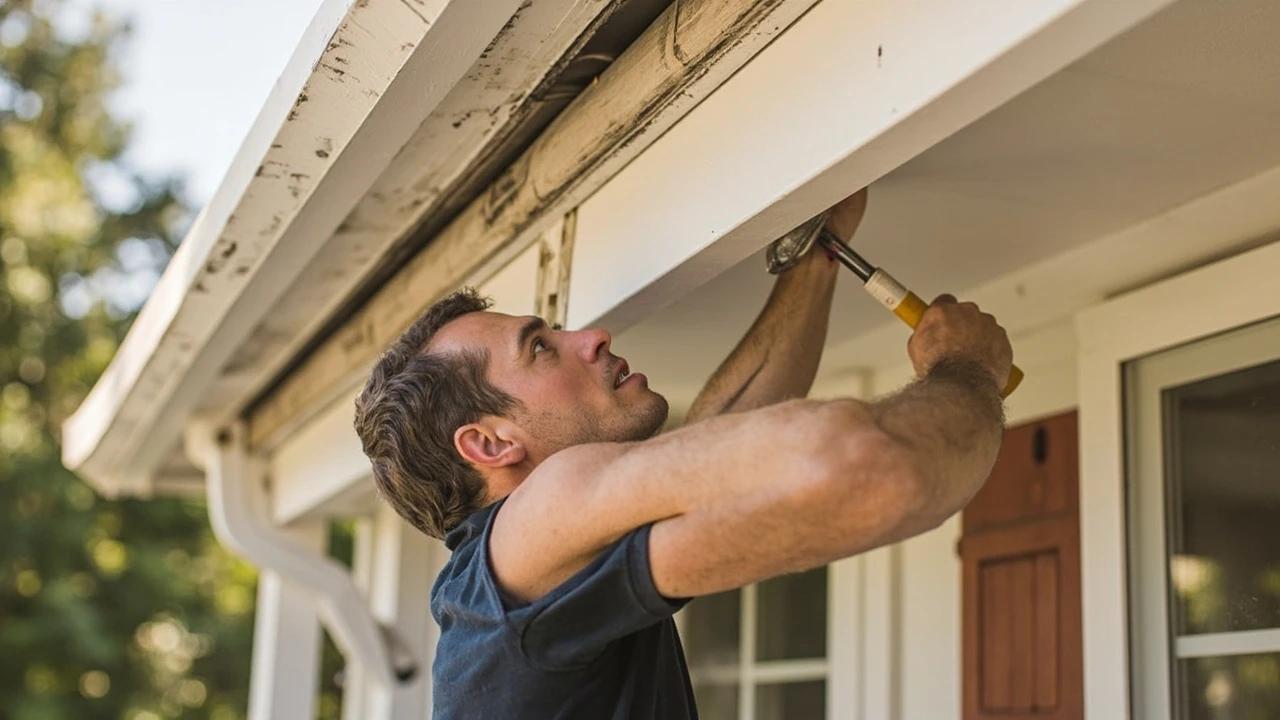

Peeling paint and soft, crumbling wood at the roof edge means the fascia (the vertical board behind the gutter) or soffit (the panel under the eave) is rotting — and every season you wait, the rot creeps toward the rafter tails it's nailed to. Swapping a damaged section is honest weekend carpentry: $50-150 in lumber and paint, basic tools, and one golden rule — find and fix the water source that caused the rot, or you'll be back on the ladder in two years.
What You'll Need
🛠 Tools
📦 Materials
Safety First
- •This is overhead ladder work: set the ladder on firm level ground, keep three points of contact, never lean past your reach, and have a helper foot the ladder and pass up boards. Second-story eaves are a pro job.
- •Wear safety glasses — you'll be prying, hammering, and cutting directly overhead, and rotted wood, rusty nails, and old caulk rain down.
- •If your home predates 1978, the eave paint may contain lead. Don't dry-scrape or power-sand it; use lead-safe practices (wet methods, sheeting, a P100 respirator) or hire an EPA Lead-Safe certified contractor.
- •Watch for wasp, bee, and bird nests before opening a soffit — stinging insects love eave cavities. Probe and peek before you pry.
Step-by-Step Instructions
Probe the Damage and Find the Water Source
Press a screwdriver into the suspect fascia and soffit: paint that hides punky, spongy wood gives way easily, and the rot usually extends a foot or more past what looks bad. Map the full soft zone, then look up and answer the only question that makes this repair permanent — where is the water coming from? Check for a gutter that overflows or has pulled its fasteners, a drip edge that's missing or stops short, and stains running down from the shingle edge above.
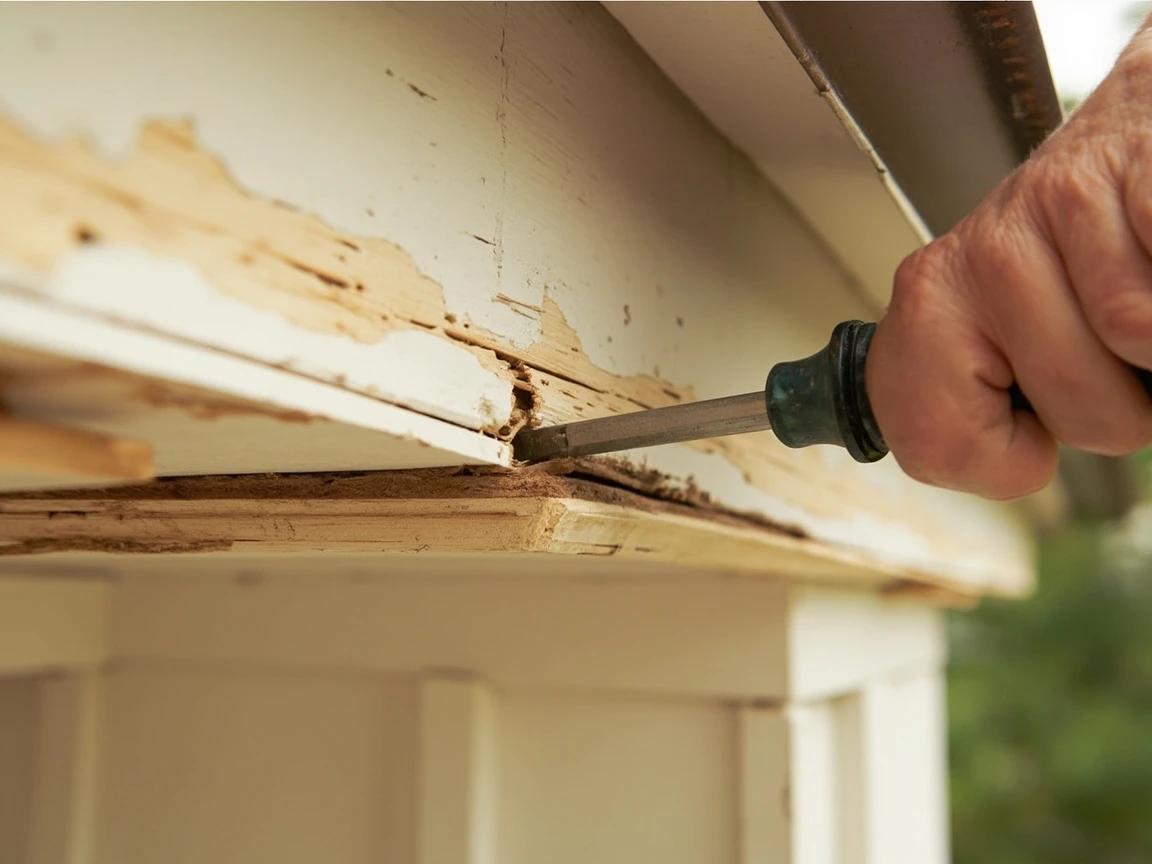
Mark the cut line at least 12 inches past the last soft spot you can find, and land it over a rafter tail so both board ends have solid nailing.
Remove the Gutter Section and Drip Edge
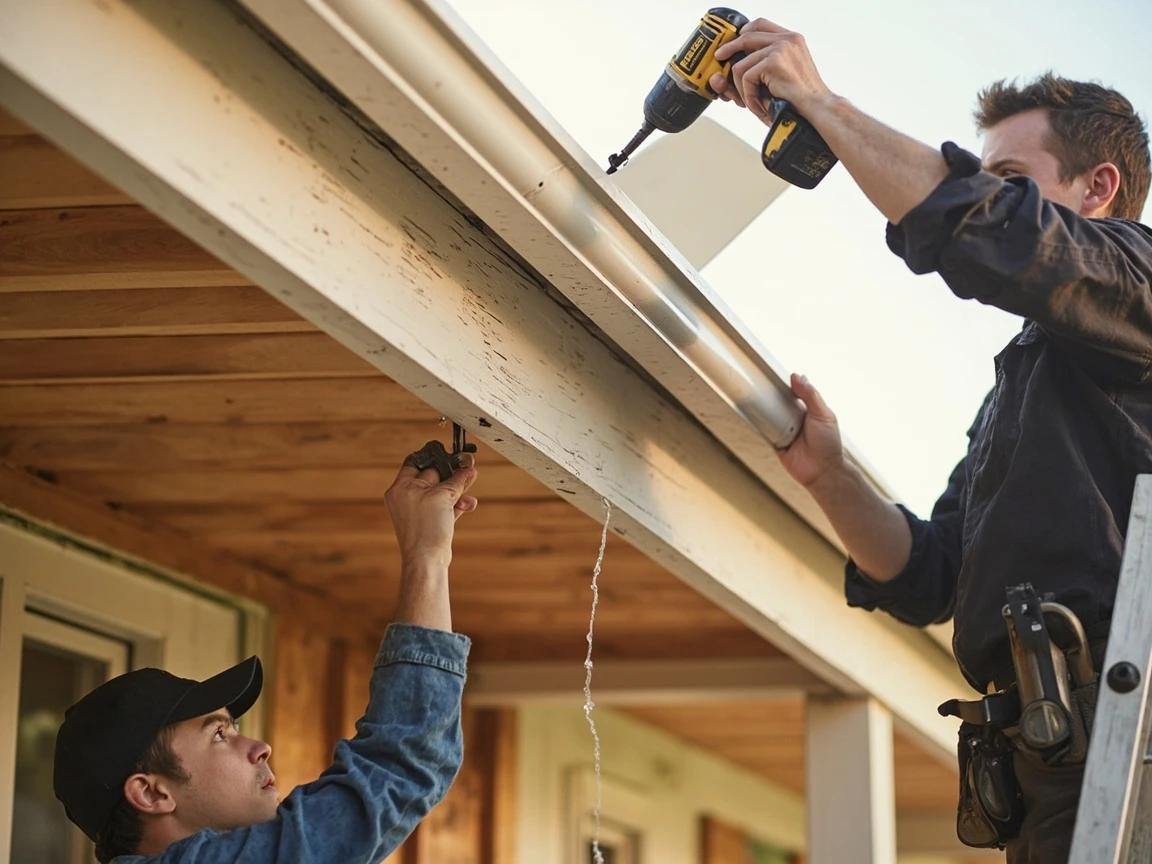
Empty the gutter, back out the hidden-hanger screws across the work zone, and lower that gutter section with your helper — on short runs it's easier to take the whole piece down than to work around it. Then pry up the drip edge (the L-shaped metal at the shingle edge) gently where it laps the work area, pulling its nails so you can reuse or replace it. Set both aside flat so they don't bend.
Cut the Seams and Pry Off the Rotted Fascia
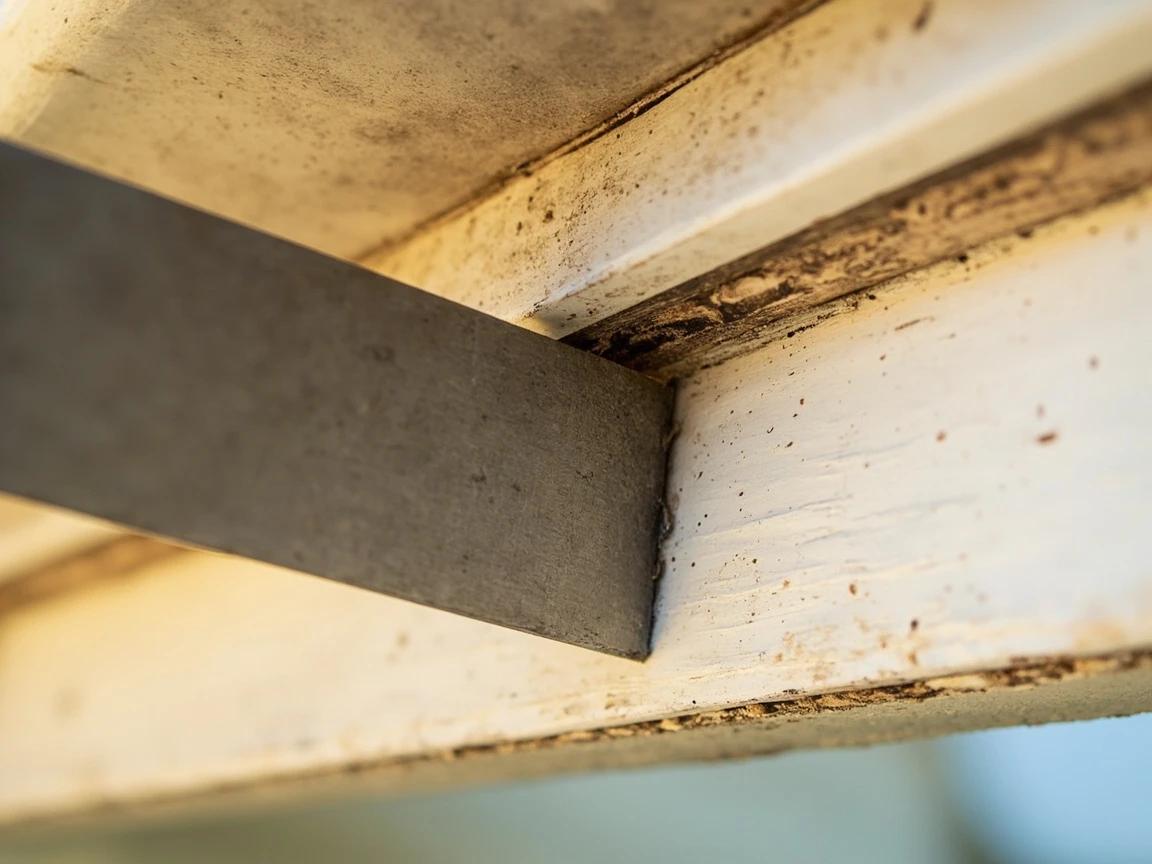
Slice every caulk line and paint seam around the damaged board with a utility knife so prying doesn't splinter the neighboring trim or soffit. If only part of a board is bad, square-cut the rot out with a circular saw set just shy of full depth (finish with a handsaw), landing the cut on a rafter tail. Work a flat pry bar behind the board at each nail, easing it off in small bites across the run rather than wrenching one end free.
Clean Up the Framing and Probe the Structure
Pull or drive every leftover nail so nothing holds the new board off the framing, and scrape old caulk off the adjoining trim. Now the critical inspection: probe the sub-fascia (if your roof has one) and the exposed rafter tails with the screwdriver. Solid wood means carry on. Soft, dark, or crumbling rafter ends mean the rot went structural — stop and bring in a carpenter to sister or repair the tails before any new trim goes up.
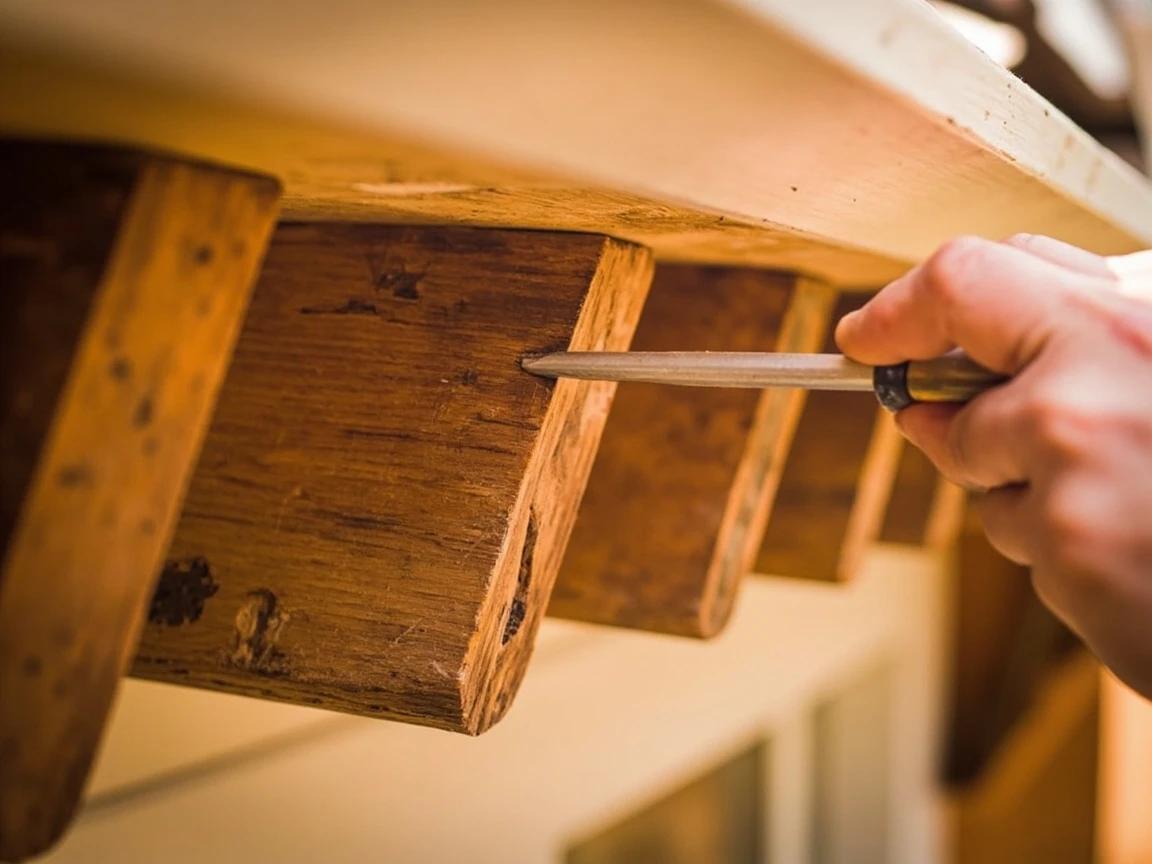
Don't nail new fascia over soft rafter tails. The gutter hangs its whole water weight on those ends — fastened into rot, the first heavy storm can pull the gutter, fascia, and all, off the house.
Drop and Repair the Soffit If It's Damaged
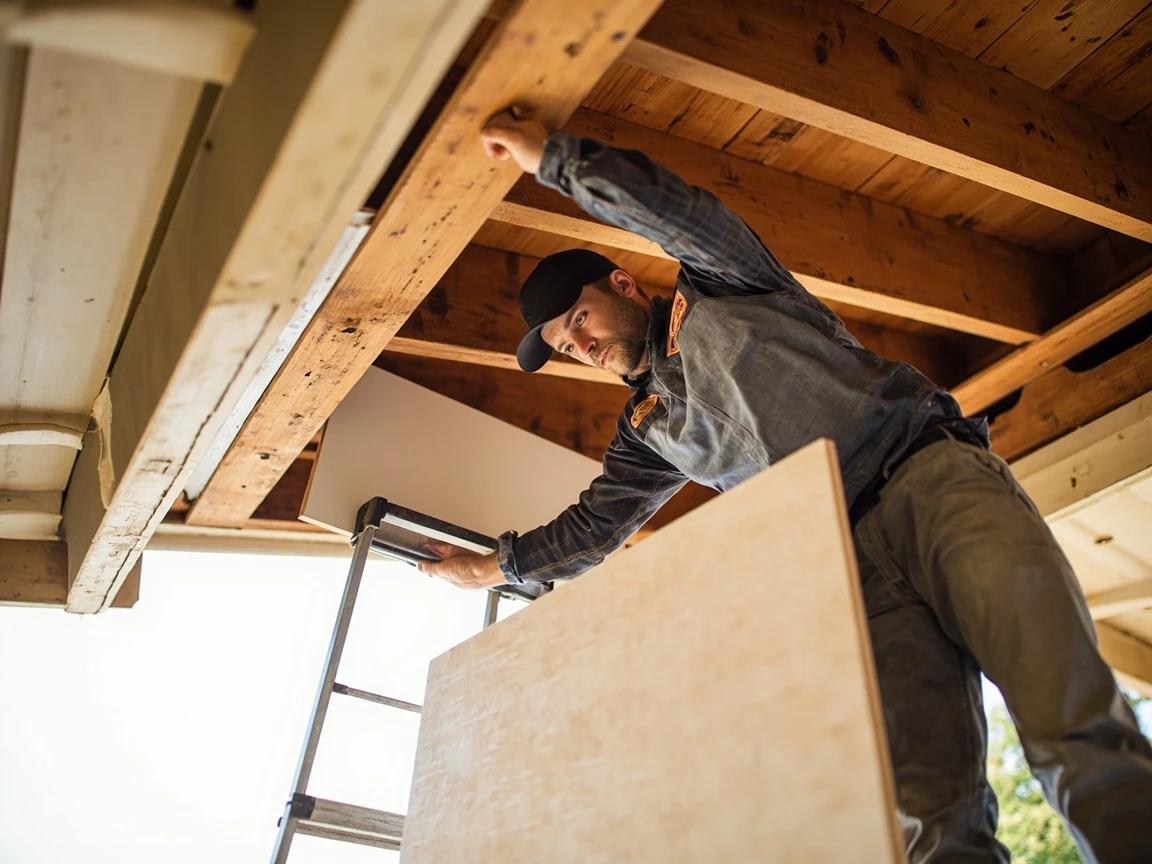
With the fascia off, the soffit panel edge is exposed; if it's stained, soft, or sagging, remove the damaged panel — most are nailed into the rafter bottoms and a ledger at the wall. Cut a replacement from matching material (exterior plywood, fiber cement, or vented vinyl panel), preserving any vent openings: those soffit vents feed the attic's airflow and must not be blocked. Clean bug screens and clogged vent slots while everything is open.
Cut the New Boards and Prime Every Side First
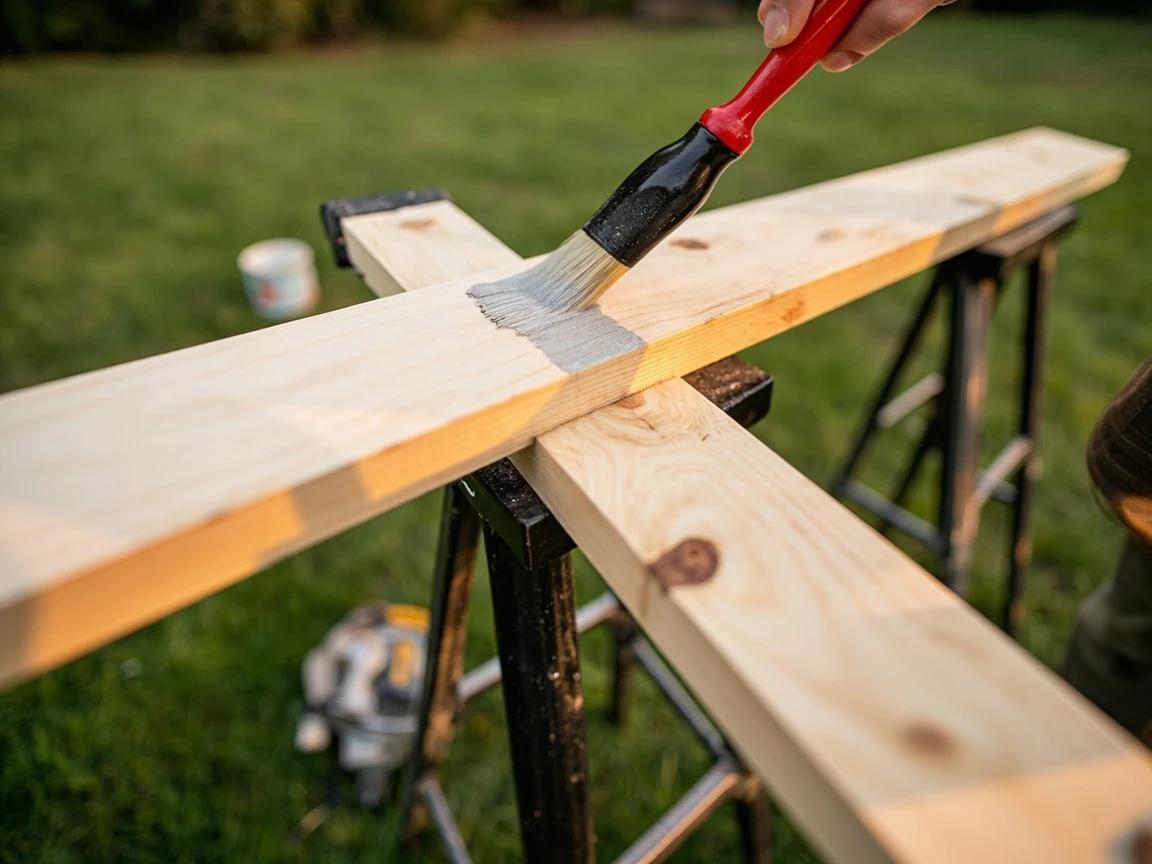
Measure twice and cut the new fascia to length, matching the original width so the drip edge and gutter land where they did before. Then the step that doubles the repair's lifespan: prime all six sides — faces, edges, and especially the end-grain cuts — and let it dry before anything goes up. Bare end grain wicks water like a straw; back-priming is the difference between a 20-year board and a 5-year one. A first topcoat on the ground is easier than on the ladder, too.
Working with cellular PVC instead of wood? Skip the primer, glue joints with PVC cement, and leave a small expansion gap at long-run joints per the maker's chart — PVC moves with temperature, not moisture.
Install the Soffit, Then the Fascia
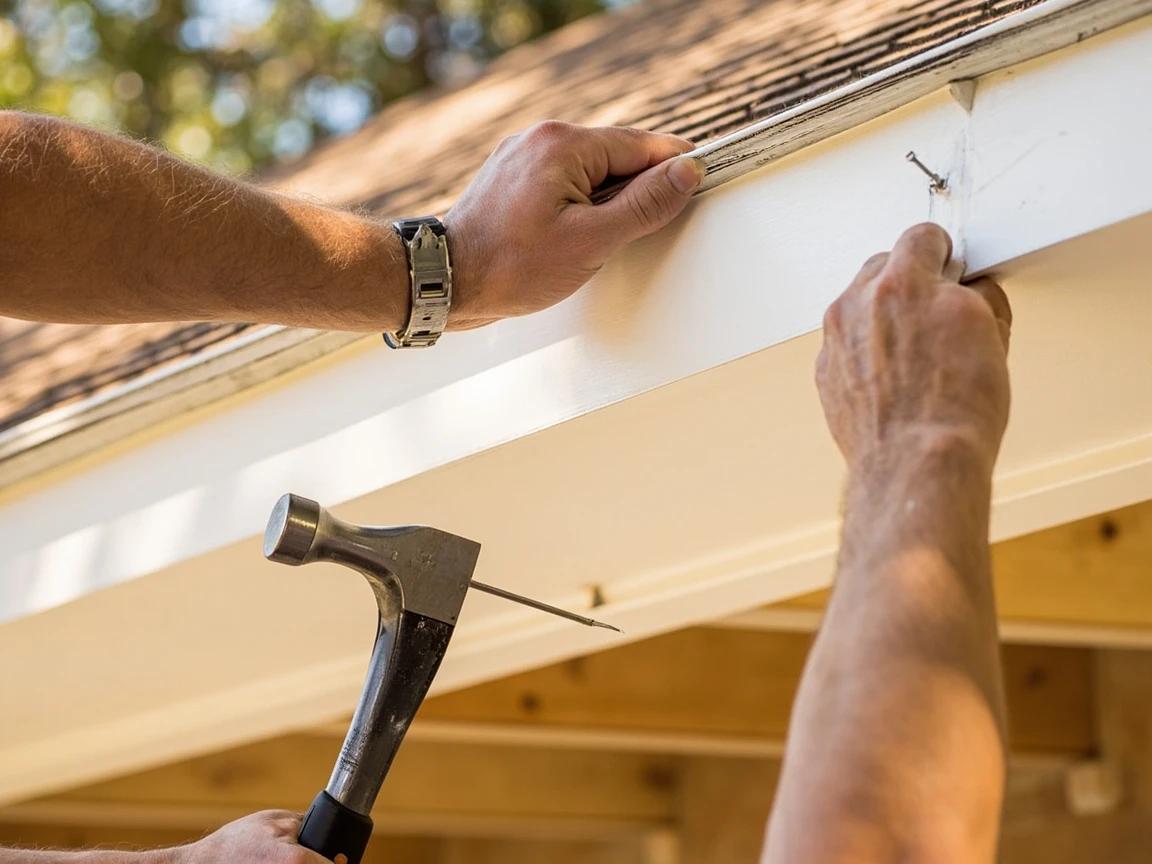
Sequence matters: the soffit panel usually tucks behind the fascia, so it goes up first — nail it to the rafter bottoms and the wall ledger. Then lift the fascia into place (the helper earns their lunch here), align its top edge to the roof plane, and fasten with two 8d galvanized ring-shank nails or exterior trim screws into each rafter tail. Butt joints between boards land centered on a tail, ideally with a slight bevel so the seam sheds water.
Caulk, Fill, and Paint
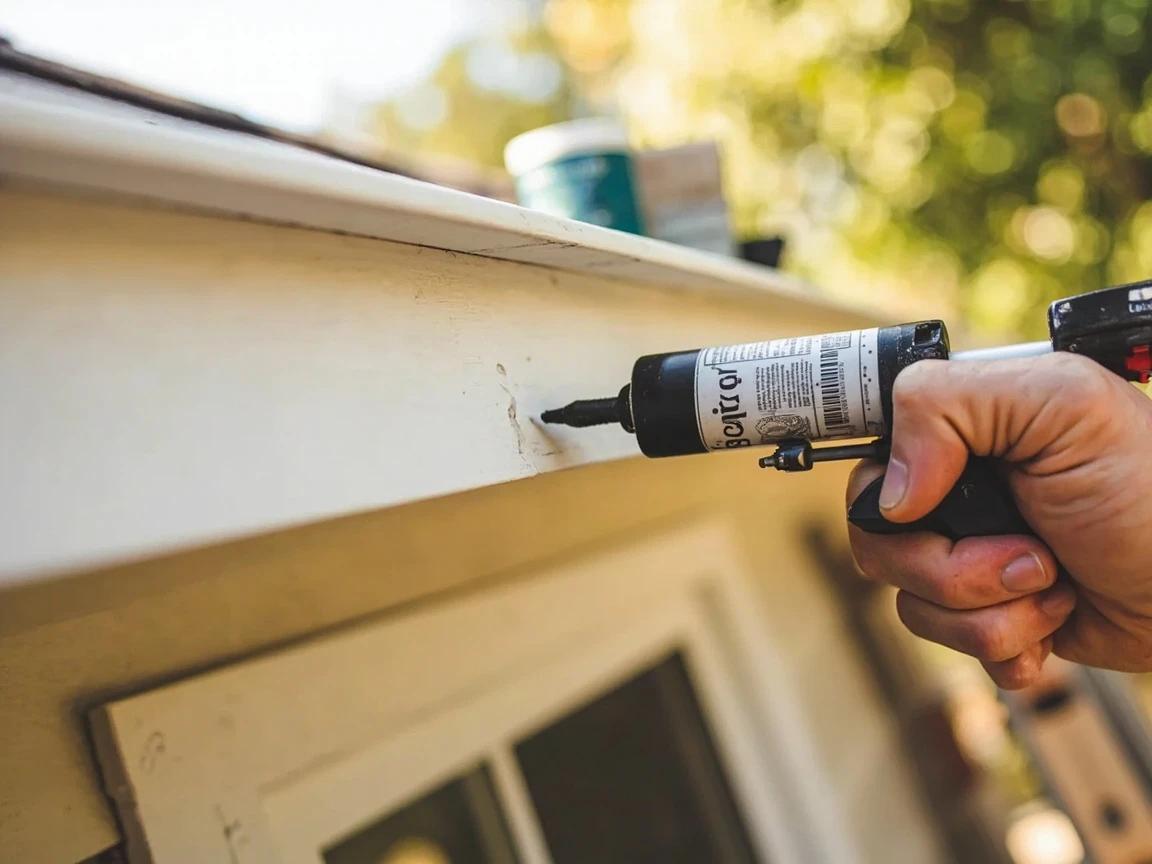
Set nail heads slightly below the surface and fill them with exterior wood filler; caulk the joints between new and old boards, the corner miters, and the seam where fascia meets soffit with paintable exterior caulk. Once the filler sands flush, brush on a finish coat (two on raw spots) of quality exterior paint, lapping an inch onto the old boards so the repair blends. Paint is the fascia's actual weatherproofing — don't leave primer waiting more than a couple of weeks.
Reinstall the Drip Edge and Gutter — and Fix the Cause
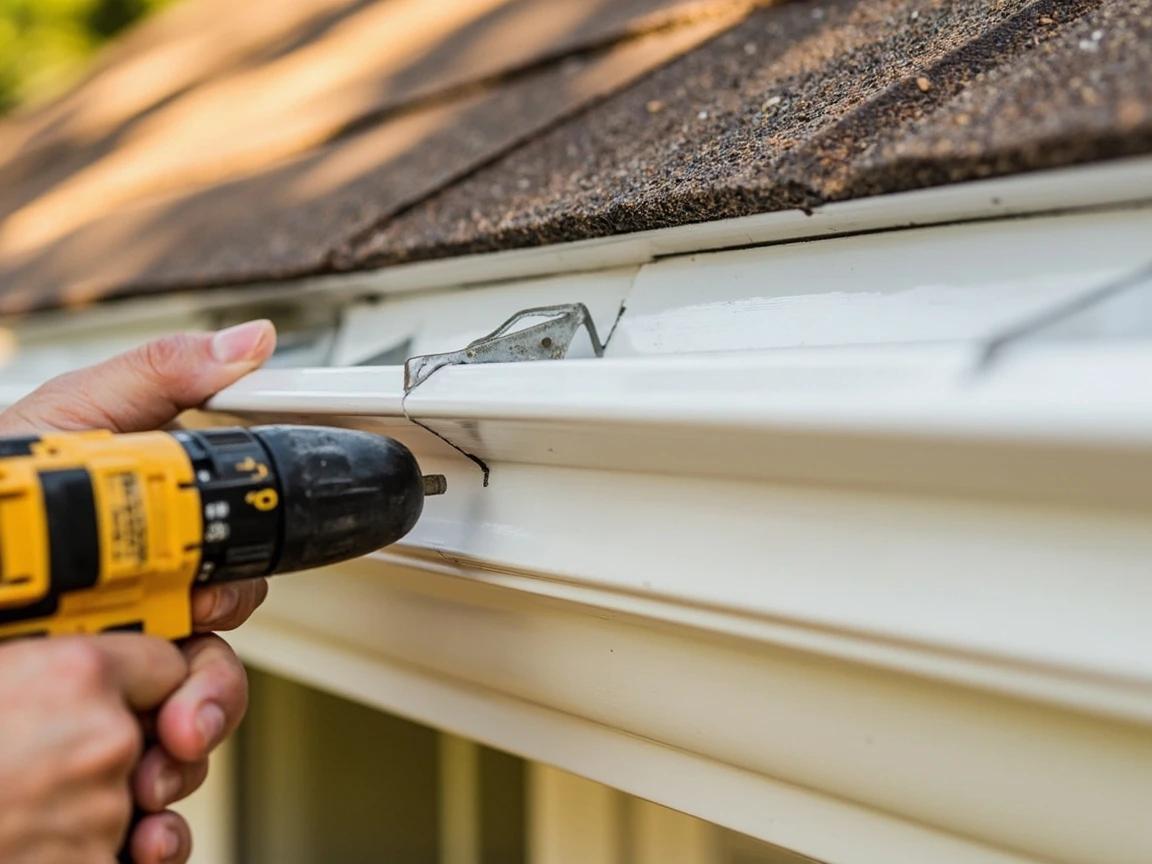
Nail the drip edge back so its lower leg laps OVER the top of the new fascia (water must shed onto the board's face, never behind it), then rehang the gutter with hidden hangers into solid wood, restoring its slope toward the downspout. Finish by curing whatever caused the rot: clear or guard the gutter, add drip edge where it was missing, or re-pitch the run that overflowed. Hose-test the gutter and watch the new board stay dry — that's the repair actually finished.
Snap a photo of the finished eave and set a reminder to re-check it after the first hard rain. Water finding a new path shows up within one storm — while the ladder muscle memory is fresh.
Frequently Asked Questions
What's the difference between soffit and fascia?
+
The fascia is the vertical board that caps the ends of the rafters — it's what your gutter is screwed to. The soffit is the horizontal panel underneath the eave that closes off the overhang, usually with vents that feed air into the attic. They meet at the roof edge and usually rot together, because water that gets past a failed gutter or drip edge hits the fascia first and wicks into the soffit behind it.
What causes fascia boards to rot?
+
Almost always water from directly above: a gutter that overflows or pulls loose, a missing or short drip edge that lets runoff curl behind the gutter, or ice dams pushing meltwater under the roof edge. Clogged soffit vents that trap humid attic air accelerate it from behind. That's why step one of a lasting repair is diagnosing the water path — new wood under the same drip fails on the same schedule.
Should I replace fascia with wood or PVC?
+
Primed pine is the cheapest and matches most houses but needs paint maintenance; cedar resists rot better for a few dollars more. Cellular PVC trim board costs roughly twice as much, never rots, and takes paint — a strong choice for chronic problem spots like sun-baked south eaves or behind valley discharge. Whatever you choose, match the existing board's width and thickness so the gutter and drip edge land correctly.
Can I repair a small rotted spot without replacing the whole board?
+
Yes — if the rot is shallow and localized (a soft patch smaller than your palm with solid wood around it), dig out the punky wood, saturate the area with liquid wood hardener, and rebuild with two-part epoxy wood filler, then sand, prime, and paint. Anything larger, through-thickness, or spanning a joint is a replacement; epoxy over widespread rot just hides it while it spreads.
How much does fascia repair cost?
+
DIY, a typical one- or two-board section runs $50-150 for lumber, fasteners, caulk, and paint — pine fascia costs a few dollars per foot and PVC about double. Hiring it out typically runs $6-20 per linear foot depending on material and height, so a 30-foot run lands in the $200-600 range. The price climbs when rot has reached rafter tails, which is structural carpentry.
Sources & further reading
- How to Replace Fascia Boards: A Step-by-Step Guide — Lowe's
- How to Replace Fascia Boards in 9 Detailed Steps — Angi
- My Fascia Boards Are Rotted! What Do I Do? — The Honest Carpenter
More Roofing & Siding Guides
View all →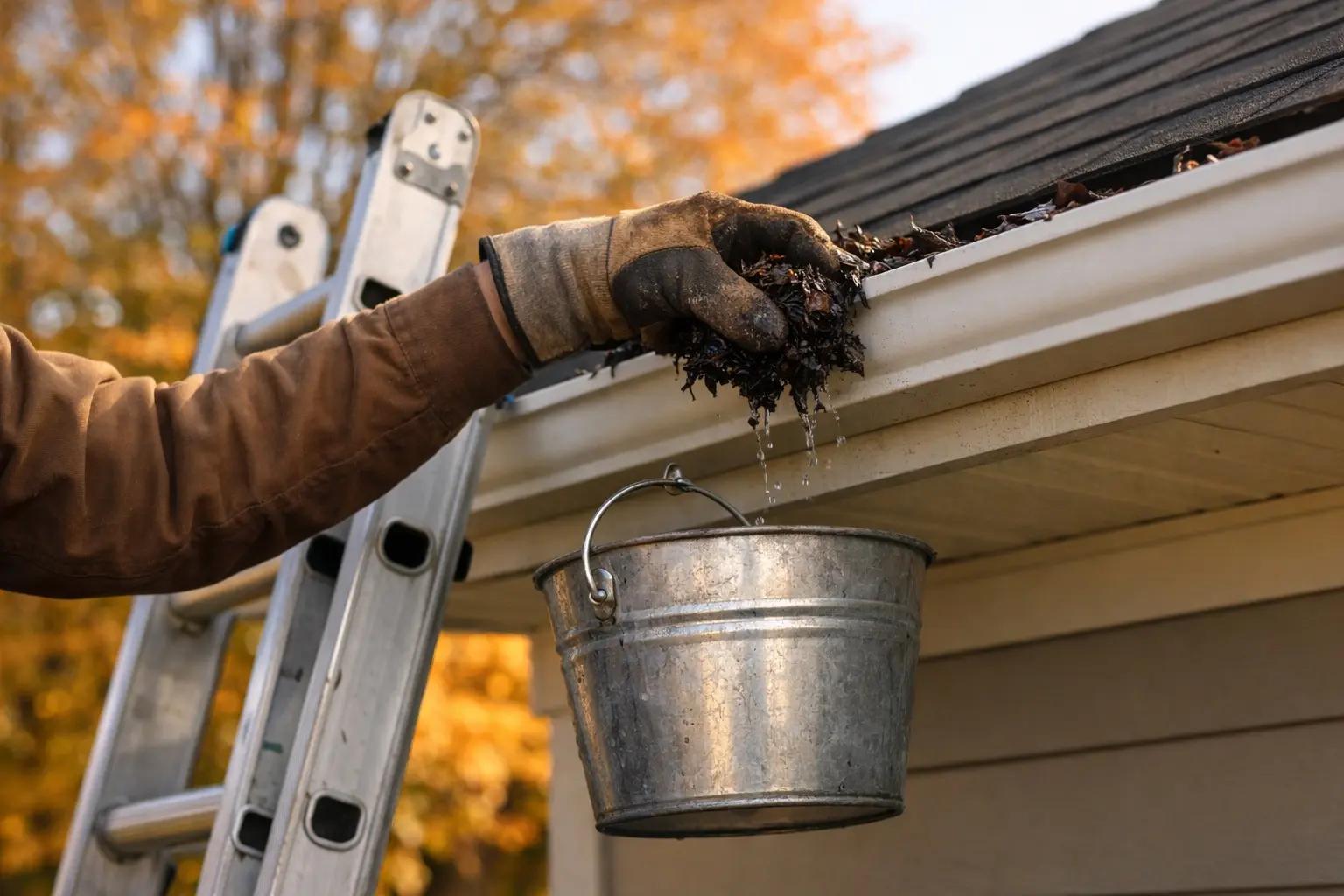 Medium2 hrs
How to Clean Gutters Safely
Clogged gutters cause water to overflow against the fascia, soffit, and foundation — leading to thousands of dollars in rot and water damage. Cleaning them twice a year takes about 1-2 hours and costs nothing if you already own a ladder, versus $150-300 for a professional service. This guide focuses on doing the job safely, because gutter cleaning is one of the top causes of ladder-related injuries at home.
 Easy1 hr
How to Inspect Your Roof for Damage
Most roof failures announce themselves months in advance — a few lifted shingles, a stripe of missing granules, a rust line on the flashing — to anyone who actually looks. The good news: you can catch nearly all of it from the ground with binoculars and from inside the attic with a flashlight, no roof-walking required. This free 60-minute inspection, done twice a year and after every big storm, is the difference between a $300 repair and a $12,000 replacement.
 Medium3 hrs
How to Install Gutter Guards
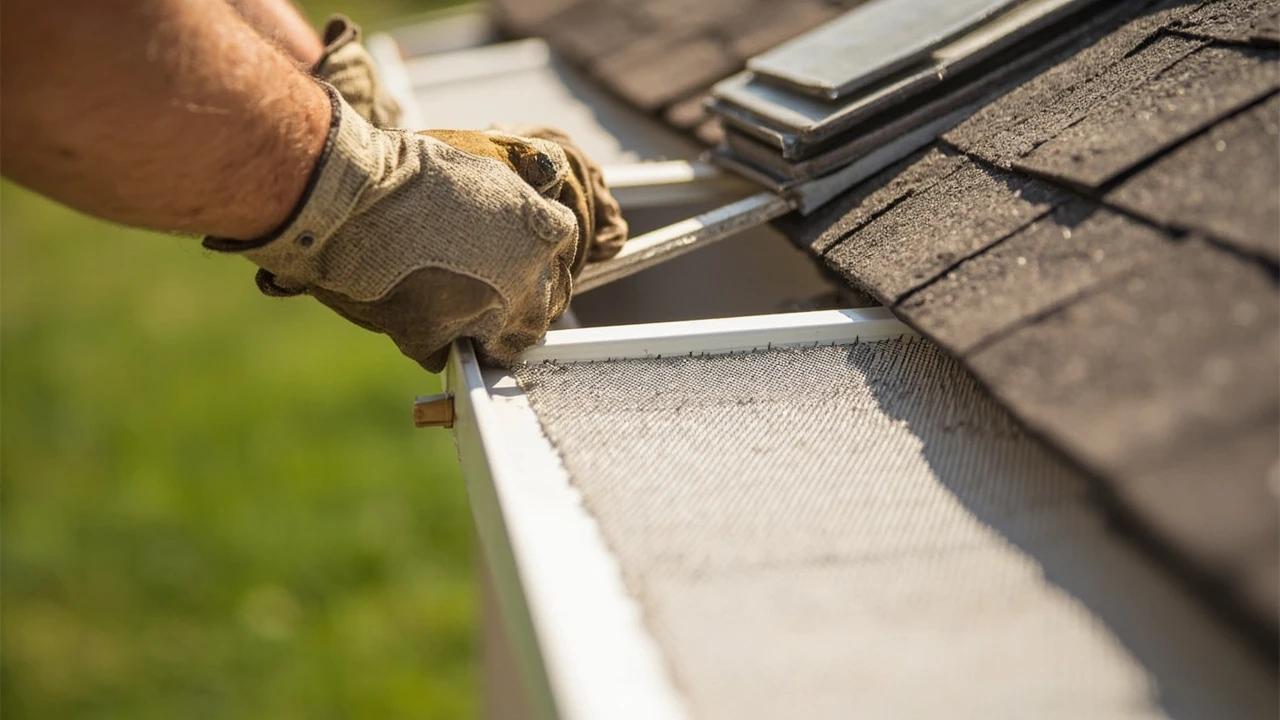
Cleaning gutters twice a year is the chore gutter guards exist to kill — and the snap-in screen and micro-mesh panels at any home center install with basic tools for $1-3 per linear foot, versus $1,500+ for a professionally installed system. The job is genuinely DIY-able on a single-story home: clean the gutters, fit and fasten the panels, and test with a hose. This guide covers choosing the right guard type, the ladder setup that keeps you safe, and the one installation mistake (tucking guards under shingles) that can void a roof warranty.
You Might Also Like
 Easy30 min
How to Fix a Dripping Faucet
A dripping faucet wastes more than 3,000 gallons of water per year and can add $20 or more to your monthly water bill. The fix is almost always a worn cartridge, washer, or O-ring — parts that cost under $10 and take 20-30 minutes to replace with basic tools.
 Hard8 hrs
How to Paint Kitchen Cabinets
A professional cabinet refinish costs $3,000-8,000, but painting them yourself with the right prep and materials delivers the same transformation for under $200 in a long weekend. The secret is thorough degreasing, a bonding primer, and thin coats with proper dry time between each — skip any of those and the paint will chip within months. This guide walks through the full process from door removal and labeling to final reassembly, covering both brush and roller techniques for a smooth, factory-like finish.
 Easy30 min
How to Replace an Electrical Outlet
A worn-out or discolored electrical outlet is one of the simplest electrical repairs you can tackle yourself — swapping one takes about 15-30 minutes and costs under $5 in parts versus $75-150 for an electrician visit. This guide walks you through safely replacing a standard duplex receptacle, including how to handle the wiring correctly and avoid the most common DIY mistakes.