How to Paint a Room
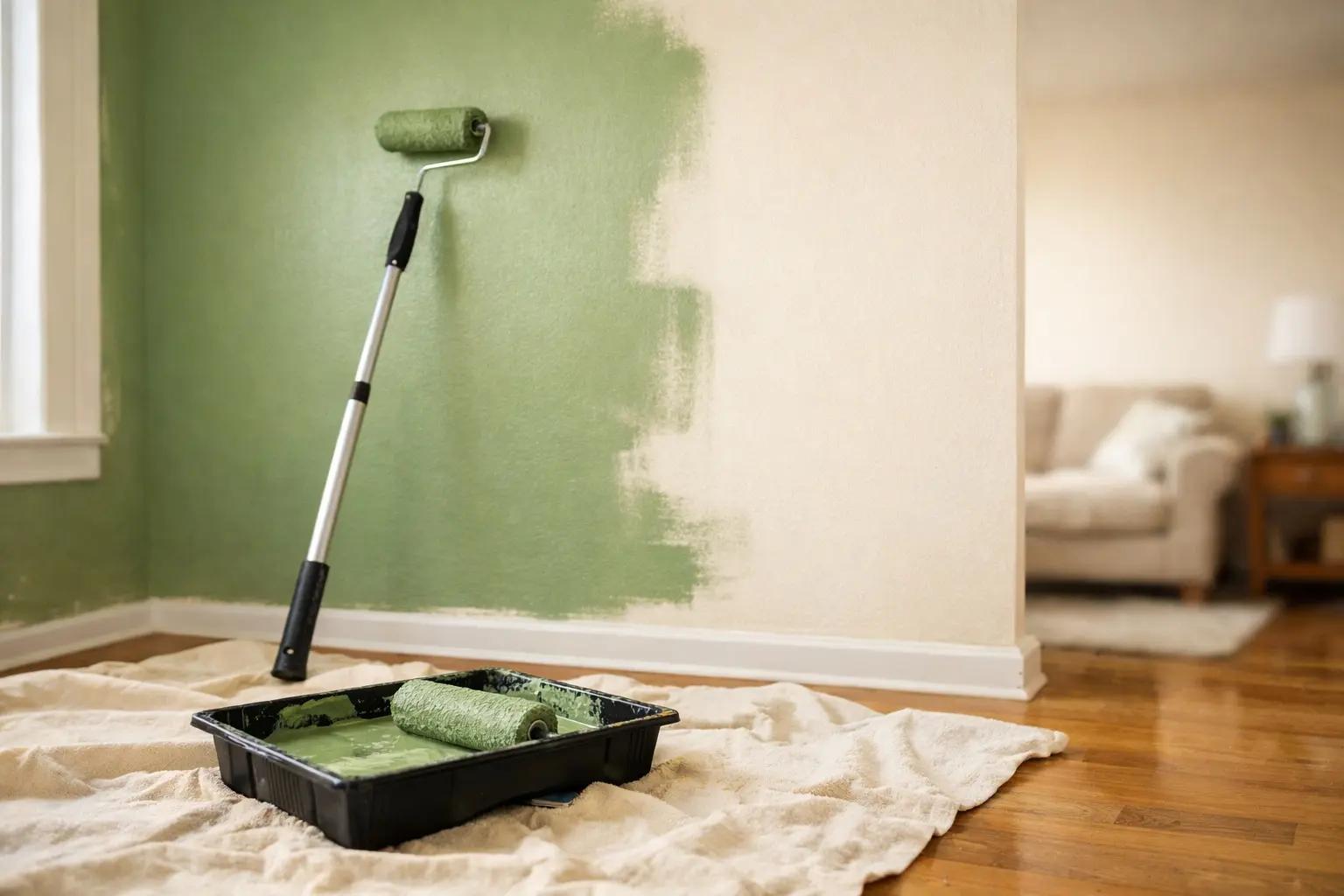

A fresh coat of paint is the fastest, cheapest way to transform any room — and doing it yourself saves $400-800 in labor for an average 12x12-foot bedroom. The job takes a weekend from prep to final coat, and the difference between an amateur-looking result and a professional finish comes down to technique, not talent. This guide covers prep, cutting in, rolling, and cleanup so you get clean lines and even coverage the first time.
What You'll Need
🛠 Tools
📦 Materials
Safety First
- •If your home was built before 1978, test for lead paint before sanding or scraping. Disturbing lead paint creates toxic dust — use an EPA-certified lead test kit ($10-15 at any hardware store) and follow EPA RRP guidelines if lead is present.
- •Ensure adequate ventilation while painting — open windows and run a fan. Even low-VOC latex paint can cause headaches and dizziness in a closed room.
Step-by-Step Instructions
Clear and Protect the Room
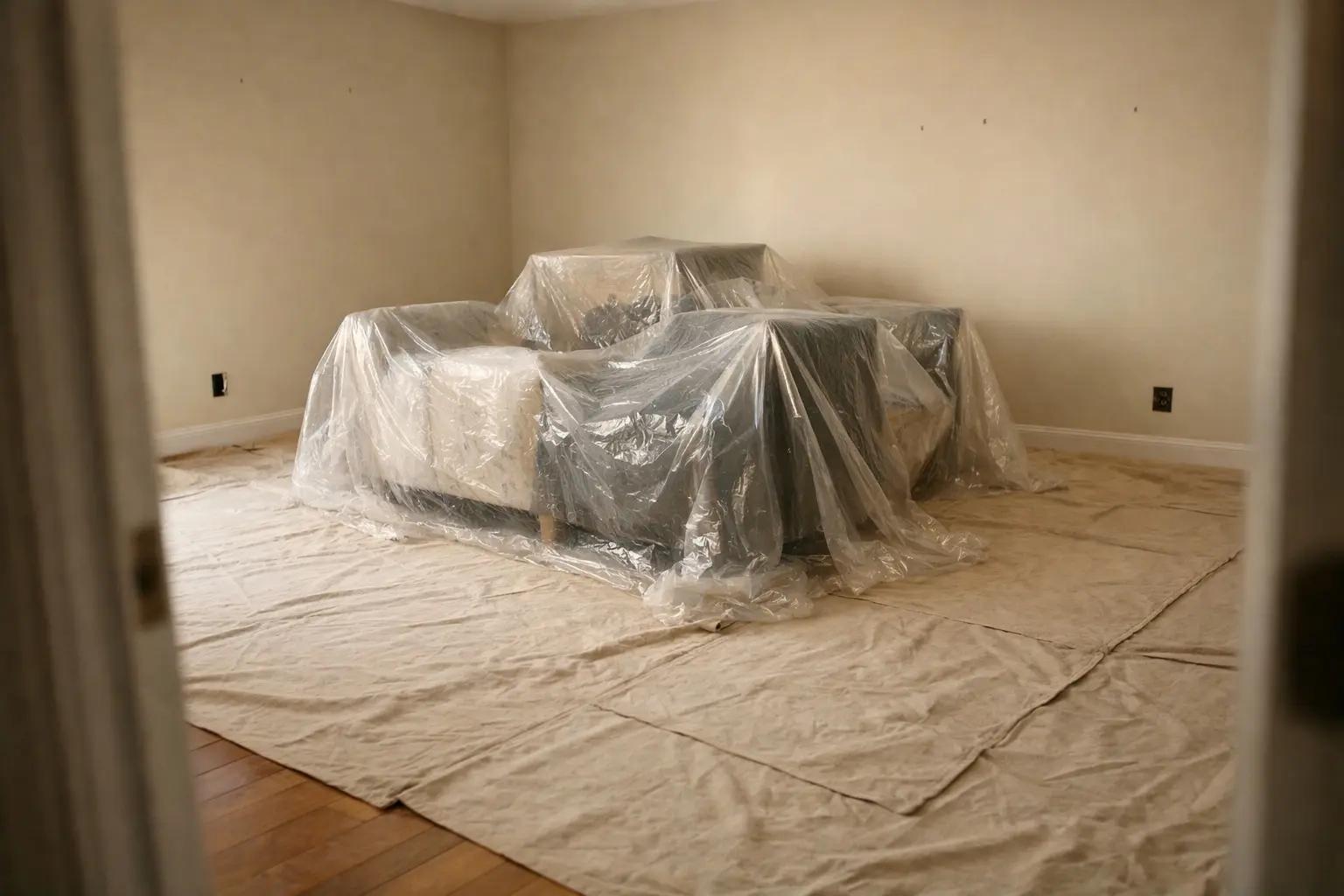
Move all furniture out of the room or push it to the center and cover it with plastic sheeting. Remove wall decor, curtain rods, and switch plate and outlet covers — drop the screws into a labeled ziplock bag so you don't lose them. Lay canvas drop cloths over the entire floor, overlapping the edges by at least 6 inches so paint can't seep through the seams. Press the drop cloth edges tight against the baseboards.
Settle the color and the finish before you buy — our paint color guide covers picking a shade that survives your room's actual light, and the paint sheen comparison covers which finish belongs in which room.
Prep the Walls for Paint
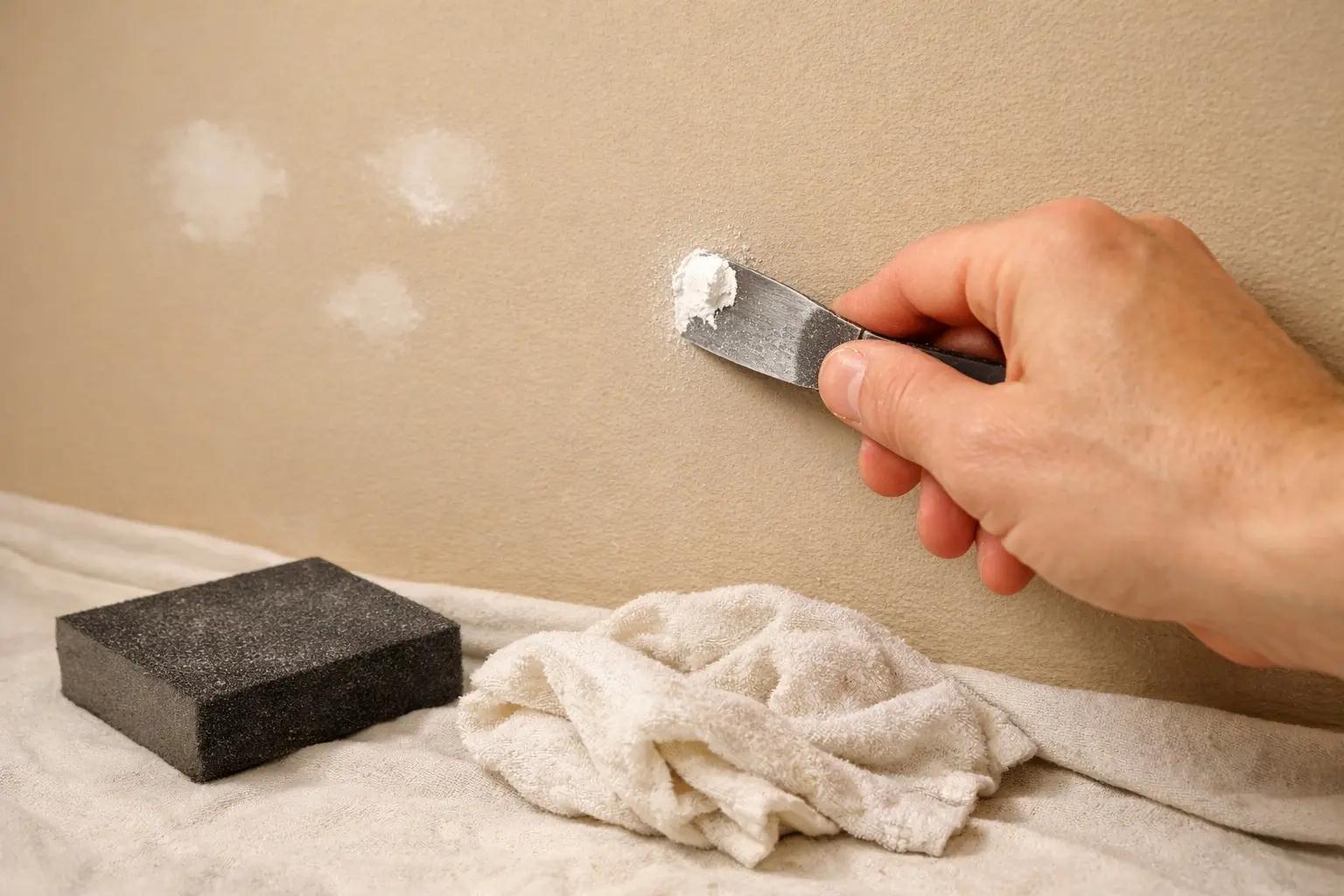
Fill any nail holes, dents, or cracks with lightweight spackle using a putty knife — press the spackle in, scrape flush with the wall, and let it dry for 15-30 minutes. Once dry, sand each patched spot with a 120-grit sanding sponge until it's smooth and level with the surrounding wall. Wipe down all walls with a damp rag or sponge to remove dust, cobwebs, and grease — paint won't adhere properly to dirty surfaces. Let the walls dry completely before moving on. If the room still has wallpaper, that comes off first — see removing wallpaper and prepping walls.
Shine a work light or flashlight at a low angle across the wall — it highlights every bump, crack, and imperfection that would otherwise show through the paint. Fix them now, not after the first coat.
Apply Painter's Tape to Trim and Edges
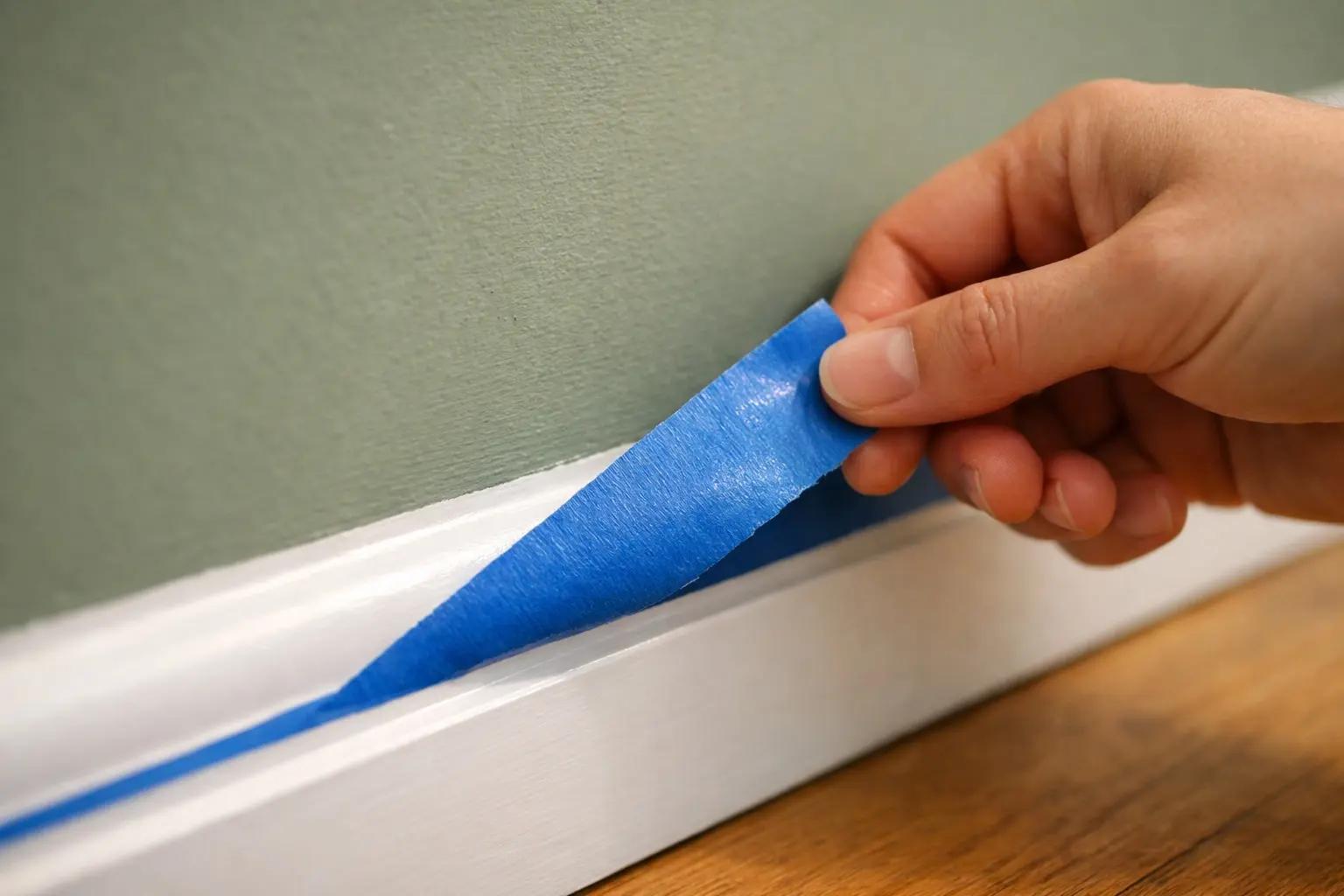
Run painter's tape along the top edge of all baseboards, around door and window casings, and along the ceiling line where it meets the walls. Press the tape edge firmly with your fingertip or a plastic putty knife to seal it against the surface — this prevents paint from bleeding under the tape. For the cleanest lines, apply tape to clean, dry surfaces and remove it while the paint is still slightly tacky (not fully dried). Don't leave tape on for more than 24 hours or the adhesive can pull off paint when you remove it.
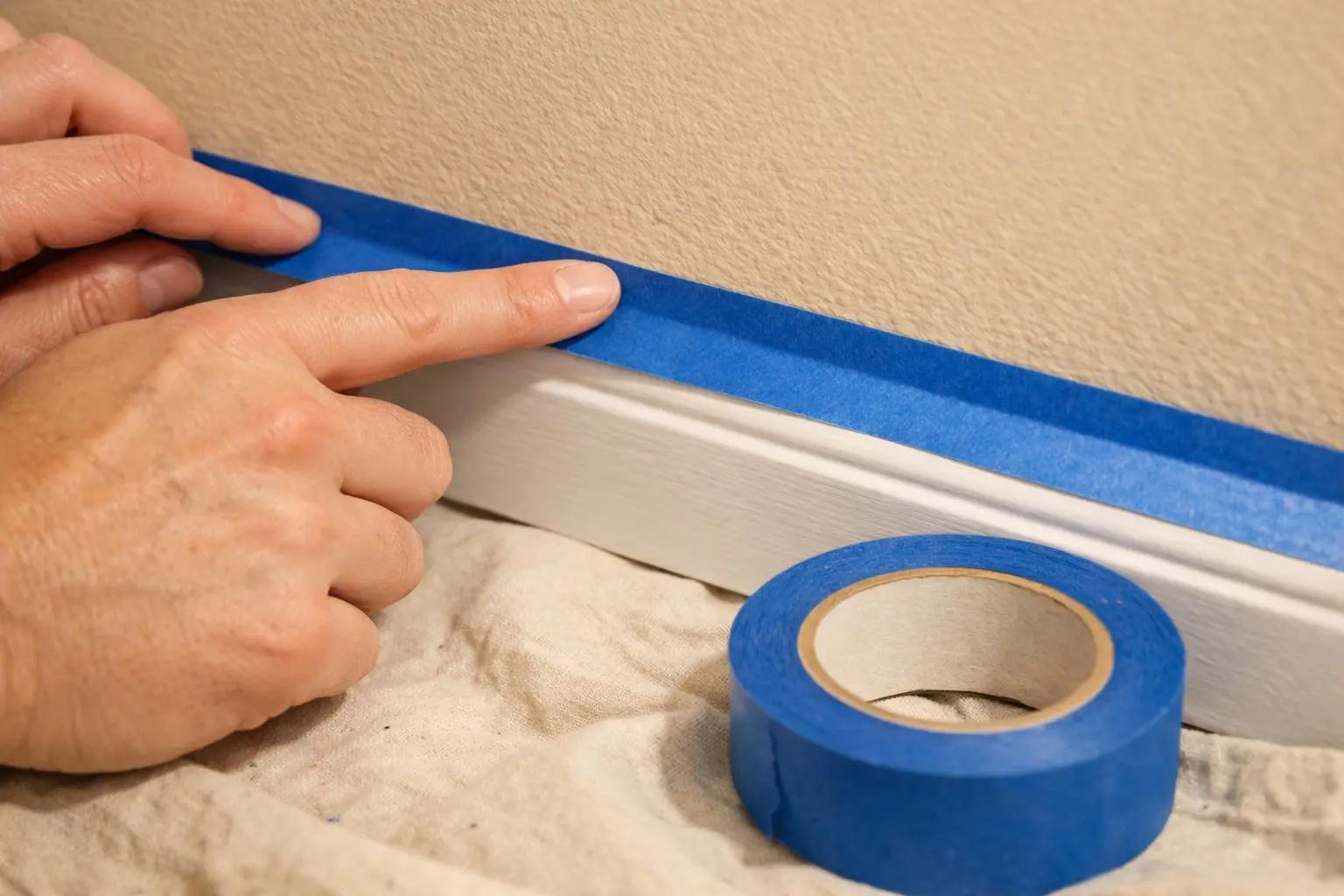
For razor-sharp tape lines on textured walls, apply the tape and then run a thin bead of your wall paint color (or clear caulk) along the tape edge before painting the new color. This seals the micro-gaps in the texture so the new color can't bleed under.
Prime the Walls (If Needed)
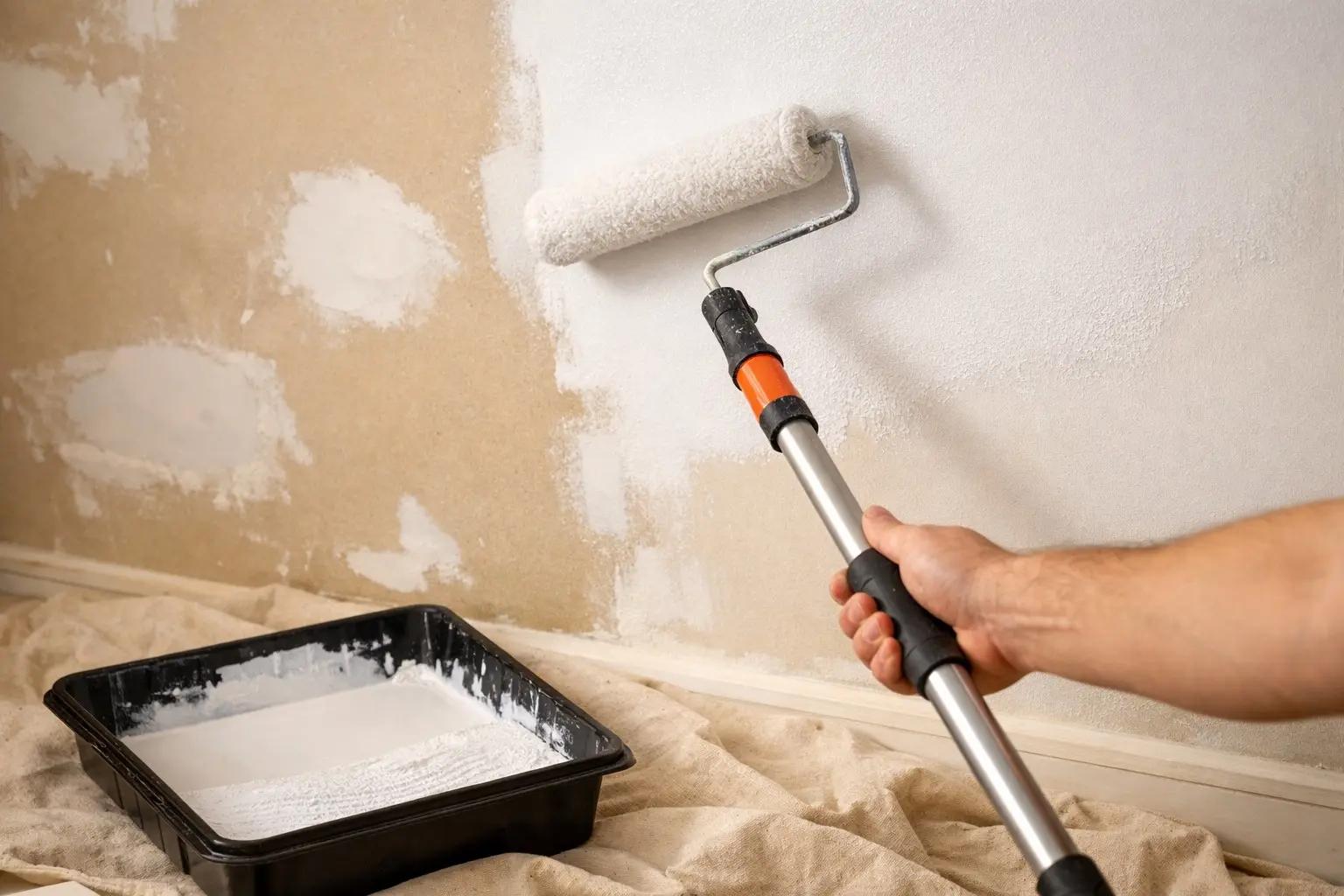
Apply primer if you're painting over a dark color, covering new drywall patches, or blocking stains (water stains, smoke, marker). Use a brush to cut in the primer around edges and corners, then roll the rest with a 3/8-inch nap roller. One coat of primer is usually sufficient — it doesn't need to look perfect, just provide even coverage. Let it dry for 1-2 hours before painting. If you're simply repainting a similar light color over existing paint in good condition, you can skip primer entirely.
Cut In Around Edges and Corners
Dip your 2-1/2-inch angled sash brush about 1/3 of the way into the paint and tap both sides gently against the inside of the can to remove excess — don't scrape the brush across the rim. Paint a 2-3-inch band along the ceiling line, inside corners, around door and window frames, and above the baseboards. Use smooth, steady strokes and feather the inner edge (the side the roller will reach) so there's no hard paint line. Work in 4-6 foot sections and move quickly to the roller — you need to roll into the cut-in paint while it's still wet to avoid visible "hat banding" where the brush marks meet the roller texture. Once you trust your hand, the cut-in technique gets you a clean line with no tape at all.
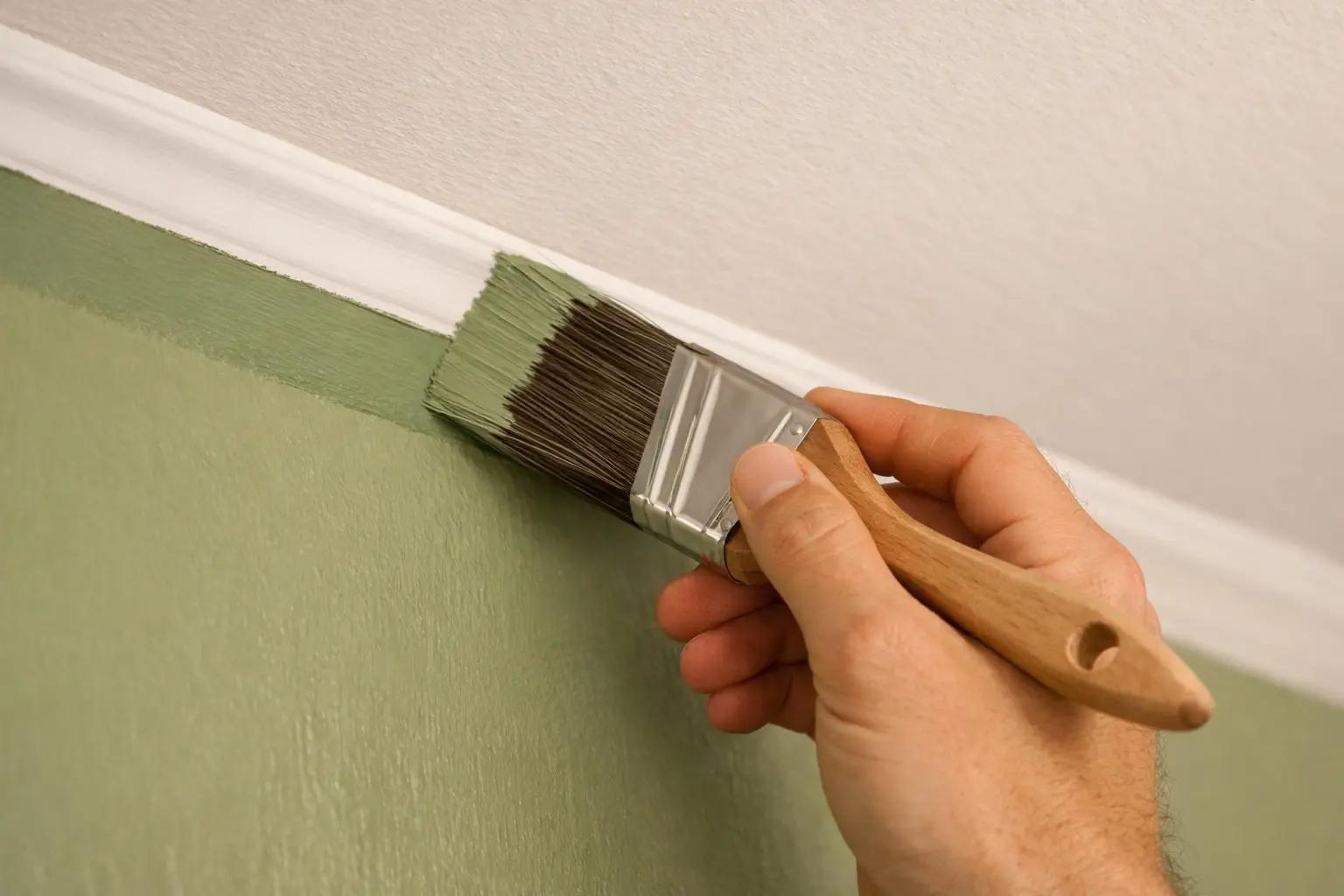
Don't cut in the entire room at once and then go back and roll. By the time you finish cutting in, the first sections will have dried and the brush-to-roller transition will show as a visible stripe. Cut in one wall, then immediately roll that wall.
Roll the Walls with Even Coverage
Fill the paint tray well about 1/3 full and roll the roller through the paint, then back and forth on the tray's ridged ramp until the cover is evenly loaded — no drips, no dry spots. Start about 6 inches from the cut-in edge (never start in a corner with a full roller) and roll upward in a smooth stroke. Then roll in a gentle "W" pattern to distribute the paint, and fill in the area with even, overlapping vertical strokes. Work in 3-4-foot-wide sections from top to bottom, always maintaining a "wet edge" — lap new paint onto paint that's still wet to avoid roller lines.
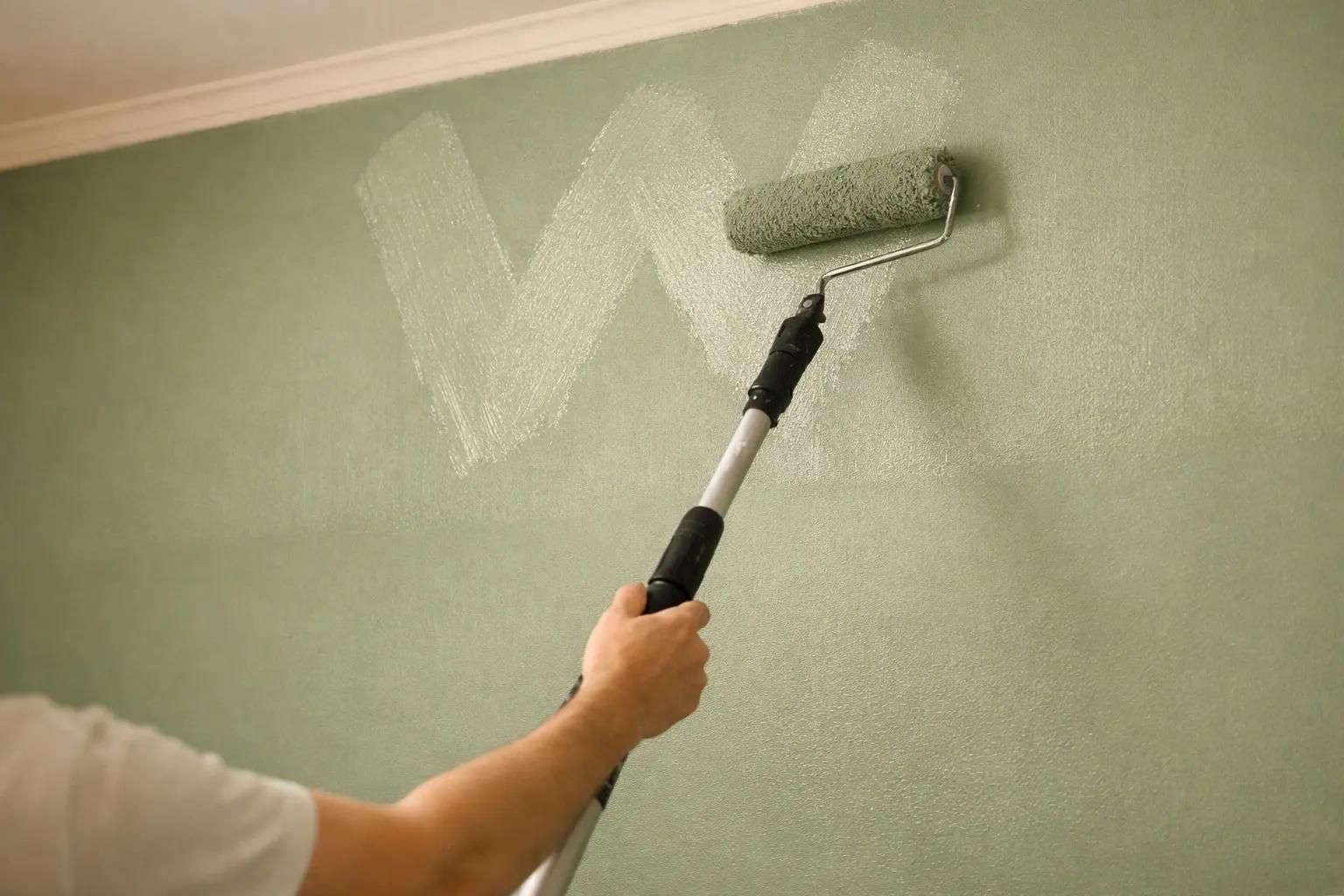
Don't press hard on the roller — let the paint do the work. Heavy pressure squeezes paint to the edges of the roller and creates track marks. Light, even pressure gives the smoothest finish.
Apply the Second Coat
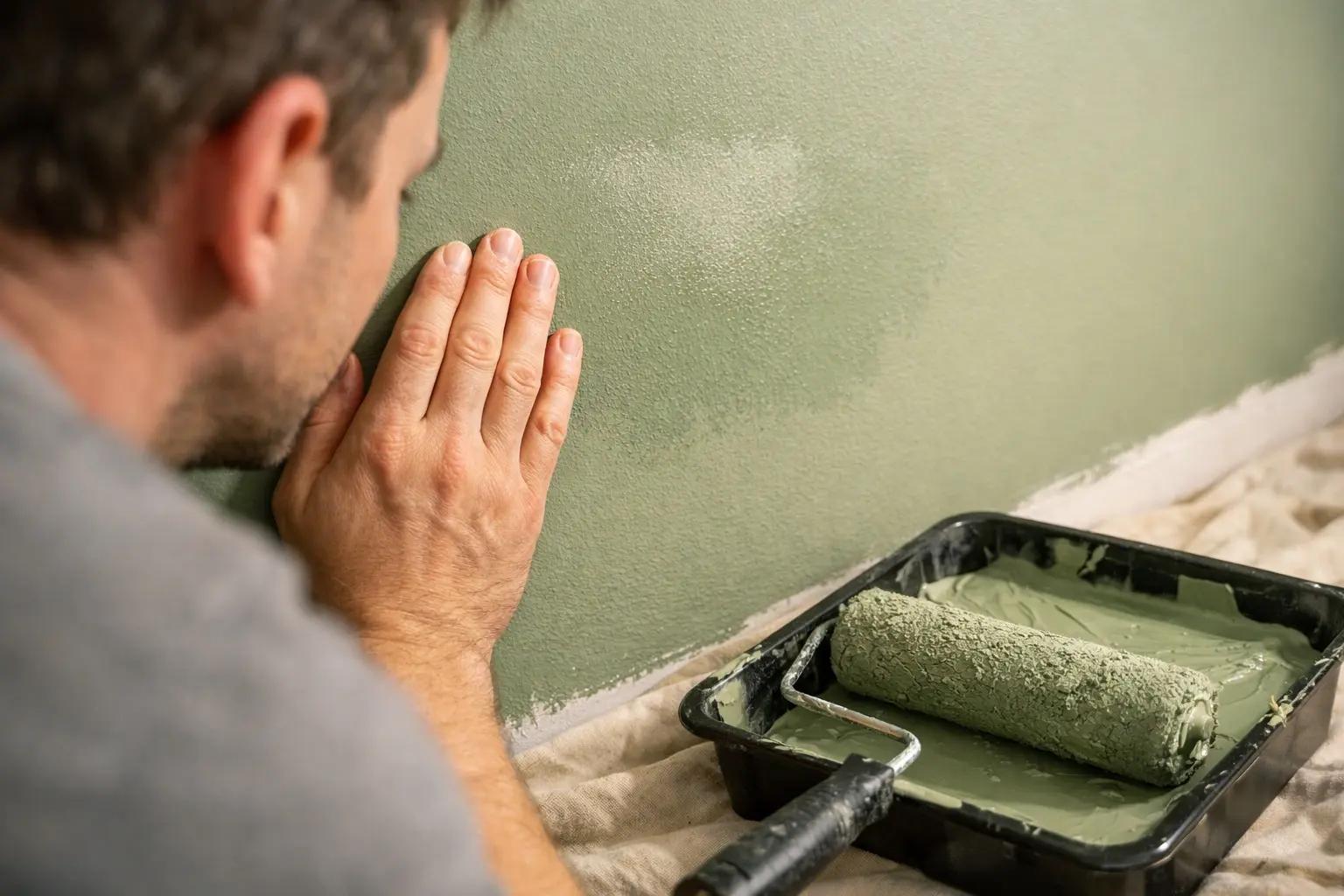
Let the first coat dry for 2-4 hours (check the paint can label for recoat time). Most colors need two coats for full, even coverage — which is why buying by the paint quantity calculator rather than by eye matters — especially lighter colors over dark walls or deep/saturated colors. Before the second coat, inspect the walls under good lighting for any thin spots, drips, or roller marks. Lightly sand any drips or bumps with 150-grit sandpaper and wipe with a damp rag. Repeat the cut-in and roll process exactly as before. The second coat goes on faster because the first coat has sealed the surface.
Remove Tape and Reassemble the Room
Remove the painter's tape while the second coat is still slightly tacky — not wet, not fully cured. Pull the tape slowly at a 45-degree angle away from the painted surface. If you wait until the paint is fully dried, the tape can pull off flakes of paint. Touch up any small imperfections with a small artist's brush. Once the paint is fully dry (usually 24 hours for latex), reinstall outlet and switch plate covers, rehang curtain rods and wall decor, and move furniture back into position. Clean brushes and rollers under warm running water until the water runs clear, then reshape and hang to dry.
Save leftover paint for touch-ups by pouring it into a clean mason jar, labeling it with the room name and paint color/code, and storing it in a cool, dry place. Touch-up paint straight from the jar with a small foam roller for the best texture match.
Frequently Asked Questions
Should I cut in the whole room first, then roll?
+
No — this is the single most common mistake. If you cut in every wall before picking up a roller, the early sections dry, and rolling into dried brushwork leaves a visible stripe around the room's perimeter where the two textures meet, called hat banding. Cut in one wall, roll that same wall immediately, then move on. Work in 4-6 foot sections and keep moving.
How long should I wait between coats of paint?
+
Two to four hours for most latex wall paints, but check the recoat time on the can — it varies by product and rises sharply in humid or cold conditions. Recoating too early drags the still-soft first coat and lifts it into streaks. Before the second coat, look across the wall under raking light for thin spots and drips, and knock any bumps down with 150-grit.
Do I actually need to prime?
+
Only in three cases: you are going over a dark color, covering new drywall or patches, or blocking stains from water, smoke, or marker. Repainting a similar light color over sound existing paint does not need primer. When you do prime, one coat is plenty and it does not need to look pretty — it only has to provide even coverage for the color coat to sit on. Which primer depends on what you are painting over; see types of paint explained.
When should I pull the painter's tape off?
+
While the final coat is still slightly tacky — not wet, not fully cured. Pull slowly at about a 45-degree angle away from the painted surface. Leaving tape on until the paint is bone-dry lets the film bond across the tape edge, so removing it tears flakes out of your fresh line. Latex is normally fully dry in about 24 hours, which is when hardware and wall decor go back up.
Why does my roller leave lines and track marks?
+
Usually too much pressure. Bearing down squeezes paint out the ends of the roller and leaves raised ridges. Load the cover evenly, start about 6 inches out from the cut-in edge rather than in a corner, and let the nap do the work with light pressure. Keeping a wet edge matters just as much — always lap new paint into paint that is still wet, working in 3-4 foot vertical sections.
Sources & further reading
- How to Paint a Room — This Old House
- Sherwin-Williams Emerald Interior Acrylic — Product Data Sheet — Sherwin-Williams
- Indoor Air Quality and Painting (VOCs) — U.S. Environmental Protection Agency
More Painting Guides
View all → Easy25 min
Best Deck Stain: Transparent vs Semi vs Solid
There is no "best" deck stain — there is the right stain for your sun exposure, wood condition, and how often you want to redo the job. Transparent stains last 1-2 years but let the natural grain show. Solid stains last 4-7 years but look like paint. This guide walks the four opacity levels and the oil-vs-water choice so you pick the one that matches your deck and your tolerance for re-staining.
 Medium6 hrs
How to Stain a Fence
A wood fence left bare goes gray, splinters, and starts rotting at the posts years before a stained one — and staining it yourself runs $75-250 in materials versus $750-2,000+ for a crew. The work itself is honest but unglamorous: the cleaning and drying before you open a can matter more than the staining, and the sprayer-plus-back-brush technique is what separates an even, professional finish from a stripey one. This guide walks the whole job, from the water-bead readiness test to the oily-rag cleanup that prevents garage fires.
 Medium4 hrs
How to Stain a Wood Deck
A properly stained wood deck not only looks stunning — deep, rich color that makes the whole backyard feel finished — but also protects the boards from UV damage, water, and rot, extending the life of a $10,000+ deck by a decade or more. A fresh coat of semi-transparent stain runs $50-150 in materials for a typical 200-square-foot deck, versus $1,500-3,000 for a pro to do it. The project itself takes an afternoon of active work spread across a 2-3 day window for cleaning, drying, and staining. This guide covers prep (which is 80% of the job), choosing the right stain, applying without lap marks, and letting it cure properly.
You Might Also Like
 Medium1 hr
How to Repair Scratches in a Hardwood Floor
Scratched hardwood almost never means refinishing the whole floor. This guide shows you how to match the fix to the damage — a touch-up marker for finish-level scratches, a wax fill stick for shallow ones, and stainable wood filler with stain and polyurethane for deep gouges — all for under $40 in supplies and about an hour of work.
 Easy45 min
How to Repair a Shower Diverter Valve
When you pull the diverter knob and water still pours from the tub spout instead of the showerhead, the fix is usually a worn washer or mineral buildup — not a $200 plumber visit. This guide covers the three most common diverter types (tub spout, three-valve, and two-valve) and walks you through cleaning, replacing washers, and swapping the diverter if needed, all in under an hour with basic tools.
 Easy2 hrs
How to Repair Damaged Baseboard Trim
Dented, chipped, and gouged baseboards are one of the most visible signs of a neglected home — but they are also one of the easiest things to fix. With $10-20 in filler and a few hours of work (mostly drying time), you can make battered trim look factory-fresh without pulling a single board off the wall.