How to Fix a Dripping Faucet
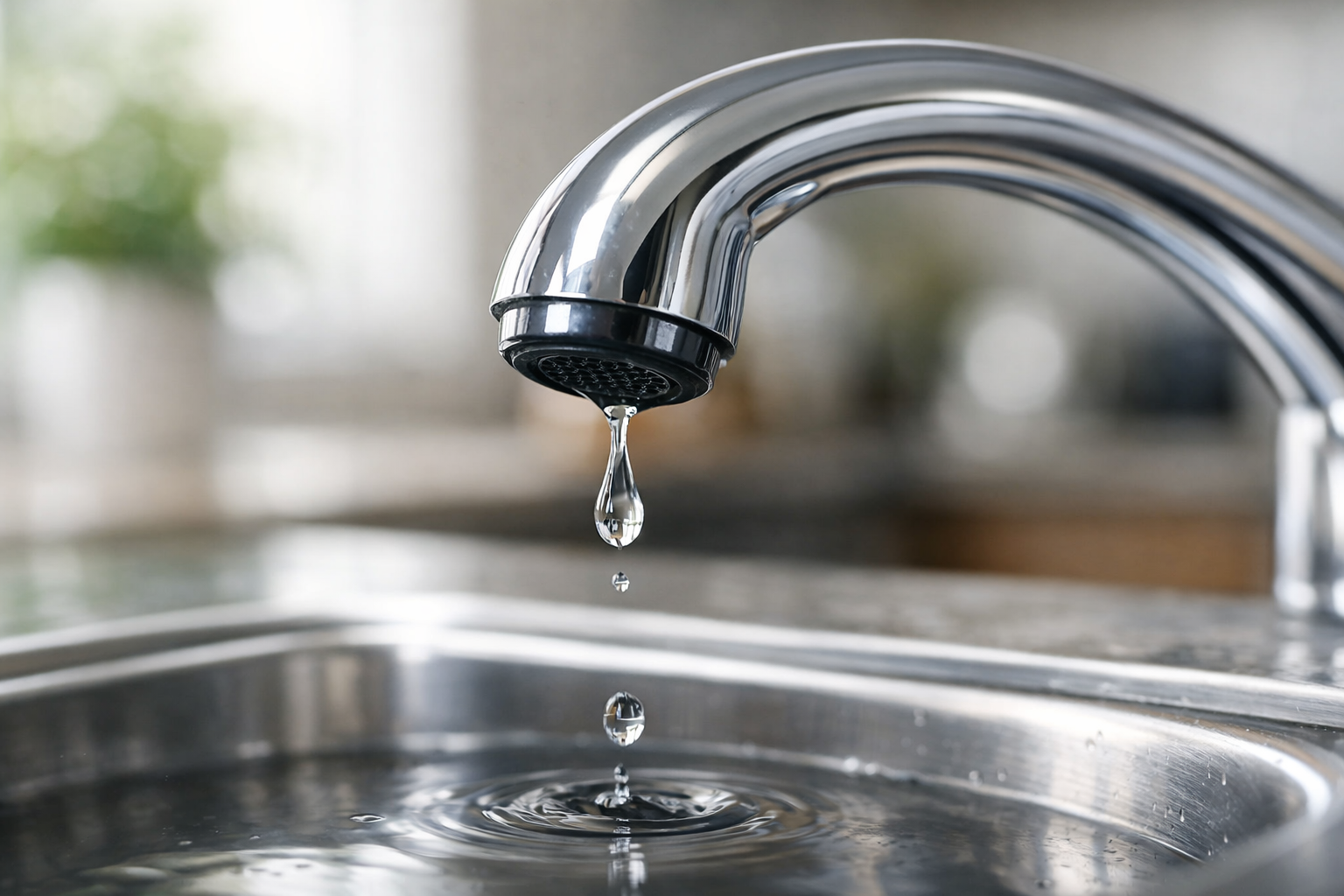

A dripping faucet wastes more than 3,000 gallons of water per year and can add $20 or more to your monthly water bill. The fix is almost always a worn cartridge, washer, or O-ring — parts that cost under $10 and take 20-30 minutes to replace with basic tools.
What You'll Need
🛠 Tools
📦 Materials
Step-by-Step Instructions
Identify Your Faucet Type
Before disassembling anything, determine which of the four faucet types you have: ball-type (single handle that moves over a rounded ball), cartridge (single or double handle with a cylindrical cartridge inside), ceramic disc (single lever over a wide cylindrical body), or compression (two separate handles that tighten down to close). The faucet type determines which internal parts you'll replace. Check the manufacturer name printed on the faucet body or spout — you'll need it to buy the correct replacement parts.
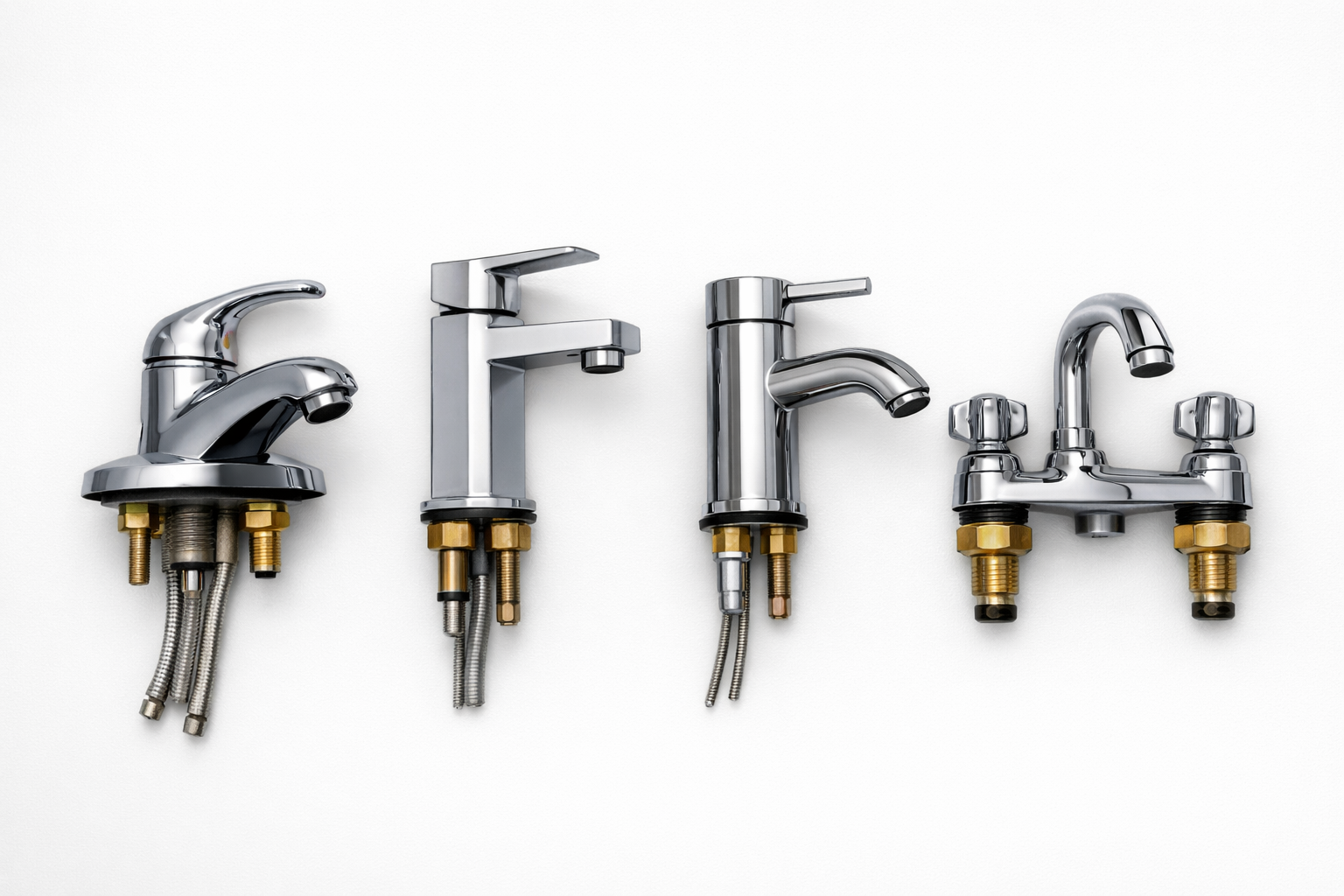
If you can't find the brand name on the faucet, check under the sink for a label on the supply lines, or take a photo and show it to the hardware store staff.
Shut Off the Water Supply
Locate the shut-off valves beneath the sink — there should be one for hot and one for cold. Turn both valves fully clockwise until they stop. If your sink doesn't have dedicated shut-off valves, turn off the main water supply for the house. Open the faucet handles to release any remaining water pressure and drain the lines completely.
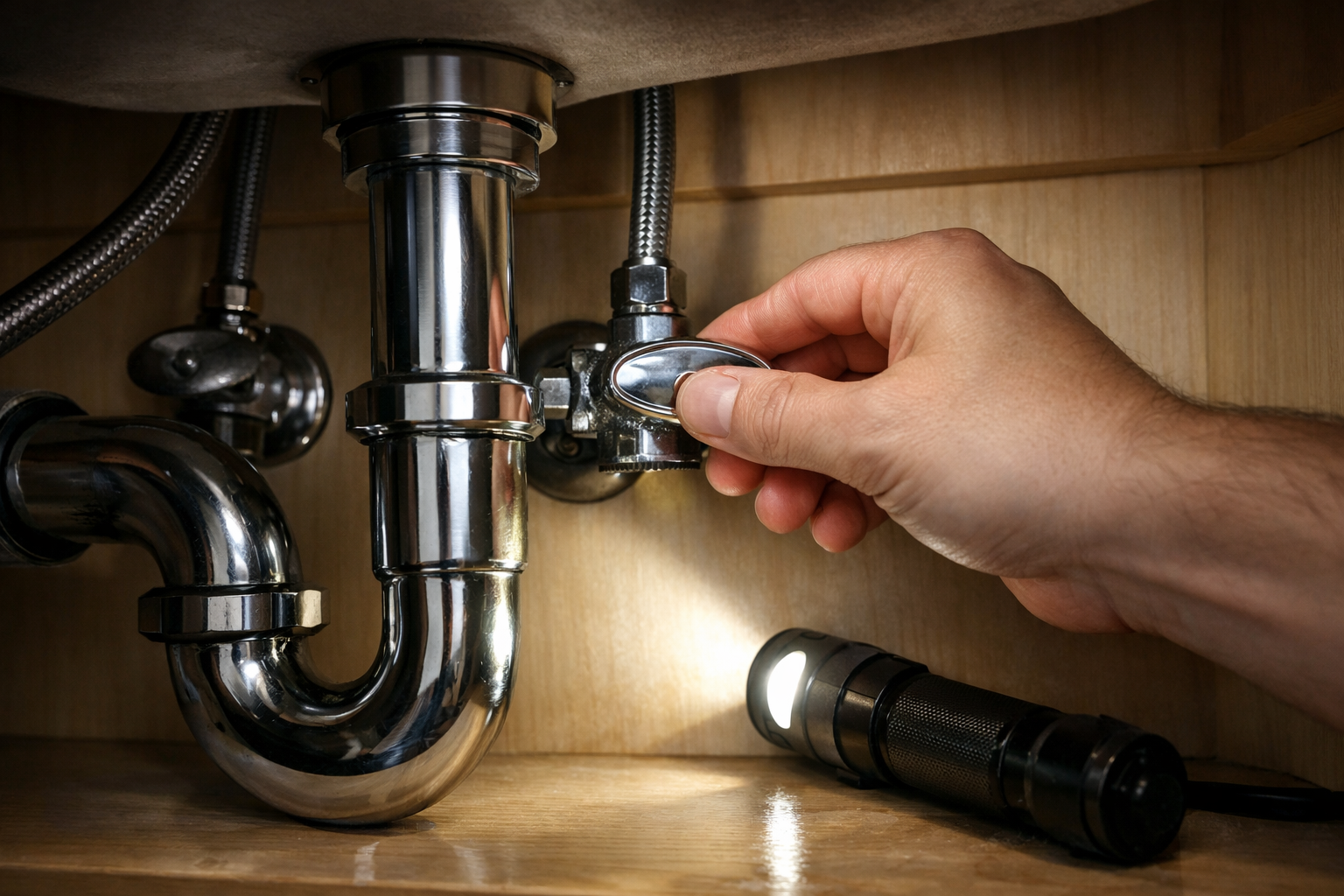
Place a towel or rag in the sink basin to cover the drain. This prevents small screws, O-rings, and clips from falling down the pipe during disassembly.
Remove the Faucet Handle
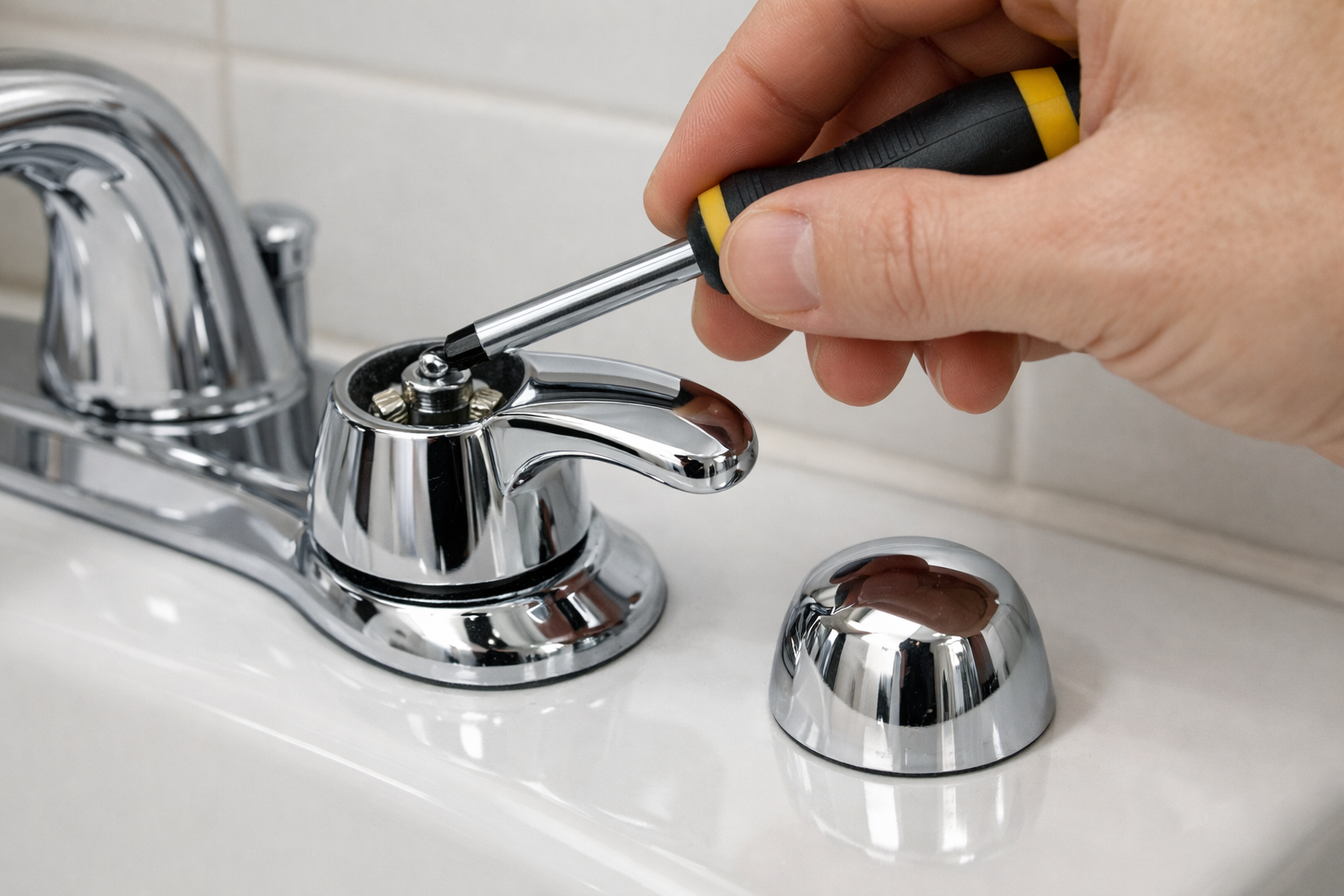
Most handles have a decorative cap on top — pry it off gently with a flat-head screwdriver to reveal the handle screw underneath. Remove the screw (Phillips-head or Allen key, depending on the brand) and pull the handle straight up. If the handle is stuck from mineral buildup, wrap it with a vinegar-soaked cloth for 15 minutes to dissolve deposits, then try again with gentle wiggling.
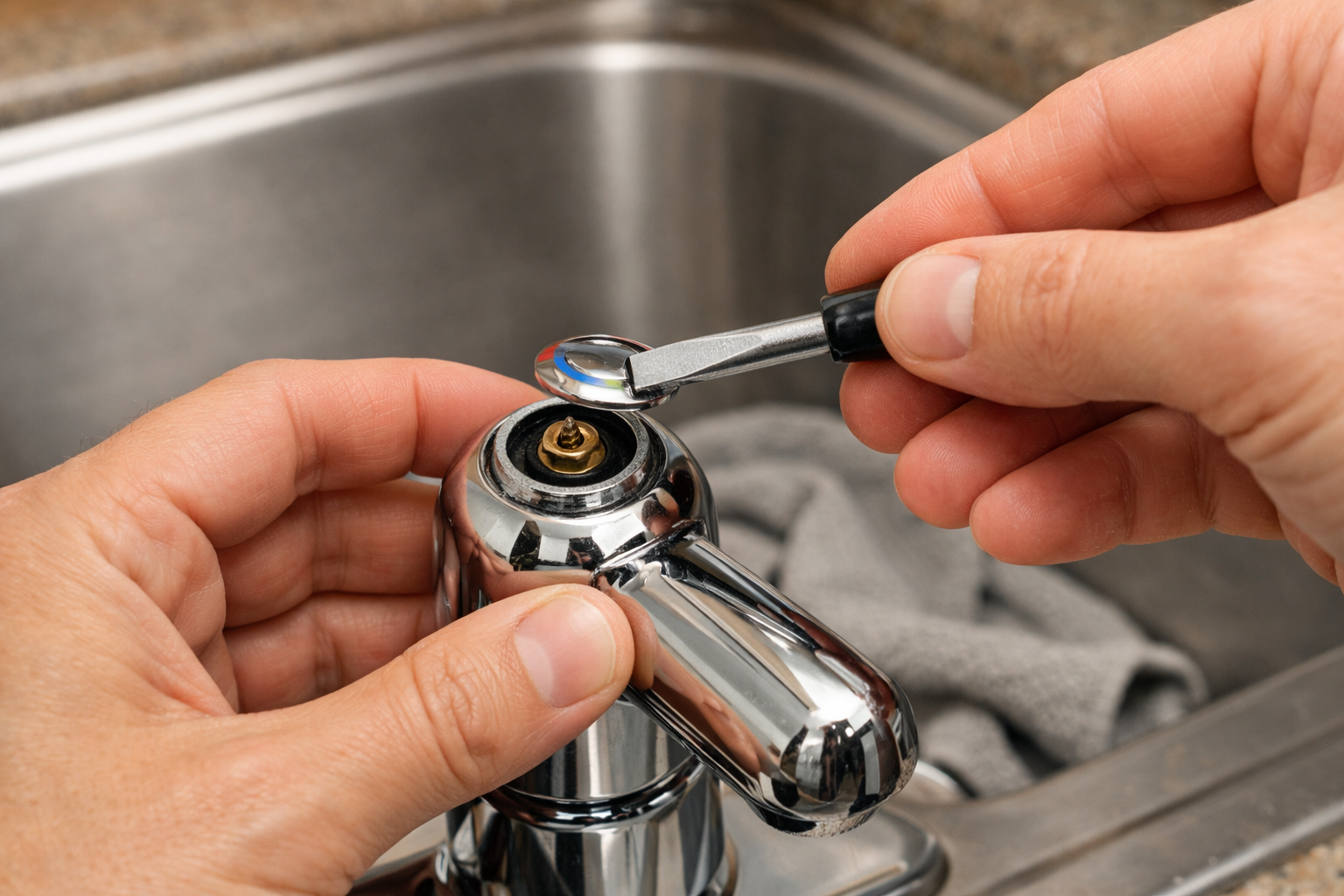
Take a photo of each stage as you disassemble. The reassembly order matters, and a quick reference photo saves guesswork.
Expose and Remove the Cartridge or Stem
With the handle off, you'll see the internal mechanism. For cartridge faucets, use needle-nose pliers to pull out the retaining clip (a small brass or plastic C-clip), then grip the cartridge and pull straight up with firm, even pressure. For compression faucets, use an adjustable wrench to unscrew the packing nut counterclockwise, then unthread the stem. Note the exact orientation of the cartridge before removal — the tabs or notches must go back the same way.
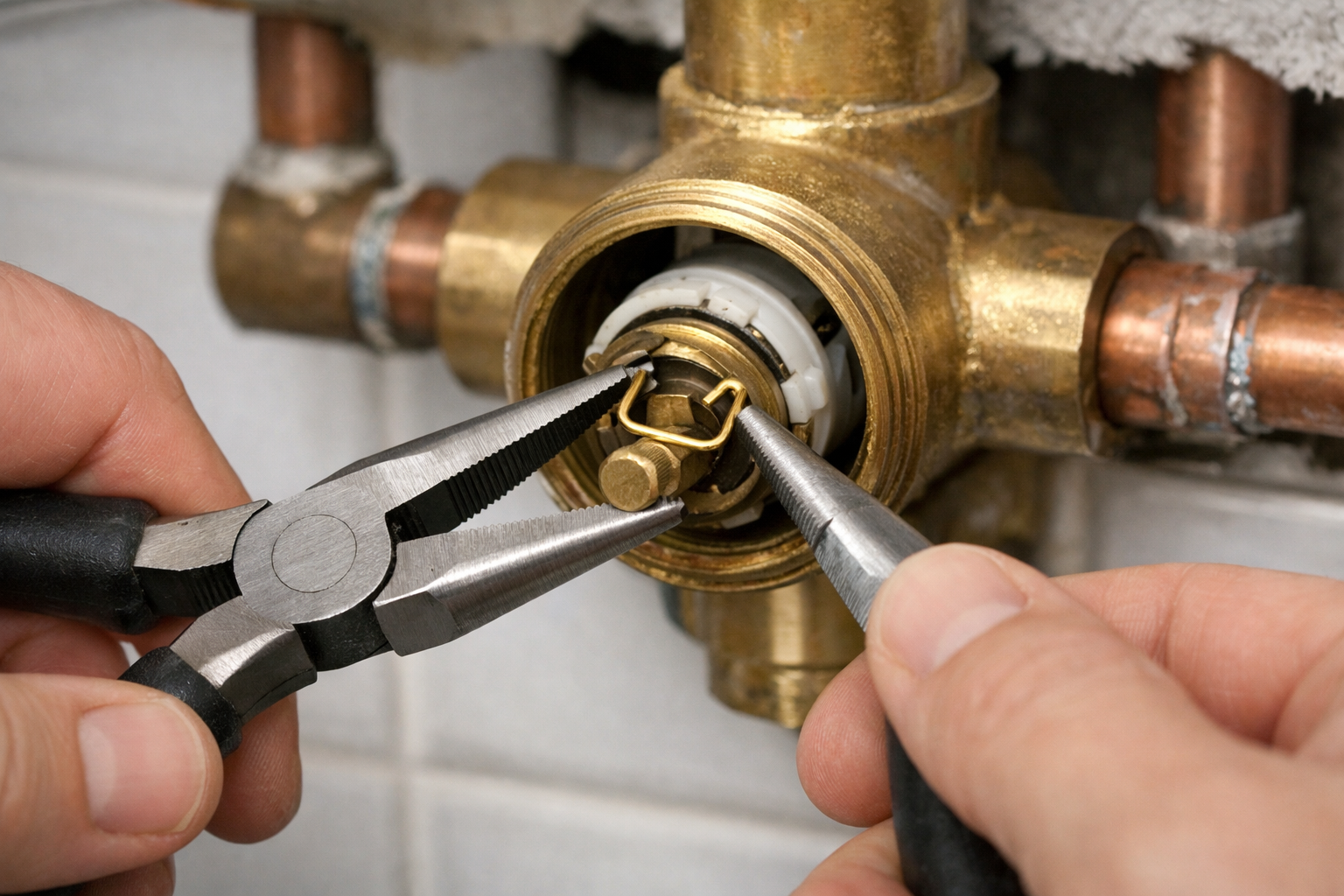
If the cartridge feels frozen in place, do not force it with pliers. Use a cartridge puller tool ($10-15 at hardware stores) to avoid cracking the cartridge body or damaging the brass valve seat — a much more expensive repair.
Inspect and Identify Worn Parts
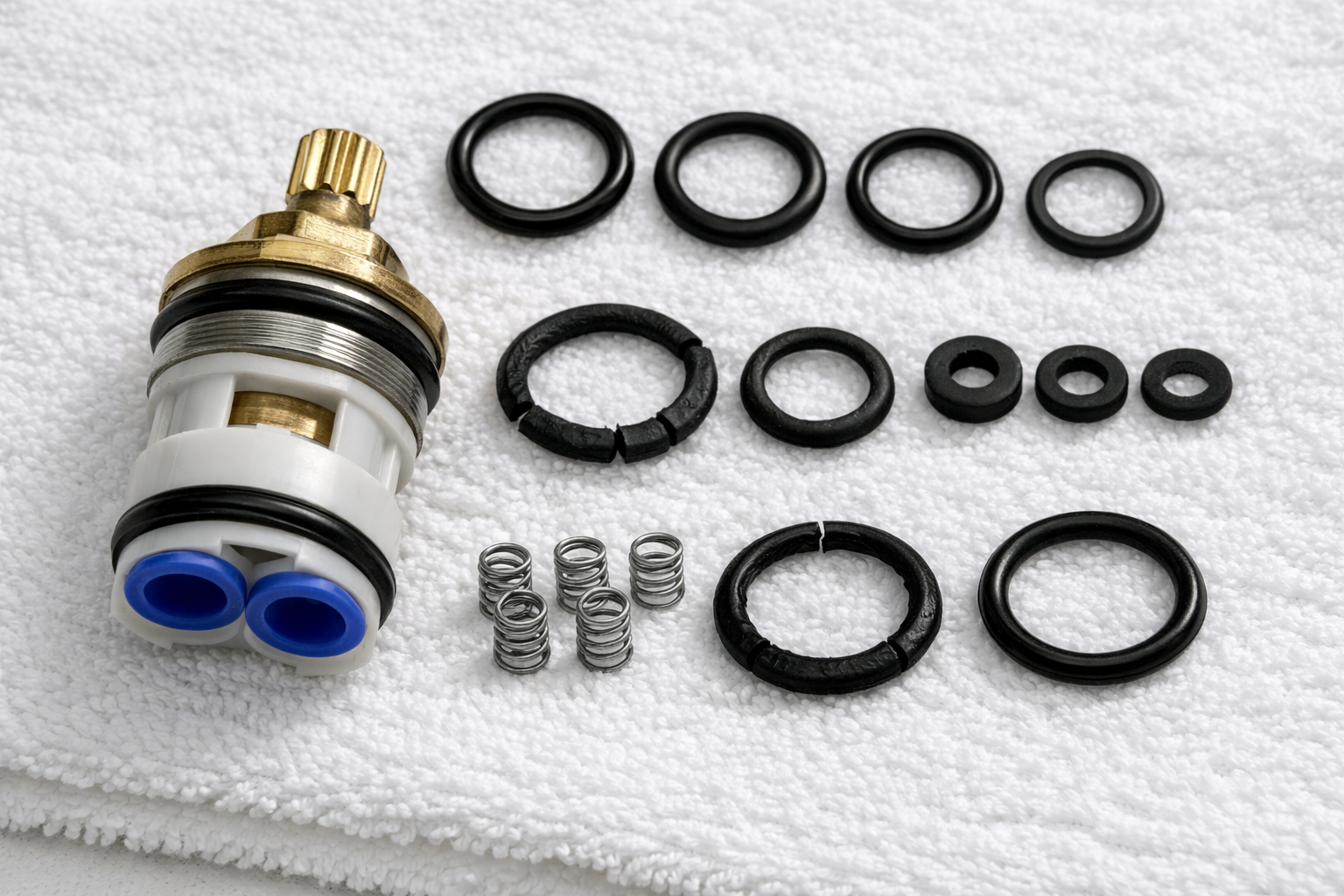
Examine the removed cartridge, washers, and O-rings closely. Look for flattening, cracking, tears, or visible indentation on rubber washers. O-rings that feel stiff, cracked, or compressed have lost their seal. For ball-type faucets, inspect the rubber valve seats and springs inside the faucet body — these are the most common failure points. Clean any mineral buildup from the valve seat inside the faucet body using white vinegar and a soft cloth.
Buy the Correct Replacement Parts
Take the old cartridge or worn parts to the hardware store for an exact match. Most major brands (Moen, Delta, Kohler, American Standard) sell branded replacement cartridges and repair kits. Search for the faucet brand plus model number printed on the faucet body. For ball-type faucets, buy a complete repair kit that includes the ball, springs, seats, and O-rings — it's only a few dollars more than individual parts and ensures everything is fresh.
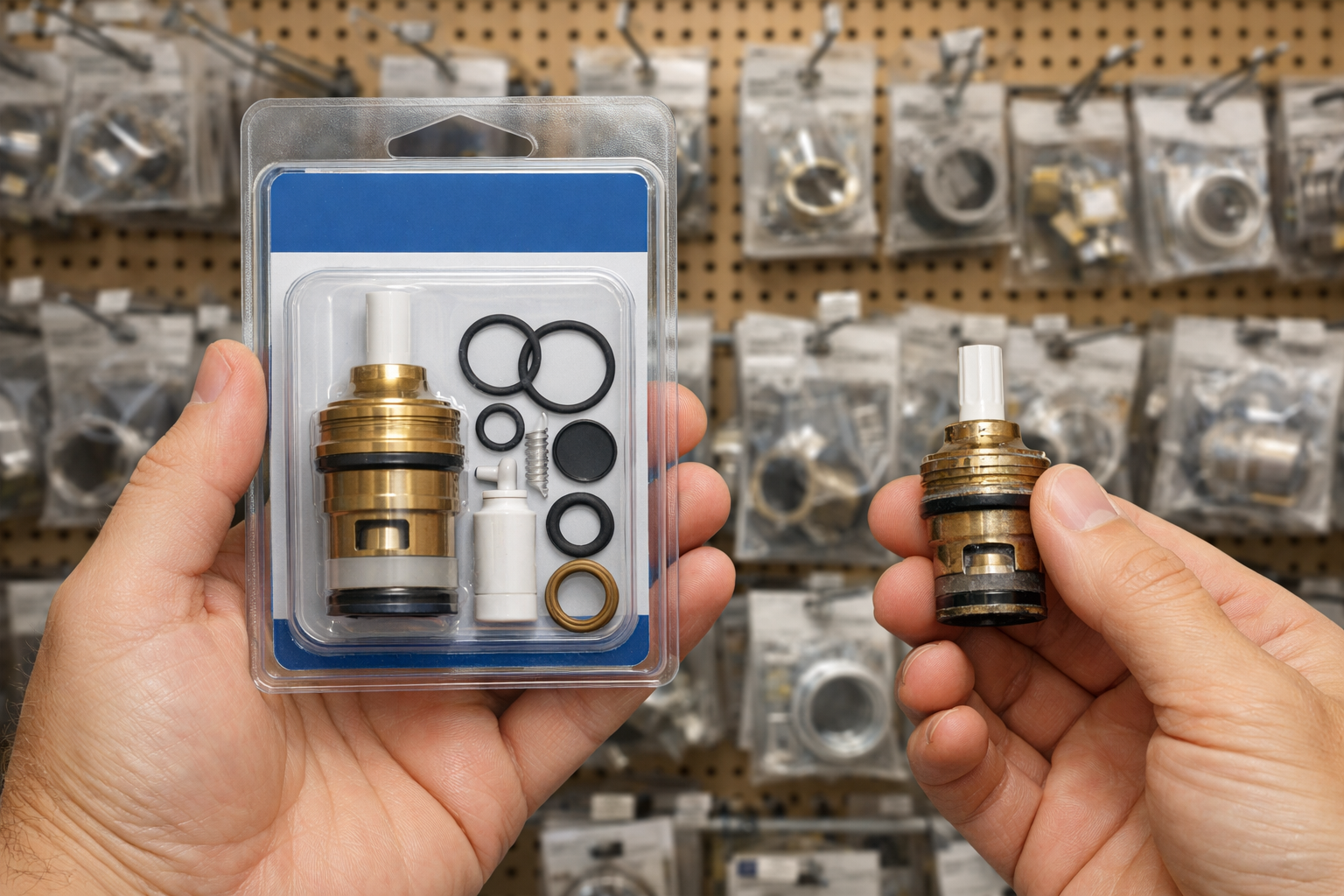
Having a photo of the old cartridge on your phone saves enormous time at the hardware store. Generic "universal" parts often don't fit precisely — brand-specific replacements are worth the extra dollar or two.
Install New Parts
Apply a thin coat of silicone-based plumber's grease to all new O-rings and the outside of the new cartridge. For cartridge faucets, align the tabs with the notches in the faucet body and press the cartridge firmly downward until fully seated, then reinstall the retaining clip. For compression faucets, place the new washer on the stem, tighten the brass screw to hold it, and thread the stem back in. Wrap any threaded connections with one or two turns of Teflon tape.
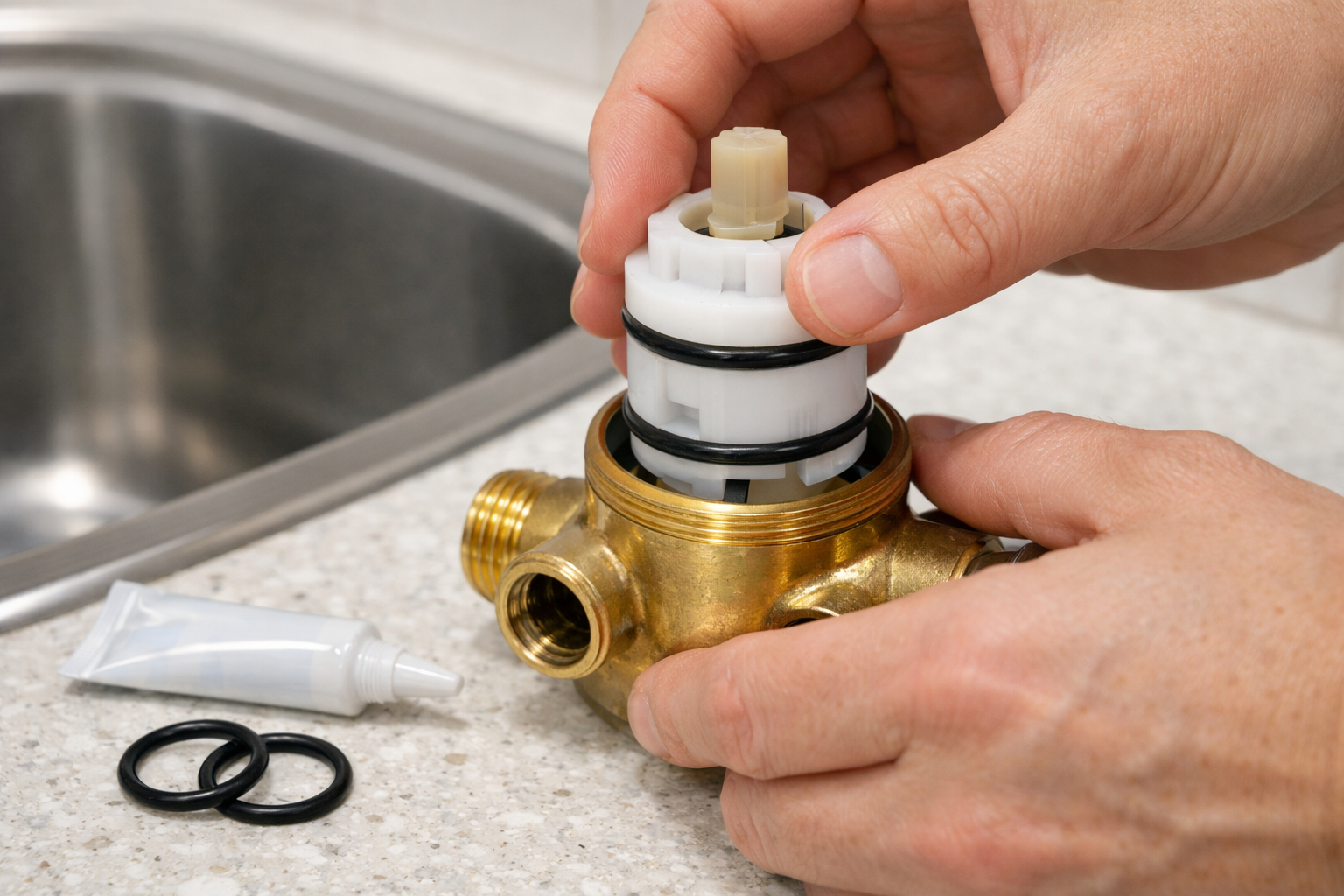
Never use petroleum jelly (Vaseline) on plumbing O-rings — it degrades rubber over time. Always use silicone-based plumber's grease, which is safe for rubber and plastic.
Reassemble the Faucet
Replace the handle by sliding it back onto the stem and tightening the handle screw snugly — firm but not overtightened, as excessive torque can crack the handle or strip the screw. Snap or press the decorative cap back into place. Tighten all connections hand-tight plus a quarter turn with a wrench. Wrap your wrench jaws with a cloth or painter's tape to avoid scratching the faucet finish.
Restore Water and Test
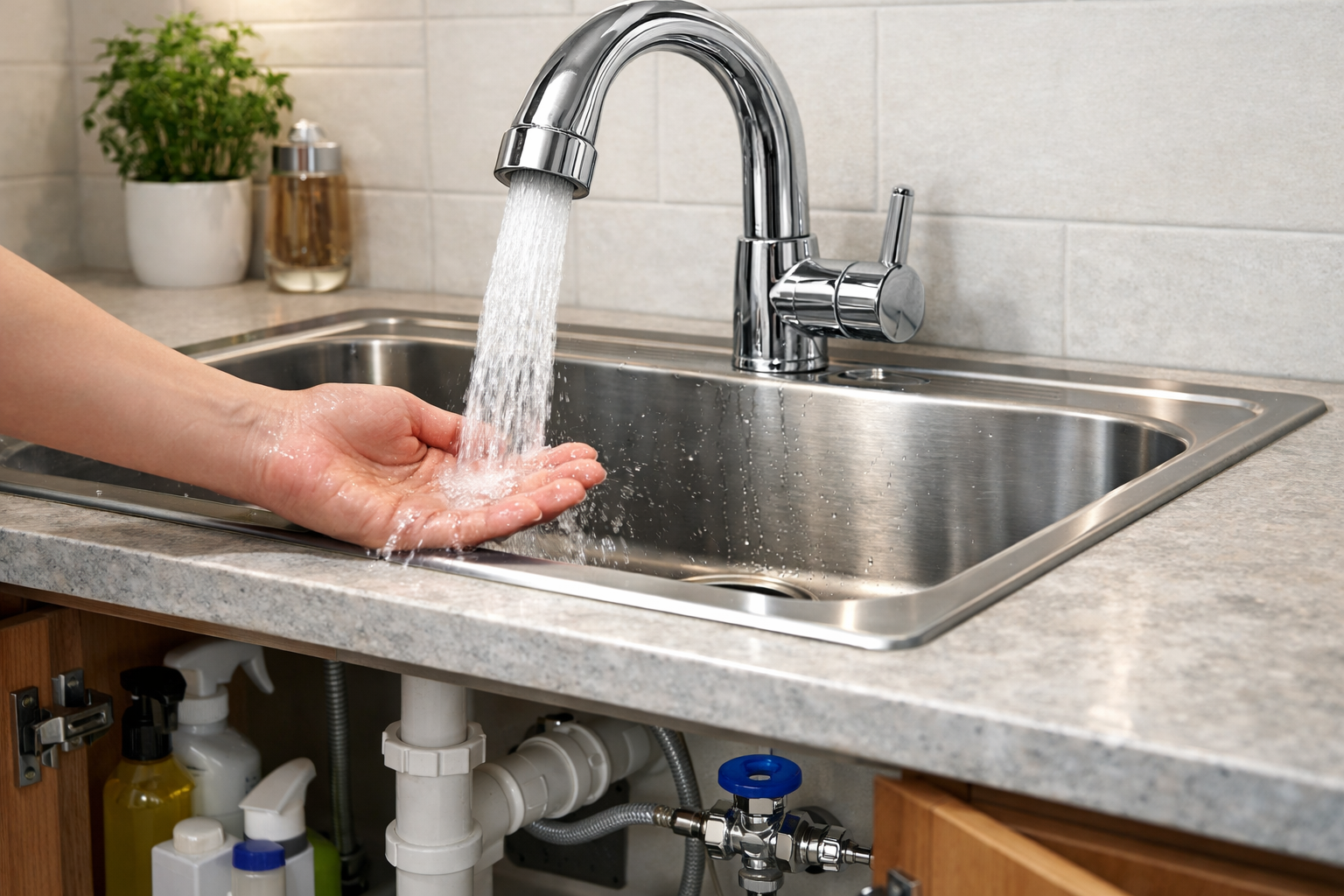
Slowly open the shut-off valves — turn them gradually over 10-15 seconds to prevent water hammer (a sudden banging in the pipes). Let water run for 30 seconds to flush any debris. Turn the faucet fully off and watch the spout for 60 seconds. Zero drips means success. Check under the sink around the supply line connections for any moisture.
If there's still a slight drip after replacing the cartridge, the valve seat inside the faucet body may be pitted or worn. A valve seat wrench ($8) can resurface it in minutes, or a replacement seat runs about $5.
Frequently Asked Questions
How much water does a dripping faucet actually waste?
+
More than 3,000 gallons a year from a single steady drip, which can add $20 or more to a monthly water bill. That is why this repair pays for itself almost immediately — the replacement part is usually under $10. It is also the reason a drip is worth fixing promptly rather than living with it.
How do I tell what type of faucet I have?
+
There are four. A ball-type has a single handle that pivots over a rounded ball. A cartridge type has one or two handles over a cylindrical cartridge. A ceramic disc has a single lever above a wide cylindrical body. A compression faucet has two separate handles that tighten down to close. The type dictates which internal part fails and what you buy, so check the manufacturer name on the body or spout before shopping.
Do I need to shut off the main water to fix a dripping faucet?
+
Usually not. Most sinks have their own hot and cold shut-off valves underneath — turn both fully clockwise, then open the faucet to bleed off the remaining pressure. Only fall back to the main if the sink has no dedicated shut-offs, or if those valves are seized and will not close.
Why is my faucet still dripping after I replaced the washer?
+
Two usual reasons. First, you may have replaced the wrong part for your faucet type — a cartridge or ceramic-disc faucet does not seal with a washer at all. Second, the valve seat inside the faucet body may be pitted or crusted with mineral scale, so a brand-new washer still cannot seat against it; clean that surface with white vinegar and a soft cloth. On ball-type faucets, check the rubber seats and springs in the body, which are the most common failure point.
Should I keep small parts from falling down the drain?
+
Cover the drain before you start — a towel or rag pressed into the basin opening is enough. Faucet repairs involve small screws, clips, O-rings, and springs, and losing one down the drain turns a 30-minute job into a trip to the hardware store or a pulled trap.
Sources & further reading
- Fix a Leak Week — U.S. EPA WaterSense
- Plumbing Repairs & How-Tos — This Old House
More Plumbing Guides
View all →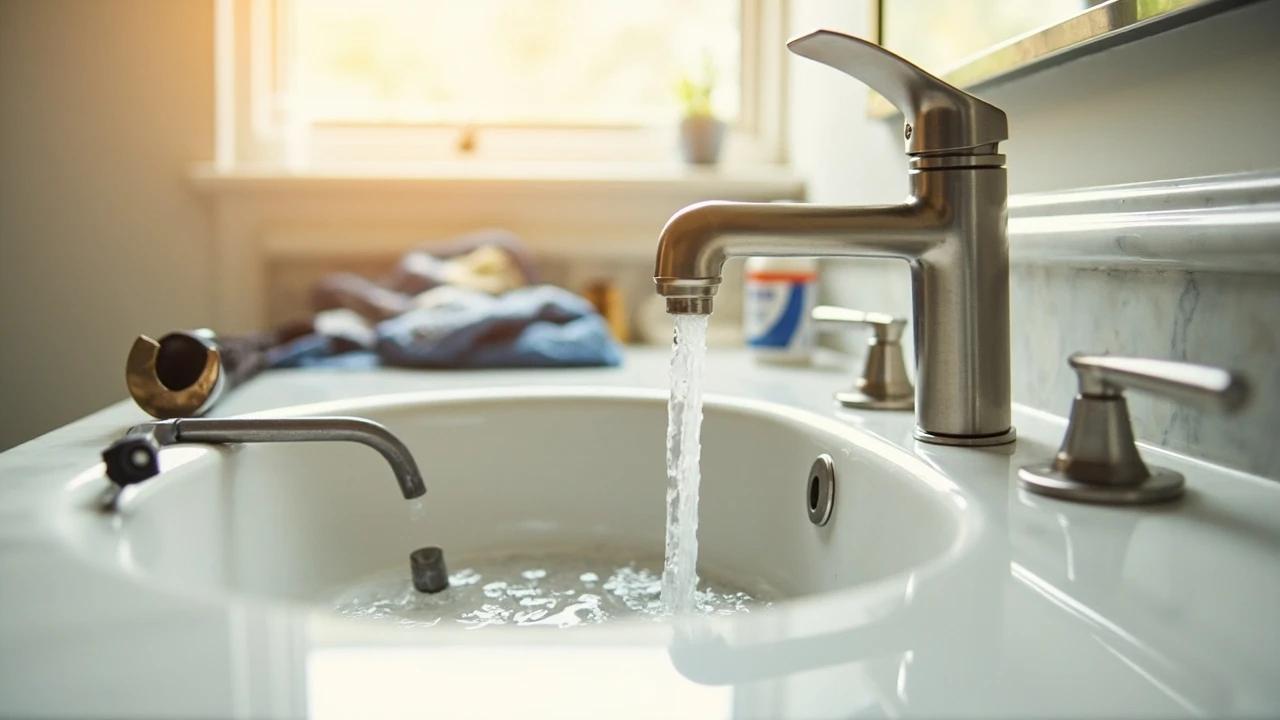 Easy1h 15m
How to Replace a Bathroom Faucet
Swapping a tired bathroom faucet for a fresh one is one of the highest-impact DIY upgrades in the house — a $60 to $150 fixture and 60 to 90 minutes of work transforms how a bathroom feels and quietly fixes years of drips, mineral staining, and a wobbly handle. The single trick that separates a 90-minute project from a four-hour Saturday is owning a basin wrench (about $15); without one, the mounting nuts six inches up inside the cabinet are essentially out of reach.
 Easy30 min
How to Replace a Shower Head and Shower Arm
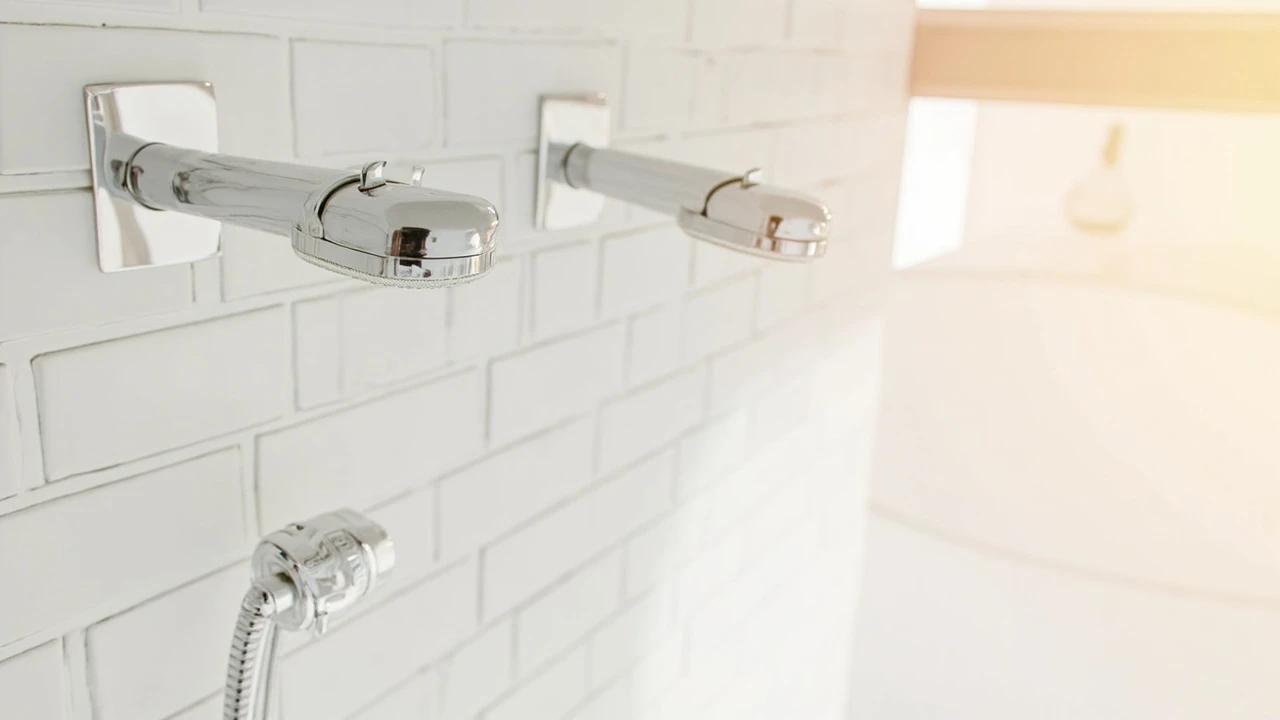
Swapping just the shower head is a 10-minute job, but if the arm (the pipe curving out of the wall) is corroded, leaking, or the wrong length for a new rain head, you'll want to replace both. The whole job costs under $50 and takes half an hour — the one trick that separates a clean swap from a flooded wall is holding the arm steady so it doesn't snap off inside the tile. This guide covers removing a stuck arm, prepping the in-wall fitting, taping the threads right, and testing leak-free.
 Medium1h 30m
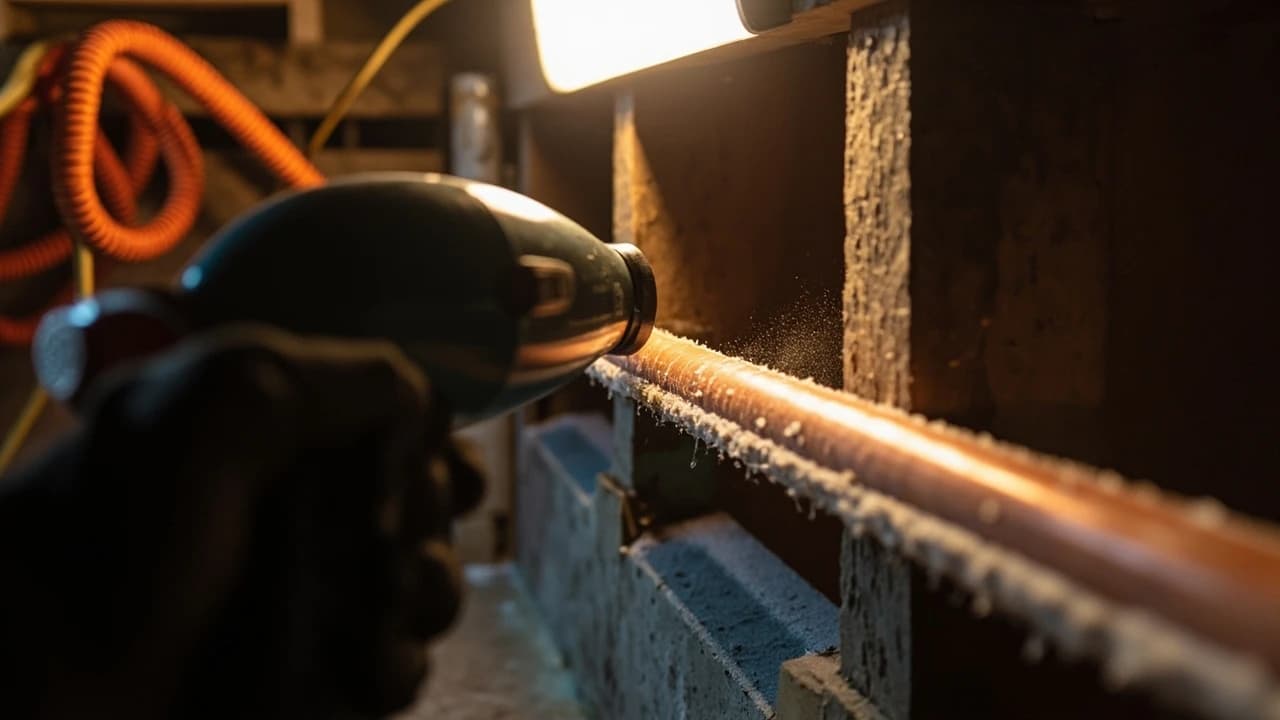
How to Thaw Frozen Pipes Safely
A frozen pipe is a burst pipe waiting to happen — the ice itself rarely splits the metal, but the water pressure trapped between the ice plug and a closed faucet does. This guide covers finding the frozen section, inspecting it for damage before you add any heat, and thawing it with tools you almost certainly already own. Most accessible pipes clear in 30 to 45 minutes.
You Might Also Like
 Medium30 min
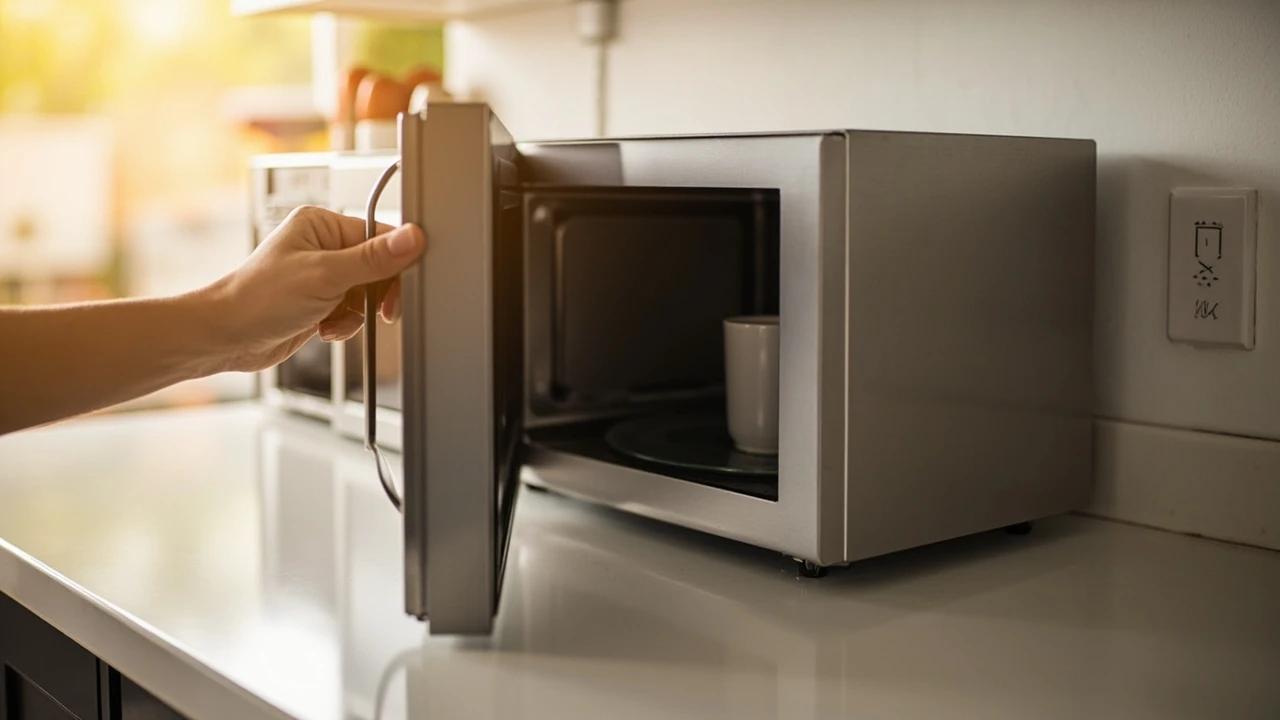
How to Troubleshoot a Microwave That Won't Heat
A microwave that runs — light on, turntable spinning, timer counting down — but leaves food stone cold is one of the most common appliance failures, and about half the time the cause is something you can fix in five minutes for free. This guide walks the diagnosis from the easy stuff (demo mode, power level, a tripped GFCI, a dirty door latch) to reading the failure signature that tells you the high-voltage circuit is gone, then helps you make the repair-or-replace call with real numbers.
 Medium45 min
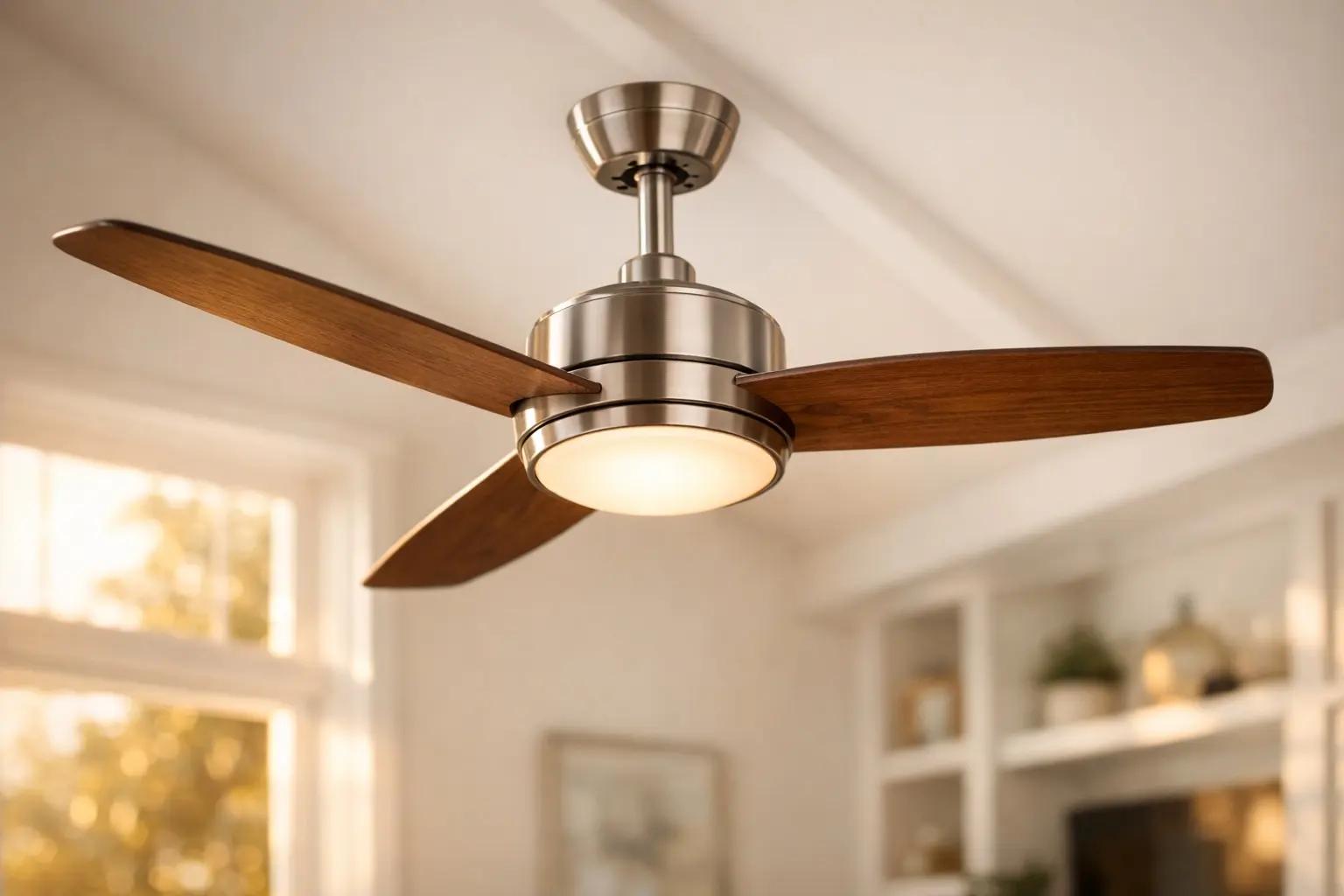
How to Install a Ceiling Fan
Replacing a light fixture with a ceiling fan improves air circulation in summer and can reduce heating costs in winter by circulating warm ceiling air downward. Most installs take 45-60 minutes.
 Easy15 min
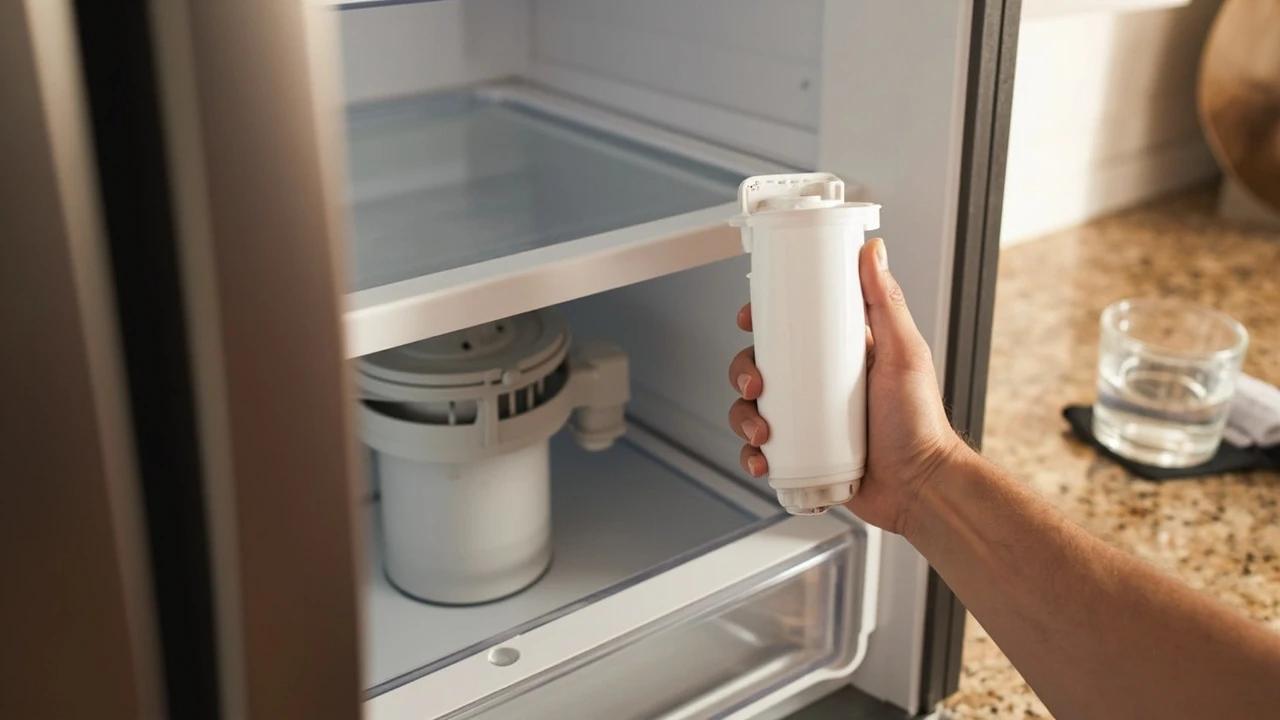
How to Replace a Refrigerator Water Filter
A clogged refrigerator water filter is the most common cause of slow dispensing, off-tasting water, and undersized ice cubes — and it is the easiest fix in your kitchen. Most filters are designed to be swapped in under five minutes with no tools, no shut-off valve, and no spilled water. This guide covers locating your filter, the two common removal styles (twist-in and push-in), inspecting the O-rings, flushing the new filter, and resetting the indicator light so you do not see the red "Replace" warning the next morning.