How to Patch a Hole in Drywall (Any Size)
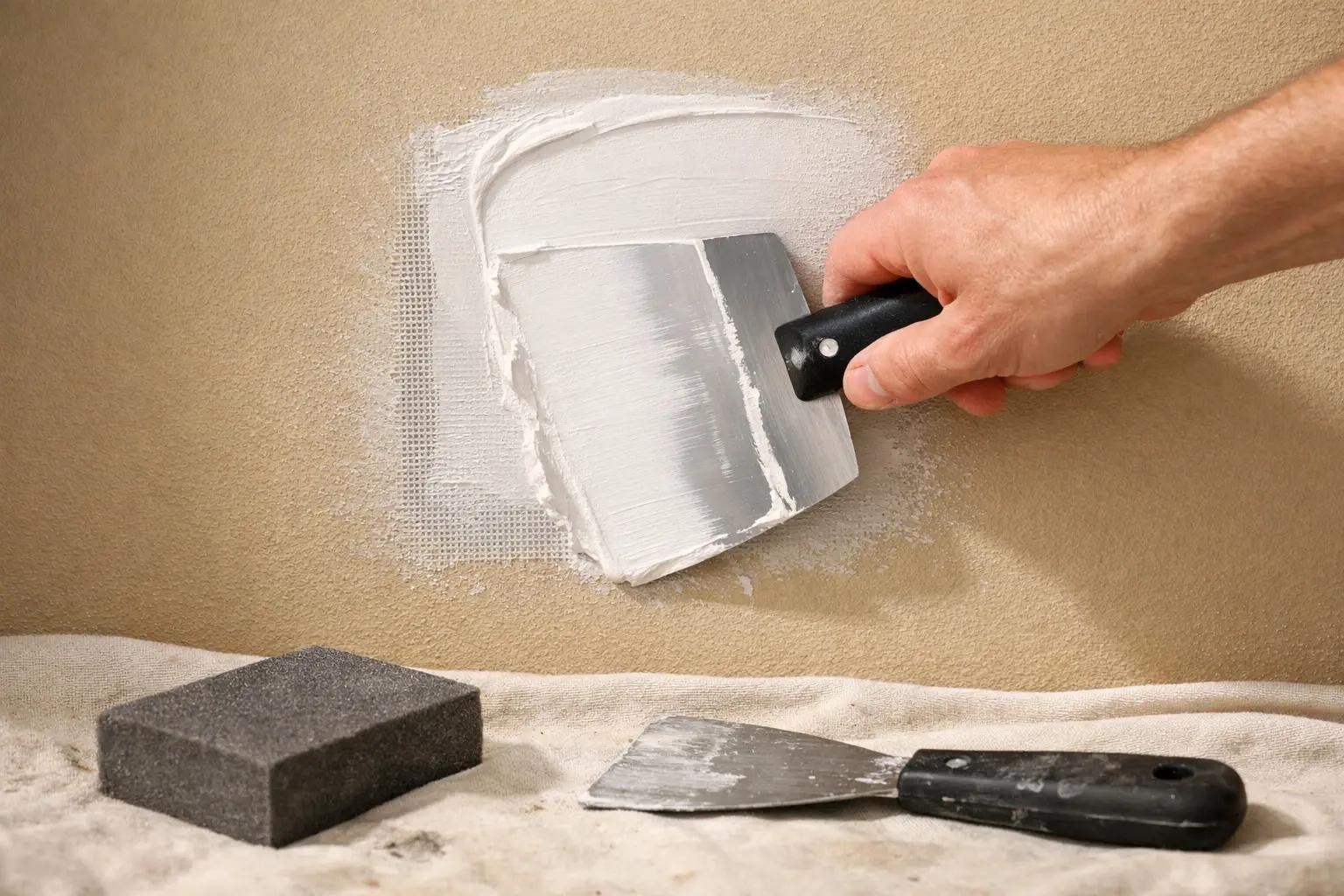

A nail hole, a doorknob punch-through, and a fist-sized hole from moving furniture each need a different repair. Match the hole to the method: spackle under 1/2 inch, a self-adhesive mesh patch up to 4 inches, a California patch from 4 to 8 inches, and a backer strip with a new drywall piece beyond that. Every method finishes with the same thin coats, sanding, and primer, and the materials cost under $40.
What do you need to patch a hole in drywall?
🛠 Tools
📦 Materials
Safety First
- •Wear an N95 dust mask and safety glasses when sanding — drywall dust is fine enough to irritate your lungs and eyes.
- •Before cutting into a wall, check behind the hole for wires, pipes, and ducts with a flashlight or a stud finder that detects live wires.
How do you patch a hole in drywall?
Measure the hole and choose your method
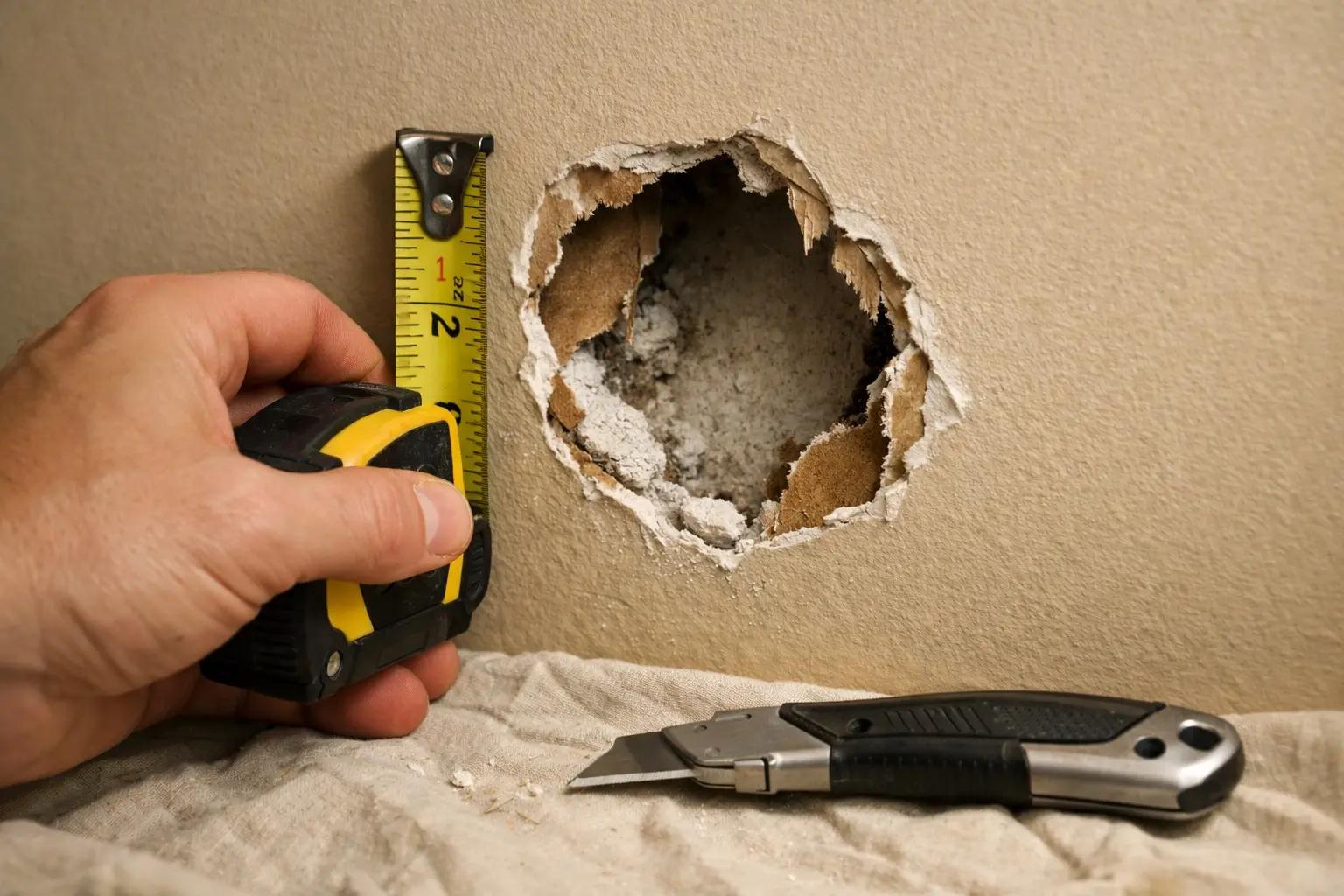
Measure the hole at its widest point, then match it to a method. Nail holes and dings under 1/2 inch need only spackle and a putty knife (step 3). Holes from 1/2 inch to about 4 inches take a self-adhesive mesh patch (step 4). Holes from 4 to 8 inches get a California patch, a piece of scrap drywall with a built-in paper border (steps 5-7). Anything larger than 8 inches needs a backer strip and a new piece of drywall screwed in place (step 8). Steps 9-12 finish every method the same way: thin coats, sanding, primer, and paint. Lay a drop cloth below the work area to catch dust and compound drips. If the hole has ragged edges, use a utility knife to trim any loose paper or crumbling gypsum so you have a clean, stable edge to work from.
Check behind the wall and square up the edges
Nail holes and spackle repairs skip this step. For anything bigger, ragged edges weaken the patch, so use a utility knife or drywall saw to cut the hole into a clean rectangle or square — give yourself straight edges to work against. Before sawing deep, peek behind the hole with a flashlight (or push a phone in for a photo) to check for electrical wires, plumbing, or HVAC ducts. Studs typically run 16 inches on center; you want to cut between studs, not through them.
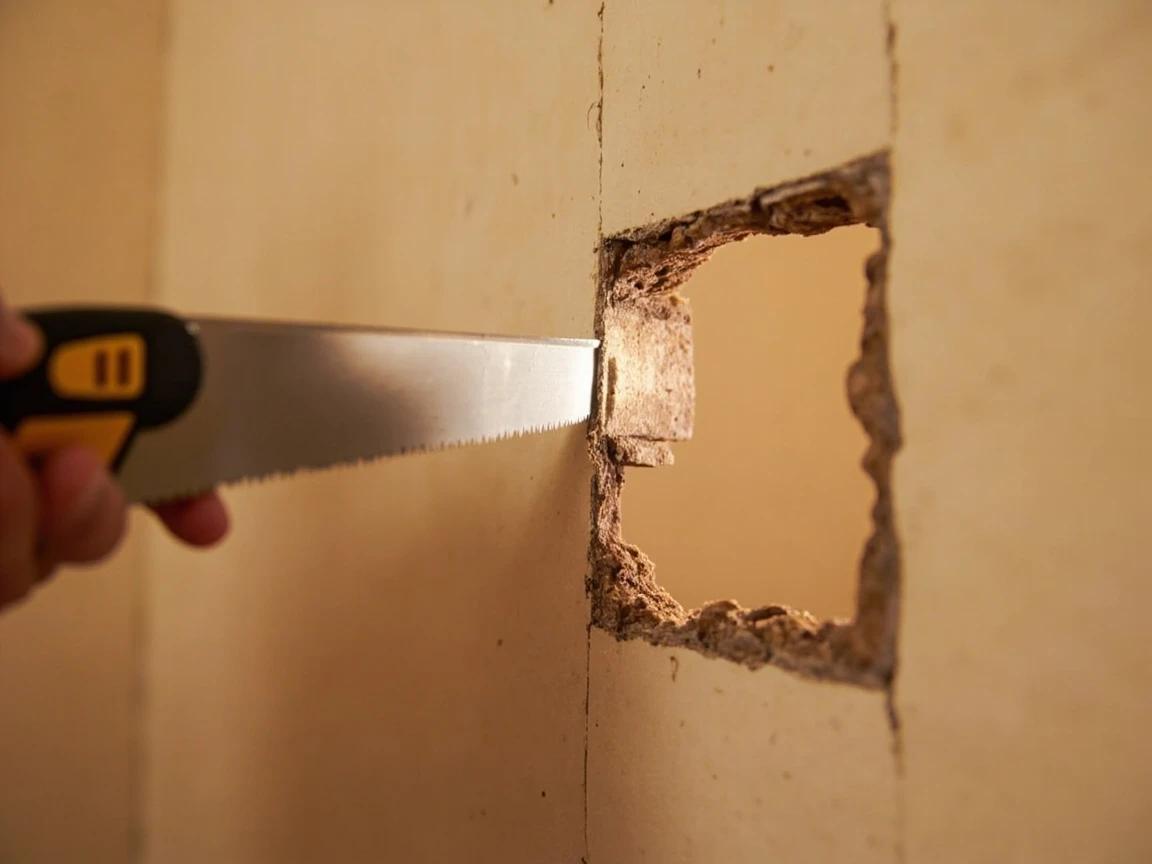
Never plunge a saw into a wall blind. A stud finder with live-wire detection (about $25) or a quick look through the existing hole with a phone flashlight catches the wires and pipes that turn a $25 repair into a $500 utility fix.
Spackle method (under 1/2 inch): press it in, then drag it flat
Run the edge of the putty knife around the hole to flatten any drywall paper that's poking out, and brush away loose gypsum dust with a rag. Scoop a dab of lightweight spackle onto the corner of the knife — about the size of a dime is plenty for a nail hole. Press it firmly into the hole at a 45-degree angle so the spackle is forced into the cavity, then drag the knife across the hole at a flatter 15-20° angle to scrape the surface flush with the wall. Fast-dry color-change spackle is ready when the pink turns fully white, usually about 30 minutes at room temperature; standard lightweight spackle needs 1-2 hours. If the patch sank as it dried, drag a very thin second coat across with the knife held nearly flat and let it dry the same way. Then skip to step 11.
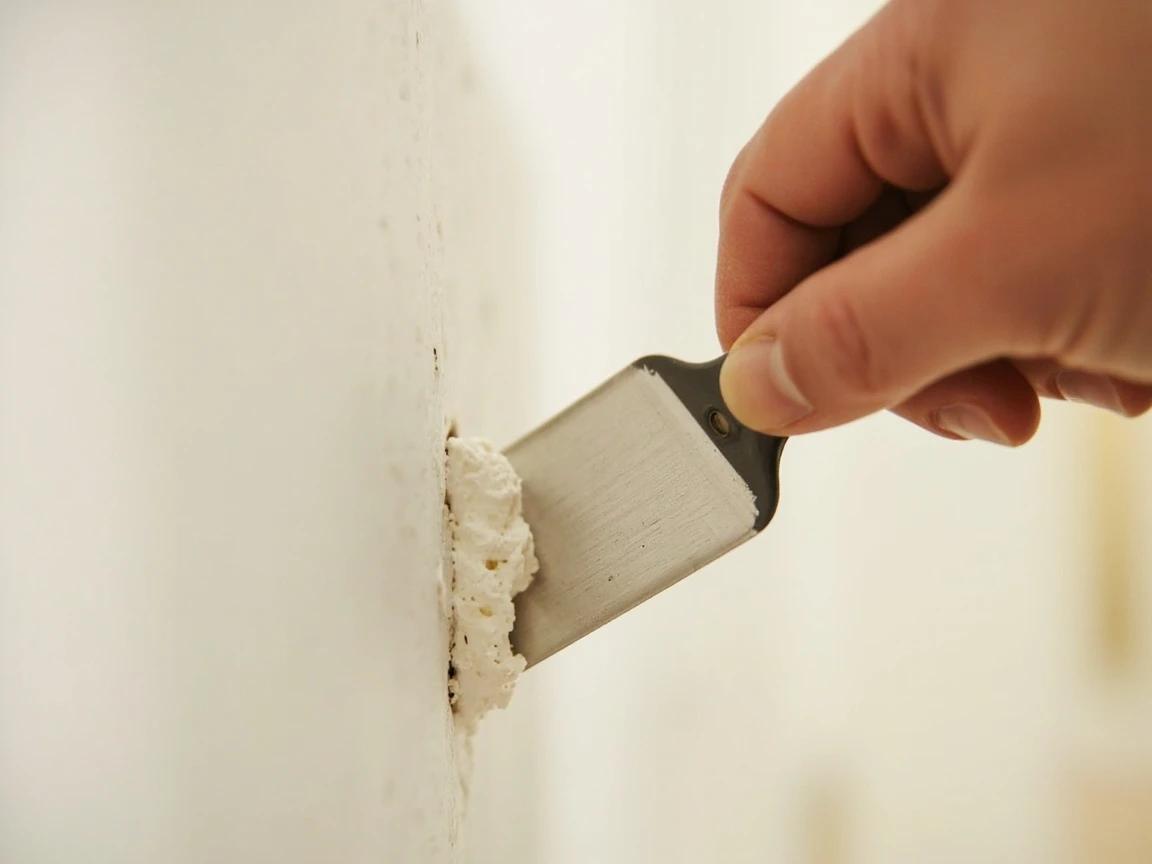
Less is more. A thin coat that needs a second pass will sand much smoother than one thick blob that cracks as it dries.
Mesh method (1/2 to 4 inches): peel and stick the patch
If you chose the mesh method, the patch does most of the work. Peel the backing off a self-adhesive fiberglass mesh patch sized at least 1 inch bigger than the hole on all sides, center it over the squared-up hole, and press the adhesive border firmly onto the surrounding drywall. The mesh bridges the opening; the adhesive holds it to the wall. Skip to step 9 (first coat of compound).
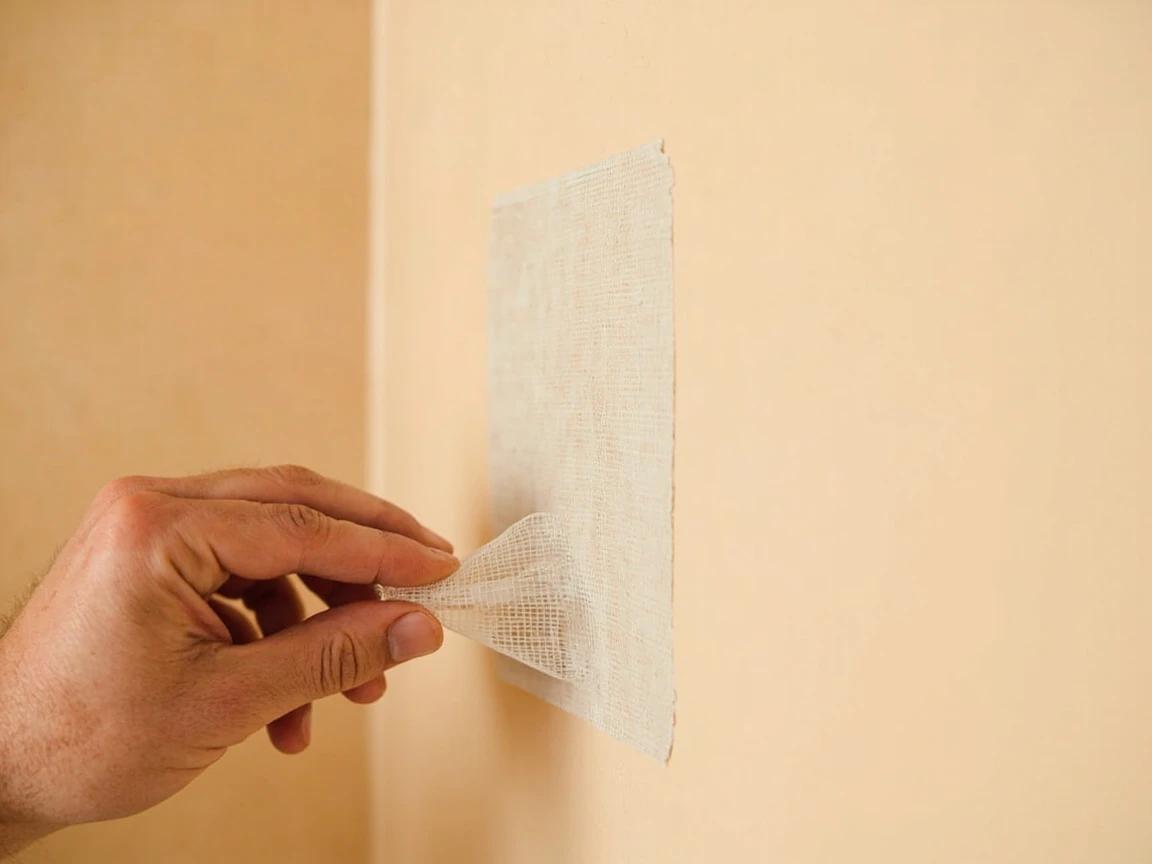
Press the adhesive border firmly with a putty knife, not just your fingers. The harder you press, the better the bond — and the less likely the mesh edge telegraphs through the finished compound.
California method (4 to 8 inches): cut a scrap with a paper border
Cut a scrap of 1/2-inch drywall (match your wall thickness) about 3 inches wider and taller than your hole (1.5 inches extra on every side). Flip it over (paper-side down). With a sharp utility knife, score a square on the BACK that's exactly the size of the wall hole, 1.5 inches in from each edge. Snap the gypsum off the back along your score lines so the center gypsum stays attached and the outer 1.5 inches becomes a paper-only flap on all sides. The paper border replaces tape.
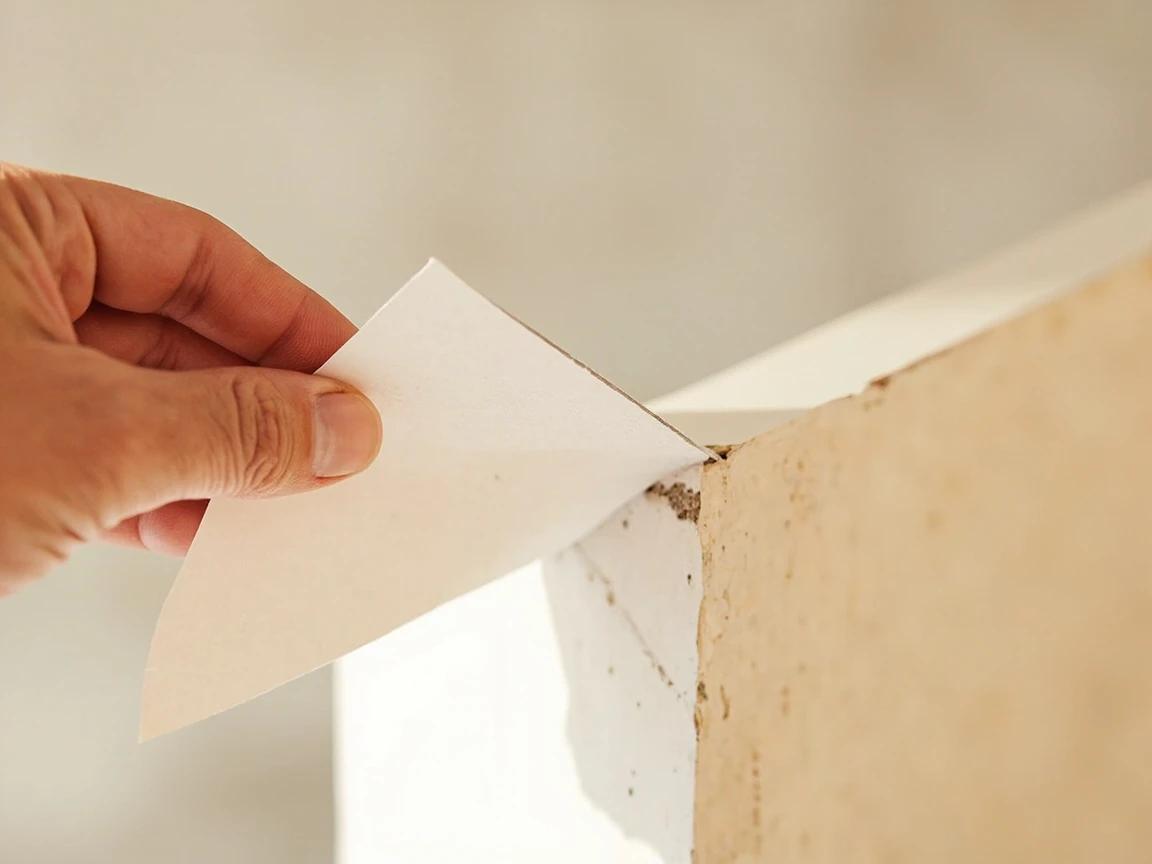
California method: trace and trim the wall hole to fit
Hold the patch flat against the wall, gypsum side toward the wall, with the paper border flat against the surface. Trace around just the gypsum square (not the paper border) with a pencil onto the wall. Set the patch aside and use a drywall saw to cut along your traced line, opening the wall hole to match the gypsum exactly. Test-fit the patch — the gypsum center should drop snug into the hole while the paper border lies flat on the surrounding wall.
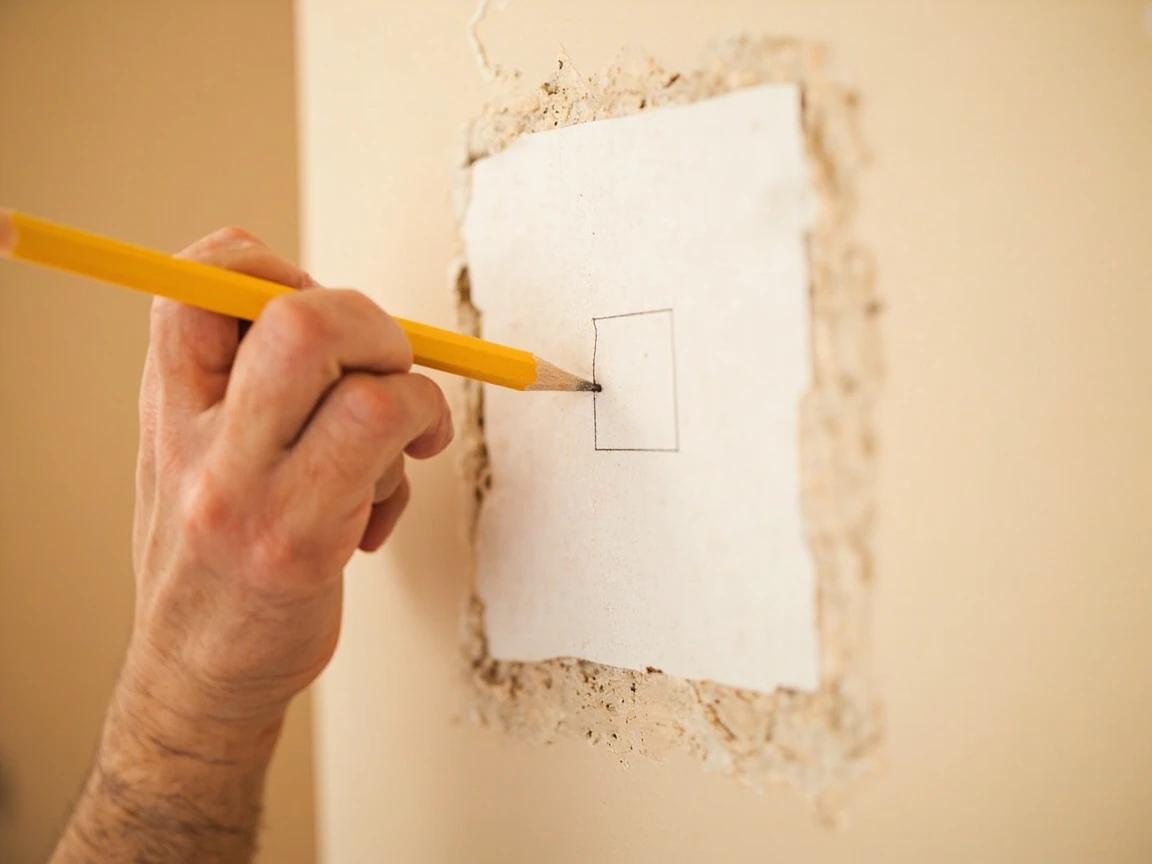
If the gypsum center doesn't drop in, don't force it — shave the wall hole a hair wider with the utility knife. The gypsum should sit flush with the wall surface, not proud and not sunken.
California method: butter and embed the patch
Load your 6-inch drywall knife with joint compound and butter a generous layer onto the wall around the hole, where the paper border will sit. Press the patch into place — gypsum into the hole, paper border into the wet compound. Smooth the paper firmly with the knife, working from the center outward to push out air bubbles and excess compound. Wipe excess and let it set up before adding more compound on top.
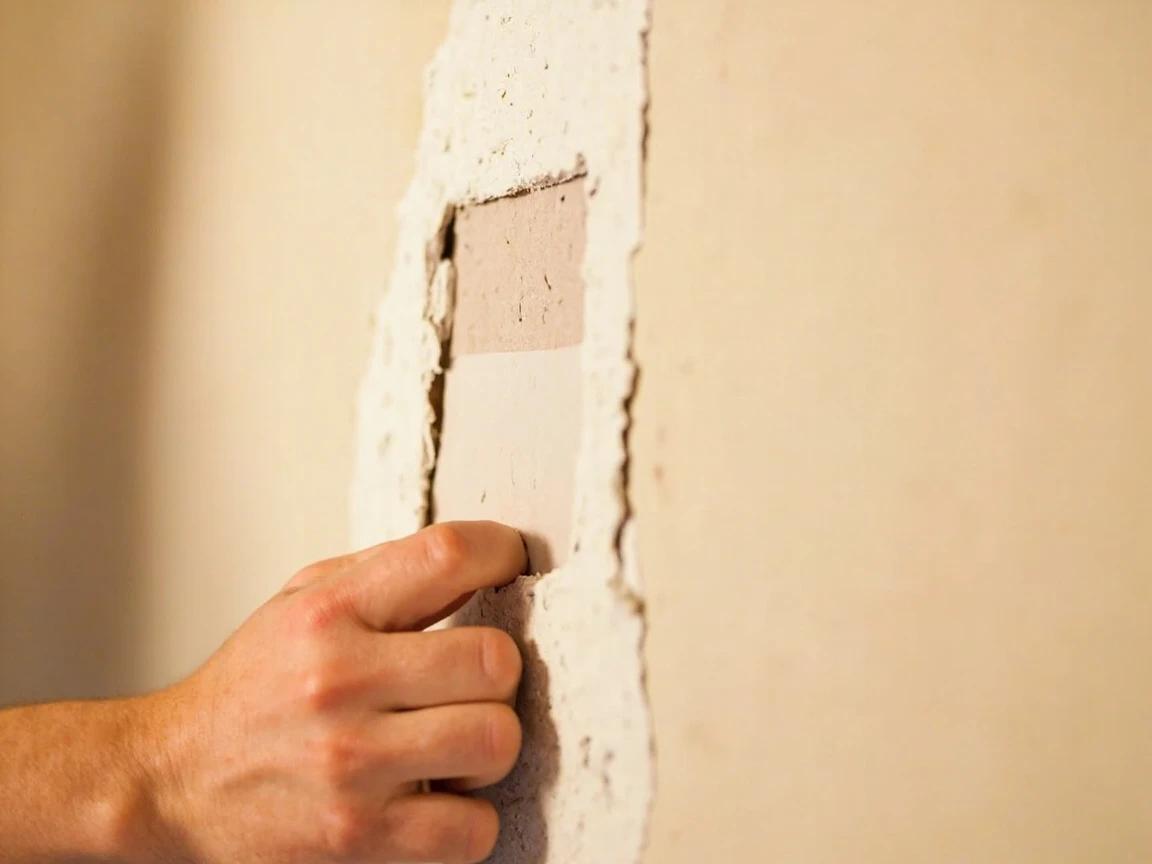
Backer-strip method (over 8 inches): screw in a new piece and tape the seams
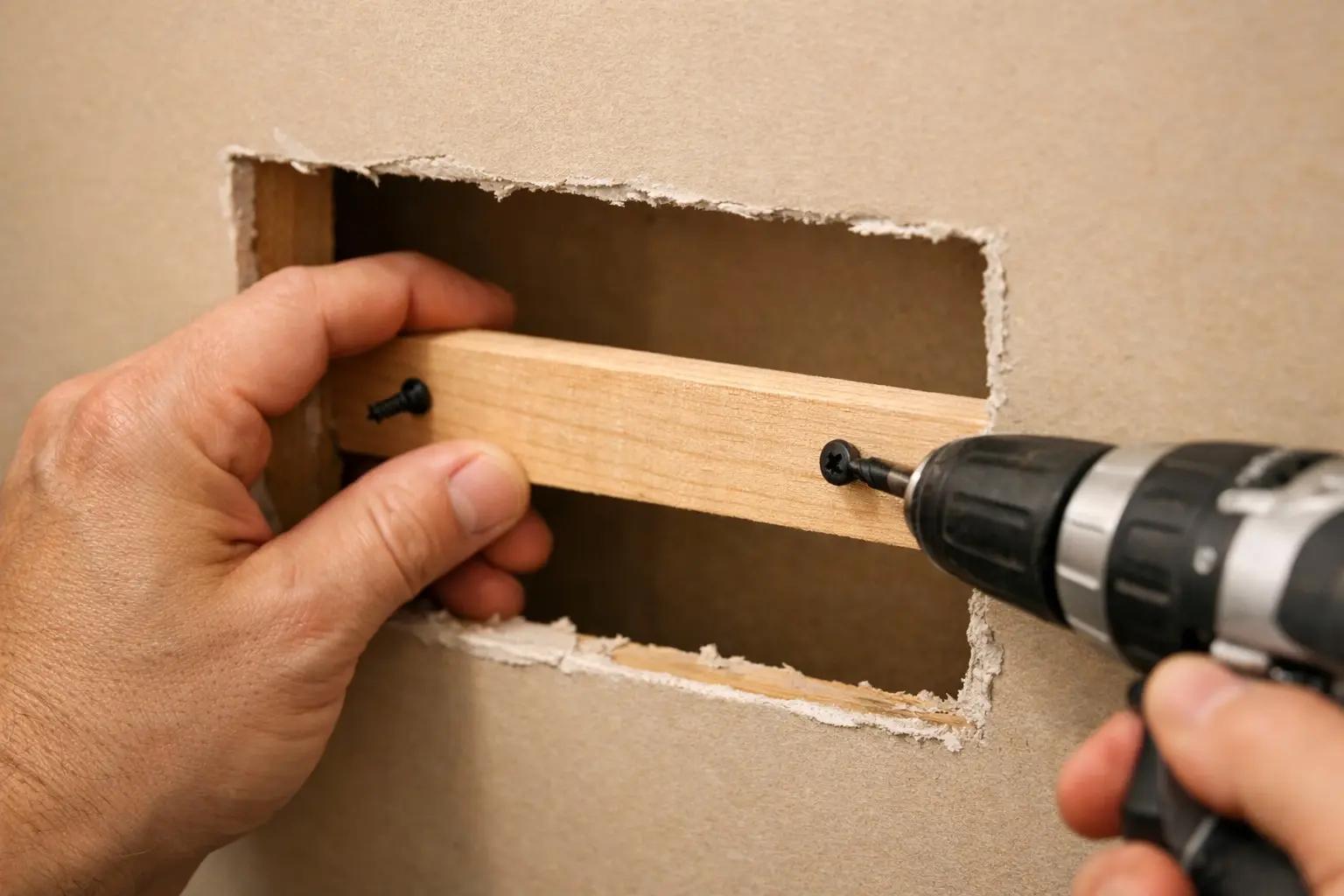
For holes larger than 8 inches, you need a solid surface behind the patch for the drywall screws to grip. Use a drywall saw to square off the hole into a clean rectangle — straight edges make the patch easier to fit. Cut a 1x3 furring strip about 4 inches longer than the hole's height. Slide the strip through the hole, center it behind the opening so it overlaps the existing drywall on both sides, and drive 1-1/4-inch drywall screws through the face of the wall into each end of the strip to anchor it. Cut a piece of scrap drywall to fit the rectangular opening and screw it to the backer strip, spacing screws every 6 inches. Then tape every seam between the new piece and the existing wall. For paper tape, spread a thin bed of joint compound over the seam, press the tape into it, and draw your drywall knife along the tape to squeeze out the excess and any trapped air; self-adhesive mesh tape goes on dry. Either way, there should be no bubbles or wrinkles under the tape.
First coat: a thin pass with the 6-inch knife
Now build up the patch with compound. Load the 6-inch knife and pull compound across the patch in long, smooth strokes — packing it into the mesh weave, onto the paper border, or over the taped seams. For a mesh patch or mesh tape, a setting-type compound (hot mud, e.g. Easy Sand 45) makes a stronger first coat that resists the hairline cracking premixed all-purpose can develop over fiberglass mesh; premixed all-purpose is fine for the California patch and for every finish coat. Feather the outer edge by lifting the back of the knife as you finish each pass, blending into the wall. Keep this coat thin; you'll build thickness in coats 2 and 3. Let it dry fully before the next coat — about 24 hours for premixed all-purpose, or just 20-90 minutes if you used setting-type compound.
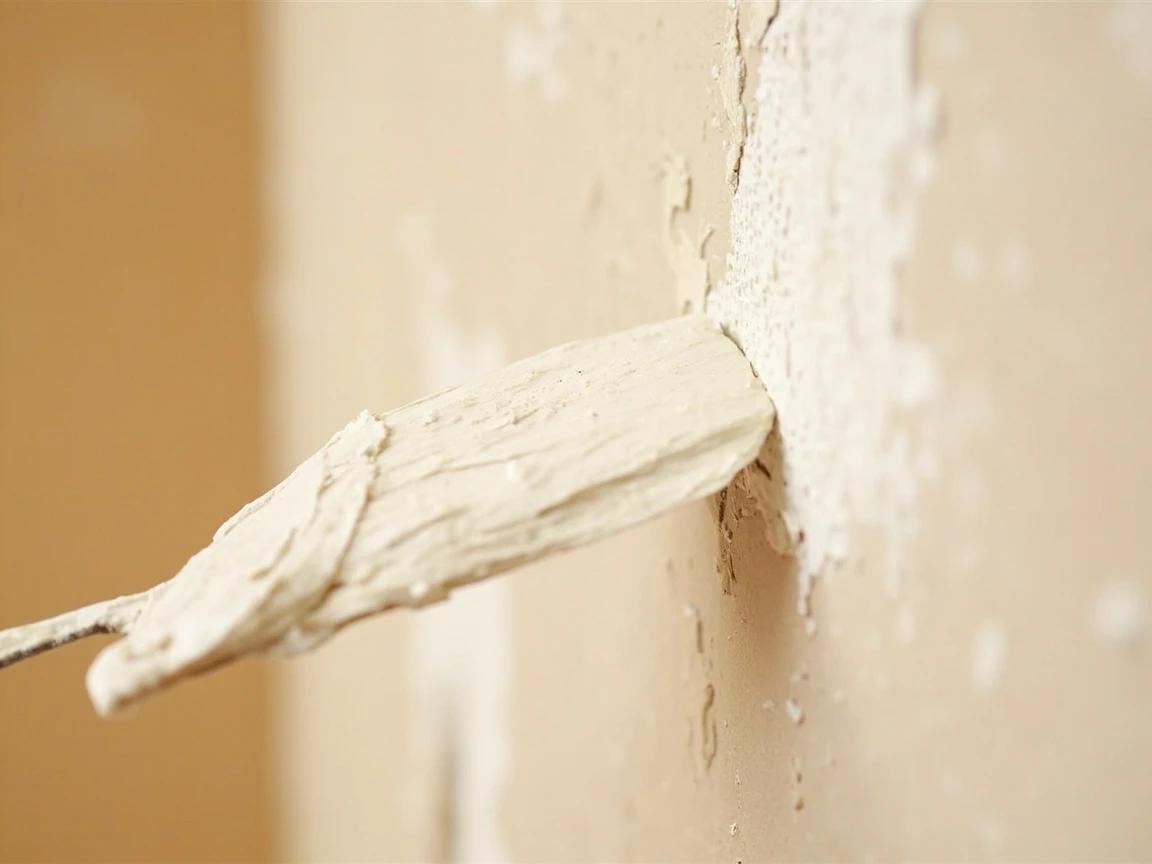
Thin coats are everything. Three thin coats produce a smoother, stronger patch than one thick blob — thick mud cracks as it shrinks and sands miserably. The same thin-coat, feather-wide technique is what makes a taped drywall seam disappear, too.
Second and third coats: feather wider each time
Once the first coat is bone-dry (white, not gray), give it a light sanding with the sponge to knock down ridges. Apply a second coat with the 6-inch knife, extending 2 inches beyond the first coat in every direction. Let dry, sand lightly again, then apply a third skim coat with the 10 or 12-inch knife extending another 2-3 inches further out. Each coat is thinner and wider than the last — that's the feathering that makes the patch disappear.
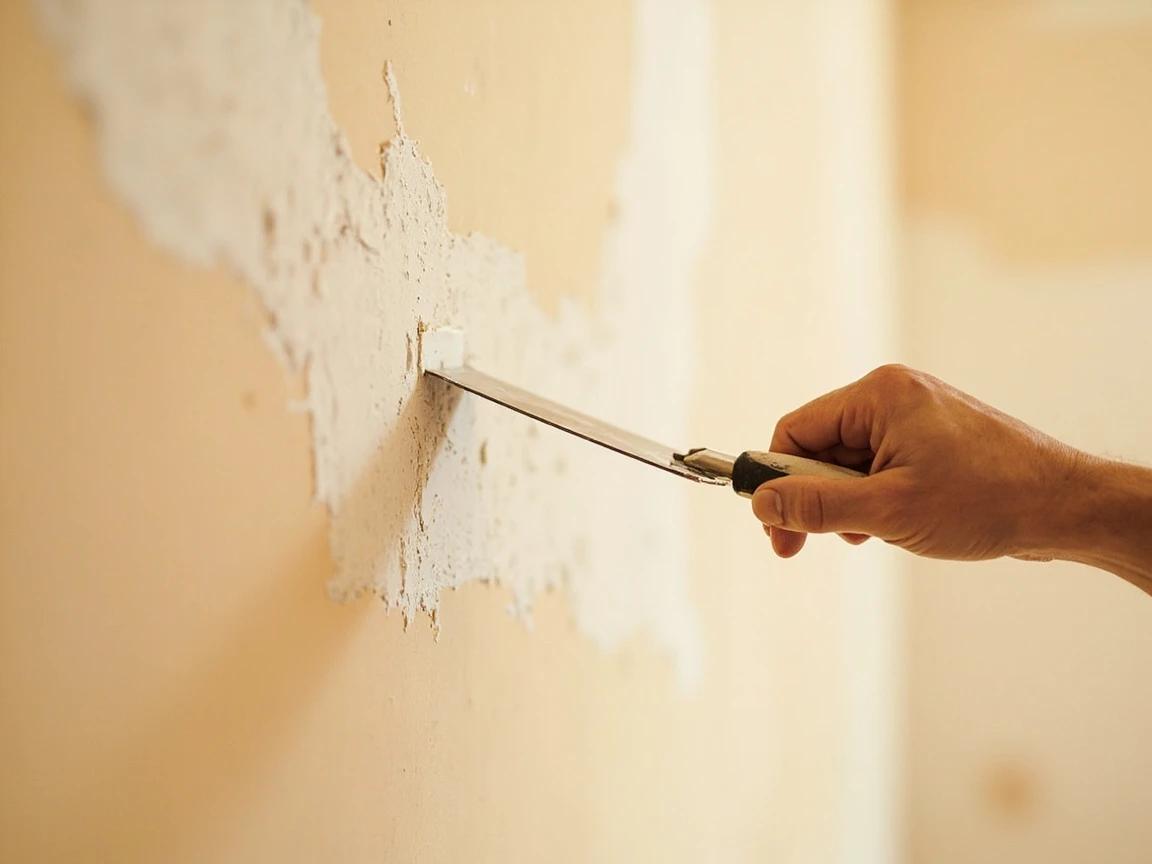
Don't try to fix bumps or ridges by adding more compound on top. Sand them flat first, then add the next thin coat. Burying a ridge under another coat just makes the ridge bigger.
Sand flush and check with raking light
Once the skim coat is fully dry, do a final sand with 150-grit sandpaper or a fine sanding sponge. Sand in light, circular motions, blending the edges of the patch into the surrounding wall until you can't feel where the repair ends and the original wall begins. For a spackle repair, a 150-220 grit sponge is enough — stop the moment it is flush, because over-sanding scuffs the paper face around it. Wipe the entire area with a damp (not wet) rag or tack cloth to remove all dust. Run your hand over the surface one more time to check for smoothness. The repair area should feel identical to the untouched wall around it.
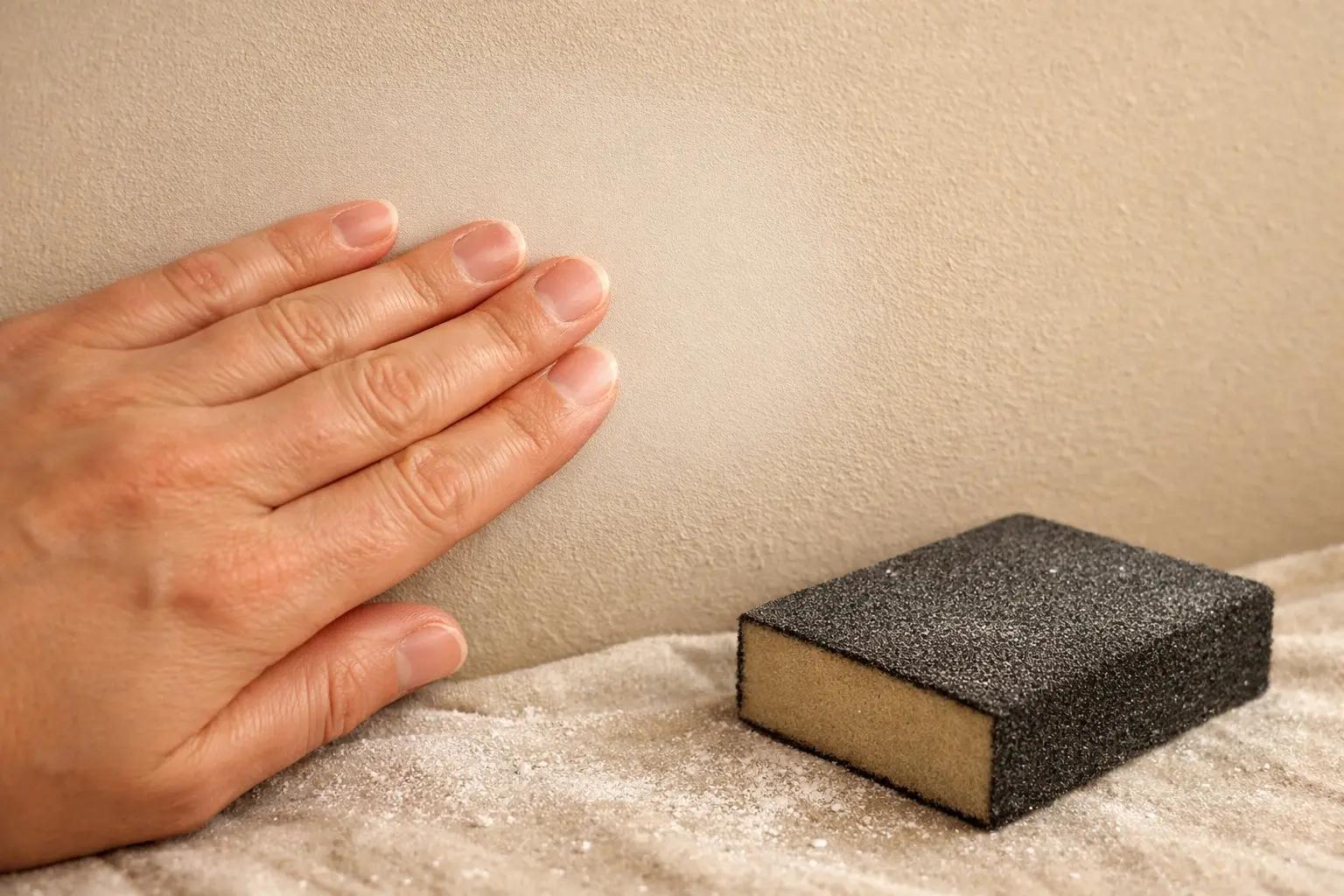
Hold a flashlight at a low angle to the wall after sanding. The raking light will reveal any bumps or ridges that look invisible head-on but will show clearly under normal room lighting once painted.
Always wear a dust mask when sanding drywall compound. The dust is extremely fine and irritates your respiratory system even in small amounts.
Prime and paint the repair
Apply a coat of PVA drywall primer or all-purpose primer over the entire repaired area, extending about 2 inches beyond the outer edges of the compound. Primer seals the porous joint compound so it absorbs paint at the same rate as the surrounding wall — without primer, the patch will show through as a dull, flat spot called 'flashing.' A small spackle repair on a flat or eggshell wall can skip primer and go straight to two coats of paint; on satin, semi-gloss, or any higher sheen, spot-prime it first. Let the primer dry (usually 30-60 minutes), then apply touch-up paint with a small roller for the best texture match. For the most invisible result, repaint the entire wall from corner to corner.
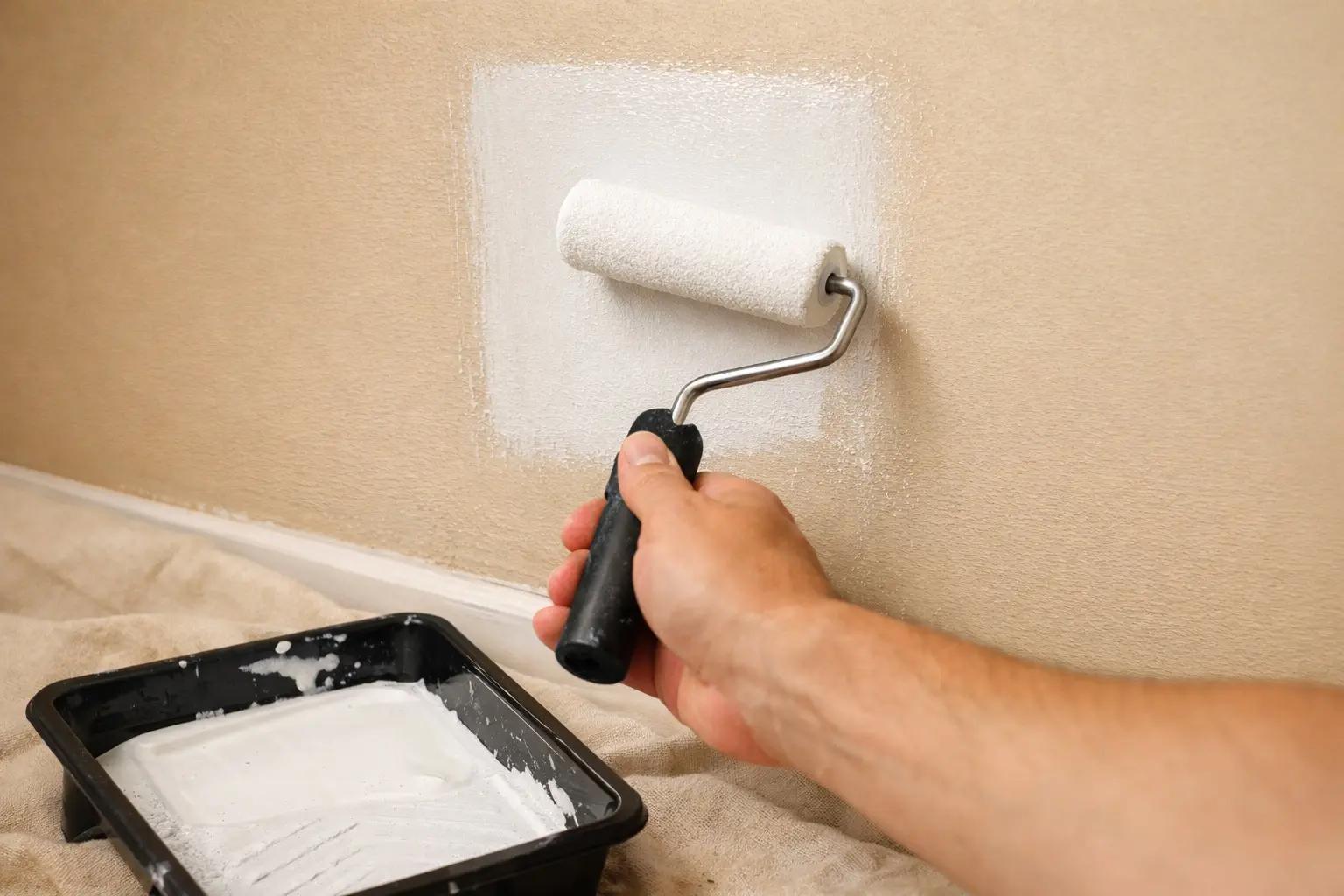
If you're touching up just the patch, use a mini roller (4-inch foam) rather than a brush — it leaves a subtle orange-peel texture that matches the roller texture on the rest of the wall. A brush leaves visible stroke marks.
Frequently Asked Questions
Spackle or joint compound — which should I use?
+
Use spackle for nail holes and dings under 1/2 inch, and joint compound for everything bigger. Lightweight spackle barely shrinks, so one or two thin coats fill a small hole and you're done, while joint compound shrinks as it dries and would leave a sunken divot in a nail hole. Spackle is the wrong choice for anything larger: it is a soft filler without the strength to bridge a mesh patch or hold over a California patch's paper border, and on a big hole it cracks within weeks. Within joint compound there are three types. Lightweight premixed sands most easily but is the weakest. All-purpose premixed is denser and makes a better structural coat. Setting-type compound, the bagged powder you mix with water, is the strongest and barely shrinks, so it belongs on the first coat over mesh. A common combination is setting-type for coat one and premixed for the finish coats.
What's the difference between a mesh patch and a California patch?
+
A self-adhesive fiberglass mesh patch is a pre-made square of stiff fiberglass mesh that sticks directly over the hole — you just smooth joint compound over the top. It's faster and beginner-friendly but works best for holes up to about 4 inches. A California patch (also called a 'hot patch') uses scrap drywall: you cut a piece 3 inches larger than the hole and shave away the back gypsum, leaving a 1.5-inch paper border that acts as built-in tape. California patches handle bigger holes (4-8 inches), are stronger, and finish flatter — but take more skill and time. One detail decides whether a mesh patch holds: the first coat over mesh should be setting-type compound, not premixed. Mesh flexes, premixed stays slightly soft, and that combination produces the hairline crack that reappears months later. Setting compound cures hard and locks the mesh down. Cost is near identical, so pick on location — mesh for low-traffic walls, California for anything a shoulder or door handle reaches.
How long should I wait between coats?
+
It depends on the product. Fast-dry color-change spackle is ready to sand in about 30 minutes, when the pink turns fully white; standard lightweight spackle needs 1-2 hours. Premixed all-purpose joint compound needs about 24 hours per coat, so three coats make a three-day project. Setting-type compound (hot mud) sets in 20-90 minutes, the number printed on the bag, which is why many people use it for the first coat over mesh and switch to premixed for the finish coats. Those times assume roughly 70 degrees and normal humidity. A damp basement can double them, and compound below 55 degrees may never cure properly. A fan moving air across the patch is safe; a heat gun is not, because drying the surface faster than the core traps moisture and cracks the finish. Judge by color, not the clock: uniformly bright white with no gray patches means it is ready to sand, and sanding wet compound tears it out.
Why is my patch still visible after I paint?
+
Three usual suspects. First, flashing: bare compound or spackle absorbs paint differently than the surrounding wall, so an unprimed patch shows as a dull spot; spot-prime it with PVA drywall primer and repaint. Second, feathering that stops too soon, so the patch reads as a raised rectangle under the paint; spread the compound about three times the width of the hole, so a 6-inch patch blends out across roughly 18 inches. Third, a texture mismatch: a glass-smooth patch on a wall with orange-peel or knockdown texture; fix it with texture-in-a-can spray, or dab thinned spackle with a stiff brush before it dries. Catch all three before the paint goes on. Hold a work light almost flat against the wall and sight along the surface, because raking light exposes ridges and hollows that straight-on light hides. Finish sanding at 150 grit or finer, and match the sheen of the surrounding wall as well as the color.
The hole is from a wall anchor that pulled out — should I patch it differently?
+
Patch it the same way, by size: spackle if the hole is under 1/2 inch, a mesh patch up to 4 inches if the anchor tore out a chunk of paper and gypsum. First deal with the old anchor. Pull a plastic expansion anchor straight out with pliers, or if it won't budge, cut it flush with a utility knife and tap it slightly below the surface so the spackle can cover it. A toggle's wings drop into the wall cavity once the bolt is removed. Don't re-hang in the exact same spot afterward: the gypsum there is already crushed and won't grip a new anchor. Move over 1-2 inches to solid drywall, or better, into a stud. If you're remounting something heavy, match the new anchor to the load with How to Install Drywall Anchors for Heavy Items — an anchor rated below the weight is a common reason the first one failed.
What's the biggest hole I can patch without screwing in a new section of drywall?
+
About 8 inches. Up to that size a California patch works, because its paper border bonds to the surrounding wall and the gypsum center is small enough to stay rigid. Beyond 8 inches the patch flexes between studs, so the new piece needs something solid behind it: a 1x3 furring strip slid behind the existing wall and screwed through the face, as in step 8. For a very large opening, find the framing first. Studs sit 16 inches on center in most homes and 24 in some newer builds, so a square opening cut back to stud centers gives the new piece solid framing to screw to on both sides. Cut with a keyhole saw at shallow depth rather than plunging a multi-tool in blind, since cable runs vertically above and below outlets and supply lines run through kitchen and bathroom walls.
Sources & further reading
- How To Patch Drywall — This Old House
- How to Patch a Hole in Drywall and Other Common Repairs — Family Handyman
- How to Patch Drywall: Small, Medium, and Large Hole Repair — Bob Vila
- Spackling 101 — DAP
- Lead-Safe Renovations for DIYers — U.S. EPA
More Carpentry Guides
View all → Easy30 min
How to Install Drywall Anchors for Heavy Items
A failed wall anchor doesn't just dent your drywall — it can drop a 60-pound TV onto a coffee table. This guide explains the five anchor types, when to use each, the stud-first rule that pros follow, and the pull-test that catches a bad install before your TV does. For the holes left behind by failed anchors, a $5 tub of spackle and ten minutes covers the cleanup.
 Medium1h 30m
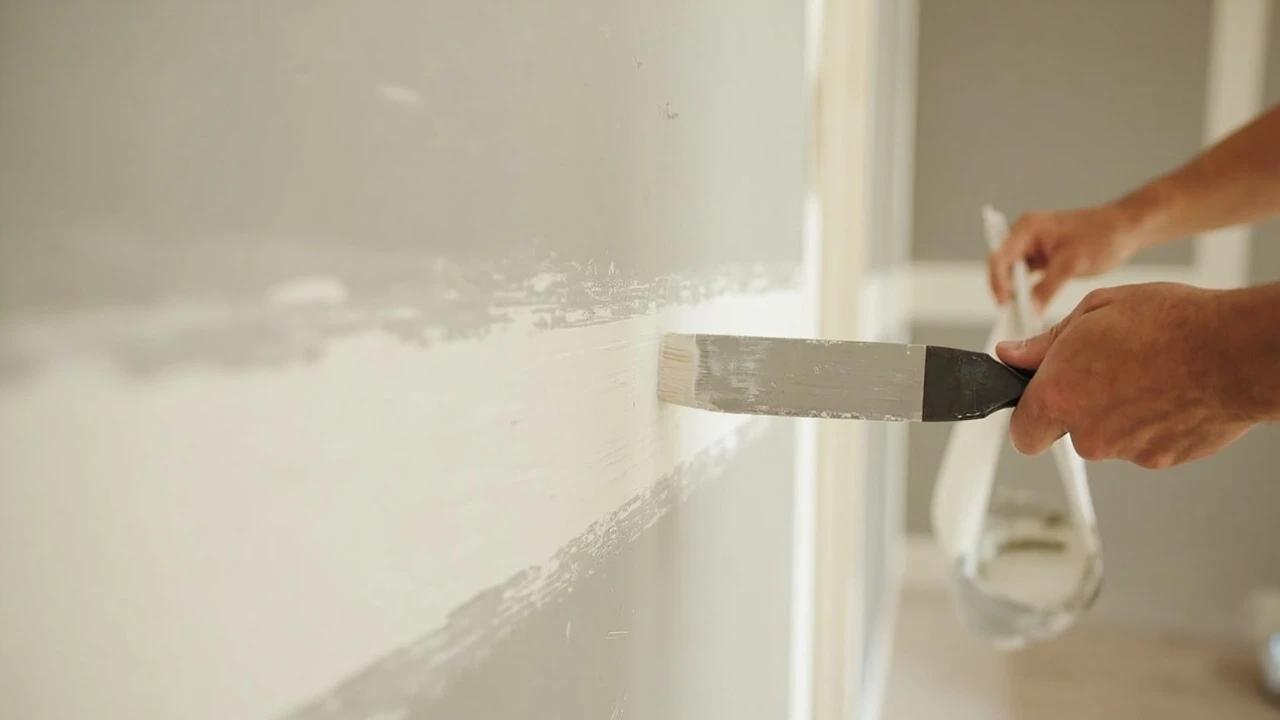
How to Tape and Mud a Drywall Seam
Taping and mudding is the skill that separates walls that look professional from walls that show every sheet of drywall behind the paint. The system is simpler than it looks: bed the tape, then two progressively wider coats with progressively wider knives, feathered to nothing. About $30 in materials finishes a room's worth of seams — the trade you're really making is three short sessions across three days.
 Easy15 min
How to Find a Stud Without a Stud Finder
No stud finder? No problem. You can locate the wooden studs behind your drywall with things you already own — an outlet, a tape measure, and a strong magnet — in about ten minutes. This guide walks through every reliable method, from the quickest starting point to a foolproof way to confirm a stud before you drill a single hole.
You Might Also Like
 Easy30 min
How to Fix a Dripping Faucet
A dripping faucet wastes more than 3,000 gallons of water per year and can add $20 or more to your monthly water bill. The fix is almost always a worn cartridge, washer, or O-ring — parts that cost under $10 and take 20-30 minutes to replace with basic tools.
 Hard8 hrs
How to Paint Kitchen Cabinets
A professional cabinet refinish costs $3,000-8,000, but painting them yourself with the right prep and materials delivers the same transformation for under $200 in a long weekend. The secret is thorough degreasing, a bonding primer, and thin coats with proper dry time between each — skip any of those and the paint will chip within months. This guide walks through the full process from door removal and labeling to final reassembly, covering both brush and roller techniques for a smooth, factory-like finish.
 Medium6 hrs
How to Paint a Room
A fresh coat of paint is the fastest, cheapest way to transform any room — and doing it yourself saves $400-800 in labor for an average 12x12-foot bedroom. The job takes a weekend from prep to final coat, and the difference between an amateur-looking result and a professional finish comes down to technique, not talent. This guide covers prep, cutting in, rolling, and cleanup so you get clean lines and even coverage the first time.