How to Install Floating Shelves
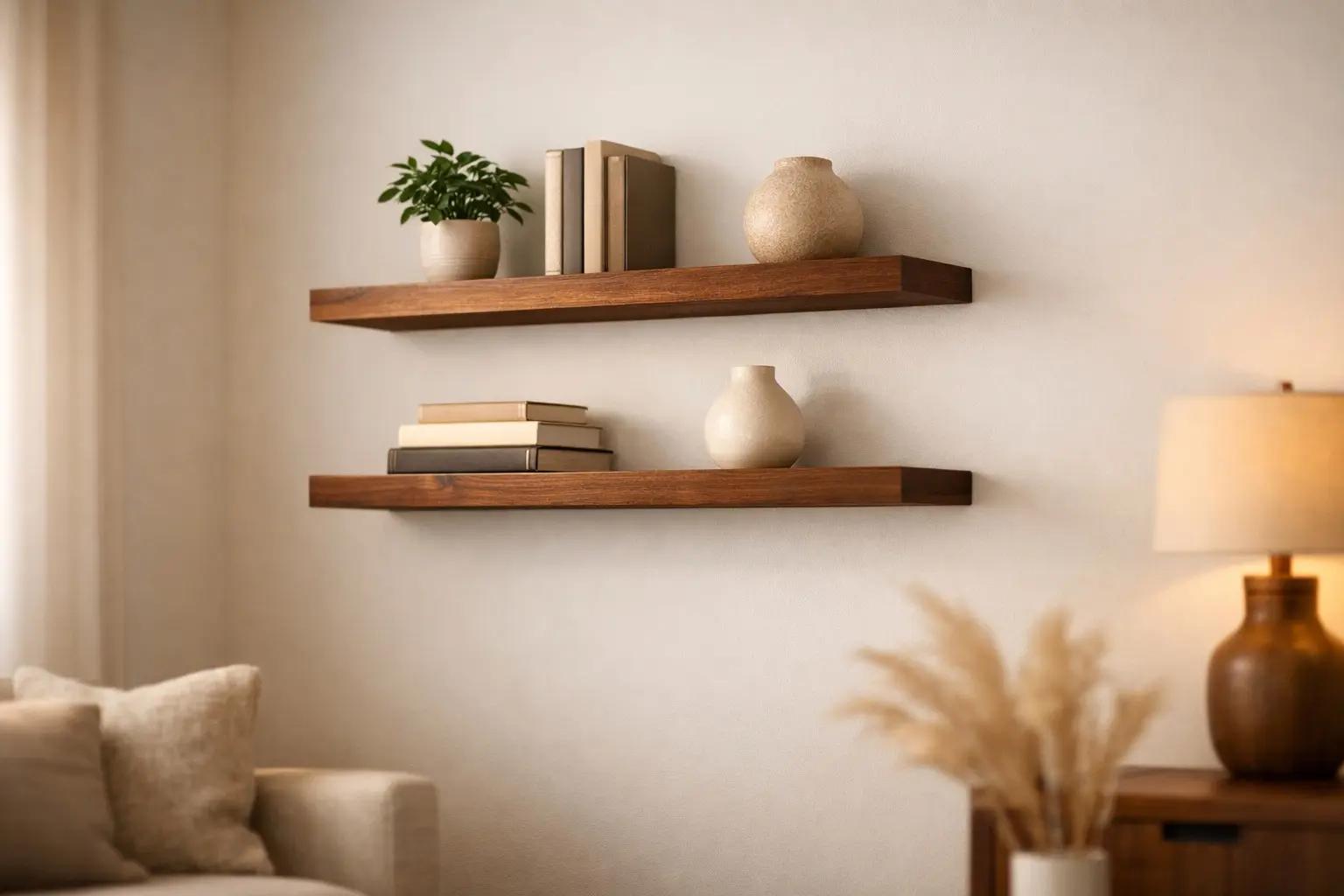

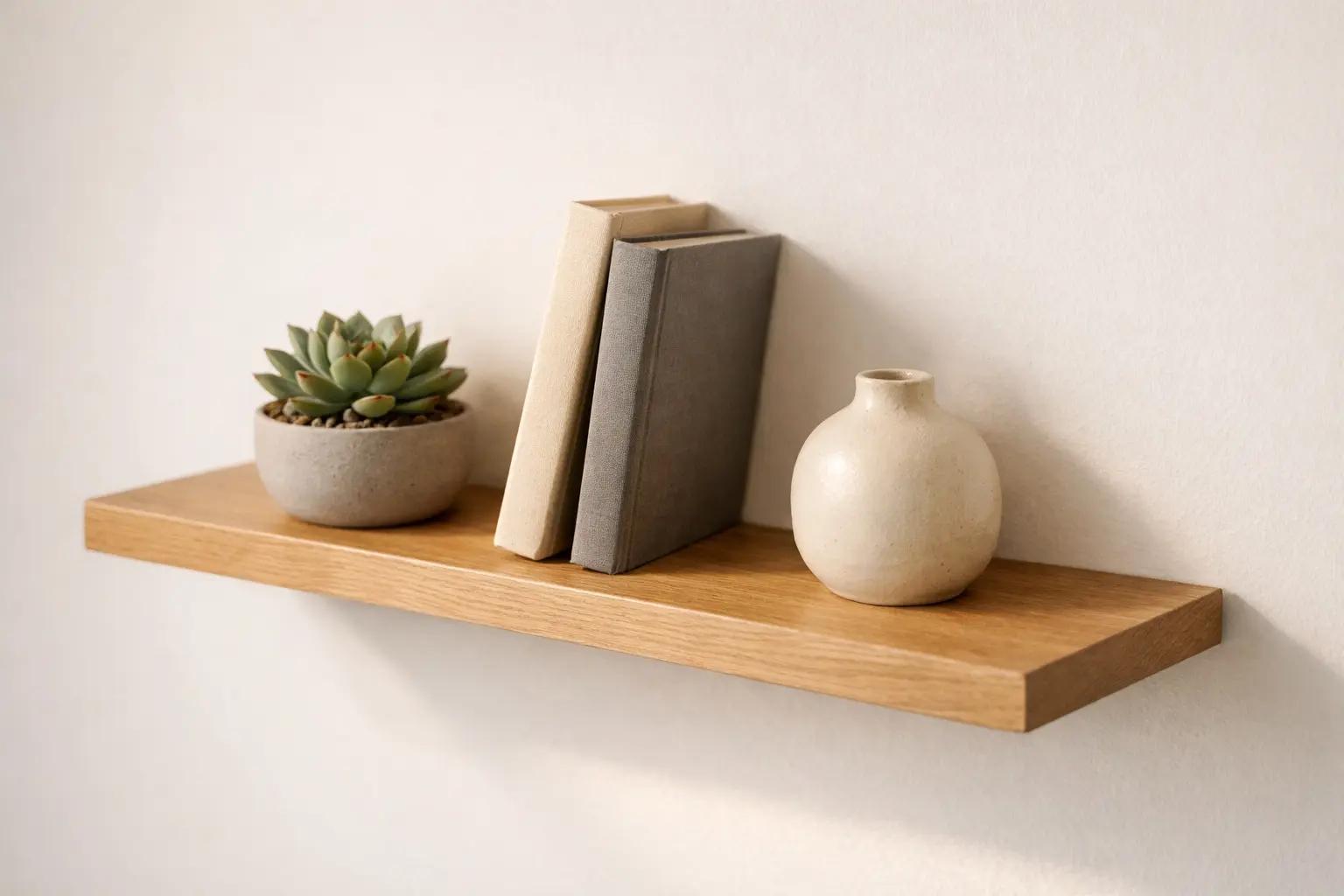
Floating shelves add storage and style to any room without bulky brackets — and installing a pair takes about 45 minutes with basic tools. A quality floating shelf kit costs $20-60, versus $100-200 for a handyman visit. This guide covers finding studs, leveling the bracket, and mounting the shelf so it holds up to 50 pounds per stud without sagging.
What You'll Need
🛠 Tools
📦 Materials
Safety First
- •Before drilling into any wall, check for electrical wires and plumbing by using a stud finder with a wire-detection mode. Drilling into a live wire can cause shock or fire.
Step-by-Step Instructions
Locate the Wall Studs
Run an electronic stud finder slowly across the wall in the area where you want the shelves. When the stud finder signals a stud, mark the edge with a pencil, then continue across to find the other edge — the center of the stud is halfway between the two marks. Repeat to find at least two studs (studs are typically 16 inches apart on center). Place a strip of painter's tape vertically over each stud center so your marks are easy to see and won't leave pencil smudges on the wall.
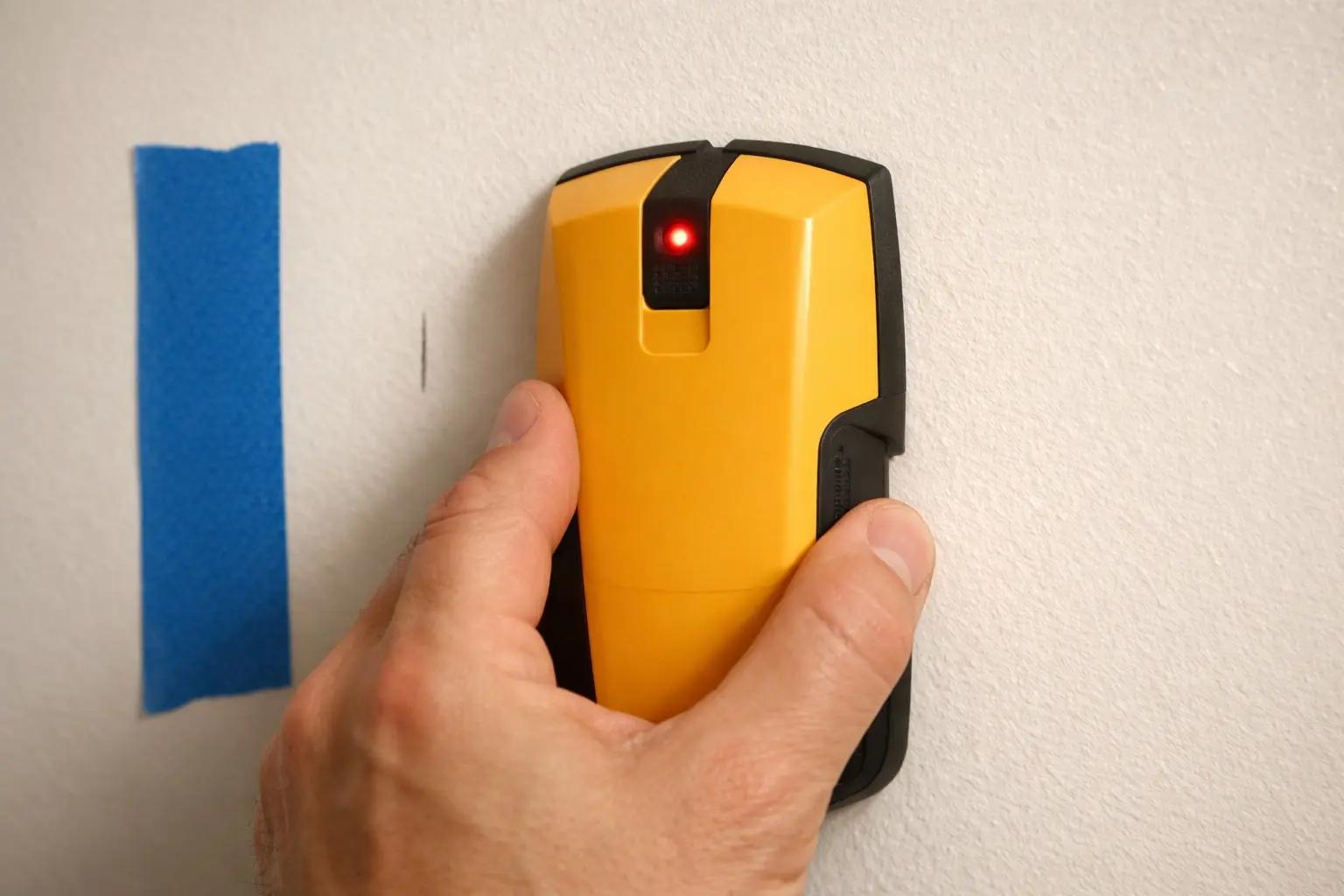
To verify a stud location, drive a thin finish nail at an angle through the drywall at your pencil mark. If it hits solid wood after 1/2 inch, you found the stud. If it punches through into open space, adjust your mark. The nail hole is tiny and easily patched.
Determine Shelf Height and Mark the Level Line
Decide where you want the shelf — common heights are 48 inches above the floor for a single display shelf, or 12-16 inches apart for stacked shelves. Measure up from the floor at one stud location and make a pencil mark at your desired height. Hold a 4-foot level against the wall with one end on your pencil mark and draw a faint, level line across to the next stud. This line represents the top edge of your mounting bracket.
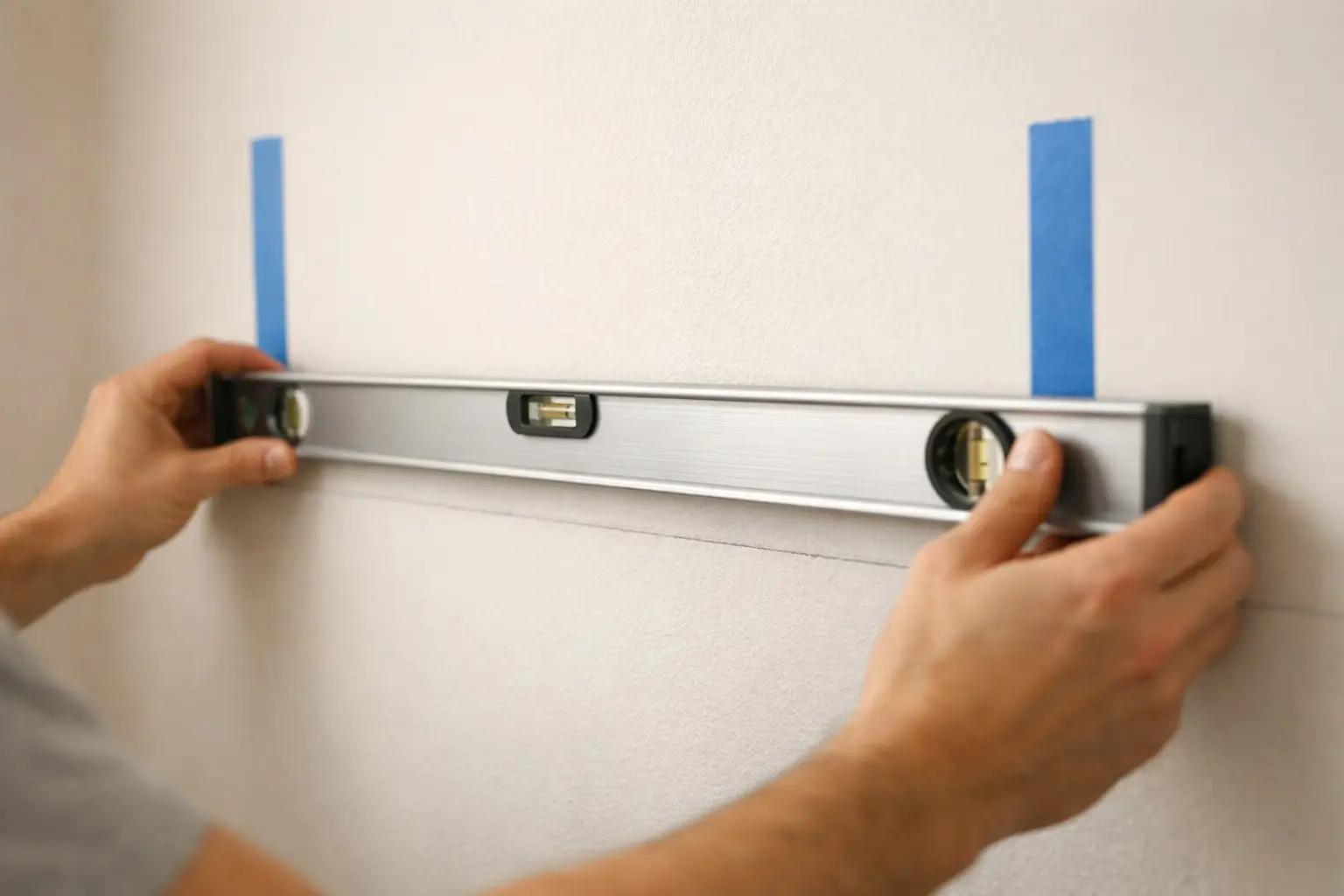
If you're installing multiple shelves at the same height (like flanking a TV), measure from the ceiling down rather than from the floor up — ceilings are more likely to be level than floors, so the shelves will look even to the eye.
Position the Mounting Bracket and Mark Screw Holes
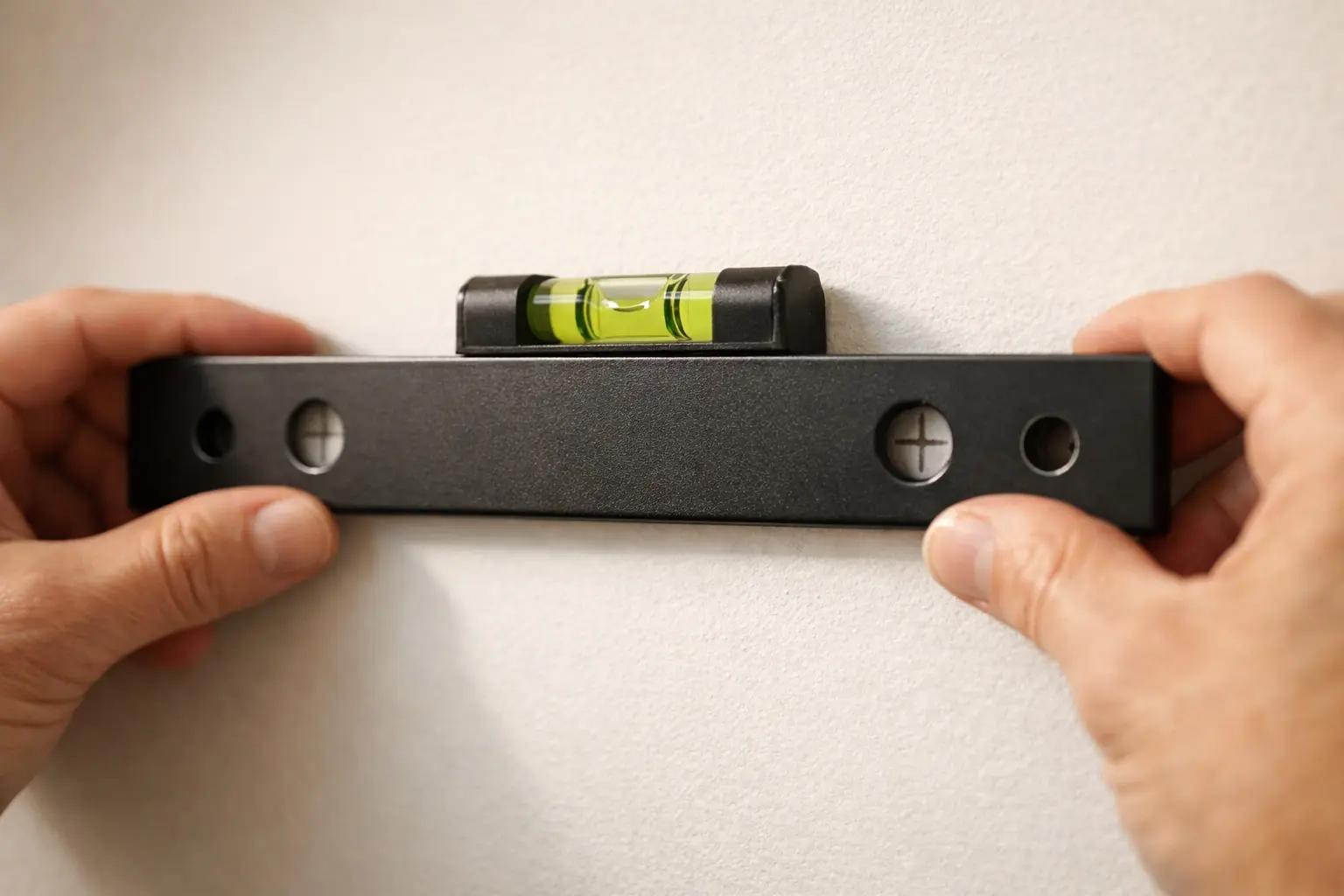
Hold the shelf's mounting bracket (or backplate) against the wall, aligning its top edge with your level line. Make sure at least two of the bracket's screw holes line up with your stud marks — this is critical for weight capacity. Place a level on top of the bracket to confirm it's perfectly horizontal, then use a pencil or a self-centering punch to mark each screw hole location through the bracket onto the wall.
Drill Pilot Holes into the Studs
Set the bracket aside and drill a pilot hole at each marked screw location using a 3/32-inch drill bit. For holes going into studs, drill about 2 inches deep — you'll feel steady resistance as the bit bites into the solid wood behind the drywall. If a screw hole doesn't land on a stud, drill a larger hole (sized for your wall anchor) and install a heavy-duty toggle bolt or snap toggle rated for at least 50 pounds. Blow or vacuum the dust from each hole.
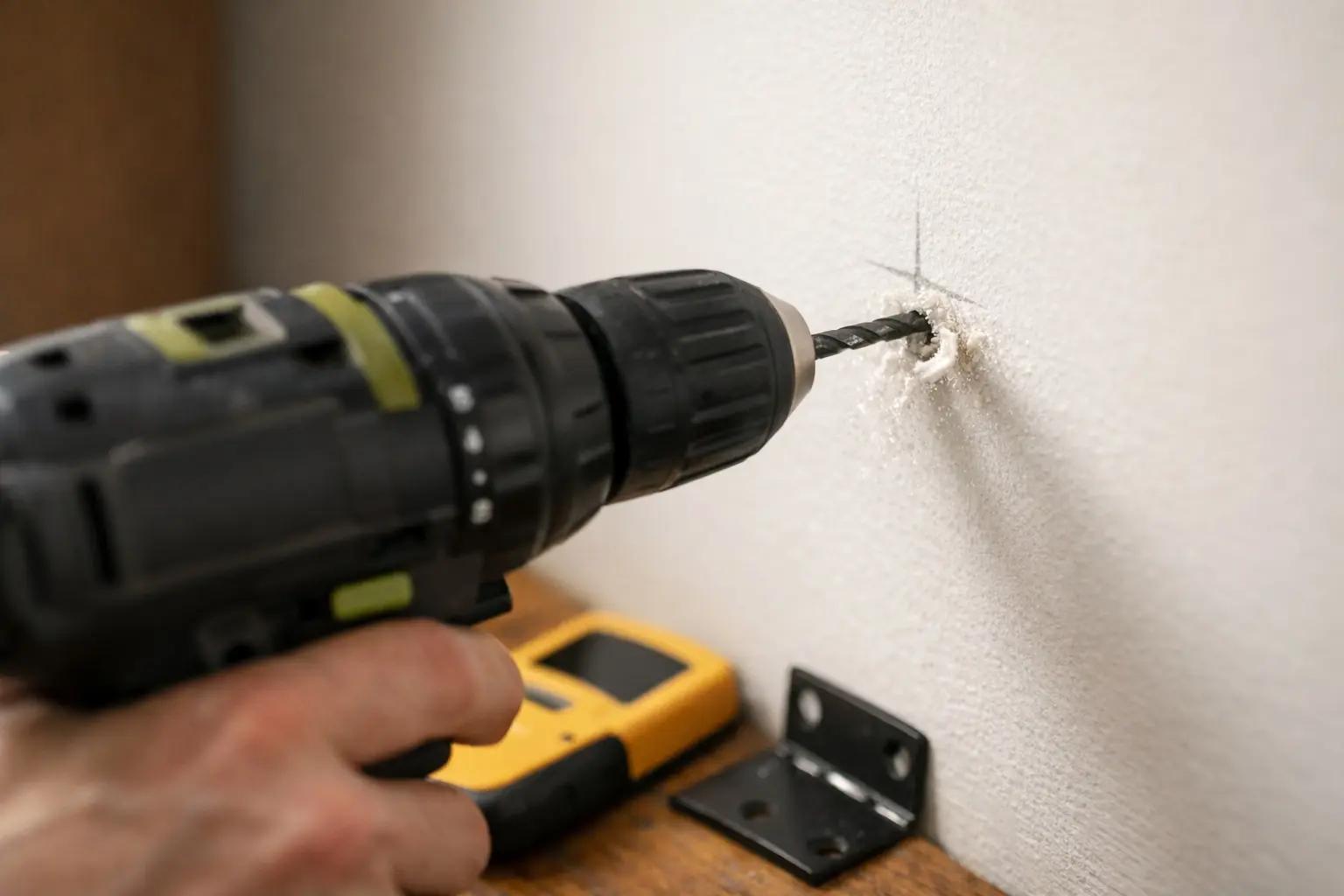
If you hit unexpected resistance (metal) or the drill suddenly breaks through into open space behind the stud, stop immediately — you may be near a pipe, duct, or electrical box. Investigate before continuing.
Fasten the Mounting Bracket to the Wall
Hold the bracket back up to the wall, align the screw holes with the pilot holes, and drive the provided #12 x 2-1/2-inch screws into each stud using a drill/driver. Tighten until the bracket is firmly clamped against the drywall with no play — but don't overtighten, as this can strip the wood or crack the drywall. For any anchor points, follow the anchor manufacturer's instructions to set the toggle before tightening the screw. Place a level on the bracket one final time and confirm it's perfectly horizontal before proceeding.
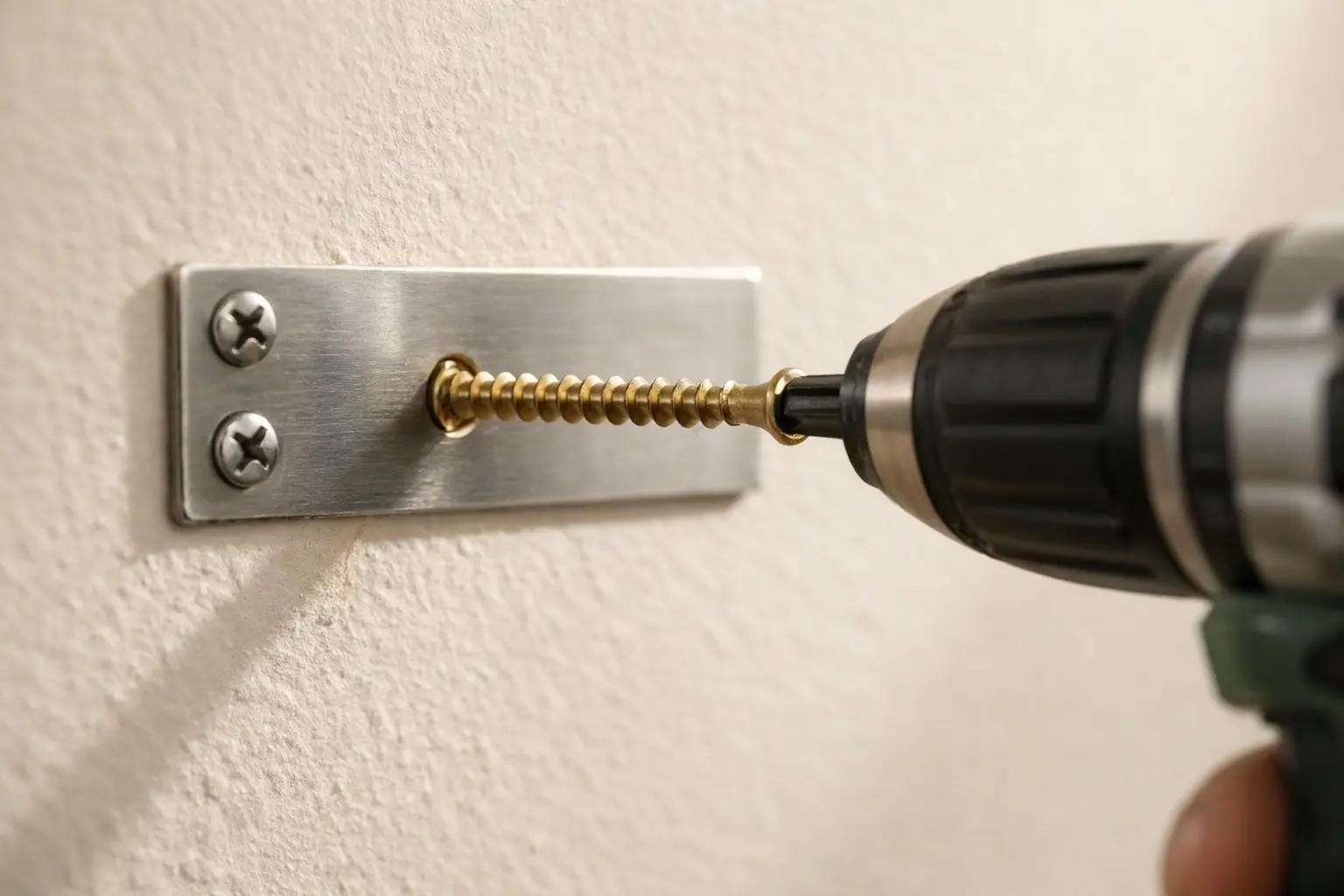
If you stripped a screw hole in the stud, remove the screw, push a couple of wooden toothpicks dipped in wood glue into the hole, snap them flush, and re-drive the screw. The toothpicks give the threads fresh wood to grip.
Slide the Shelf onto the Bracket
Most floating shelves slide over the bracket from the front — align the hollow interior of the shelf with the bracket's mounting rods or backplate and push it straight back until the shelf sits flush against the wall. Some designs require you to slide the shelf down from above onto hook-style brackets. Check the underside of the shelf for set screws (small Allen-head or Phillips screws) and tighten each one to lock the shelf to the bracket — this prevents the shelf from being accidentally lifted off.
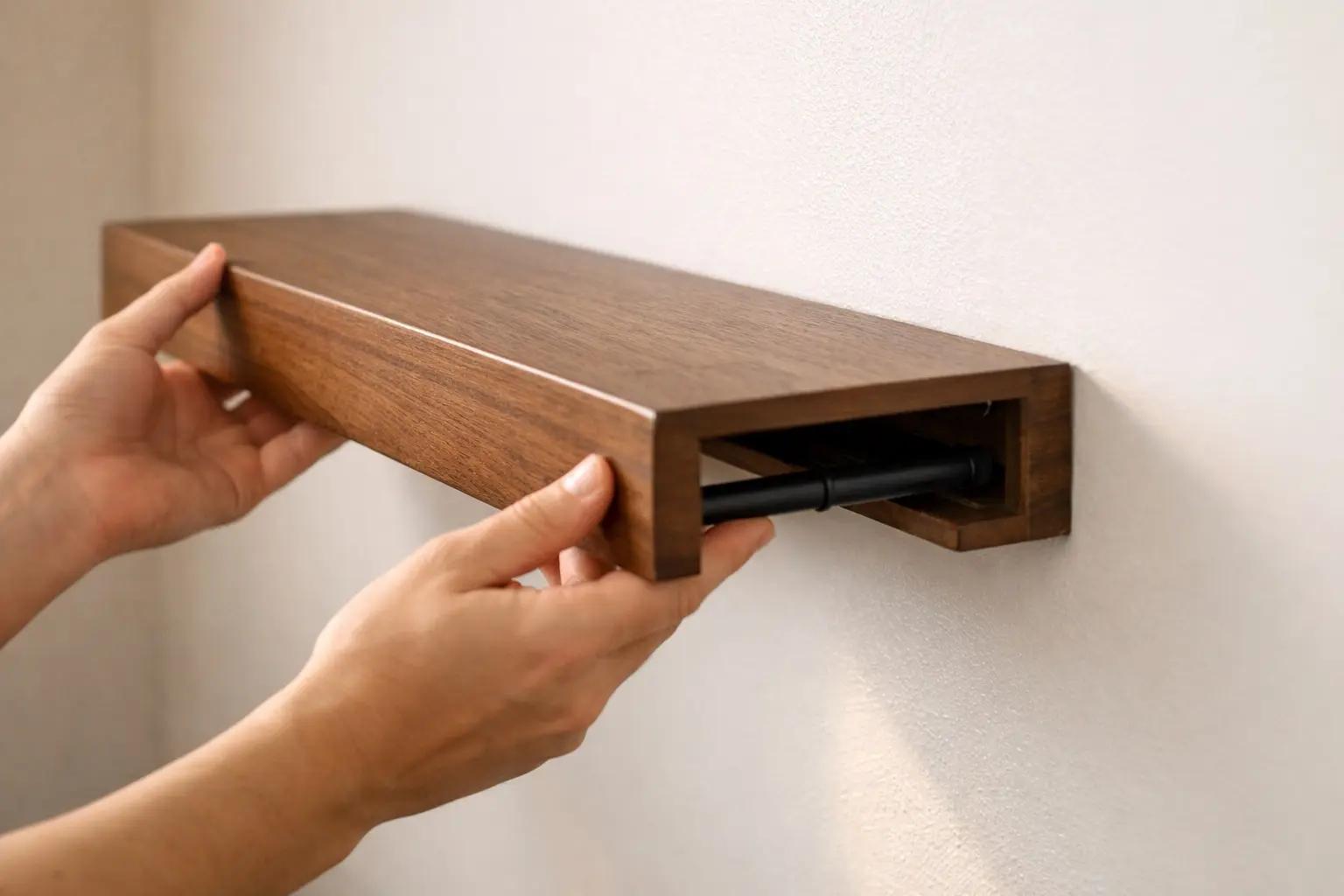
Test the Shelf for Stability and Weight Capacity
Firmly press down on the front edge of the shelf with both hands — there should be zero wobble or tilt. If the shelf dips when you push, a screw may have missed the stud or an anchor isn't holding. Place a stack of books or a gallon jug of water (about 8 pounds) on the shelf and leave it for 30 minutes, then check for any sagging with your level. A properly mounted shelf on two studs can hold 45-50 pounds per stud. Only load the shelf to its rated capacity once you've confirmed it's solid.
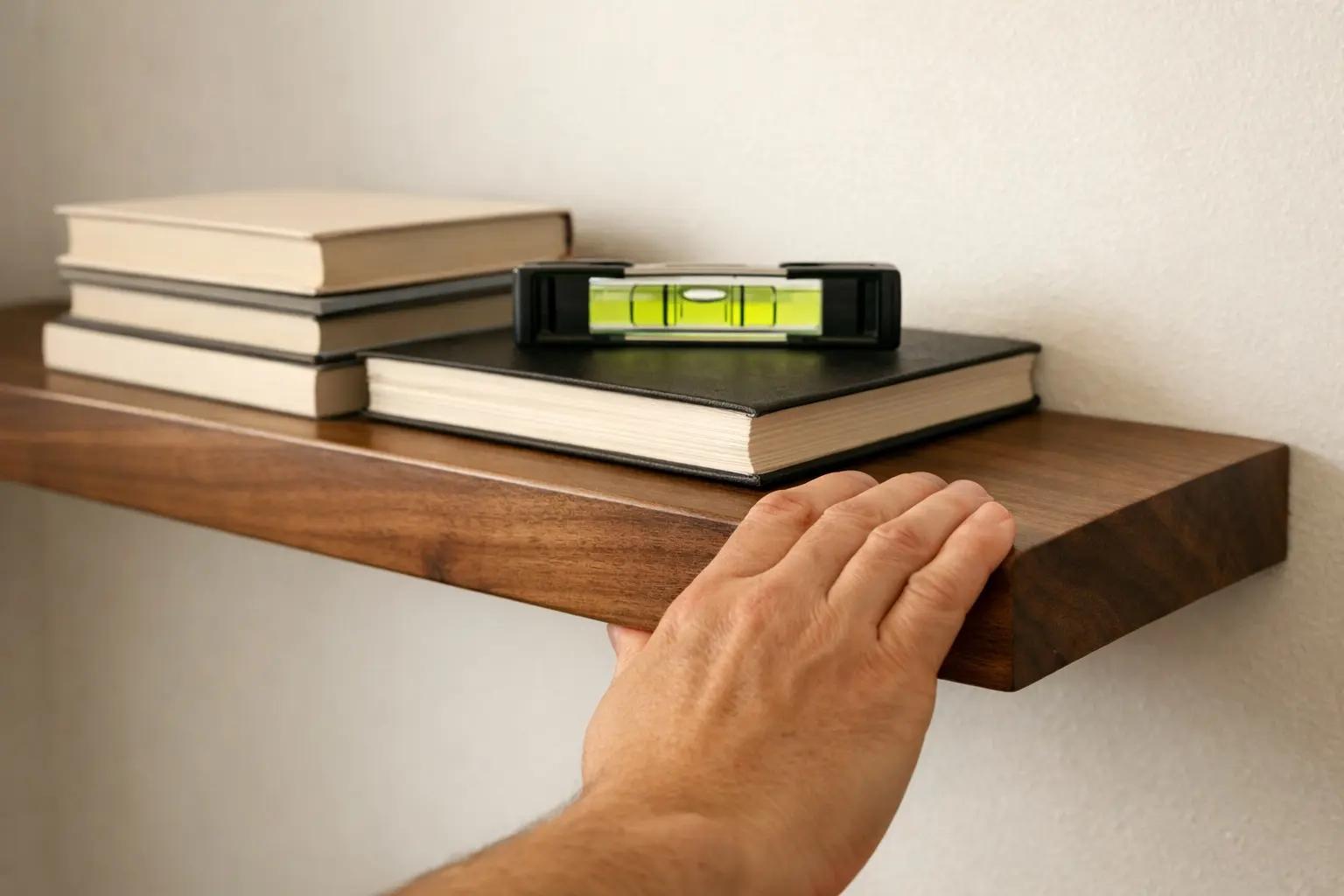
If the shelf has a very slight downward tilt at the front edge (common with heavy loads), shim the bottom of the bracket at the wall with a thin piece of cardboard before tightening the screws — this pre-tilts the bracket up by a degree or two to compensate.
Fill Gaps and Style the Shelf
If there's a hairline gap between the shelf and the wall (common on slightly uneven walls), run a bead of paintable caulk along the back edge and smooth it with a wet finger for a seamless look. Touch up any stray pencil marks with a Magic Eraser or damp cloth. Now style the shelf — group items in odd numbers (threes and fives look best), vary heights with a mix of books, plants, and decorative objects, and keep the heaviest items closest to the bracket points over the studs.
Frequently Asked Questions
How long does it take to install floating shelves?
+
This project typically takes about 45 min. The guide includes 8 steps with detailed instructions for each.
What tools do I need?
+
You will need: Electronic stud finder, Drill/driver with Phillips bit, Drill bit set (3/32-inch for pilot holes, 1/4-inch for wall anchors), 4-foot level (or laser level), Tape measure, Pencil, Painter's tape. Materials include: Floating shelf kit with hidden bracket or backplate (sized to your space — 24-inch and 36-inch are most common), #12 x 2-1/2-inch wood screws (for stud mounting — usually included with the shelf), Wall anchors rated for 50+ lbs each (toggle bolts or snap toggles — only if you cannot hit two studs), Small torpedo level (if shelf has no built-in level vial).
Is this a good project for beginners?
+
Yes! This is rated as an easy project that most homeowners can complete with basic tools and no prior experience.
Sources & further reading
- How to Build and Install DIY Floating Shelves — Family Handyman
- Advanced Framing: Minimum Wall Studs — Building America Solution Center (DOE/PNNL)
More Carpentry Guides
View all →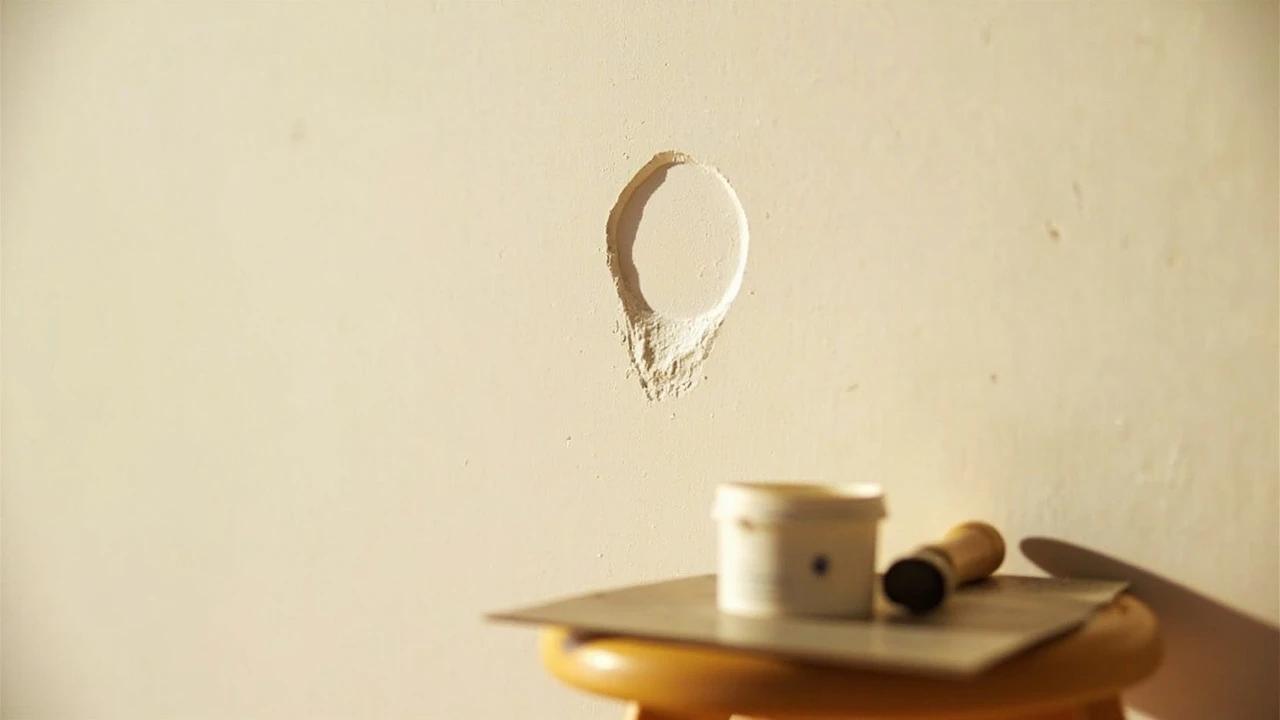 Easy45 min
How to Fix a Nail Pop or Screw Pop in Drywall
That little round bump or crescent crack in your wall is a nail pop — the framing lumber dried and shrank, and the fastener stayed put while the wood moved around it. Hammering it back in is a two-month fix; the permanent repair takes twenty minutes and about ten dollars: re-anchor the drywall with new screws above and below the pop, deal with the old fastener, and fill. This guide covers walls, the ceiling version, and how to tell a harmless pop from a symptom worth investigating.
 Medium1h 30m
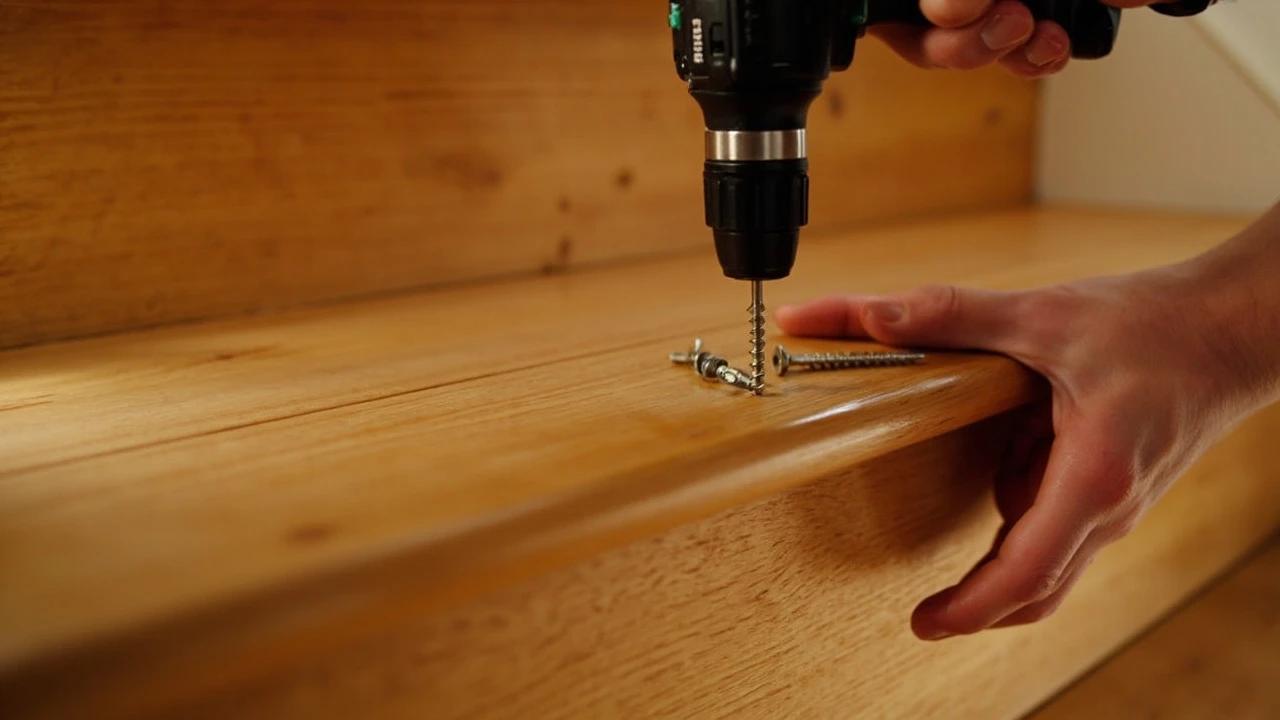
How to Fix a Squeaky Stair
That one step everybody in the house learns to skip isn't a structural problem — it's almost always a tread rubbing against a riser or a stringer as the wood shrinks with age. A few dollars of glue blocks, shims, and trim-head screws silences it for good, and if you can reach the underside of the staircase you can fix it permanently without leaving a single mark on the finished side. This guide covers pinpointing which joint is actually moving, the from-below and from-above repairs, the carpet-safe method, and why the can of spray lubricant under your sink is the wrong tool.
 Easy15 min
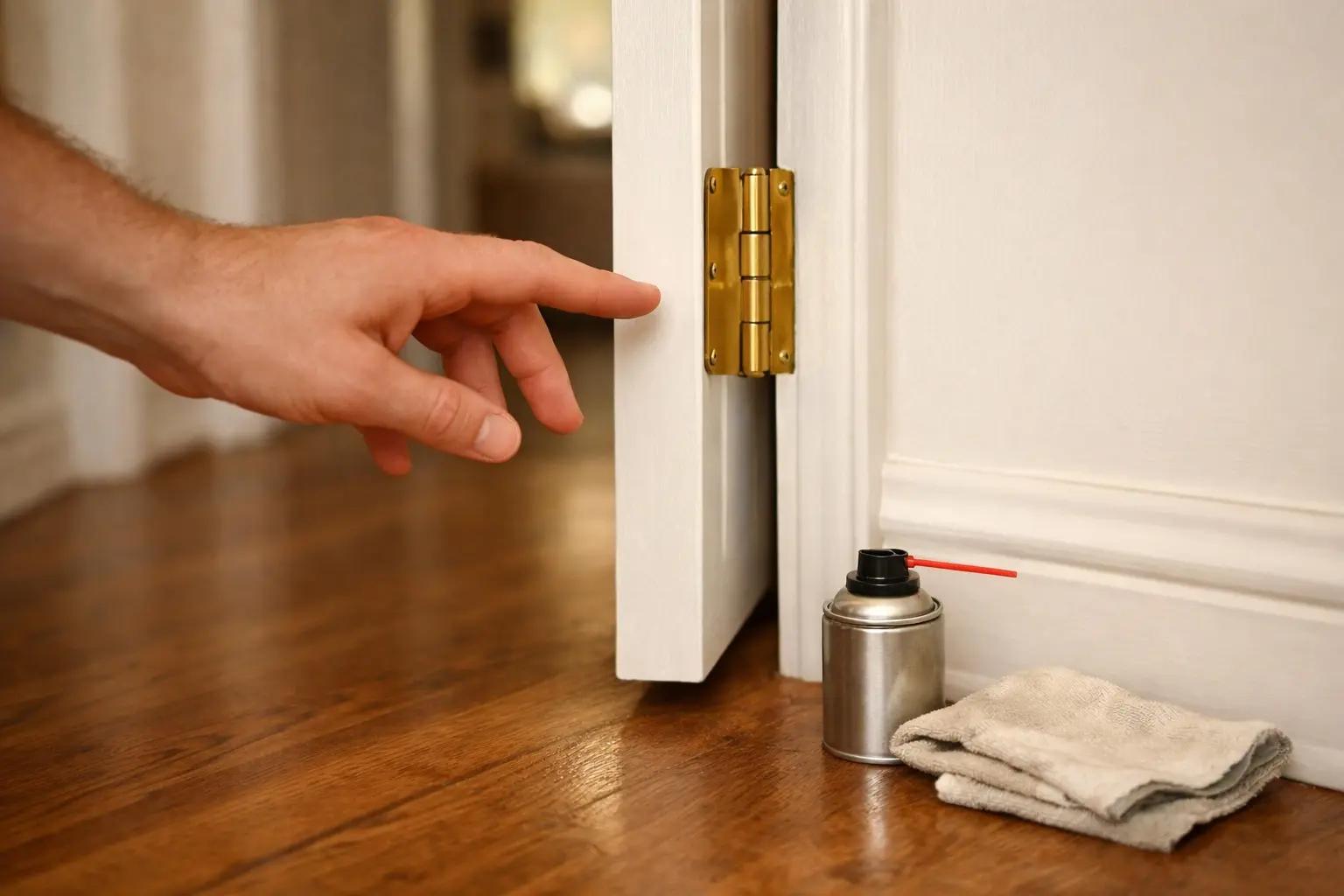
How to Fix a Squeaky Door
A squeaky door is one of the most annoying household problems — and one of the easiest to fix. In most cases you can silence the squeak in under 10 minutes with lubricant you probably already have at home, no special tools required. This guide covers quick lubrication fixes, hinge pin cleaning, and what to do when the squeak keeps coming back.
You Might Also Like
 Easy25 min
Best Deck Stain: Transparent vs Semi vs Solid
There is no "best" deck stain — there is the right stain for your sun exposure, wood condition, and how often you want to redo the job. Transparent stains last 1-2 years but let the natural grain show. Solid stains last 4-7 years but look like paint. This guide walks the four opacity levels and the oil-vs-water choice so you pick the one that matches your deck and your tolerance for re-staining.
 Easy45 min
How to Install a Smart Thermostat
A smart thermostat is one of the highest-ROI upgrades you can make to your home — it learns your schedule, adjusts automatically when you're away, and typically saves about 8% on heating and cooling bills — the figure ENERGY STAR verifies from real-home data, roughly $50 a year — so the $120-250 device usually pays for itself within a few years. If your old thermostat has labeled wires behind it, the swap takes about 30-45 minutes with nothing more than a screwdriver and your phone. This guide covers checking compatibility, labeling wires, mounting the new base, connecting everything, and walking through the app setup so your system is running smart the same day.
 Easy30 min
How to Fix a Dripping Faucet
A dripping faucet wastes more than 3,000 gallons of water per year and can add $20 or more to your monthly water bill. The fix is almost always a worn cartridge, washer, or O-ring — parts that cost under $10 and take 20-30 minutes to replace with basic tools.