How to Fix a Squeaky Door
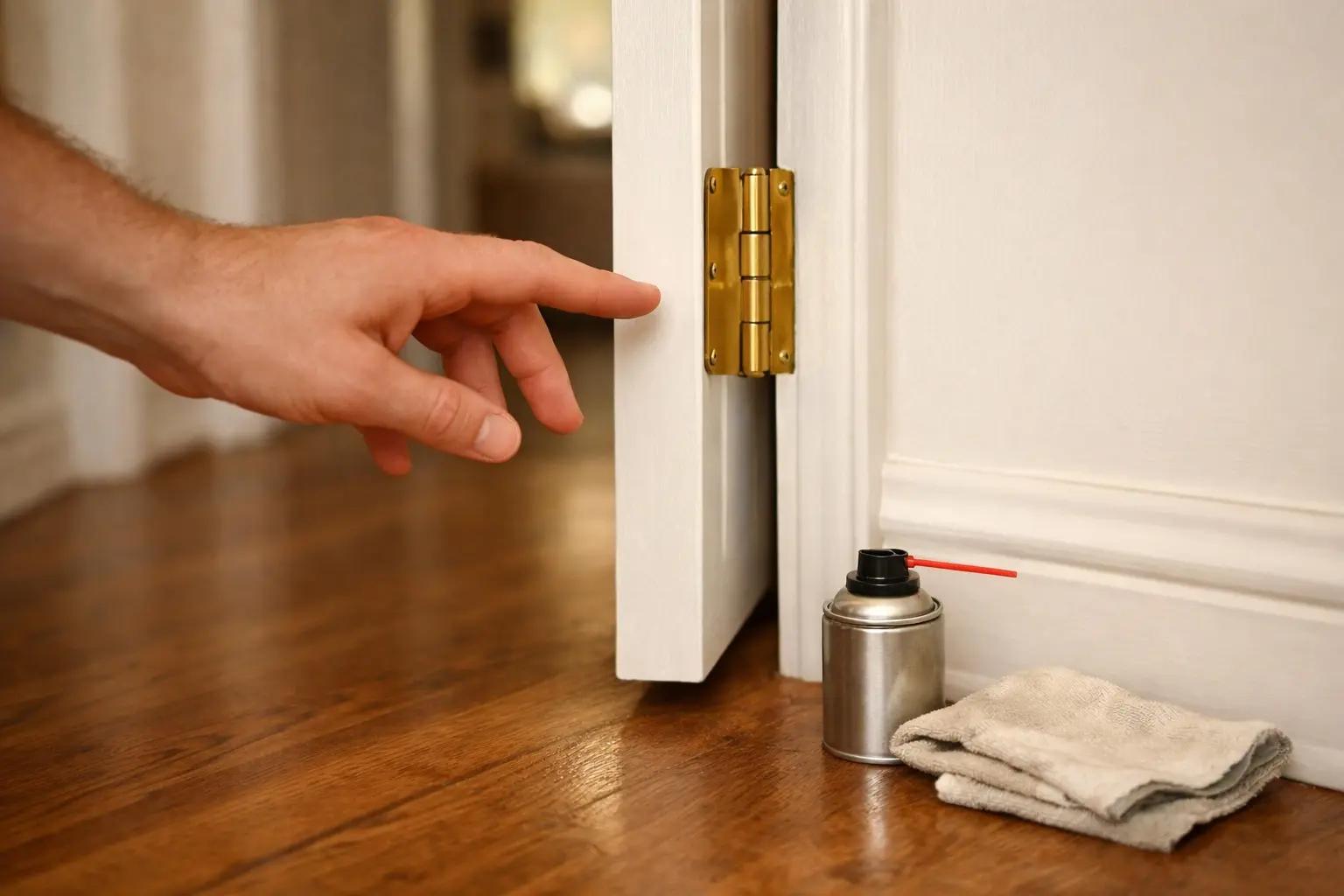

A squeaky door is one of the most annoying household problems — and one of the easiest to fix. In most cases you can silence the squeak in under 10 minutes with lubricant you probably already have at home, no special tools required. This guide covers quick lubrication fixes, hinge pin cleaning, and what to do when the squeak keeps coming back.
What You'll Need
🛠 Tools
📦 Materials
Step-by-Step Instructions
Identify Which Hinge Is Squeaking
Slowly open and close the door while listening carefully. Most interior doors have three hinges — top, middle, and bottom. The squeak usually comes from one specific hinge. Have someone slowly swing the door while you put your ear close to each hinge in turn, or lightly touch each hinge with your fingertip while the door moves — you'll feel the vibration in the noisy one. Mark the culprit hinge with a piece of painter's tape so you know which one to treat.
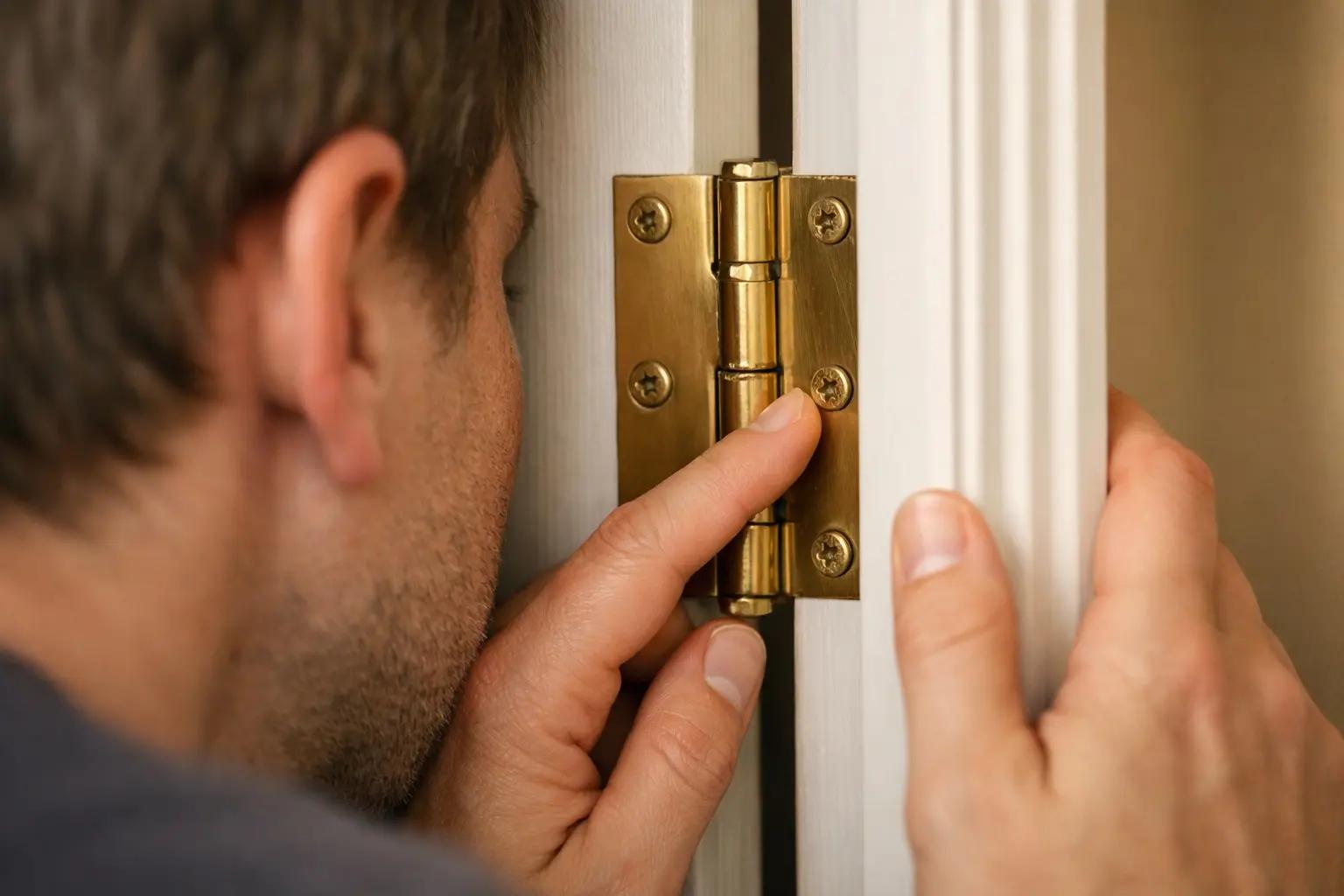
If you can't pinpoint the exact hinge, just treat all three — it only takes an extra minute per hinge and guarantees you get the right one.
Try a Quick Spray Lubrication First
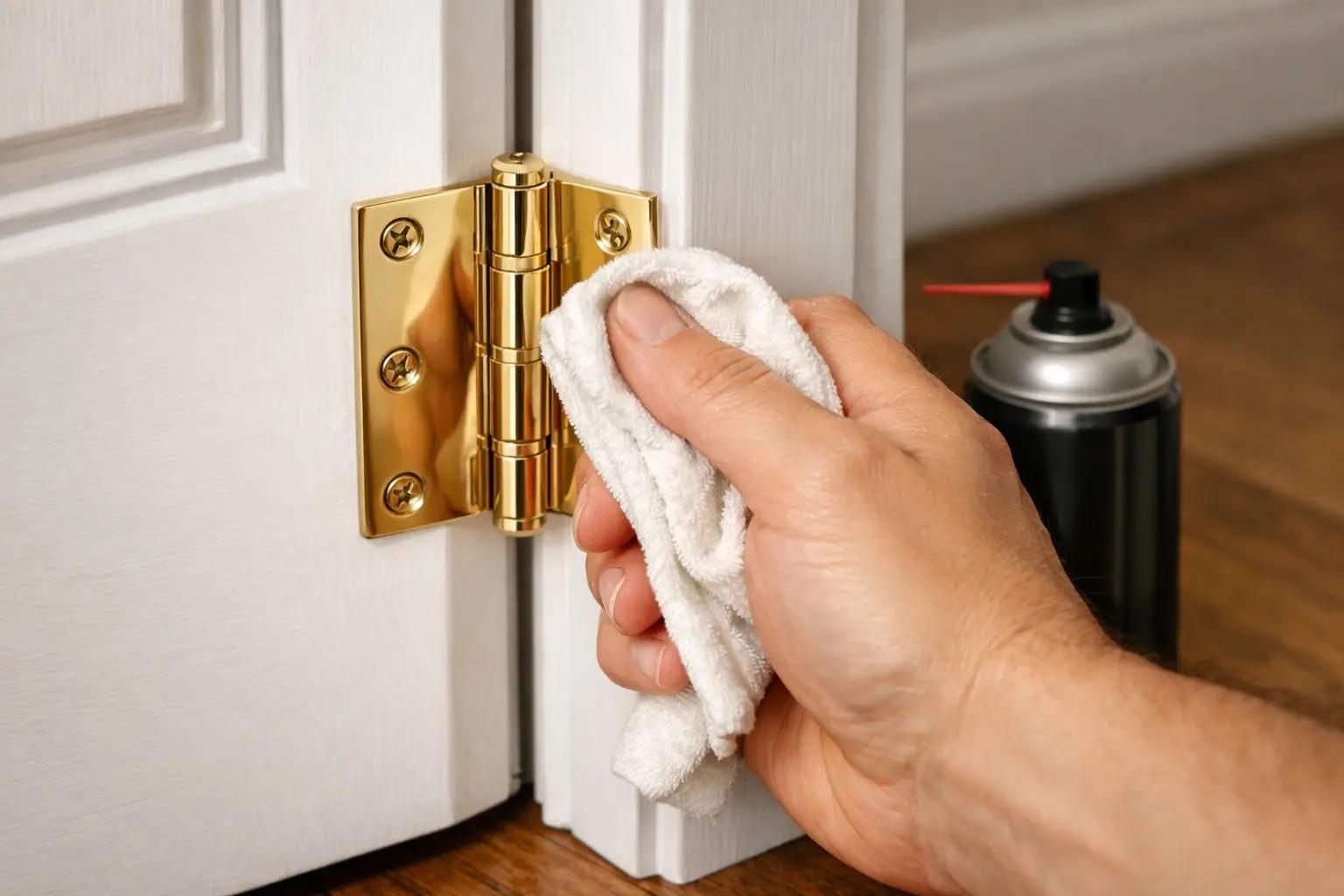
This is the fastest fix and works about 80% of the time. Attach the straw nozzle to a can of silicone-based lubricant spray and aim it at the top of the hinge pin — the seam where the pin enters the hinge barrel. Give it 2-3 short bursts, then swing the door back and forth several times to work the lubricant into the joint. Hold a rag behind the hinge to catch any drips. Test by opening and closing the door normally — if the squeak is gone, you're done.
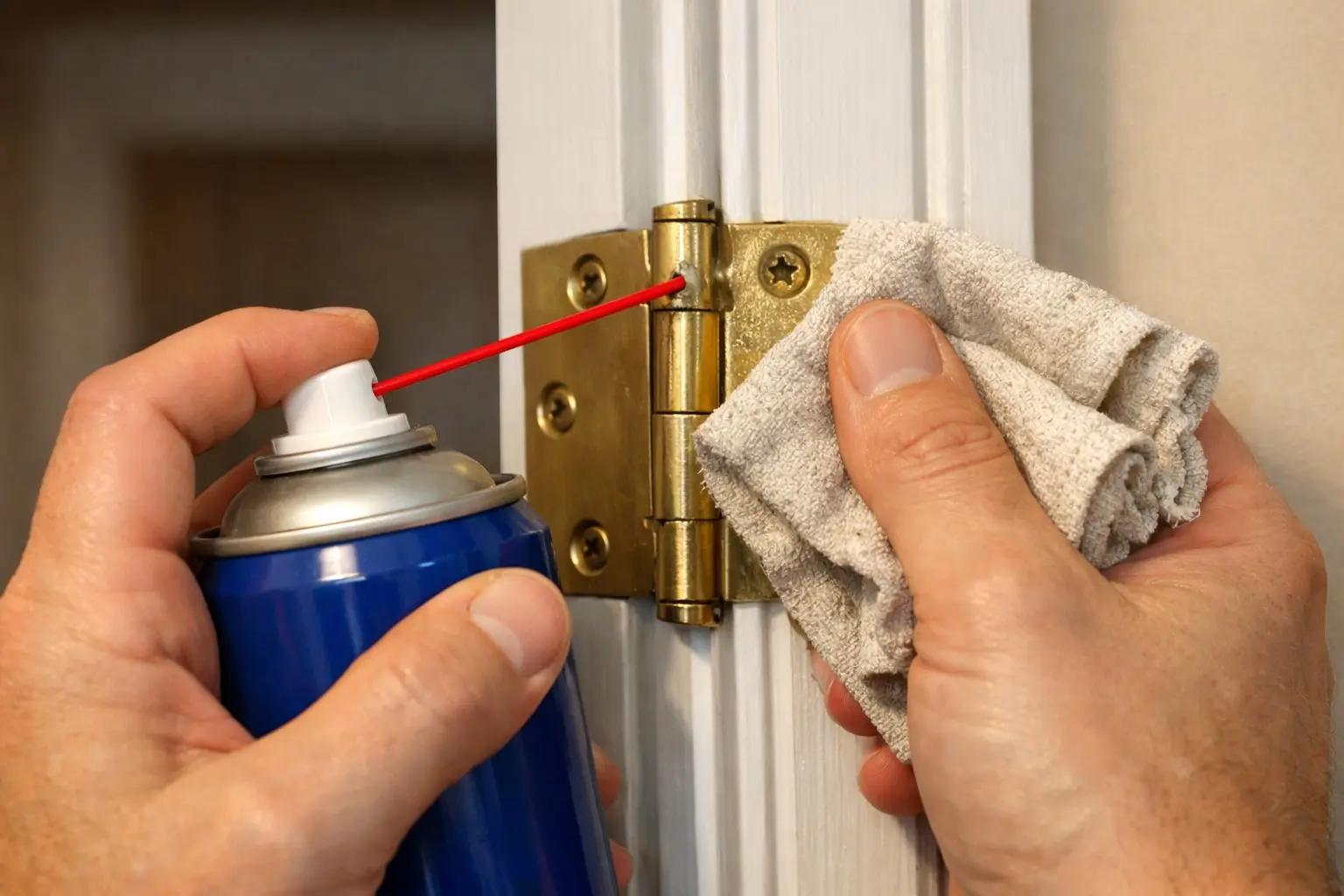
Use silicone spray rather than standard WD-40. Regular WD-40 is a water displacer and short-term penetrant, not a lasting lubricant — its light oils evaporate within days, the squeak returns, and the leftover residue can attract dirt. Silicone spray lasts 6-12 months.
Tighten All Hinge Screws
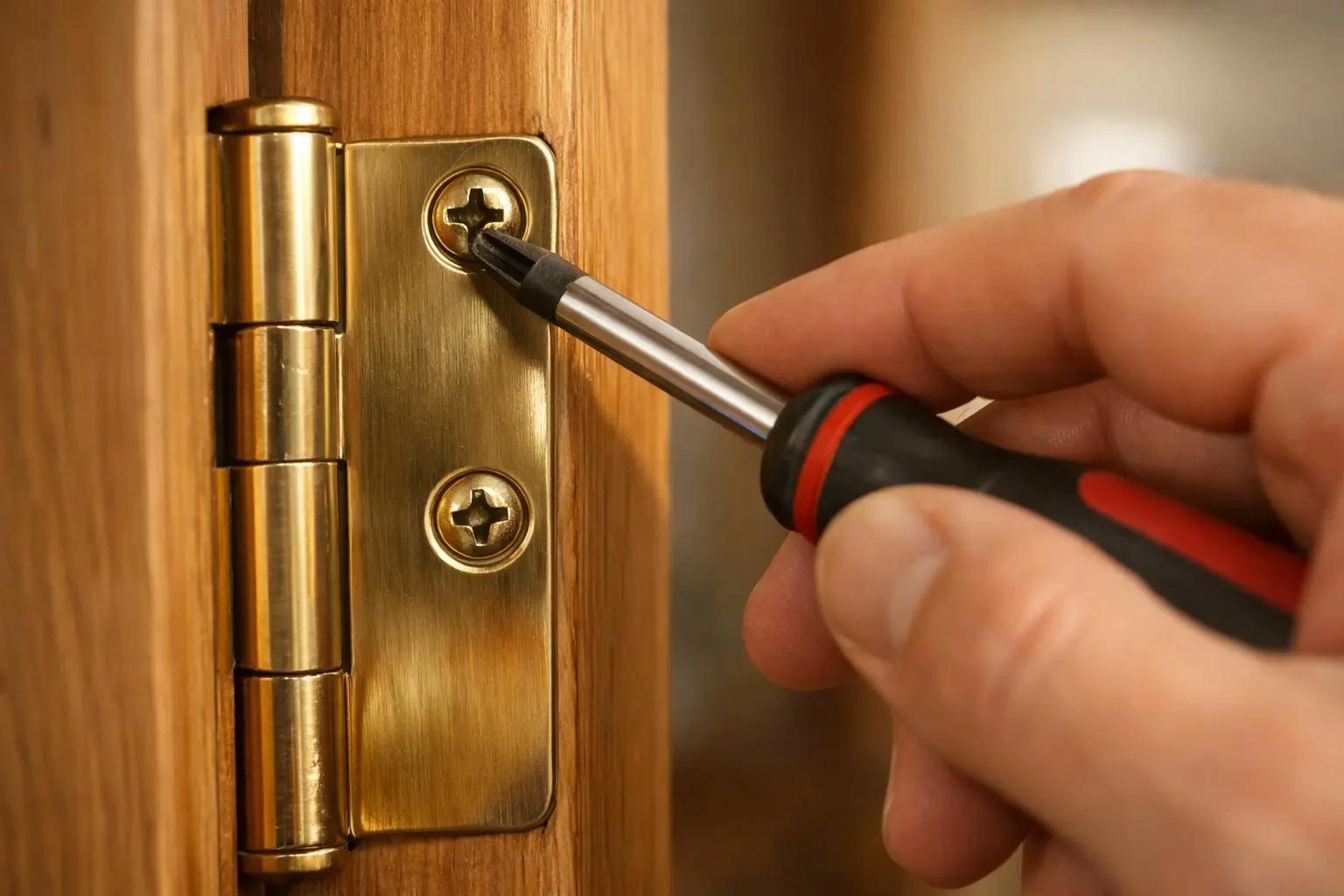
If lubrication alone didn't fix it, the squeak may be caused by a loose hinge vibrating under the door's weight. Using a Phillips-head screwdriver, tighten every screw on both the door-side and frame-side hinge plates. Turn each screw clockwise until snug — don't overtighten, as this can strip the screw hole in the wood. If a screw spins freely and won't tighten, the hole is stripped. Remove the screw, push two wooden toothpicks dipped in wood glue into the hole, snap them flush, and re-drive the screw.
Remove the Hinge Pin for Deep Cleaning
If the squeak persists, you need to clean the hinge pin directly. Close the door most of the way and wedge a book or shim under the bottom edge to support the door's weight. Position a nail or hinge pin punch against the bottom of the hinge pin and tap upward with a hammer until the pin pops up enough to grab with your fingers. Pull the pin out completely. Only remove one hinge pin at a time — the remaining hinges will hold the door in place.
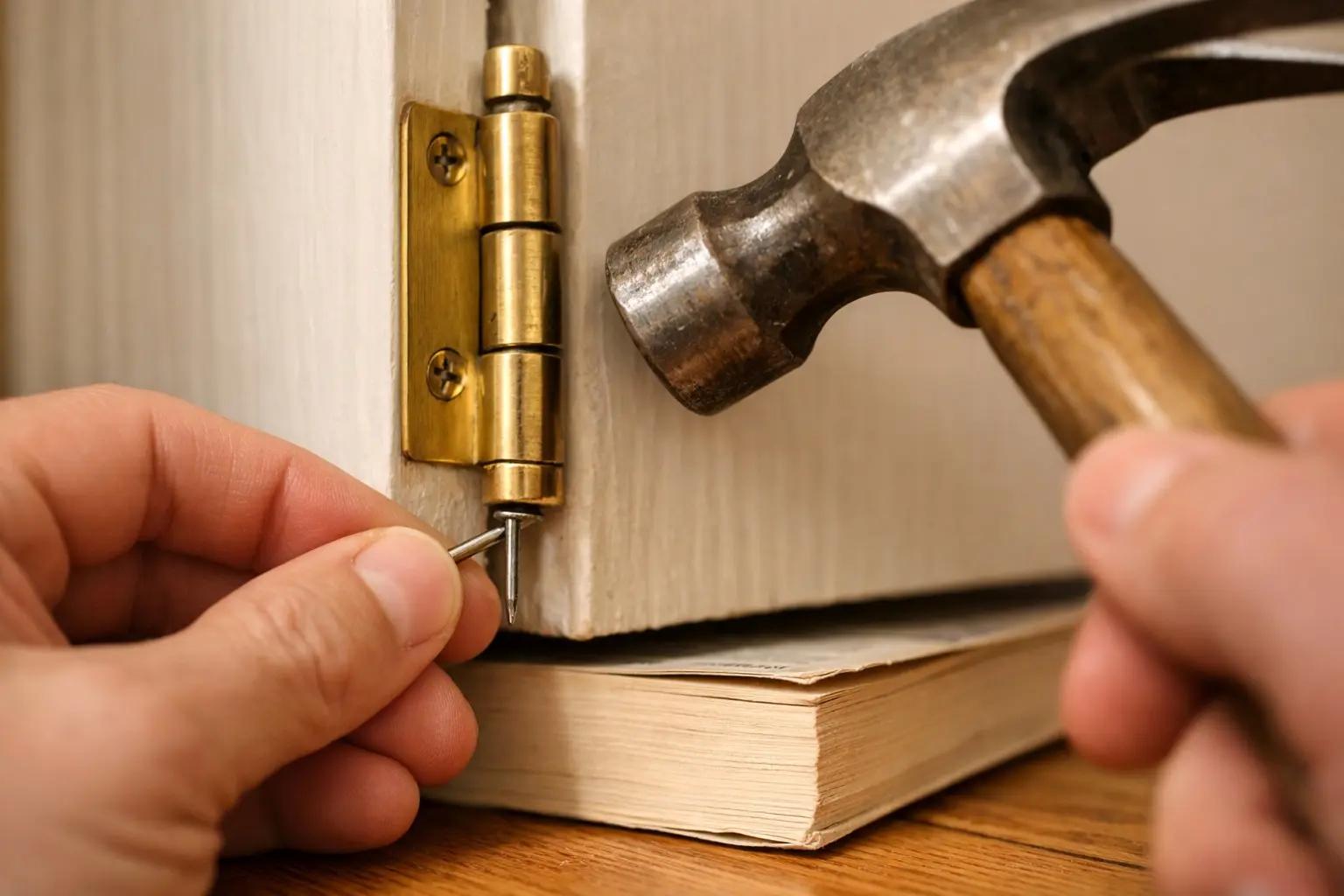
Always support the door with a shim or book before removing a hinge pin. A heavy solid-core door can shift and fall if unsupported, potentially causing injury or damaging the door and frame.
Clean Rust and Debris from the Hinge Pin
Examine the hinge pin — you'll often see a dark, gritty buildup of old lubricant mixed with rust and metal dust. This is what causes the squeak. Scrub the pin from end to end with 0000-grade steel wool until the metal is shiny and smooth. Pay special attention to any rough or pitted spots. If the pin is severely corroded or bent, replace it — you can buy individual hinge pins at any hardware store for under $3. Wipe the pin clean with a dry rag when you're done.
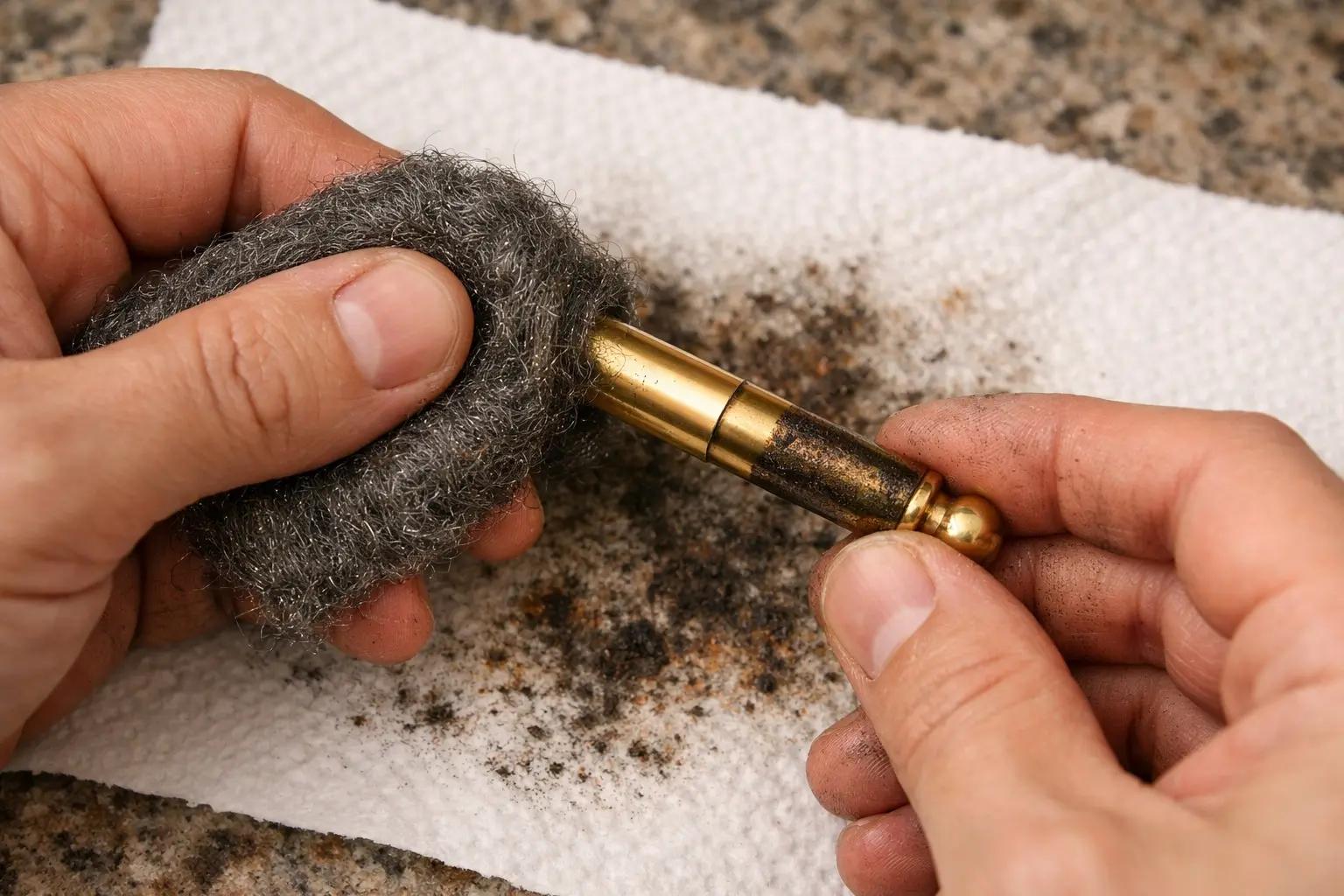
Lubricate the Pin and Hinge Barrel
Apply a thin coat of petroleum jelly or silicone grease along the entire length of the cleaned hinge pin — a fingertip's worth is plenty. Also spray a short burst of silicone lubricant into the hinge barrel (the cylinder the pin slides into) to lubricate the inside. Petroleum jelly is thicker than spray lubricant and stays in place longer, making it the best choice for a lasting fix on a pin you've already removed.
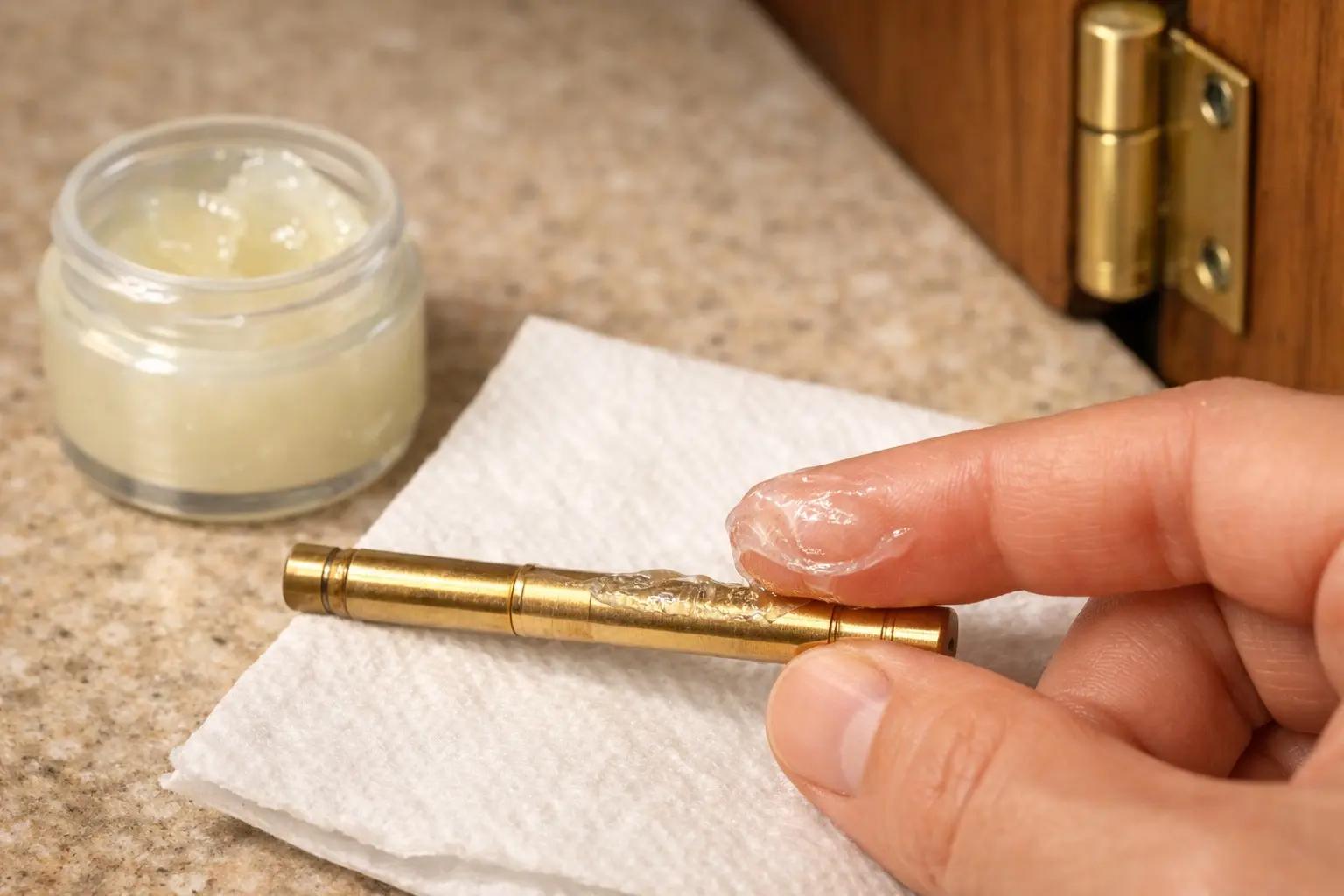
For an even longer-lasting fix, use white lithium grease instead of petroleum jelly — it won't dry out or attract dust the way petroleum-based products can over time.
Reinsert the Hinge Pin and Test
Slide the greased pin back into the hinge barrel from the top, aligning it with the knuckles. Tap it down gently with a hammer until the pin head sits flush with the top of the hinge. Remove the shim or book from under the door. Open and close the door slowly, then at normal speed, listening for any remaining noise. The squeak should be completely gone. If it's quieter but not silent, repeat the cleaning and lubrication on the remaining hinges.
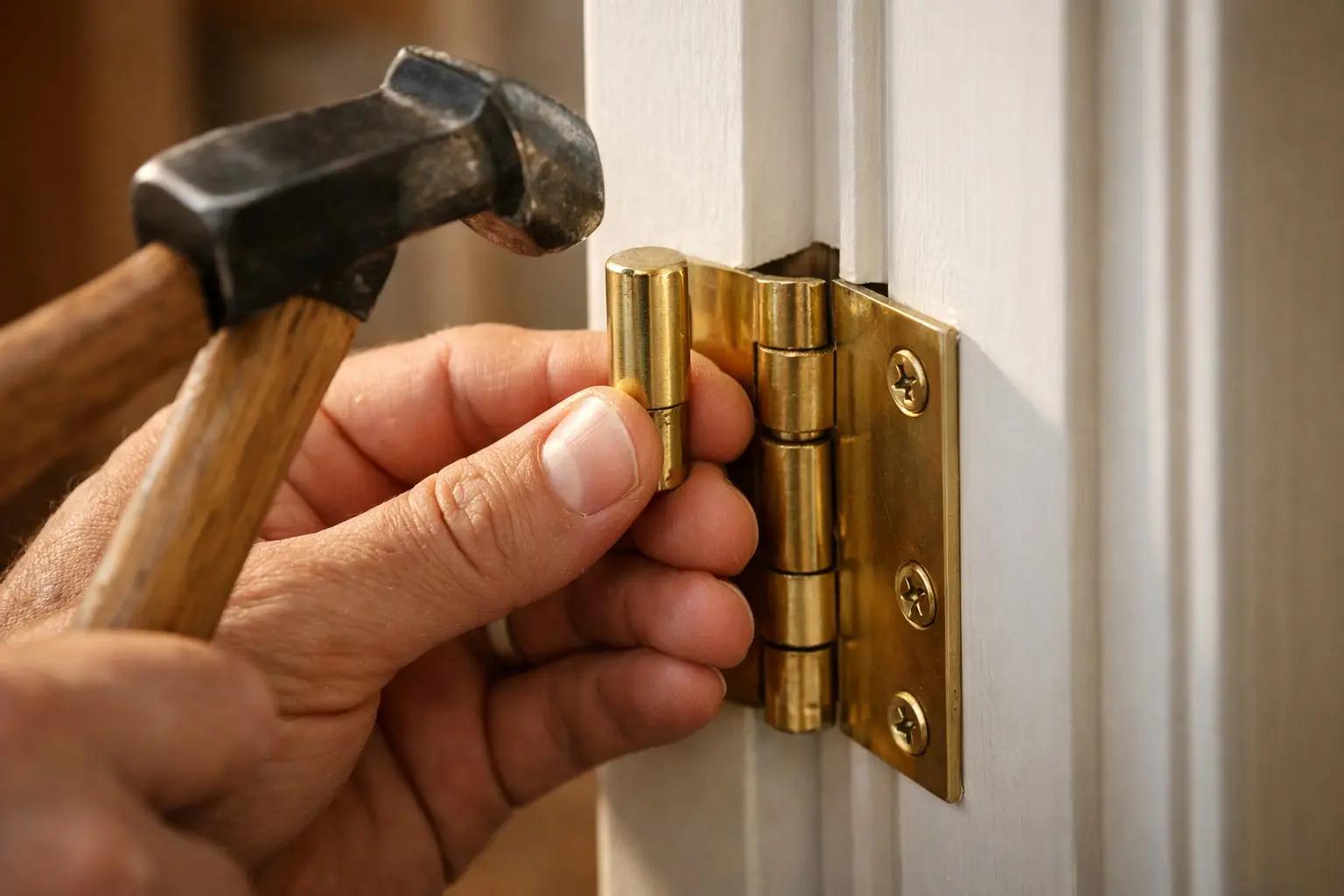
Clean Up and Schedule Maintenance
Wipe any excess lubricant from the hinge plates, door frame, and surrounding wall with a clean rag — silicone spray and petroleum jelly can stain paint if left to sit. Check the floor for any drips and clean them immediately, especially on hardwood or tile where oil-based products make the surface slippery. Going forward, apply a quick spray of silicone lubricant to all door hinges in your home every 6-12 months to prevent squeaks from returning.
Frequently Asked Questions
Which hinge is actually squeaking?
+
Swing the door slowly and listen, then isolate it: lift up gently on the door handle as you swing. If the noise changes or stops, the load is shifting off the squeaking hinge. You can also have someone swing the door while you rest a finger lightly on each hinge barrel in turn — the one that is squeaking transmits a distinct vibration. Doors often have more than one dry hinge, so check all of them rather than stopping at the first.
What is the best lubricant for a squeaky door hinge?
+
A dry or silicone-based lubricant is the better long-term choice because it does not attract dust and grit the way an oil does. Penetrating sprays work immediately but tend to collect grime and go quiet only temporarily. Whatever you use, work it into the hinge barrel where the pin turns — spraying the outside of the hinge leaf accomplishes nothing — and wipe the runoff so it does not stain the door or the floor.
Why does my door squeak again a few weeks later?
+
A surface spray only coats the outside of the pin. When rust or hardened old grease is inside the barrel, the lubricant washes past it and the squeak returns once it dries. The durable fix is to tap the hinge pin out, scrub the rust and residue off it with steel wool or a wire brush, lubricate the clean pin, and reinsert it. Doing one hinge at a time keeps the door hanging.
Can loose hinge screws cause a squeak?
+
Yes. A hinge that has worked loose lets the door sag slightly, which changes how the pin sits in the barrel and creates binding and noise. Tighten every screw on both leaves before assuming you need lubricant. If a screw spins without biting, the hole is stripped — the standard fix is to pack the hole with wood glue and toothpicks or a golf tee, let it set, and drive the screw again.
Sources & further reading
- How to fix a squeaky door hinge — Schlage
- How to Fix a Squeaky Door — Bob Vila
More Carpentry Guides
View all → Easy45 min
How to Install Floating Shelves
Floating shelves add storage and style to any room without bulky brackets — and installing a pair takes about 45 minutes with basic tools. A quality floating shelf kit costs $20-60, versus $100-200 for a handyman visit. This guide covers finding studs, leveling the bracket, and mounting the shelf so it holds up to 50 pounds per stud without sagging.
 Medium8 hrs
How to Install Laminate Flooring
Click-lock laminate is the most beginner-friendly floor you can lay — it floats over an underlayment with no nails, no glue, and no wet saw. This guide walks the full job: acclimating the planks, flattening the subfloor, getting a dead-straight first row, staggering the joints, and finishing the edges. Expect about a day of work for a typical room and roughly $2 to $5 per square foot in materials, a fraction of a pro install.
 Easy30 min
How to Replace a Window Screen
A torn window screen is a bug highway all summer, and the fix is one of the best value-for-effort repairs in the house: about $15 in mesh and spline, a $6 roller tool, and 30 minutes at a table. This guide covers the patch-or-rescreen decision, matching spline size to mesh type, and the rolling technique that gets a drum-flat screen without bowing the frame.
You Might Also Like
 Medium30 min
How to Troubleshoot a Microwave That Won't Heat
A microwave that runs — light on, turntable spinning, timer counting down — but leaves food stone cold is one of the most common appliance failures, and about half the time the cause is something you can fix in five minutes for free. This guide walks the diagnosis from the easy stuff (demo mode, power level, a tripped GFCI, a dirty door latch) to reading the failure signature that tells you the high-voltage circuit is gone, then helps you make the repair-or-replace call with real numbers.
 Easy30 min
How to Replace an Electrical Outlet
A worn-out or discolored electrical outlet is one of the simplest electrical repairs you can tackle yourself — swapping one takes about 15-30 minutes and costs under $5 in parts versus $75-150 for an electrician visit. This guide walks you through safely replacing a standard duplex receptacle, including how to handle the wiring correctly and avoid the most common DIY mistakes.
 Medium45 min
How to Install a Ceiling Fan
Replacing a light fixture with a ceiling fan improves air circulation in summer and can reduce heating costs in winter by circulating warm ceiling air downward. Most installs take 45-60 minutes.