How to Install a Closet Organization System
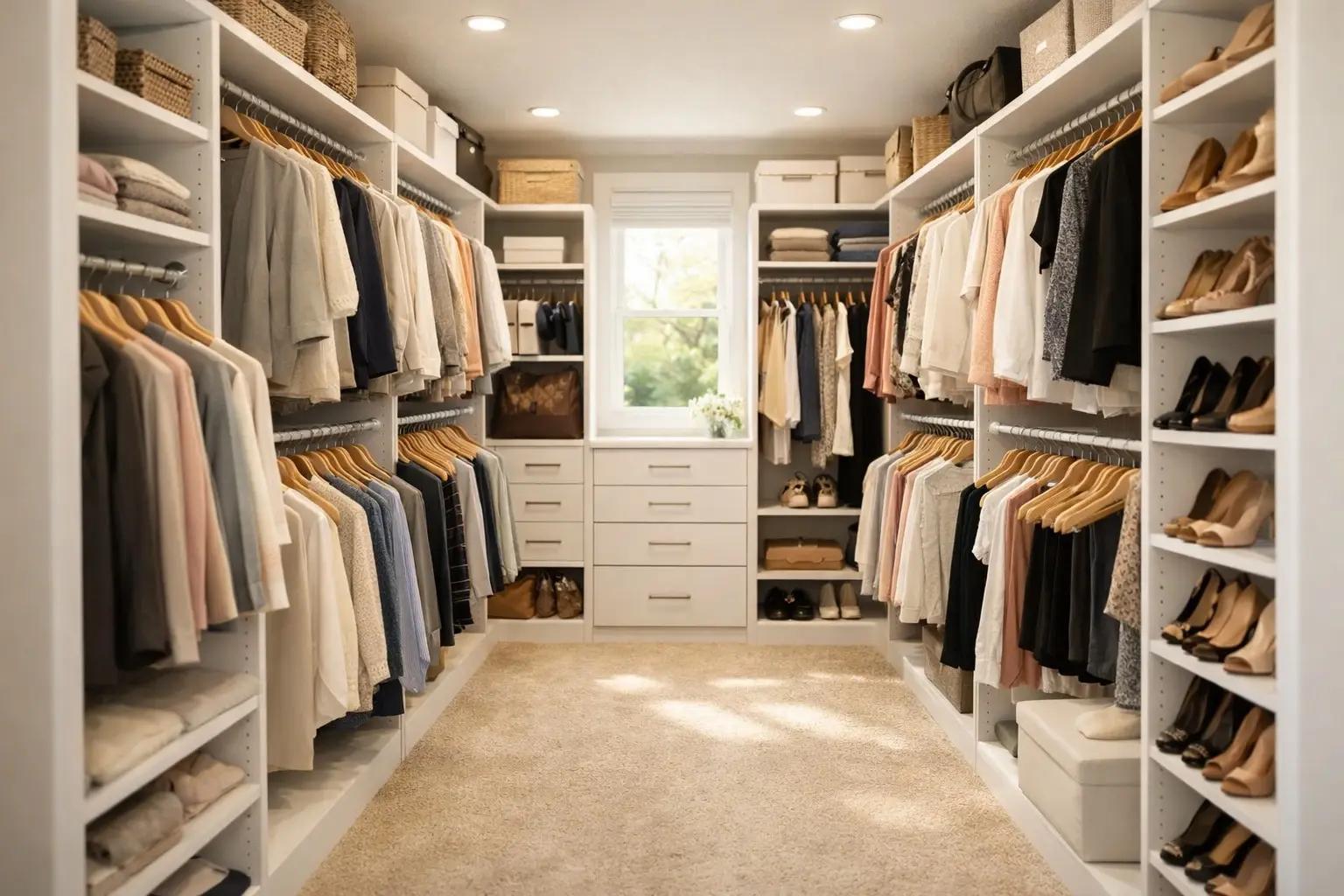

A well-designed closet organizer can double your usable storage space and turn a frustrating pile-and-dig situation into a calm, everything-has-a-place wardrobe. This guide walks through installing an adjustable shelf-and-rod system — the most popular DIY option — in about half a day for $150-400 in materials, saving $500-1,500 over professional installation.
What You'll Need
🛠 Tools
📦 Materials
Safety First
- •Always wear safety glasses when cutting melamine or plywood — the laminate chips into small sharp fragments that can fly toward your face.
- •Secure the hanging rail into wall studs wherever possible. A fully loaded closet system can hold 200-400 lbs of clothing — drywall alone cannot support this weight and will pull out over time.
Step-by-Step Instructions
Empty the Closet and Remove the Old System
Take everything out of the closet — clothes, shoes, bins, and anything stored on the shelf. Remove the existing shelf and rod by unscrewing the support brackets and shelf clips from the wall. Pull out any old drywall anchors with pliers, or drive them flush with the wall if they resist. Fill all old screw holes and anchor holes with lightweight spackling compound, let it dry 30 minutes, then sand smooth with 120-grit sandpaper. Touch up with matching wall paint if the patched spots are visible. A clean, repaired wall surface gives you a blank canvas and ensures the new system mounts flush.
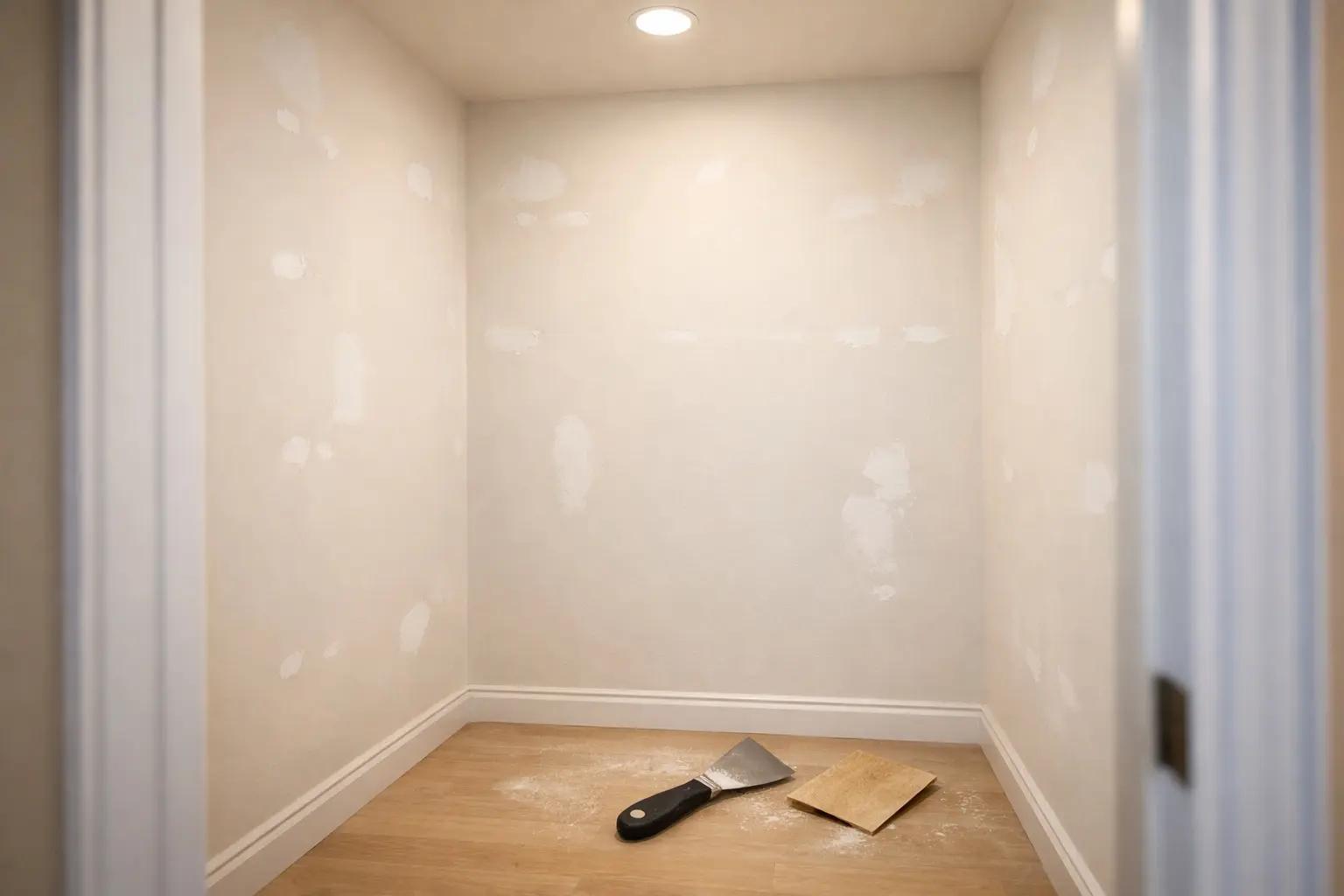
While the closet is empty, this is the perfect time to add a fresh coat of paint. A bright white semi-gloss reflects light and makes the closet feel larger. It takes an hour to paint and an hour to dry — well worth the effort.
Measure the Closet and Plan Your Layout
Measure the closet width, depth, and height at multiple points — closets are rarely perfectly square. Record the narrowest width (this is your maximum shelf length), the shortest height from floor to ceiling, and the depth from back wall to door frame. Sketch a layout on paper or use the manufacturer's online design tool. Plan for double-hanging sections (two rods stacked vertically, 40 inches and 80 inches from the floor) for shirts and pants, a long-hang section (one rod at 68 inches) for dresses and coats, shelves above each rod, and a shoe shelf or cubby near the floor. Leave at least 2 inches of clearance between the top shelf and the ceiling for air circulation and easy access.
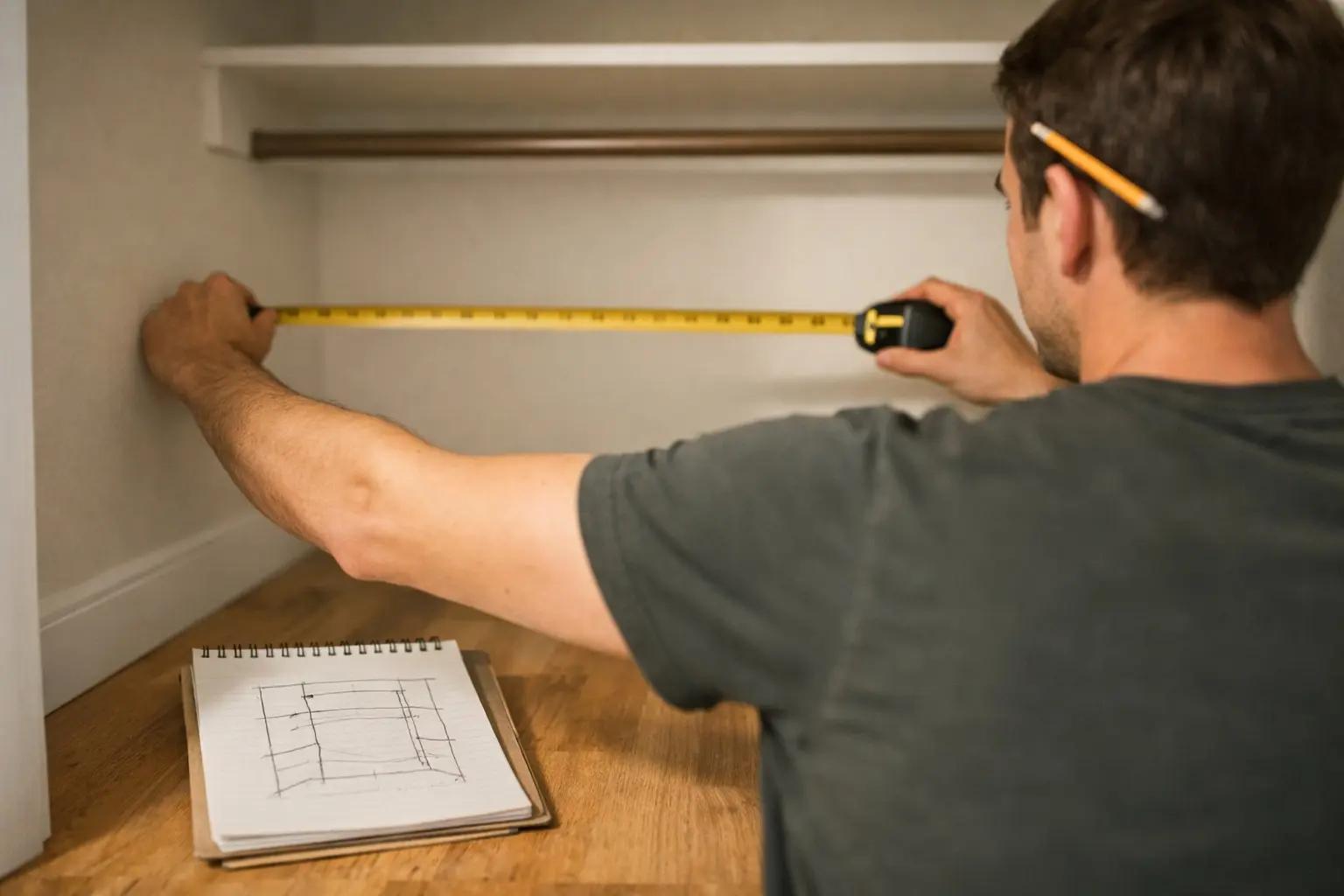
The most common planning mistake is allocating too much long-hang space. Most wardrobes are 70% short items (shirts, jackets, folded pants) and 30% long items (dresses, coats). Measure your longest garments and size the long-hang section to fit only what you actually own.
Find and Mark Wall Studs
Run a stud finder slowly across the back wall of the closet at roughly the height where your hanging rail will mount (usually 80-84 inches from the floor for a standard reach-in closet). Mark each stud edge with a pencil, then find the center by marking the opposite edge and splitting the difference. Studs in most homes are 16 inches on center, so once you find two you can predict the rest — but always verify each one with the stud finder. Mark stud locations with a vertical pencil line from the rail height down about 12 inches so the marks stay visible as you work. The more screws you drive into studs, the stronger your system will be.
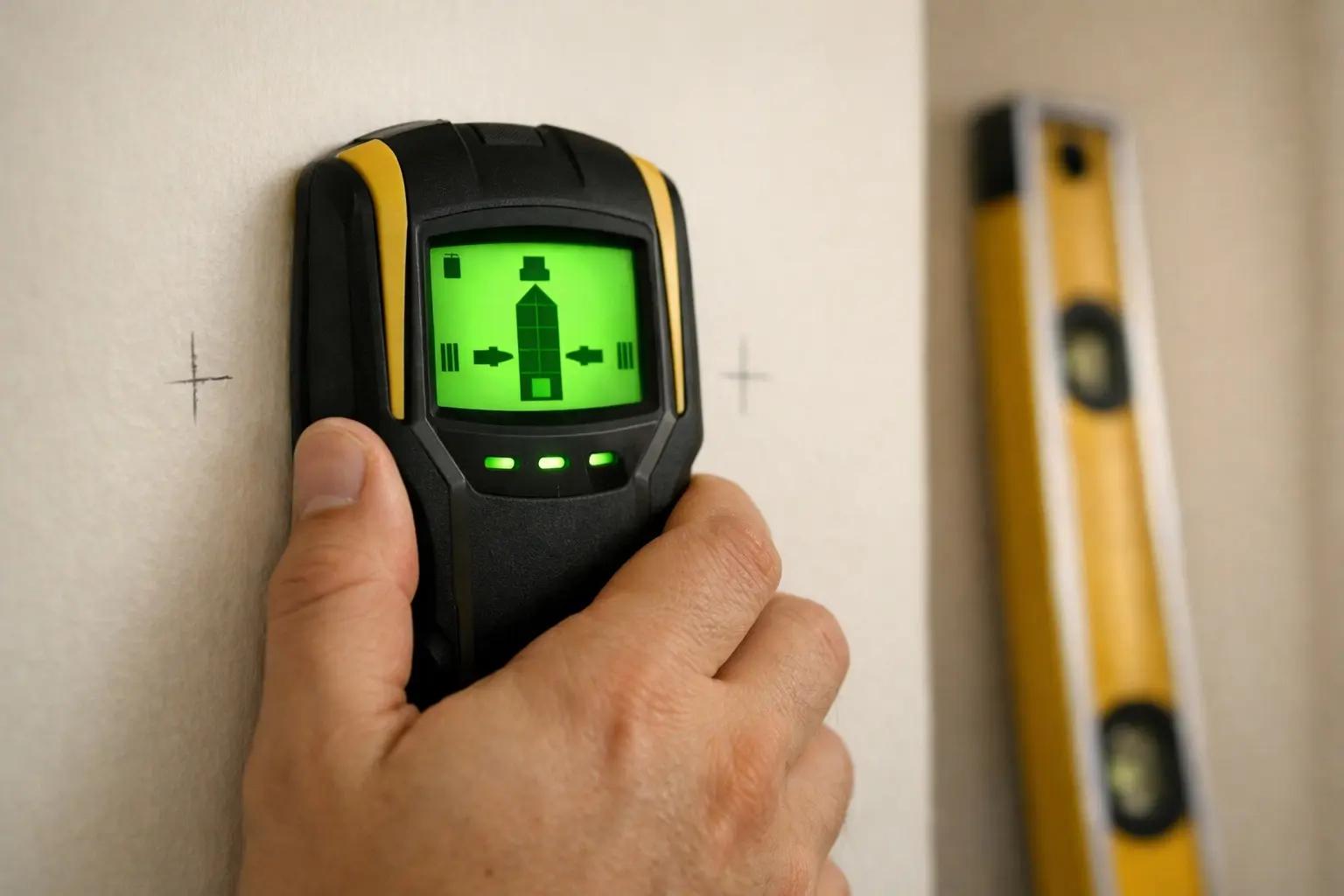
If your stud finder detects live electrical wires or plumbing behind the wall, adjust your rail height or position to avoid drilling into them. Most closet walls have minimal wiring, but check before drilling.
Install the Hanging Rail
The hanging rail (also called the mounting strip or hang track) is the backbone of your entire system — every shelf bracket and rod support clips into this horizontal rail. Hold the rail against the back wall at your planned height and use a 4-foot level to ensure it is perfectly level. Mark the screw hole positions, prioritizing holes that align with studs. Pre-drill pilot holes using a 1/8-inch bit, then drive #10 x 2-1/2-inch screws through the rail into each stud. For any sections between studs, install 50-lb-rated toggle bolt anchors. The rail should feel absolutely solid with no flex when you push on it — if it moves, add another screw into a stud.
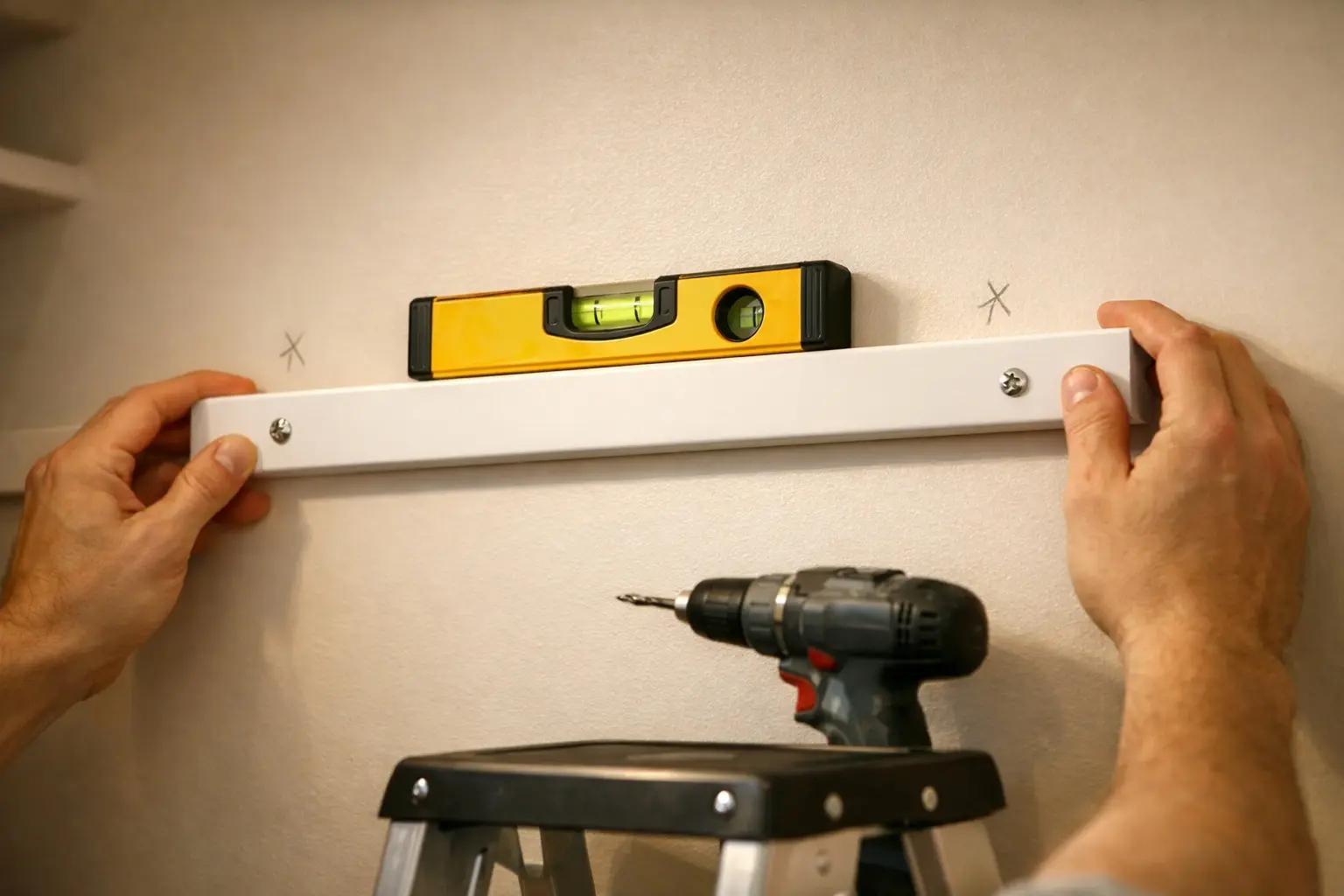
Never rely solely on drywall anchors for the hanging rail. At least 75% of the rail screws must go into studs. A fully loaded closet section can exert 50-100 lbs of downward and outward force — drywall anchors alone will eventually pull out.
Cut Shelves and Rods to Fit
Measure each shelf section opening and subtract 1/8 inch for clearance on each side (1/4 inch total) so shelves slide in and out without binding. Mark the cut line on the finished (top) face of each melamine shelf using a pencil and straight edge. Cut with a circular saw equipped with a fine-tooth blade (60+ teeth), keeping the finished side face-up to minimize chipping. For metal closet rods, measure the opening, subtract 1/4 inch, and cut with a hacksaw or pipe cutter — file the cut end smooth with a metal file to remove burrs. Label each piece with painter's tape noting its location.
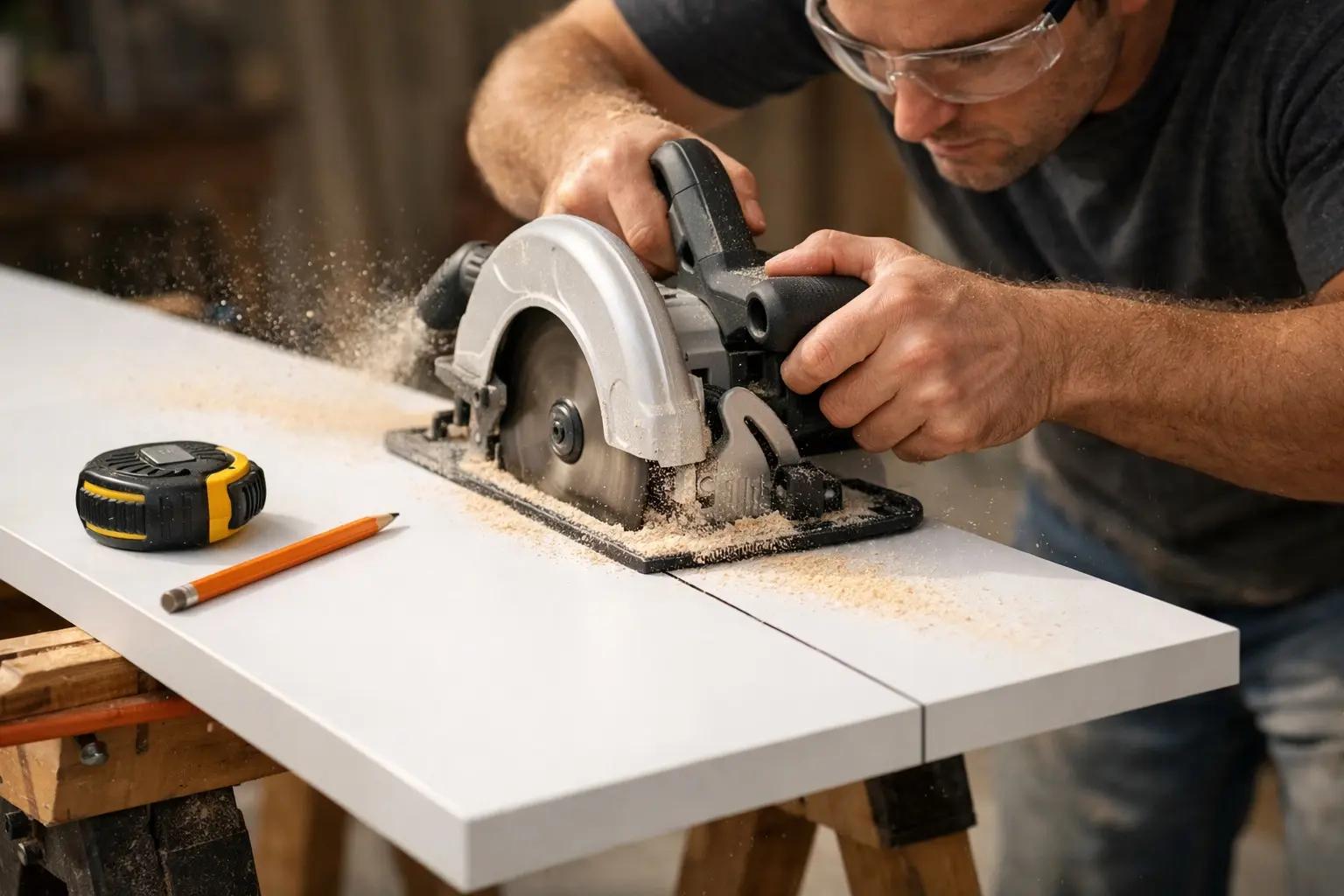
Apply a strip of painter's tape along the cut line before sawing melamine — it dramatically reduces edge chipping. Peel the tape off after cutting for a clean, factory-looking edge.
Mount Shelf Brackets and Vertical Standards
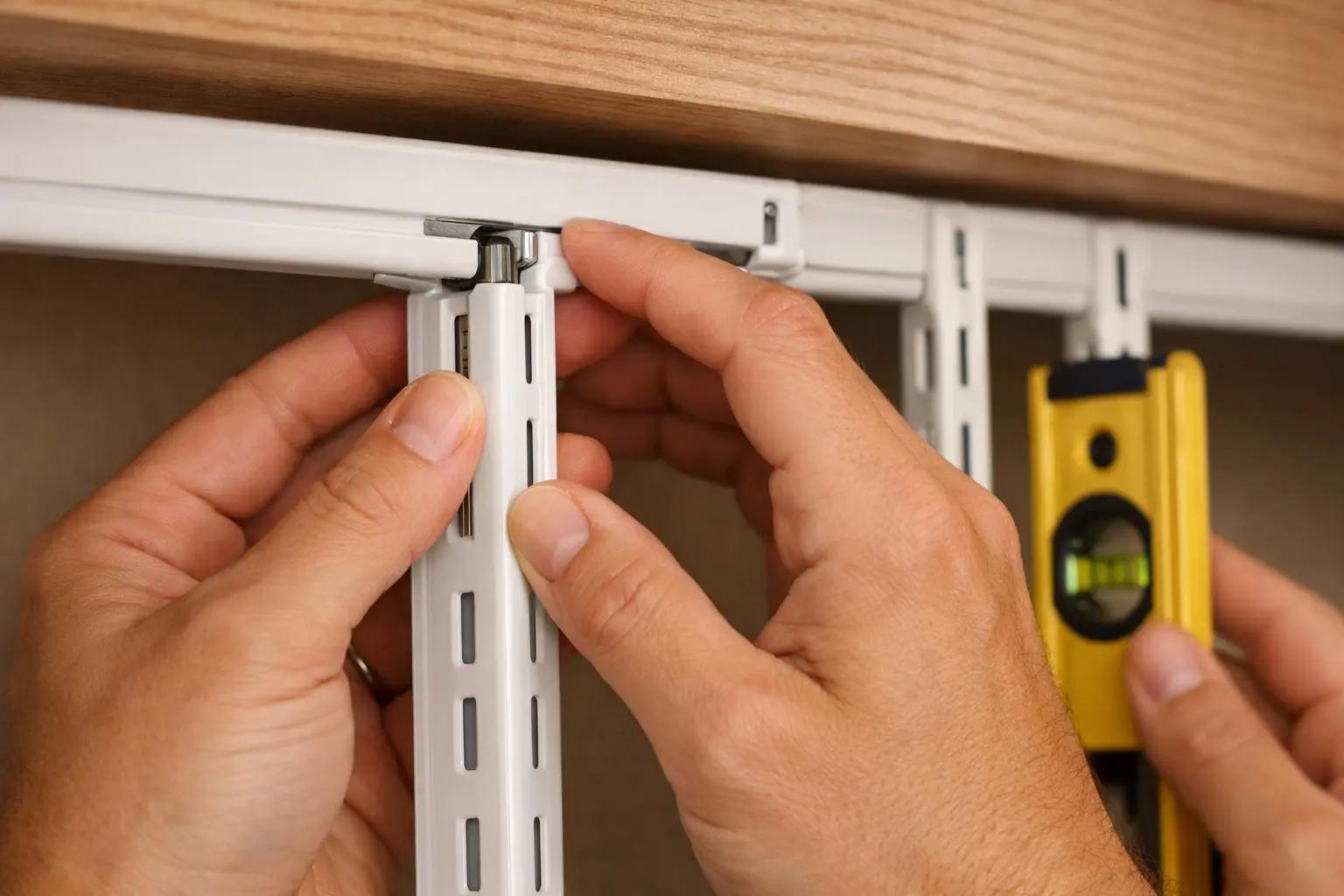
Clip the vertical shelf standards (the slotted metal strips that hold adjustable shelf pins) into the hanging rail at the positions you marked in your layout plan. Most systems click or lock into the rail — push up, then down to seat them. Use a level to verify each standard hangs perfectly vertical. If your system uses fixed shelf brackets instead of adjustable standards, screw the brackets into the wall at the marked heights, driving into studs wherever possible. Space shelf brackets no more than 32 inches apart to prevent shelf sag — for heavy items like stacked sweaters or bins, keep brackets at 24-inch intervals.
Install Shelves, Rods, and Drawers
Insert shelf support clips or pins into the vertical standards at your planned heights, then lay each shelf on its supports. Push down gently at the center to confirm it is seated solidly — a properly supported shelf should not rock or flex. Install rod support cups at the appropriate heights: 68 inches from the floor for long-hang, 80 inches for the upper short-hang rod, and 40 inches for the lower short-hang rod. Drop the closet rods into the cups. If your system includes pull-out drawers or basket slides, mount the drawer slides to the vertical standards following the manufacturer's instructions — these typically require four screws per slide and must be perfectly level for smooth operation.
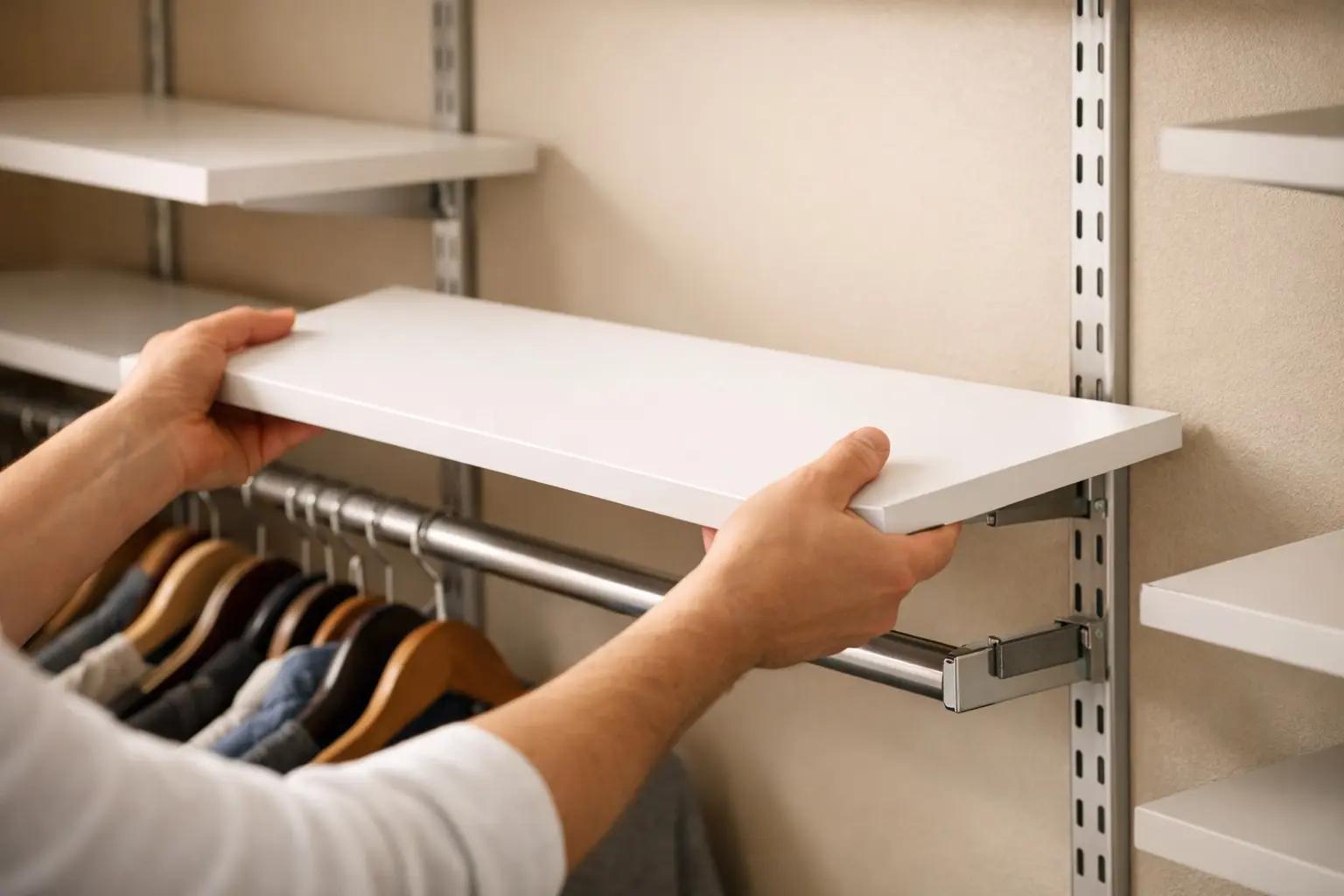
Install your most-used hanging rod at a height where you can comfortably reach the rod without tiptoeing — typically 66-70 inches from the floor for most adults. Put the less-accessed rod (seasonal or formal wear) higher at 80+ inches.
Test the System and Organize Your Clothing
Before loading the closet, grab each shelf and rod firmly and pull outward and downward to test that nothing shifts or pulls away from the wall. Hang a heavy coat or bag of books on each rod to verify the support brackets hold. Adjust any shelf heights now while the system is empty — it is much easier than rearranging once loaded. Now load the closet strategically: group clothing by type (shirts, pants, dresses), then by color within each group. Place everyday items at eye and arm level, off-season items on the top shelf, and shoes on the floor shelf or in cubbies. Leave 1-2 inches of breathing room between garments on each rod to reduce wrinkles and make items easy to pull out.
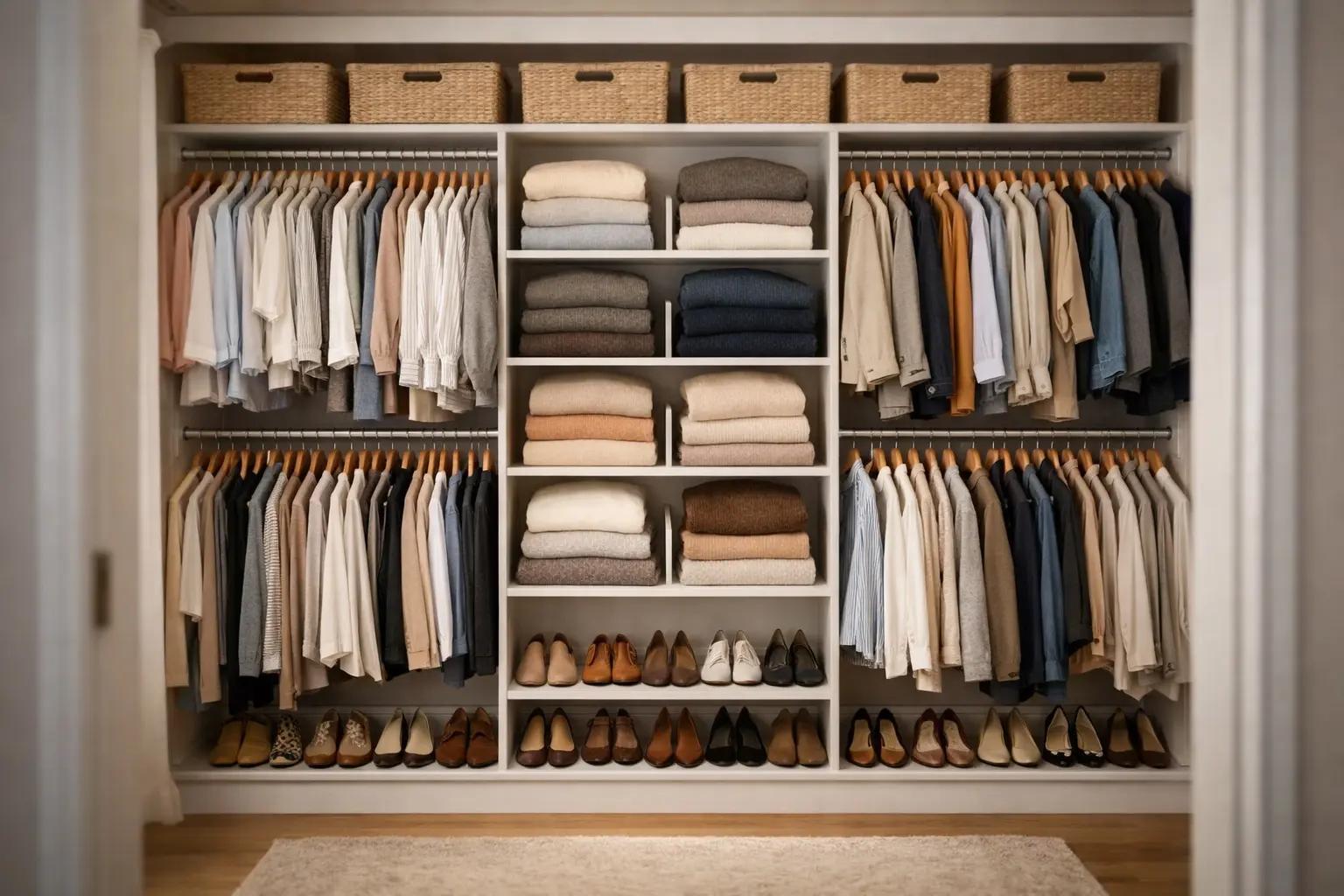
Switch to slim velvet hangers throughout — they save about 1/3 of rod space compared to bulky plastic hangers, prevent clothes from slipping off, and give the closet a uniform, tidy look. A 50-pack costs under $20 and is the single highest-impact closet upgrade.
Frequently Asked Questions
Do closet systems have to be screwed into studs?
+
The main hanging rail does, yes — it carries the weight of the entire system plus everything on it. Drywall anchors alone will pull out under a loaded double-hang rod. Locate and mark every stud along the run first and drive into them; use anchors only for secondary points that carry little load. This is the single most common failure point in a DIY closet install.
How much does a DIY closet system cost versus professional installation?
+
Expect roughly $150-400 in materials for an adjustable shelf-and-rod system, against about $500-1,500 for professional installation of a comparable setup. The savings come almost entirely from labor, and the job is about half a day for most reach-in closets. Custom built-ins with islands or integrated lighting sit in a different price bracket entirely.
How high should I mount a double hanging rod?
+
Plan the layout around what you actually own before drilling anything. Double-hang sections need enough clearance for shirts and folded pants on both levels, while long-hang sections for dresses and coats need a single full-height run. Measure your longest garments first and lay the whole plan out on paper — moving a rail after it is screwed into studs means patching holes.
Can I install a closet system in a plaster or masonry closet?
+
It is much harder and often worth handing off. Plaster-on-lath, common in pre-1950 homes, tends to shatter around anchors so they will not hold reliably, and masonry needs masonry anchors and a hammer drill. If a stud scan turns up steel framing rather than wood, that also changes the fastener requirements. Confirm what your walls are made of before buying the kit.
What if my closet floor is not level?
+
A small amount is tolerable, but if the floor runs more than about 1/2 inch out of level across the closet, forcing a kit into place causes real problems — most visibly drawers that slide open on their own. The proper fix is scribing the vertical panels to follow the floor so the system itself sits plumb, which is fiddly enough that many people bring in a finish carpenter for that step.
Sources & further reading
- How To Install a Simple Rod and Shelf System for Your Closet — Family Handyman
- Closet Organizer Installation Guide — John Louis Home
More Carpentry Guides
View all → Easy45 min
How to Install Floating Shelves
Floating shelves add storage and style to any room without bulky brackets — and installing a pair takes about 45 minutes with basic tools. A quality floating shelf kit costs $20-60, versus $100-200 for a handyman visit. This guide covers finding studs, leveling the bracket, and mounting the shelf so it holds up to 50 pounds per stud without sagging.
 Medium8 hrs
How to Install Laminate Flooring
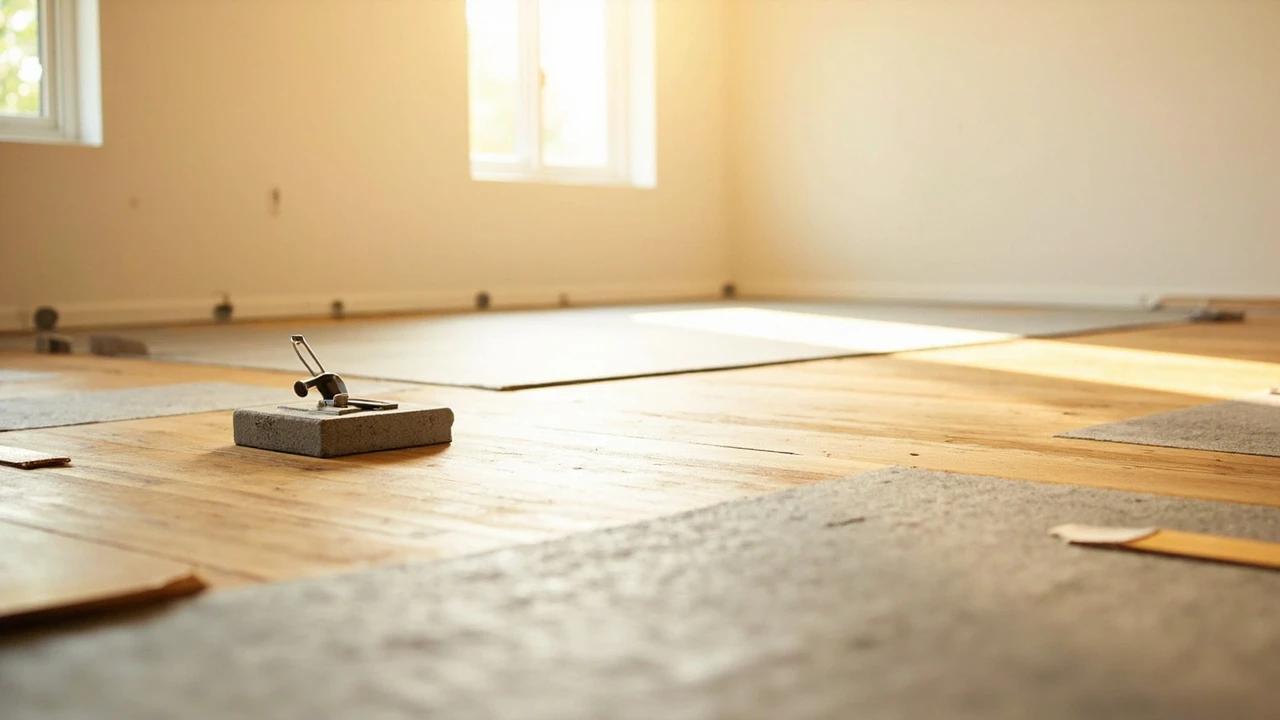
Click-lock laminate is the most beginner-friendly floor you can lay — it floats over an underlayment with no nails, no glue, and no wet saw. This guide walks the full job: acclimating the planks, flattening the subfloor, getting a dead-straight first row, staggering the joints, and finishing the edges. Expect about a day of work for a typical room and roughly $2 to $5 per square foot in materials, a fraction of a pro install.
 Easy2h 30m
How to Clean and Seal Bathroom Grout
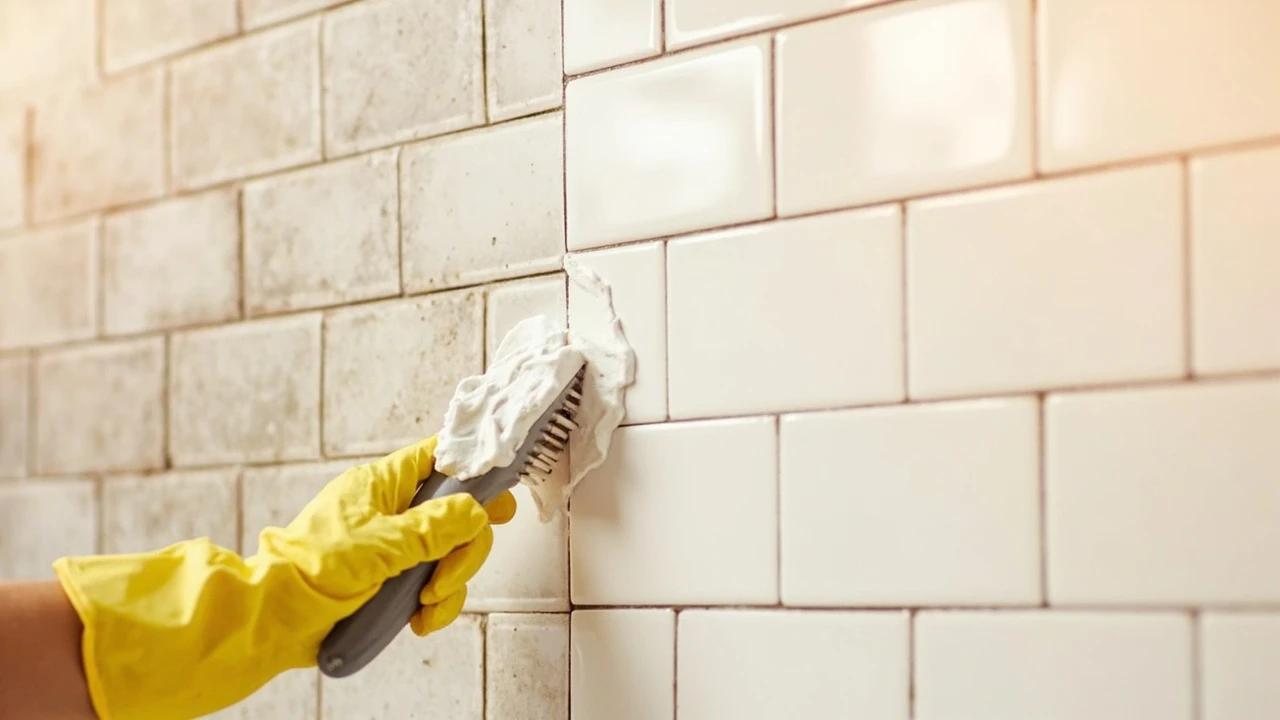
Dingy grout lines can make a freshly scrubbed bathroom look dirty, and porous unsealed grout drinks in soap scum, body oils, and mildew a little deeper every month. For about $25-60 in supplies you can deep-clean the lines with an oxygen-based paste and lock out future stains with a penetrating sealer — no regrouting required. This guide covers the cleaner that actually works, the popular ones that quietly destroy grout, and how to seal without hazing your tile.
You Might Also Like
 Easy30 min
How to Replace an Electrical Outlet
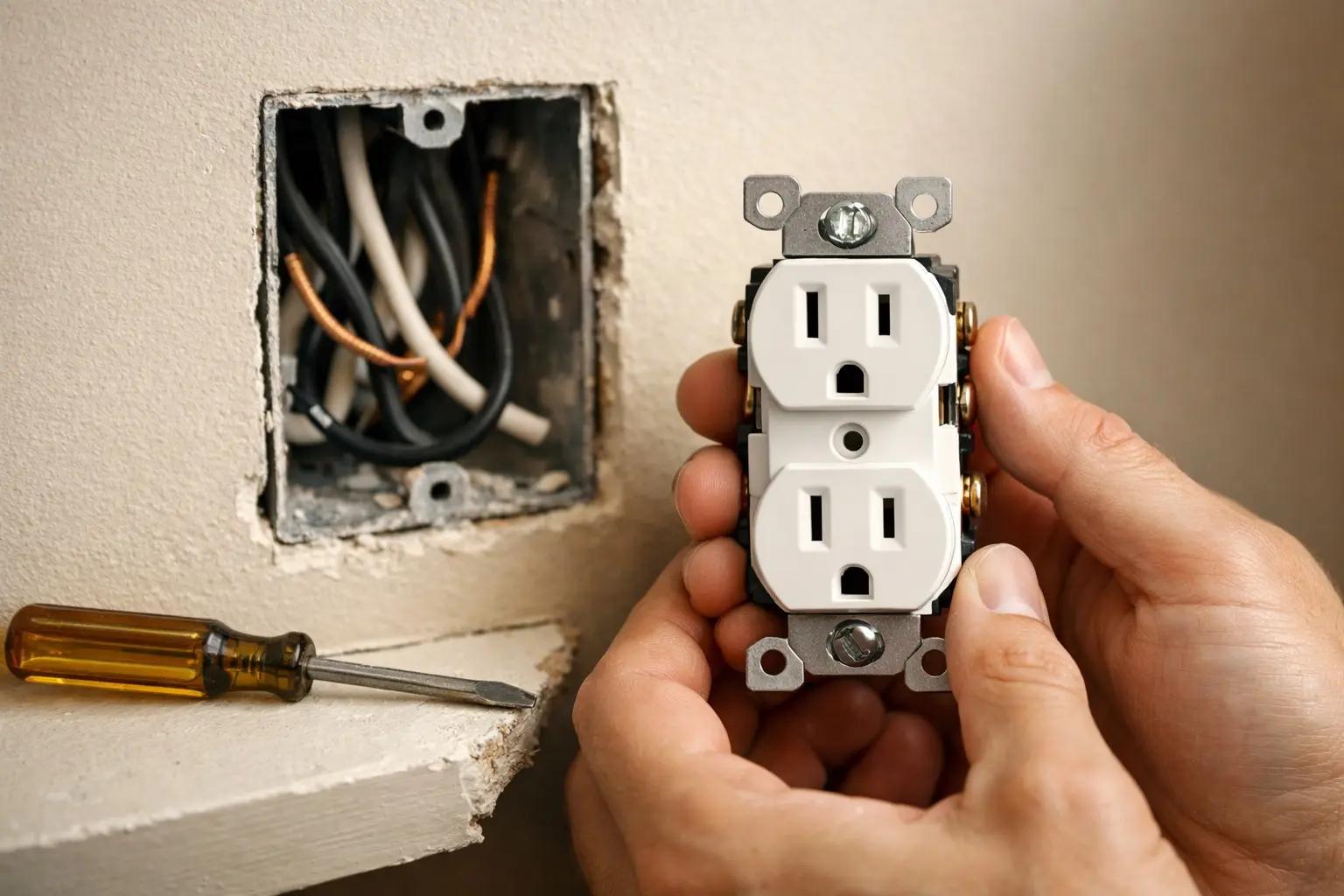
A worn-out or discolored electrical outlet is one of the simplest electrical repairs you can tackle yourself — swapping one takes about 15-30 minutes and costs under $5 in parts versus $75-150 for an electrician visit. This guide walks you through safely replacing a standard duplex receptacle, including how to handle the wiring correctly and avoid the most common DIY mistakes.
 Medium30 min
How to Troubleshoot a Microwave That Won't Heat
A microwave that runs — light on, turntable spinning, timer counting down — but leaves food stone cold is one of the most common appliance failures, and about half the time the cause is something you can fix in five minutes for free. This guide walks the diagnosis from the easy stuff (demo mode, power level, a tripped GFCI, a dirty door latch) to reading the failure signature that tells you the high-voltage circuit is gone, then helps you make the repair-or-replace call with real numbers.
 Medium45 min
How to Install a Ceiling Fan
Replacing a light fixture with a ceiling fan improves air circulation in summer and can reduce heating costs in winter by circulating warm ceiling air downward. Most installs take 45-60 minutes.