How to Fix a Refrigerator That's Not Cooling


A fridge that hums along but won't get cold is usually choking on its own dust or airflow — not dying. This guide walks the troubleshooting tree in order of likelihood, from temperature settings and blocked vents to dirty condenser coils, a frost-clogged defrost system, and the fans that move the cold air. Most causes are a free or under-$20 fix; a few mean it's time for a tech, and you'll learn how to tell them apart before you spend a dime.
What You'll Need
🛠 Tools
📦 Materials
Safety First
- •Unplug the refrigerator before reaching into the coil or fan area at the bottom-rear. There are live 120V connections there and a condenser fan that can start without warning.
- •Food safety first: if the fridge sat above 40°F for more than two hours, discard perishable foods (meat, dairy, eggs, leftovers). Per USDA guidance, when in doubt, throw it out.
- •Never chip frost off the coils with a knife, screwdriver, or ice pick, and don't aim a heat gun or open flame at them — you can puncture a refrigerant line or melt the plastic liner. Let ice thaw, or speed it gently with bowls of hot water and towels.
Step-by-Step Instructions
Confirm It's Running and Recheck the Basics
Before assuming the worst, rule out the easy stuff. Confirm the compressor is actually running (a low hum at the back) and the outlet has power — plug a lamp into the same outlet and check the breaker. Then check the dials: the fridge should sit near 37°F and the freezer near 0°F, and it's easy for a control to get bumped or for a unit to be left in 'demo' or 'showroom' mode, which disables cooling entirely (your manual lists the button combo to exit it).
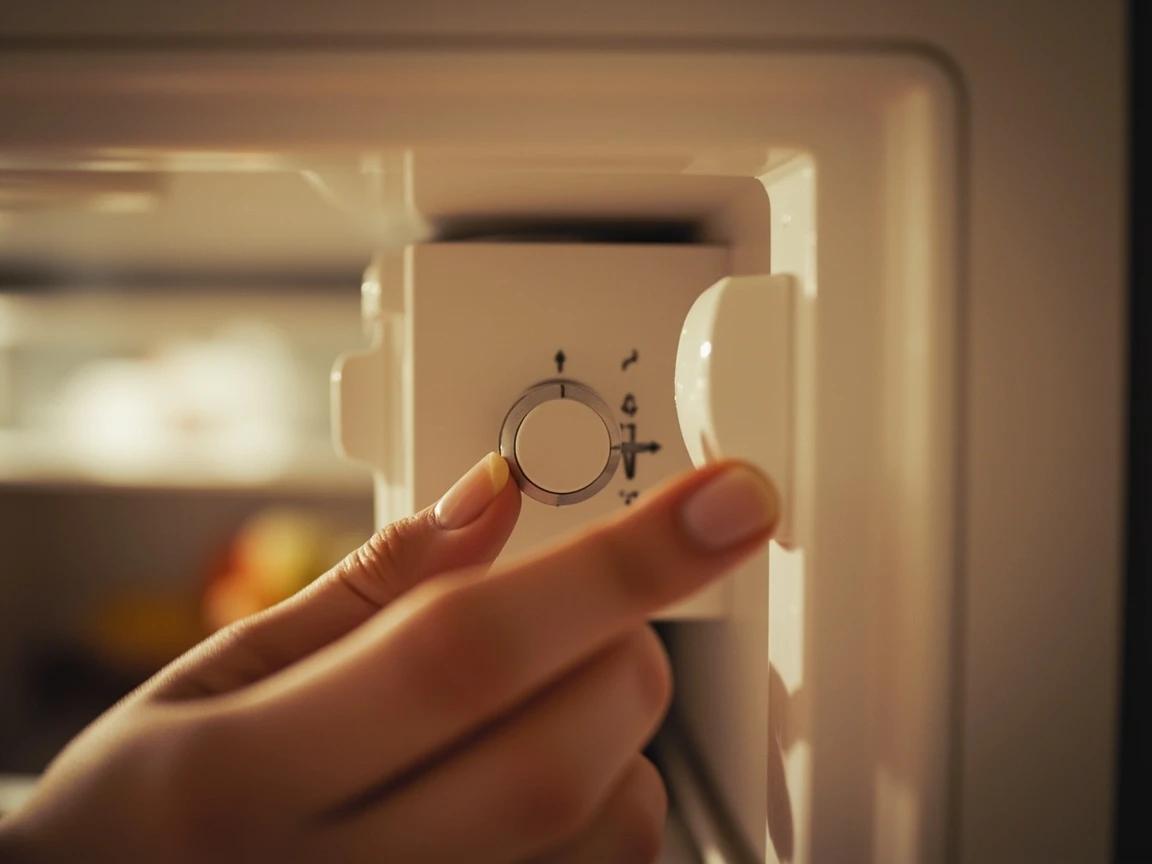
If the interior light is on but you hear no hum at all and nothing is cold, the problem is power or the compressor, not airflow. If you do hear the compressor running, move on to airflow and coils.
Clear the Air Vents and Stop Overpacking
A fridge cools by circulating cold air from the freezer down into the fresh-food section through small vents, usually on the rear wall. Cardboard boxes, tall bottles, or an overstuffed shelf can block those vents and leave the fridge warm while the freezer stays cold. Pull items away from the vents, leave a couple of inches of clearance, and don't pack the fridge so full that air can't move.

A nearly empty fridge struggles too — with no thermal mass it warms fast every time the door opens. A few jugs of water on a shelf help hold the temperature steady.
Inspect and Clean the Door Gasket
A torn or dirty door gasket lets warm room air leak in faster than the fridge can remove it. Wipe the rubber gasket with warm soapy water and check it for cracks, tears, and flattened spots that don't spring back. Run the 'dollar-bill test': close the door on a dollar bill and pull — if it slides out with no drag, the seal is weak at that spot.
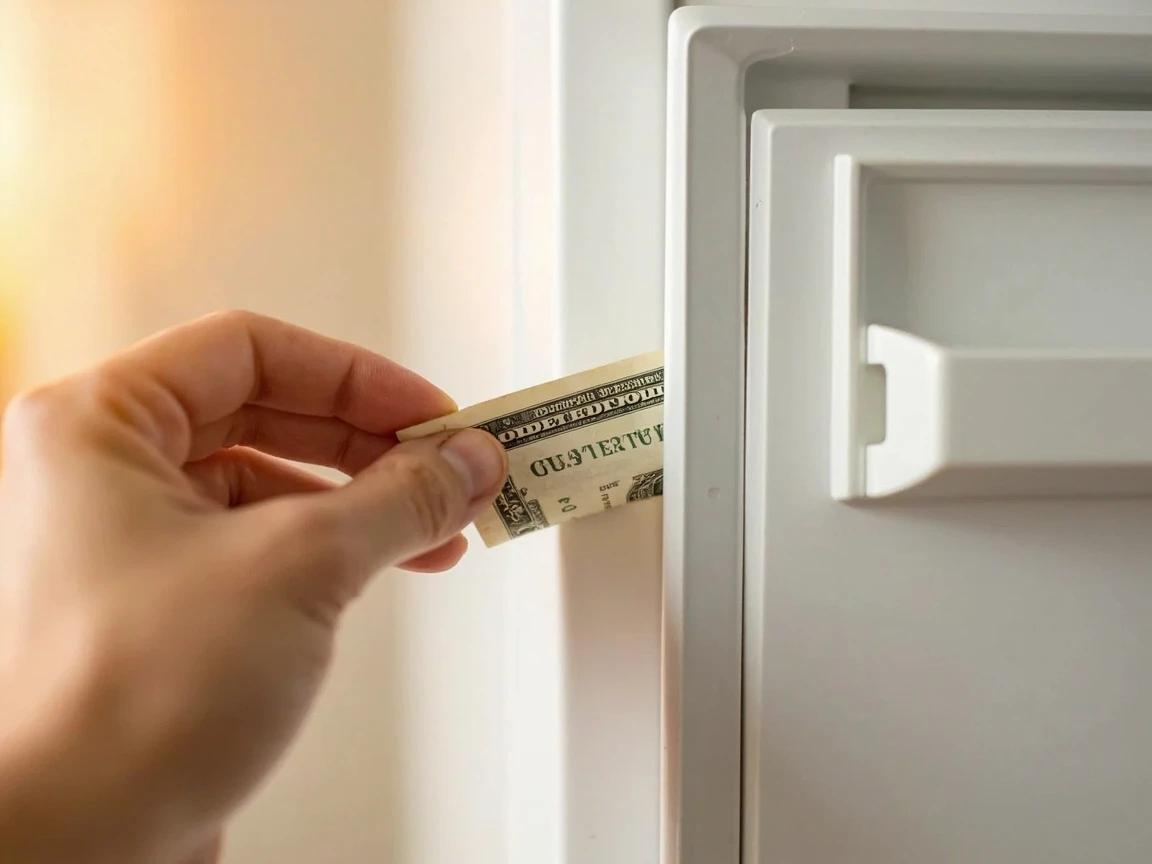
A gasket that's just stiff or misshapen can often be revived — warm it with a hair dryer on low and press it back into shape. Replace it only if it's torn or still won't seal after cleaning.
Clean the Condenser Coils
Dust-clogged condenser coils are one of the most common cooling killers: they can't shed heat, so the fridge runs nonstop but never gets cold. Unplug the fridge, find the coils (behind a toe-grille at the bottom front, or on the lower back), and clean them with a coil brush and a vacuum. Do this every 6–12 months, more often with shedding pets in the house.
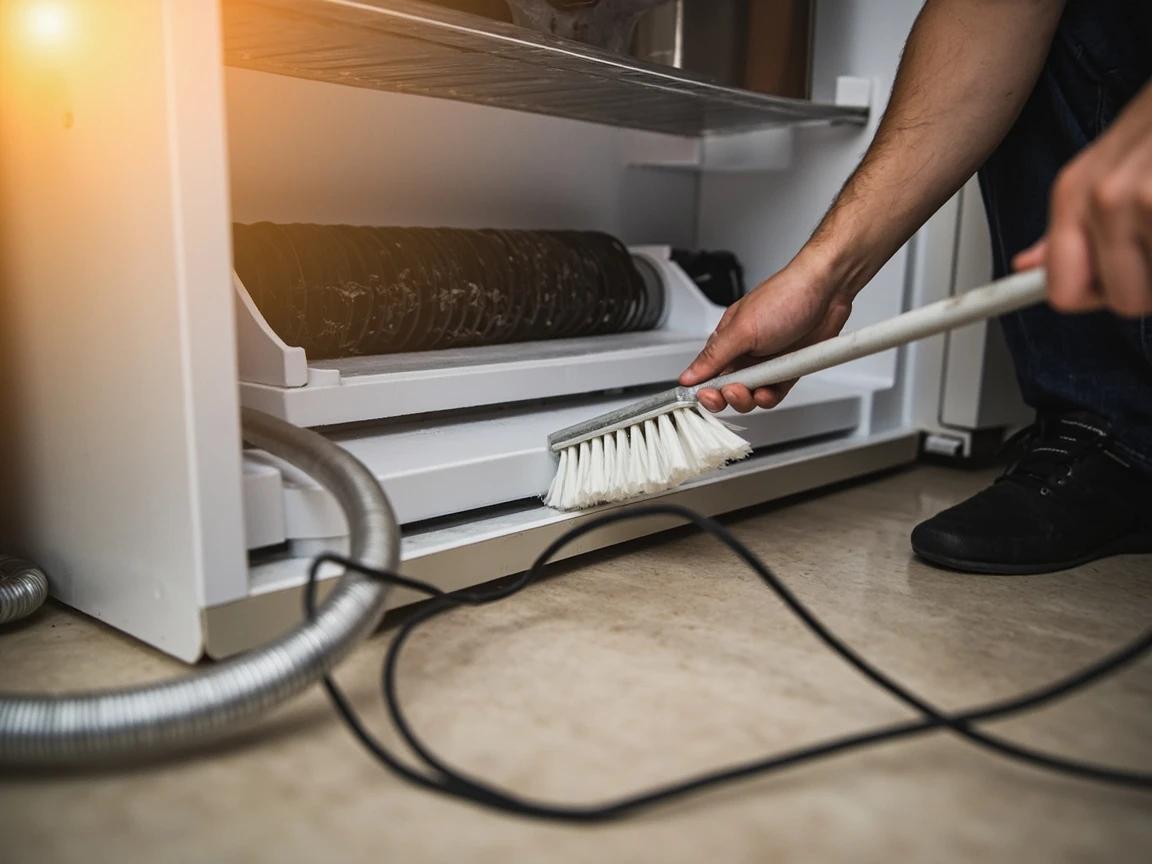
Always unplug the refrigerator before reaching into the coil or fan area at the bottom-rear — there are live 120V connections and a fan that can start the moment the compressor cycles on.
Check the Condenser Fan
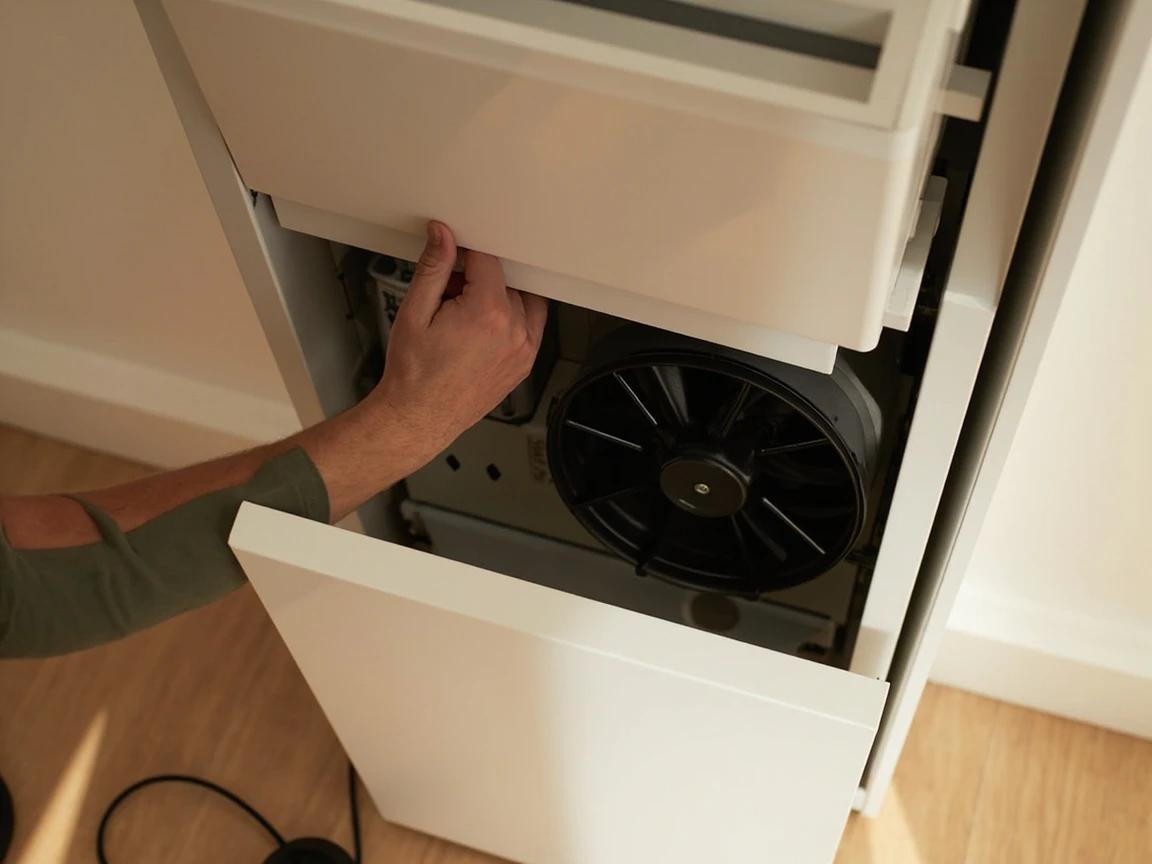
With the fridge still unplugged and pulled out, find the condenser fan near the compressor at the lower back. Clear any dust, pet hair, or debris jammed in the blades and spin it by hand — it should turn freely and quietly. Plug the fridge back in and confirm the fan runs whenever the compressor runs; a dead condenser fan lets the compressor overheat and cooling falls off fast.
Check for Frost on the Evaporator Coils and Defrost the Freezer
If the freezer is cold but the fridge stays warm — or both are weak — the evaporator coils behind the freezer's rear interior panel may be choked with frost from a failed defrost system. Unplug and empty the fridge, then unscrew that panel; coils caked in solid ice are your answer. Let the whole unit thaw with the doors open for 24–48 hours (towels down to catch the melt), then plug it back in — if it cools normally afterward, the defrost system is failing and needs service.
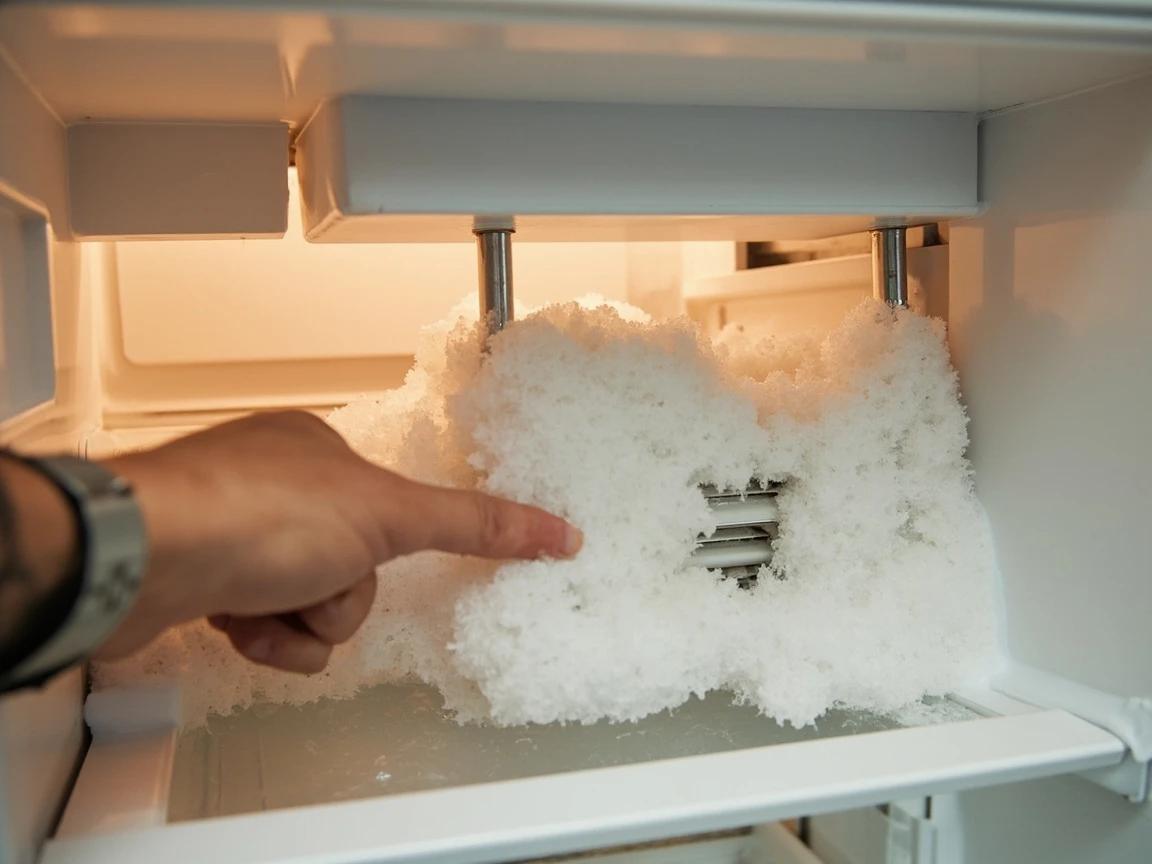
Don't chip at the ice with anything sharp and don't aim a heat gun or flame at the coils — a punctured refrigerant line ends the repair and the fridge. Thaw it, or speed it gently with bowls of hot water and towels.
Test the Evaporator Fan
The evaporator fan, mounted near those coils behind the freezer panel, is what actually pushes cold air through the vents into the fridge. With the panel off, check that the blade spins freely and isn't jammed by ice. With power on and the door switch held in (so it thinks the door is closed), the fan should run; a fan that's seized, screeching, or silent won't move cold air no matter how cold the coils are.
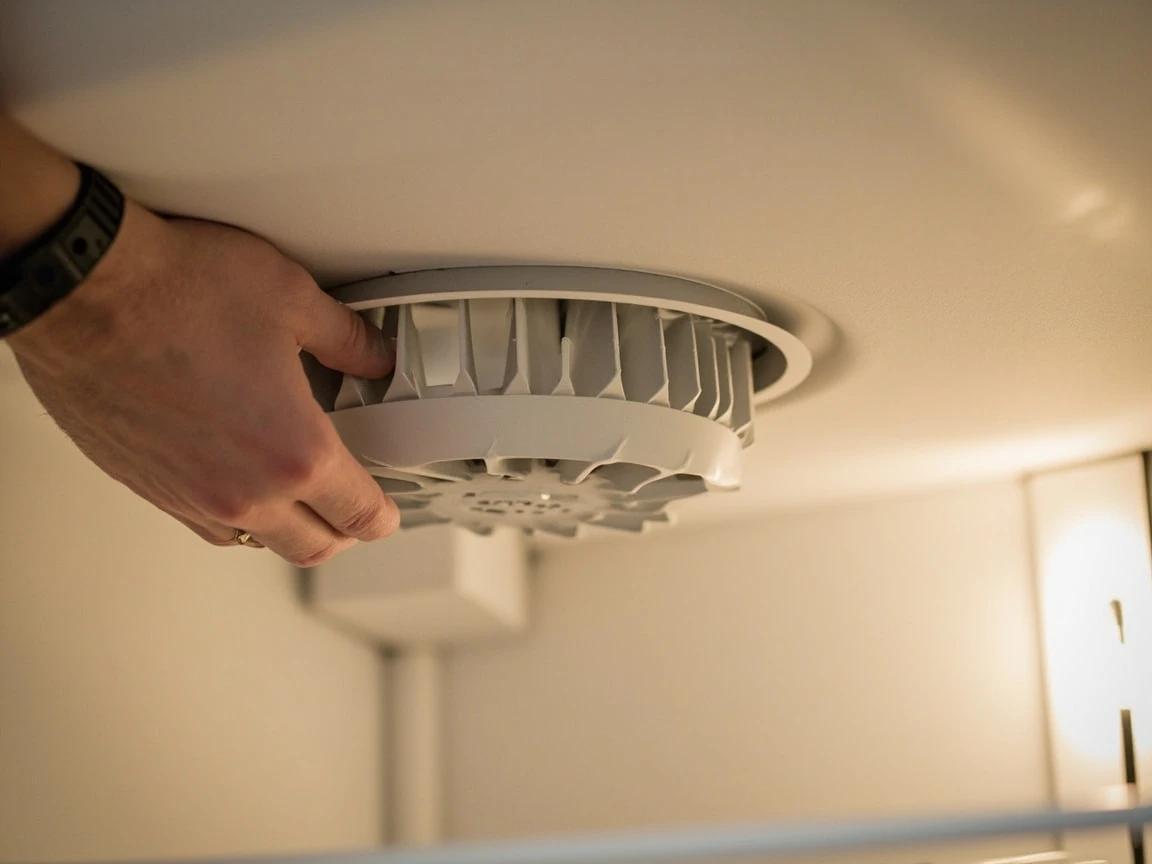
Evaporator fans usually get loud before they quit. A squealing or chirping from the freezer that gets louder when you open the door is a classic sign the fan motor is on its way out.
Restore Power, Give It 24 Hours, and Verify
After any fix — especially a defrost — a fridge needs time to pull back down to temperature. Plug it in, set the fridge to 37°F and the freezer to 0°F, and wait a full 24 hours with the doors closed before judging it. Verify with a standalone appliance thermometer rather than the digital readout, which shows the setpoint, not the real air temperature.
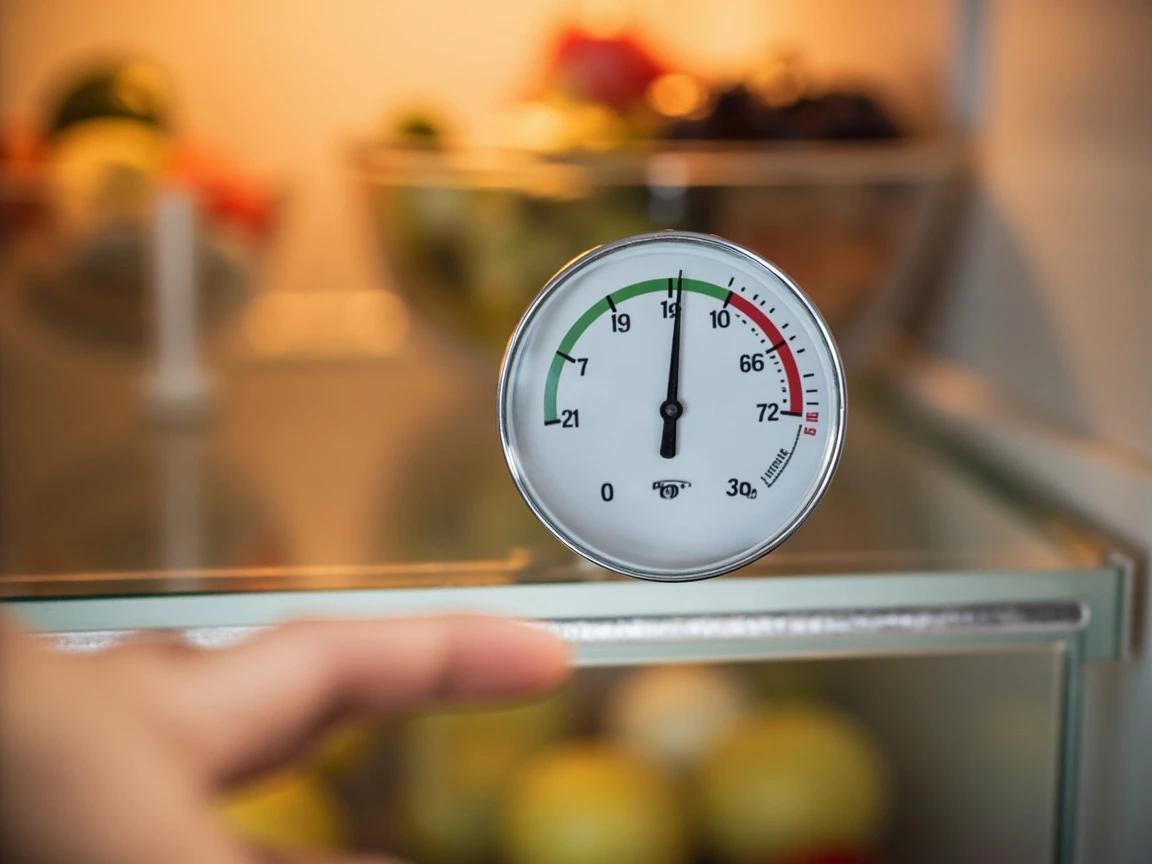
If the fridge was above 40°F for more than two hours, throw out perishable food before restocking. Refreezing or re-chilling spoiled food doesn't make it safe.
Rule Out a Sealed-System or Control Failure
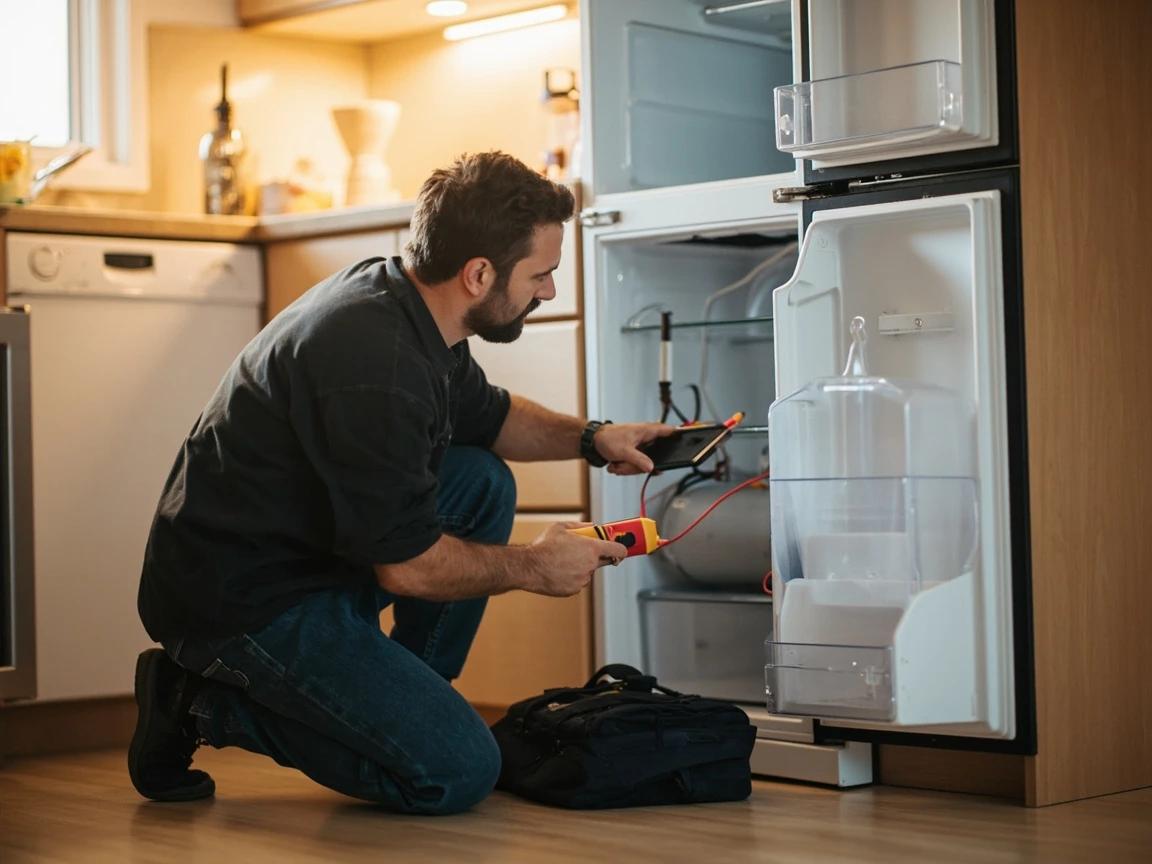
If the compressor runs warm but you found no frost on the evaporator coils and the condenser coils and fan are clean, the likely cause is the sealed system — low or leaked refrigerant, or a failing compressor — which is not a DIY repair. The same goes for a bad defrost heater, timer, or thermostat, a dead evaporator-fan motor, or a failed control board or thermistor: all are diagnosable with a multimeter but need model-specific parts. At that point, weigh a repair quote against the age of the fridge before you spend.
Frequently Asked Questions
Why is my fridge not cold but the freezer still works?
+
That almost always points to airflow, not a dead compressor. Cold air is made in the freezer and ducted down to the fridge through vents that can be blocked by food, frost, or an overstuffed shelf. The usual culprits are blocked vents, dirty condenser coils, or a failed evaporator fan or defrost system that lets frost wall off the vent — start by clearing the vents and setting the fridge to 37°F.
How long should I unplug my refrigerator to reset it?
+
A quick power-cycle reset is only a few minutes, but it rarely fixes a real cooling fault. If you found the evaporator coils caked in frost, that's a different job: empty the fridge and leave it unplugged with the doors open for 24 to 48 hours so all the ice melts, then plug it back in. If it cools normally after a full defrost, the defrost system is failing and needs service.
What temperature should my refrigerator be set to?
+
Set the refrigerator to 37°F (anywhere from 35 to 38°F is fine) and the freezer to 0°F. The FDA and USDA say the fridge must stay at or below 40°F to keep food safe. Trust a standalone appliance thermometer over the digital display, which shows the setpoint rather than the real air temperature.
My fridge stopped cooling after a power outage — what do I do?
+
First make sure it isn't stuck in a demo or showroom mode, which some models drop into after a power blip and which disables cooling (your manual lists the button combo to exit). If the compressor is running, give it a full 24 hours to pull back down before judging it. If it still won't cool, work through the coils, fans, and vents below.
Is it worth repairing a refrigerator that won't cool?
+
Always do the cheap fixes first — settings, vents, coil cleaning, a defrost, and a gasket all run from free to about $80. But once you're into a compressor or sealed-system (refrigerant) repair on a fridge that's 10 or more years old, the bill often approaches half the price of a new unit, and replacement becomes the smarter money. Get a repair quote before committing.
Sources & further reading
- Refrigerator Not Cooling? Fix Refrigerator Problems (DIY) — Family Handyman
- Why Is My Refrigerator Not Cooling? — Whirlpool
- Refrigeration & Food Safety — USDA Food Safety and Inspection Service
More Appliance Repair Guides
View all →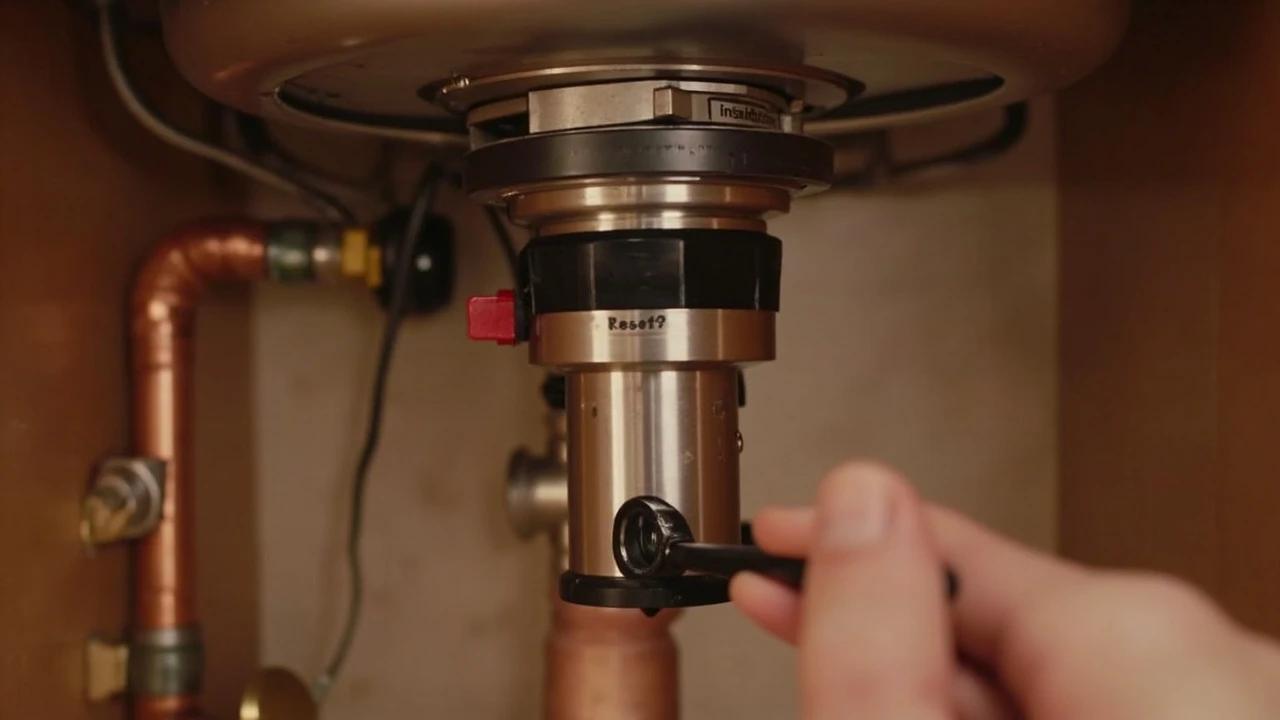 Easy15 min
How to Fix a Garbage Disposal Jam
A garbage disposal that hums but will not spin, or trips off the moment you flip the switch, is almost always jammed — a peach pit, a chicken bone, a teaspoon, or a wad of fibrous celery wedged between the spinning impeller plate and the grind ring. The fix is genuinely a 15-minute DIY job that costs nothing if the original 1/4-inch hex wrench is still taped to the unit, and somewhere between $5 and $15 if it is not. A plumber would charge $75 to $200 for the same five-minute crank-and-reset, so this is the highest-ROI repair in the kitchen — assuming you do it safely.
 Medium45 min
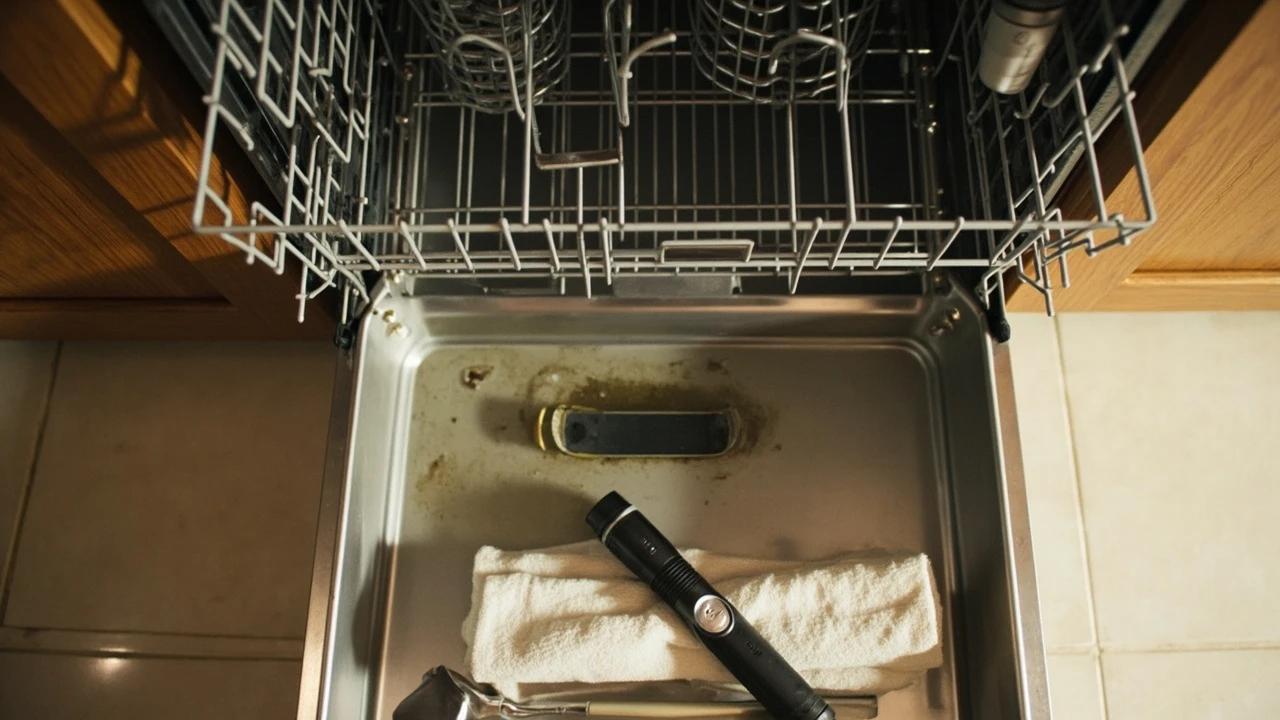
How to Fix a Dishwasher That Won't Drain
Standing water in the bottom of the dishwasher after a cycle is one of the most common kitchen complaints — and a service call costs $150-300 to diagnose what is almost always a clogged filter, blocked drain hose, or unrun garbage disposal. The fix takes 30-45 minutes with basic tools, and roughly nine out of ten cases are solved without replacing a single part. This guide walks through every cause from simplest to most involved, in the exact order a repair tech would check them.
 Medium45 min
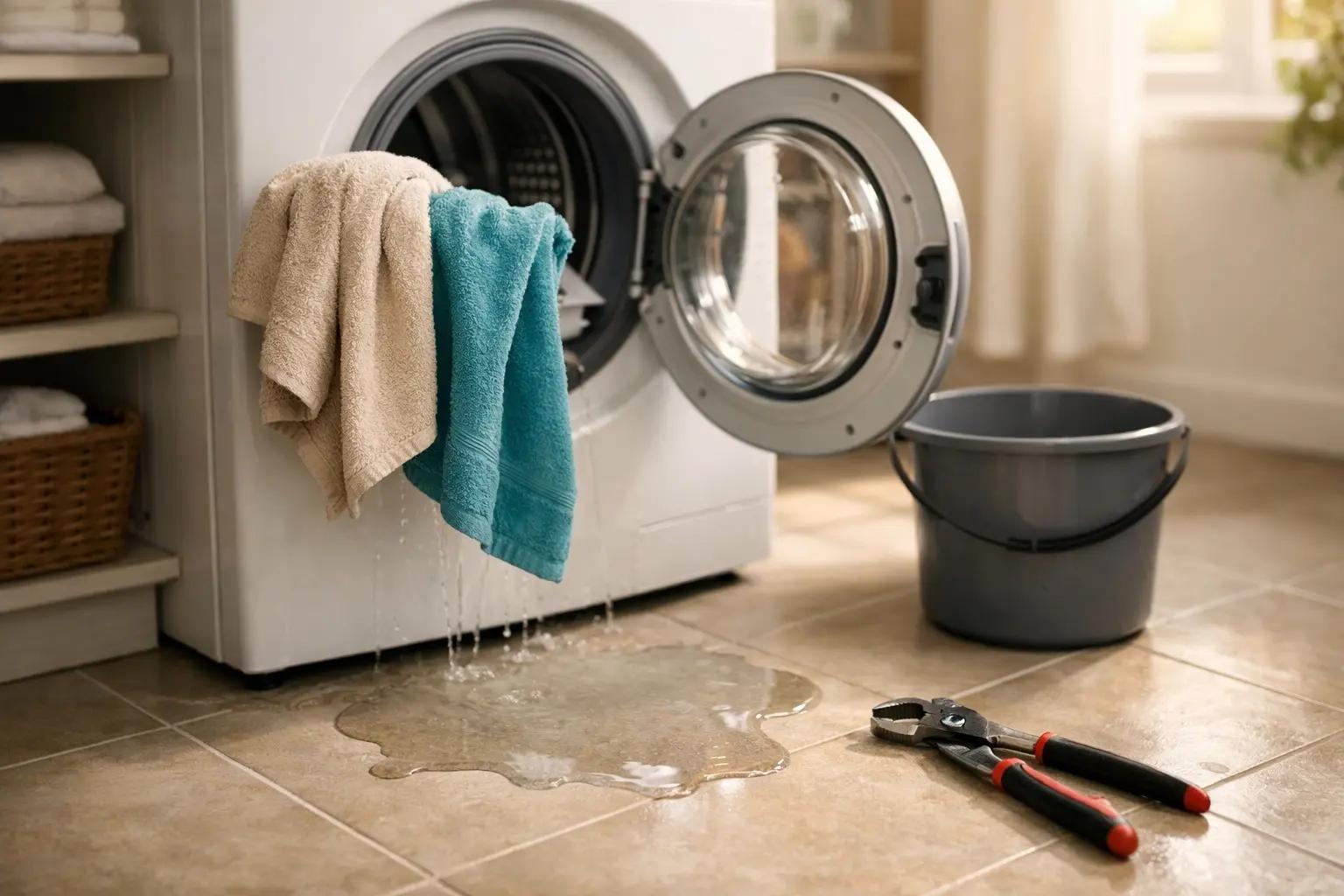
How to Fix a Washing Machine That Won't Drain
A washing machine that won't drain leaves you with a tub full of standing water and a pile of soaking clothes — but the fix is almost always a clogged filter, kinked hose, or small object jamming the pump, not a dead motor. Most homeowners can diagnose and resolve the problem in 30-45 minutes with basic tools and no replacement parts. This guide walks through every common cause from simplest to most involved so you can get your washer spinning again.
You Might Also Like
 Medium6 hrs
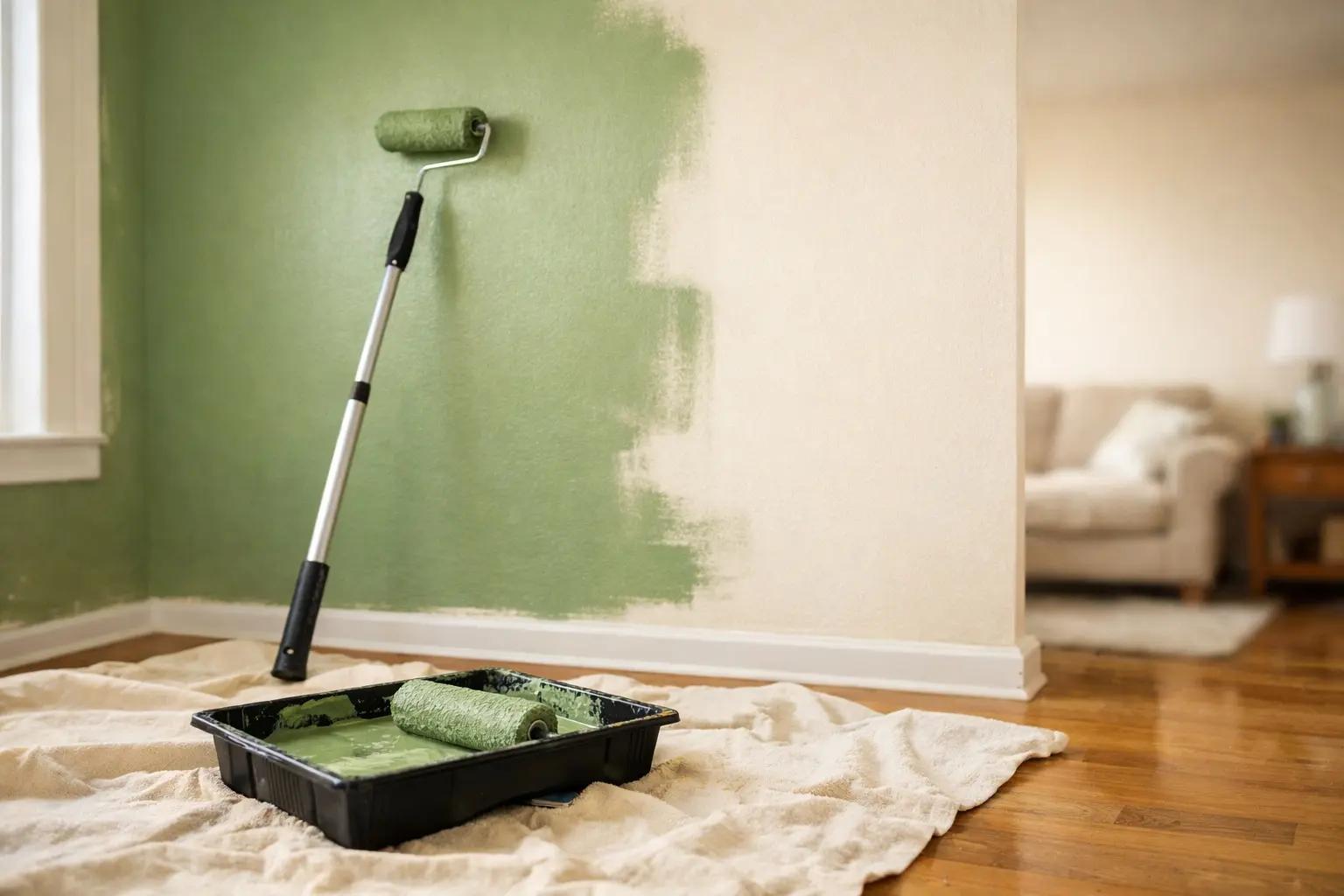
How to Paint a Room
A fresh coat of paint is the fastest, cheapest way to transform any room — and doing it yourself saves $400-800 in labor for an average 12x12-foot bedroom. The job takes a weekend from prep to final coat, and the difference between an amateur-looking result and a professional finish comes down to technique, not talent. This guide covers prep, cutting in, rolling, and cleanup so you get clean lines and even coverage the first time.
 Medium45 min
How to Install a Ceiling Fan
Replacing a light fixture with a ceiling fan improves air circulation in summer and can reduce heating costs in winter by circulating warm ceiling air downward. Most installs take 45-60 minutes.
 Medium1 hr
How to Repair Scratches in a Hardwood Floor
Scratched hardwood almost never means refinishing the whole floor. This guide shows you how to match the fix to the damage — a touch-up marker for finish-level scratches, a wax fill stick for shallow ones, and stainable wood filler with stain and polyurethane for deep gouges — all for under $40 in supplies and about an hour of work.