How to Fix a Garbage Disposal Jam
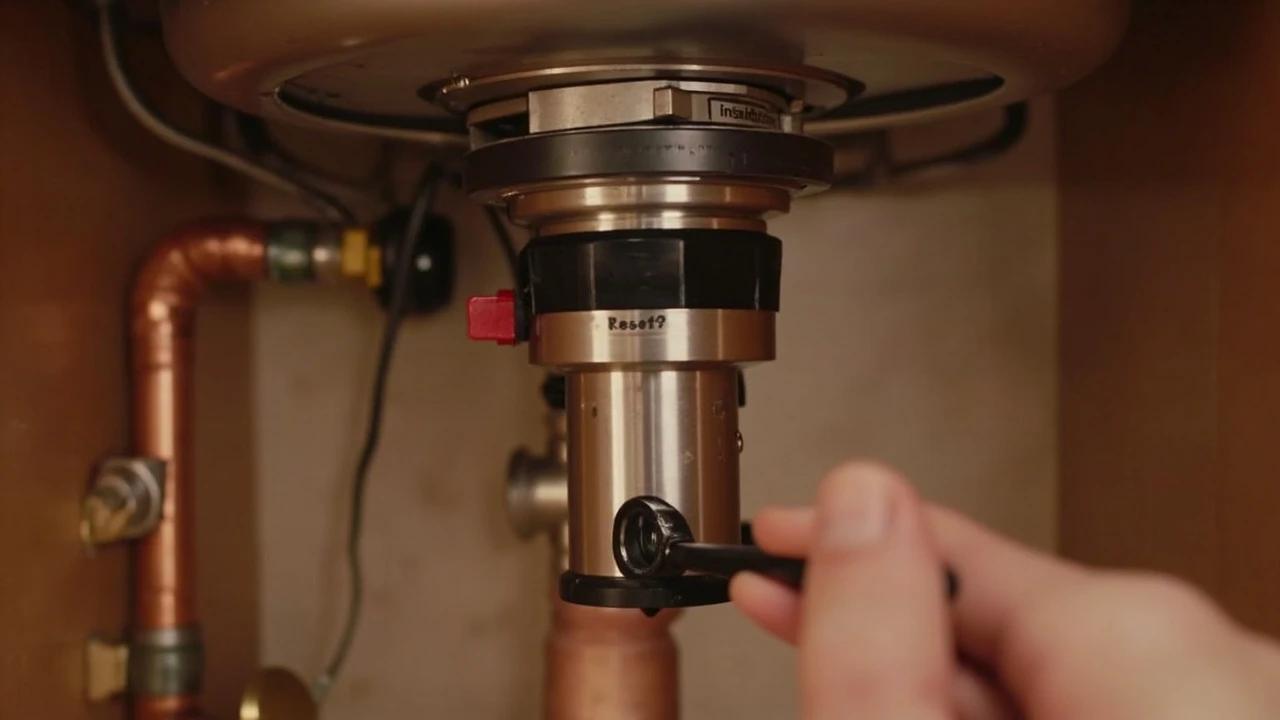

A garbage disposal that hums but will not spin, or trips off the moment you flip the switch, is almost always jammed — a peach pit, a chicken bone, a teaspoon, or a wad of fibrous celery wedged between the spinning impeller plate and the grind ring. The fix is genuinely a 15-minute DIY job that costs nothing if the original 1/4-inch hex wrench is still taped to the unit, and somewhere between $5 and $15 if it is not. A plumber would charge $75 to $200 for the same five-minute crank-and-reset, so this is the highest-ROI repair in the kitchen — assuming you do it safely.
What You'll Need
🛠 Tools
📦 Materials
Safety First
- •Never put your hand or fingers down into the disposal opening, even with the power off. The blunt impellers can still cut, and there is no good reason to reach in when 10-inch tongs cost $4 at any hardware store.
- •Cut power at BOTH the wall switch AND the circuit breaker (or unplug the unit entirely from the under-sink outlet). The wall switch alone is not a guarantee — a stuck switch or wiring fault can leave the unit live.
- •Do not pour chemical drain cleaners (Drano, Liquid-Plumr) into a jammed disposal. The lye corrodes the rubber splash guard and the steel grind ring, voids the warranty, and does nothing to break a mechanical jam.
- •Do not flip the wall switch repeatedly hoping the motor will "muscle through." Each humming attempt overheats the motor windings; three or four cycles is enough to permanently burn out the motor and turn a 15-minute fix into a $200 replacement.
Step-by-Step Instructions
Cut Power at the Wall Switch and the Breaker
Flip the wall switch above the counter to OFF, then go to the electrical panel and switch off the breaker labeled "Disposal" or "Kitchen Disposal" (often shared with the dishwasher). If the unit is plugged into an outlet under the sink, unplug it entirely — that is even better. Two layers of disconnect is the rule any time you will be working near the impeller, even from the bottom.
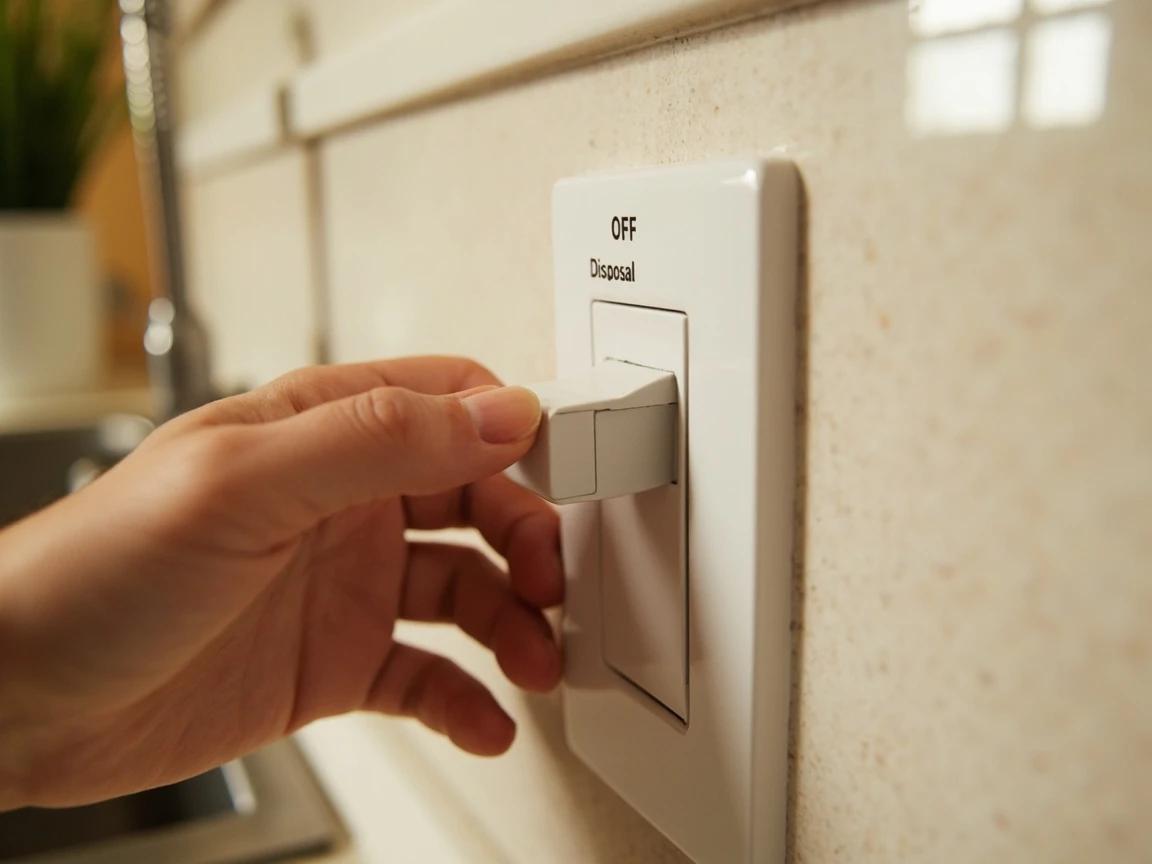
The wall switch alone is not enough. A stuck switch, mis-wired circuit, or remodeled kitchen with hot-and-neutral reversed can leave the unit energized even when the toggle is down. The breaker is the only true disconnect.
Look (Do Not Reach) Inside With a Flashlight
Aim a flashlight or your phone flashlight straight down through the rubber splash guard into the grinding chamber. Look for the obvious: a teaspoon, a peach pit, a chicken-bone fragment, a wedged piece of glass, a wad of fibrous vegetable matter wrapped around the impeller fins. Anything you can see and identify is something you can fish out in step 3 — no further diagnostics needed.
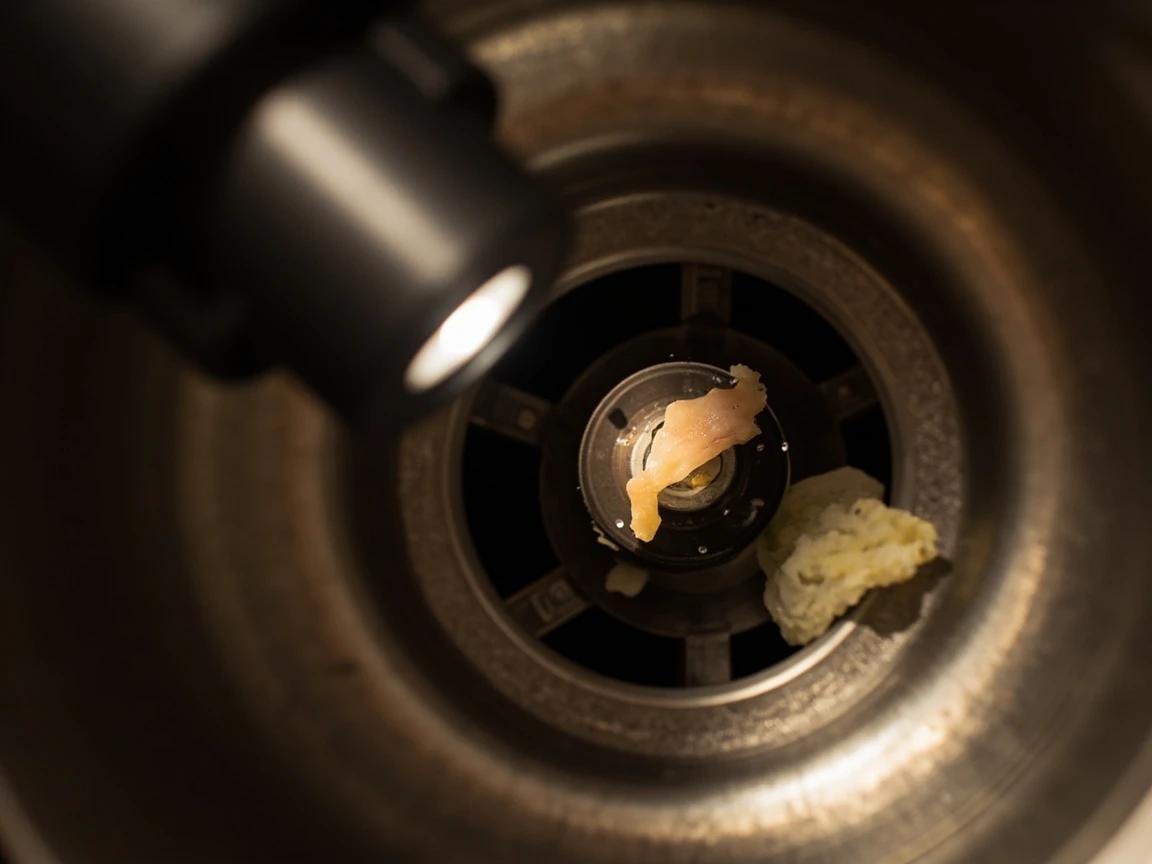
Push the rubber splash guard flaps to one side with the flashlight handle to get a clear view — the black rubber petals are the single biggest reason people miss what is actually jamming the unit.
Pull Out Visible Debris With Long Tongs or Needle-Nose Pliers
Use 10-inch kitchen tongs or long needle-nose pliers to grab whatever you spotted in step 2. Work patiently and pivot the object to free it — most jamming objects (especially bones and fruit pits) are wedged at an angle. Drop everything you remove into the trash, not back down the drain. Do not skip ahead to the wrench until you have removed every visible foreign object you can see and grip.
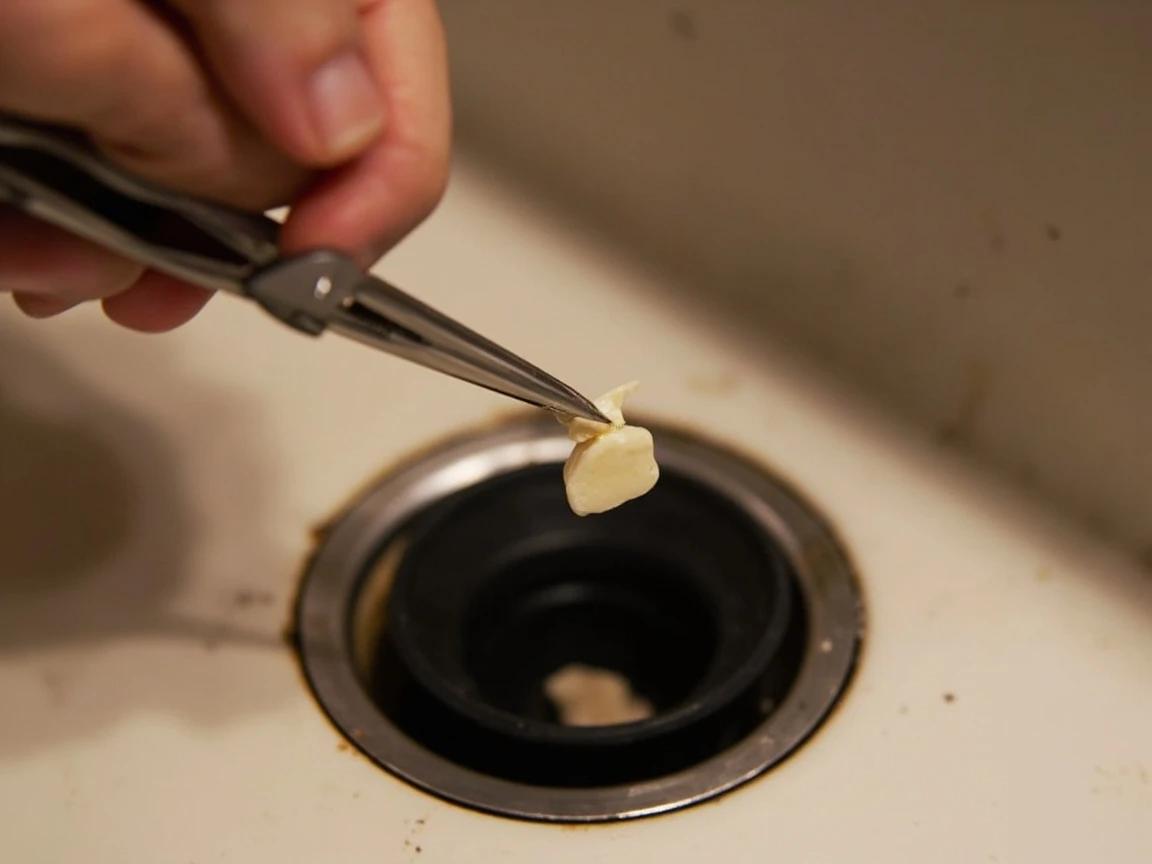
Never use your fingers, even briefly, even if the power is off and the breaker is flipped. The impellers are blunt but heavy, and the grind ring edge is sharp enough to slice skin. A $4 pair of tongs is the entire safety budget for this job.
Crank the Bottom Hex Socket With a 1/4-Inch Allen Wrench
Get under the sink and look at the dead center of the bottom of the disposal — there is a small hex-shaped socket (about 1/4 inch across) drilled into the motor shaft. Insert a 1/4-inch hex wrench, push it all the way in, and rotate firmly back and forth — clockwise a quarter turn, counterclockwise a quarter turn, repeat. You will feel the impeller plate break loose and start to spin freely. Keep working it until the wrench can complete several full rotations in both directions with no resistance.
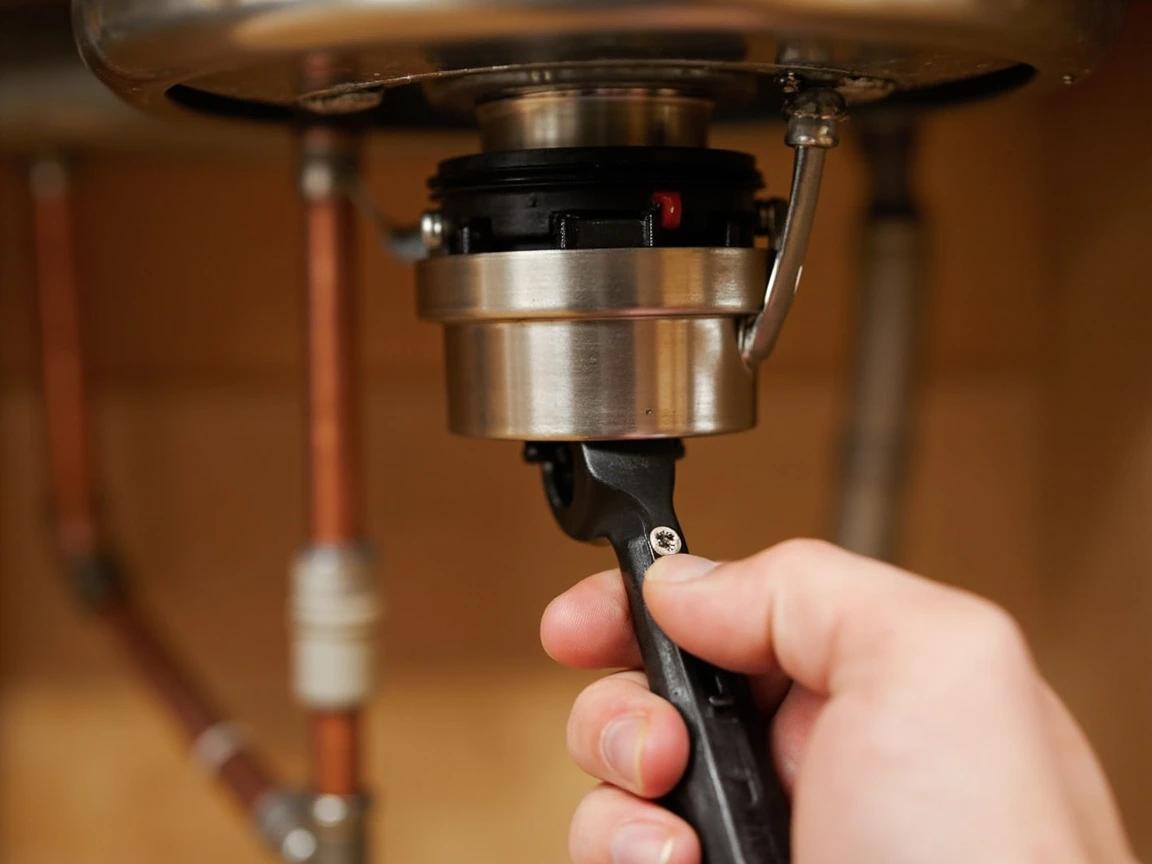
The factory hex wrench is usually taped to the side of the disposal or zip-tied to the power cord — check there before you buy a new one. If it has been lost, any 1/4-inch SAE hex key from a $5 set works identically; do not substitute a 6 mm metric key, which is slightly undersized and will round the socket.
No Bottom Socket? Use a Wooden Spoon From Above
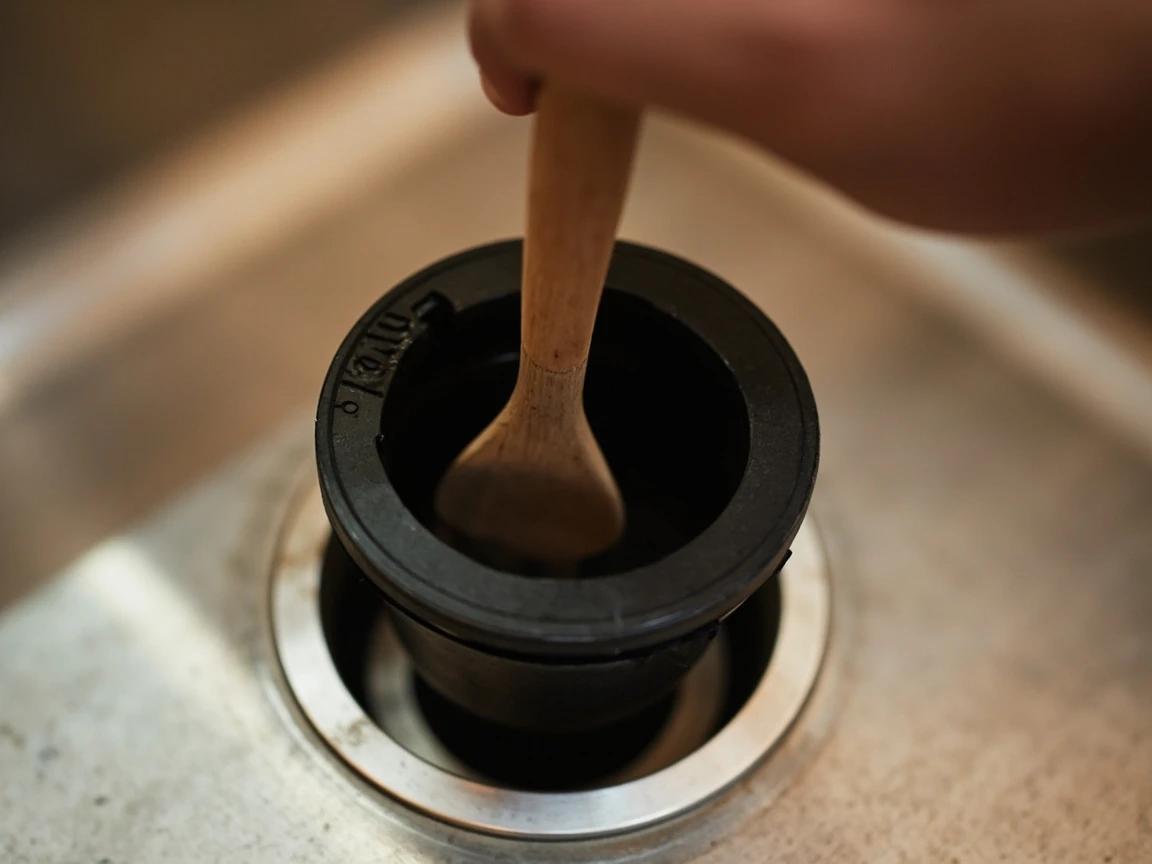
Waste King, some Moen, and a few GE models have no bottom hex socket — the motor uses a permanent magnet design that does not need one. With power still off, push the handle of a sturdy wooden spoon (or a broom handle, or a wooden dowel) down through the splash guard, brace it against one of the impeller fins, and lever the plate back and forth until you feel it break loose and rotate freely. Never substitute a metal tool — metal will chew up the impellers and the grind ring, and bits of metal are exactly what you do not want loose in the chamber.
Press the Red Overload Reset Button
On the bottom of the disposal, next to the hex socket, find the small square red button — it is the overload reset, and it almost certainly popped out (about 1/4 inch / 5 mm) when the jam stalled the motor. Push it firmly back in until it clicks and stays flush. If it pops back out instantly, the motor is still too hot from earlier hum-and-stall attempts; wait a full 10 to 15 minutes for it to cool, then try again.
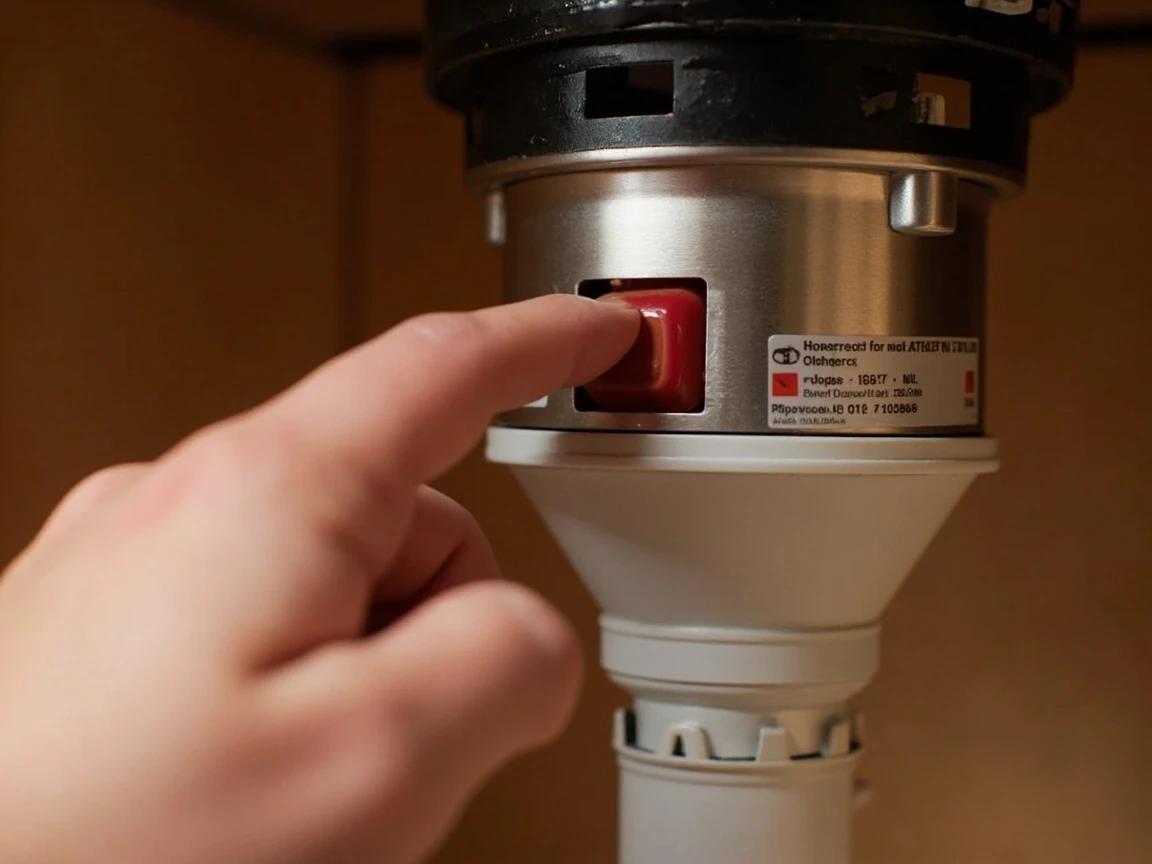
If the red button pops out for the third time, stop pressing it — the impeller is still mechanically jammed and the motor is just protecting itself. Go back to step 4 or 5 and work the wrench (or wooden spoon) again until you can feel the plate spin truly freely with zero resistance.
Restore Power and Test With Cold Water Running
Plug the disposal back in (or flip the breaker back on), turn the cold water on at the sink and let it run a steady stream, then briefly flip the wall switch to ON. The motor should engage immediately with a clean, even whine — no hum, no stutter. Let it run with cold water for 30 seconds to flush any small debris loosened by the cranking, then switch off. Cold water (not hot) keeps any residual grease solid so it flushes through the trap instead of coating the drain line.
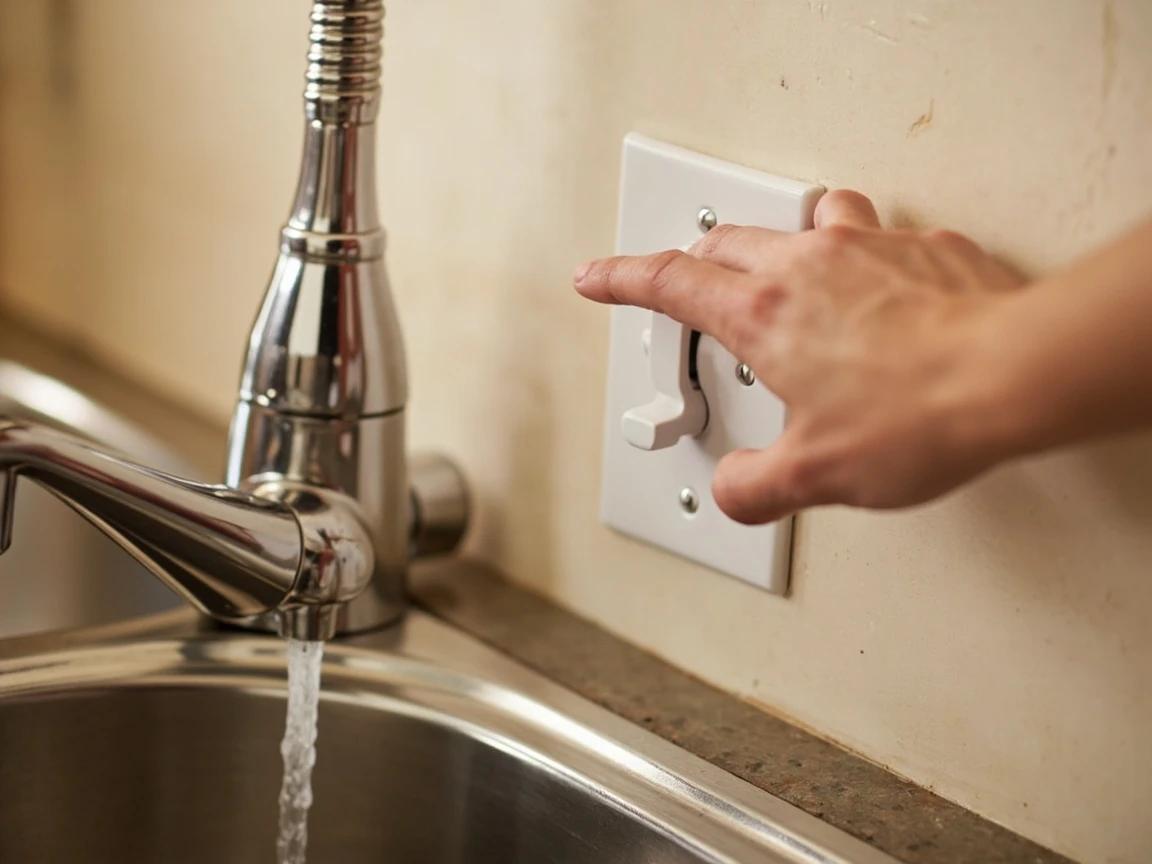
If the disposal hums again, switch off immediately — do not let it hum for more than 2 to 3 seconds. A second hum means a second jam (often a small fragment of the original object that you missed) and you will need to repeat steps 1 through 6.
Flush With Ice and Citrus to Prevent the Next Jam
With the unit running and cold water flowing, drop a full cup of ice cubes and a handful of rock salt down the drain. The ice and salt scour residual gunk off the impellers and the grind ring without damaging anything. Follow with a quartered lemon or orange — the disposal will pulverize the rinds, and the citrus oils deodorize the unit and the drain trap for the next several days. This 60-second cleaning is the single best thing you can do to prevent the next jam.
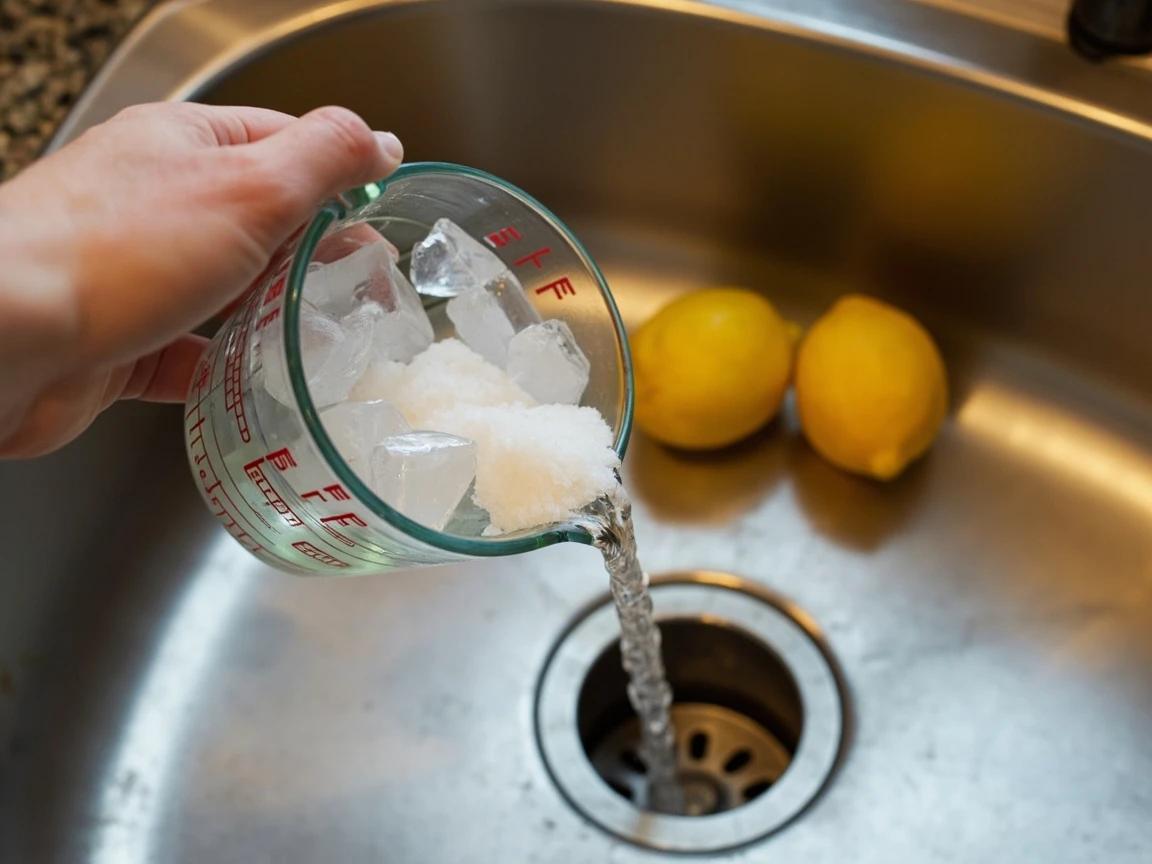
Add this 60-second flush to your monthly kitchen routine — it is far easier than fixing another jam. The biggest jam-makers to keep out of the drain entirely are fruit pits, bones, fibrous celery and corn husks, pasta and rice (they swell), eggshell membranes, and any grease.
Frequently Asked Questions
Why does my garbage disposal hum but not spin?
+
A hum means the motor is getting power but the impeller plate cannot rotate — about 80% of the time, that is a hard object (peach pit, chicken bone, fruit pit, fragment of glass, or a utensil) wedged between the impeller and the grind ring. Cut power immediately and stop flipping the switch — every additional hum overheats the motor windings. The fix is to free the impeller with a hex wrench from below or a wooden spoon from above, then press the red reset button.
What size Allen wrench do I need to unjam a garbage disposal?
+
A 1/4-inch hex (Allen) wrench fits virtually every InSinkErator, Waste King, KitchenAid, and Moen disposal sold in North America. Most disposals ship with the correct wrench taped to the bottom of the unit or zip-tied to the power cord — check there first. If it is missing, a 1/4-inch hex key from any hardware store works identically; do not use a metric 6 mm key, which is slightly undersized and will round out the socket.
My disposal has no hex socket on the bottom. Now what?
+
Some Waste King, GE, and Moen models have no bottom hex socket — they use a permanent magnet motor that does not need one. With power off, insert the handle of a wooden spoon or a broom handle (never metal) through the rubber splash guard from above, brace it against one of the impeller fins, and pry the plate back and forth until it rotates freely. Then press the red reset button and test.
What is the red button on the bottom of my garbage disposal?
+
That is the overload reset button, and it pops out (about 1/4 inch / 5 mm) whenever the motor draws too much current — typically right after a jam stalls the impeller. Pushing it back in resets the internal thermal breaker. If it pops back out the moment you press it, the motor is still hot — wait 10 to 15 minutes for it to cool, then try again. If it pops out a third time, the jam has not actually been cleared.
Should I just call a plumber instead?
+
Almost never, for a simple jam. A plumber will charge $75 to $200 to do exactly what is in this guide — usually 5 minutes of work plus a service-call minimum. The DIY fix takes 15 minutes and the most expensive thing you might buy is a $5 hex wrench. Save the plumber call for an actual leak from the disposal body, a unit that trips the breaker even when empty, or a motor that will not hum at all after the reset (which usually means a dead capacitor or windings).
What should I never put down a garbage disposal?
+
The biggest jam-makers, in order: fibrous vegetables (celery, corn husks, artichoke leaves, asparagus stalks) which wrap around the impeller; bones and fruit pits which lodge in the grind ring; pasta and rice which expand and form a paste that seizes the plate; coffee grounds which sludge the trap; eggshells (the membrane wraps the impeller, despite the old myth that they "sharpen the blades"); and grease, which solidifies in the drain line below. When in doubt, compost it or trash it.
Sources & further reading
- Fixing a Jammed Garbage Disposal — InSinkErator
- How to Repair a Garbage Disposal — This Old House
- How To Repair a Garbage Disposal — Tips and Tricks — Lowe's
More Appliance Repair Guides
View all →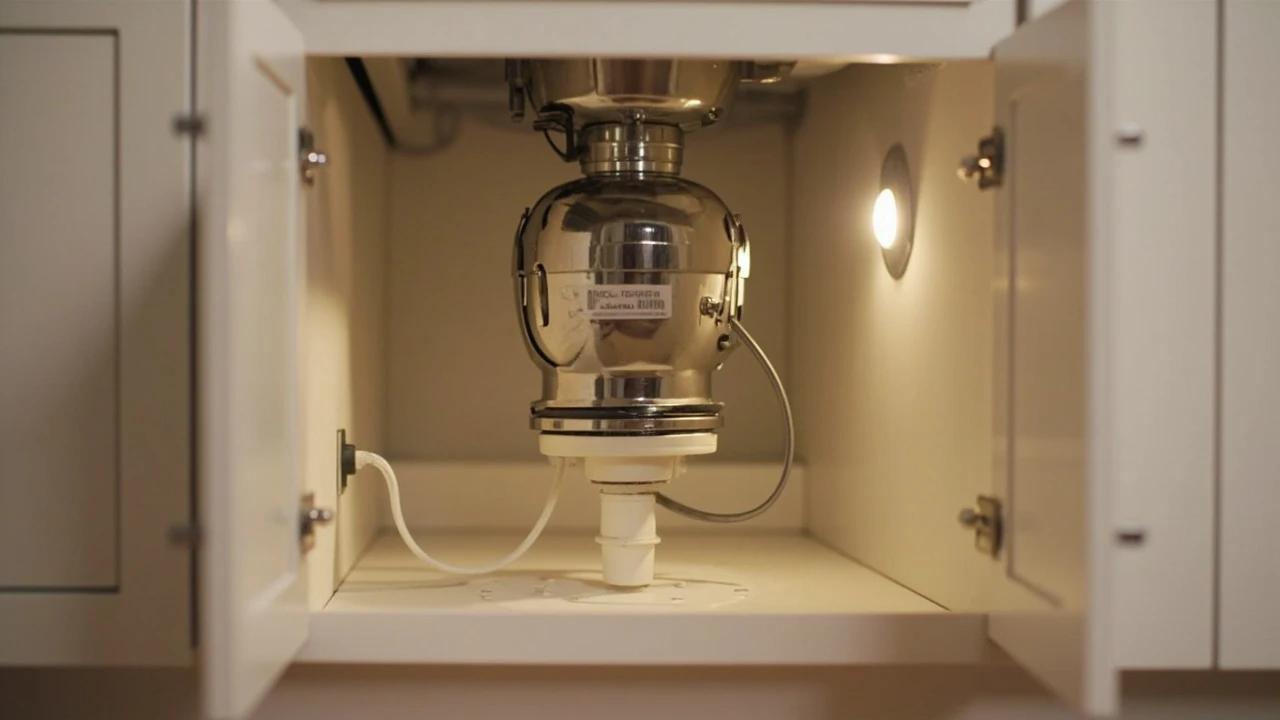 Medium2 hrs
How to Install a Garbage Disposal
A garbage disposal turns food scraps into a non-issue and keeps your kitchen drain smelling clean — a new unit costs $80-200 and you can install it yourself in about two hours versus $200-500 for a plumber visit. The job combines basic plumbing and a simple electrical connection, but a loose mounting ring, a forgotten dishwasher knockout plug, or a bad P-trap slope will leave you mopping up under the sink. This guide walks you through removing the old drain (or disposal), mounting the new flange and ring assembly, wiring the unit, connecting the discharge to the P-trap, and testing everything leak-free.
 Medium1h 30m
How to Fix a Toilet Leaking at the Base
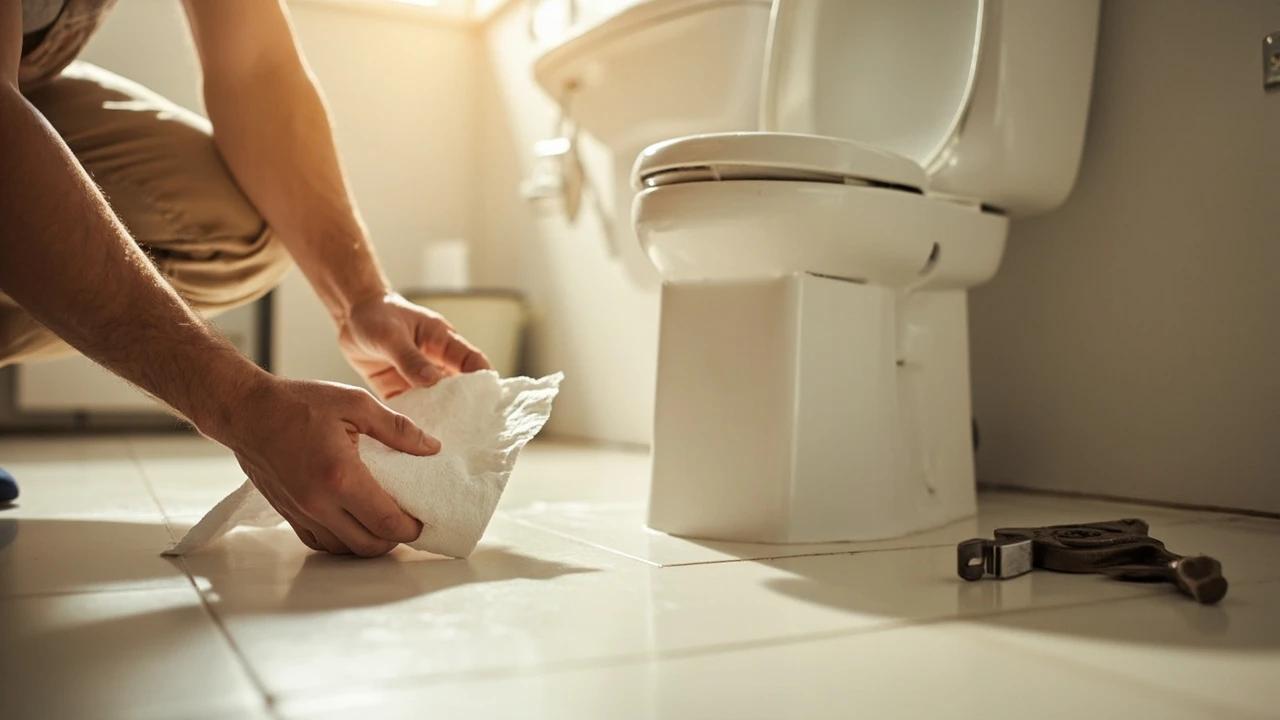
Water pooling around the bottom of the toilet is one of those leaks that punishes procrastination — every flush pushes dirty water under the flooring, and a $10 wax ring problem quietly becomes a $1,000 subfloor repair. This guide diagnoses where the water is really coming from first, then walks the fix in order: snug the bolts, and only if needed, pull the toilet and replace the seal.
 Medium1h 30m
How to Fix a Squeaky Stair
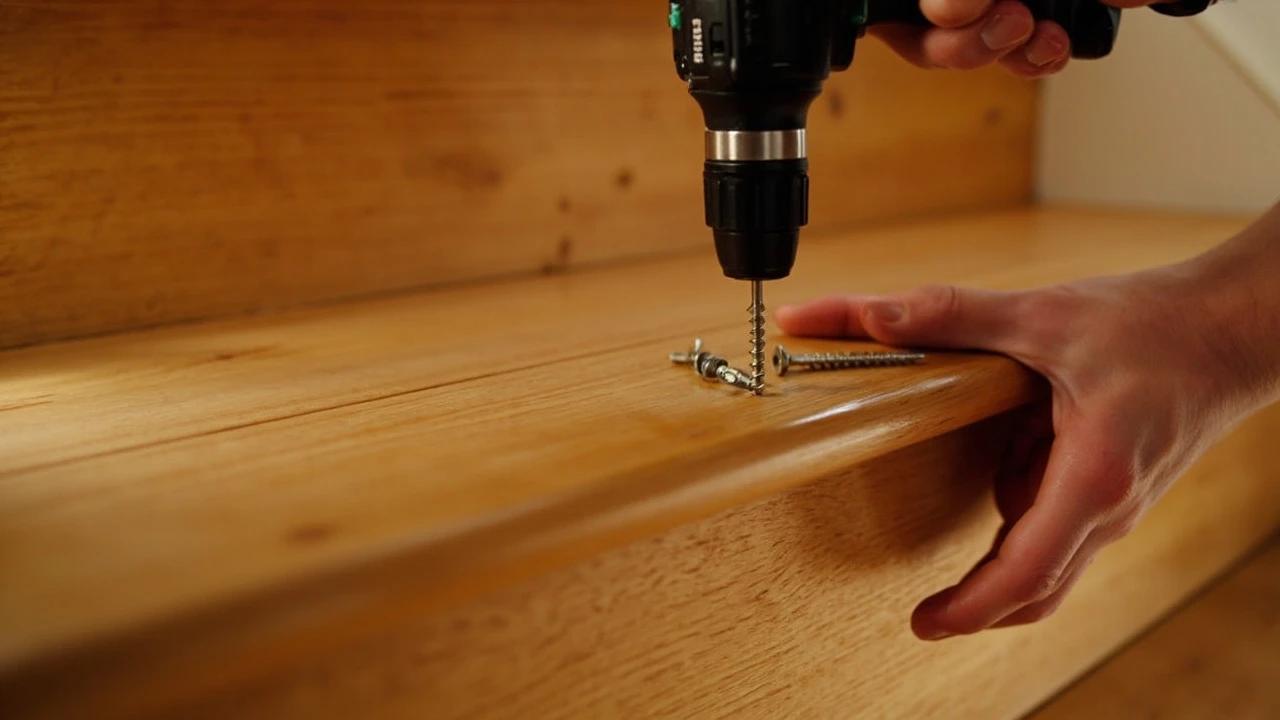
That one step everybody in the house learns to skip isn't a structural problem — it's almost always a tread rubbing against a riser or a stringer as the wood shrinks with age. A few dollars of glue blocks, shims, and trim-head screws silences it for good, and if you can reach the underside of the staircase you can fix it permanently without leaving a single mark on the finished side. This guide covers pinpointing which joint is actually moving, the from-below and from-above repairs, the carpet-safe method, and why the can of spray lubricant under your sink is the wrong tool.
You Might Also Like
 Medium6 hrs
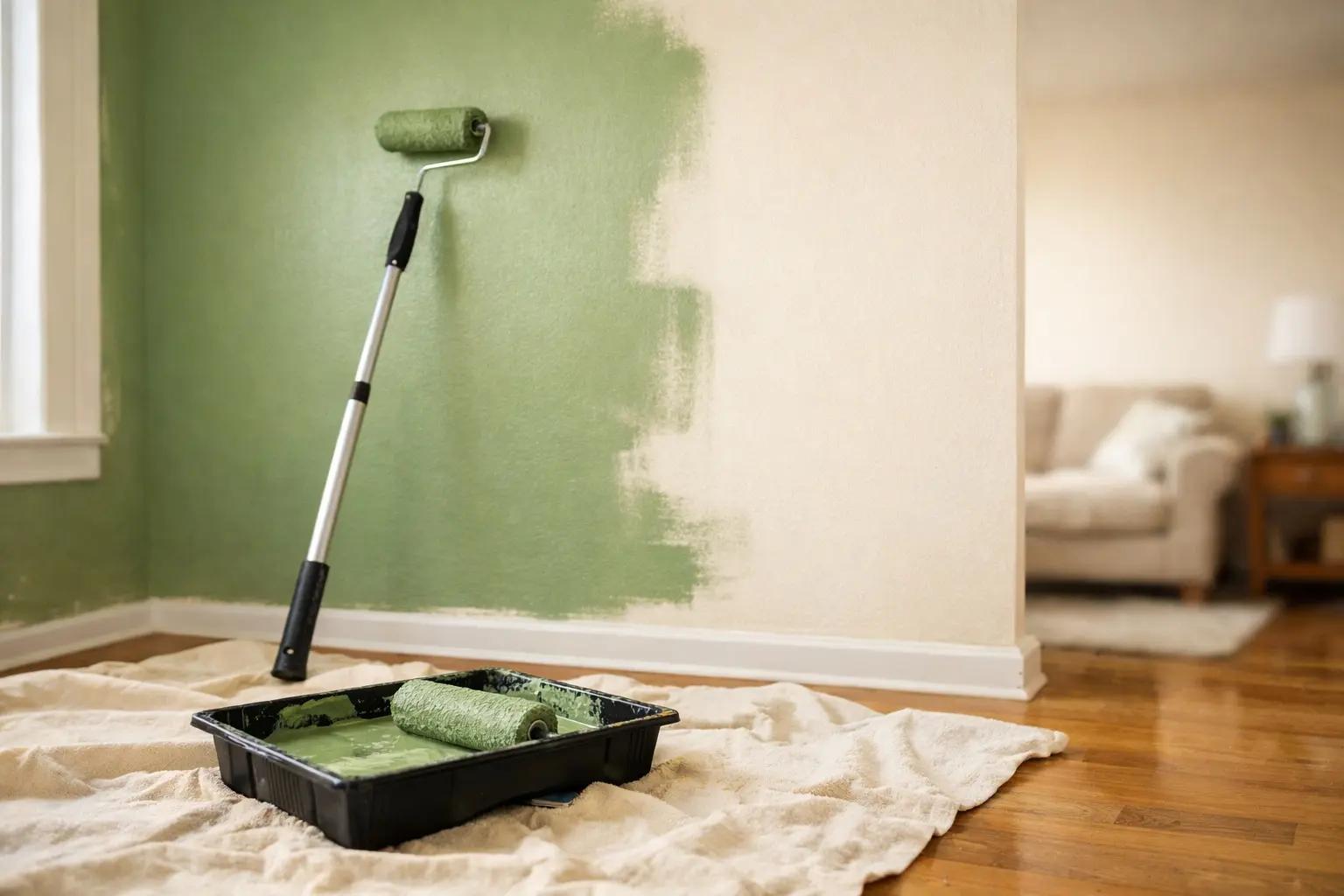
How to Paint a Room
A fresh coat of paint is the fastest, cheapest way to transform any room — and doing it yourself saves $400-800 in labor for an average 12x12-foot bedroom. The job takes a weekend from prep to final coat, and the difference between an amateur-looking result and a professional finish comes down to technique, not talent. This guide covers prep, cutting in, rolling, and cleanup so you get clean lines and even coverage the first time.
 Easy30 min
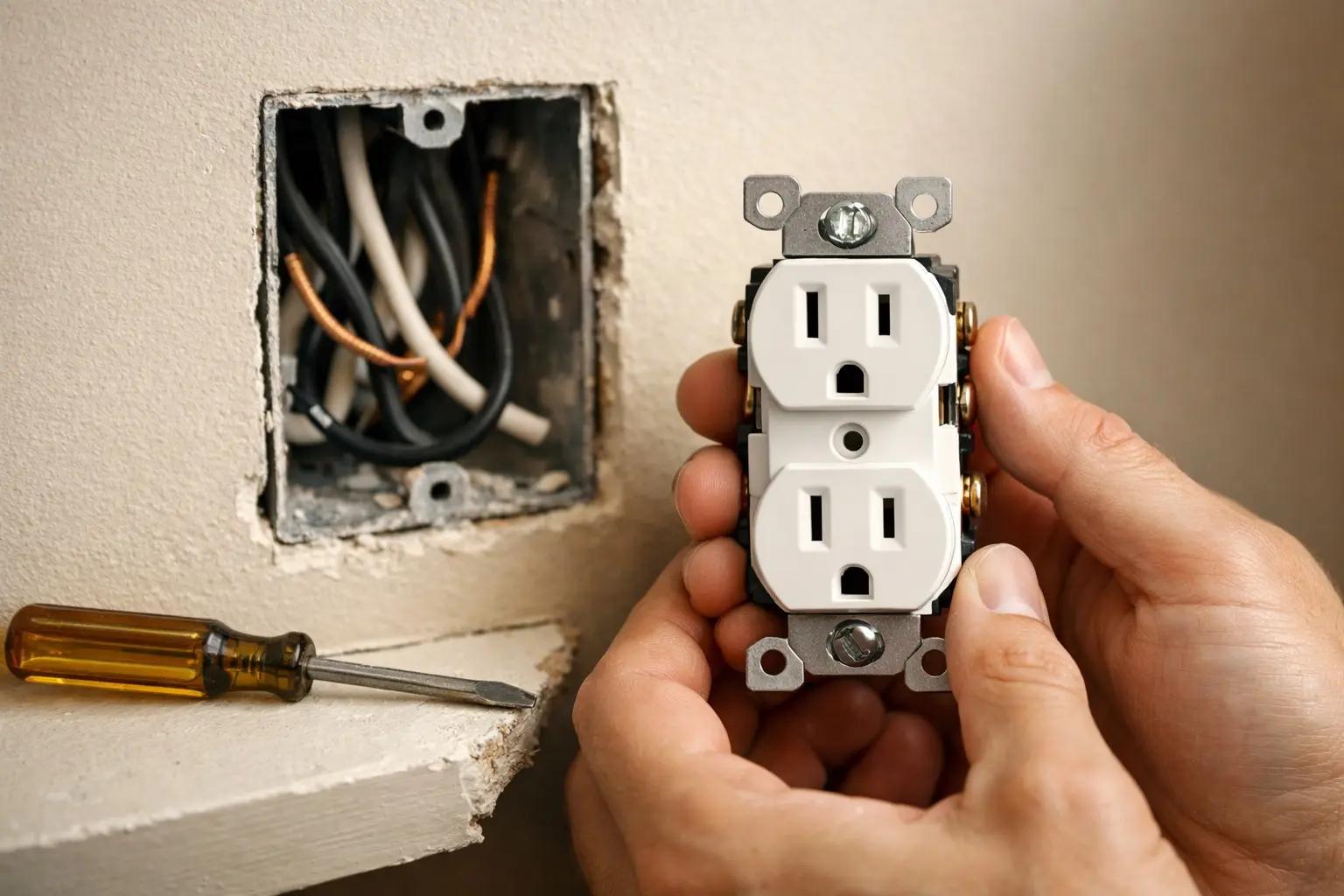
How to Replace an Electrical Outlet
A worn-out or discolored electrical outlet is one of the simplest electrical repairs you can tackle yourself — swapping one takes about 15-30 minutes and costs under $5 in parts versus $75-150 for an electrician visit. This guide walks you through safely replacing a standard duplex receptacle, including how to handle the wiring correctly and avoid the most common DIY mistakes.
 Medium45 min
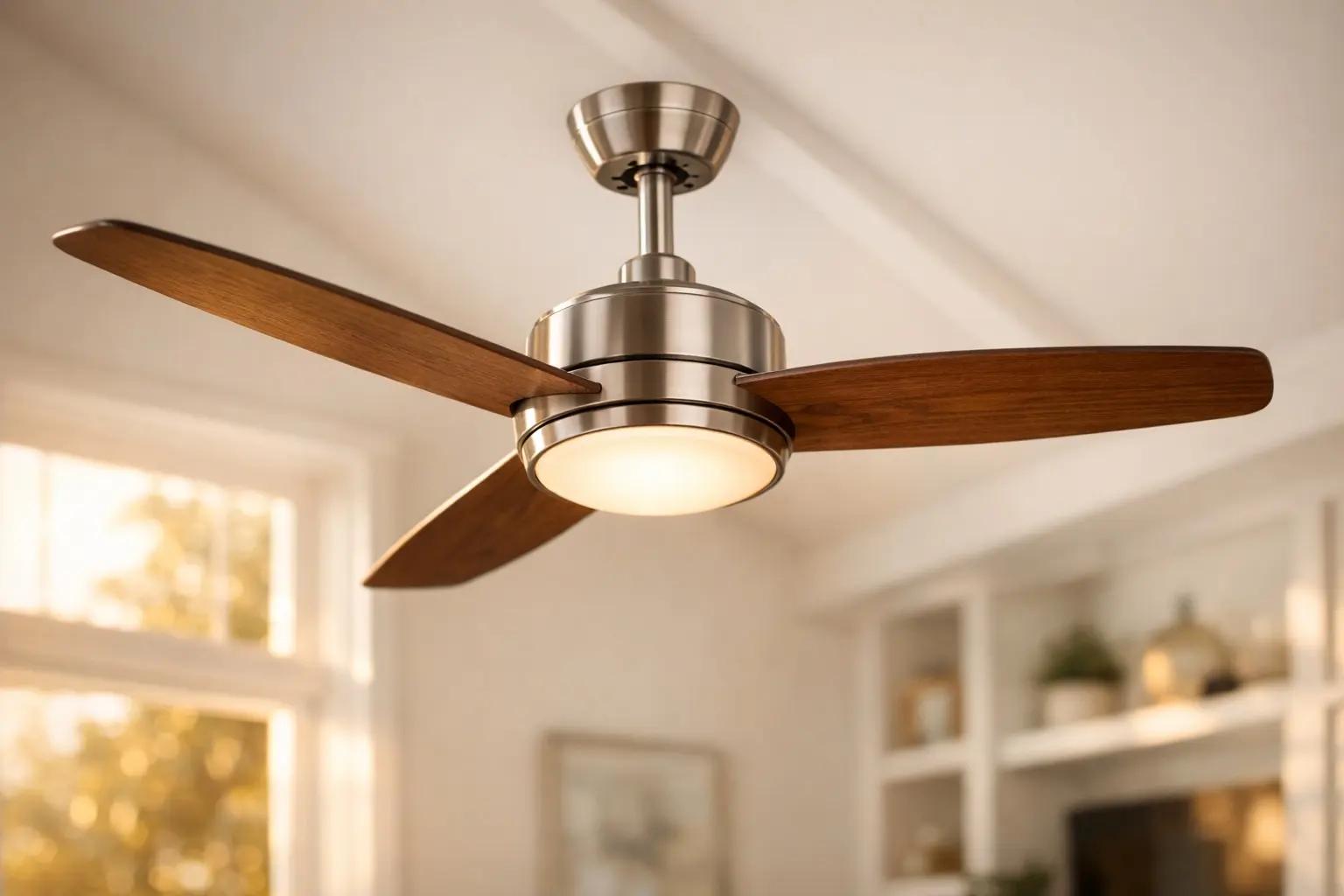
How to Install a Ceiling Fan
Replacing a light fixture with a ceiling fan improves air circulation in summer and can reduce heating costs in winter by circulating warm ceiling air downward. Most installs take 45-60 minutes.