How to Unclog a Drain
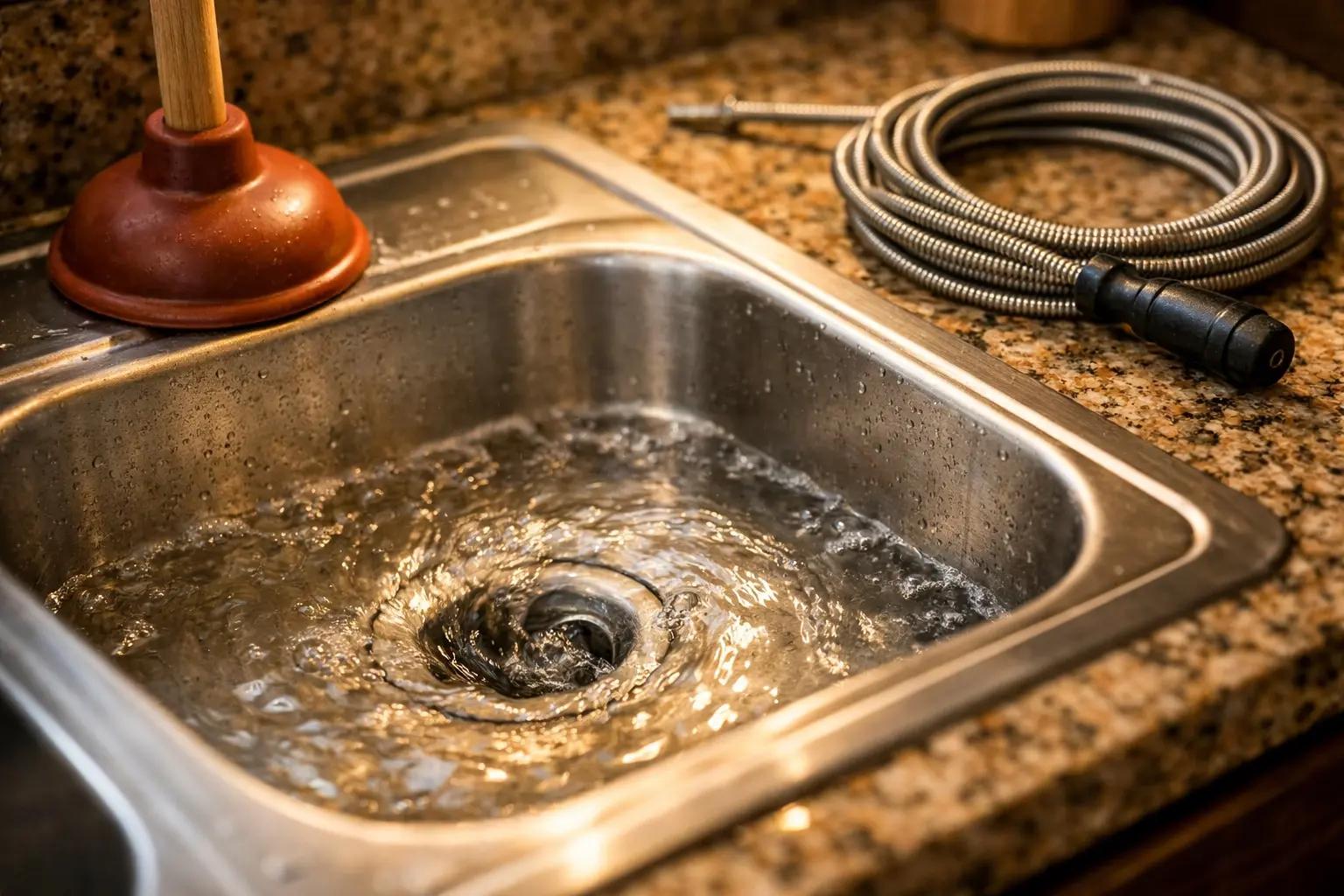

A slow or fully blocked drain is one of the most common household plumbing issues — and usually one of the cheapest to fix yourself. Most clogs can be cleared in under 30 minutes with tools you already own, saving the $150-300 a plumber would charge for the same job.
What You'll Need
🛠 Tools
📦 Materials
Safety First
- •Never mix a chemical drain cleaner with vinegar, another drain cleaner, or any other chemical — acid (including vinegar) poured onto a bleach-based cleaner releases toxic chlorine gas. If a chemical cleaner is already sitting in the drain, flush it through with plenty of water before plunging, opening the P-trap, or using the baking-soda method.
- •Boiling water can crack porcelain sinks. Use hot (not boiling) water on porcelain; boiling is safe for stainless steel and metal pipes.
- •Wear rubber gloves when handling drain contents — standing water in drains can harbor bacteria.
Step-by-Step Instructions
Assess the Clog
Determine the severity and location of the clog before choosing your approach. Run the water and observe: if it drains slowly, you likely have a partial clog that baking soda and plunging can fix. If water pools and doesn't drain at all, you may need to snake the line or clean the P-trap. Check whether multiple fixtures are affected — if both the sink and tub are backing up, the clog is deeper in the main line and may require professional help.
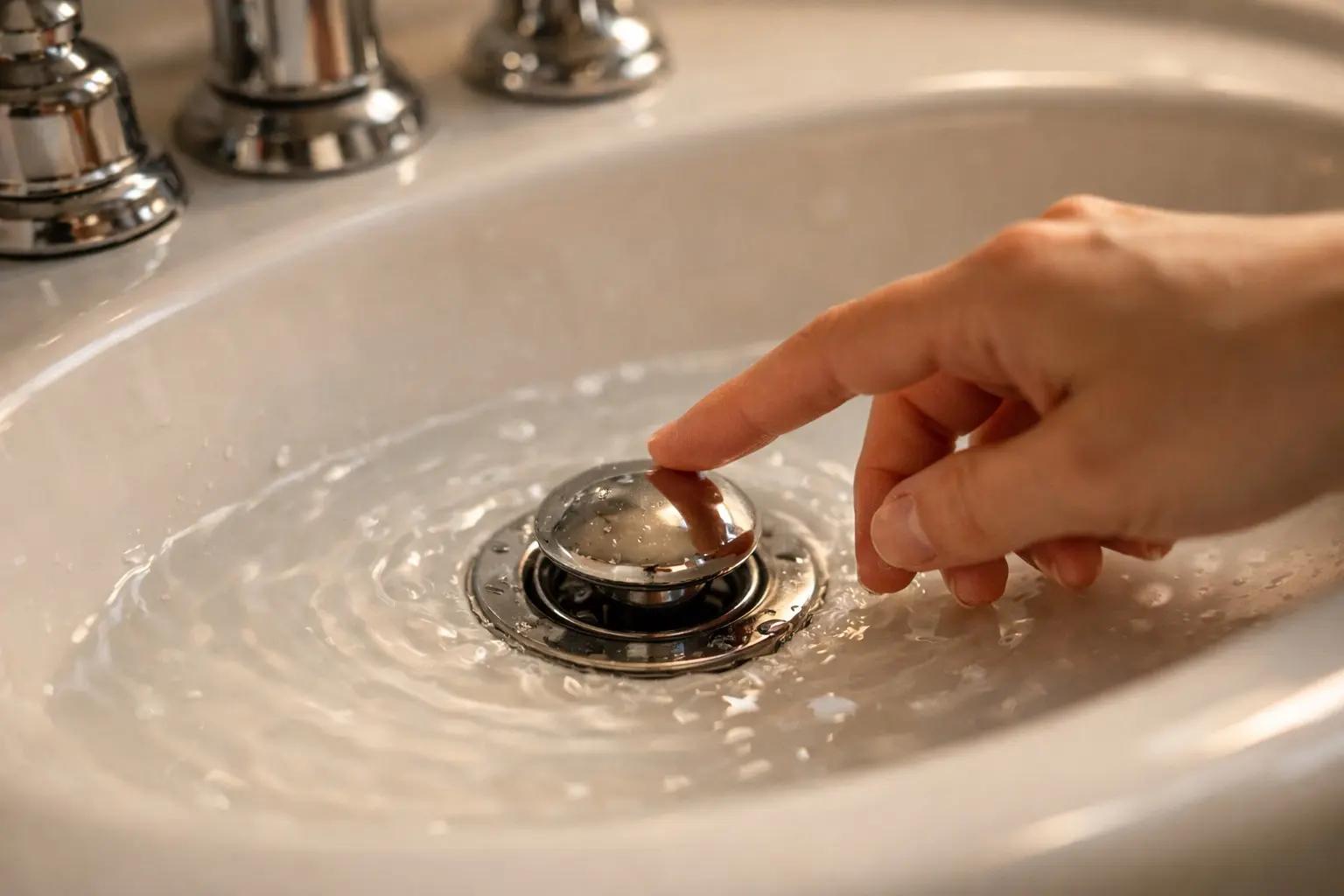
Remove the drain stopper or strainer first and pull out any visible hair or debris with needle-nose pliers. This alone fixes about 30% of bathroom drain clogs.
Try Boiling Water First
Boil a full kettle of water (about 1 liter) and pour it into the drain in two or three stages, waiting a few seconds between each pour to let the heat work on the clog. (If your sink basin is porcelain or ceramic, use very hot tap water instead of boiling — see the warning below.) Boiling water dissolves soap scum and grease buildup — the most common cause of kitchen sink clogs. If the water drains noticeably faster afterward, repeat once more. This takes 5 minutes and costs nothing, so always try it before escalating.
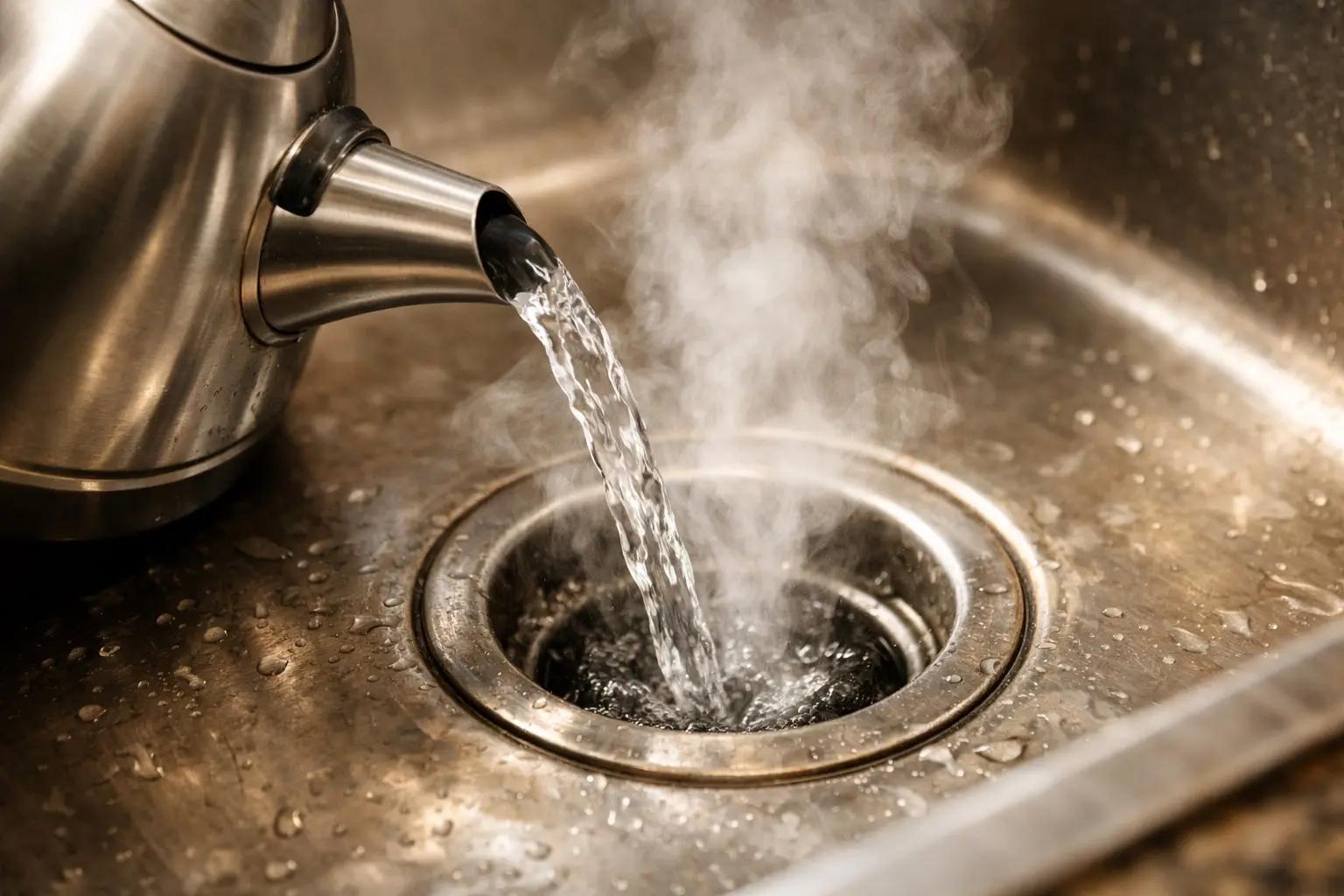
Do not pour boiling water into a porcelain or ceramic sink — the thermal shock can crack the basin. Use very hot tap water instead. Boiling water is safe for stainless steel sinks and metal drain pipes.
Apply Baking Soda and Vinegar
Pour 1/2 cup of baking soda directly into the drain opening, pushing it down with a spoon if needed. Follow with 1/2 cup of white vinegar and immediately cover the drain with a wet cloth or stopper to force the fizzing reaction downward into the clog instead of back up through the opening. Wait 15-30 minutes while the chemical reaction breaks down organic buildup. Flush with another kettle of boiling water (or hot water for porcelain).
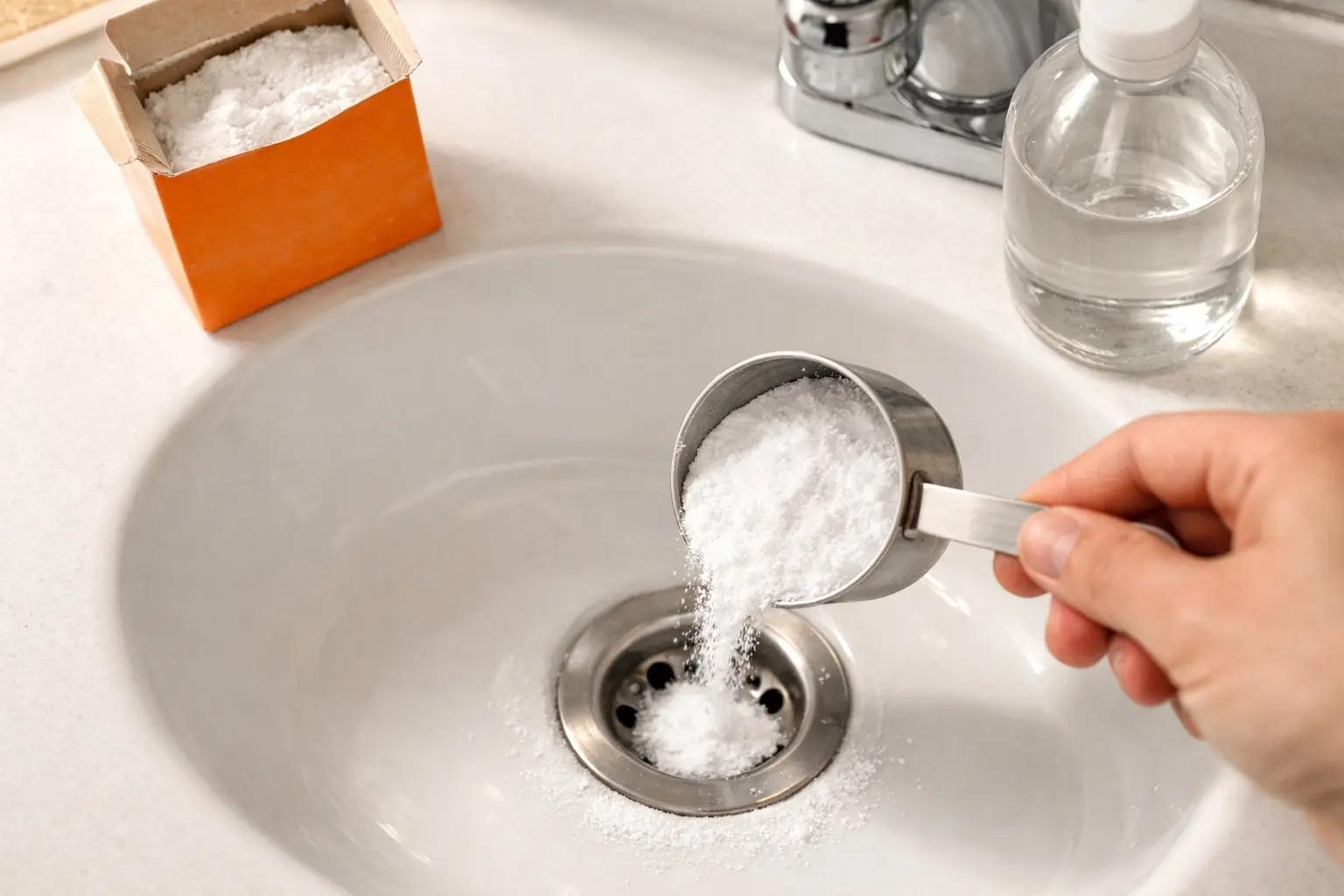
For stubborn grease clogs in kitchen sinks, squirt a tablespoon of dish soap into the drain before the boiling water flush. Dish soap emulsifies grease and helps it slide through the pipe.
Plunge the Drain
If the clog persists, use a flat-bottomed cup plunger (not a flange plunger, which is designed for toilets). Fill the sink with 2-3 inches of hot water to create a seal — use hot tap water (not boiling, which can crack porcelain). Apply a thin layer of petroleum jelly around the rim of the plunger for better suction. Place the plunger squarely over the drain and pump vigorously 15-20 times with sharp, forceful strokes. Pull the plunger off sharply on the last stroke to break the suction — the clog should release with a gurgling sound.
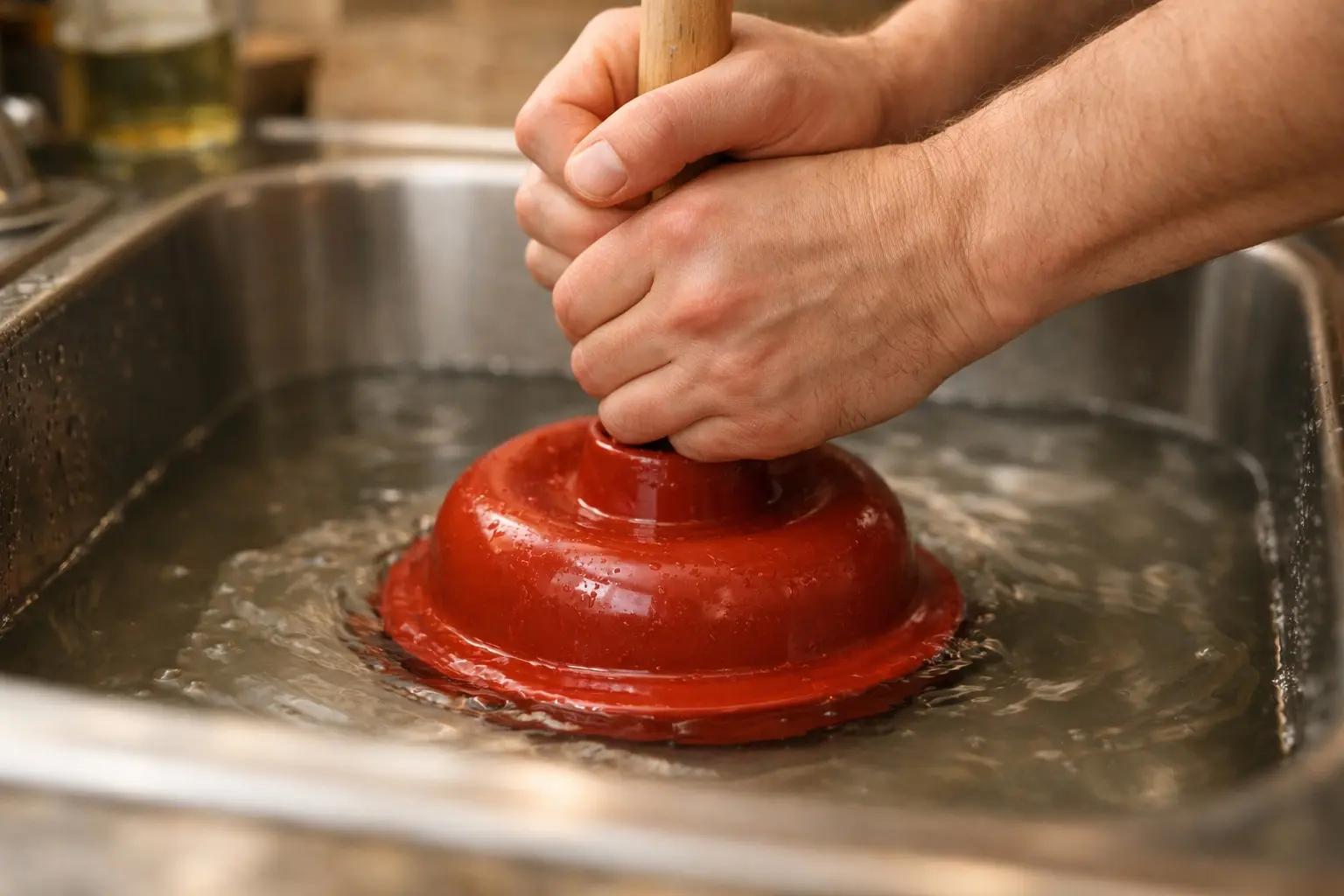
If you have a double-basin kitchen sink, stuff a wet rag into the second drain opening before plunging. This prevents air from escaping through the other side and gives you maximum pressure on the clog.
Clean the P-Trap
The P-trap is the curved section of pipe directly beneath the sink — it collects debris and is the most common location for stubborn clogs. Place a bucket underneath, then use adjustable pliers to loosen the two slip nuts (the threaded rings at each end of the curved pipe) by turning them counterclockwise. Carefully lower the P-trap and dump its contents into the bucket. Scrub the inside with an old toothbrush and hot soapy water, removing any buildup. Inspect the pipe going into the wall for blockages you can reach.
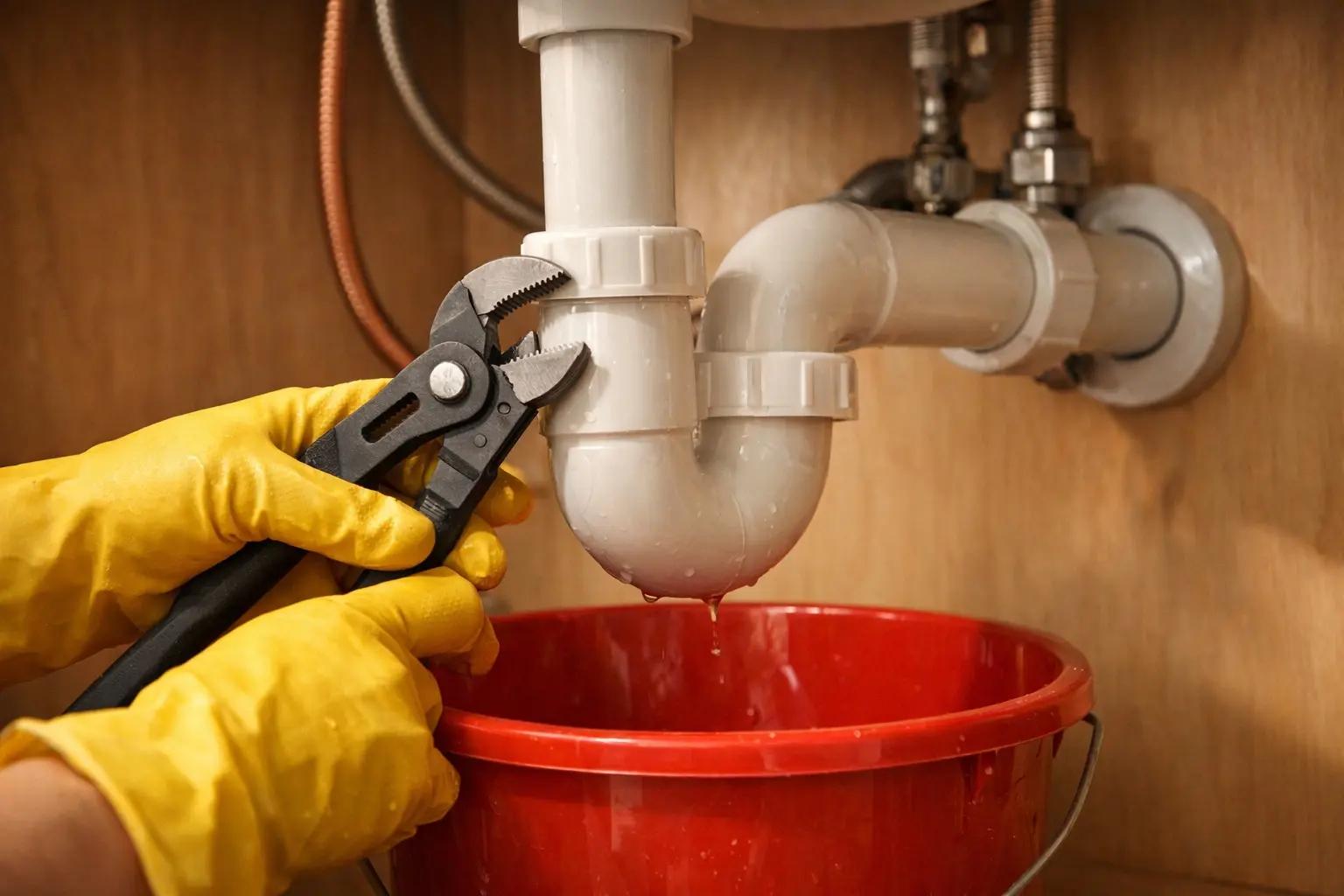
Have the bucket positioned before loosening any fittings — the P-trap holds standing water and trapped debris that will spill immediately once disconnected.
Snake the Drain Line
If the clog is deeper than the P-trap, insert a drain snake (also called a drain auger) into the pipe opening in the wall. Feed the cable into the pipe while turning the handle clockwise. When you feel resistance, you've reached the clog — continue turning and pushing gently to break through it. Pull the snake back slowly, cleaning off debris as it emerges. For bathroom drains, you can also feed the snake directly through the drain opening from above after removing the stopper.
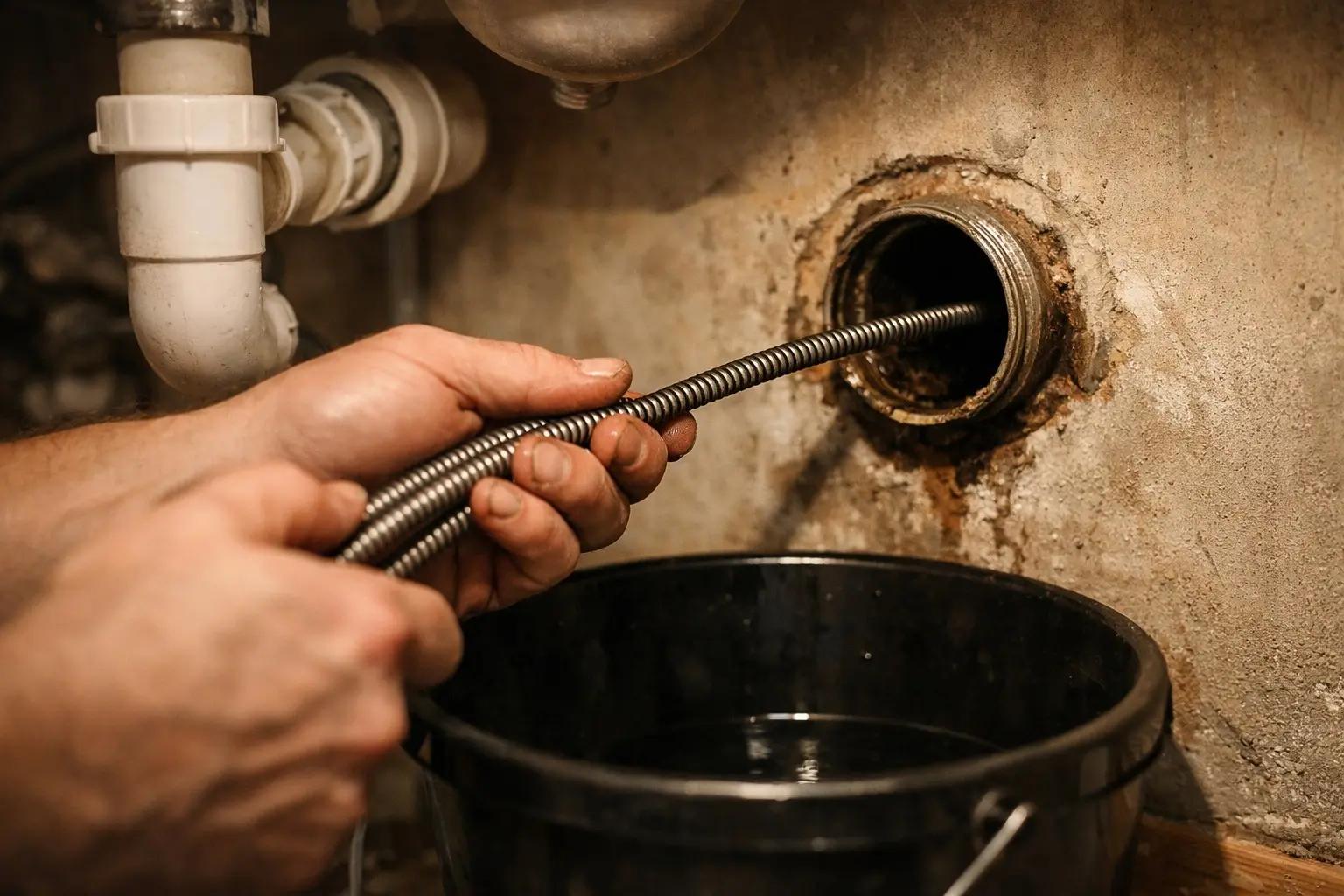
A 15-25 foot drain snake ($20-30 at any hardware store) handles virtually all household clogs. If the snake hits the clog but can't break through after several tries, the blockage may be too far down the line for a hand snake — that's when to call a plumber.
Reassemble and Test
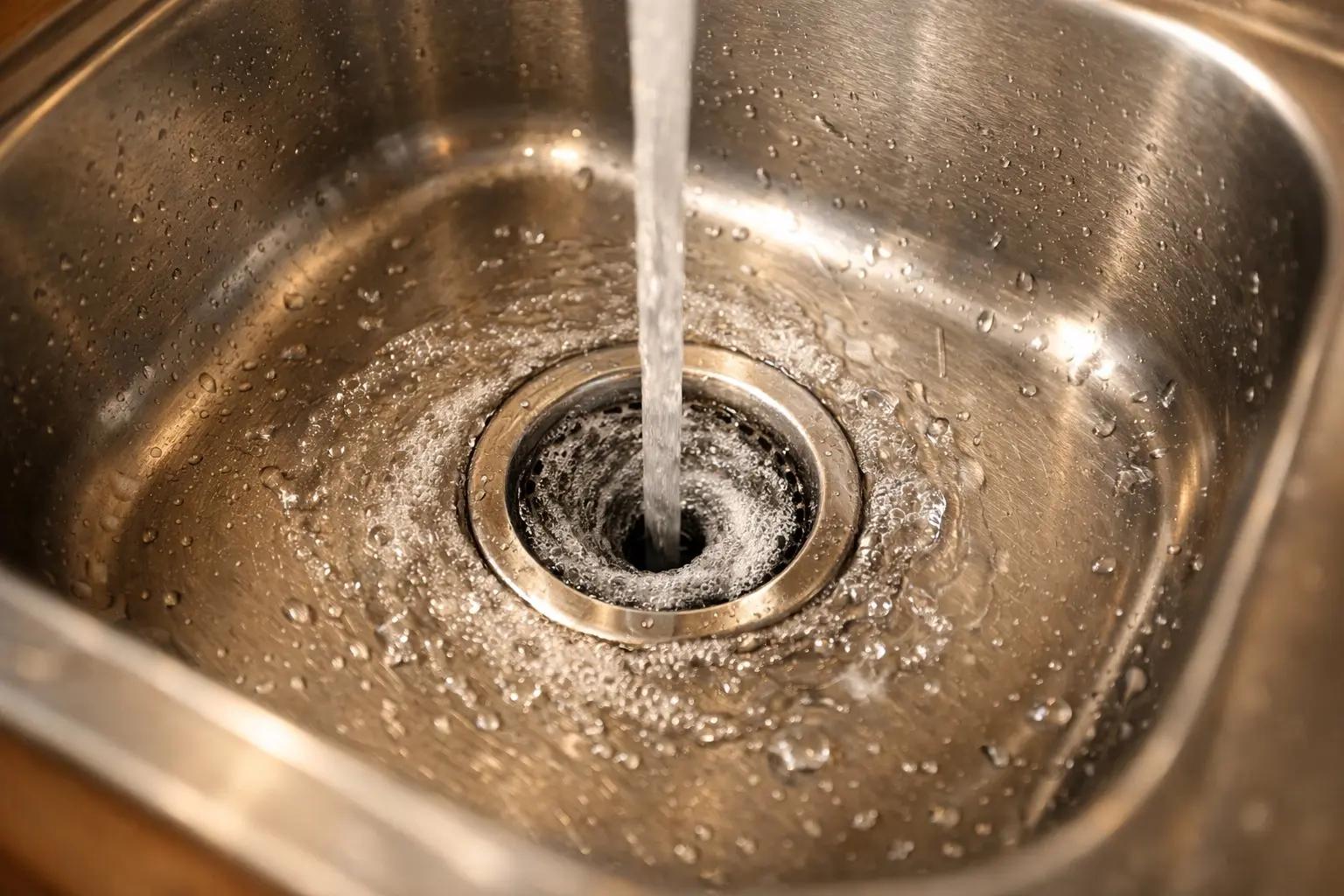
If you removed the P-trap, reinstall it by hand-tightening the slip nuts first, then snugging them a quarter turn with pliers — over-tightening can crack PVC fittings. Replace the drain stopper or strainer. Run hot water for 30-60 seconds and watch the flow: it should drain quickly with a steady whirlpool at the drain opening. While the water runs, check under the sink for any drips at the P-trap connections. Tighten any leaking joints an eighth of a turn at a time.
Prevent Future Clogs
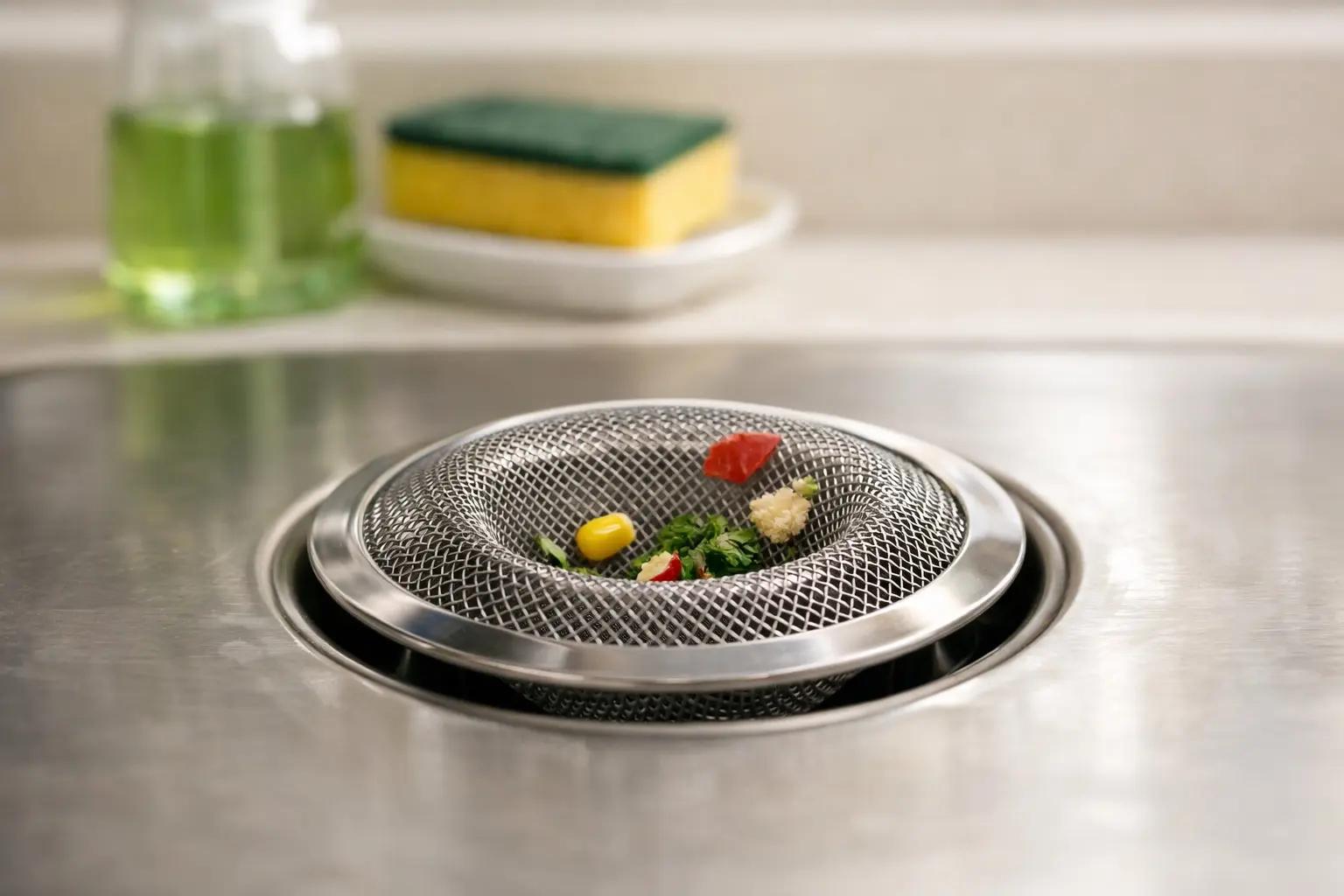
Install a mesh drain strainer ($3-5) over every drain to catch hair, food scraps, and debris before they enter the pipe. Never pour cooking grease or oil down the drain — wipe greasy pans with a paper towel before washing. Run hot water for 15 seconds after each use to flush soap residue through the pipes. Once a month, pour 1/2 cup of baking soda followed by hot water down each drain as preventive maintenance. In the bathroom, remove and clean the drain stopper every two weeks.
Avoid chemical drain cleaners like Drano or Liquid-Plumr for regular use. They work short-term but corrode pipes over time — especially older metal plumbing. The baking soda method is gentler and equally effective for maintenance.
Frequently Asked Questions
How long does it take to unclog a drain?
+
This project typically takes about 30 min. The guide includes 8 steps with detailed instructions for each.
What tools do I need?
+
You will need: Cup plunger (flat-bottomed, not a flange/toilet plunger), Drain snake or drain auger (15-25 ft), Adjustable pliers or channel-lock pliers, Bucket, Rubber gloves, Flashlight, Old toothbrush. Materials include: Baking soda (1/2 cup), White vinegar (1/2 cup), Dish soap, Boiling water, Old towels or rags, Petroleum jelly (for plunger seal).
Is this a good project for beginners?
+
Yes! This is rated as an easy project that most homeowners can complete with basic tools and no prior experience.
Sources & further reading
- How You Can Unclog Any Drain: Sink, Toilet, and Tub — This Old House
- Home Maintenance — EPA WaterSense
More Plumbing Guides
View all → Easy30 min
How to Fix a Dripping Faucet
A dripping faucet wastes more than 3,000 gallons of water per year and can add $20 or more to your monthly water bill. The fix is almost always a worn cartridge, washer, or O-ring — parts that cost under $10 and take 20-30 minutes to replace with basic tools.
 Easy45 min
How to Repair a Shower Diverter Valve
When you pull the diverter knob and water still pours from the tub spout instead of the showerhead, the fix is usually a worn washer or mineral buildup — not a $200 plumber visit. This guide covers the three most common diverter types (tub spout, three-valve, and two-valve) and walks you through cleaning, replacing washers, and swapping the diverter if needed, all in under an hour with basic tools.
 Easy1h 30m
How to Re-Caulk a Bathtub or Shower Surround
Mildewed, cracked, or peeling caulk around a bathtub isn't just ugly — it's letting water reach the drywall and studs behind the wall, which turns a $10 caulk job into a thousand-dollar tile-and-framing repair. This guide walks through removing the old caulk completely, treating mold, masking and tooling a clean single bead of 100% silicone, and the curing schedule that keeps the new joint waterproof for years.
You Might Also Like
 Easy25 min
Best Deck Stain: Transparent vs Semi vs Solid
There is no "best" deck stain — there is the right stain for your sun exposure, wood condition, and how often you want to redo the job. Transparent stains last 1-2 years but let the natural grain show. Solid stains last 4-7 years but look like paint. This guide walks the four opacity levels and the oil-vs-water choice so you pick the one that matches your deck and your tolerance for re-staining.
 Easy45 min
How to Install a Smart Thermostat
A smart thermostat is one of the highest-ROI upgrades you can make to your home — it learns your schedule, adjusts automatically when you're away, and typically saves about 8% on heating and cooling bills — the figure ENERGY STAR verifies from real-home data, roughly $50 a year — so the $120-250 device usually pays for itself within a few years. If your old thermostat has labeled wires behind it, the swap takes about 30-45 minutes with nothing more than a screwdriver and your phone. This guide covers checking compatibility, labeling wires, mounting the new base, connecting everything, and walking through the app setup so your system is running smart the same day.
 Hard8 hrs
How to Paint Kitchen Cabinets
A professional cabinet refinish costs $3,000-8,000, but painting them yourself with the right prep and materials delivers the same transformation for under $200 in a long weekend. The secret is thorough degreasing, a bonding primer, and thin coats with proper dry time between each — skip any of those and the paint will chip within months. This guide walks through the full process from door removal and labeling to final reassembly, covering both brush and roller techniques for a smooth, factory-like finish.