How to Seal Drafty Windows
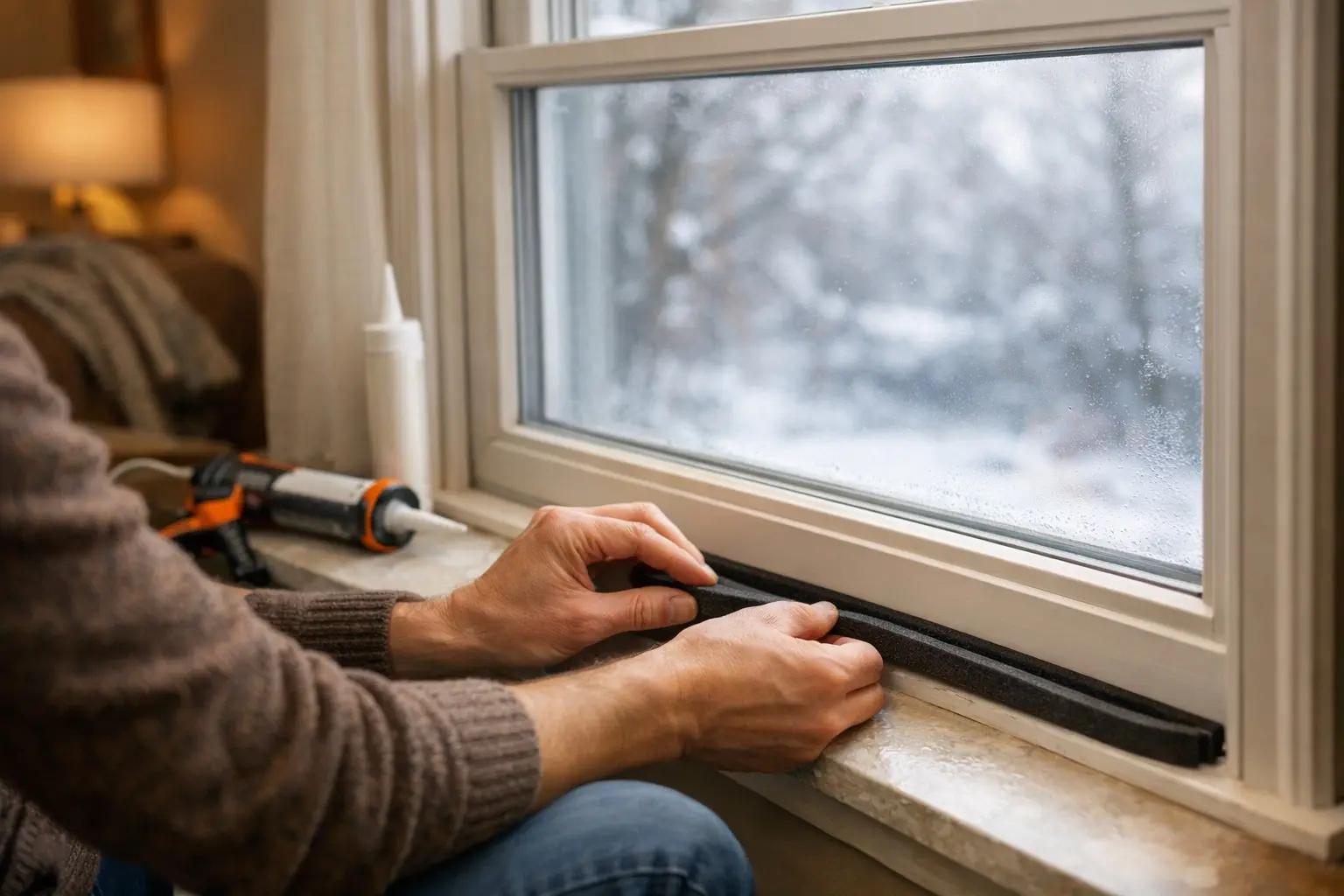

Drafty windows can add 5-30% to your heating and cooling bills — the U.S. Department of Energy estimates that a comprehensive home weatherization project (which includes sealing windows, doors, and other air leaks) can save homeowners several hundred dollars per year on energy costs. Window sealing alone typically pays for itself within a few seasons through lower heating and cooling bills. The good news is that most drafts are fixed with $10-30 in weatherstripping and caulk, not expensive replacement windows. This guide walks you through finding the leaks, choosing the right sealant for each gap, and applying it for a tight, long-lasting seal.
What You'll Need
🛠 Tools
📦 Materials
Step-by-Step Instructions
Find the Drafts with a Simple Test
On a cold or windy day, hold a lit candle or stick of incense near the edges of each window — where the sash meets the frame, where the glass meets the frame, and where the frame meets the wall. Watch the flame or smoke: if it flickers, bends, or gets pulled sideways, you've found a draft. Mark each leak location with a small piece of painter's tape. Check the window lock too — many drafts are simply caused by a window that doesn't close or latch tightly.

You can also feel for drafts with the back of your hand — it's more sensitive to temperature changes than your palm. Run it slowly along every edge and joint of the window on a cold day.
Remove Old Caulk and Weatherstripping
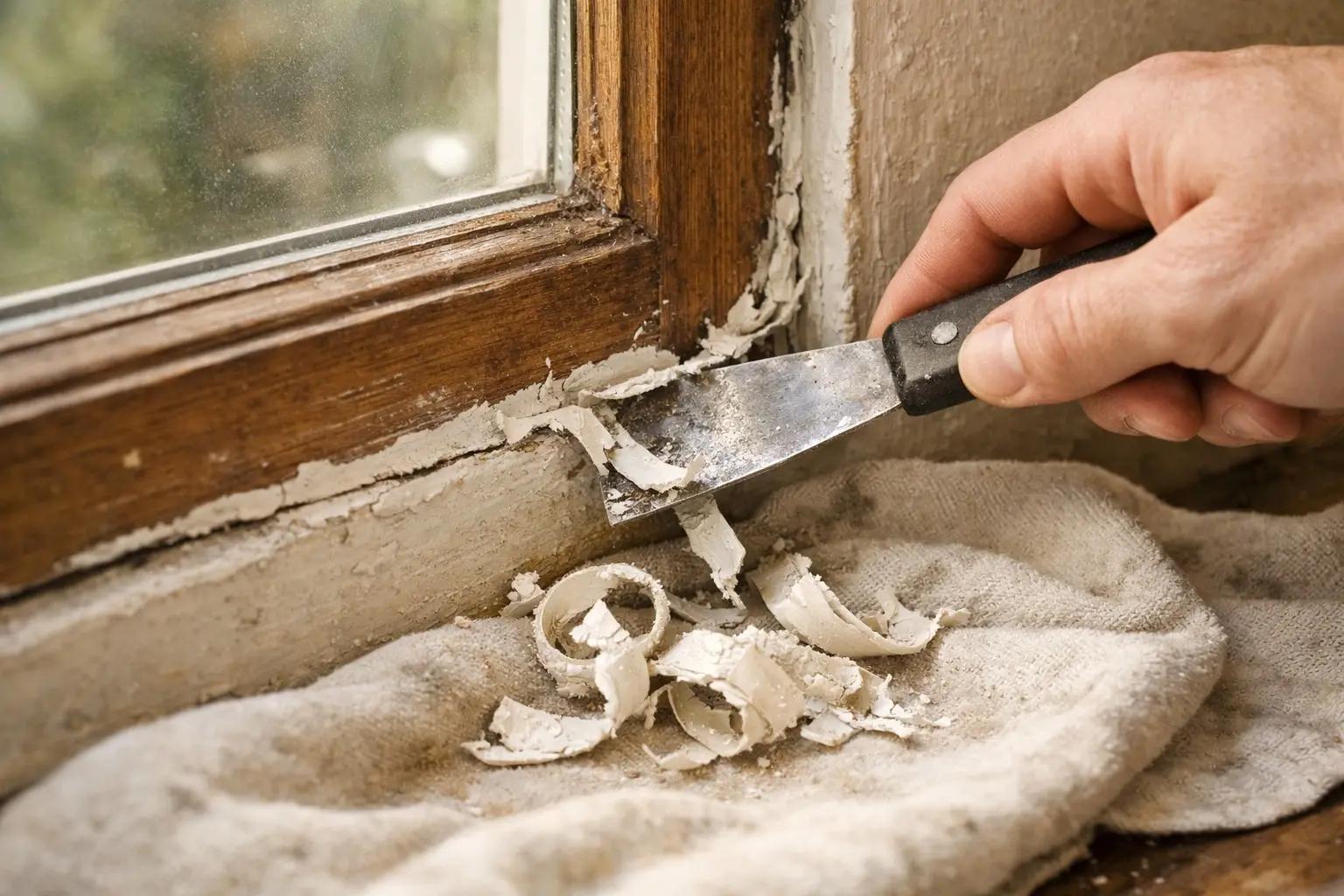
Before applying new sealant, you need to remove any cracked, peeling, or brittle old caulk and worn-out weatherstripping. Use a utility knife to score along the edges of old caulk, then peel and scrape it away with a putty knife. Pull off any old foam tape or felt weatherstripping — it usually comes off in strips. Scrape any adhesive residue with the putty knife and wipe the surface clean with rubbing alcohol on a rag. New sealant won't stick properly over old, degraded material.
Caulk the Fixed Joints Around the Frame
Caulk is for joints that don't move — the seam where the window frame meets the wall (both interior and exterior), and where the glass pane meets the frame (the glazing line). Cut the caulk tube nozzle at a 45-degree angle to create a 1/8-inch opening. Hold the gun at a 45-degree angle to the joint and squeeze a steady, continuous bead along the entire seam. Immediately smooth the bead with a wet finger or a damp rag, pressing it into the gap. Use paintable latex caulk on interior surfaces and silicone caulk on exterior surfaces for better weather resistance.
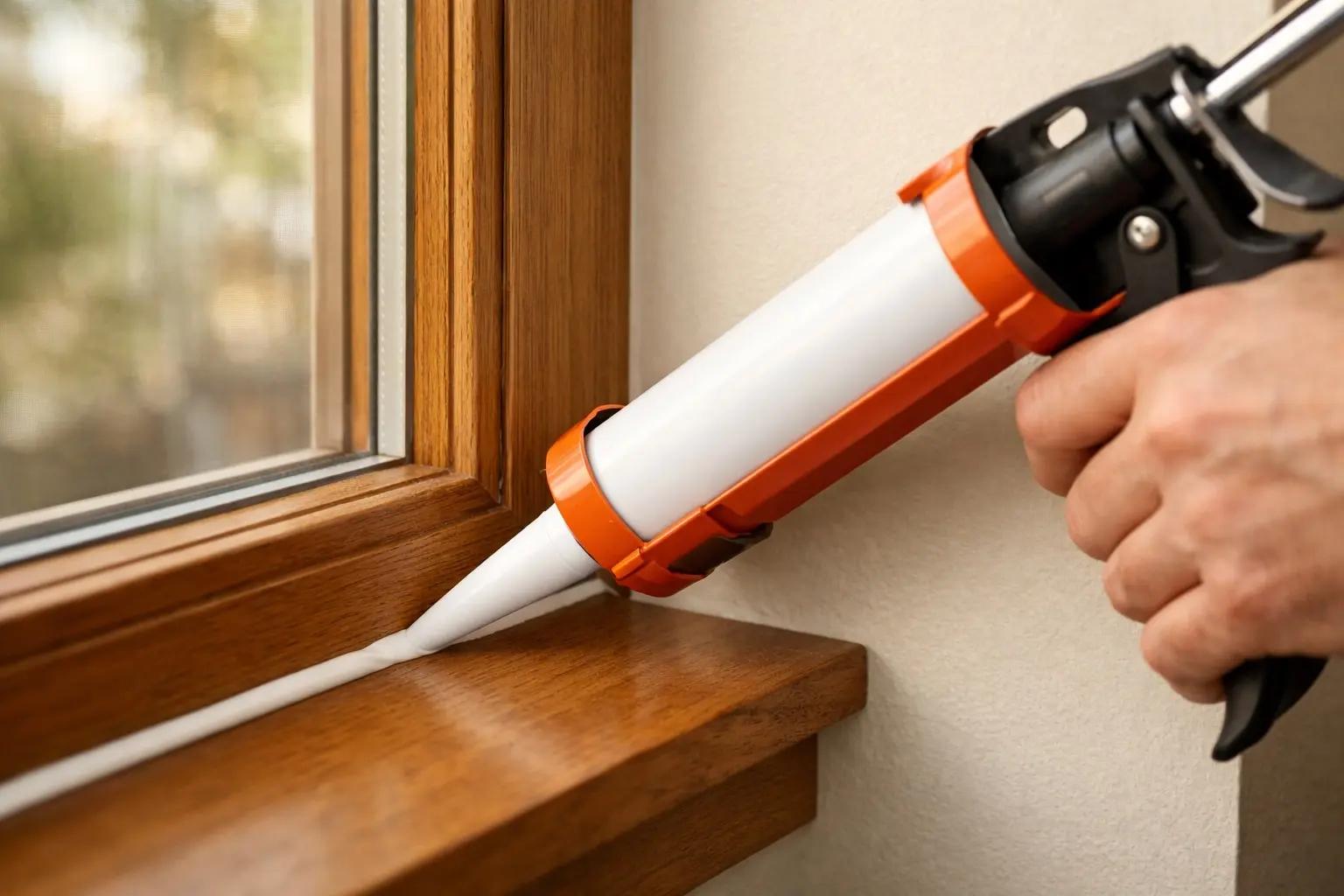
Never caulk the gap between the sash and the frame where the window slides open and closed — this will glue the window shut. Caulk is only for fixed, non-moving joints. Use weatherstripping for moving parts.
Apply Foam Weatherstripping to the Sash
Closed-cell foam tape is the easiest weatherstripping for the gap between the window sash and the frame. Measure the length of each side of the window where the sash meets the frame when closed — top rail, bottom rail, and both sides. Cut strips to length with scissors. Peel the adhesive backing and press the foam firmly along the frame face where the sash makes contact when closed. Close the window to compress the foam and check for a snug seal. If the foam is too thick and the window won't close, switch to a thinner strip (1/4-inch instead of 3/8-inch).
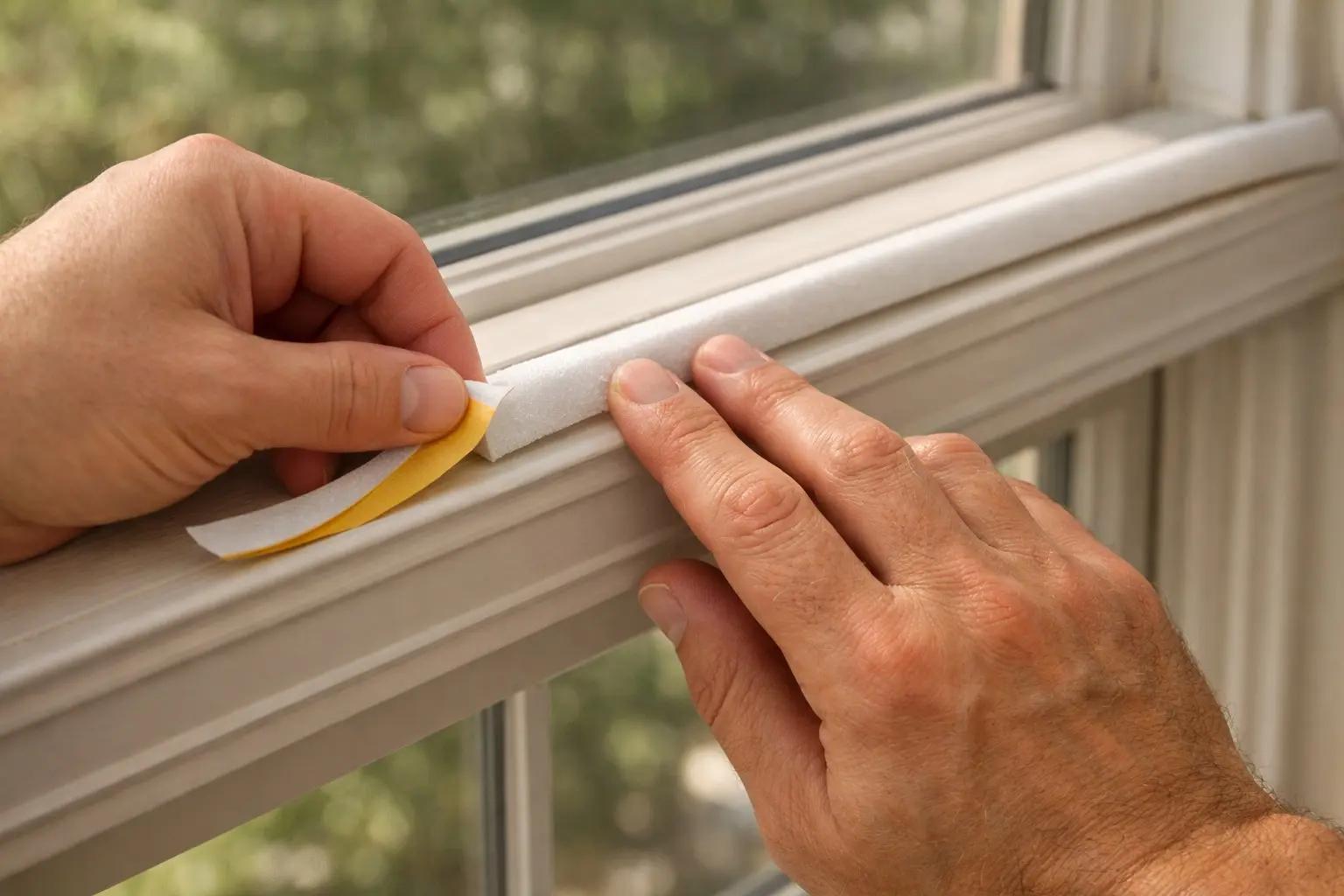
For double-hung windows, the biggest draft source is usually the meeting rail — the horizontal bar where the upper and lower sashes overlap in the middle. Apply a strip of foam tape on the bottom edge of the upper sash's meeting rail so it compresses against the lower sash when both are closed.
Install V-Strip in the Sash Channels
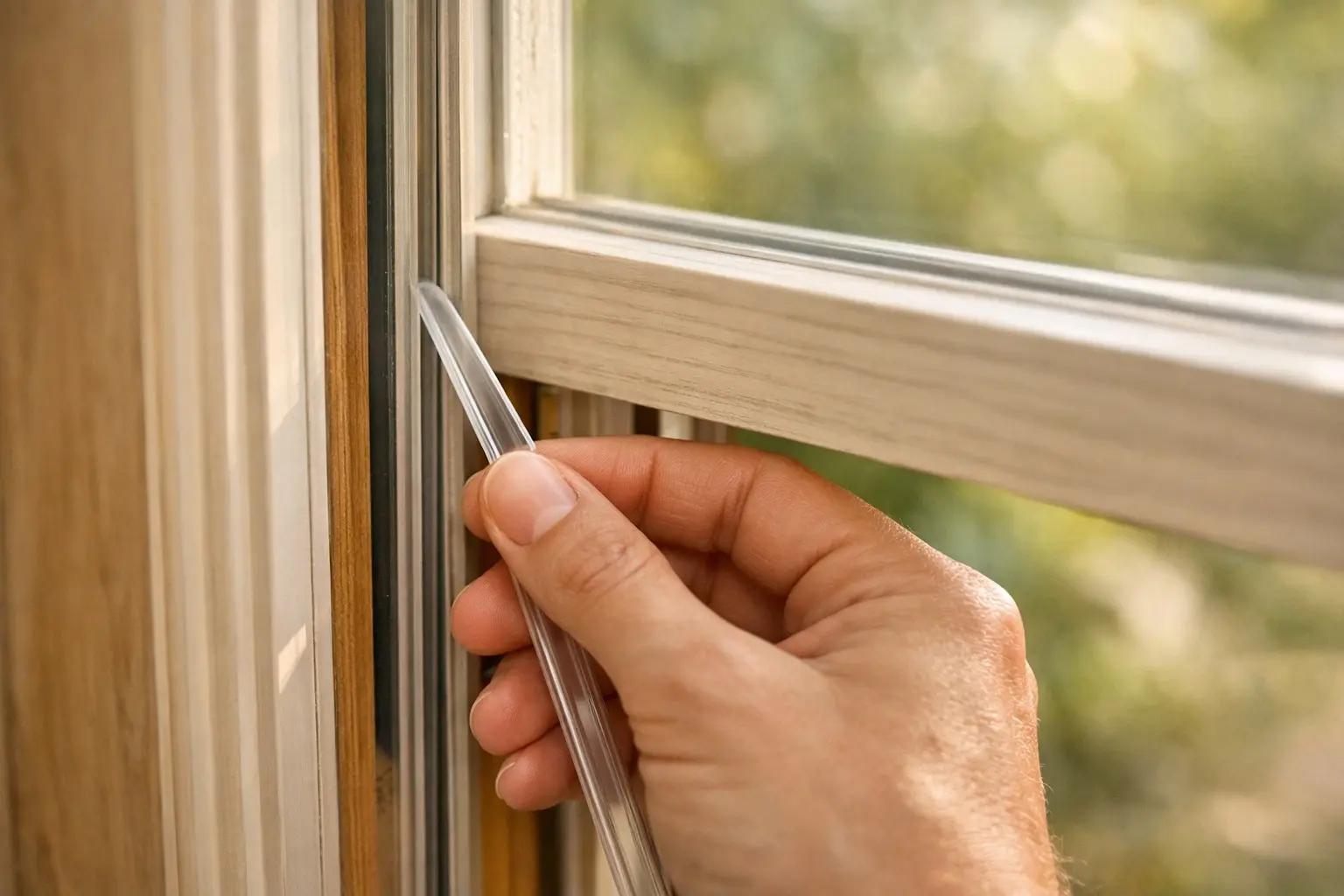
V-strip (also called tension seal) is a thin, folded plastic or metal strip that creates a spring-loaded seal in the channels where a double-hung window sash slides up and down. Measure the height of the sash channel and cut the V-strip to length. Open the window, slide the V-strip into the channel between the sash and the frame with the open end of the V facing outward (toward the weather). Peel and press the adhesive backing against the channel, or tack metal V-strip in place with the small nails provided. Close the window — the V-strip should flex and press against the sash, sealing the gap without restricting movement.
Apply Window Insulation Film (Optional)
For windows you won't open until spring, a clear shrink-film kit adds a dead-air insulating layer that mimics the effect of a second pane of glass. Clean the window frame with rubbing alcohol and let it dry. Apply the double-sided tape from the kit around the entire perimeter of the frame (not the glass). Cut the plastic film slightly larger than the window and press it onto the tape, starting at the top and working down. Use a hair dryer on medium heat, holding it 2-3 inches from the film, and slowly sweep across the surface — the film will shrink taut and become nearly invisible.
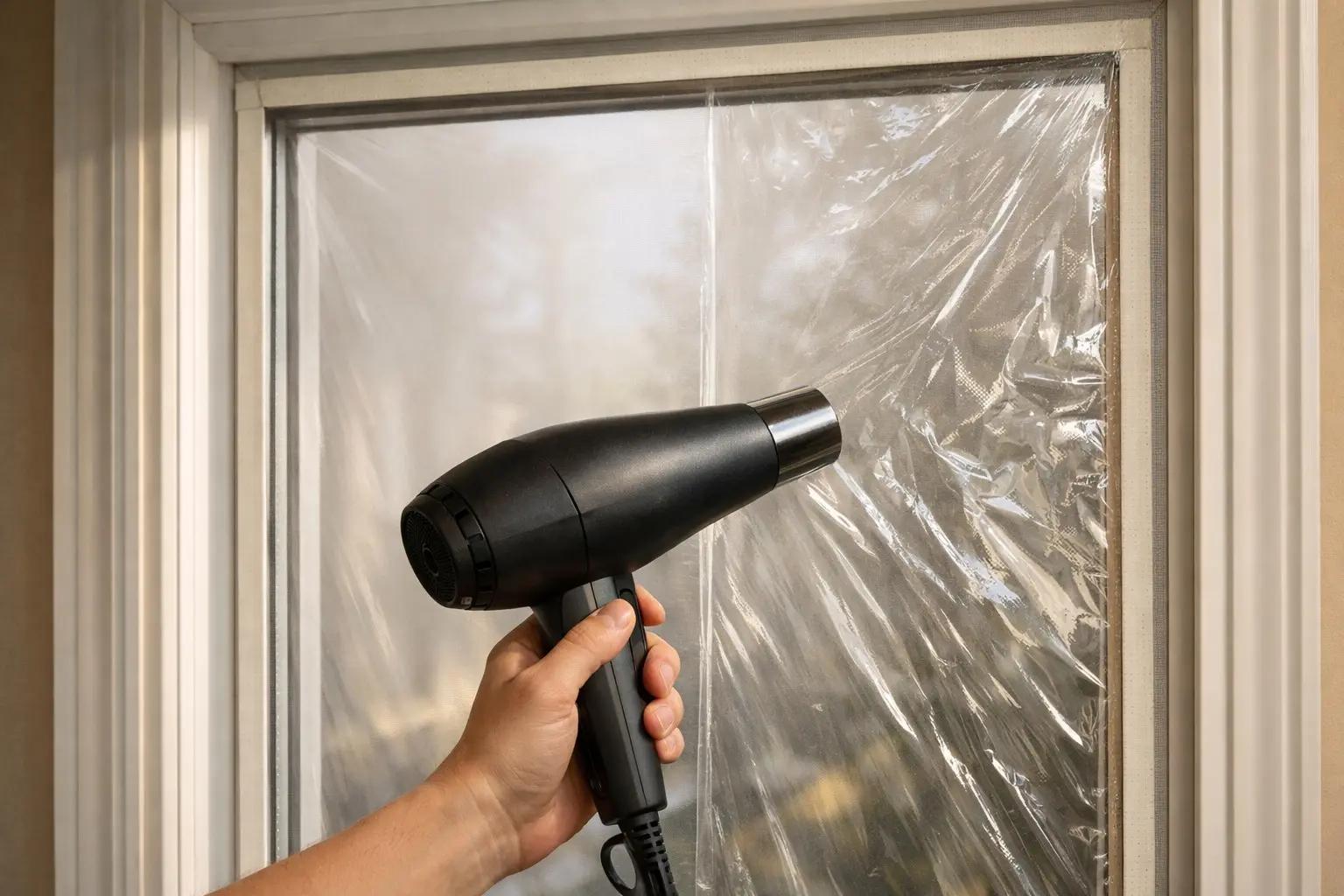
Window film kits cost $3-5 per window and can reduce heat loss through the glass by up to 55%. They're the single best bang-for-your-buck upgrade for single-pane windows when replacement isn't in the budget.
Test the Seal and Check for Remaining Drafts
Repeat the candle or incense test from step 1 at every joint you sealed. The flame or smoke should hold steady with no flickering. Close and lock the window — the lock pulls the sash tight against the weatherstripping for a better seal. If you still feel a draft at a specific spot, apply an additional layer of foam tape or press a thin bead of rope caulk (a removable putty-like sealant) into the gap. Check your work over the next few days: temperature changes can cause materials to shift, and you may need to re-press a section of foam tape or add caulk to a spot you missed.

Frequently Asked Questions
How long does it take to seal drafty windows?
+
This project typically takes about 45 min. The guide includes 7 steps with detailed instructions for each.
What tools do I need?
+
You will need: Caulk gun, Utility knife with fresh blade, Putty knife or 5-in-1 tool, Tape measure, Scissors, Hair dryer (for shrink film, if used), Clean rags. Materials include: Silicone or latex caulk (paintable latex for interior, silicone for exterior — one 10 oz tube does 3-4 windows), Self-adhesive foam weatherstripping tape (3/8-inch wide, closed-cell foam — one roll does 2-3 windows), V-strip (tension seal) weatherstripping (for sliding sash channels on double-hung windows), Rubbing alcohol (for cleaning surfaces before adhesive application), Window insulation shrink film kit (optional — for extra insulation on windows you won't open until spring), Rope caulk (optional — removable putty-like sealant for renters or temporary fixes).
Is this a good project for beginners?
+
Yes! This is rated as an easy project that most homeowners can complete with basic tools and no prior experience.
Sources & further reading
- DIY Savings Project: Weatherstrip Double-Hung Windows — U.S. Department of Energy
- Caulking — U.S. Department of Energy
More HVAC Guides
View all → Easy45 min
How to Replace a Thermostat (Non-Smart)
A faulty or outdated thermostat can cause uneven temperatures and inflate your energy bill by 10-20%. Swapping it for a new programmable or basic digital thermostat is a 30-minute job that requires only a screwdriver and costs $20-50 for the part. This guide walks you through safely disconnecting the old unit, labeling wires, mounting the new thermostat, and verifying your HVAC system responds correctly.
 Medium10 hrs
How to Insulate an Attic
Adding attic insulation is the highest-payback weatherization project in most homes — but the step that actually saves money is the one DIYers skip: air-sealing the leaks before any insulation goes down. This guide does it in the right order — seal the penetrations and hatch, add baffles so you don't smother the soffit vents, keep insulation safely clear of recessed lights and the flue, then build the floor up to your climate zone's R-value target with batts or blown-in. Budget roughly $1 to $2 per square foot in materials and a weekend.
 Easy45 min
How to Install a Smart Thermostat
A smart thermostat is one of the highest-ROI upgrades you can make to your home — it learns your schedule, adjusts automatically when you're away, and typically saves about 8% on heating and cooling bills — the figure ENERGY STAR verifies from real-home data, roughly $50 a year — so the $120-250 device usually pays for itself within a few years. If your old thermostat has labeled wires behind it, the swap takes about 30-45 minutes with nothing more than a screwdriver and your phone. This guide covers checking compatibility, labeling wires, mounting the new base, connecting everything, and walking through the app setup so your system is running smart the same day.
You Might Also Like
 Easy15 min
How to Replace a Refrigerator Water Filter
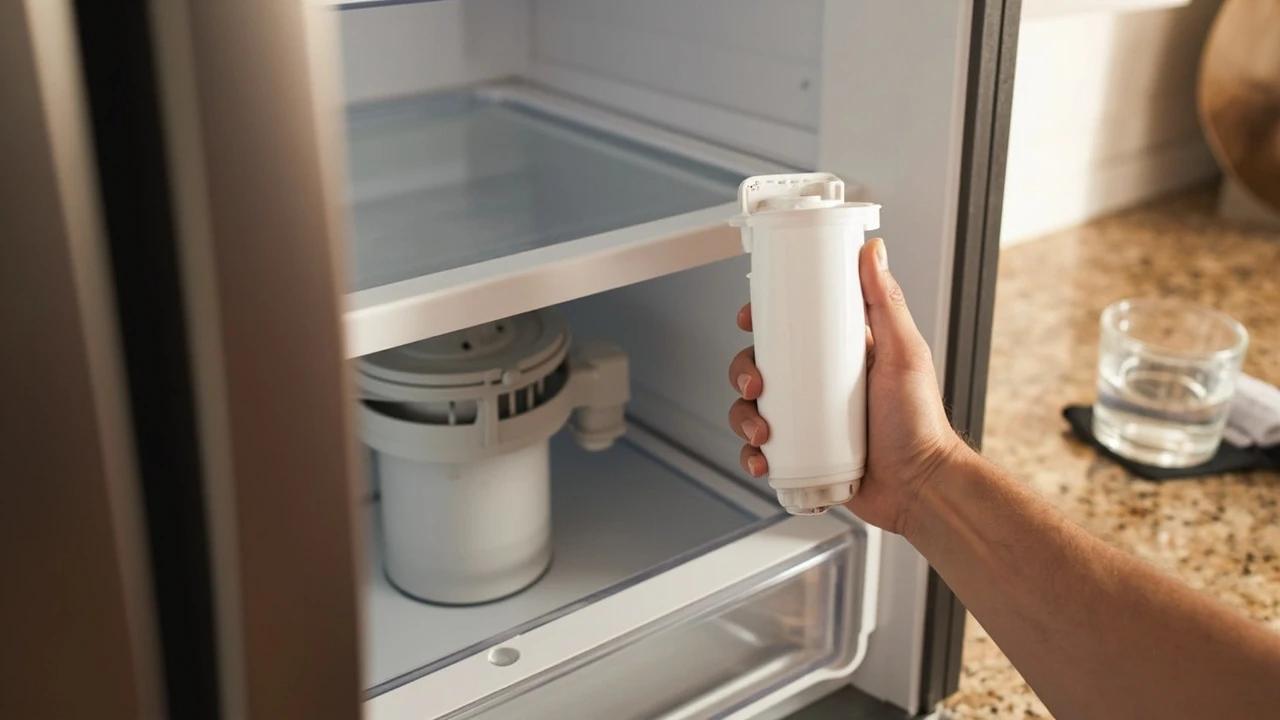
A clogged refrigerator water filter is the most common cause of slow dispensing, off-tasting water, and undersized ice cubes — and it is the easiest fix in your kitchen. Most filters are designed to be swapped in under five minutes with no tools, no shut-off valve, and no spilled water. This guide covers locating your filter, the two common removal styles (twist-in and push-in), inspecting the O-rings, flushing the new filter, and resetting the indicator light so you do not see the red "Replace" warning the next morning.
 Medium1 hr
How to Repair Scratches in a Hardwood Floor
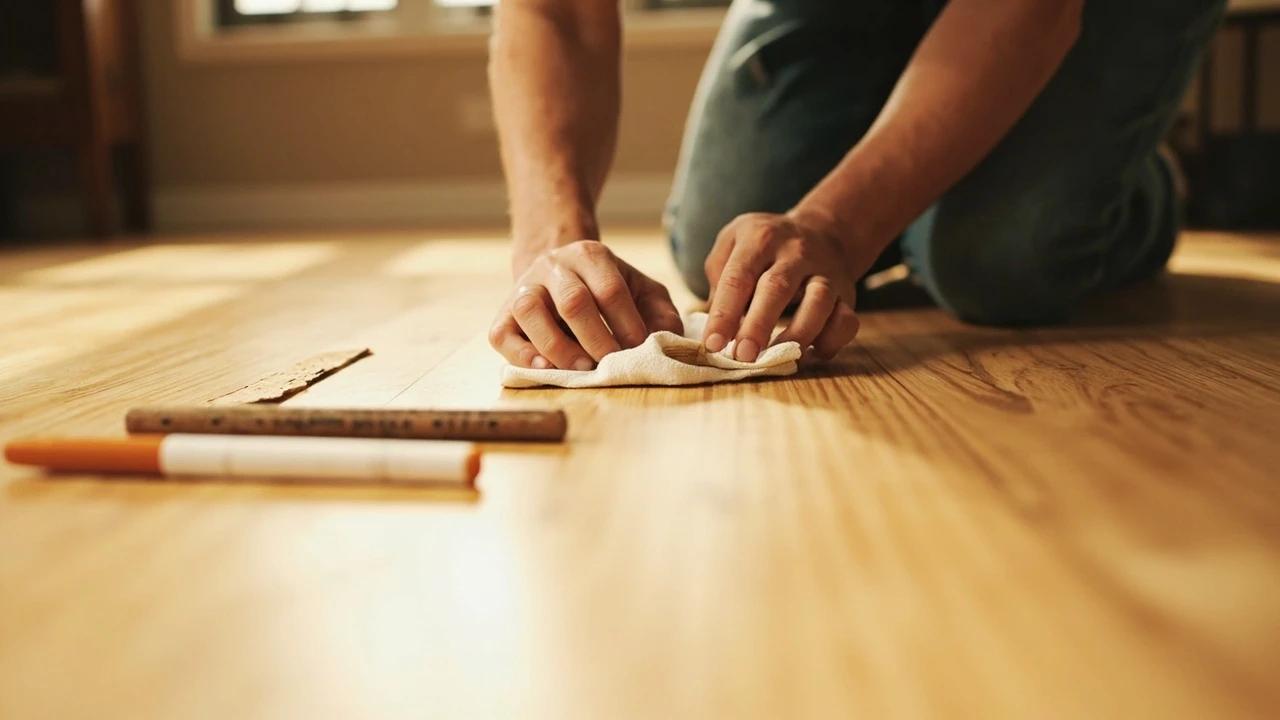
Scratched hardwood almost never means refinishing the whole floor. This guide shows you how to match the fix to the damage — a touch-up marker for finish-level scratches, a wax fill stick for shallow ones, and stainable wood filler with stain and polyurethane for deep gouges — all for under $40 in supplies and about an hour of work.
 Easy25 min
Best Deck Stain: Transparent vs Semi vs Solid
There is no "best" deck stain — there is the right stain for your sun exposure, wood condition, and how often you want to redo the job. Transparent stains last 1-2 years but let the natural grain show. Solid stains last 4-7 years but look like paint. This guide walks the four opacity levels and the oil-vs-water choice so you pick the one that matches your deck and your tolerance for re-staining.