How to Replace a Light Switch
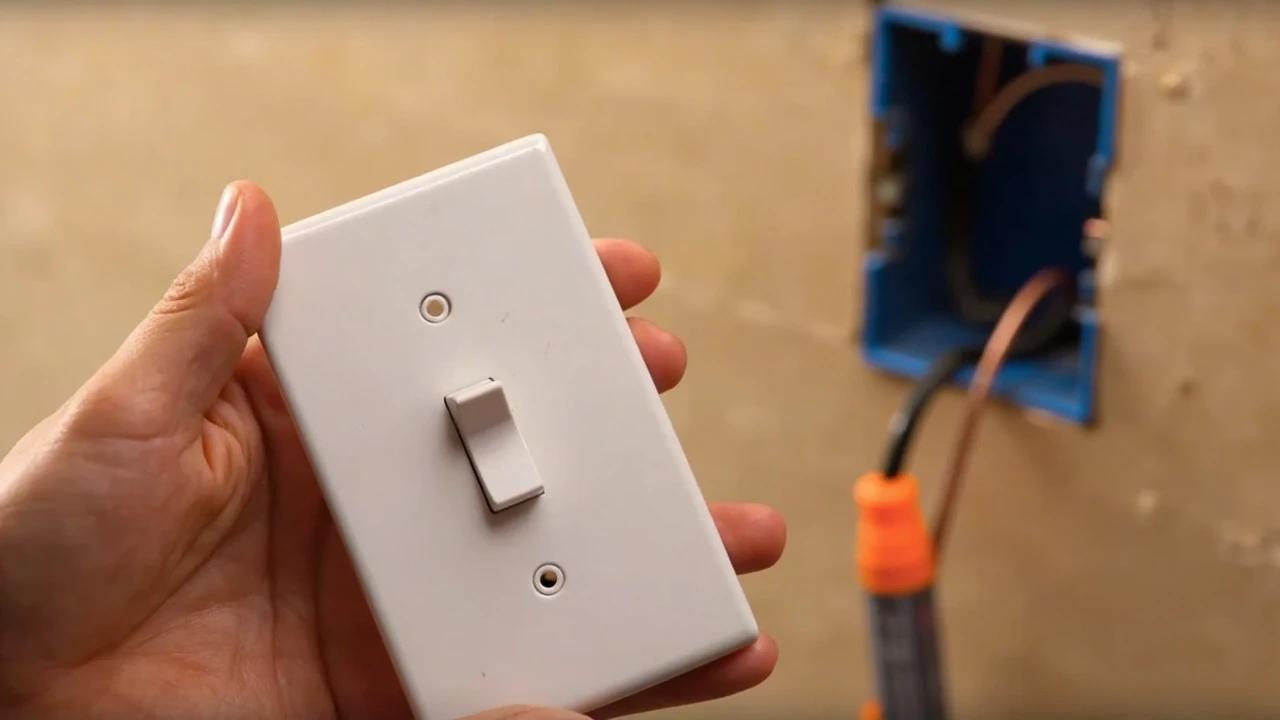

A worn, cracked, or misbehaving light switch is one of the easiest electrical fixes in the house — the job takes about 20-30 minutes, costs $2-10 in parts, and replaces a device that an electrician would charge $100-150 to swap. This guide walks through safely replacing a standard single-pole toggle or decora switch, from cutting the power to wiring the new device and testing the circuit.
What You'll Need
🛠 Tools
📦 Materials
Safety First
- •Always turn off power at the circuit breaker — not just the wall switch — and verify the circuit is dead with a non-contact voltage tester before touching any wires. Household 120V current can cause serious injury or death.
- •Do not work on a switch that is part of an unfamiliar wiring situation (more than 2 hot wires, aluminum wiring, knob-and-tube, or any scorched/blackened wire insulation). Call a licensed electrician instead.
Step-by-Step Instructions
Turn Off Power at the Breaker Panel
Go to your home's main electrical panel and flip the breaker that controls the light switch to the OFF position. If your breakers are not clearly labeled, leave the light turned on and flip breakers one at a time until the light goes off — that is the correct one. Put a piece of painter's tape over the breaker so nobody restores power while you work. Return to the switch and use a non-contact voltage tester in the next step to confirm the circuit is truly dead.
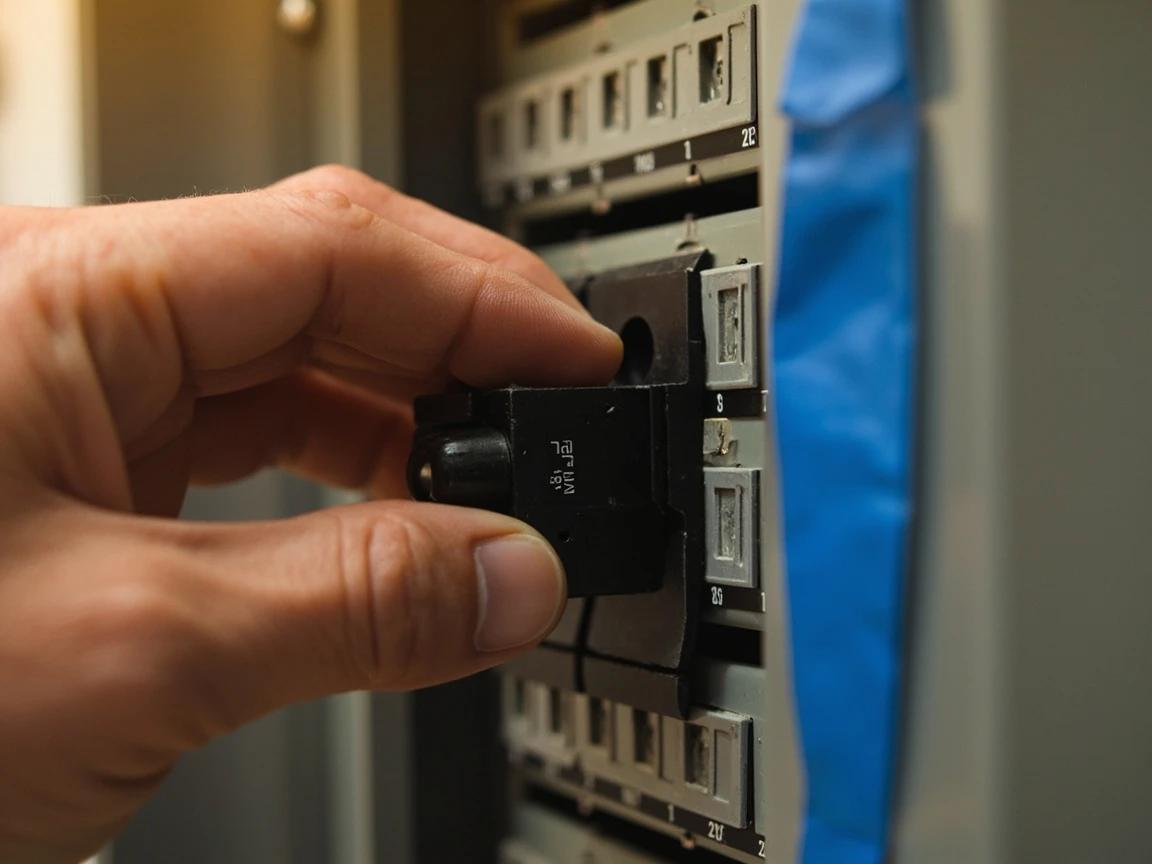
Never rely on the wall switch alone to confirm power is off. The line-side terminal inside the switch stays live even when the switch is flipped off, and you can still get shocked.
Verify the Circuit Is Dead with a Voltage Tester
Hold a non-contact voltage tester near the switch body and the wall plate screws. It should stay silent and dark. Then — just to be sure — unscrew the wall plate, remove the two mounting screws holding the switch to the box, and gently pull the switch out about an inch so you can touch the tip of the voltage tester to each wire terminal. If the tester beeps or lights up on any wire, stop and find the correct breaker. A $10-15 tester is cheap insurance against a 120V shock.
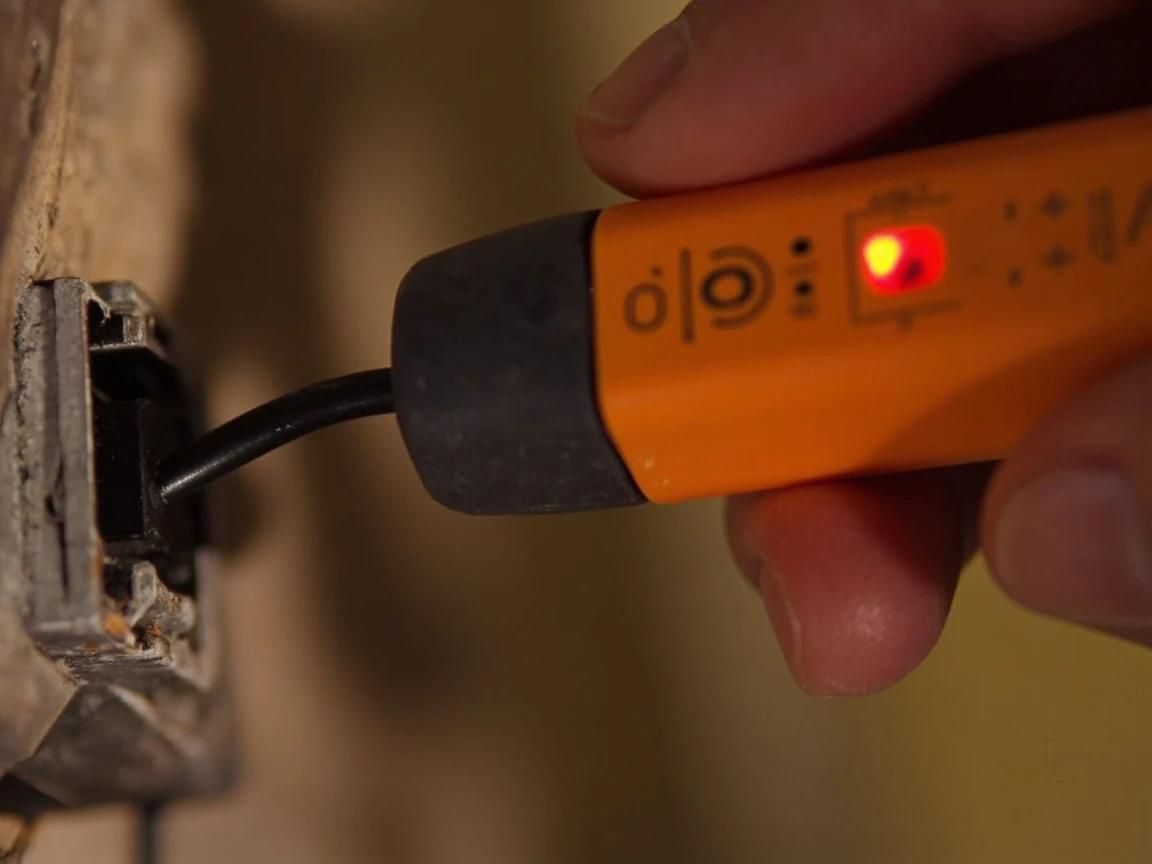
Test your voltage tester on a known live outlet first to confirm it is working. Non-contact testers occasionally fail silently — a quick "known-live" check before every job takes 5 seconds and has saved many DIYers from a bad surprise.
Remove the Switch and Photograph the Wiring
Pull the switch the rest of the way out of the box, letting the still-connected wires come with it. Before disconnecting anything, take a clear, well-lit photo of the wiring with your phone — capture which wire goes to which screw terminal. For a single-pole switch you should see two hot wires (usually both black, sometimes one black and one other color) on the two brass screws, and a bare copper or green-insulated ground wire on the green screw. If you see more than 2 hot wires or a red wire, stop — you likely have a 3-way switch and need to buy a 3-way replacement instead.
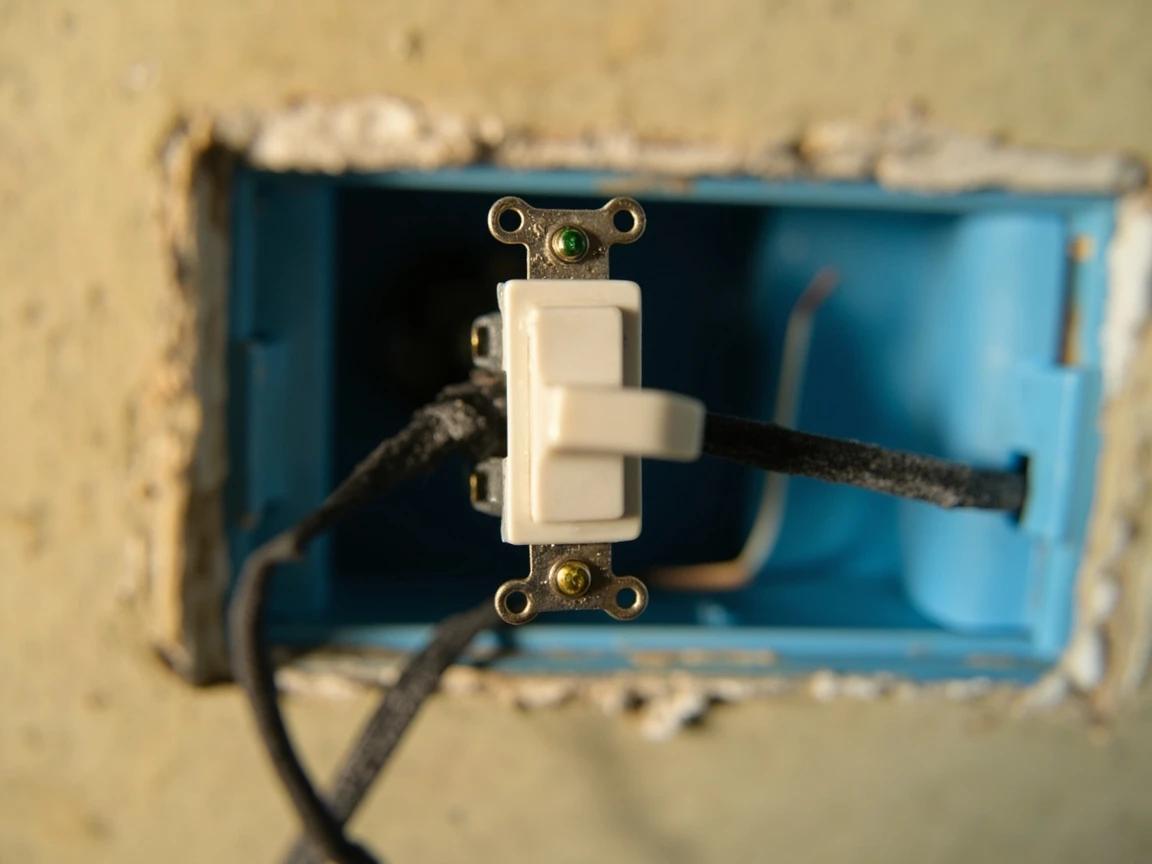
If the wires are connected via push-in holes on the back of the switch (backstabs) rather than screw terminals, plan to move them to the side screws on your new switch. Backstab connections are the single most common cause of failed residential switches.
Disconnect the Wires from the Old Switch
Loosen each of the two brass screw terminals counterclockwise until the wire loop slips free. If the wires are backstabbed instead, insert a small flat-head screwdriver into the release slot next to each wire and pull the wire straight out while pressing in on the release. Disconnect the ground wire last. Straighten any kinked wire ends with needle-nose pliers, and inspect the exposed copper — if it is nicked, corroded, or shorter than about 3/4 inch, strip back fresh insulation with wire strippers to expose a clean 3/4-inch length of bright copper.
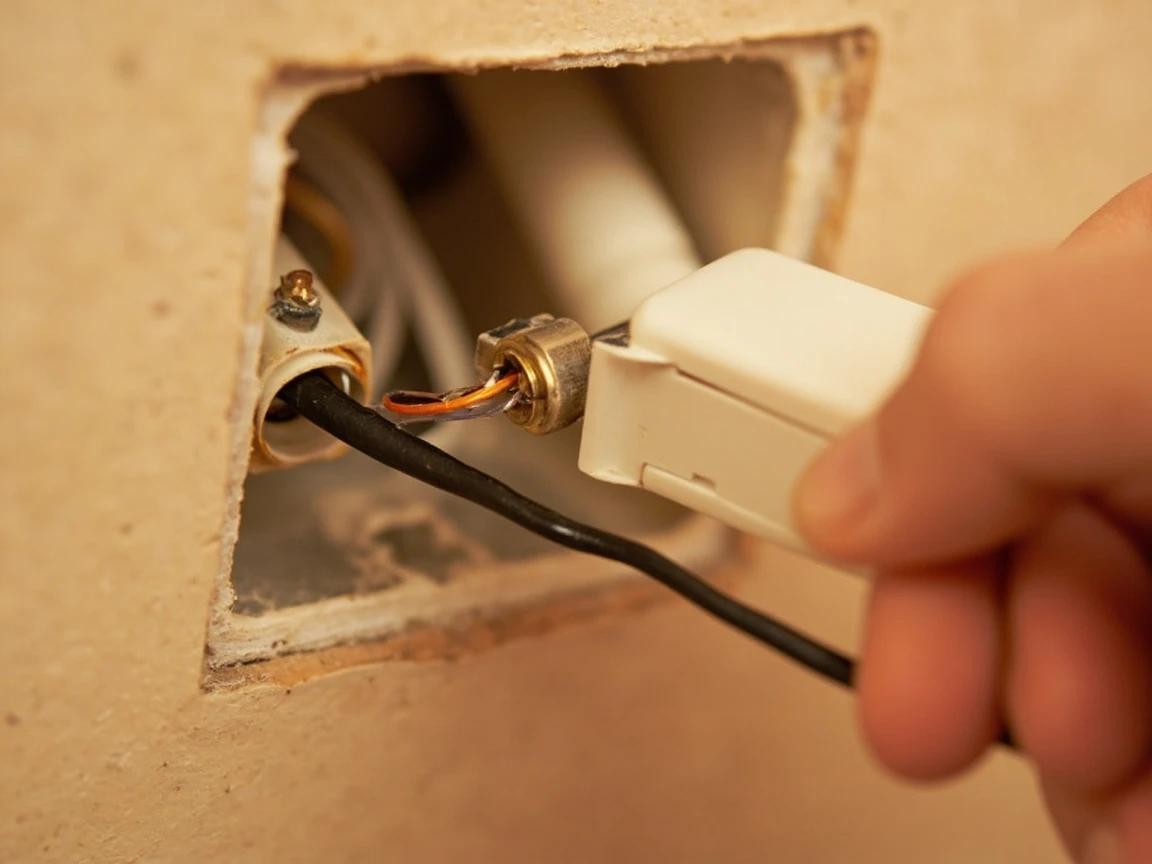
Connect the Ground Wire to the New Switch
Start with the bare copper or green-insulated ground wire. Using needle-nose pliers, form a clockwise hook at the end of the wire — clockwise so that tightening the screw pulls the loop closed rather than pushing it open. Hook the loop around the green grounding screw on the new switch and tighten the screw firmly until the wire is clamped with no loose copper sticking out past the screw head. If the electrical box is metal and has its own grounding pigtail, twist both grounds together with the new switch's green pigtail (if your switch has one) inside a wire nut.
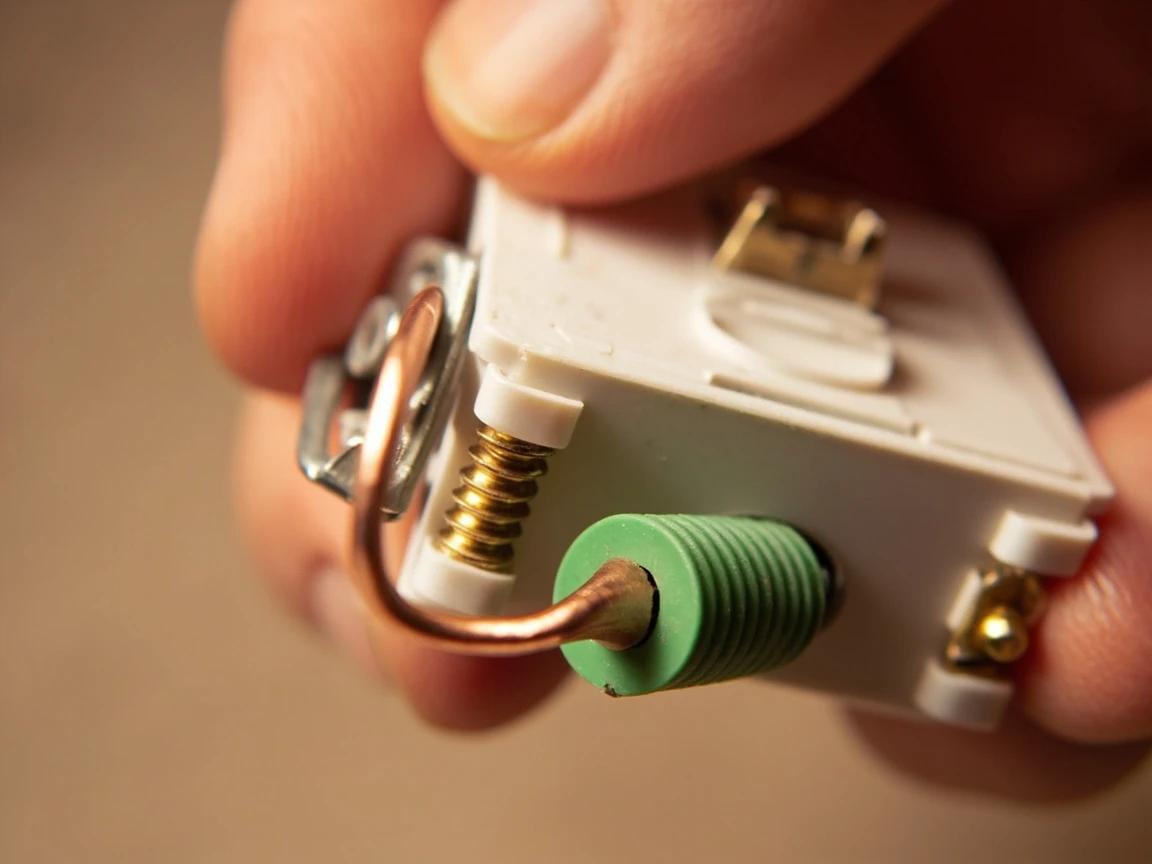
Always wrap wires clockwise around screws. If you wrap counterclockwise, tightening the screw pushes the wire out from under the screw head, leaving a loose connection that can arc and overheat.
Connect the Hot Wires to the Brass Screws
The two hot wires go to the two brass (gold-colored) screws on the side of the switch. On a single-pole switch, the two brass screws are interchangeable — it does not matter which wire goes on top and which on bottom. Form a clockwise hook on each wire end with needle-nose pliers, hook each wire around one brass screw, and tighten firmly. Tug gently on each wire after tightening to confirm the connection is mechanically secure. Wrap one turn of electrical tape around the body of the switch, covering the screw terminals on both sides — this prevents accidental contact with the metal box.
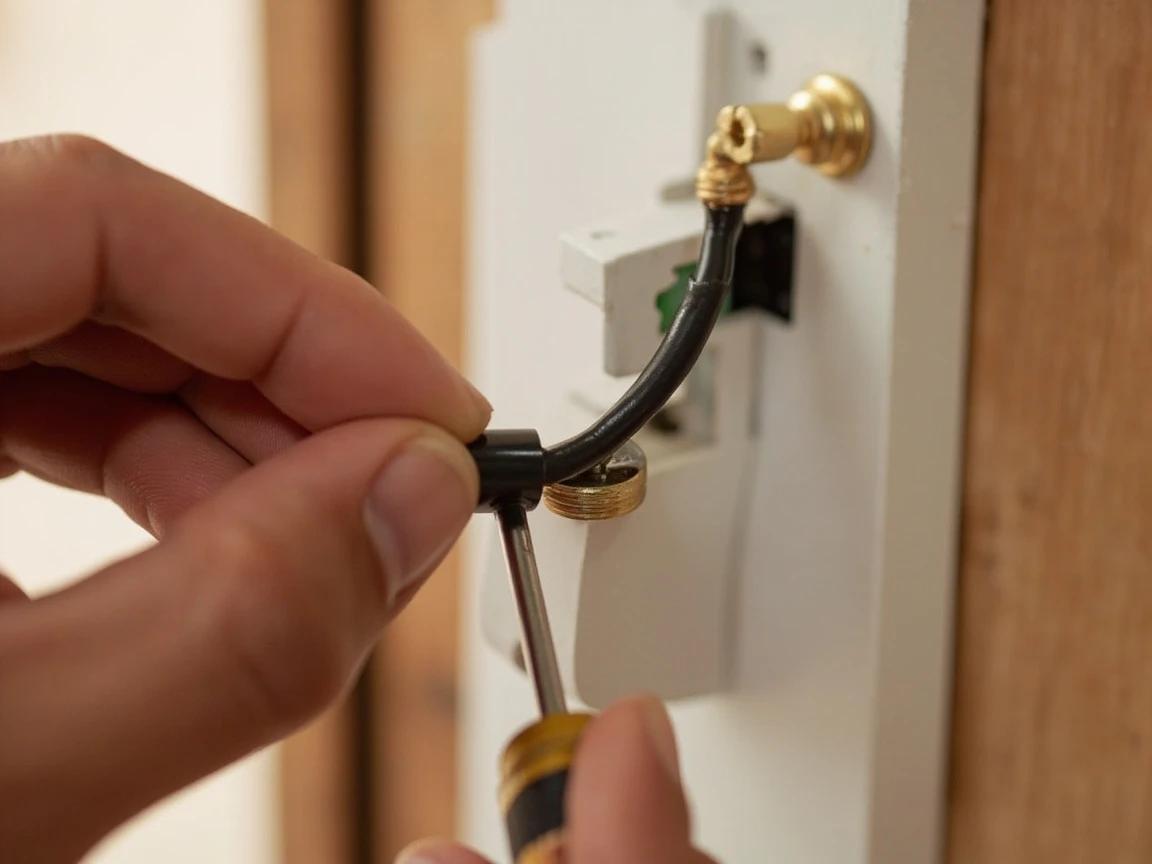
Never connect a white (neutral) wire to a standard single-pole switch. A white wire on the switch usually means the circuit uses the "switch loop" wiring method where the white has been re-purposed as a hot — in that case it should be marked with black tape. If you are unsure, stop and consult an electrician.
Mount the Switch in the Electrical Box
Carefully fold the wires in an accordion pattern and push the switch back into the box — do not cram the wires in, as sharp kinks can damage the insulation. Align the switch mounting tabs with the screw holes in the box and drive the two Phillips-head mounting screws until the switch sits flush with the wall surface. Use the long slots in the mounting tabs to adjust the switch until it sits perfectly level (important for matching the final wall plate). Snap or screw the wall plate into place — it should sit flat against the wall with no gaps.
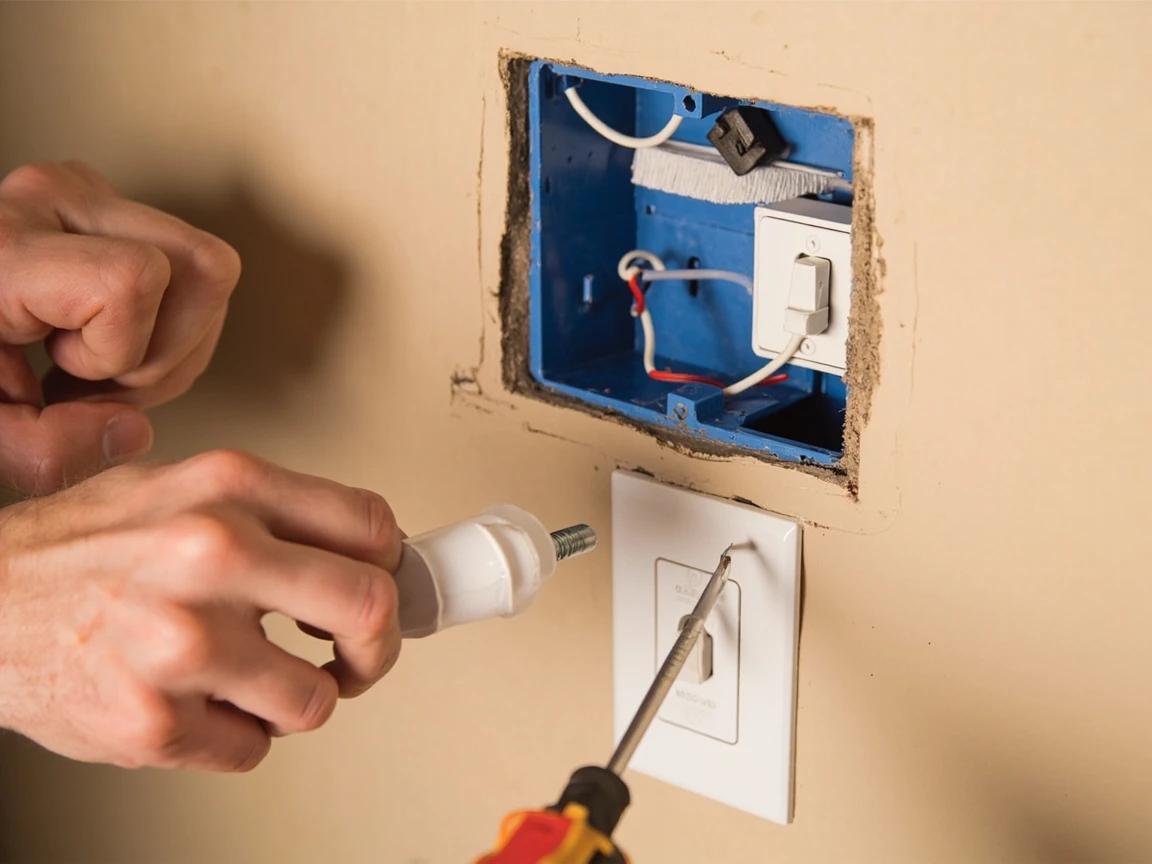
If the switch sits crooked in the wall plate opening, loosen the two mounting screws slightly and rotate the switch — the elongated mounting slots let you shift it up to about 1/8 inch in either direction to get it perfectly plumb.
Restore Power and Test the Switch
Go back to the electrical panel, remove your painter's tape, and flip the breaker to ON. Return to the room and toggle the switch on and off several times — the light should respond instantly and cleanly, with no flickering, buzzing, or delay. Feel the switch body after 30 seconds of use; it should be at room temperature, not warm. If the switch does not work, flip the breaker back off and recheck your connections — the most common cause is a screw terminal that was not tightened down fully onto the wire loop. If you hear any buzzing or smell anything hot, shut the breaker off immediately.
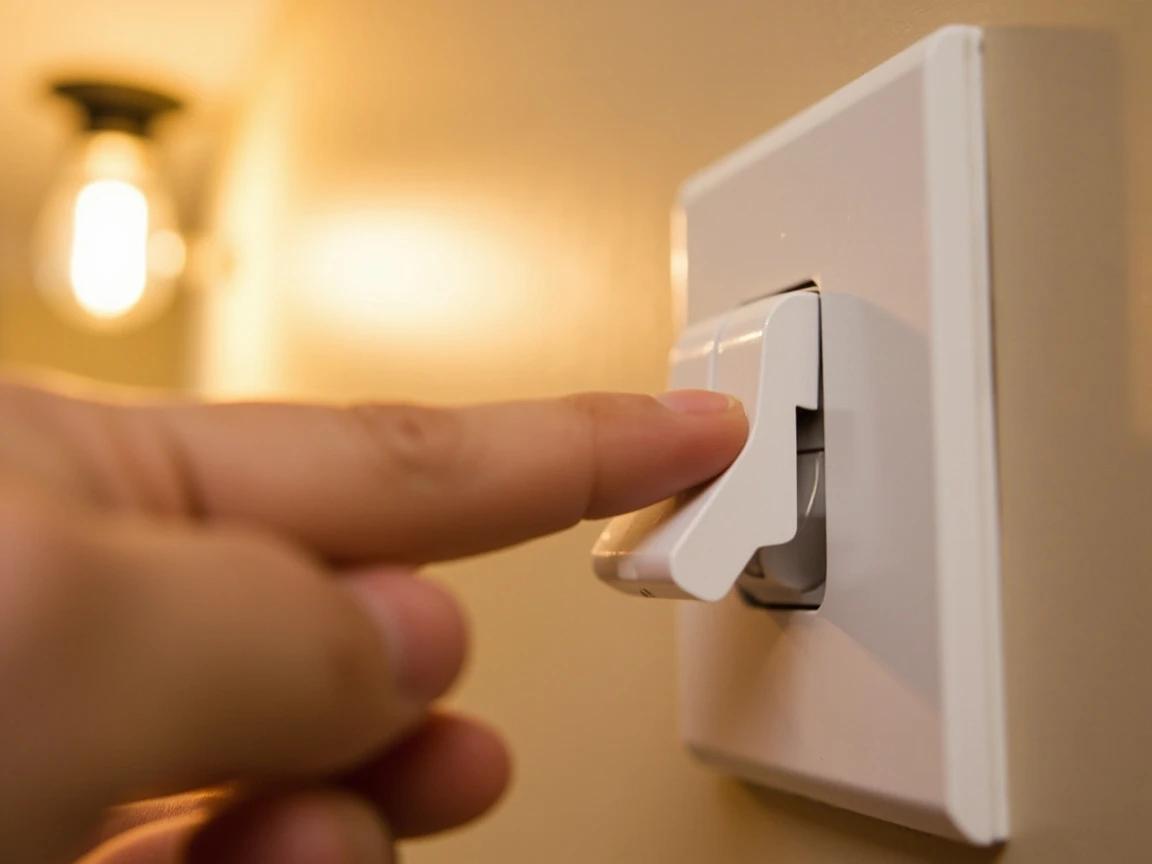
If this is a switch you use every day, spend the extra $3-5 on a commercial/spec-grade switch rather than the cheapest residential model. Spec-grade switches are rated for 10,000+ operations (versus 3,000 for bargain switches) and feel noticeably crisper — you will notice the difference every time you flip it.
Frequently Asked Questions
Do I have to turn off the breaker, or is flipping the wall switch enough?
+
Always turn off the breaker at the main panel, not just the wall switch. The wall switch only interrupts the hot wire going to the fixture — the line-side terminal on the switch can still be live. Confirm the circuit is dead with a non-contact voltage tester before touching any wire.
How do I know if I have a single-pole switch or a 3-way switch?
+
A single-pole switch has ON/OFF embossed on the toggle and controls the light from one location only. A 3-way switch has no ON/OFF markings and works alongside another switch at a different location (for example, top and bottom of a staircase). Count the wires too — single-pole switches have 2 hot wires plus a ground, while 3-way switches have 3 hot wires plus a ground.
Which screw does each wire connect to?
+
On a single-pole switch, the two hot wires (usually both black) each connect to one of the two brass screws on the side — they are interchangeable, so either wire can go to either brass screw. The bare copper or green-insulated ground wire connects to the green screw. There is no neutral (white) wire on a standard single-pole switch — if you see one, it may be spliced through in the box for other circuits.
Should I use the side screws or the push-in back holes on the new switch?
+
Always use the side screws, never the push-in "backstab" holes. Backstab connections rely on a small spring clip that loosens over time, causing arcing, overheating, and switch failure. Professional electricians avoid backstabs for this exact reason, and some modern switches have eliminated them entirely.
What if my new switch has a green ground screw but the box has no ground wire?
+
Older homes (pre-1960s) often have no ground in the switch box. If your box is metal and the cable is bonded to it, the box itself provides the ground path — run a short pigtail from the green screw to a grounding screw in the box. If there is no ground at all, code still allows a replacement switch without one, but installing GFCI protection upstream is the safer modern upgrade.
Sources & further reading
- Home Electrical Safety — Electrical Safety Foundation International
- Electrical Wiring Projects & How-Tos — This Old House
More Electrical Guides
View all → Easy1h 30m
How to Replace a Downspout
A crushed, leaking, or detached downspout dumps roof water right at your foundation — the single most common cause of wet basements — and replacing one is among the easiest exterior repairs there is. Parts are standard at any home center ($25-60 for a typical run with elbows and straps), the only real tools are a hacksaw and a drill, and the whole swap takes about 90 minutes. The trick that separates a dry wall from a streaky one is assembly order: every upper piece slips INSIDE the piece below it.
 Easy30 min
How to Replace an Oven Heating Element
An electric oven that will not heat, is dim on one side, or trips its breaker mid-bake is almost always a failed heating element — the U-shaped coil at the bottom (bake) or top (broil) of the cavity. The part costs $30-60 OEM and the entire job is two screws and two spade connectors, versus a $200-300 service call. This guide covers Whirlpool, KitchenAid, Maytag, GE, Frigidaire, Kenmore, and Samsung electric ranges, plus notes for swapping a bad broil element using the same procedure.
 Easy15 min
How to Replace a Refrigerator Water Filter
A clogged refrigerator water filter is the most common cause of slow dispensing, off-tasting water, and undersized ice cubes — and it is the easiest fix in your kitchen. Most filters are designed to be swapped in under five minutes with no tools, no shut-off valve, and no spilled water. This guide covers locating your filter, the two common removal styles (twist-in and push-in), inspecting the O-rings, flushing the new filter, and resetting the indicator light so you do not see the red "Replace" warning the next morning.
You Might Also Like
 Medium6 hrs
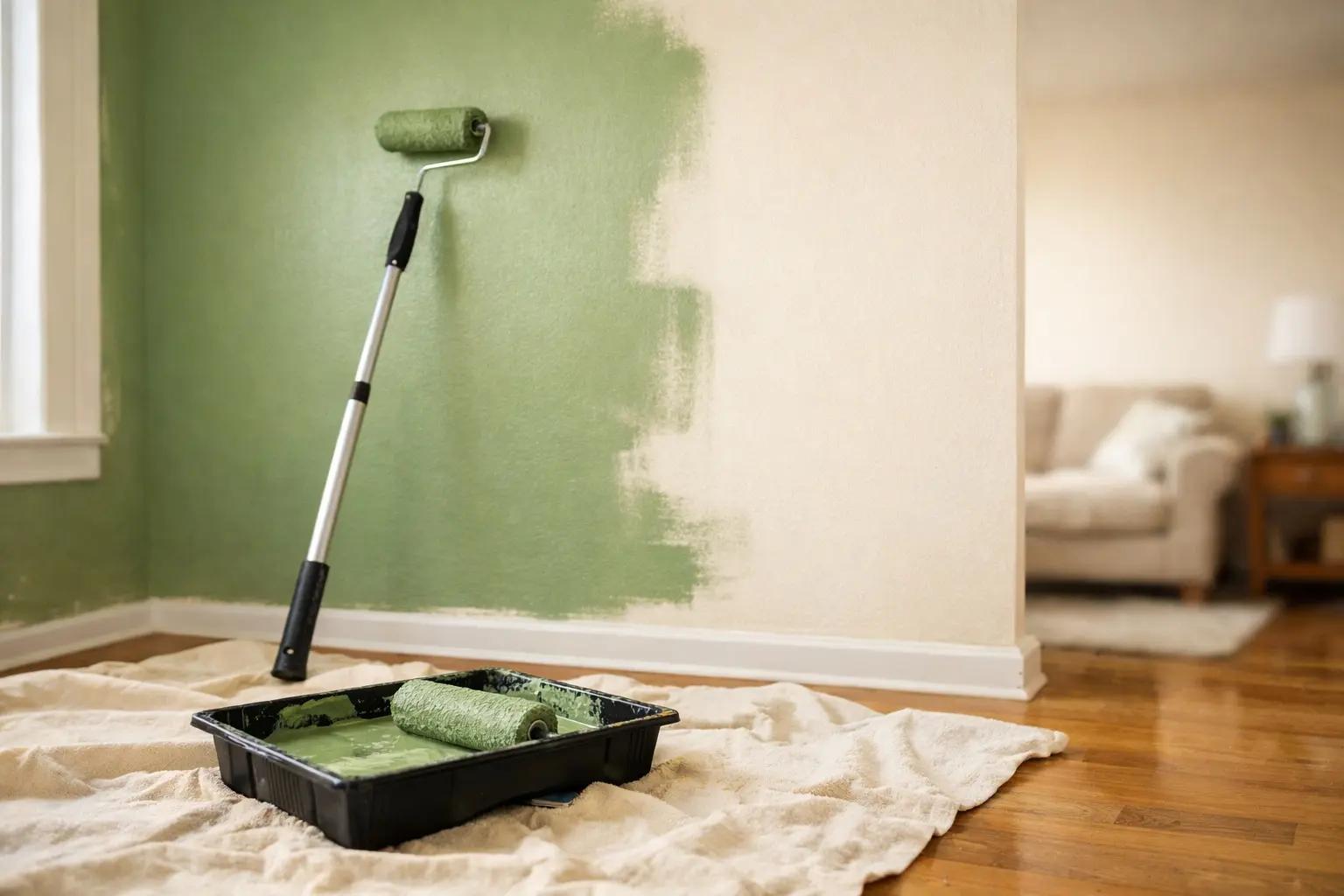
How to Paint a Room
A fresh coat of paint is the fastest, cheapest way to transform any room — and doing it yourself saves $400-800 in labor for an average 12x12-foot bedroom. The job takes a weekend from prep to final coat, and the difference between an amateur-looking result and a professional finish comes down to technique, not talent. This guide covers prep, cutting in, rolling, and cleanup so you get clean lines and even coverage the first time.
 Medium30 min
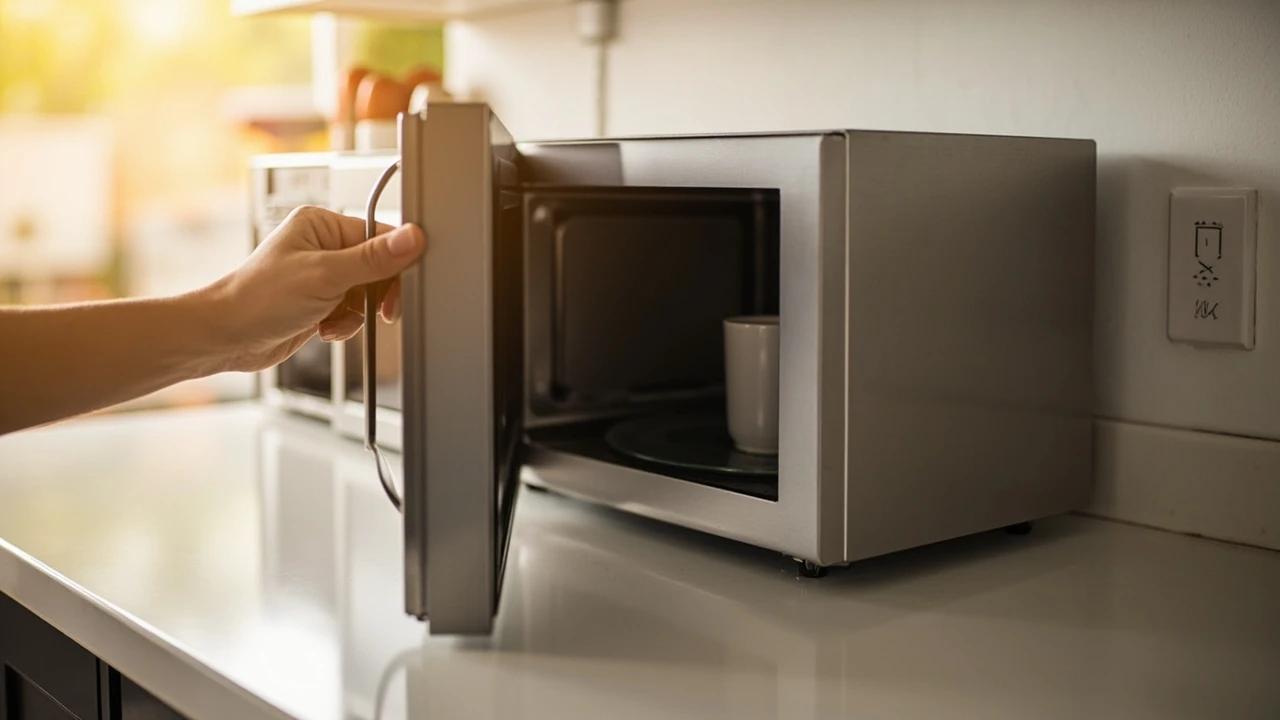
How to Troubleshoot a Microwave That Won't Heat
A microwave that runs — light on, turntable spinning, timer counting down — but leaves food stone cold is one of the most common appliance failures, and about half the time the cause is something you can fix in five minutes for free. This guide walks the diagnosis from the easy stuff (demo mode, power level, a tripped GFCI, a dirty door latch) to reading the failure signature that tells you the high-voltage circuit is gone, then helps you make the repair-or-replace call with real numbers.
 Medium1 hr
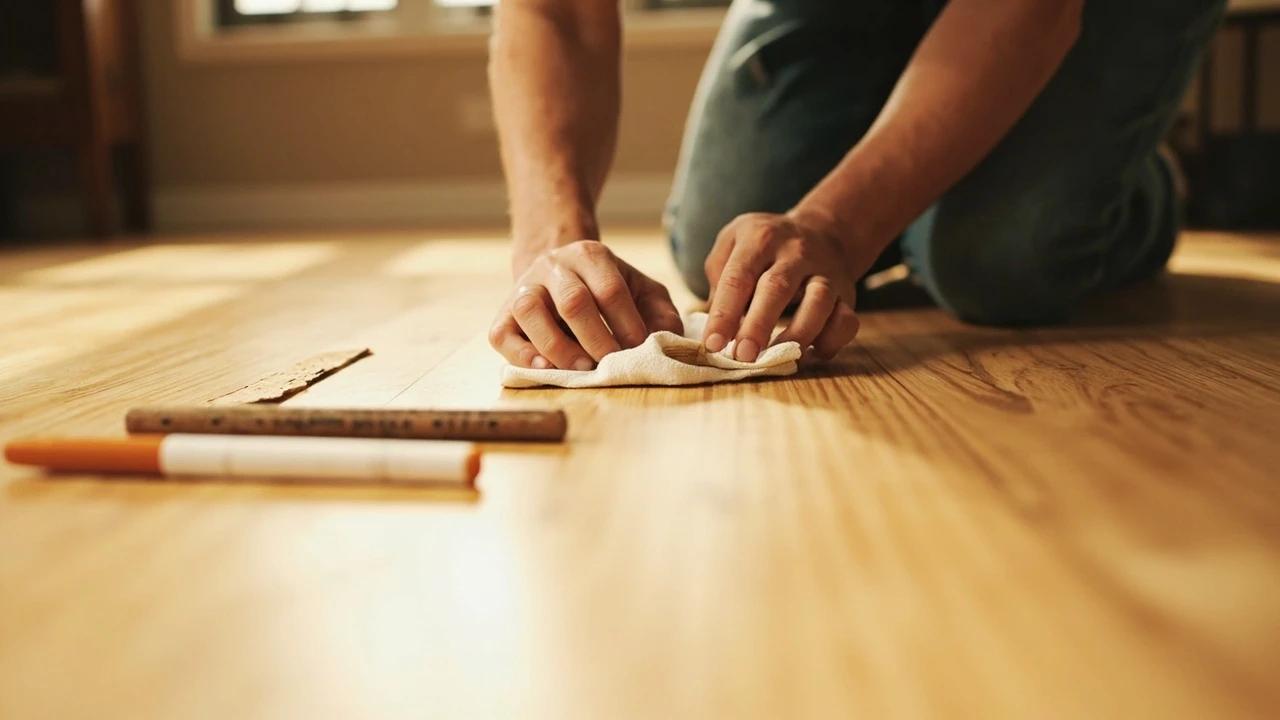
How to Repair Scratches in a Hardwood Floor
Scratched hardwood almost never means refinishing the whole floor. This guide shows you how to match the fix to the damage — a touch-up marker for finish-level scratches, a wax fill stick for shallow ones, and stainable wood filler with stain and polyurethane for deep gouges — all for under $40 in supplies and about an hour of work.