How to Replace a Dishwasher Door Seal
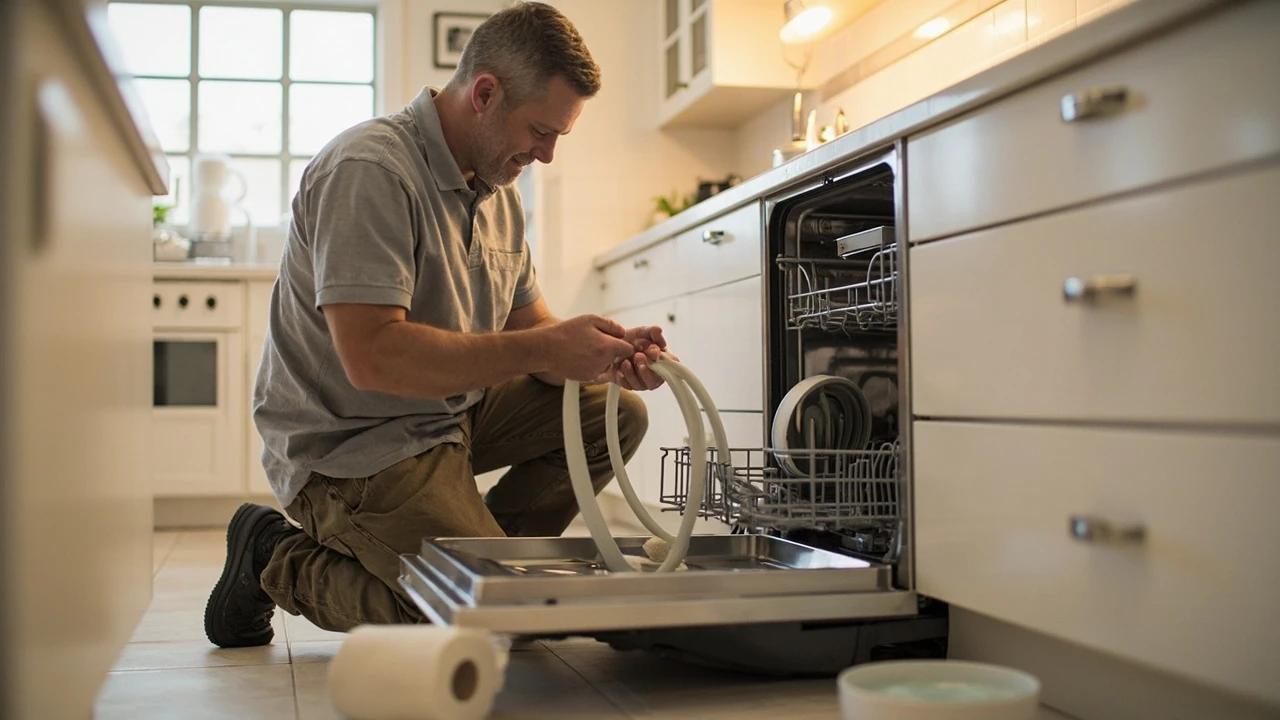

A leaking dishwasher door is almost always a worn or hardened door gasket — the rubber seal that runs around the perimeter of the inner tub. The part costs $10-25 and the entire job takes 30-45 minutes of active work, versus a $150-250 service call. This guide covers Whirlpool, KitchenAid, Maytag, GE, and Frigidaire (which all share the same tub-perimeter design) plus Bosch-specific notes for upper and lower seals.
What You'll Need
🛠 Tools
📦 Materials
Safety First
- •Switch off the dishwasher at the breaker panel before working — even with the door open, the control board remains energized and a stray hand can reach into the heating element.
- •Do not use sharp utility knives to pry the old gasket out of the channel — it is easy to slice through the painted tub liner, which then rusts within months and is impossible to repair.
- •Old gaskets can harbor mold and bacteria, especially if the leak has been going on for weeks — wear nitrile gloves while handling the old seal and wash hands thoroughly afterward.
Step-by-Step Instructions
Confirm the Seal Is the Source of the Leak
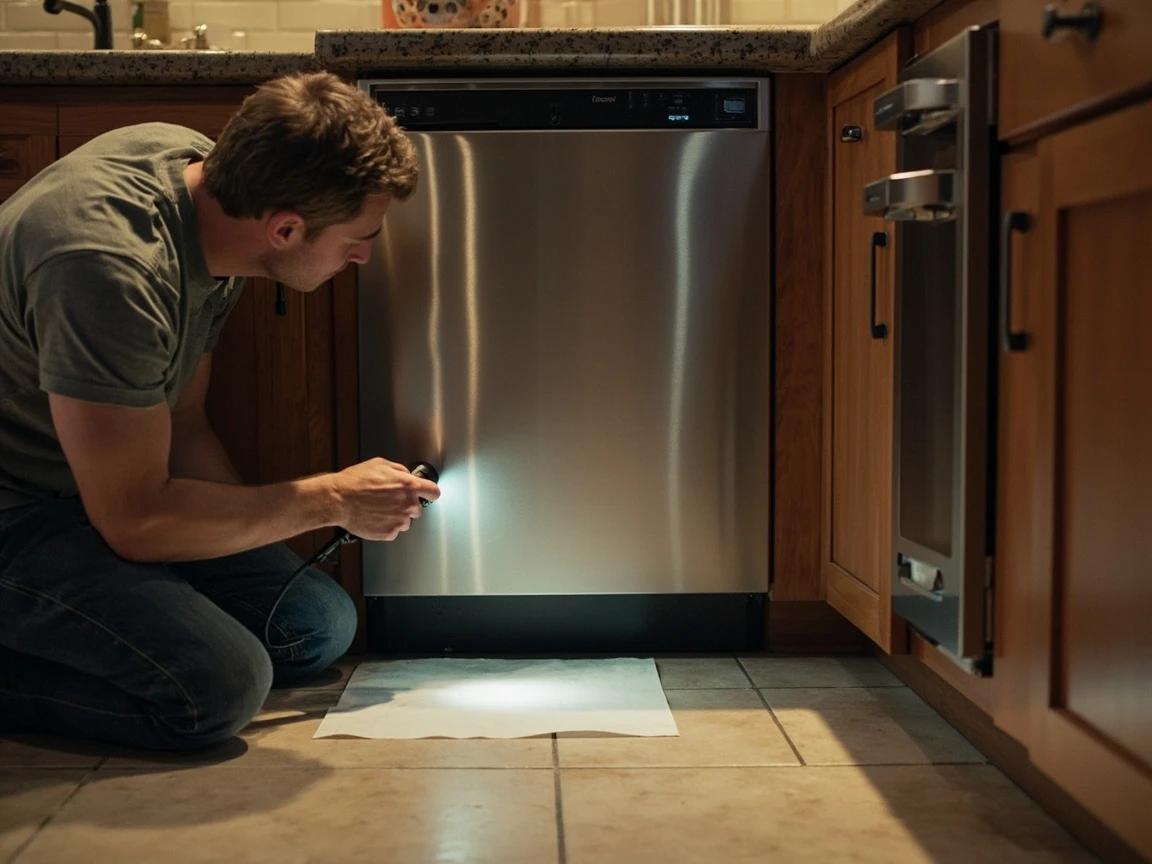
Before you order a part, verify the gasket is actually what is leaking. Run an empty cycle and watch the front of the dishwasher with a flashlight from the side — if water is visibly weeping out of the door perimeter, the seal is suspect. Open the door and inspect the gasket: run your fingers along its full length, looking for cracks, hard spots, tears, missing chunks, or sections where the rubber has flattened. A healthy seal is soft, springy, and seats flush in the channel. If the gasket looks fine, also check the soap dispenser for cracks and the foam strip along the bottom of the door — these account for about a quarter of "leaking door" calls and have nothing to do with the gasket.
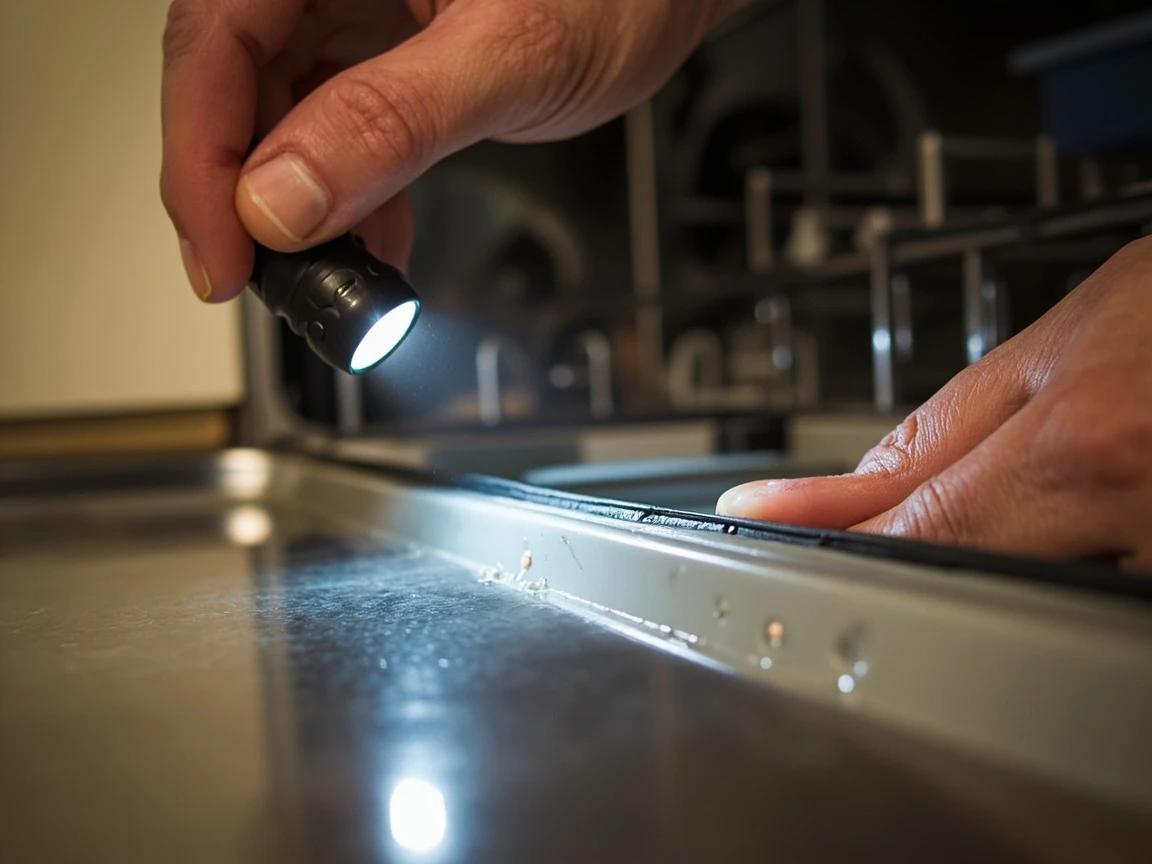
Lay a sheet of paper towel on the floor in front of the dishwasher before running the test cycle — the paper makes even tiny drips visible and tells you exactly where on the door perimeter the leak is coming from.
Find Your Model Number and Order the OEM Gasket
Locate the model number sticker — it is almost always on the inner edge of the door frame (visible only when the door is open) or on the left or right side of the open door. Write down the full model number including any suffix letters. Search the exact string "[brand] [model number] door gasket" on the manufacturer's official parts site, RepairClinic.com, PartSelect.com, or AppliancePartsPros.com. Order the OEM part — universal gaskets do not fit the channel correctly and tend to leak within weeks. The part will arrive coiled and creased from shipping; this is normal and is dealt with in step 5.
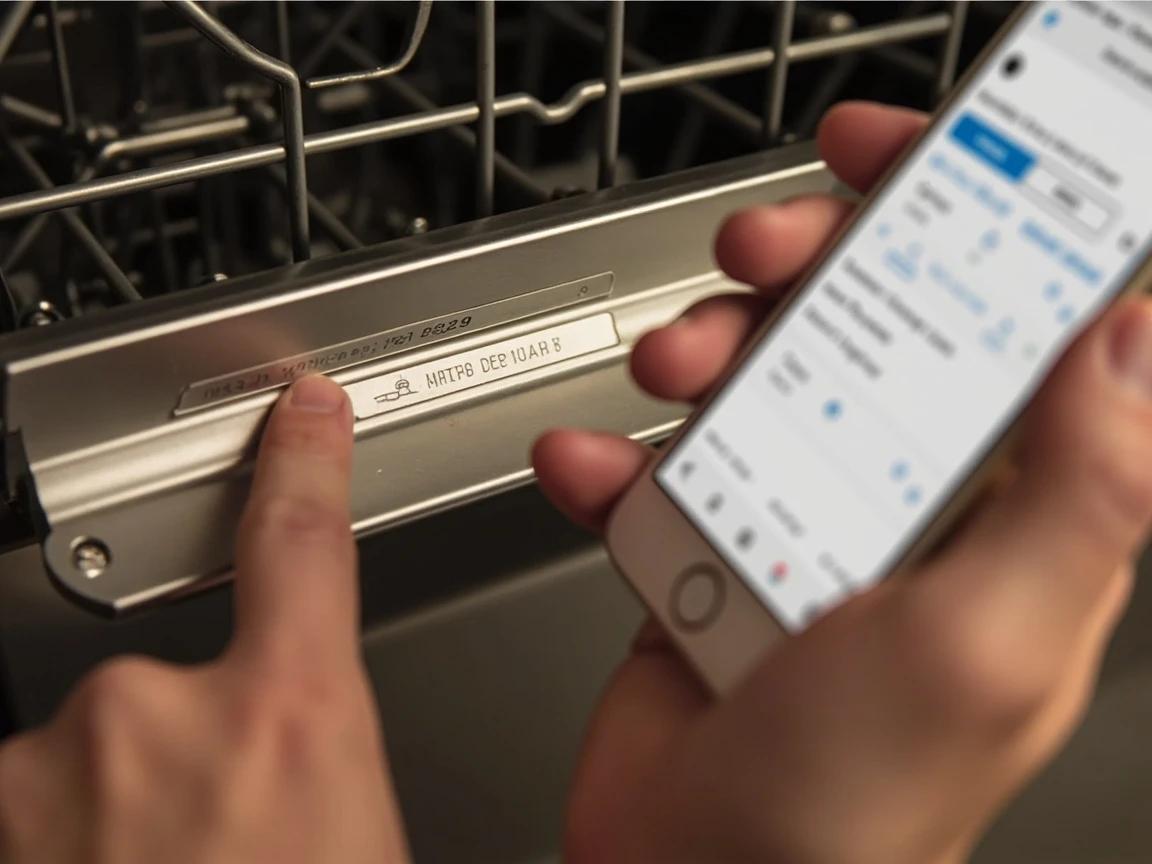
Take a photo of the model sticker with your phone before you start ordering — the print is small and the sticker is in an awkward position, and you will inevitably get the number wrong if you try to type it from memory.
A "universal" gasket sold on Amazon for $8 fits no dishwasher correctly. Skip it — you will redo the entire job inside a month.
Cut Power and Pull the Old Gasket Out
Switch off the dishwasher at the breaker panel — even with the door open, the control board remains energized. Open the door fully and locate the top center of the gasket where it sits in its channel. Grip the rubber firmly with your fingers and pull straight out and toward you — most one-piece tub gaskets pop out of the channel by hand without any tools, since they are friction-fit, not glued. If a section is stuck, slide a flat-head screwdriver under the rubber lip (never a knife) and gently lever it out. Work your way down both sides until the entire seal is removed. Discard the old gasket — do not reuse it, even if it looks intact in places.
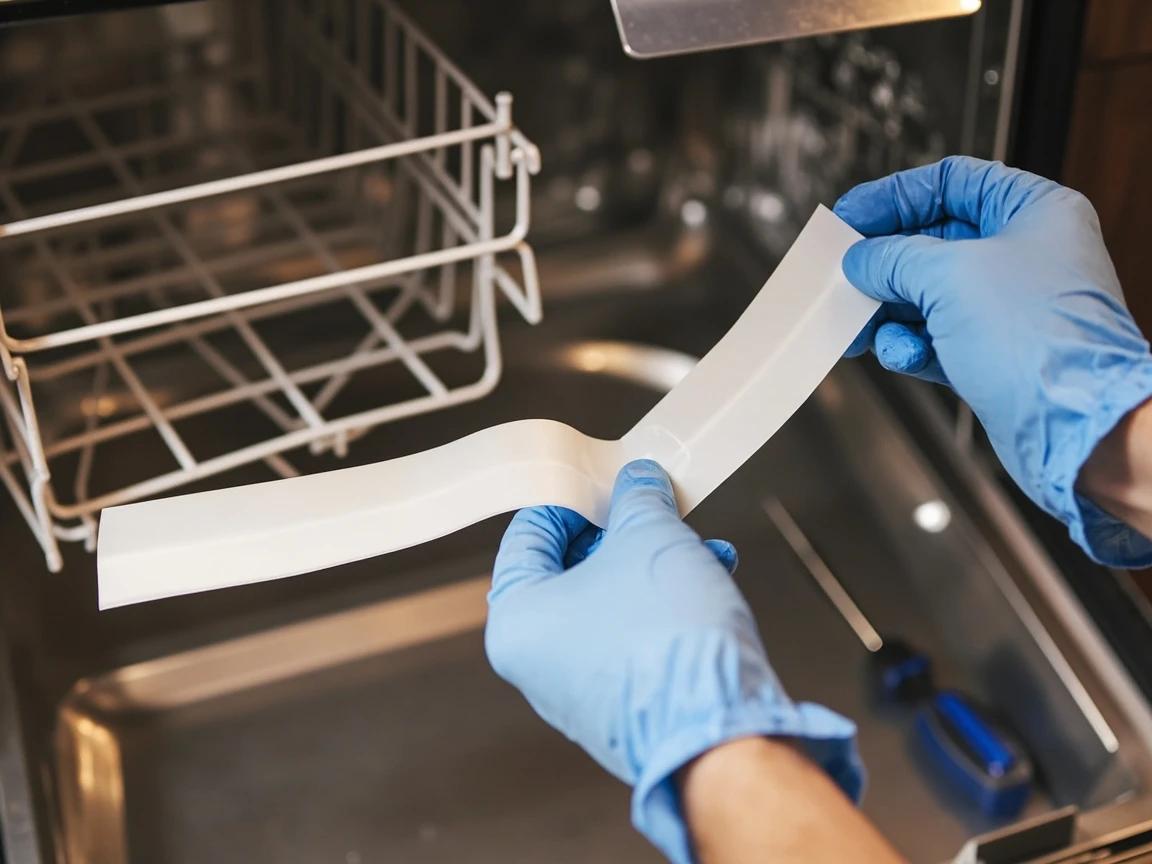
Never use a utility knife or razor to pry the old gasket out — one slip cuts through the painted tub liner, which then rusts within months and cannot be repaired short of replacing the entire tub.
Scrub the Gasket Channel Until It Is Spotless
The single most common cause of a new gasket leaking is a dirty channel. Mix 1 teaspoon of dish soap into a cup of warm water and spray the entire channel generously. Use an old toothbrush to scrub out years of accumulated food residue, soap scum, grease, and biofilm — pay special attention to the corners where the channel turns 90 degrees, because gunk loves to hide there. Wipe the channel dry with a microfiber cloth and inspect it: it should be clean enough that a paper towel comes away white. For mineral scale (chalky white deposits), spray with straight white vinegar and let it sit for 5 minutes before scrubbing. The new gasket needs a perfectly clean surface to seat against.
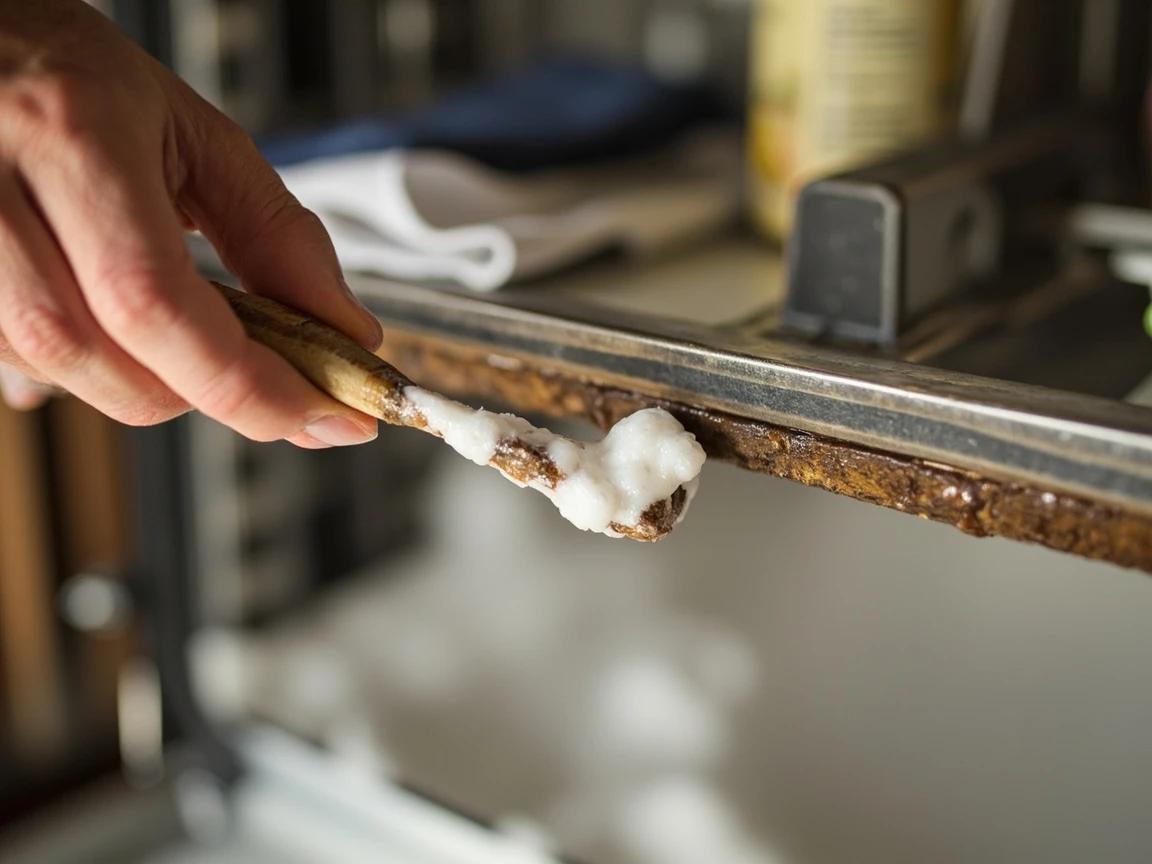
Run a wooden toothpick or the back of a butter knife wrapped in a microfiber cloth all the way around the channel as a final pass — it picks up the last hairline residue that even an old toothbrush misses.
Warm the New Gasket to Remove Shipping Creases
New gaskets ship coiled in a small box and arrive with sharp creases and folds — installing one cold guarantees a leak at every kink. Lay the new gasket flat on a counter and run a hair dryer or heat gun on its low setting along the full length, holding the heat source about 6 inches away and moving constantly. The rubber should warm until it is pliable and the creases visibly relax (about 60-90 seconds total). Do not get the rubber hot to the touch — warm is enough. Run your fingers along the gasket as it warms and gently smooth out any remaining bends; it should now lie completely flat with no kinks.
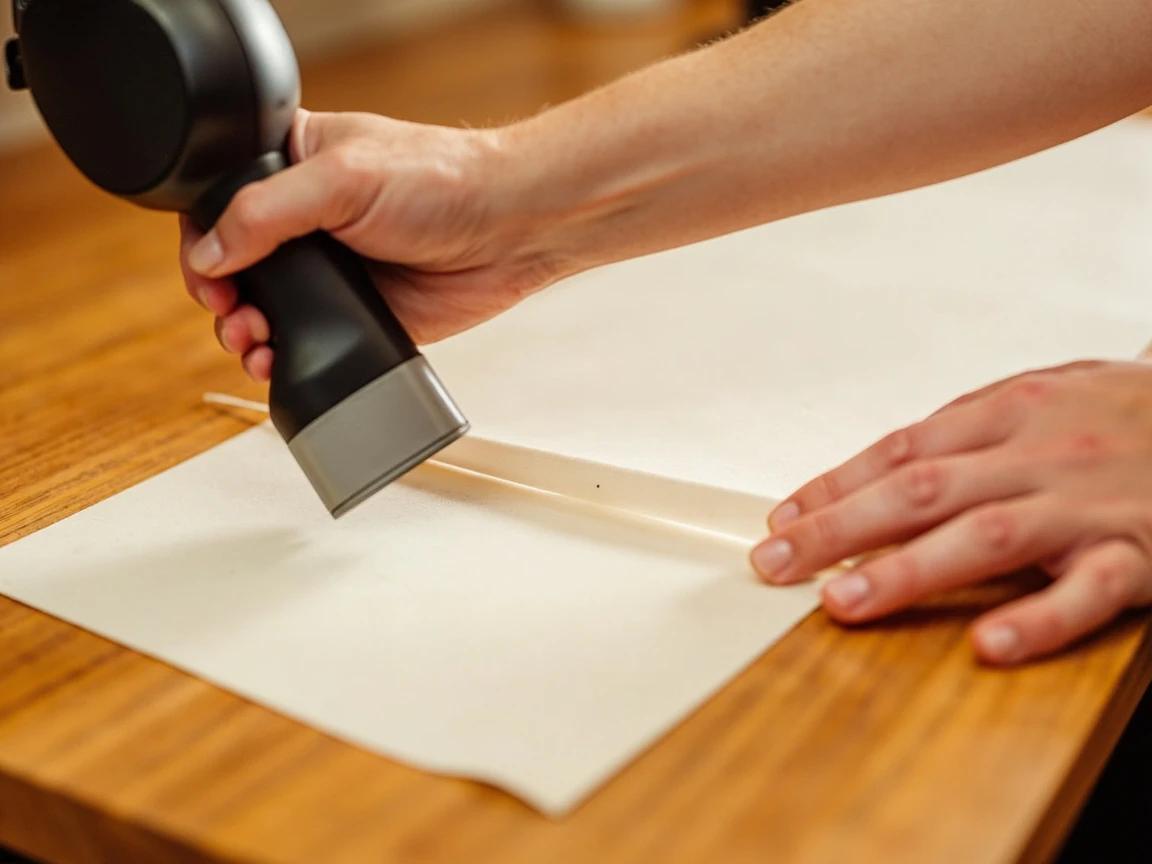
If you do not have a hair dryer handy, soak the gasket for 5 minutes in a sink full of hot tap water — the same warming effect, just slower. Pat completely dry before installing.
Do not use a heat gun on its high setting and never hold the heat in one spot — the rubber melts and deforms quickly, and a melted gasket is ruined.
Find the Midpoint and Press the Gasket In From the Top Center
Fold the new gasket exactly in half and pinch the fold to mark its center point. Locate the center of the channel along the top of the dishwasher tub. Press the gasket's midpoint firmly into the center of the top channel — it should snap or push into place with steady finger pressure. Now work outward from that center point in both directions simultaneously, pressing the gasket into the channel along the top, then continuing down each side. Critical: never stretch the gasket as you install it. If you stretch it to make the ends meet, the rubber will retract over the next 24 hours and pull itself out of the channel at the corners. Press it in flat and let any extra length tuck into the corners naturally.
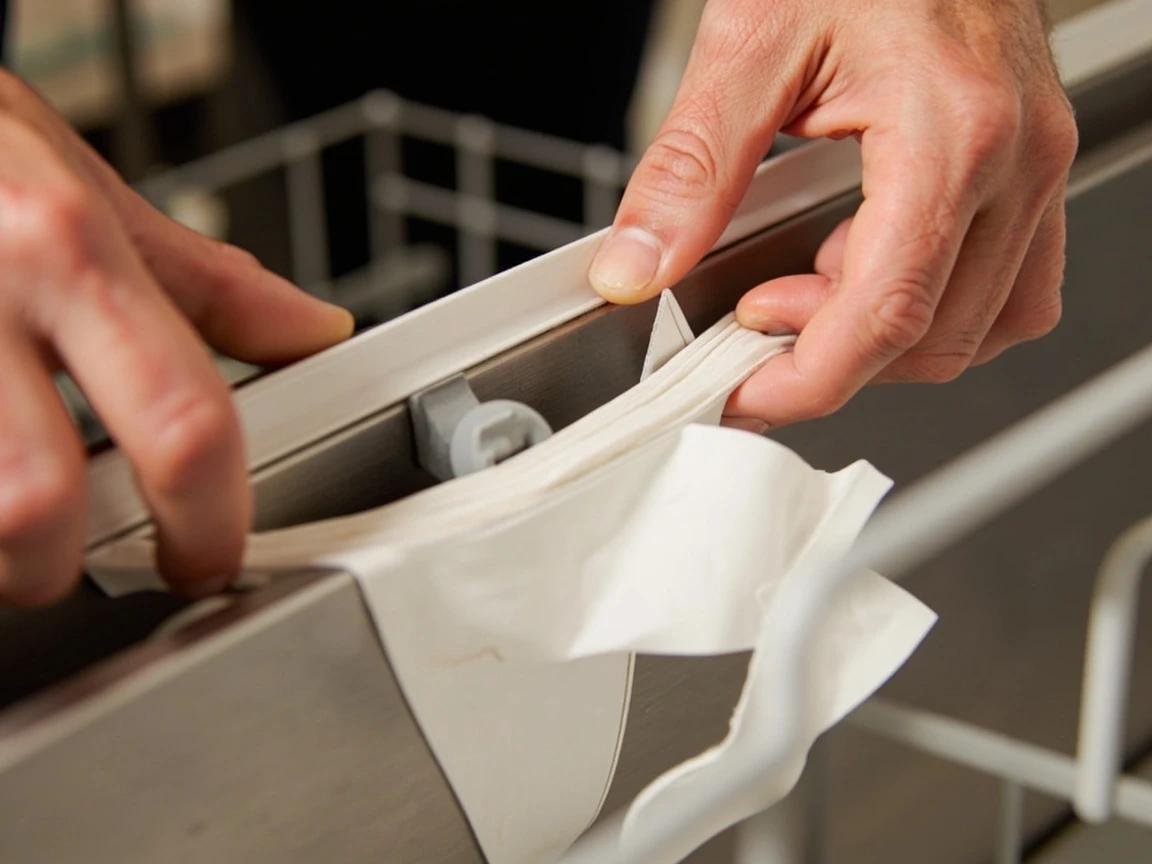
Press the gasket in with your thumb pad, not your fingertip — thumb pressure spreads the force across an inch of rubber and seats the seal evenly, while a fingertip can poke a divot into the soft rubber that becomes a leak point later.
Verify the Seal Is Fully Seated Around the Entire Perimeter
With the gasket installed, run your finger slowly along the full length of the seal from one bottom corner up, across the top, and back down the other side. Every inch should sit flush in the channel — no bulges, no gaps, no kinks where the rubber is twisted. Pay special attention to the two upper corners; these are the highest-stress bends and the first place a poorly seated gasket pops loose. If you find a section that is not seated properly, lift it out completely and re-press it in (do not try to nudge it sideways — that stretches the rubber). Check that the gasket's sealing lip is pointing toward the door, not away from it; an inverted seal cannot make contact with the closing door.
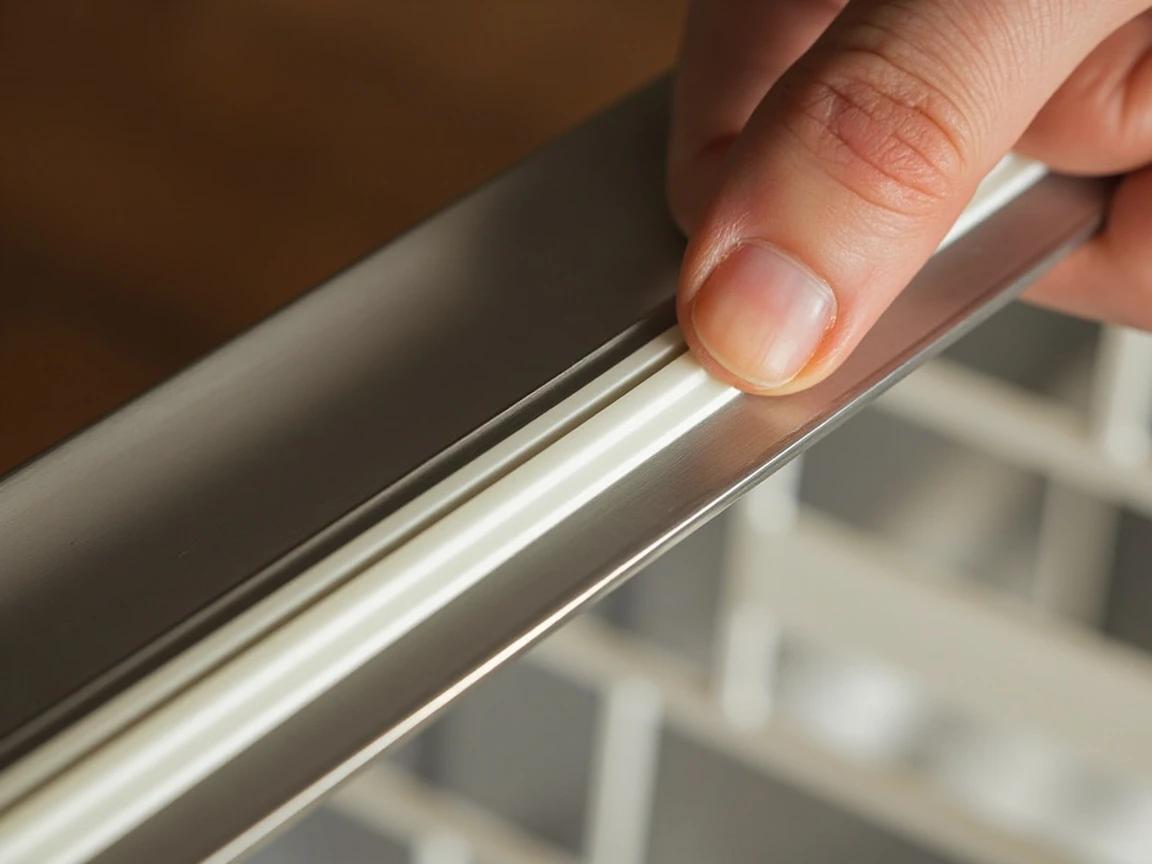
Look at the gasket from the side, with your eye level with the channel — anything that bulges out from the surrounding rubber will catch light differently and is immediately obvious from this angle, even if it looked seated when viewed straight-on.
Close the Door and Let the Gasket Set Overnight
Shut the dishwasher door firmly to engage the latch and leave it closed for at least 4 hours — overnight is better. The closed door pressed against the new gasket compresses the rubber into its final shape and lets the seal "take a set" in the channel. Skipping this step is the second most common cause of a new gasket leaking. Do not run a cycle yet; just let it sit. If your dishwasher is in a household where it must be used immediately, set a kitchen timer for 4 hours and resist running it until the timer goes off.
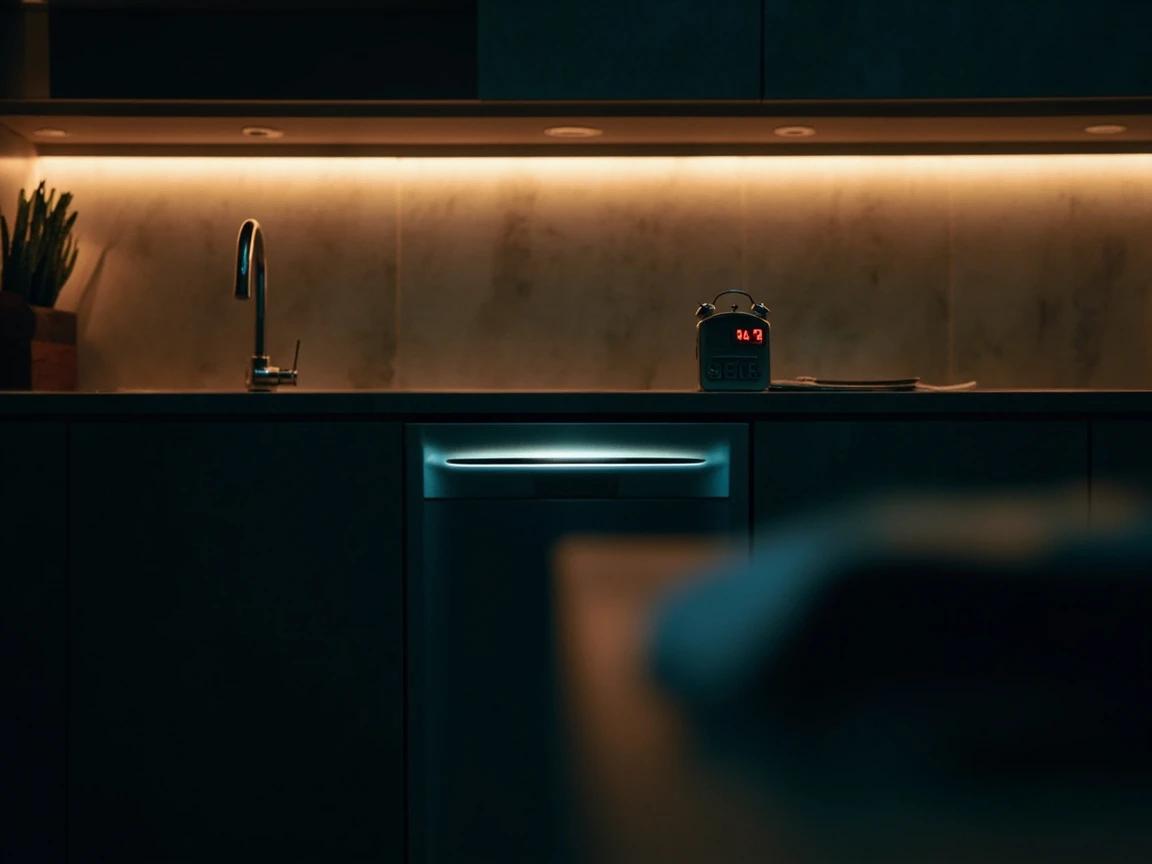
If your dishwasher latch has trouble engaging the first few times after the new gasket is installed, that is a good sign — it means the seal is fresh and slightly oversized, and the door pressure is what compresses it down to fit. After 24 hours the latch will engage normally again.
Run a Test Cycle and Watch for Leaks
Restore power at the breaker. Lay a fresh sheet of paper towel along the floor in front of the dishwasher. Run a short Rinse Only cycle (about 10 minutes) so you do not waste detergent diagnosing leaks. Stand by with a flashlight and watch the door perimeter from both sides during the wash phase, when water is being sprayed forcefully against the inside of the tub. The paper towel should remain bone dry. If you see any drip, identify exactly where on the perimeter it is coming from, open the door once the cycle ends, and re-seat that specific section of the gasket. Most successful installs are leak-free on the first test cycle. After two clean cycles, the job is done.
After the test cycle, mark today's date on a slip of tape stuck to the inner door frame — gaskets last 5-10 years on average, and the dated tape gives you a quick reference point next time you suspect the seal.
Frequently Asked Questions
How much does it cost to replace a dishwasher door seal?
+
A genuine OEM replacement gasket costs $10-25 from the manufacturer (Whirlpool, GE, Bosch, etc.) — most fall in the $15-20 range. Universal aftermarket gaskets are available for $8-12 but rarely fit the channel correctly and tend to leak within weeks. If you hire an appliance repair tech, expect $150-250 total including the part, since most companies have a $120+ minimum service call fee just to show up.
How do I know if my dishwasher door seal is bad?
+
The clearest sign is water on the kitchen floor directly in front of the dishwasher after a cycle, or visible streaks of water running down the front of the door. Open the dishwasher mid-cycle and look at the gasket: a healthy seal is soft, pliable, and seats flush in its channel. A failing seal will be rock-hard, cracked, torn, deformed flat in spots, or visibly pulling out of the channel. Black mold spots that wipe back on after cleaning also indicate the seal is past its life.
Do I need to buy an OEM gasket or will a universal one work?
+
Always buy the OEM part matched to your model number. Dishwasher door channels are slightly different in width and depth between brands, and a "universal" gasket will either be too thin (leaks) or too thick (door won't latch properly). The model number is on a sticker inside the door frame or on the side of the open door — search "[brand] [model number] door gasket" on the manufacturer's parts site, RepairClinic, or PartSelect.
Why does my new dishwasher door seal still leak?
+
Four causes account for nearly every "new gasket still leaks" complaint: the gasket was stretched during installation (it should be pressed in, never pulled), the channel was not cleaned and old grease prevents the seal from seating, the gasket has shipping creases that were not warmed out before install, or the leak was actually from the soap dispenser or door latch — not the seal — to begin with. Re-do the install, this time warming the gasket first and never stretching it.
Are upper and lower dishwasher door seals different?
+
Most American brands (Whirlpool, KitchenAid, Maytag, GE, Frigidaire) use a single one-piece tub gasket that runs across the top and down both sides of the inner tub — there is no separate lower seal because the bottom of the tub is permanently sealed at the factory. Bosch and some European brands use two pieces: an upper "tub" seal and a separate lower "door" seal that snaps onto the bottom edge of the tub or door. Always order parts by model number to be sure.
Sources & further reading
- Dishwasher Door Seal Replacement (Whirlpool Product Help) — Whirlpool
- How to Replace a Dishwasher Door Seal — Sears PartsDirect
- Why Dishwasher Door Seals Fail and How to Catch Early Signs of Wear — Sears PartsDirect
More Appliance Repair Guides
View all → Easy45 min
How to Deep Clean a Dishwasher
A dishwasher that smells, leaves residue on glasses, or doesn't drain properly is almost always a cleaning problem, not a mechanical one — and a deep clean takes about 30 minutes of hands-on work plus two empty cycles. Food particles, grease, mineral deposits, and mold accumulate in the filter, spray arms, and door gasket over time, reducing cleaning performance and creating odors. This guide walks through every hidden spot so your dishwasher runs like new.
 Medium45 min
How to Fix a Dishwasher That Won't Drain
Standing water in the bottom of the dishwasher after a cycle is one of the most common kitchen complaints — and a service call costs $150-300 to diagnose what is almost always a clogged filter, blocked drain hose, or unrun garbage disposal. The fix takes 30-45 minutes with basic tools, and roughly nine out of ten cases are solved without replacing a single part. This guide walks through every cause from simplest to most involved, in the exact order a repair tech would check them.
 Medium1 hr
How to Replace a Dryer Belt
A dryer that hums but won't tumble almost always has a snapped drive belt — a $10 to $40 part that a technician will charge $100 to $250 to swap. The job is an hour of careful panel work: pop the top, pull the front, loop the new belt around the drum and idler, and check the pulley that probably killed the old belt in the first place.
You Might Also Like
 Easy30 min
How to Fix a Dripping Faucet
A dripping faucet wastes more than 3,000 gallons of water per year and can add $20 or more to your monthly water bill. The fix is almost always a worn cartridge, washer, or O-ring — parts that cost under $10 and take 20-30 minutes to replace with basic tools.
 Hard8 hrs
How to Paint Kitchen Cabinets
A professional cabinet refinish costs $3,000-8,000, but painting them yourself with the right prep and materials delivers the same transformation for under $200 in a long weekend. The secret is thorough degreasing, a bonding primer, and thin coats with proper dry time between each — skip any of those and the paint will chip within months. This guide walks through the full process from door removal and labeling to final reassembly, covering both brush and roller techniques for a smooth, factory-like finish.
 Medium6 hrs
How to Paint a Room
A fresh coat of paint is the fastest, cheapest way to transform any room — and doing it yourself saves $400-800 in labor for an average 12x12-foot bedroom. The job takes a weekend from prep to final coat, and the difference between an amateur-looking result and a professional finish comes down to technique, not talent. This guide covers prep, cutting in, rolling, and cleanup so you get clean lines and even coverage the first time.