How to Fix a Washing Machine That Won't Drain
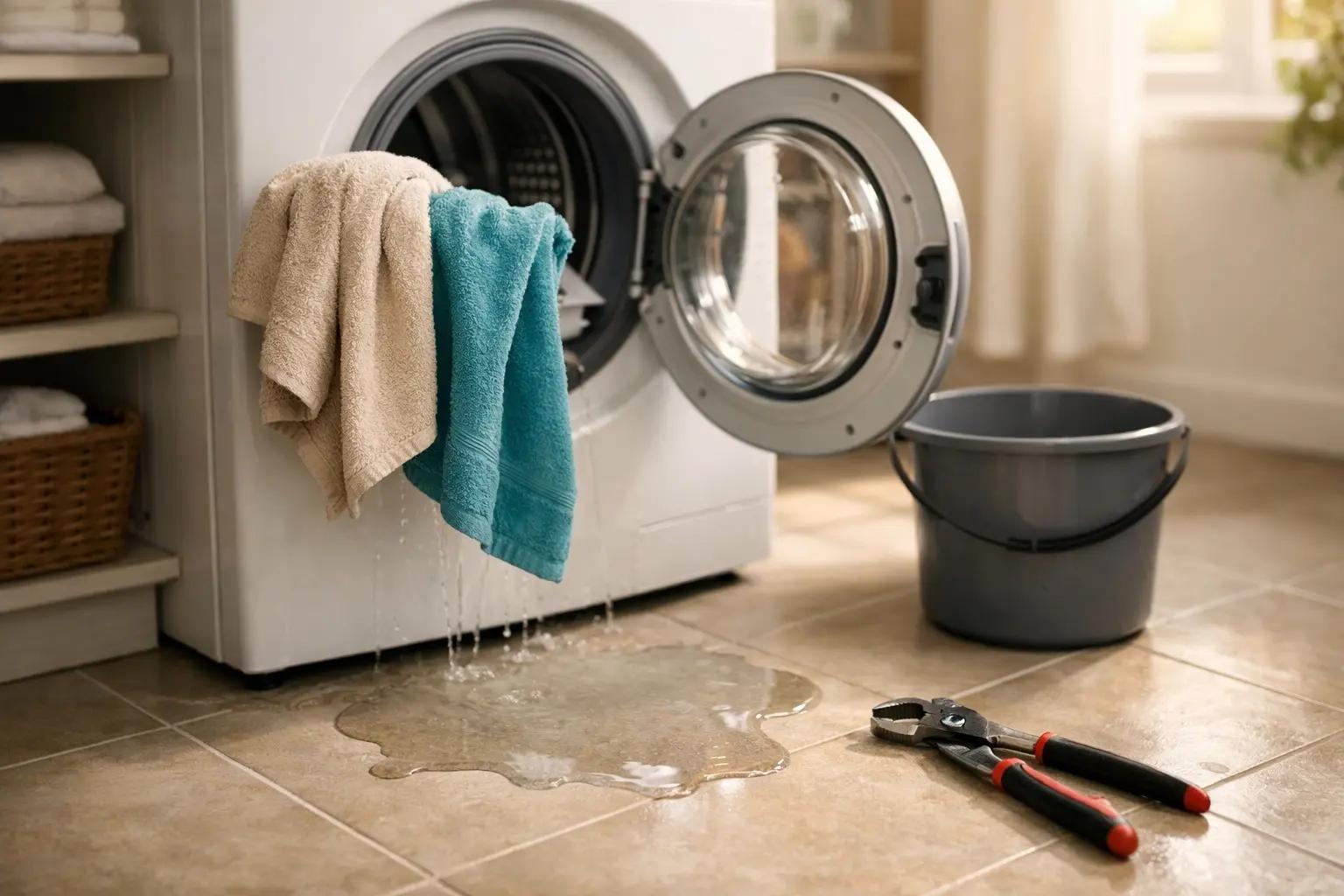

A washing machine that won't drain leaves you with a tub full of standing water and a pile of soaking clothes — but the fix is almost always a clogged filter, kinked hose, or small object jamming the pump, not a dead motor. Most homeowners can diagnose and resolve the problem in 30-45 minutes with basic tools and no replacement parts. This guide walks through every common cause from simplest to most involved so you can get your washer spinning again.
What You'll Need
🛠 Tools
📦 Materials
Safety First
- •Always unplug the washer from the wall outlet before opening any panels or disconnecting hoses — even if the machine appears off, live voltage is present.
- •Turn off the hot and cold water supply valves behind the washer before disconnecting any hoses to prevent flooding.
- •Standing water in the tub can be heavy — bail or siphon most of it into a bucket before tilting or moving the machine.
Step-by-Step Instructions
Disconnect Power and Water Supply
Unplug the washing machine from the wall outlet — do not just press the power button, because the control board and pump can still receive voltage. Then turn off both the hot and cold water supply valves behind the machine by rotating them clockwise until they stop. Lay 2-3 old towels on the floor around the base of the washer to catch any water that escapes during troubleshooting.
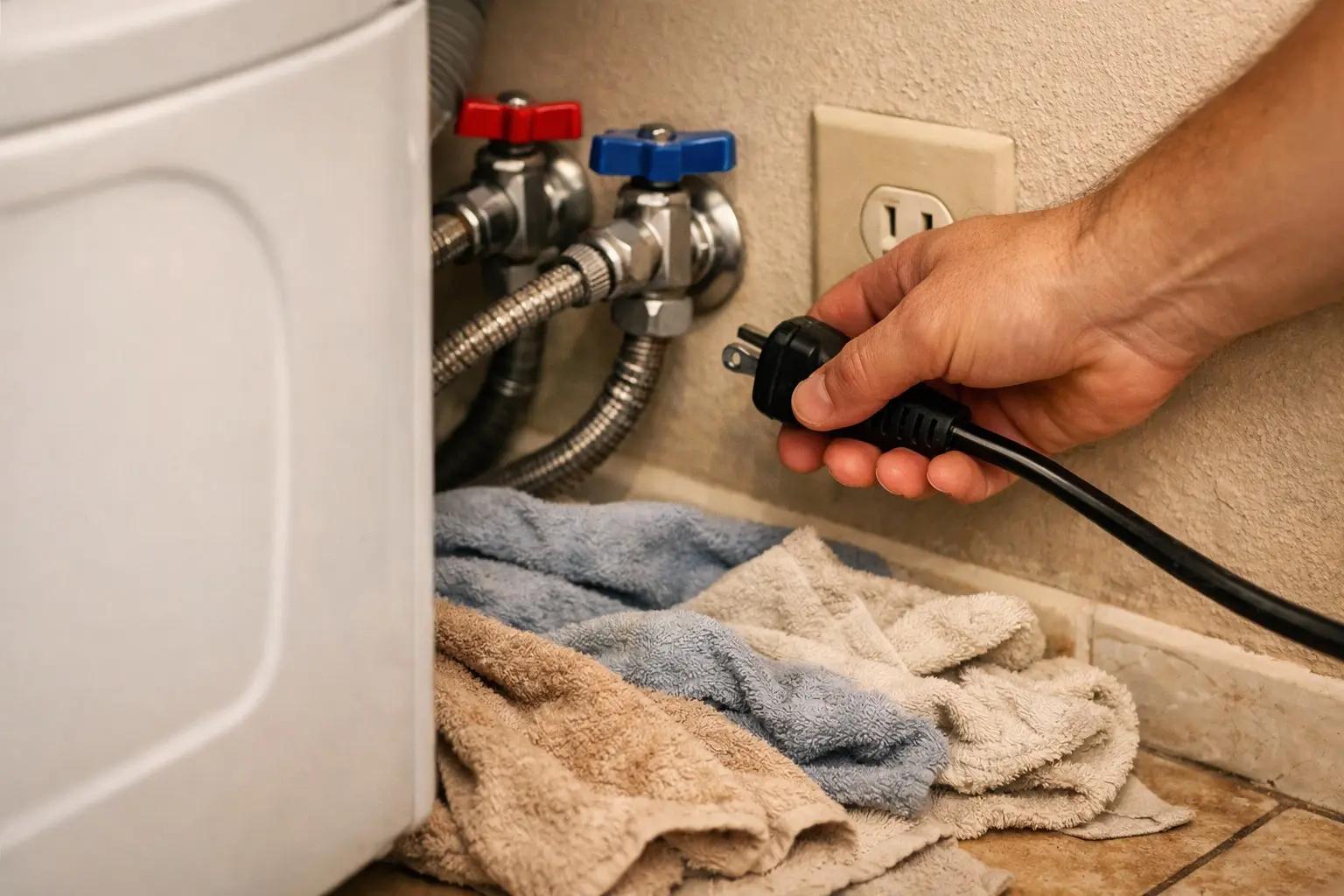
Never work on a plugged-in washing machine. Even with the power button off, components inside carry live voltage that can cause serious shock.
Drain the Standing Water
If the tub is full of water, you need to remove it before you can access the filter or pump. For front-loaders, locate the small drain hose or emergency drain tube behind the access panel on the lower-front of the machine — place a shallow pan underneath, pull the cap or plug, and let gravity drain the water into the pan, emptying it into a bucket as needed. For top-loaders without an emergency drain, bail the water out with a cup into a bucket, or use a wet/dry vacuum. Getting the water out first makes every subsequent step safer and less messy.
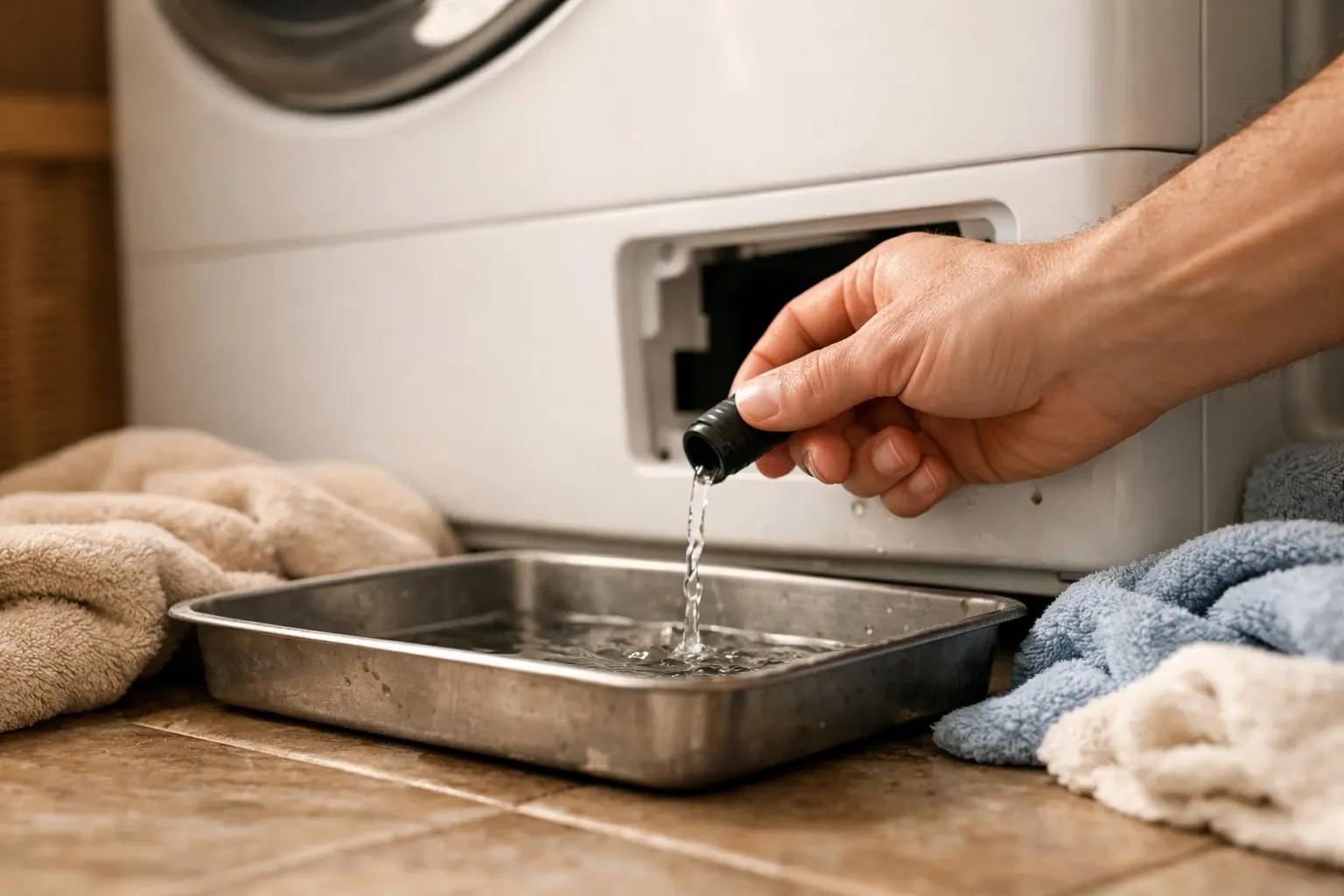
Front-loader emergency drain tubes are slow — expect 5-10 minutes for a full tub to empty. Use that time to gather your tools.
Clean the Pump Filter (Front-Loaders)
Most front-loading washers have a pump filter (also called a coin trap) behind a small access panel on the lower-front of the machine. Open the panel, place a shallow pan underneath, and slowly twist the filter cap counterclockwise — water will rush out, so go a quarter-turn at a time and let it drain between turns. Once the flow stops, unscrew the filter completely and pull it out. You will often find coins, hair ties, bobby pins, lint clumps, and small socks jammed in the filter housing. Remove all debris, rinse the filter under running water, and scrub the housing interior with a toothbrush. Reinstall the filter by threading it clockwise until snug — do not overtighten.
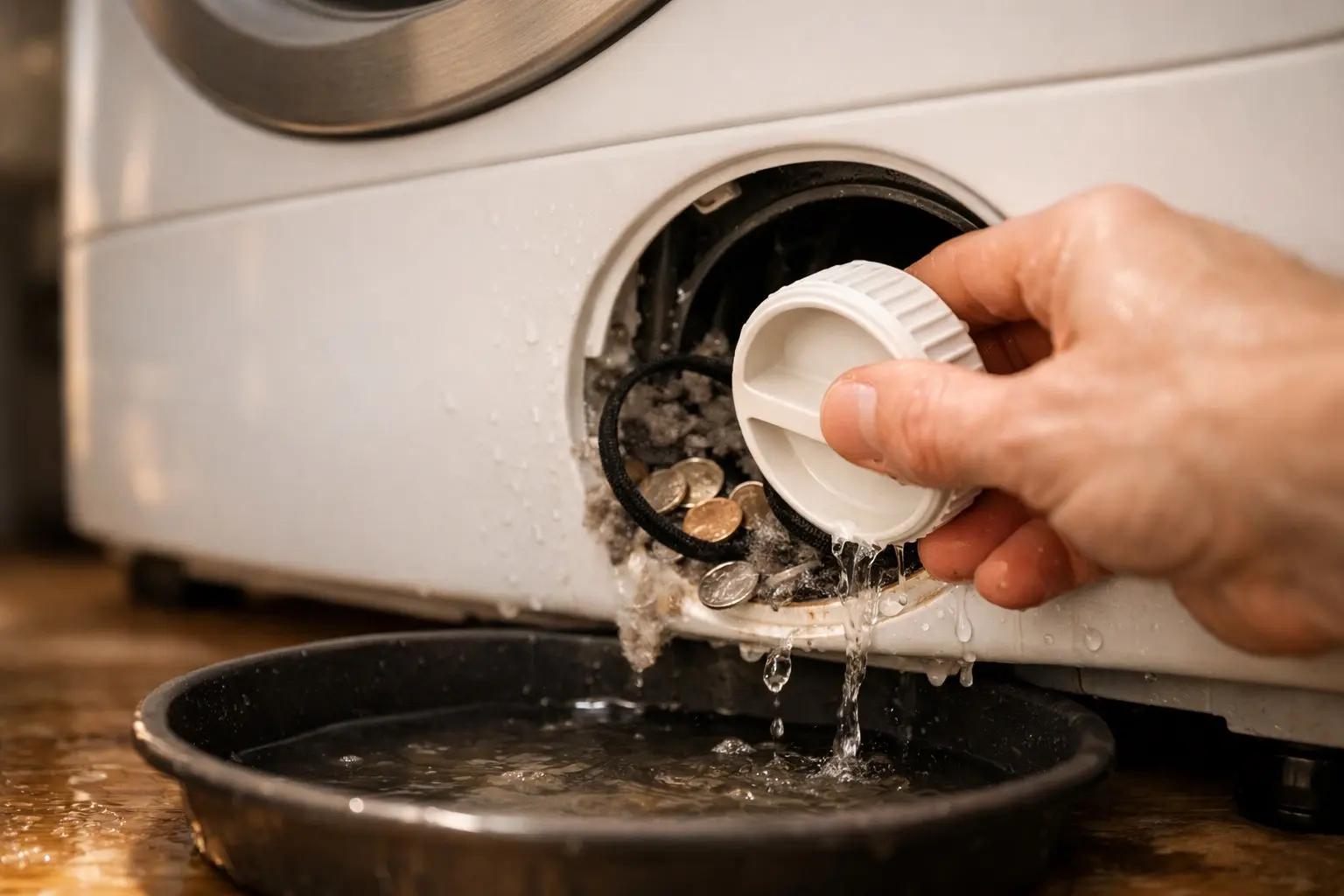
Check this filter every 2-3 months as routine maintenance — a single coin or bobby pin wedged in the pump impeller can burn out the motor over time.
Even after draining, the filter housing holds residual water. Have towels ready and open the cap slowly.
Inspect the Drain Hose for Kinks and Clogs
Pull the washing machine forward far enough to access the back (have someone help if needed — washers weigh 150-200 lbs). The drain hose is the corrugated gray or black hose that runs from the back of the machine to the standpipe, laundry sink, or wall drain. Check the full length for kinks, sharp bends, or pinch points — a kink even an inch long can completely block drainage. If the hose looks clear externally, disconnect it at the machine end by loosening the hose clamp with pliers. Hold it over the bucket and let any trapped water flow out. Shine a flashlight through the hose and look for blockages — lint, soap scum, and small objects accumulate at bends. If you find a clog, use a long-handled brush or straightened wire hanger to push it out.
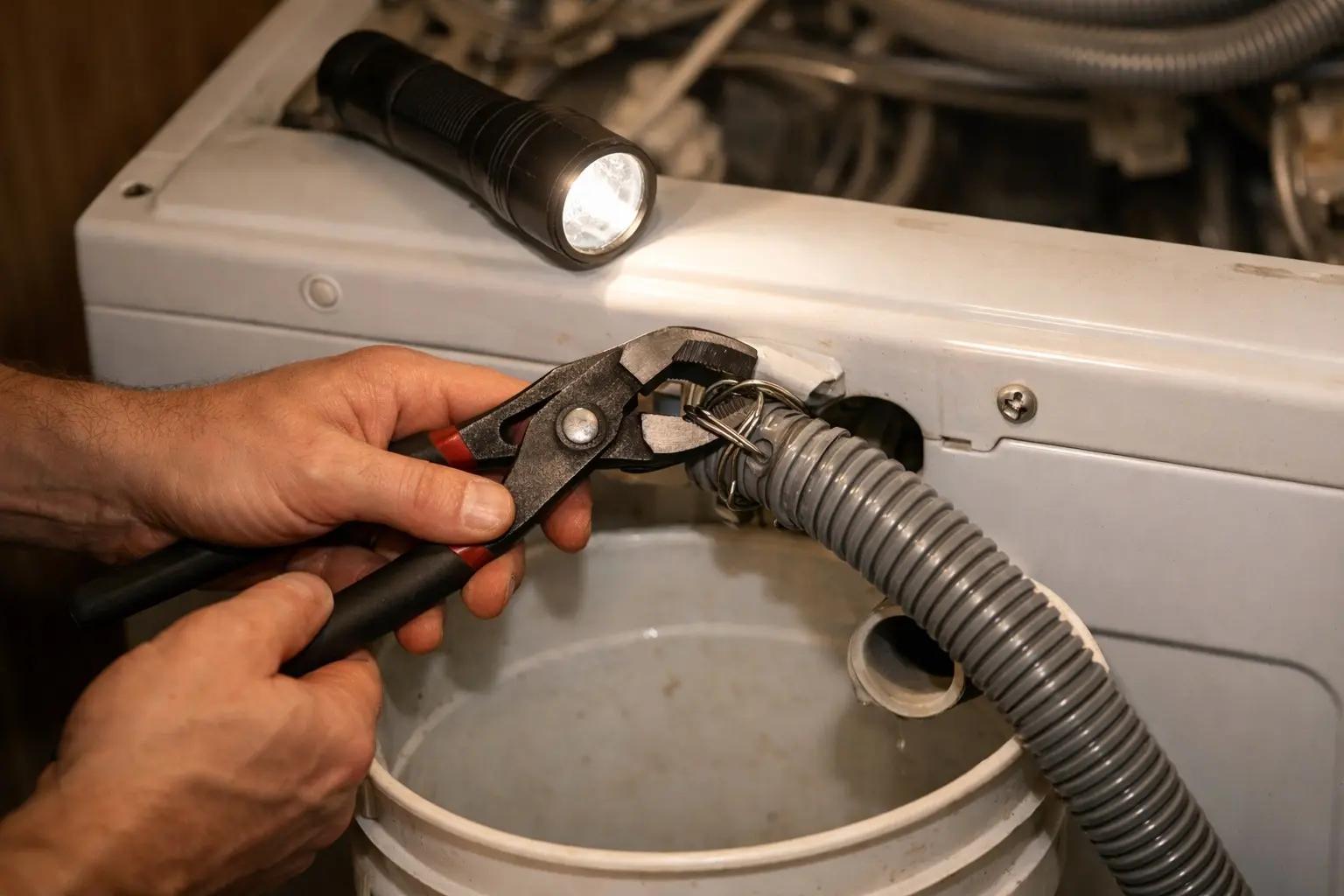
The drain hose should rise to at least 30 inches above the floor before entering the standpipe — if it's too low, water siphons back into the tub during the cycle. Check your machine's manual for the exact height.
Check the Standpipe or Drain Connection
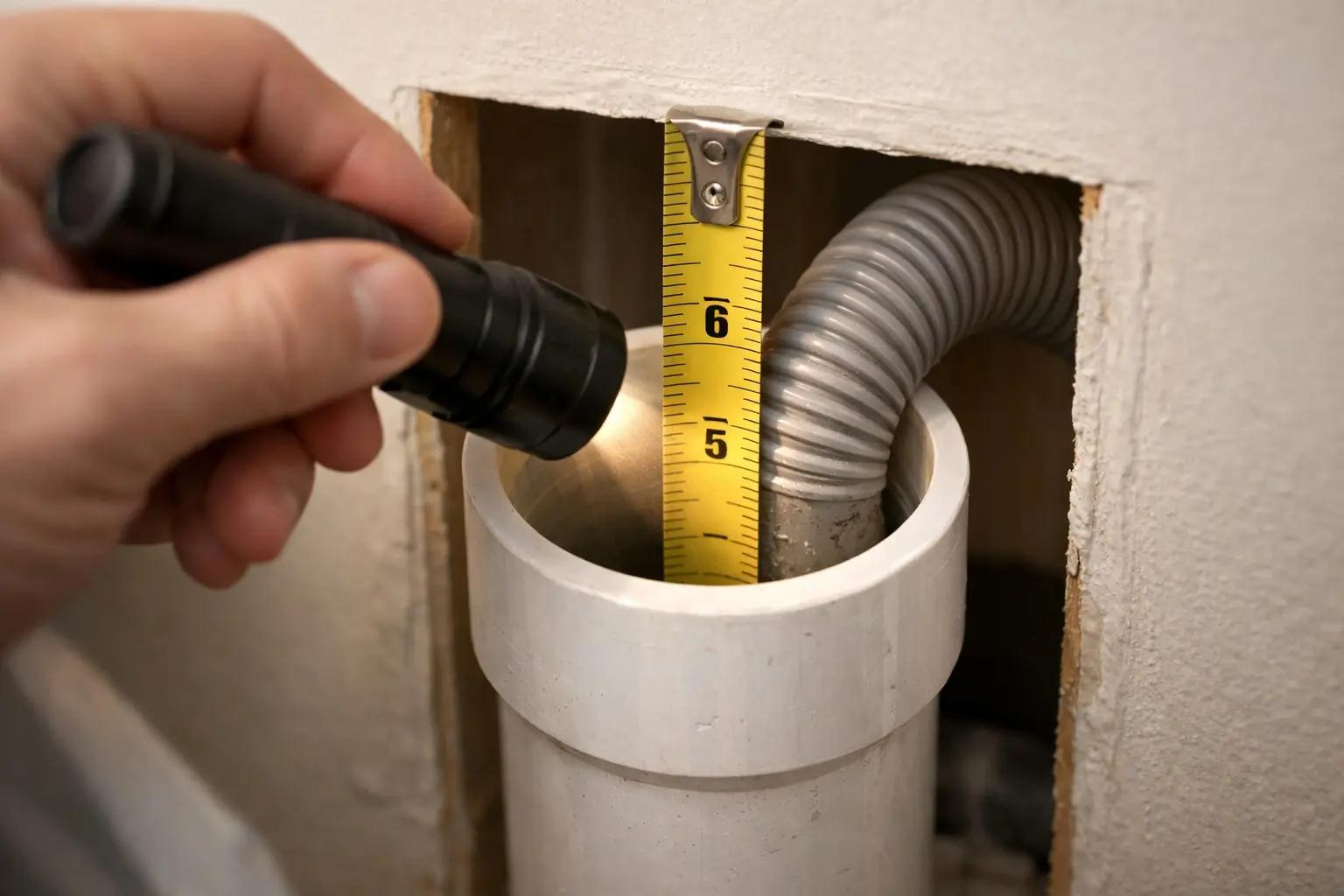
If the hose itself is clear, the clog may be in the standpipe (the vertical pipe in the wall that the drain hose feeds into) or the laundry sink drain. Shine a flashlight down the standpipe opening — you may see standing water or debris. Pour a cup of white vinegar followed by hot water to help dissolve soap buildup. If water backs up quickly, the clog is deeper in the plumbing and you may need a drain snake. Also verify the drain hose isn't pushed too far into the standpipe — it should insert only 6-8 inches. Pushing it too deep creates an air-lock that prevents proper drainage.
Test the Lid Switch (Top-Loaders Only)
Top-loading washers have a lid switch that prevents the machine from draining or spinning when the lid is open — a safety feature that can malfunction. Open the lid and locate the small plastic switch on the underside of the lid or on the door frame. Press it with a pen or your finger — you should hear a distinct click. If it doesn't click or feels loose, the switch may be broken and the washer thinks the lid is open, so it refuses to drain. Replacement lid switches cost $10-25 and typically attach with two screws and a wire connector. Consult your model's parts diagram before ordering.
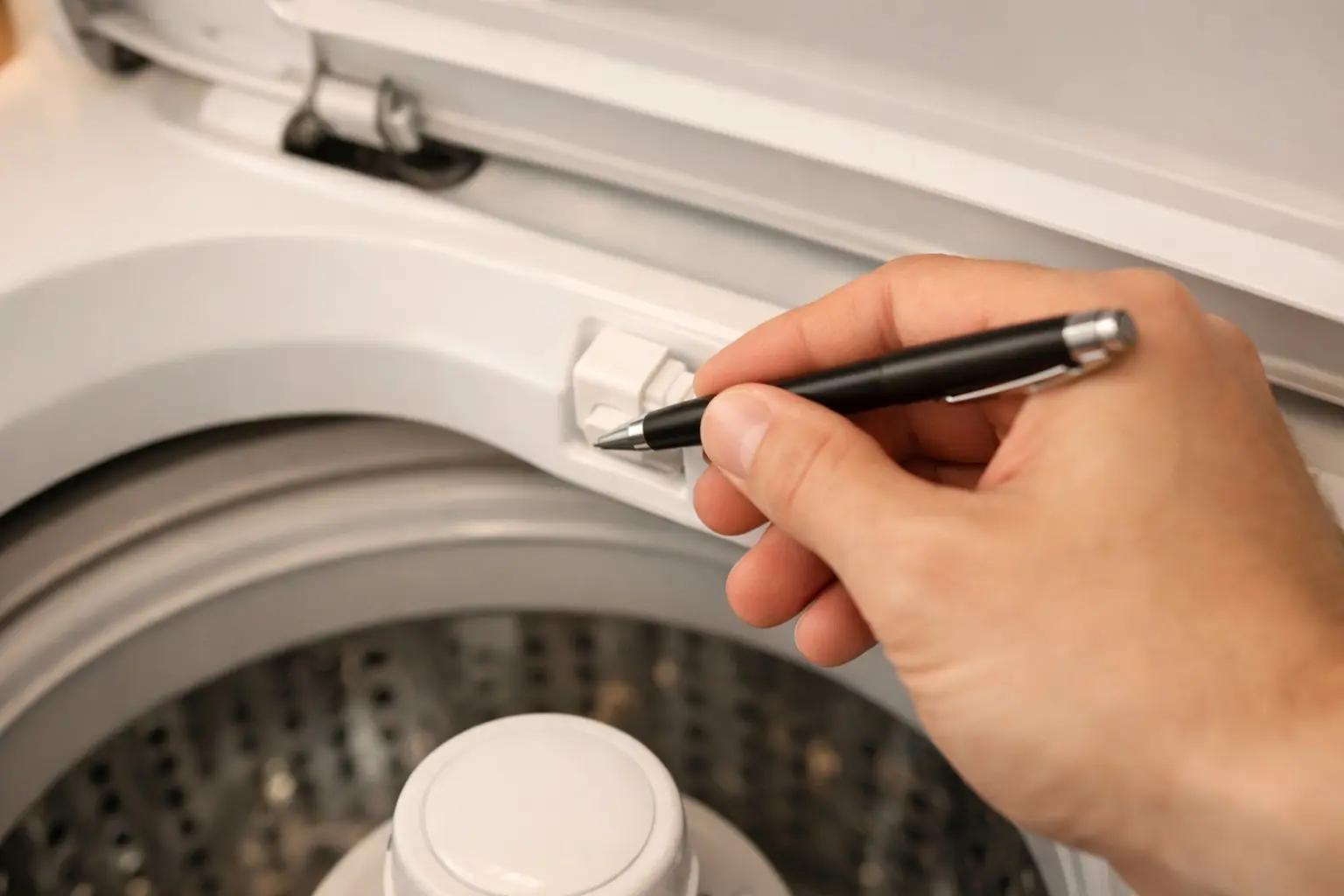
Look up your washer model number (usually on a sticker inside the door frame or on the back) before ordering any parts — lid switches are model-specific.
Inspect the Drain Pump for Obstructions
If the filter, hose, and standpipe are all clear, the pump itself may be jammed. The drain pump is located behind the lower access panel (front-loaders) or underneath the cabinet (top-loaders — you may need to tilt the machine back). With the filter removed, shine a flashlight into the pump housing and look for the impeller — a small fan-like disc. Try rotating it gently with your finger or a wooden skewer. It should spin freely. If it's stuck, a small object like a coin, button, or underwire from a bra is likely wedged against the impeller blades. Remove the obstruction carefully. If the impeller spins freely but the pump still doesn't work when powered on, the pump motor may have failed and needs professional replacement.
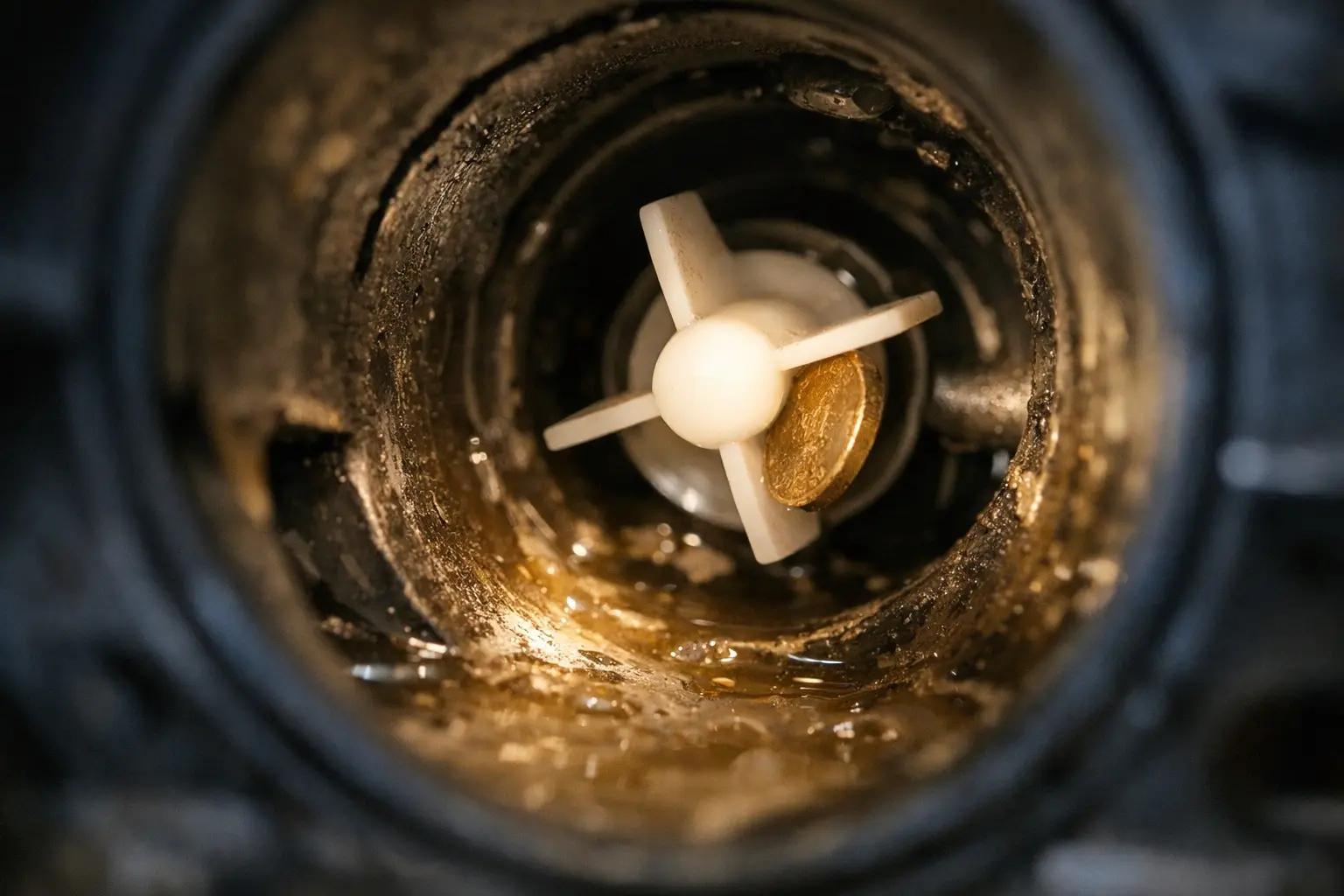
Never force the impeller if it won't rotate — you can crack the blades. Gently work the obstruction free instead.
Reassemble, Reconnect, and Test
Reinstall the pump filter (hand-tight, clockwise), reattach the drain hose and tighten the clamp, close any access panels, and push the washer back into position. Reconnect the hot and cold water supply lines (turn valves counterclockwise to open). Plug the washer back in. Run an empty rinse-and-spin cycle and watch for leaks at the filter cap, drain hose connections, and behind the machine. Listen for the pump running — it should hum steadily, not grind or rattle. If water drains normally and no leaks appear, the fix is complete.
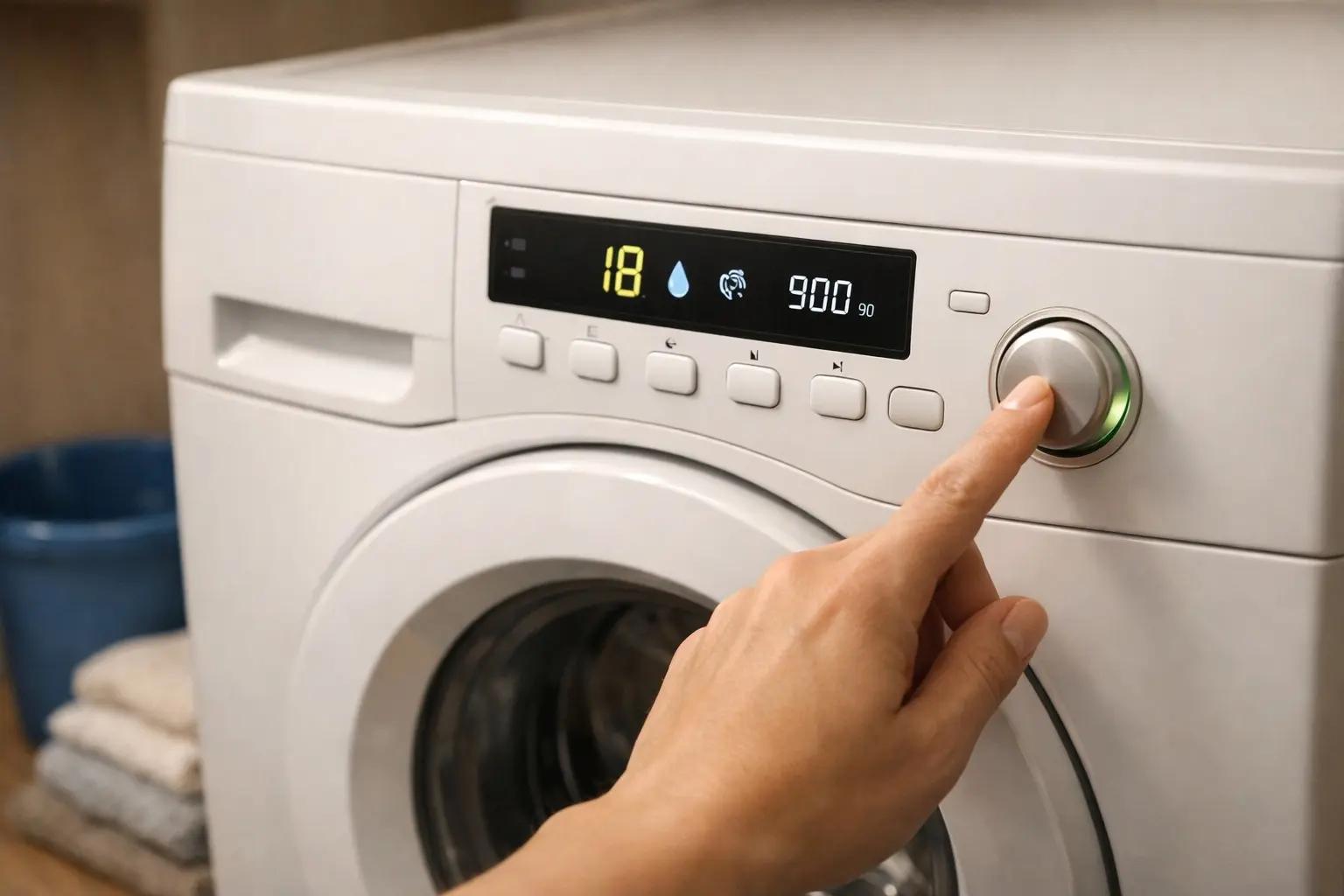
Run this test cycle with the machine pulled forward slightly so you can check the back connections for leaks. Push it fully into place only after confirming everything is dry.
Frequently Asked Questions
How long does it take to fix a washing machine that won't drain?
+
This project typically takes about 45 min. The guide includes 8 steps with detailed instructions for each.
What tools do I need?
+
You will need: Channel-lock pliers or adjustable pliers, Flat-head screwdriver, Phillips-head screwdriver, Flashlight, Shallow baking pan or drip tray, Bucket (5-gallon), Old towels (3-4), Toothpick or wooden skewer. Materials include: White distilled vinegar (1 cup, for flushing), Replacement drain hose clamp (if the original is damaged).
Is this a good project for beginners?
+
This is a moderate-difficulty project. Some basic DIY experience is helpful, but the step-by-step instructions make it approachable for motivated beginners.
Sources & further reading
- Cleaning the Drain Pump Filter — Whirlpool
- Not Draining — Front Load Washer — Whirlpool
More Appliance Repair Guides
View all → Medium1 hr
How to Replace a Dryer Belt
A dryer that hums but won't tumble almost always has a snapped drive belt — a $10 to $40 part that a technician will charge $100 to $250 to swap. The job is an hour of careful panel work: pop the top, pull the front, loop the new belt around the drum and idler, and check the pulley that probably killed the old belt in the first place.
 Easy30 min
How to Fix Garage Door Sensors That Block Closing
When your garage door rolls down a few inches, stops, and reverses while the opener light blinks, the safety photo-eye sensors are almost always the cause — not the motor. This guide walks the fix in diagnostic order, from a ten-second lens wipe to realignment and a wiring check, so you fix it for free before spending $40 on parts you may not need.
 Easy25 min
How to Fix a Running Toilet
A running toilet can waste up to 200 gallons of water per day, adding $50 or more to your monthly water bill. The fix almost always involves one of three cheap parts — the flapper, fill valve, or float — and takes under 30 minutes with no special skills required.
You Might Also Like
 Easy20 min
Best Paint for Kitchen Cabinets, Compared
The four paints that actually hold up to daily kitchen use are Benjamin Moore Advance, Sherwin-Williams Emerald Urethane Trim Enamel, INSL-X Cabinet Coat, and Behr Urethane Alkyd. They all work; they each fail in different ways. This guide compares cure time, leveling, scratch resistance, and price so you pick the one that matches your skill level and timeline — not the one a paint-store clerk has the most stock of.
 Easy25 min
Best Deck Stain: Transparent vs Semi vs Solid
There is no "best" deck stain — there is the right stain for your sun exposure, wood condition, and how often you want to redo the job. Transparent stains last 1-2 years but let the natural grain show. Solid stains last 4-7 years but look like paint. This guide walks the four opacity levels and the oil-vs-water choice so you pick the one that matches your deck and your tolerance for re-staining.
 Easy45 min
How to Install a Smart Thermostat
A smart thermostat is one of the highest-ROI upgrades you can make to your home — it learns your schedule, adjusts automatically when you're away, and typically saves about 8% on heating and cooling bills — the figure ENERGY STAR verifies from real-home data, roughly $50 a year — so the $120-250 device usually pays for itself within a few years. If your old thermostat has labeled wires behind it, the swap takes about 30-45 minutes with nothing more than a screwdriver and your phone. This guide covers checking compatibility, labeling wires, mounting the new base, connecting everything, and walking through the app setup so your system is running smart the same day.