How to Deep Clean a Dishwasher

A dishwasher that smells, leaves residue on glasses, or doesn't drain properly is almost always a cleaning problem, not a mechanical one — and a deep clean takes about 30 minutes of hands-on work plus two empty cycles. Food particles, grease, mineral deposits, and mold accumulate in the filter, spray arms, and door gasket over time, reducing cleaning performance and creating odors. This guide walks through every hidden spot so your dishwasher runs like new.
What You'll Need
🛠 Tools
📦 Materials
Step-by-Step Instructions
Empty the Dishwasher and Remove the Racks
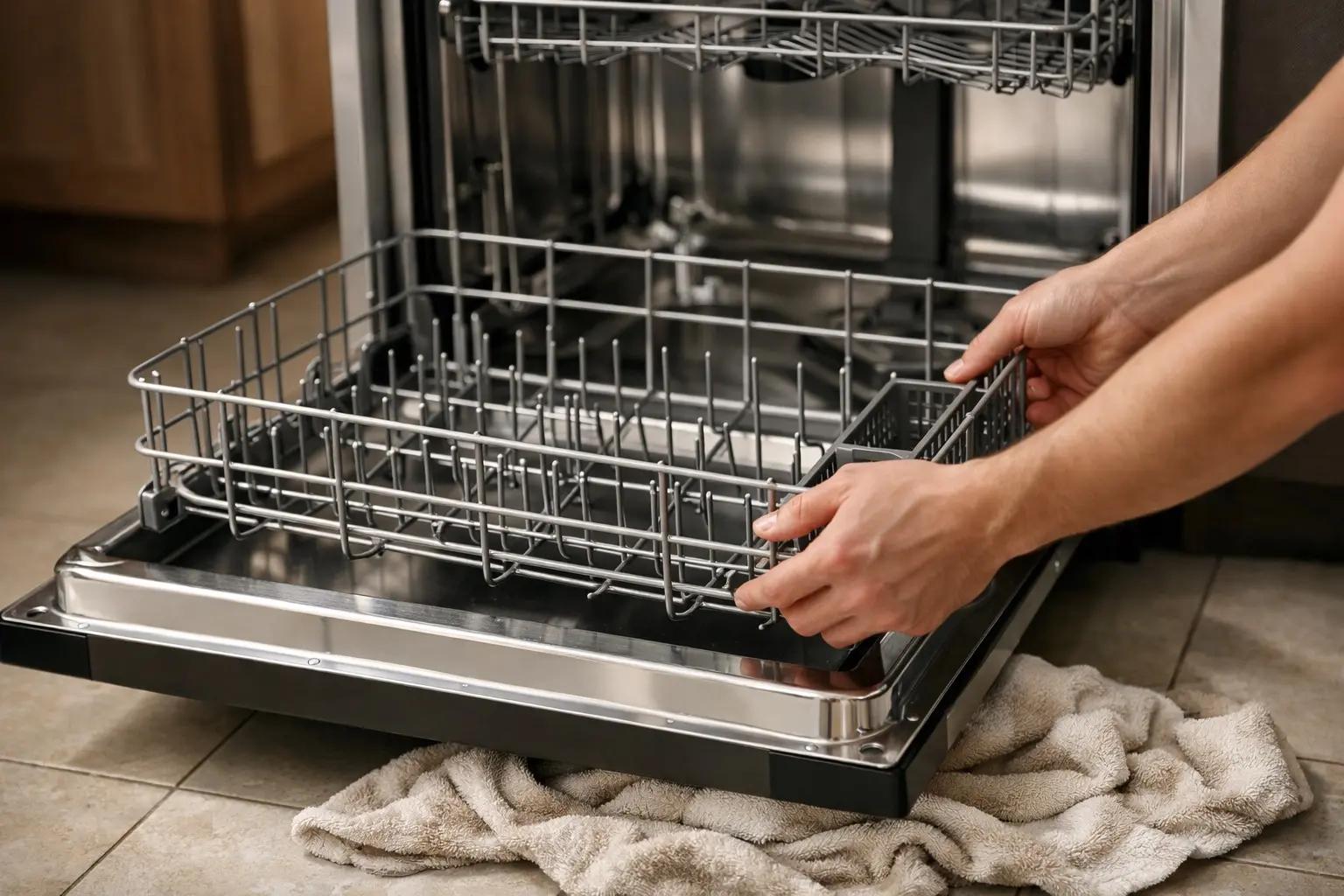
Make sure the dishwasher is completely empty — no dishes, utensils, or dishwasher pods in the dispenser. Pull out both the upper and lower racks and set them on a towel on the counter or in the sink. If the racks have built-up grime or hard-water scale, fill the sink or bathtub with warm water and 1 cup of white vinegar and let them soak for 30 minutes while you clean the interior. Lay a bath towel on the floor in front of the dishwasher to catch any drips.
Remove and Clean the Filter
The filter is the round, cylindrical screen at the bottom of the dishwasher tub — usually near the base of the lower spray arm. Twist it counterclockwise (most models) and lift it out. You may find a coarse mesh filter underneath it as well — remove that too. Rinse both pieces under warm running water, using an old toothbrush and a few drops of dish soap to scrub away the built-up food particles, grease, and slime. Hold it up to the light — every hole in the mesh should be clear. This single step fixes the majority of dishwasher odor problems.
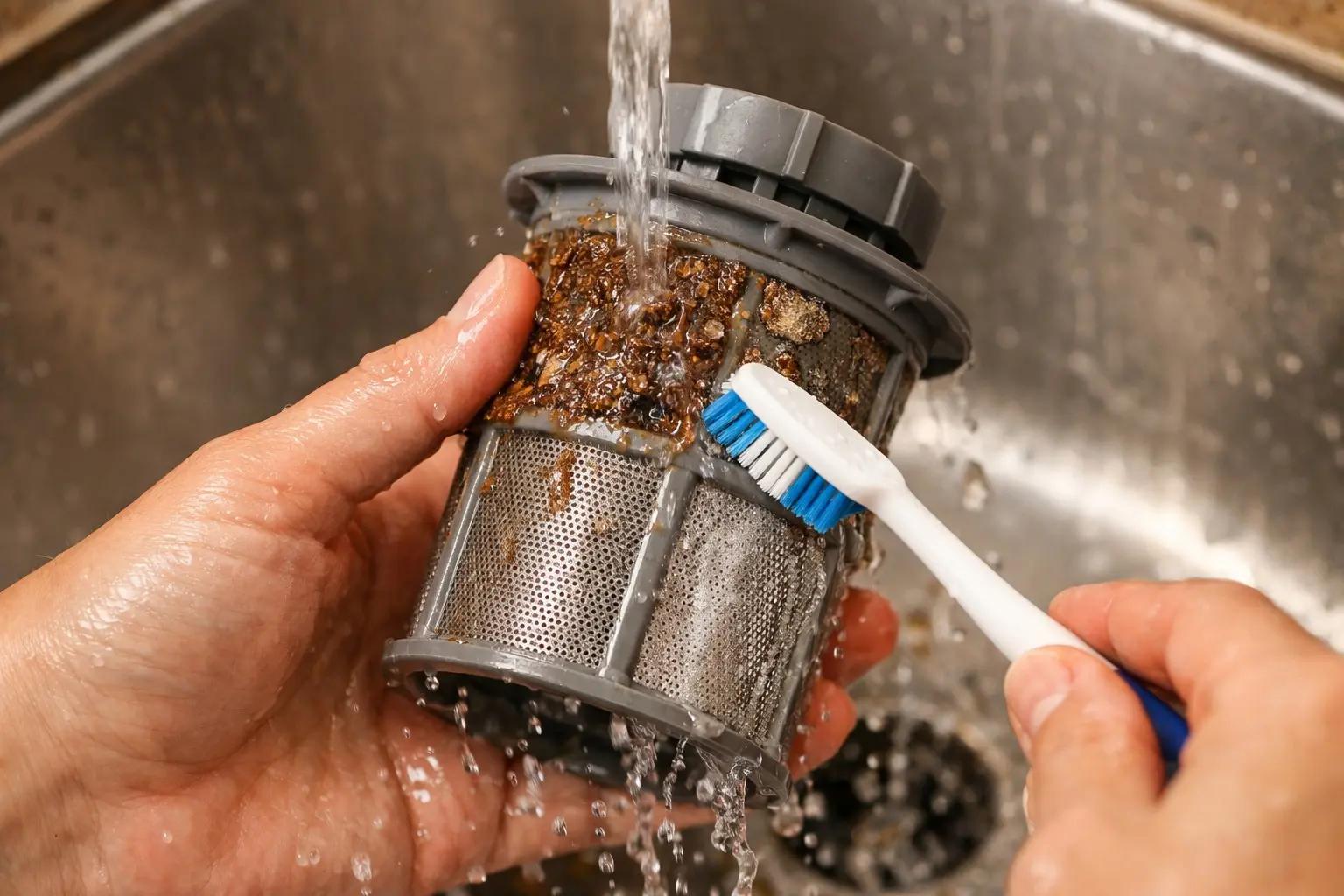
If you've never cleaned the filter and it has a stubborn grease coating, soak it in warm water with 1 tablespoon of dish soap for 10 minutes before scrubbing. This loosens the grease dramatically.
Clean the Spray Arms
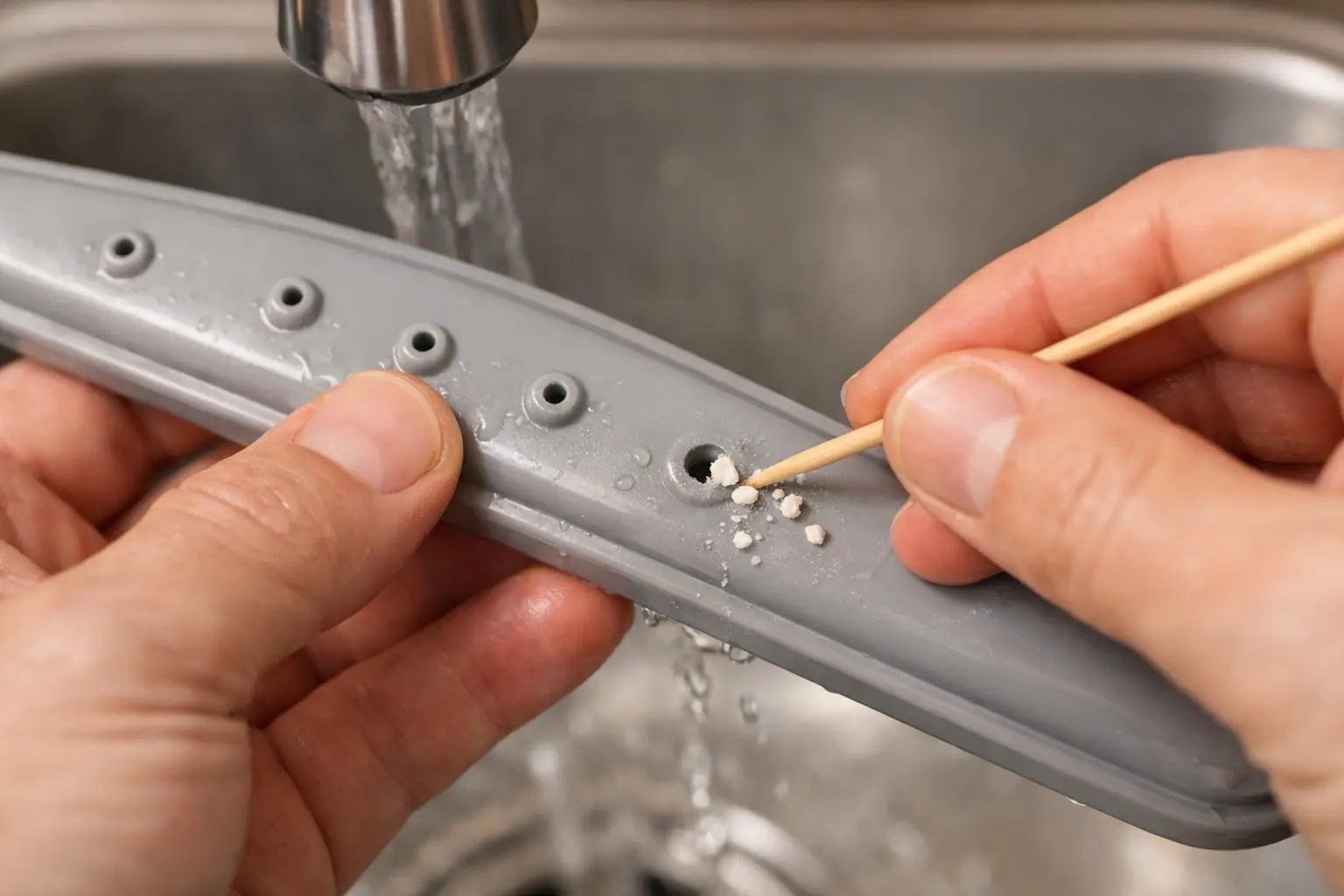
Remove the spray arms — the lower arm usually lifts off or unscrews from the center post, and the upper arm clips or screws off from the underside of the upper rack bracket. Inspect the small spray holes along each arm. Food particles and mineral deposits frequently clog these holes, reducing water pressure and leaving dishes dirty. Use a toothpick or bamboo skewer to poke through each hole and dislodge any debris. Rinse the arms under running water and shake out any loose particles. Snap or screw them back into place.
Scrub the Door Gasket and Interior Edges
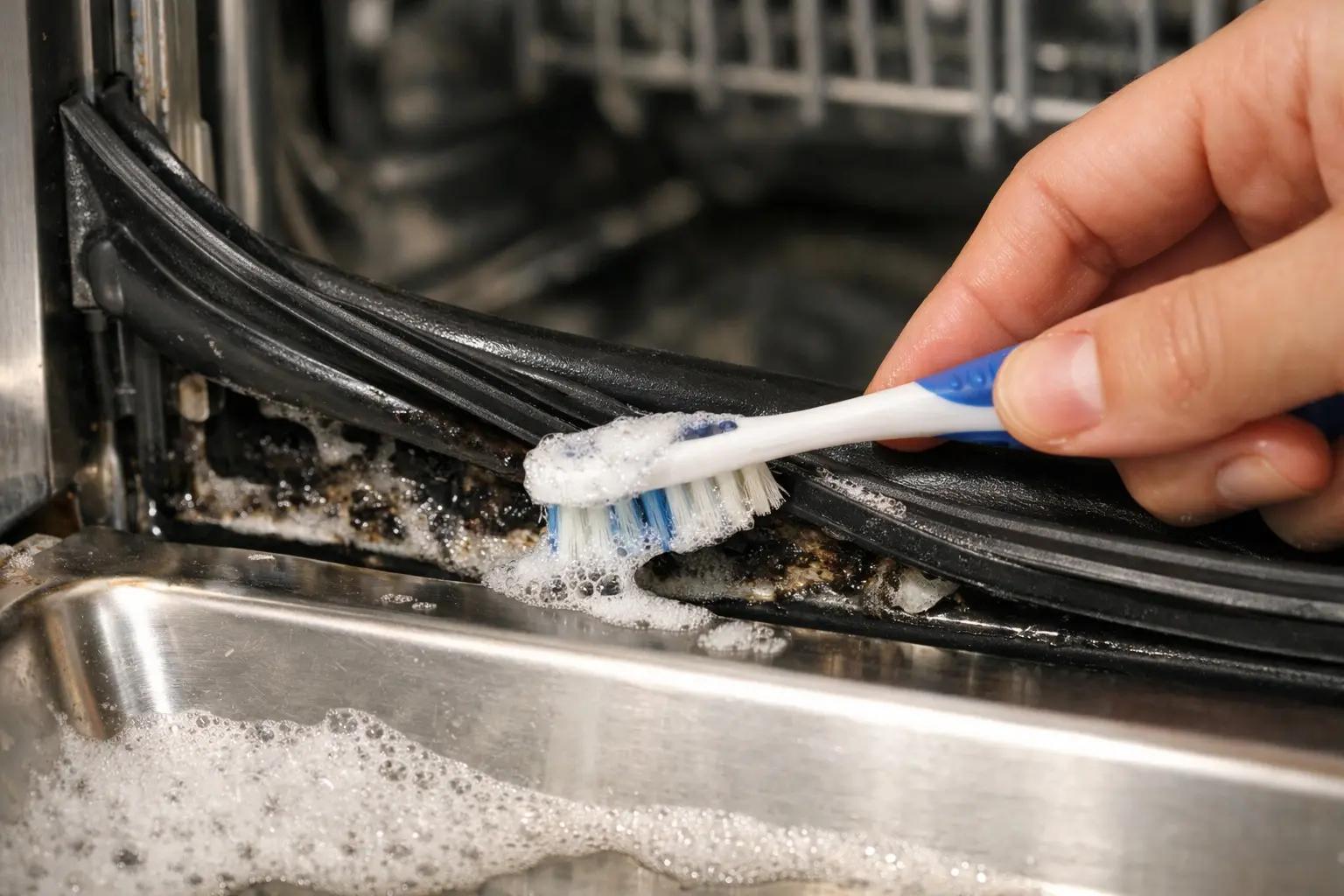
The rubber gasket around the door is a hidden breeding ground for mold and mildew because it stays damp between cycles. Dip a toothbrush in warm soapy water and scrub along the entire gasket — pull it back gently to clean the fold underneath where black mold often hides. Also scrub the bottom edge of the door and the area around the door hinge where food debris collects but never gets reached by the spray arms during a cycle. Wipe everything down with a damp microfiber cloth.
Clean the Drain Area and Check for Debris
With the filter removed, look down into the drain well at the bottom of the dishwasher tub. You'll often find broken glass, food scraps, label fragments, or even small utensils that slipped through the rack. Remove any visible debris by hand. Wipe around the drain opening and the surrounding area with a damp cloth. If there's visible mineral buildup or slime, scrub it with the toothbrush and a splash of vinegar. Reinstall the clean filter by dropping it in and twisting clockwise until it locks.
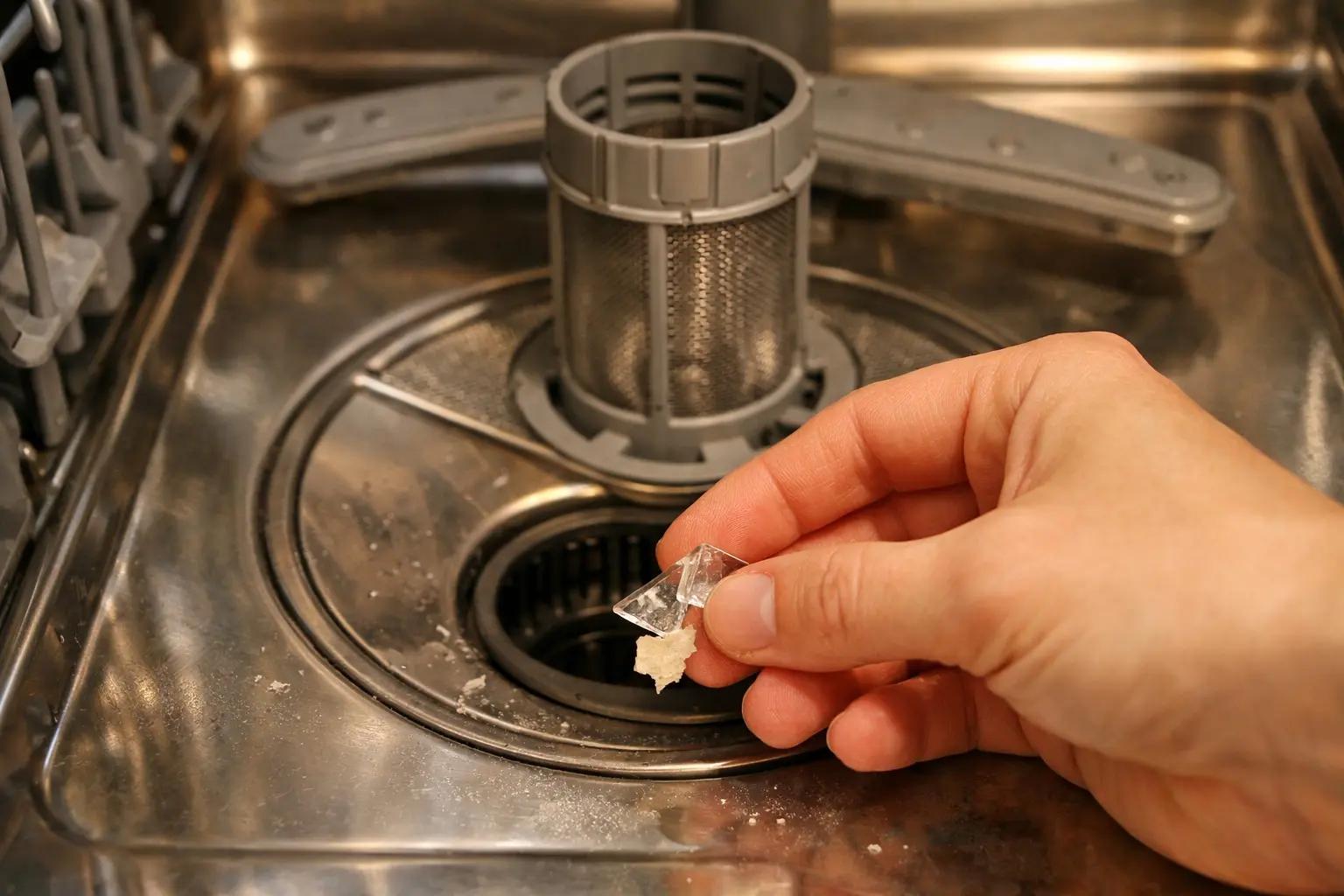
Check carefully for broken glass before reaching in — shards from chipped glasses are common in the drain well and can cut your fingers. Wear gloves if you see any glass fragments.
Run a Vinegar Cleaning Cycle
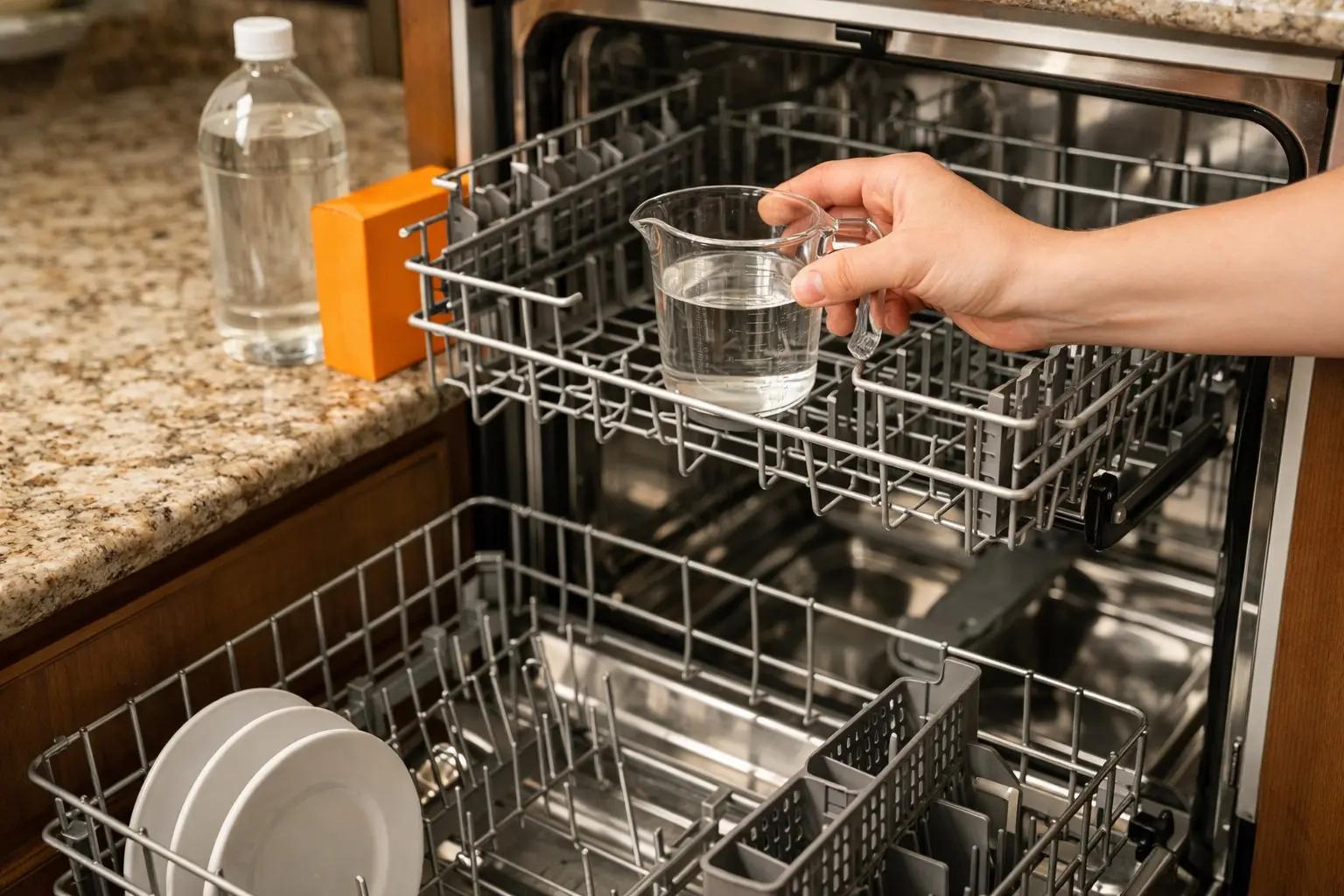
Place the racks back in the dishwasher. Pour 2 cups of white distilled vinegar into a dishwasher-safe glass measuring cup or bowl and set it upright on the top rack. Do not add any detergent. Close the door and run a full cycle on the hottest water setting available. The vinegar dissolves mineral deposits (hard-water scale), cuts through grease, and sanitizes the interior. The steam from the hot cycle carries the vinegar into every spray arm hole, hose, and crevice you can't reach by hand.
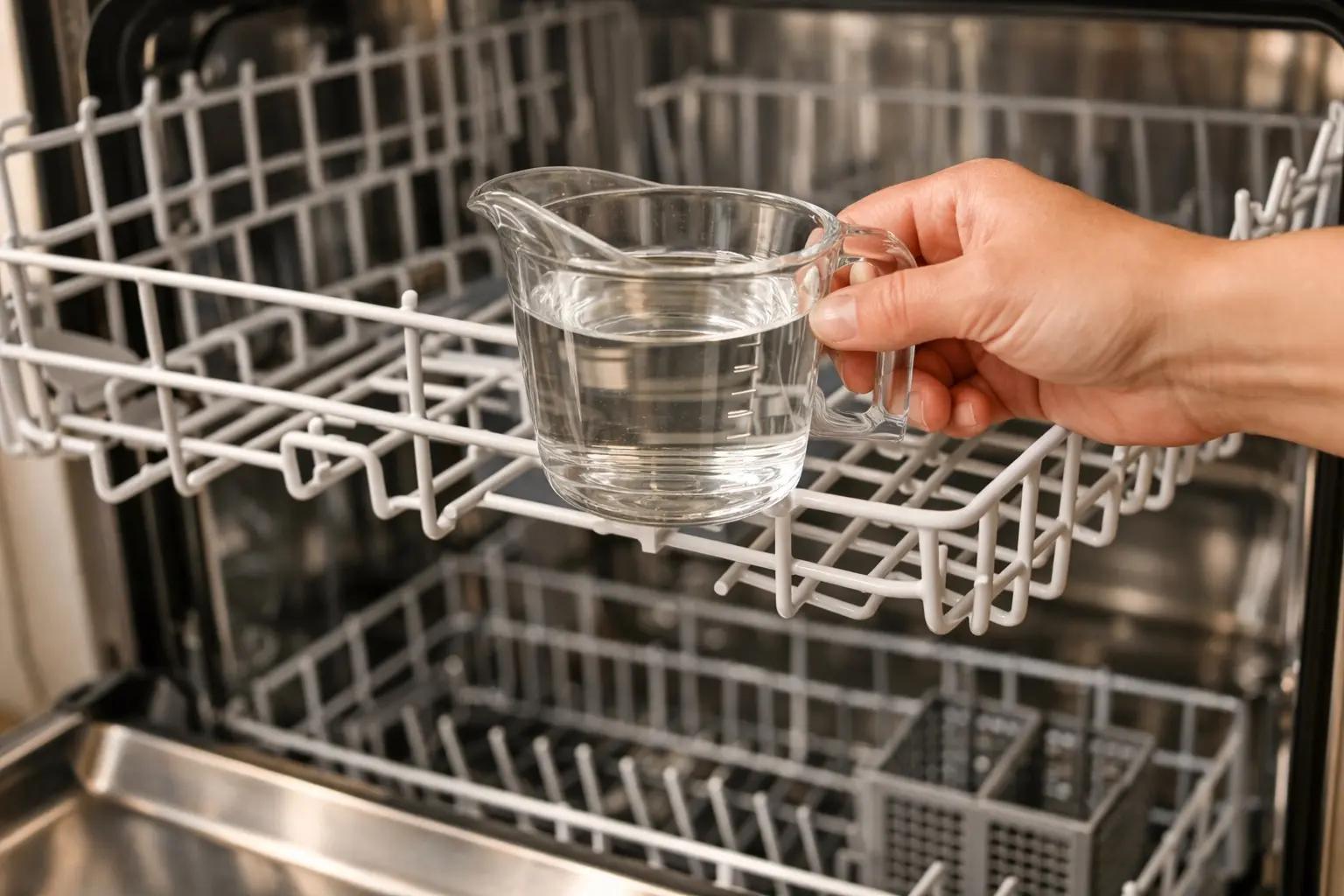
If you have extremely hard water and see white scale buildup on the interior walls, use 3 cups of vinegar instead of 2. For routine monthly maintenance, 1 cup is enough.
Run a Baking Soda Freshening Cycle
After the vinegar cycle finishes, open the door and sprinkle 1 cup of baking soda evenly across the bottom of the dishwasher tub. Close the door and run a short hot-water cycle (or a rinse cycle if your machine has one). The baking soda absorbs any remaining odors, provides a mild abrasive scrub to the interior surfaces, and leaves the tub smelling fresh. When this cycle finishes, open the door and let the dishwasher air-dry for 30 minutes — this helps prevent mold and mildew from forming on the gasket.
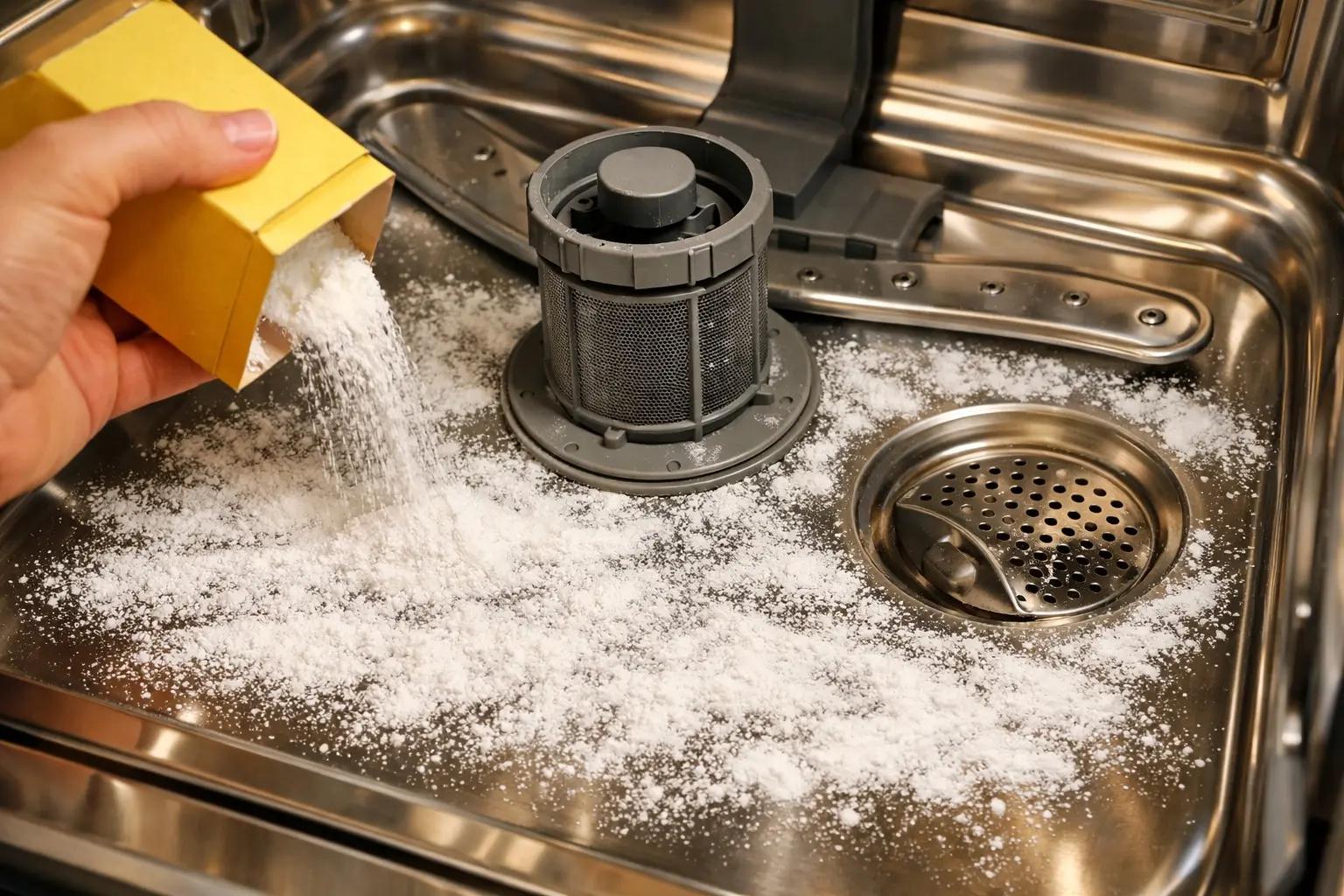
Never combine vinegar and baking soda in the same cycle — they neutralize each other and you lose the cleaning benefit of both. Always run them as separate back-to-back cycles.
Wipe Down the Exterior and Set a Cleaning Schedule
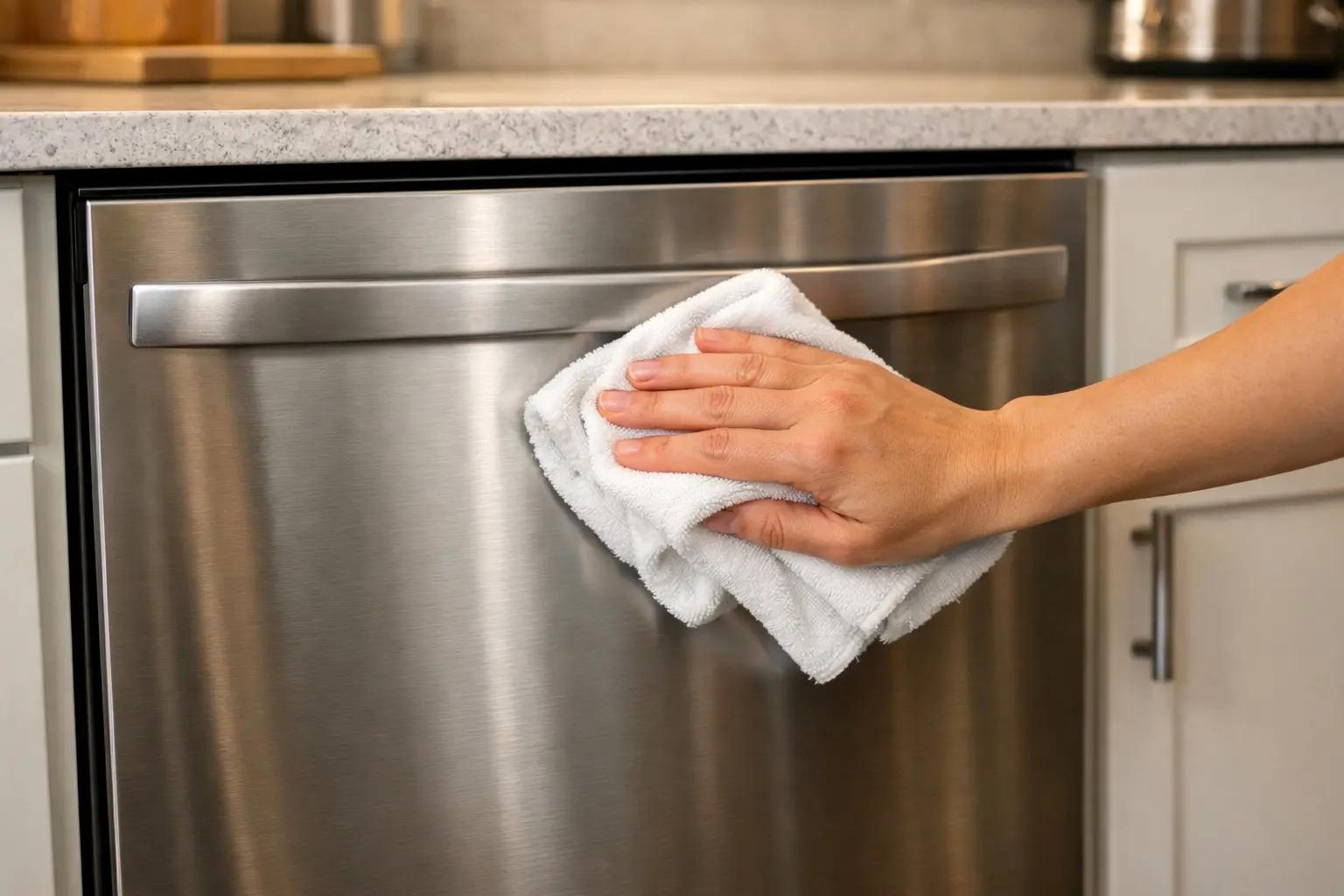
Wipe the door, handle, and control panel with a damp microfiber cloth and a drop of dish soap. For stainless steel exteriors, wipe in the direction of the grain to avoid scratches and use a dry cloth to buff away streaks. Going forward, deep clean your dishwasher once a month — the vinegar and baking soda cycles take zero hands-on effort and keep odors and buildup from returning. Between deep cleans, rinse the filter under running water every 1-2 weeks and scrape large food debris off dishes before loading to reduce buildup.
Frequently Asked Questions
How long does it take to deep clean a dishwasher?
+
This project typically takes about 45 min. The guide includes 8 steps with detailed instructions for each.
What tools do I need?
+
You will need: Old toothbrush or small detail brush, Toothpick or bamboo skewer (for clearing spray arm holes), Soft microfiber cloths, Small bowl or dishwasher-safe measuring cup. Materials include: White distilled vinegar (2 cups), Baking soda (1 cup), Dish soap (a few drops, for hand-cleaning removable parts), Warm water, Bath towel (to protect the floor in front of the dishwasher).
Is this a good project for beginners?
+
Yes! This is rated as an easy project that most homeowners can complete with basic tools and no prior experience.
Sources & further reading
- Removing Odors in your Dishwasher — Maytag
- How to Clean a Dishwasher Filter and Spray Arm — Family Handyman
More Appliance Repair Guides
View all →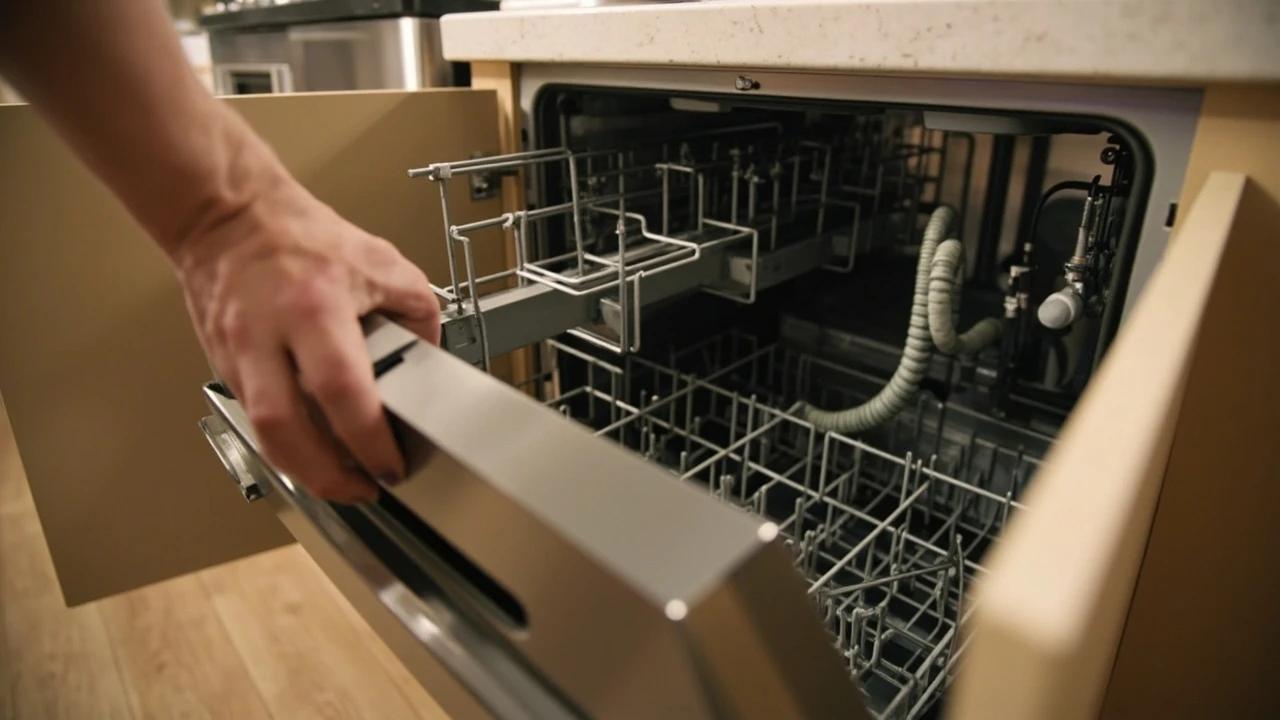 Medium2h 30m
How to Install a Dishwasher
Installing a dishwasher yourself saves the $150 to $250 that delivery crews charge for hookup, and once the cabinet opening already has water, drain, and power, it's a roughly two-hour job that comes down to three connections. The catch is the small details that cause callbacks — forgetting the disposal knockout plug, skipping the drain-hose high loop, and overtightening the fittings. This guide walks the full replacement: pull the old unit, prep the new one, make the three connections, level it, secure it, and leak-test so it runs dry and quiet the first time.
 Easy45 min
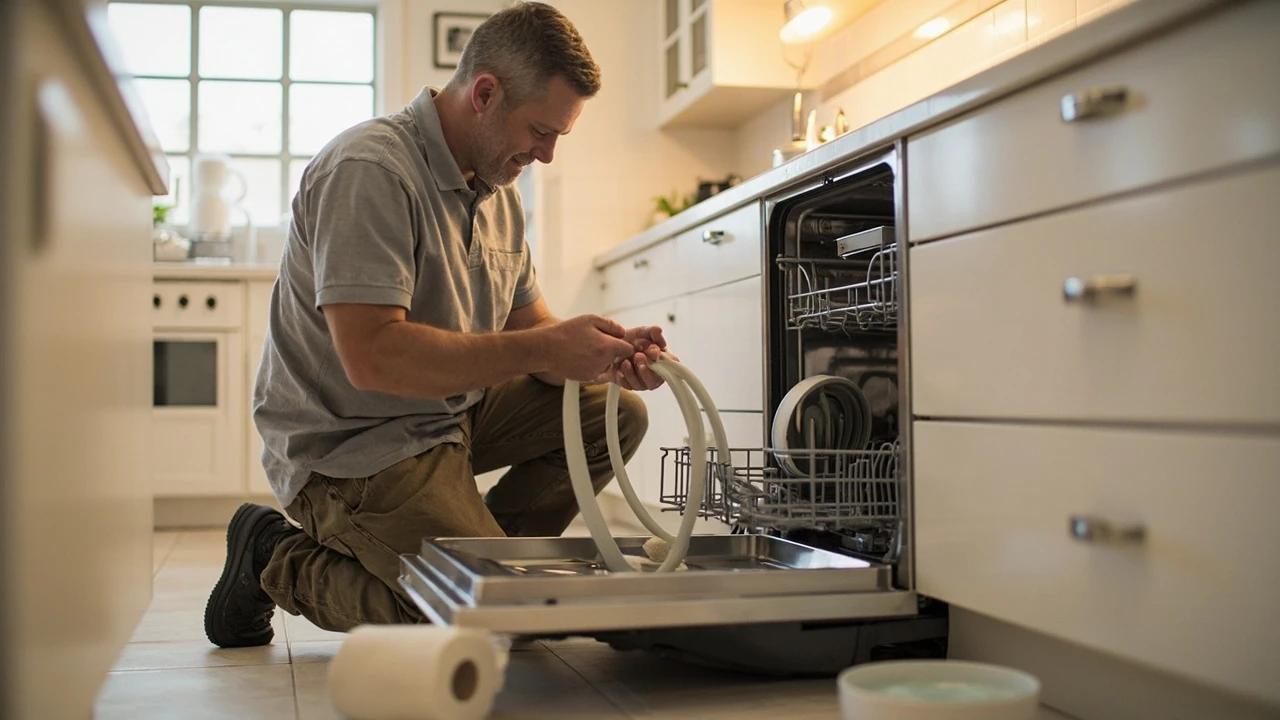
How to Replace a Dishwasher Door Seal
A leaking dishwasher door is almost always a worn or hardened door gasket — the rubber seal that runs around the perimeter of the inner tub. The part costs $10-25 and the entire job takes 30-45 minutes of active work, versus a $150-250 service call. This guide covers Whirlpool, KitchenAid, Maytag, GE, and Frigidaire (which all share the same tub-perimeter design) plus Bosch-specific notes for upper and lower seals.
 Medium30 min
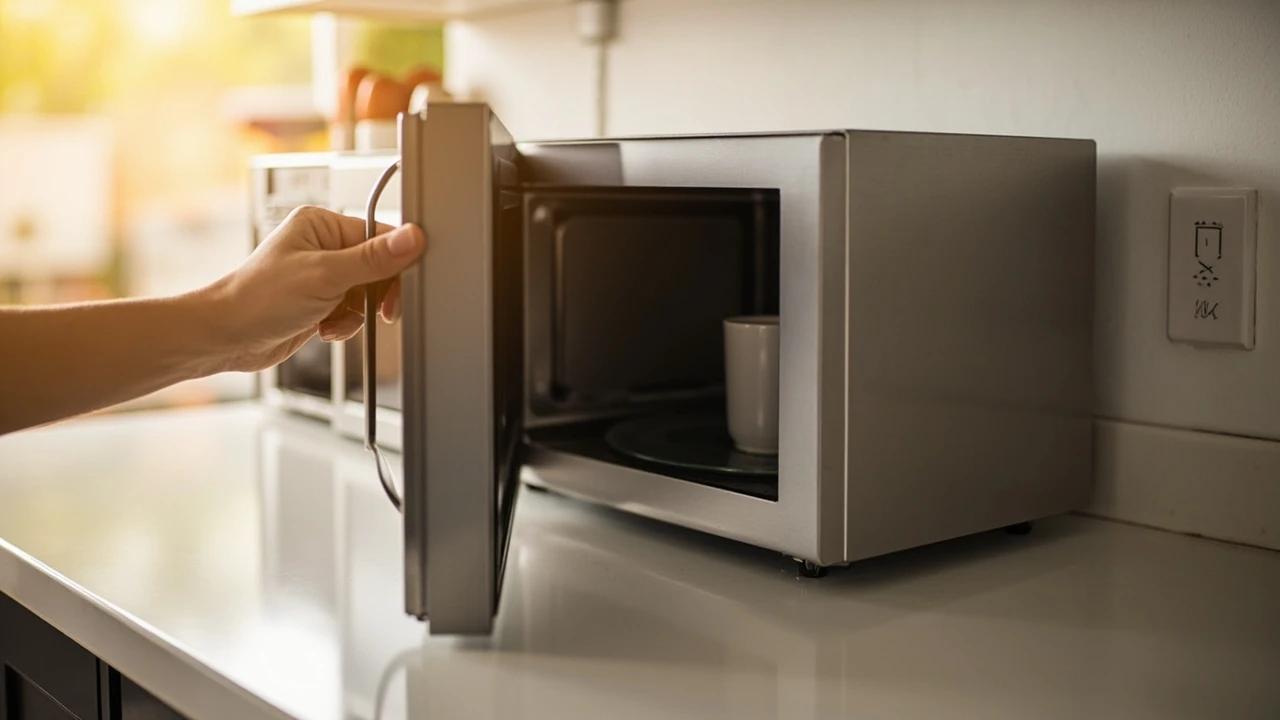
How to Troubleshoot a Microwave That Won't Heat
A microwave that runs — light on, turntable spinning, timer counting down — but leaves food stone cold is one of the most common appliance failures, and about half the time the cause is something you can fix in five minutes for free. This guide walks the diagnosis from the easy stuff (demo mode, power level, a tripped GFCI, a dirty door latch) to reading the failure signature that tells you the high-voltage circuit is gone, then helps you make the repair-or-replace call with real numbers.
You Might Also Like
 Medium6 hrs
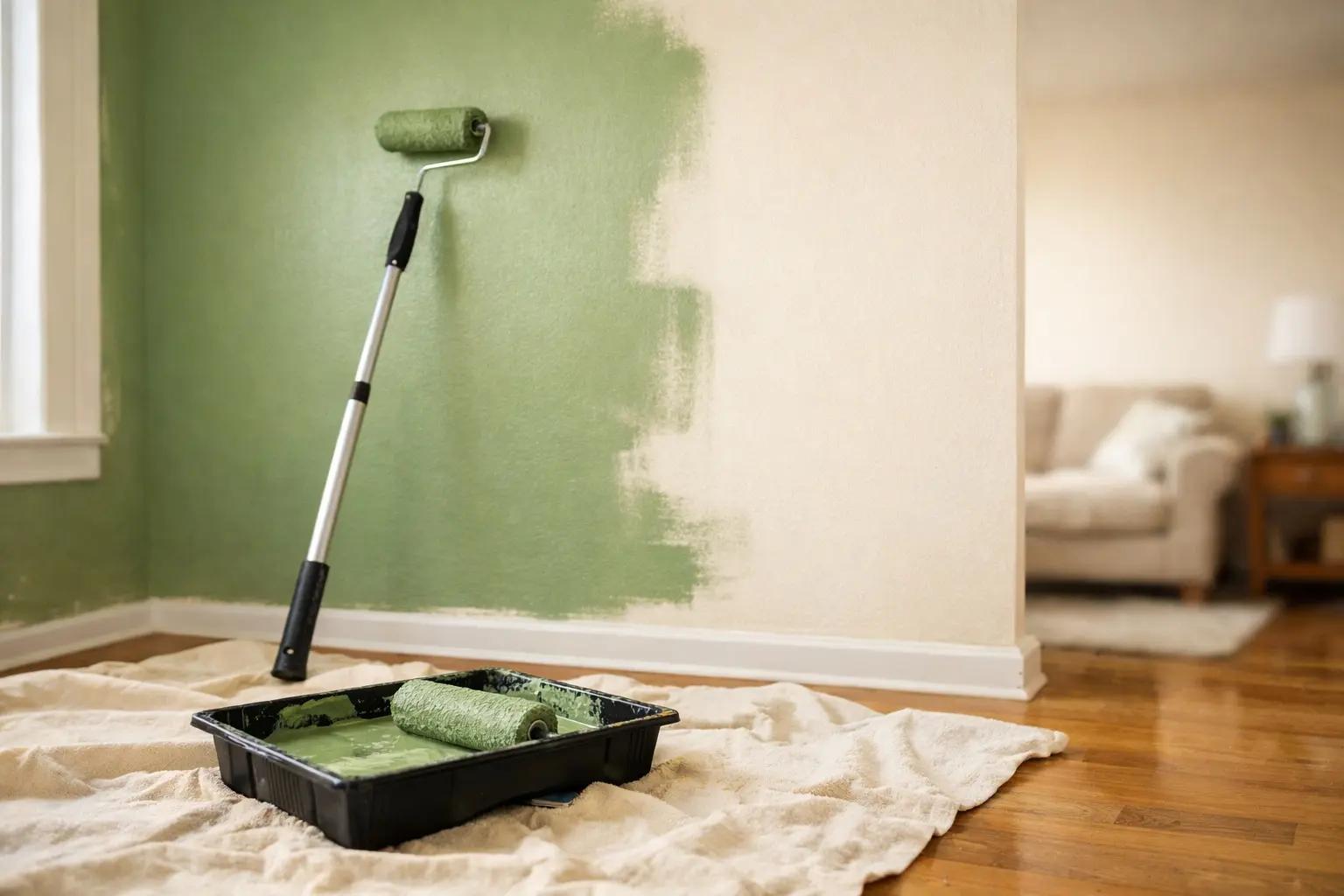
How to Paint a Room
A fresh coat of paint is the fastest, cheapest way to transform any room — and doing it yourself saves $400-800 in labor for an average 12x12-foot bedroom. The job takes a weekend from prep to final coat, and the difference between an amateur-looking result and a professional finish comes down to technique, not talent. This guide covers prep, cutting in, rolling, and cleanup so you get clean lines and even coverage the first time.
 Easy30 min
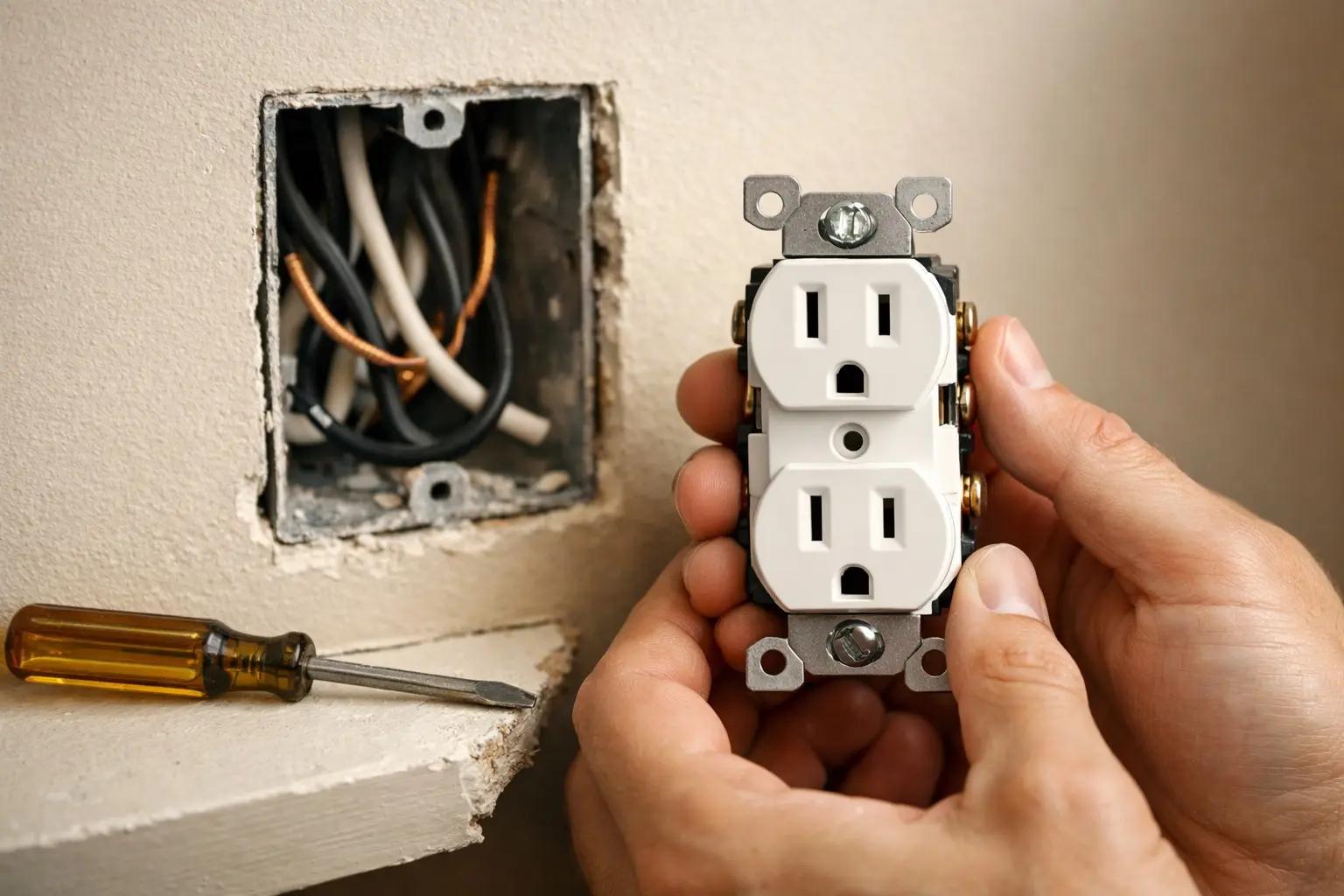
How to Replace an Electrical Outlet
A worn-out or discolored electrical outlet is one of the simplest electrical repairs you can tackle yourself — swapping one takes about 15-30 minutes and costs under $5 in parts versus $75-150 for an electrician visit. This guide walks you through safely replacing a standard duplex receptacle, including how to handle the wiring correctly and avoid the most common DIY mistakes.
 Medium45 min
How to Install a Ceiling Fan
Replacing a light fixture with a ceiling fan improves air circulation in summer and can reduce heating costs in winter by circulating warm ceiling air downward. Most installs take 45-60 minutes.