How to Fix a Loose Stair Railing or Wobbly Handrail
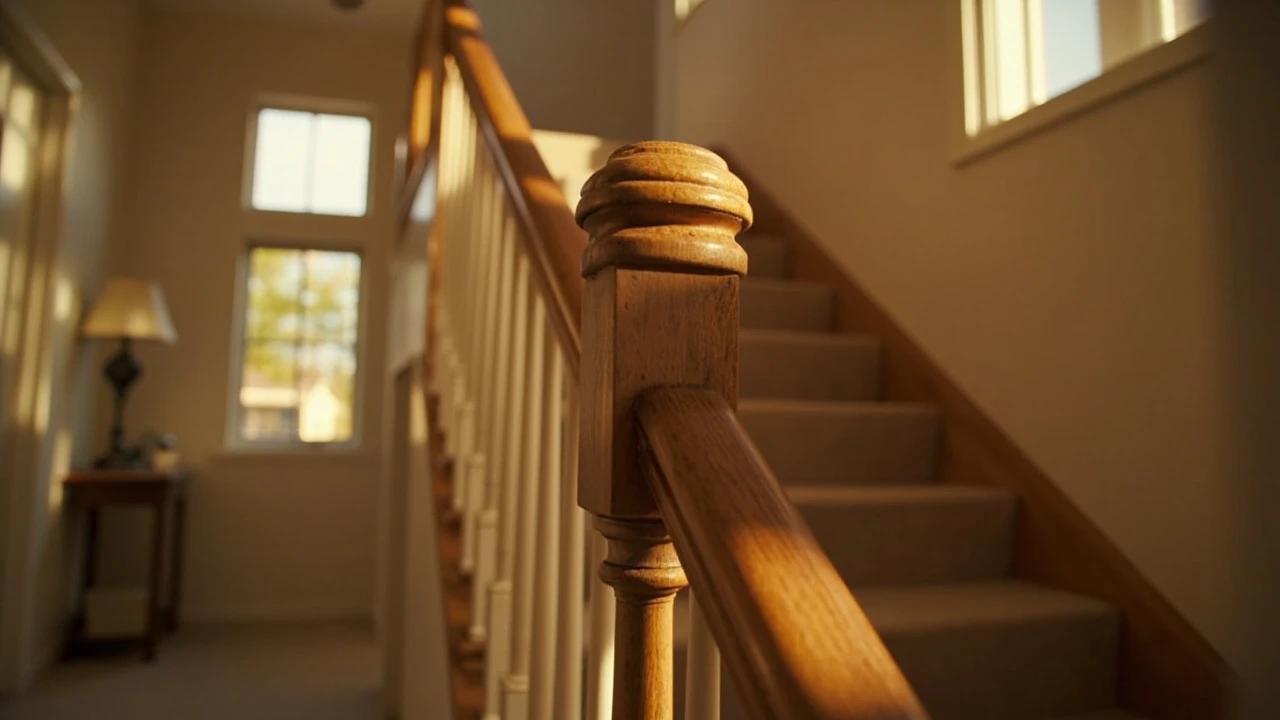

A wobbly stair railing is more than an annoyance — it's a genuine fall hazard, especially for children and older adults. Most loose railings are caused by stripped screw holes, worn brackets, or loose newel post connections, and the fix typically takes under an hour with basic hand tools. This guide walks you through diagnosing the source of the wobble, reinforcing the fasteners, tightening balusters, and securing the entire assembly so it feels rock-solid again.
What You'll Need
🛠 Tools
📦 Materials
Safety First
- •A loose railing can collapse under body weight — do not lean on or use the railing for support until the repair is complete and tested.
- •Wear safety glasses when drilling or driving screws to protect against wood splinters and metal shavings.
Step-by-Step Instructions
Diagnose the Source of the Wobble
Grip the handrail at several points along its length and apply firm sideways pressure — not violent shaking, but enough force to simulate someone catching themselves during a stumble. Note exactly where the movement originates: does the newel post rock at the base, does the handrail shift where it meets the wall bracket, or do individual balusters (spindles) rattle between the handrail and the stair tread? Get down at floor level and look for gaps between the newel post base plate and the floor, and check whether any visible screws or bolts are sitting proud above their brackets.
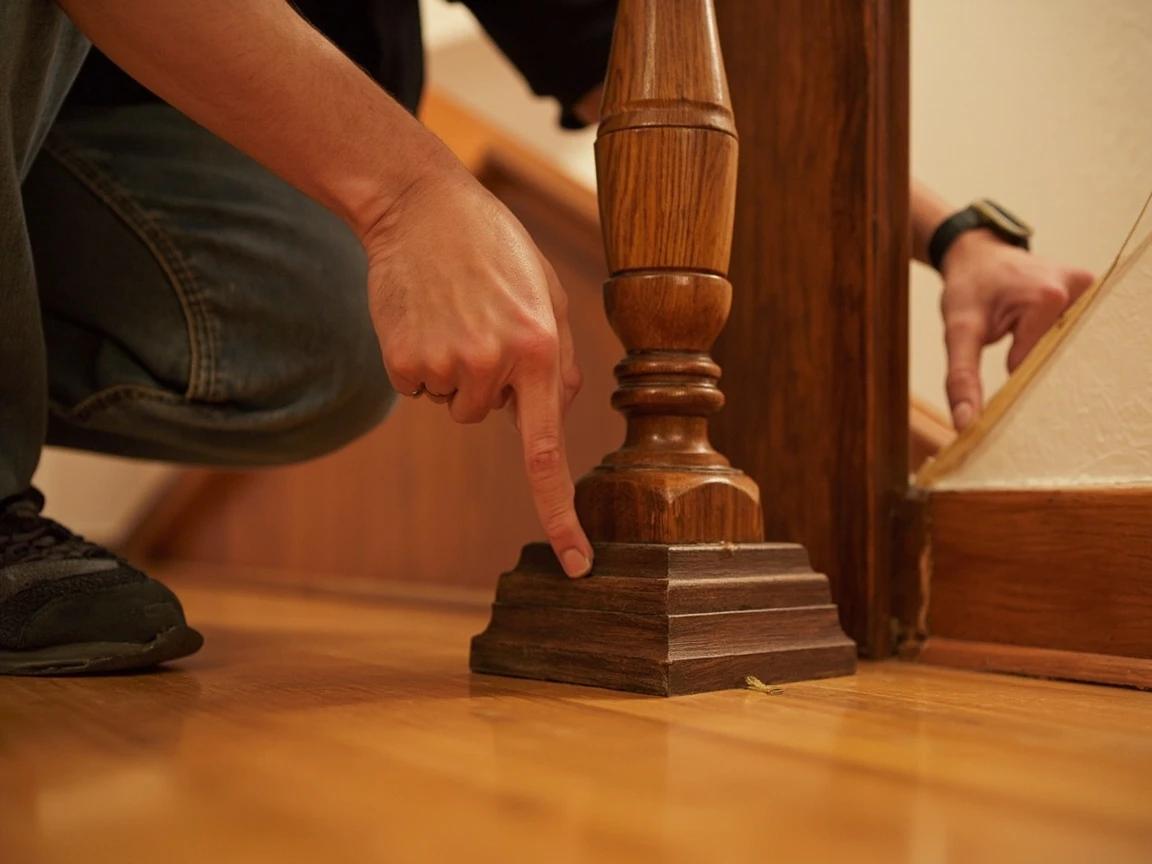
Mark each loose connection with a piece of blue painter's tape as you go — it's easy to forget which spots wobbled once you start the repair.
Tighten All Existing Fasteners
Start with the simplest fix: using a screwdriver, adjustable wrench, or socket, tighten every visible screw, bolt, and lag screw connecting the railing to the wall, the newel post to the floor, and the handrail to the newel post. Check the underside of the handrail where it meets the newel — many railings use a rail bolt (a two-piece connector with a lag screw on one end and a nut on the other) that can be accessed through a small hole on the underside. Tighten the nut with a wrench. Re-test each marked spot after tightening — if the wobble is gone, the repair may be done.
Repair Stripped Screw Holes
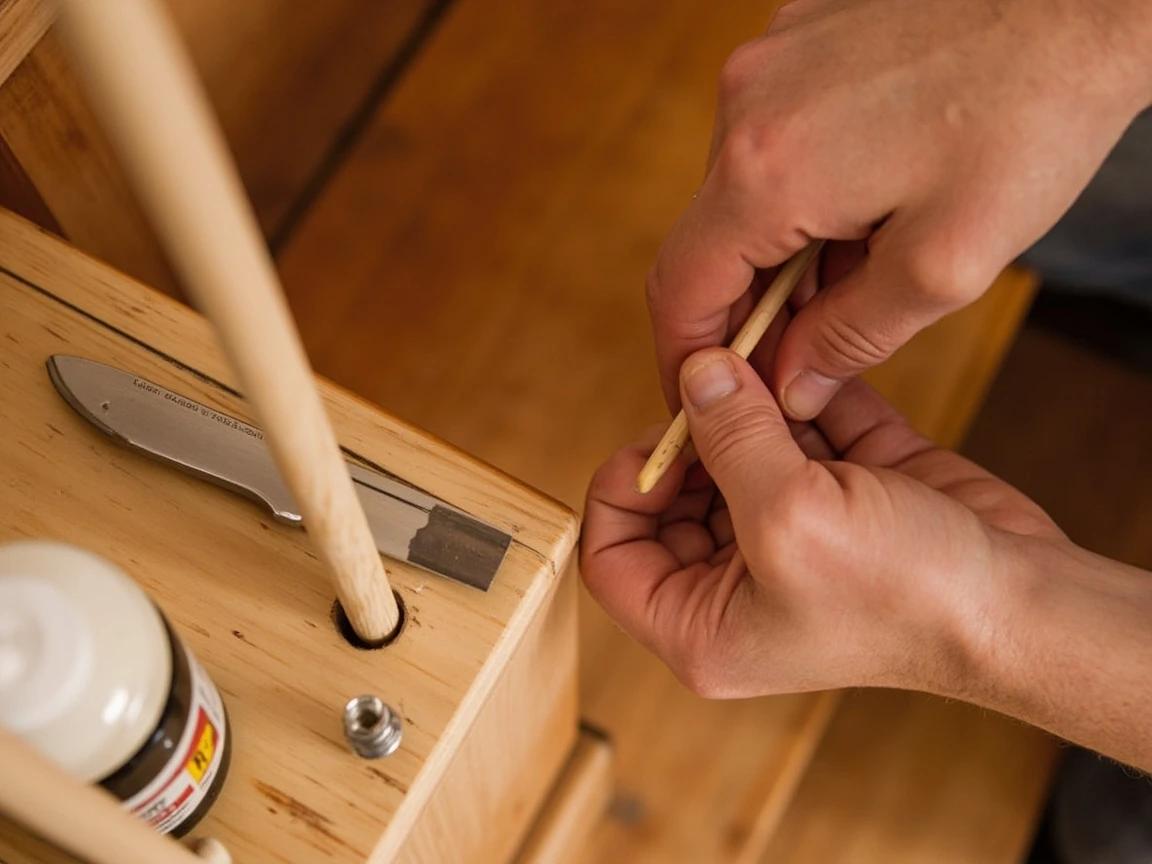
If a screw spins freely without gripping, the wood around the hole is stripped. Remove the screw completely, then pack the hole with wooden toothpicks or small wood shims coated in wood glue — push them in until the hole is snugly filled. Score the protruding ends with a utility knife and snap them flush with the surface. Let the glue dry for at least 30 minutes (the bottle will say the full cure time, but the screw only needs initial grip). Drill a pilot hole slightly smaller than the screw diameter through the filled hole, then drive the original screw back in — it will now bite into solid wood.
For badly stripped holes that toothpicks won't fill, drill out the hole to 3/8 inch and glue in a hardwood dowel. Once dry, drill a new pilot hole through the dowel center — this creates a permanent, full-strength repair.
Secure a Wobbly Newel Post
The newel post is the large vertical post at the top and bottom of the staircase — if it wobbles, the entire railing feels unsafe. For a surface-mounted newel post (bolted to the floor with a visible base plate), tighten the lag screws into the subfloor or joist below. If the lag screws are stripped, replace them with 3/8-inch x 4-inch lag screws driven through the base plate into the floor joist. For a free-standing newel post that mounts through the stair tread, access the bolt from below (through a basement ceiling or by removing a stair riser) and tighten the nut, or install a newel post fastener like a Zipbolt that draws the post tight from inside.
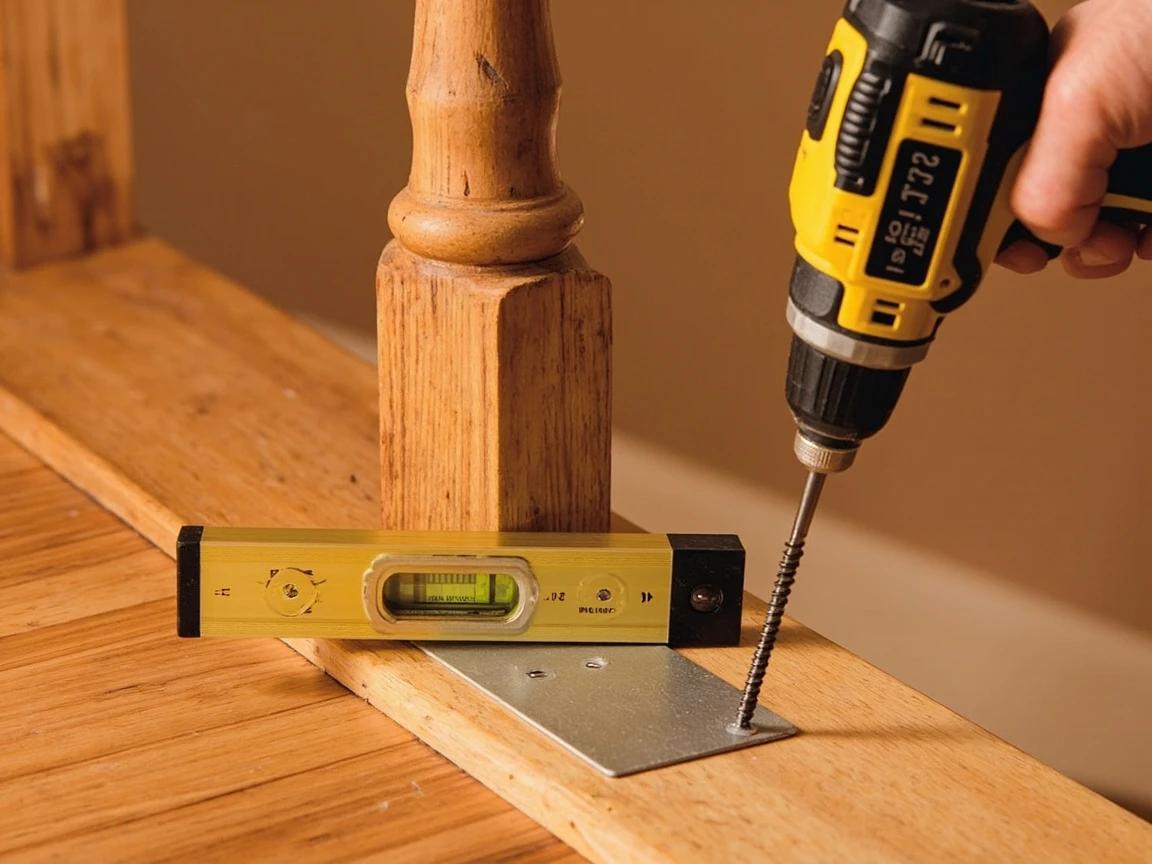
If the newel post is structurally cracked or rotted at the base, tightening screws will not fix the problem — the post needs to be replaced, which is a more involved repair.
Reattach or Replace Wall Brackets
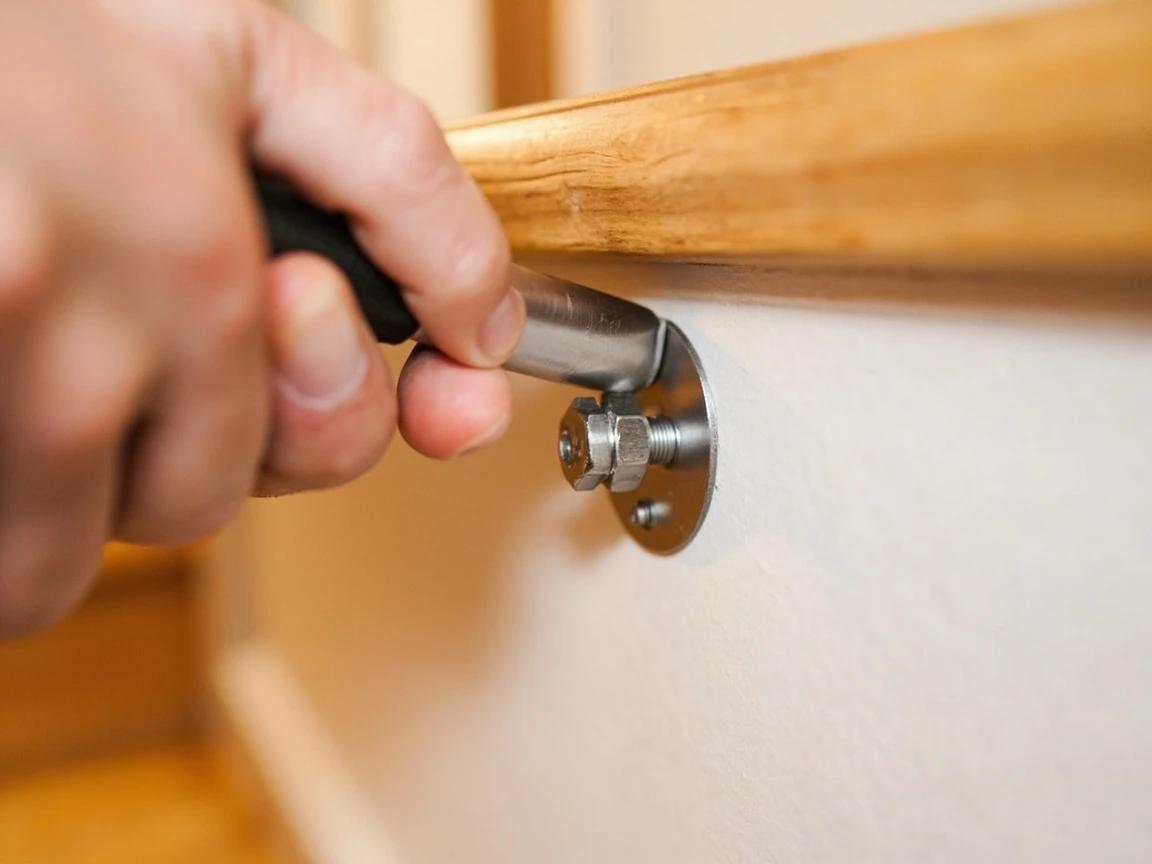
If the handrail is mounted to a wall with metal brackets, remove each loose bracket by backing out the screws. If the bracket itself is bent or cracked, replace it with a new one of the same style. For drywall-mounted brackets where the anchors have pulled out, switch to toggle bolts — they spread the load across a larger area of drywall and hold 50-75 pounds each. For brackets mounted into a wall stud, drill a pilot hole and use a 3-inch #10 wood screw driven directly into the stud. Reattach the bracket, confirm the handrail sits level, and tighten all screws firmly.
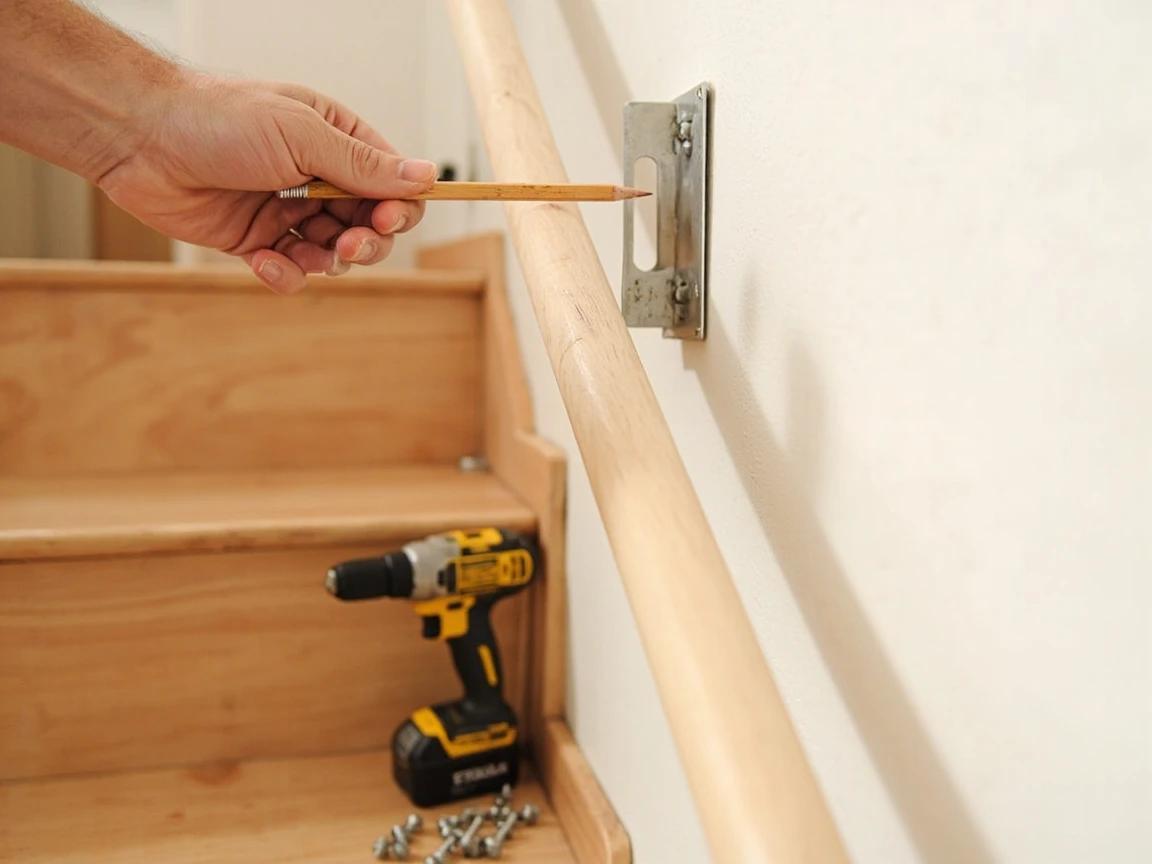
Use a stud finder before drilling — hitting a wall stud gives you the strongest possible connection and eliminates the need for wall anchors entirely.
Fix Loose Balusters (Spindles)
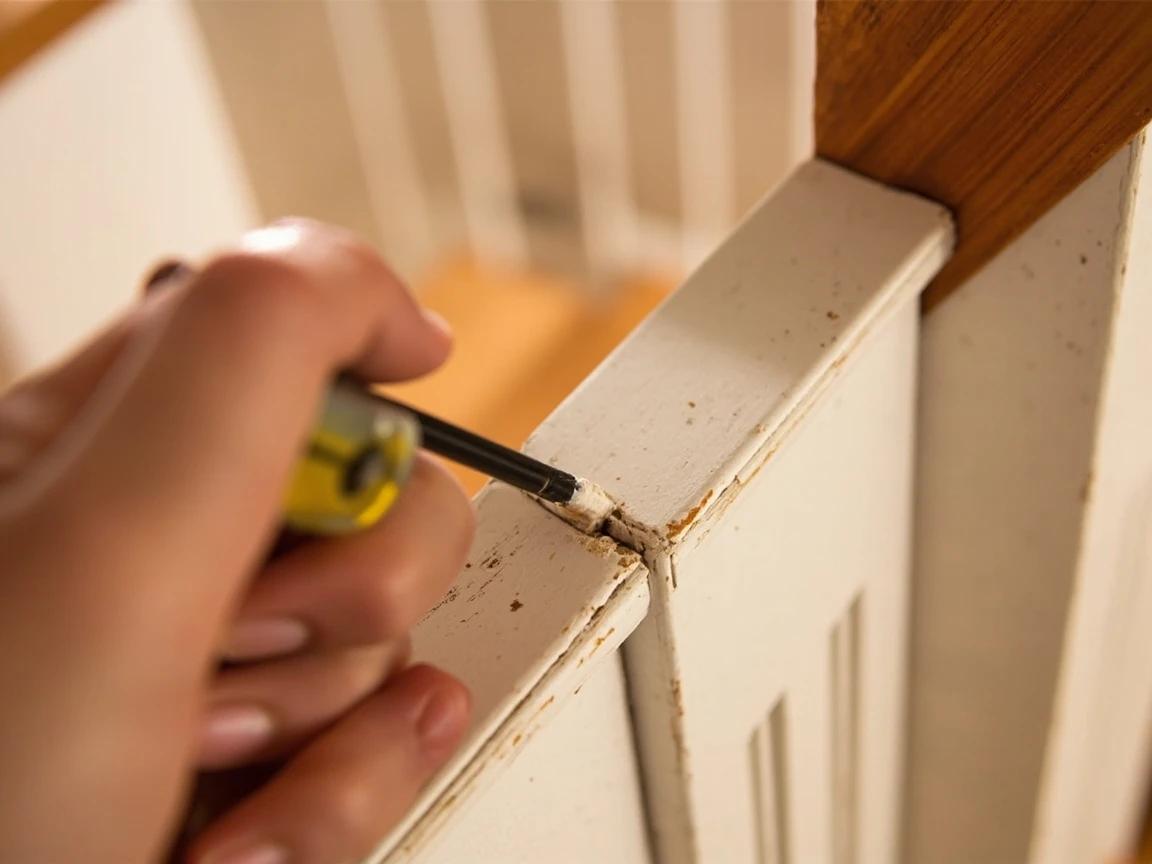
Loose balusters typically rattle where they meet the handrail at the top or the tread/shoe rail at the bottom. For a baluster that's loose at the top, apply a thin bead of wood glue to a flat toothpick and wedge it into the gap between the baluster and the handrail hole — press it in with a flathead screwdriver, score with a utility knife, and snap flush. For the bottom connection, if the baluster sits in a shoe rail, tighten or replace the small finish nail that pins it in place. If the baluster is doweled into the tread, apply wood glue and use a clamp to hold it tight for 30 minutes while the glue sets.
Reinforce the Handrail-to-Post Connection
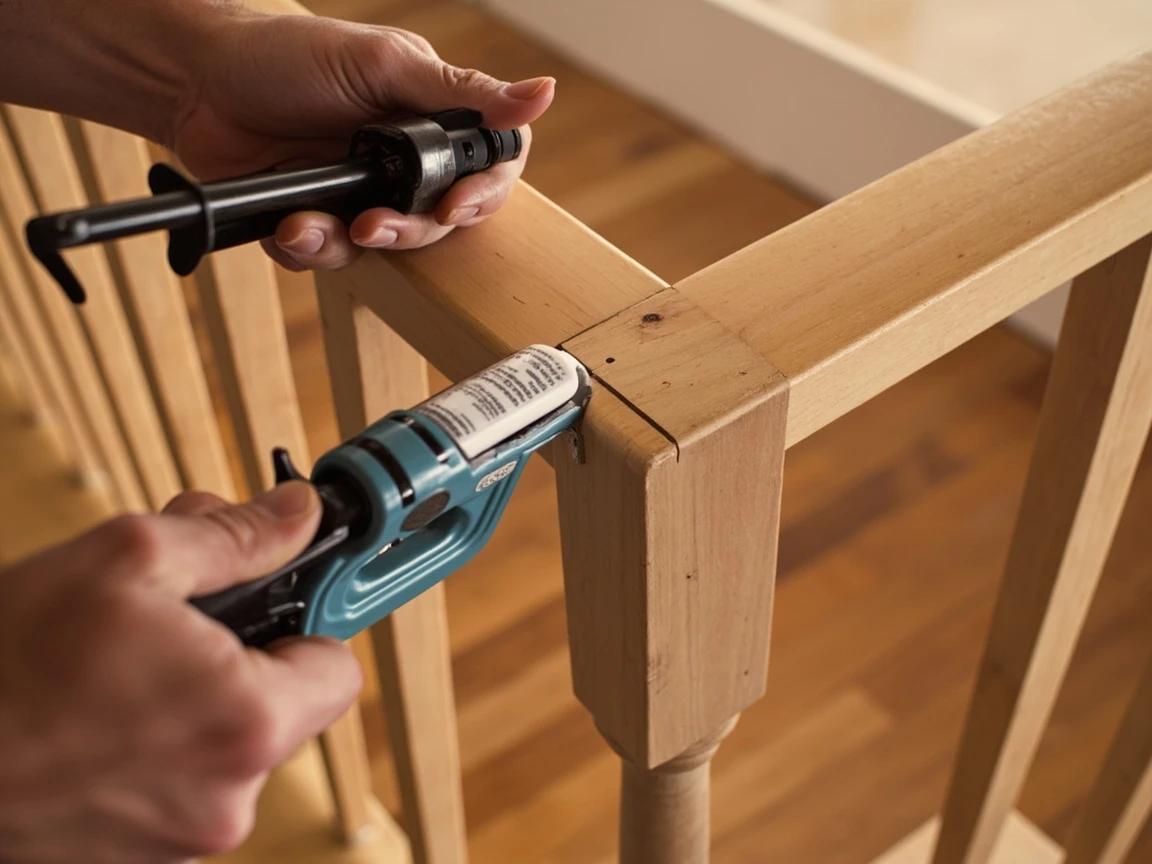
The joint where the handrail meets the newel post takes the most stress and is a common failure point. If the existing rail bolt or dowel connection is loose, apply construction adhesive (PL Premium or Liquid Nails) into the joint, push the handrail firmly against the post, and clamp it in place for the adhesive's recommended cure time (usually 24 hours for full strength). For extra reinforcement, drill a pilot hole at an angle from the underside of the handrail into the newel post and drive a 3-inch trim-head screw — the small head is easy to conceal with wood filler.
Fill Holes and Touch Up the Finish
Once all connections are tight and the glue and adhesive have cured, fill any visible screw holes, toothpick patches, or drill marks with stainable wood filler — apply it with a putty knife, slightly overfilling each hole to account for shrinkage. Let the filler dry completely (typically 1-2 hours), then sand flush with 120-grit sandpaper followed by 220-grit for a smooth finish. Apply matching paint or stain with a small artist's brush for precision — feather the edges so the touch-up blends seamlessly with the surrounding finish.
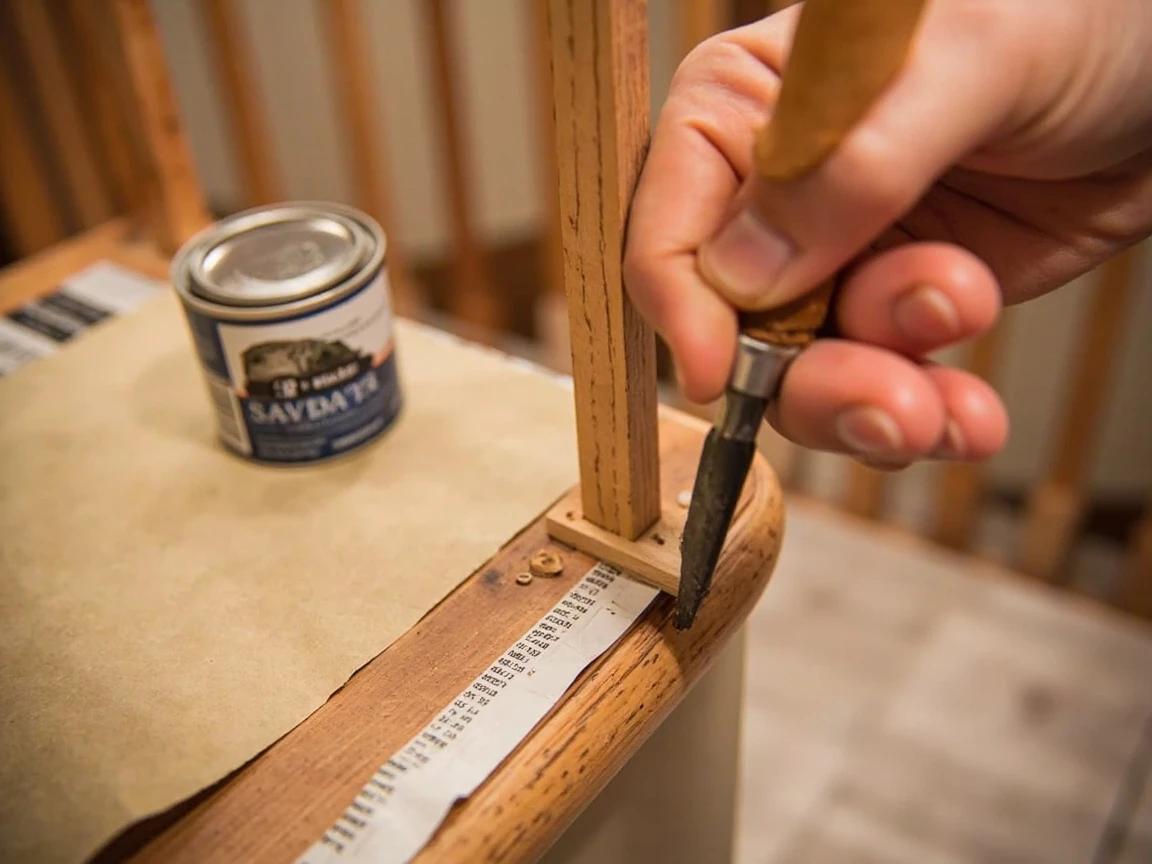
Mix two shades of wood filler to match your railing color more closely — most off-the-shelf fillers are slightly lighter or darker than real wood, and blending gets you much closer.
Test the Railing and Inspect Annually
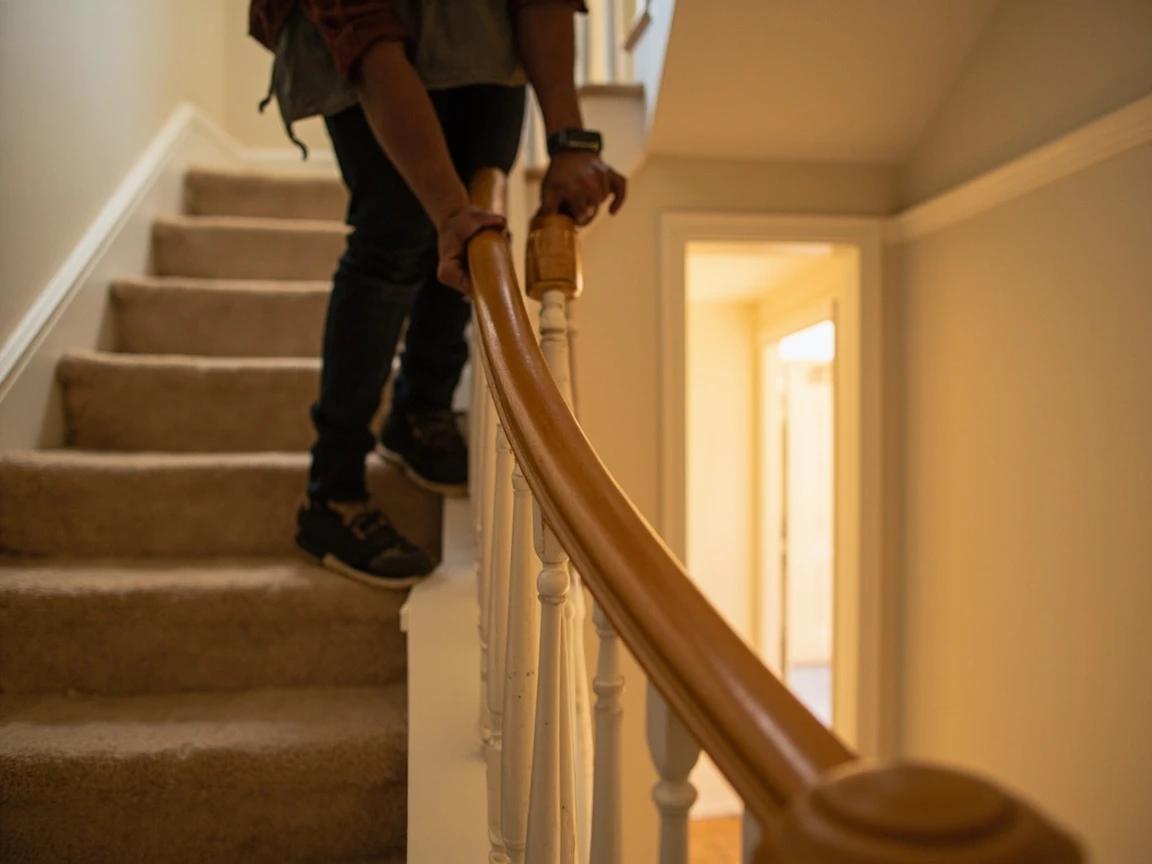
Give the railing a thorough stress test: grip it firmly at the newel post, at the midpoint, and at the top, applying your full body weight laterally in each direction. Building codes require a railing to withstand 200 pounds of force applied in any direction — your test won't reach that, but you should feel zero play or movement. Walk up and down the stairs using the railing normally. If any spot still wobbles, go back and reinforce that specific connection. Add an annual railing check to your home maintenance calendar — tightening a loose screw in October prevents a dangerous wobble in January.
Frequently Asked Questions
How do I find what is actually making the railing wobble?
+
Push and pull the rail in sections rather than grabbing the middle. If the whole assembly sways from the bottom, the newel post is loose. If one span moves but the posts do not, a wall bracket is loose or its screws have stripped. If the rail feels solid but individual spindles rattle, that is the balusters. Fixing the wrong component is the most common wasted effort here.
What do I do about a screw hole that just spins?
+
The hole is stripped, and driving a longer or fatter screw into it is a temporary fix that usually strips again. Pack the hole with wood glue and wooden toothpicks or a golf tee, snap them off flush, and let the glue cure fully before re-driving the original screw. That restores fresh material for the threads to bite. For a bracket carrying real load, relocating slightly to hit solid framing is better still.
How strong does a stair handrail have to be?
+
The IRC requires a residential handrail assembly to resist a 200-pound force applied in any direction — that is the standard your repair should meet, not merely 'it stopped wobbling.' Code also sets handrail height between 34 and 38 inches and limits baluster spacing so a 4-inch sphere cannot pass through. If your railing fails those, reinforcing it still leaves a non-compliant rail that can surface at resale.
How do I fix a loose newel post at the bottom of the stairs?
+
The newel anchors the whole assembly, so it has to reconnect to structure, not just to trim. Tightening surface fasteners rarely holds because the post has usually worked loose from its base connection. If the post is anchored into a floor joist or tread that flexes underfoot, no amount of tightening will help — the substrate is the problem, and that is where a carpenter should take over.
How often should I check a stair railing?
+
Once a year, and any time someone in the household starts relying on it more — a rail that is decorative to one person is load-bearing to a child or an older adult. Grip it and pull firmly outward, downward, and sideways along its whole length. Catching a slightly loose bracket annually is far easier than repairing a rail that has already torn out of the wall.
Sources & further reading
- Stairways and Handrails (IRC) — UpCodes (IRC)
- 2018 IRC R311.7.8 Handrails — International Code Council
More Carpentry Guides
View all →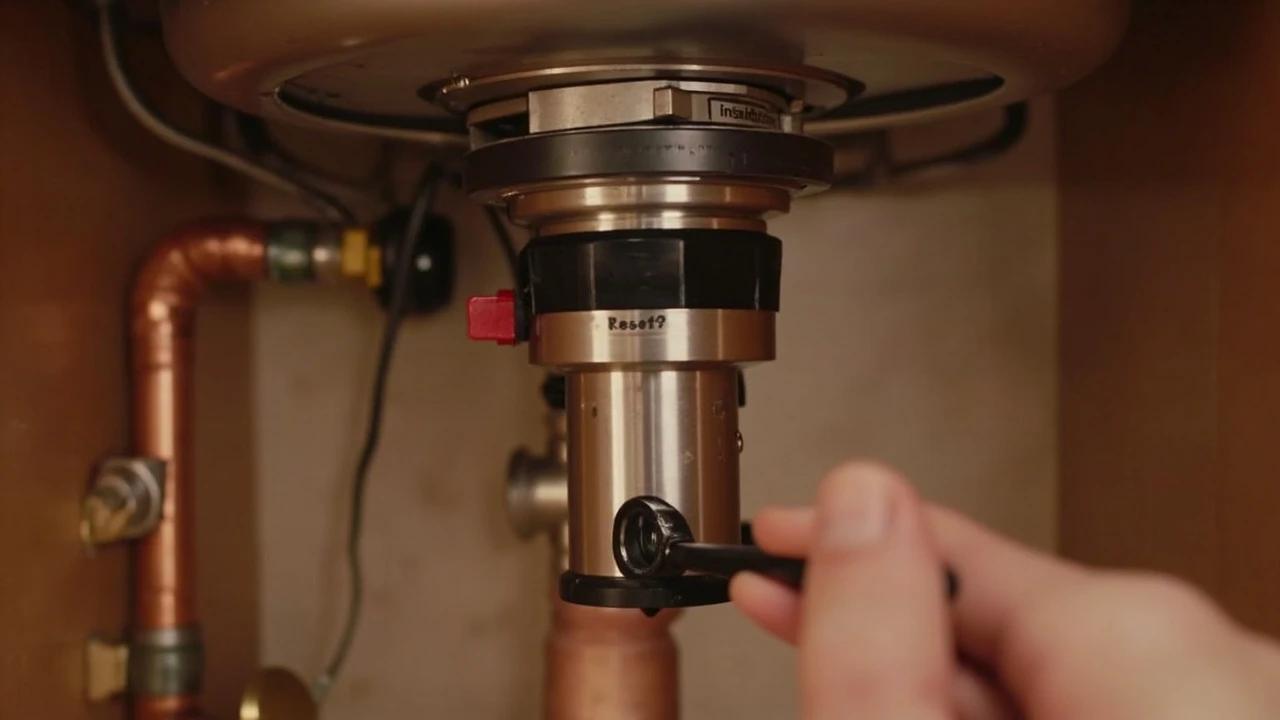 Easy15 min
How to Fix a Garbage Disposal Jam
A garbage disposal that hums but will not spin, or trips off the moment you flip the switch, is almost always jammed — a peach pit, a chicken bone, a teaspoon, or a wad of fibrous celery wedged between the spinning impeller plate and the grind ring. The fix is genuinely a 15-minute DIY job that costs nothing if the original 1/4-inch hex wrench is still taped to the unit, and somewhere between $5 and $15 if it is not. A plumber would charge $75 to $200 for the same five-minute crank-and-reset, so this is the highest-ROI repair in the kitchen — assuming you do it safely.
 Medium1h 30m
How to Fix a Toilet Leaking at the Base
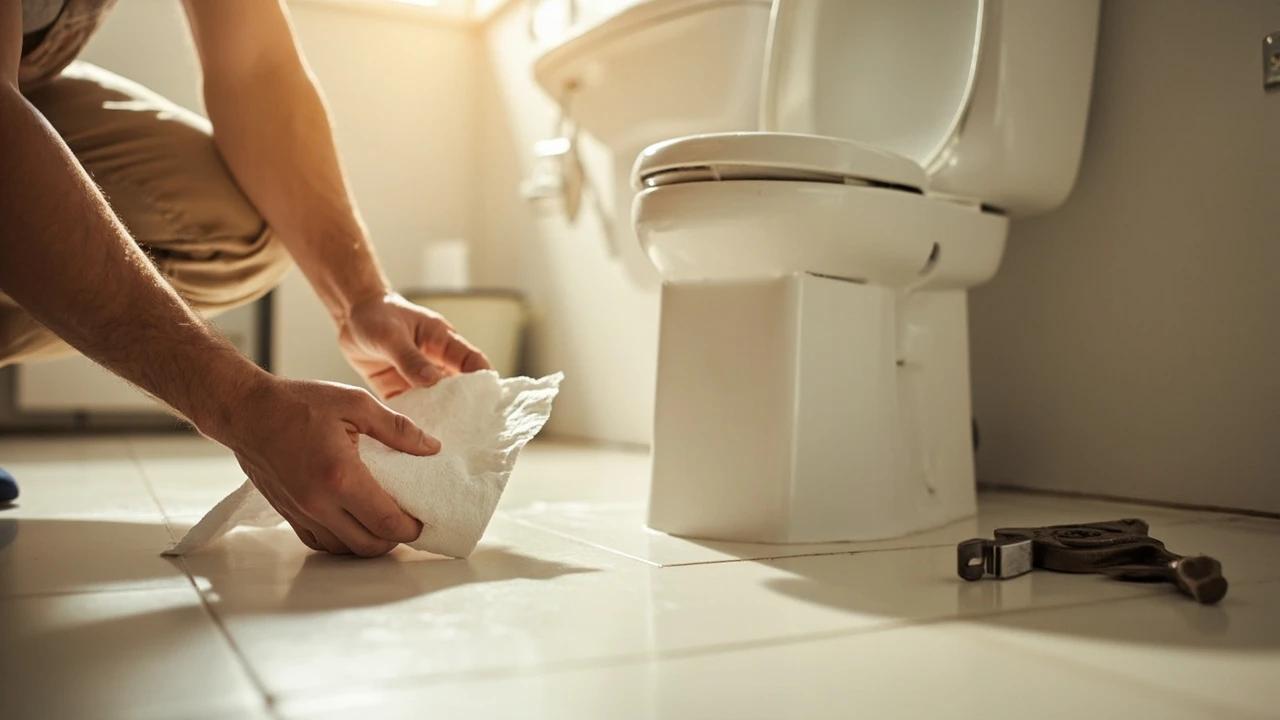
Water pooling around the bottom of the toilet is one of those leaks that punishes procrastination — every flush pushes dirty water under the flooring, and a $10 wax ring problem quietly becomes a $1,000 subfloor repair. This guide diagnoses where the water is really coming from first, then walks the fix in order: snug the bolts, and only if needed, pull the toilet and replace the seal.
 Medium45 min
How to Fix a Refrigerator That's Not Cooling
A fridge that hums along but won't get cold is usually choking on its own dust or airflow — not dying. This guide walks the troubleshooting tree in order of likelihood, from temperature settings and blocked vents to dirty condenser coils, a frost-clogged defrost system, and the fans that move the cold air. Most causes are a free or under-$20 fix; a few mean it's time for a tech, and you'll learn how to tell them apart before you spend a dime.
You Might Also Like
 Easy25 min
Best Deck Stain: Transparent vs Semi vs Solid
There is no "best" deck stain — there is the right stain for your sun exposure, wood condition, and how often you want to redo the job. Transparent stains last 1-2 years but let the natural grain show. Solid stains last 4-7 years but look like paint. This guide walks the four opacity levels and the oil-vs-water choice so you pick the one that matches your deck and your tolerance for re-staining.
 Easy45 min
How to Install a Smart Thermostat
A smart thermostat is one of the highest-ROI upgrades you can make to your home — it learns your schedule, adjusts automatically when you're away, and typically saves about 8% on heating and cooling bills — the figure ENERGY STAR verifies from real-home data, roughly $50 a year — so the $120-250 device usually pays for itself within a few years. If your old thermostat has labeled wires behind it, the swap takes about 30-45 minutes with nothing more than a screwdriver and your phone. This guide covers checking compatibility, labeling wires, mounting the new base, connecting everything, and walking through the app setup so your system is running smart the same day.
 Easy30 min
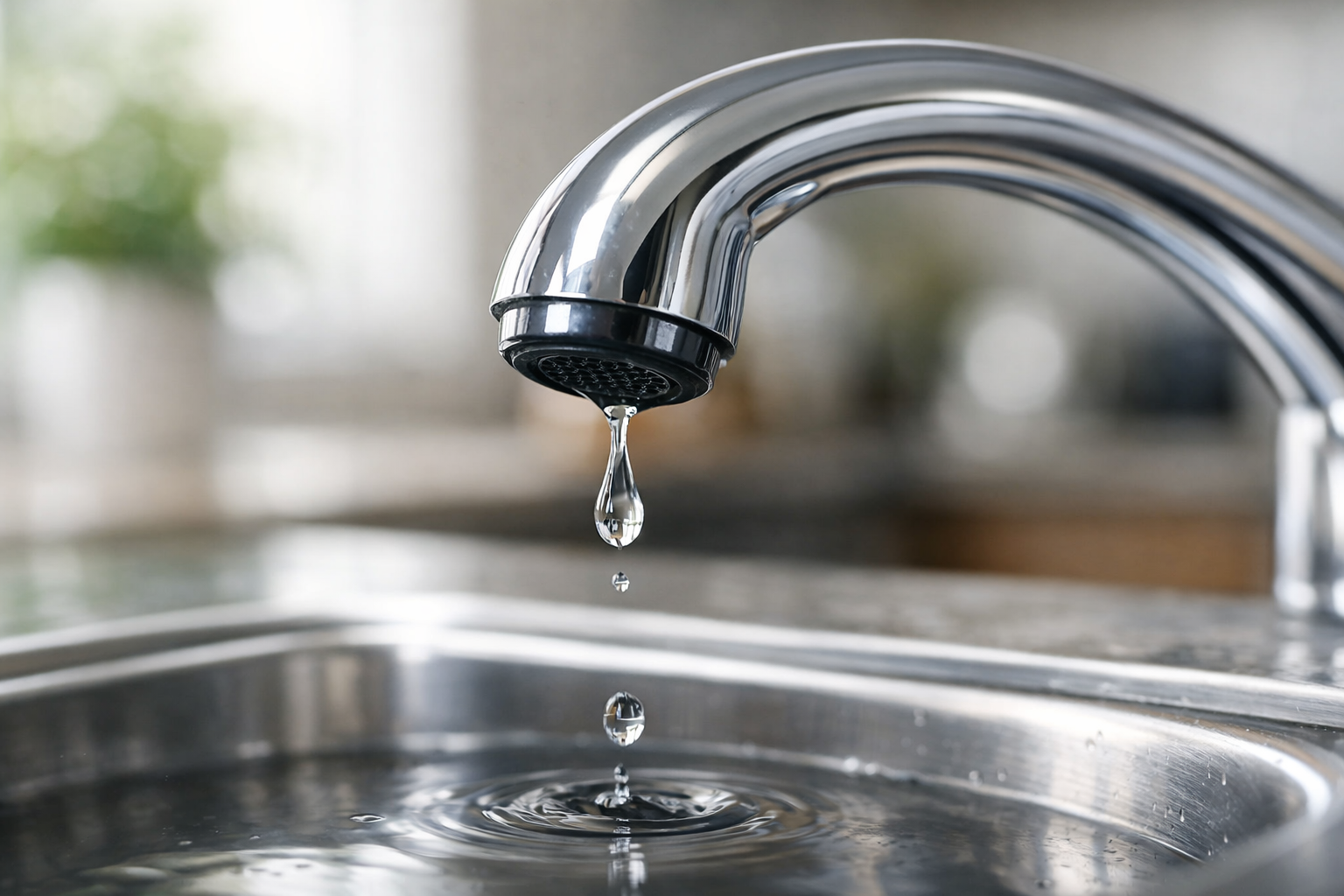
How to Fix a Dripping Faucet
A dripping faucet wastes more than 3,000 gallons of water per year and can add $20 or more to your monthly water bill. The fix is almost always a worn cartridge, washer, or O-ring — parts that cost under $10 and take 20-30 minutes to replace with basic tools.