How to Fix a Squeaky Floor (From Above and Below)
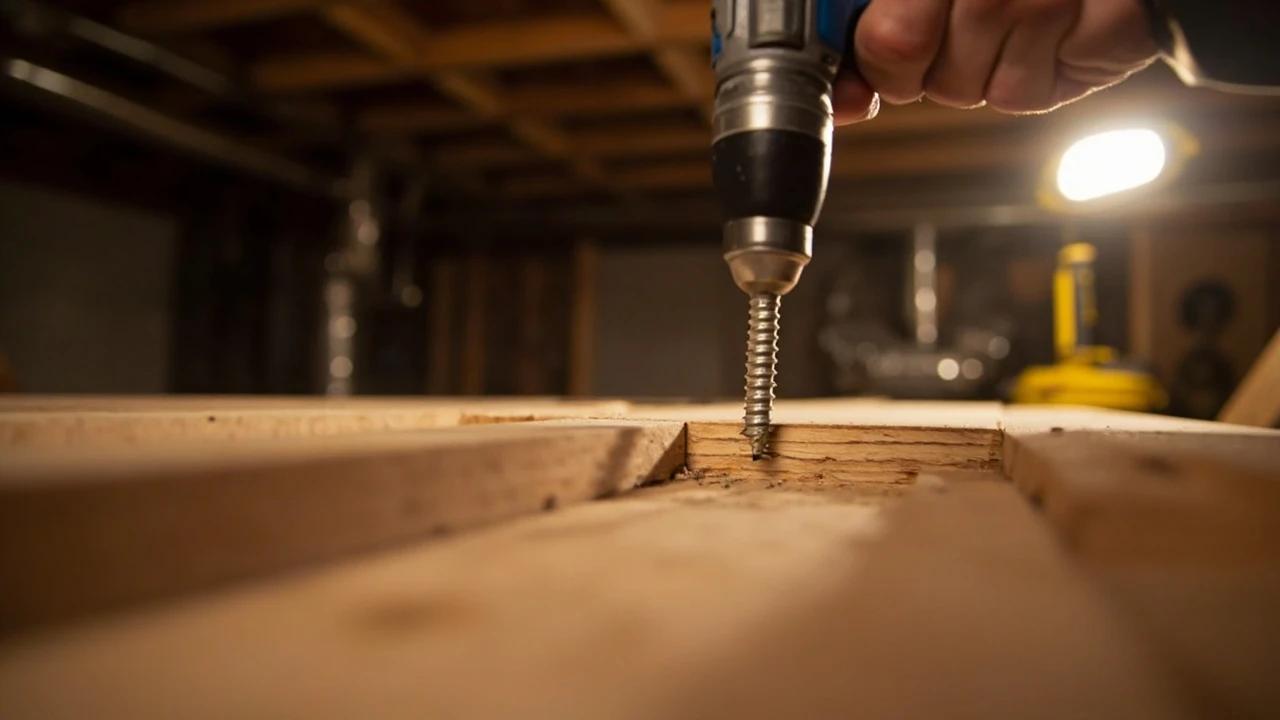

A squeaky floor isn't a structural problem — it's the subfloor lifting off the joists by a hair every time you step. From a basement or crawlspace, you can fix it permanently with a $5 shim and a $0.10 screw. From above (carpet, hardwood, or vinyl) the Squeeeek No More kit drives a scored screw that snaps off below the surface — no exposed hardware. This guide covers both approaches.
What You'll Need
🛠 Tools
📦 Materials
Safety First
- •Never drill blind into a floor without locating utilities first — heating ducts, water lines, and electrical can run between floor joists. Use a stud finder with live-wire detection or scan from below when possible.
Step-by-Step Instructions
Locate the squeak with a helper walk-test
Send a helper walking slowly back and forth across the squeaky area while you listen — first from above (to feel exactly which board moves) then from below if you have basement or crawlspace access. Mark each squeak with a piece of painter's tape on the floor above and a chalk line on the joist below. Most rooms have 2-4 distinct squeaks, not one continuous problem; identifying them individually lets you do precise fixes instead of guessing.
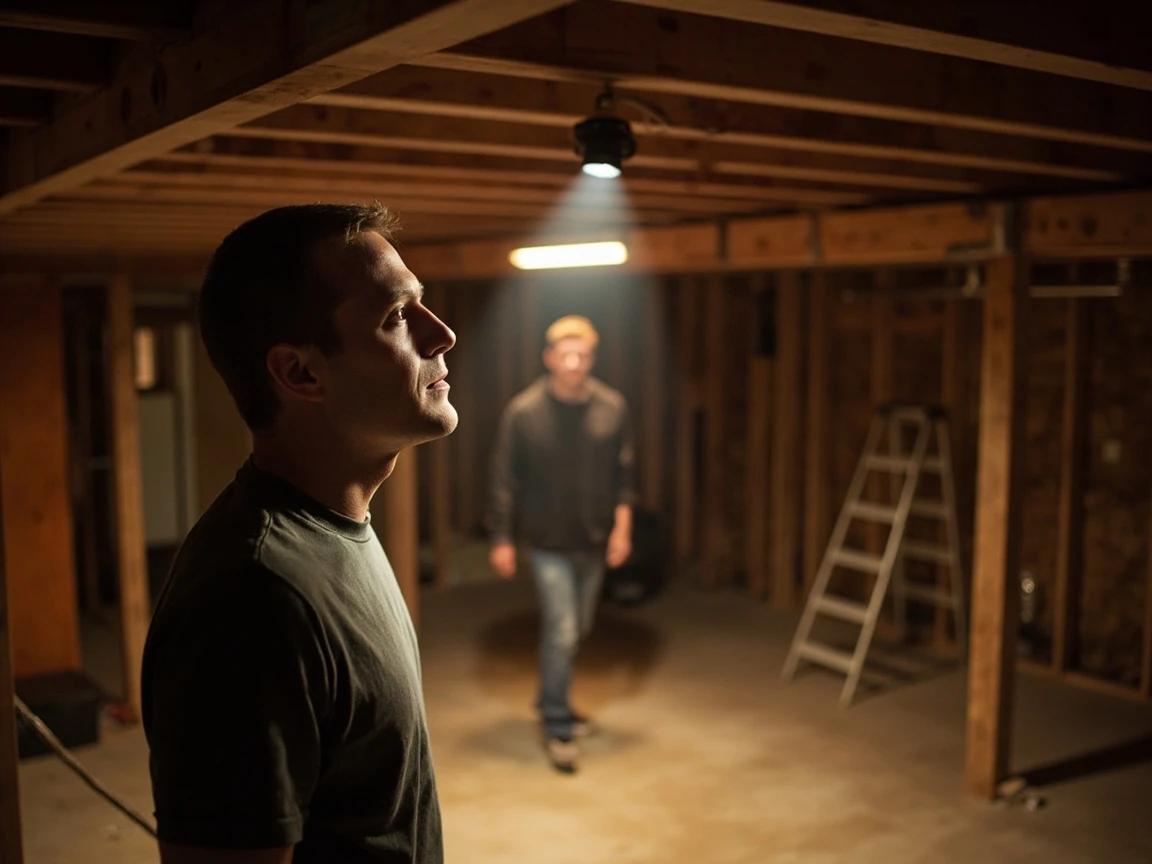
Put your hand flat on the joist while the helper walks above. You'll feel the subfloor lift away from the joist in time with the squeak — that's the gap that needs closing.
Decide your approach — from below if you can, from above if you must
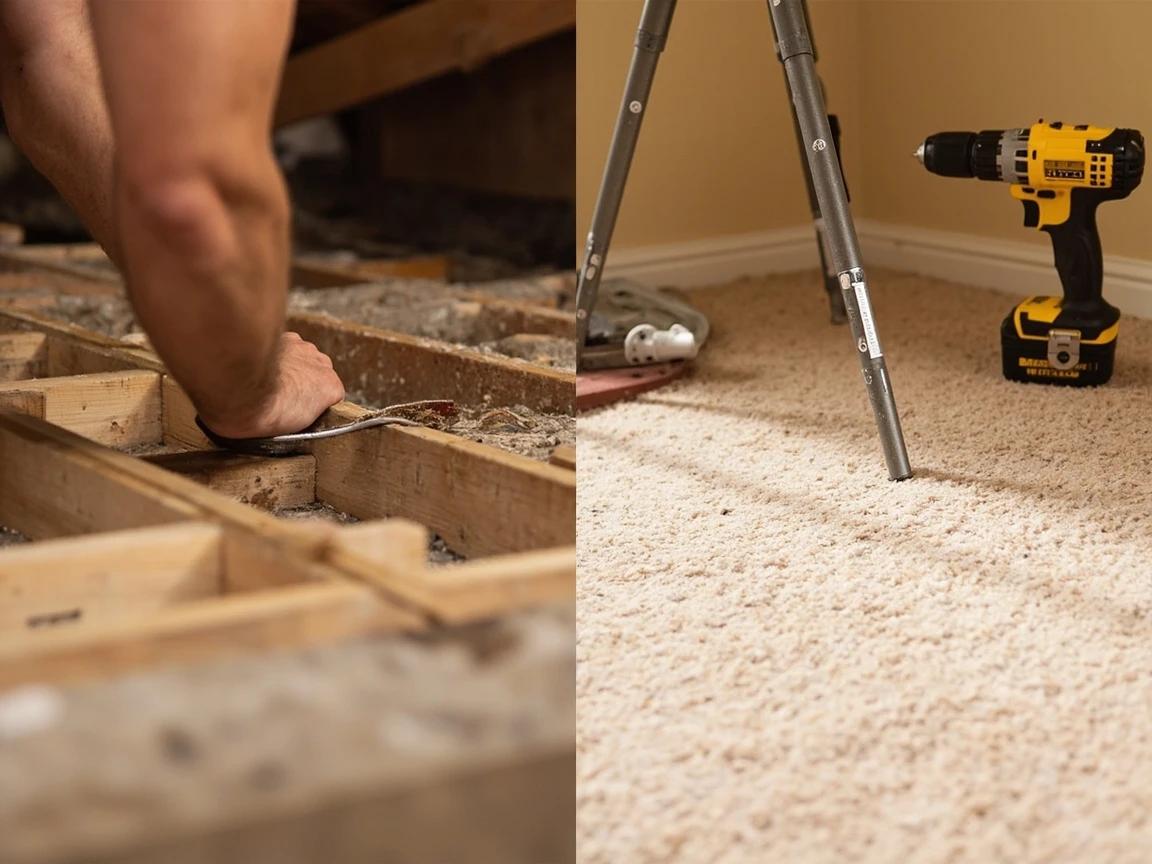
Below-access fixes are stronger, invisible, and free of patching. Choose this if you have a basement or crawlspace beneath the squeak. From-above fixes use the Squeeeek No More kit and work through carpet, hardwood, vinyl, or laminate — choose this when there's a finished ceiling below or a slab. Many homes use both approaches: from below in the basement areas, from above in the kitchen (since plumbing under the kitchen sink often blocks below-access).
From below: shim any visible gap with construction adhesive
Look closely along each joist beneath the marked squeak. Where the subfloor has separated, you'll see a hairline gap of light between the joist top and the subfloor underside. Run a bead of construction adhesive along both sides of a cedar shim, then tap the shim gently into the gap with a hammer — just until snug, not driven hard. Driving hard widens the gap and creates a new squeak above; the goal is to fill the existing void, not lift the subfloor.
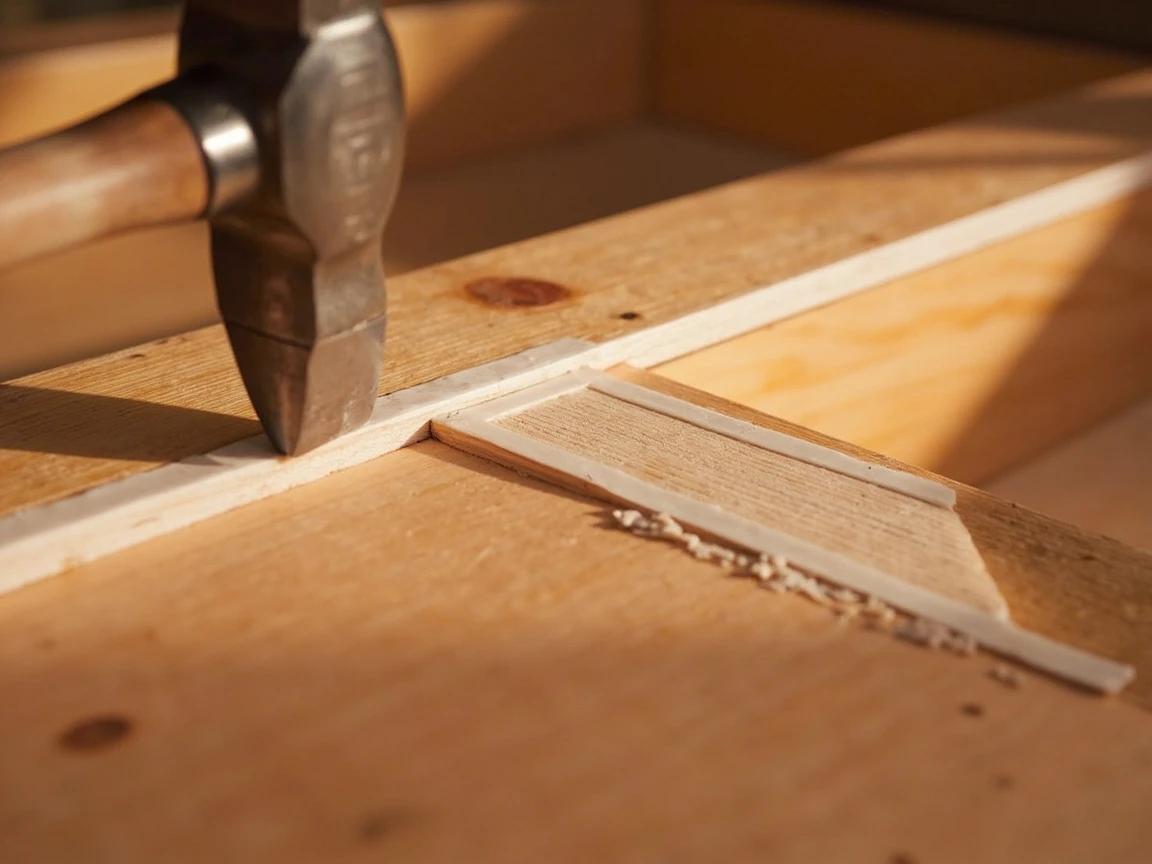
Don't overdrive the shim. Pounding it in widens the gap, lifts the subfloor, and can cause a new squeak directly above your fix. Stop the moment the shim feels snug.
From below: drive a screw up through the joist into the subfloor
For squeaks where there's no visible gap, the subfloor needs to be pulled tight to the joist. Pick a 1-1/4 or 1-5/8 inch drywall or deck screw that's at least 1/4 inch shorter than the combined subfloor + finish floor thickness (measure with a piece of wire if you don't know). Drill a 1/8-inch pilot hole up through the joist, then drive the screw while a helper stands on the squeak above — their weight closes the gap and the screw locks it shut. Space screws every 6 inches along the squeak area.
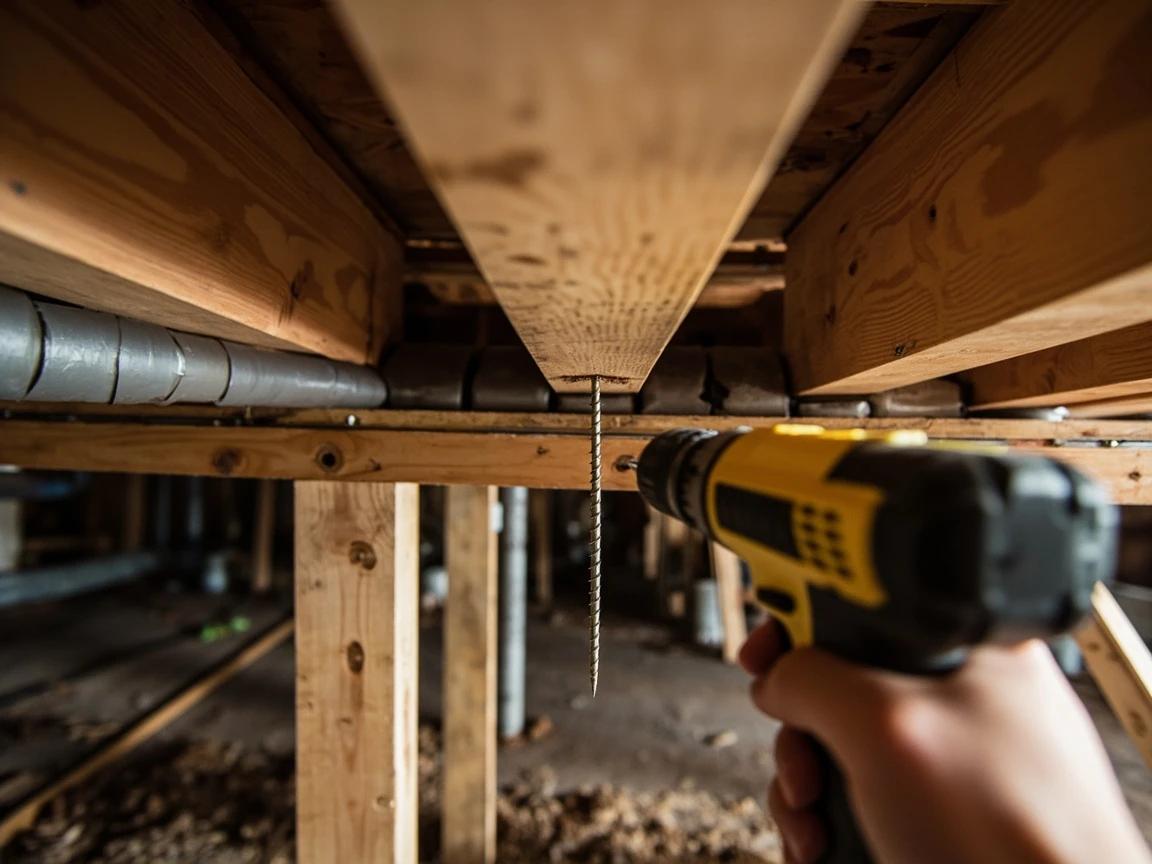
Mark the desired drill depth on the bit with a wrap of masking tape. Drilling too deep — into or through the finish flooring — is the most common DIY mistake here.
From below: sister a 2x4 cleat for a long squeaky run
When the squeak runs 4+ feet along a single joist, individual screws every 6 inches is tedious. Cut a 2x4 the length of the squeak, run construction adhesive down its top edge, and press it tight against the underside of the joist so the 2x4's top face contacts the subfloor. Drive 2-1/2 inch deck screws every 8 inches at an angle through the 2x4 into the joist — and a few through the 2x4 up into the subfloor — to lock everything together. The cleat eliminates the entire run at once.
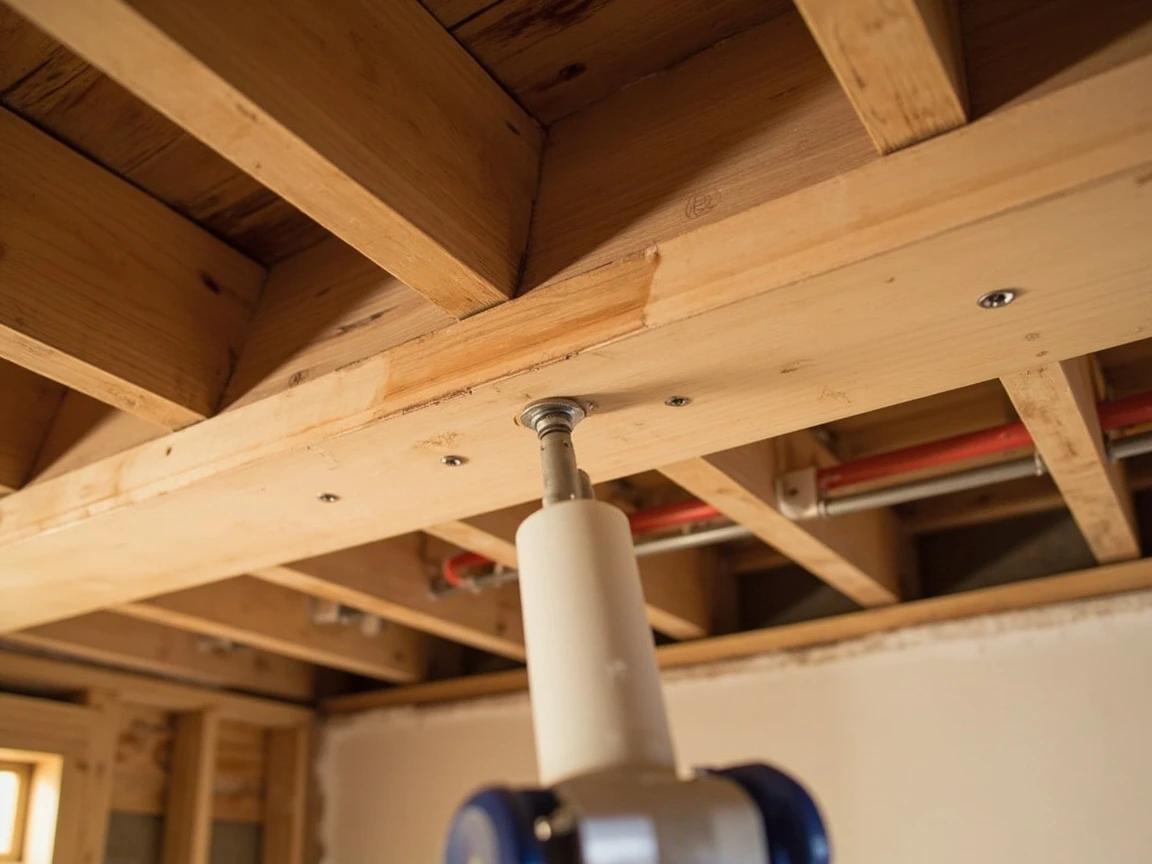
From above (carpet): use the Squeeeek No More kit
Use the kit's joist-finder drill bit to locate joists through the carpet — the bit has a metal tip that grabs solid wood and tells you when you've hit a joist (vs. just empty subfloor). Place the tripod fixture over the marked spot, slip a scored Squeeeek No More screw through the fixture, and drive it down through the carpet, padding, and subfloor into the joist. The screw is wax-coated so its threads slip through carpet fibers without snagging. When the screw head reaches the tripod, snap it sideways — the scored section breaks 1/5 inch below the carpet, invisible.
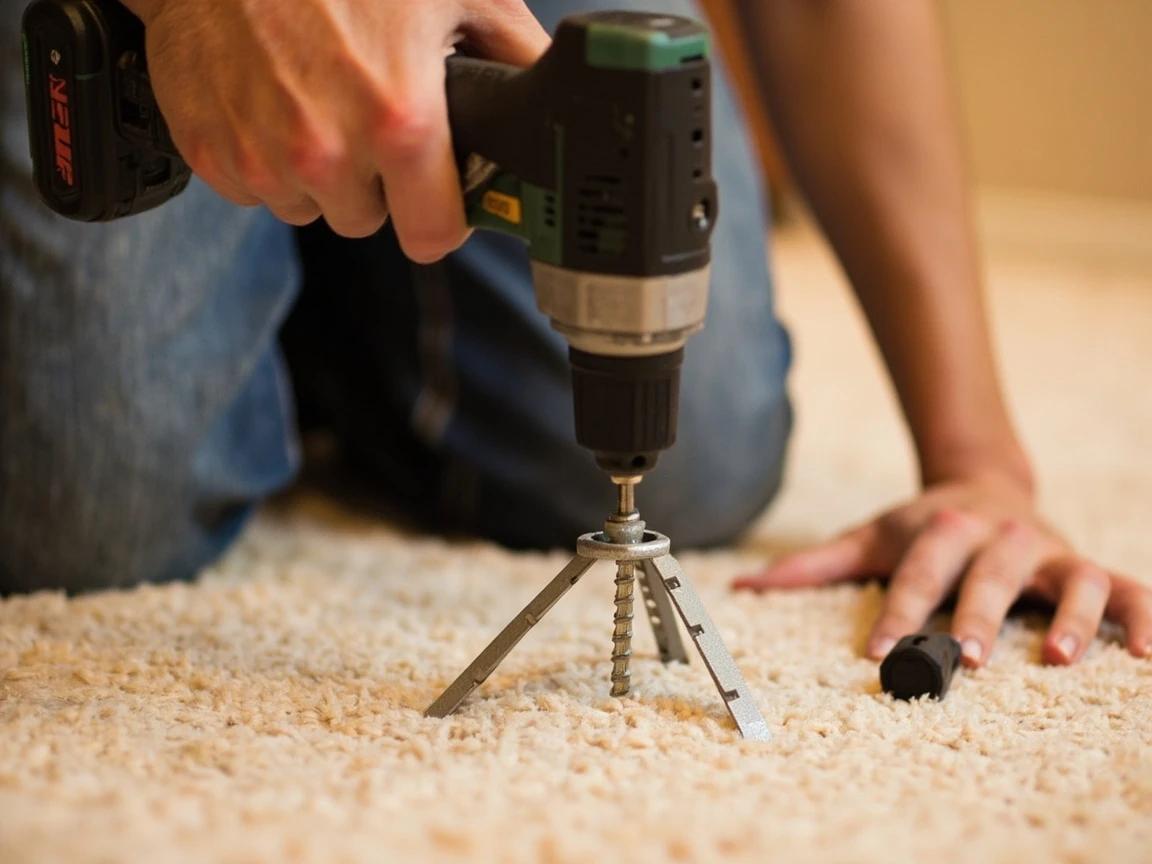
Drive the screw with steady pressure. If it spins without progressing, you've missed the joist — back out, move 1 inch over, and try again. Hitting empty subfloor with these screws does nothing.
From above (hardwood or vinyl): use the kit's hardwood adapter or Counter-Snap
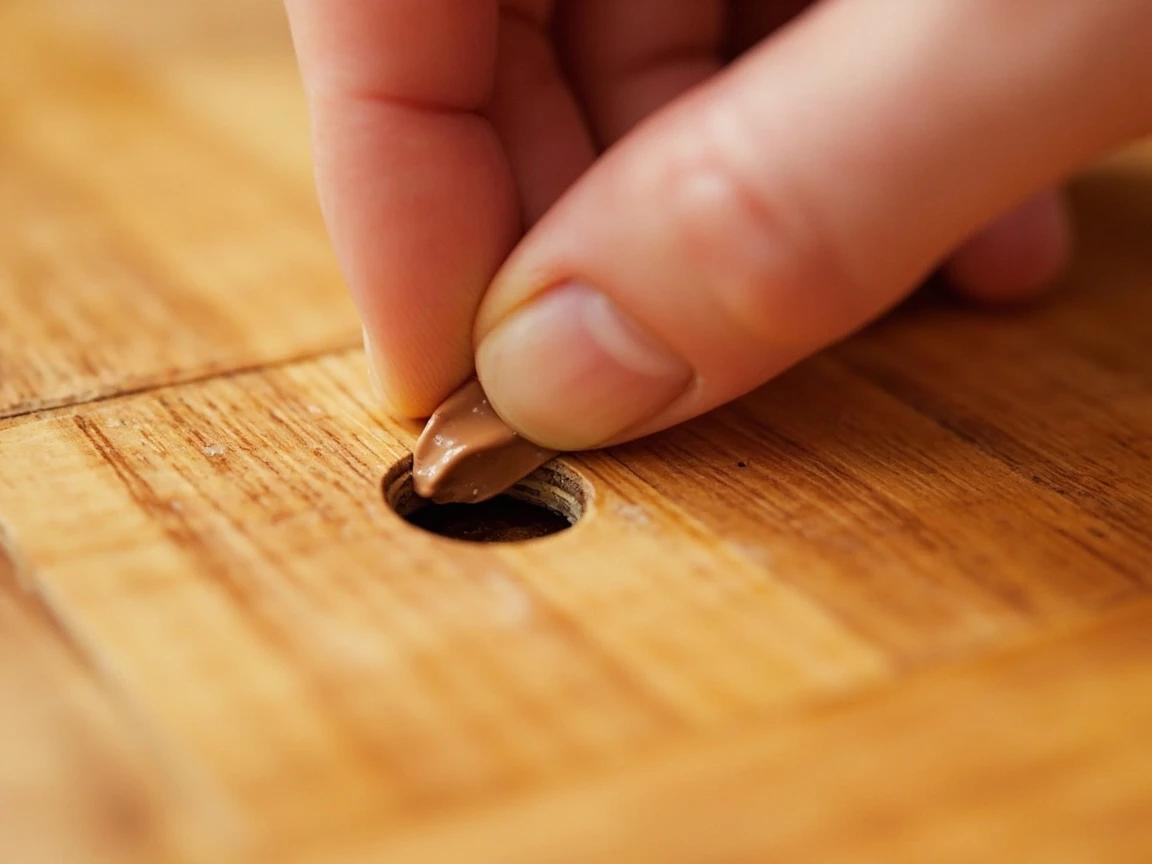
On hardwood, swap the carpet tripod for the kit's hardwood adapter (a flat metal piece that contacts the wood). The Squeeeek No More screw drives flush, then snaps off at 1/5 inch below the wood surface, leaving a clean hole about the size of a finish-nail dimple. Fill the hole with color-matched wood putty (Minwax or DAP), wipe the excess with your finger or a putty knife, and let it dry. On vinyl or laminate the hole is even smaller — usually no filler needed. And since you're already kneeling there with color-matched putty in hand, it's the perfect moment to erase any scratches in the hardwood while the lid is off.
Test the fix and repeat for remaining squeaks
Walk slowly back and forth over the area you just fixed, putting your full weight on each step. If you hear nothing, move to the next marked squeak. If a squeak persists, it's almost always because the gap is at a different joist than the one you screwed into — the squeak's audible location can be 6-12 inches off from its actual source. Add one more screw 6 inches over and re-test. A whole room of squeaks usually takes 60-90 minutes once you find your rhythm. Stairs develop the same wood-on-wood play — if your staircase squeaks or the rail shifts underfoot, the same logic applies to a loose stair railing.
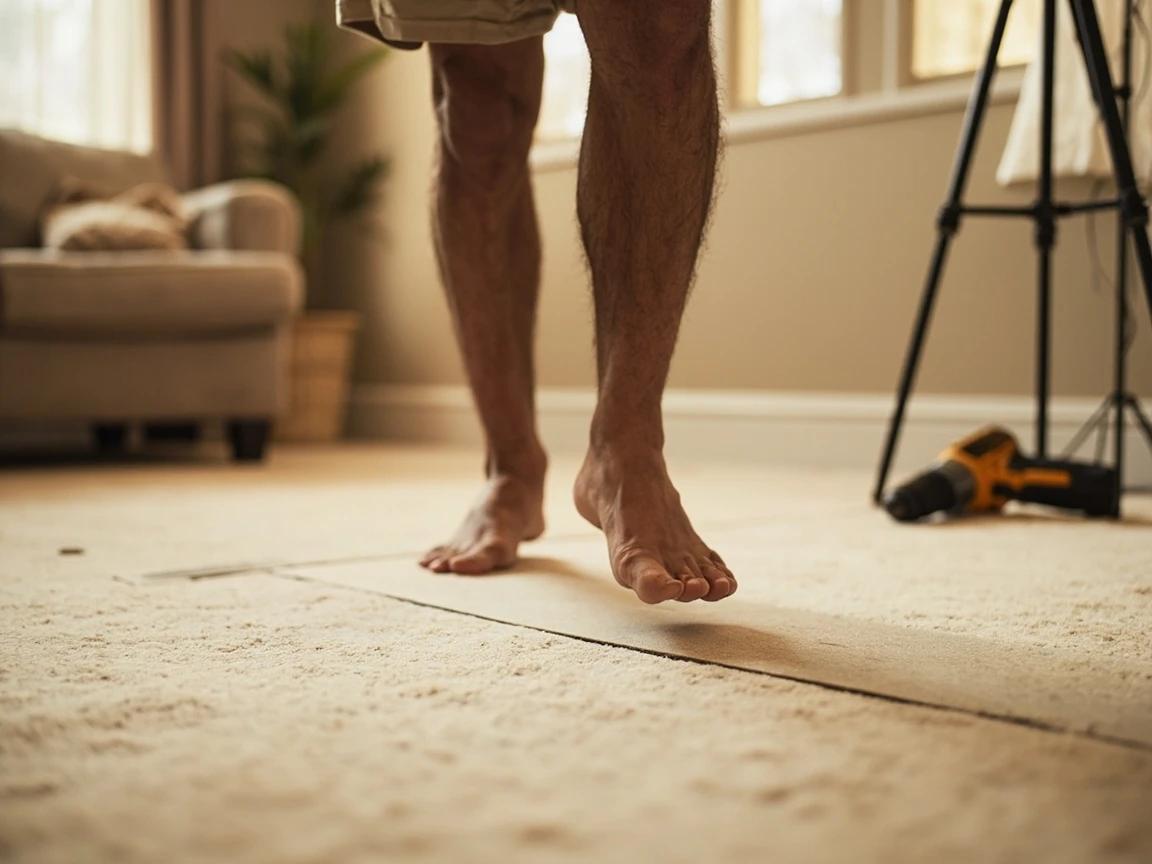
Squeaks travel. The board that squeaks under your foot is sometimes flexing 6-12 inches away from where it actually meets the joist. If your first screw doesn't silence it, walk the area methodically with painter's tape and mark every spot that still squeaks — the pattern often reveals you're missing a single joist line.
Frequently Asked Questions
What actually causes a floor to squeak?
+
Almost always a gap between the subfloor and the joist beneath it. The original construction nails loosen over time (wood shrinks, seasonal humidity cycles, settling), so every step lets the subfloor flex up and down a fraction of an inch. The wood-on-wood movement and the nail moving in its hole produce the squeak. Fixing the gap — with a shim, adhesive, or a fresh screw pulling the subfloor tight to the joist — silences it permanently.
Can I fix a squeaky floor without pulling up the carpet or hardwood?
+
Yes — that's exactly what the Squeeeek No More kit is for. The kit's scored screws drive through the floor covering into the subfloor, then snap off 1/5 inch below the surface. On carpet the wax-coated screw threads pass through without snagging fibers. On hardwood the small hole left behind fills with color-matched wood putty in about ten seconds. The only material you need is the kit itself (~$20) plus matching putty for hardwood.
How much does it cost to fix a squeaky floor?
+
DIY: $20-30 in materials covers a handful of squeaks (one kit lasts ~50 fixes; one tube of construction adhesive does dozens of shims). A handyman or carpenter typically charges $150-400 for a service call to fix 2-3 squeaky areas, more if drywall has to be cut on a finished basement ceiling to access from below. The 30-minute DIY is one of the highest hourly-wage repairs you'll ever do.
Will WD-40 or talcum powder fix a squeaky floor?
+
Talcum powder or graphite worked into the gaps between floorboards is a real temporary fix — it lubricates wood-on-wood friction and can buy you a few weeks to months of quiet, especially for tongue-and-groove hardwood squeaks. WD-40 doesn't work well; it absorbs into the wood and evaporates in days. Neither is a permanent solution — the underlying gap is still there. For lasting silence, use the screw or shim method below.
Can I fix a squeaky floor on the second story when I can't access from below?
+
Yes, but you have two options. The cleanest is the Squeeeek No More approach from above — works through carpet, hardwood, or vinyl with no patching beyond a putty dot on hardwood. The alternative is cutting a small access hole in the ceiling drywall below to fix from underneath, then patching the drywall using mesh or California patch (see How to Patch Drywall Holes). For 1-2 squeaks, fix from above. For an entire room of squeaks, the access hole is usually faster overall.
Sources & further reading
- How To Fix Squeaky Floors — This Old House
- How to Fix Squeaky Floors (DIY) — Family Handyman
More Carpentry Guides
View all → Medium4 hrs
How to Install a Closet Organization System
A well-designed closet organizer can double your usable storage space and turn a frustrating pile-and-dig situation into a calm, everything-has-a-place wardrobe. This guide walks through installing an adjustable shelf-and-rod system — the most popular DIY option — in about half a day for $150-400 in materials, saving $500-1,500 over professional installation.
 Easy45 min
How to Install Floating Shelves
Floating shelves add storage and style to any room without bulky brackets — and installing a pair takes about 45 minutes with basic tools. A quality floating shelf kit costs $20-60, versus $100-200 for a handyman visit. This guide covers finding studs, leveling the bracket, and mounting the shelf so it holds up to 50 pounds per stud without sagging.
 Easy30 min
How to Replace a Window Screen
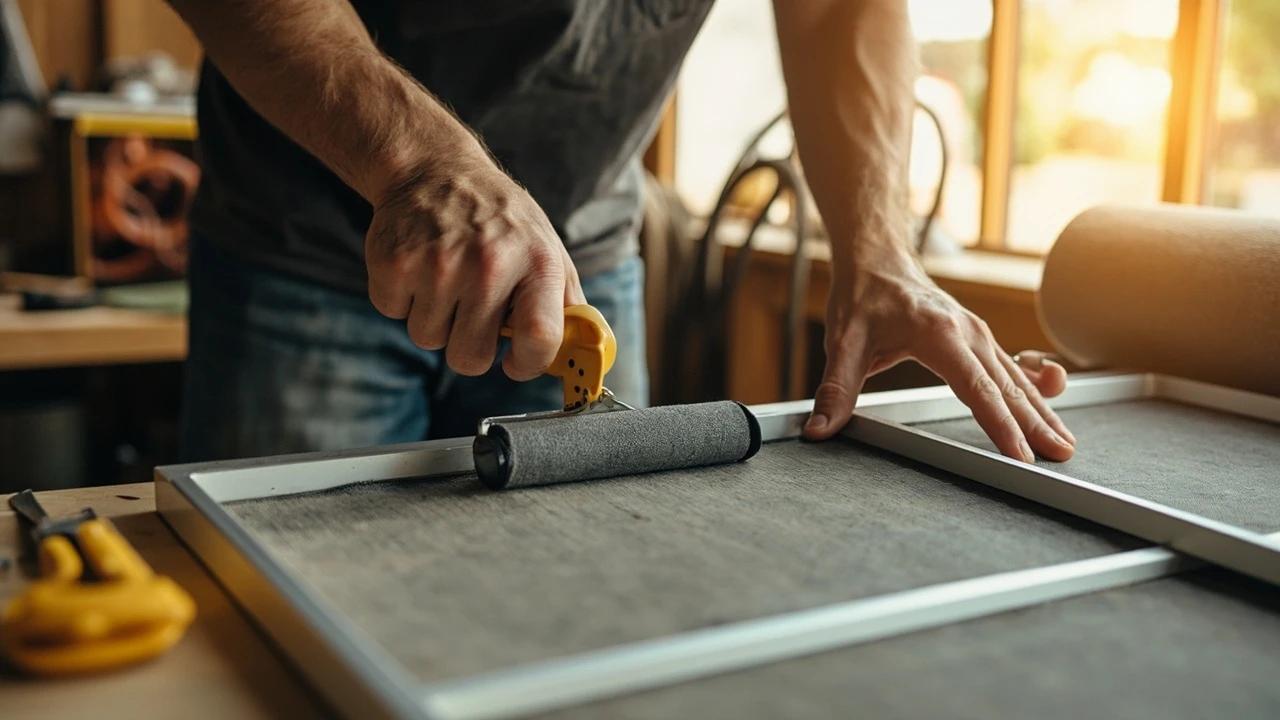
A torn window screen is a bug highway all summer, and the fix is one of the best value-for-effort repairs in the house: about $15 in mesh and spline, a $6 roller tool, and 30 minutes at a table. This guide covers the patch-or-rescreen decision, matching spline size to mesh type, and the rolling technique that gets a drum-flat screen without bowing the frame.
You Might Also Like
 Hard8 hrs
How to Paint Kitchen Cabinets
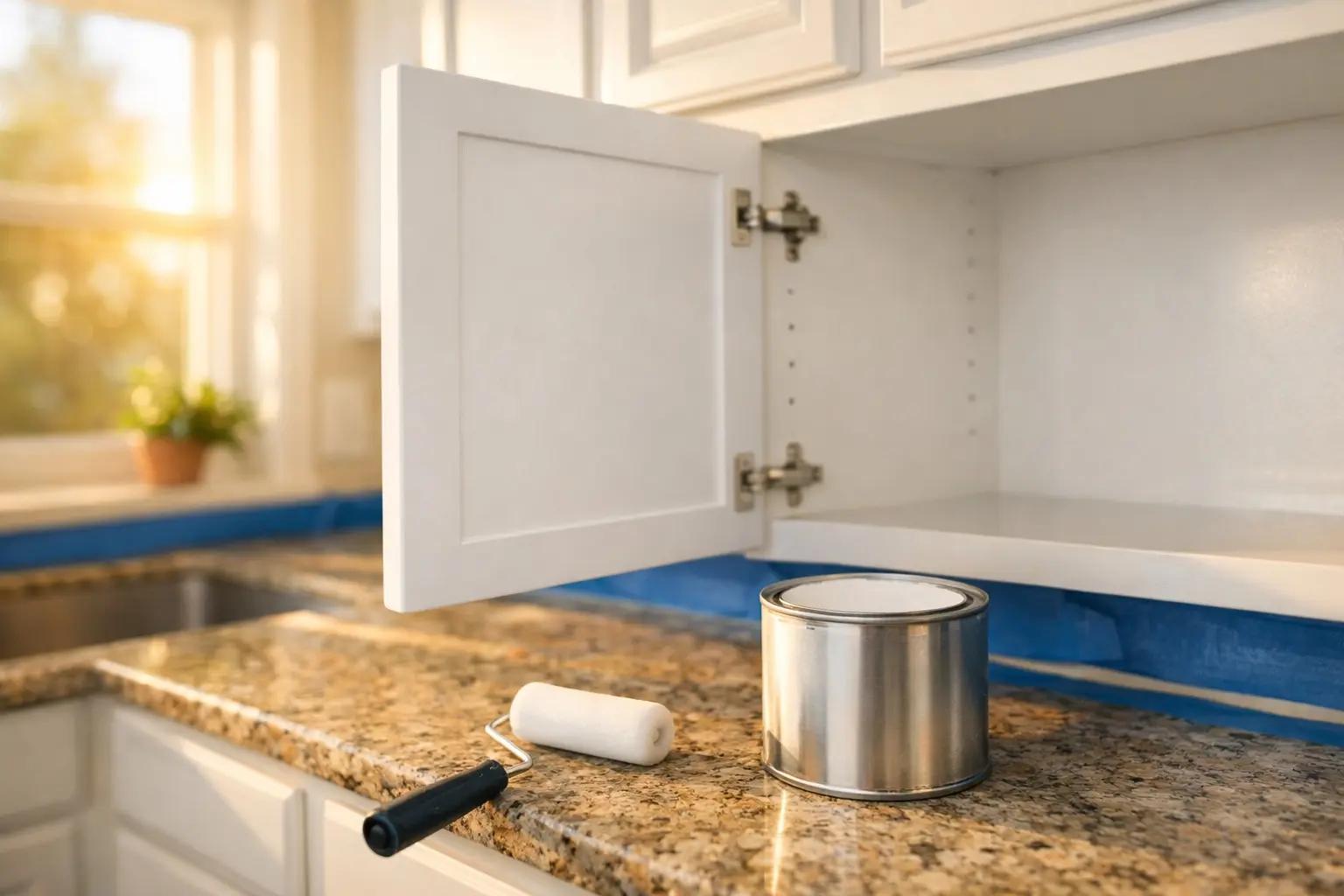
A professional cabinet refinish costs $3,000-8,000, but painting them yourself with the right prep and materials delivers the same transformation for under $200 in a long weekend. The secret is thorough degreasing, a bonding primer, and thin coats with proper dry time between each — skip any of those and the paint will chip within months. This guide walks through the full process from door removal and labeling to final reassembly, covering both brush and roller techniques for a smooth, factory-like finish.
 Medium6 hrs
How to Paint a Room
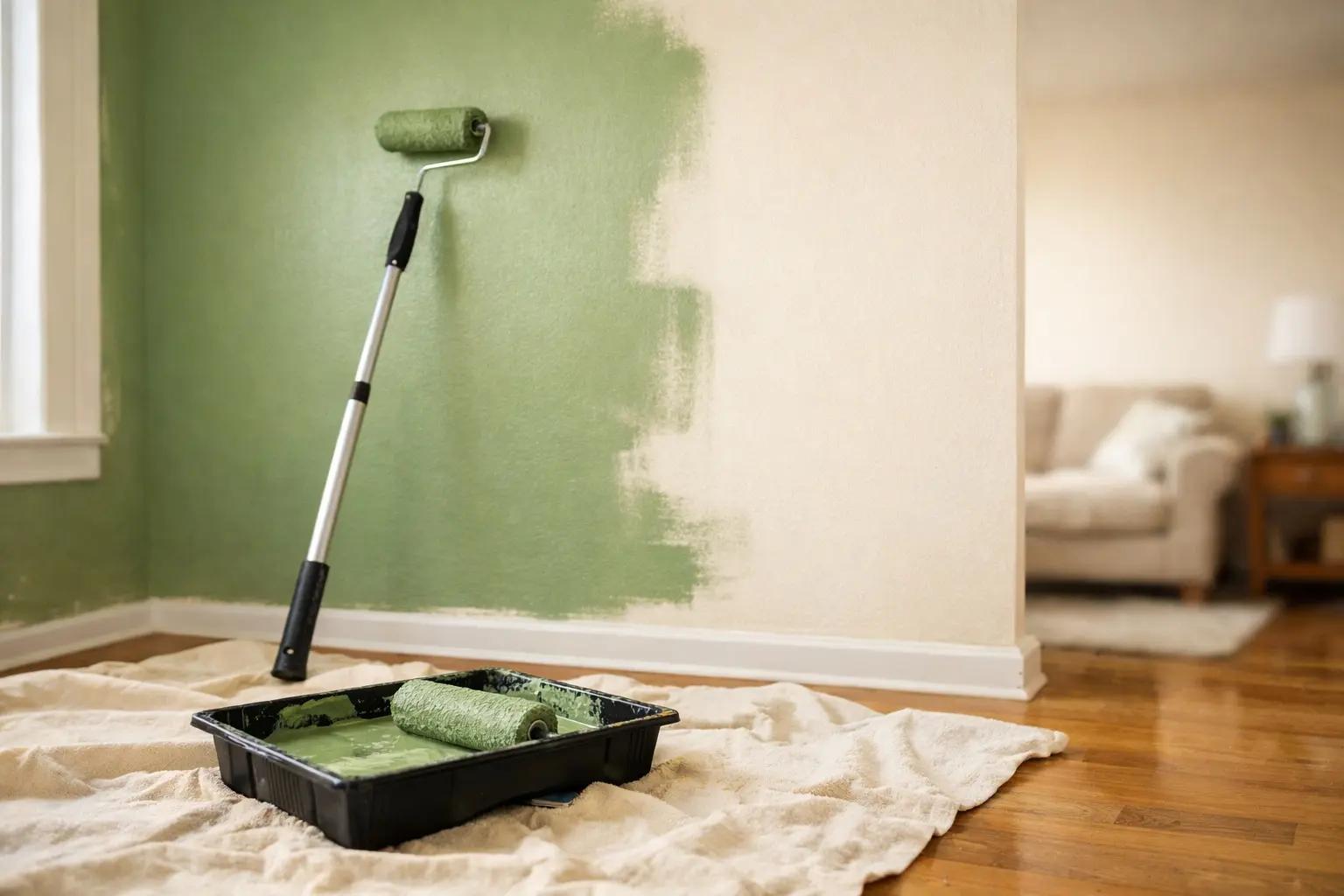
A fresh coat of paint is the fastest, cheapest way to transform any room — and doing it yourself saves $400-800 in labor for an average 12x12-foot bedroom. The job takes a weekend from prep to final coat, and the difference between an amateur-looking result and a professional finish comes down to technique, not talent. This guide covers prep, cutting in, rolling, and cleanup so you get clean lines and even coverage the first time.
 Easy30 min
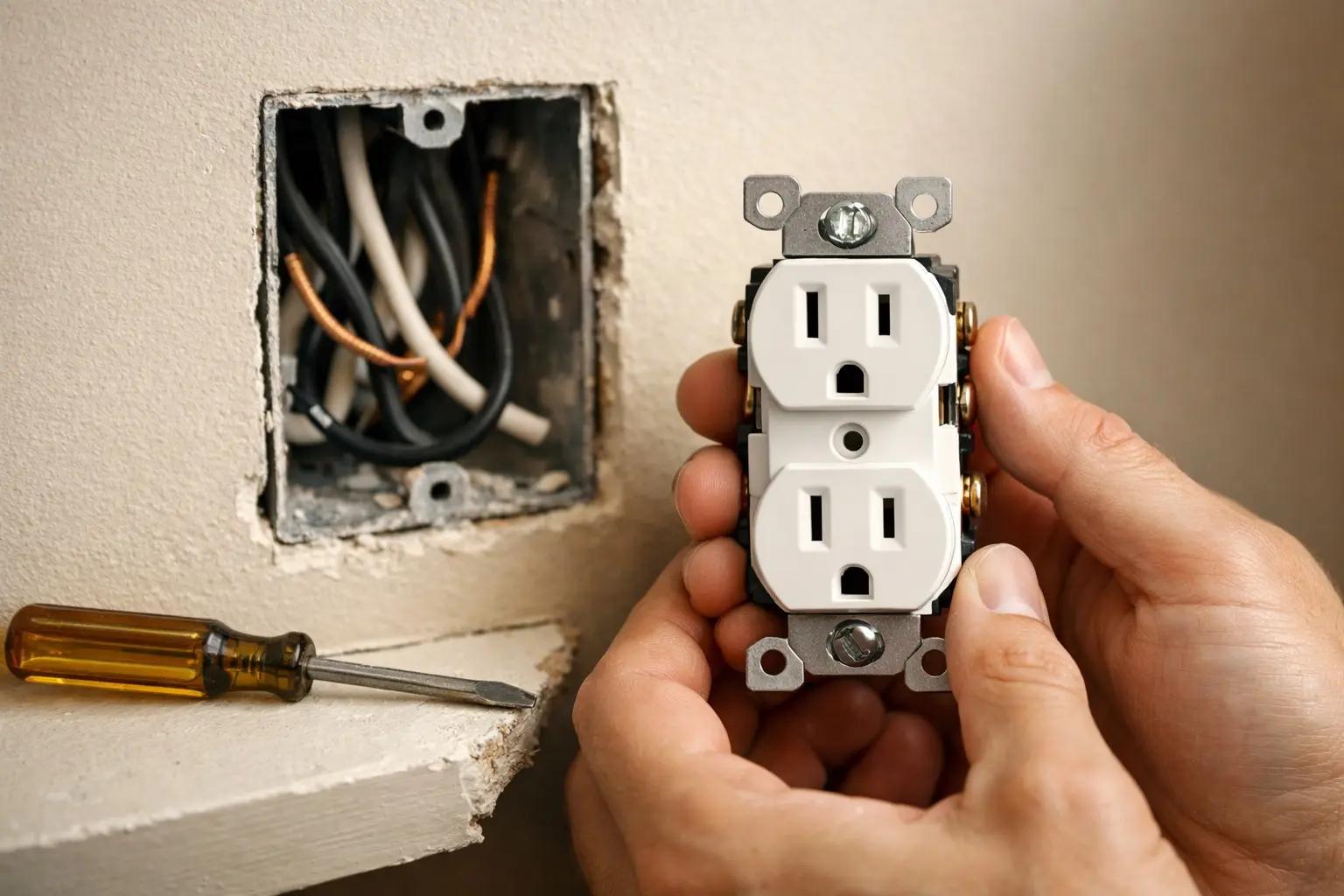
How to Replace an Electrical Outlet
A worn-out or discolored electrical outlet is one of the simplest electrical repairs you can tackle yourself — swapping one takes about 15-30 minutes and costs under $5 in parts versus $75-150 for an electrician visit. This guide walks you through safely replacing a standard duplex receptacle, including how to handle the wiring correctly and avoid the most common DIY mistakes.