How to Install Outdoor Landscape Lighting
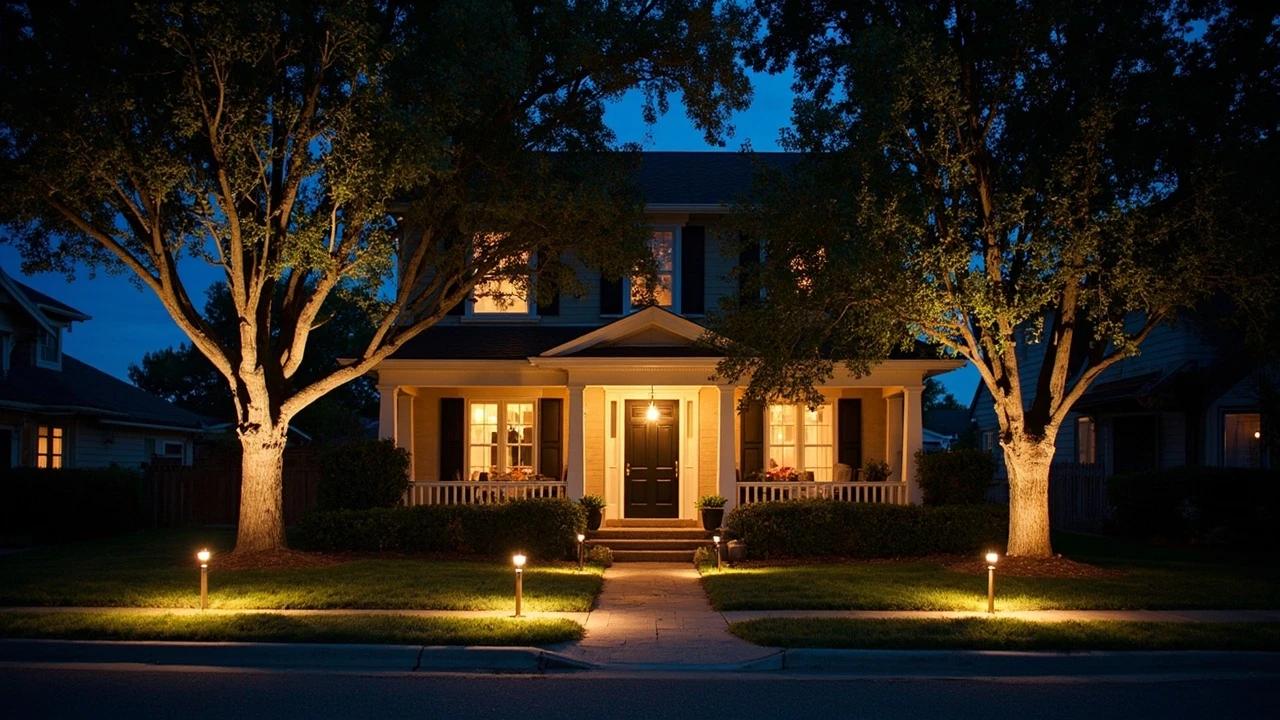

Low-voltage landscape lighting transforms a yard after dark — highlighting walkways, trees, and architectural features while adding real security value — and it's one of the most approachable electrical projects a homeowner can tackle because the entire system runs on safe 12-volt power. A typical 8-to-10 fixture installation costs $150-300 in materials and takes an afternoon. This guide walks you through planning the layout, sizing the transformer, running burial-rated wire, connecting fixtures, and testing for voltage drop before you bury everything.
What You'll Need
🛠 Tools
📦 Materials
Safety First
- •Call 811 at least two business days before digging — underground gas, electric, water, and cable lines can be as shallow as 6 inches in residential yards. This service is free.
- •The transformer plugs into a standard 120V outlet, so the outlet side is full household voltage. Use a GFCI-protected outdoor outlet and keep the transformer connection dry with an in-use weatherproof cover.
Step-by-Step Instructions
Plan Your Lighting Layout
Walk your yard at dusk and identify what you want to light — pathways, garden beds, trees, architectural features, or dark security zones. Sketch a rough map showing the house, walkways, and plantings, then mark where each fixture will go. Group fixtures into separate wire runs of no more than 100 feet each to minimize voltage drop. Count the total wattage of all fixtures (e.g., 10 LED path lights at 3W each = 30W) and add 20% headroom to determine transformer size — in this example, a 45W or larger transformer.

Use the "hub" or "T" wiring method — run a main trunk line from the transformer and branch off to fixture clusters — instead of daisy-chaining every fixture on one long run, which causes the last lights to dim.
Mount the Transformer Near an Outdoor Outlet
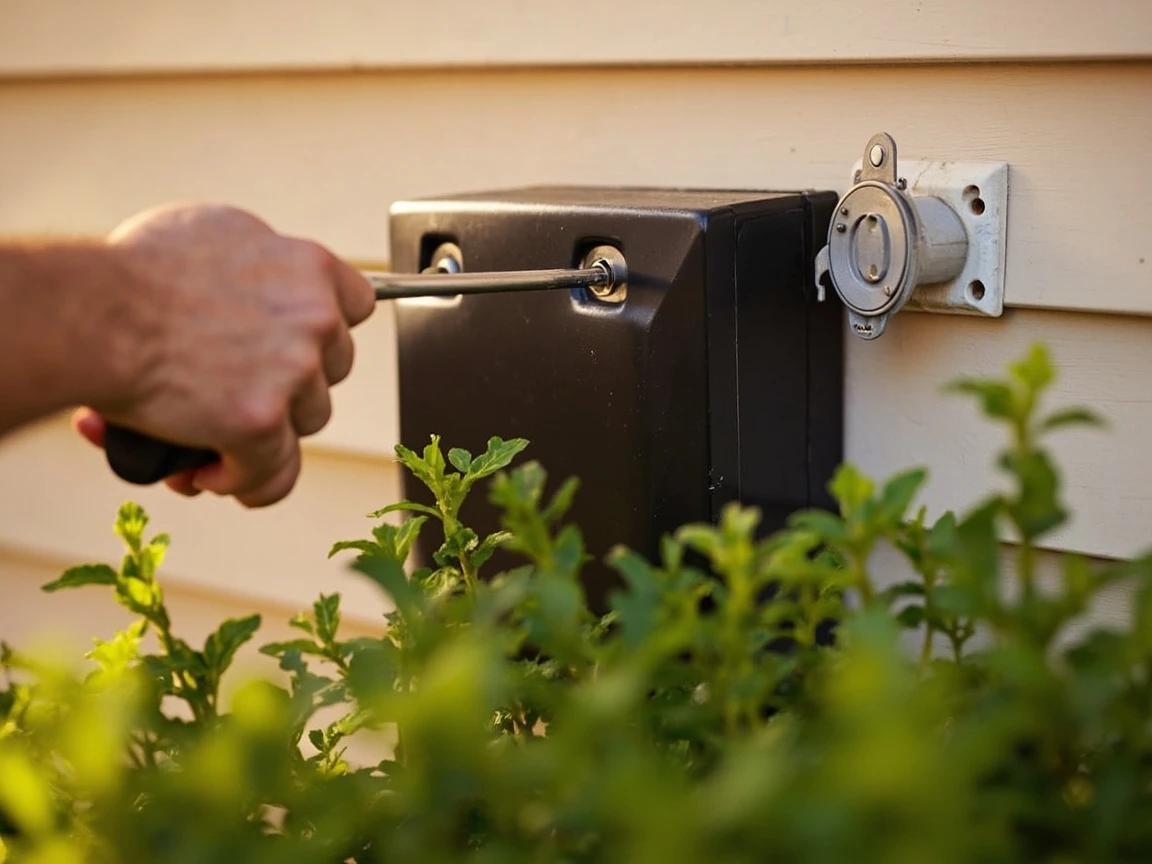
Choose a location for the transformer that's close to a GFCI-protected outdoor outlet and hidden from view — behind a shrub, under a deck, or on the side of the house. Mount it at least 12 inches above grade to keep it away from standing water and splashing. Most transformers have a built-in mounting bracket with keyhole slots — drive two screws into the wall stud or use masonry anchors on brick, hang the transformer, and tighten. Do not plug it in yet.
Lay Out the Wire Runs on the Surface
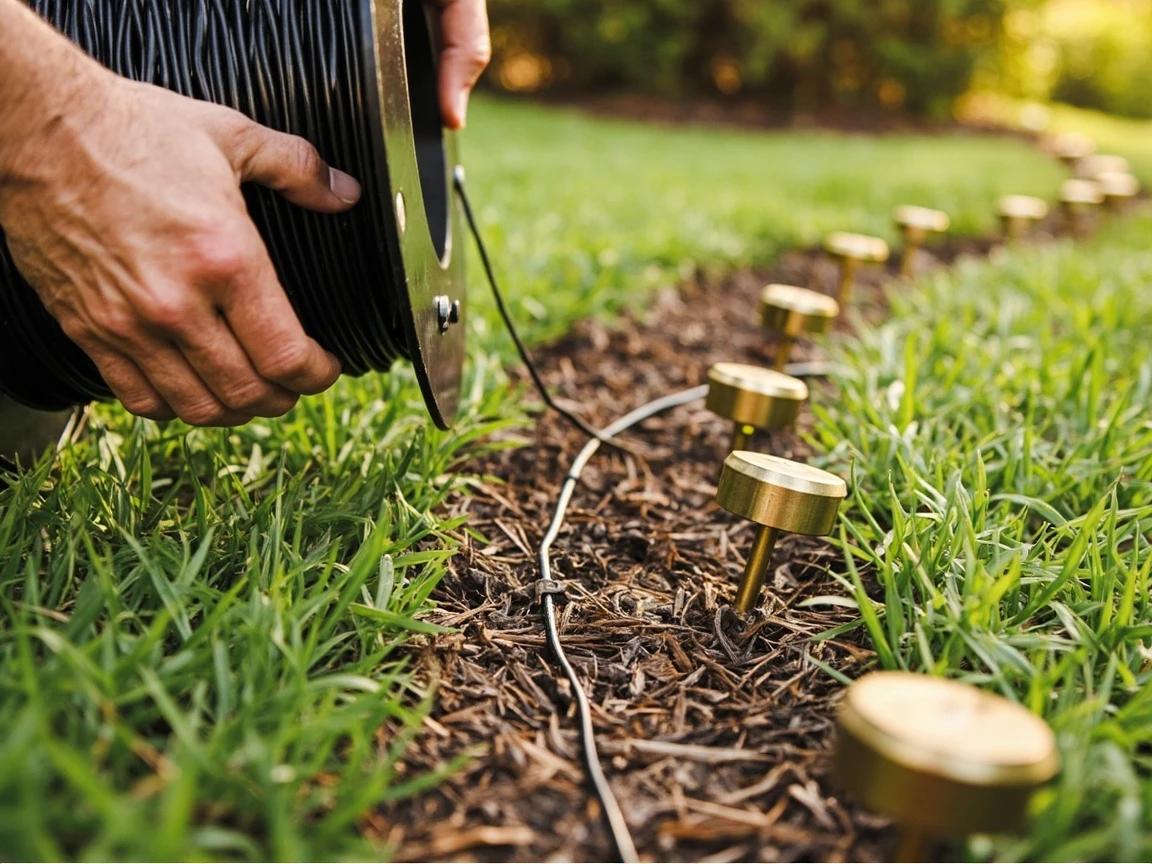
Unroll the 12-gauge landscape wire from the transformer location along each planned run, laying it on the surface of the lawn or bed — do not bury it yet. Leave 2-3 feet of extra wire at the transformer end and 6-8 inches of slack at each fixture location for easy connections. Pin the wire loosely to the ground with landscape staples every 6-8 feet to keep it in place. If you need to branch a run into a T-split, cut the wire at the branch point and use a waterproof gel connector to join the trunk and branch wires.
Position and Stake the Fixtures
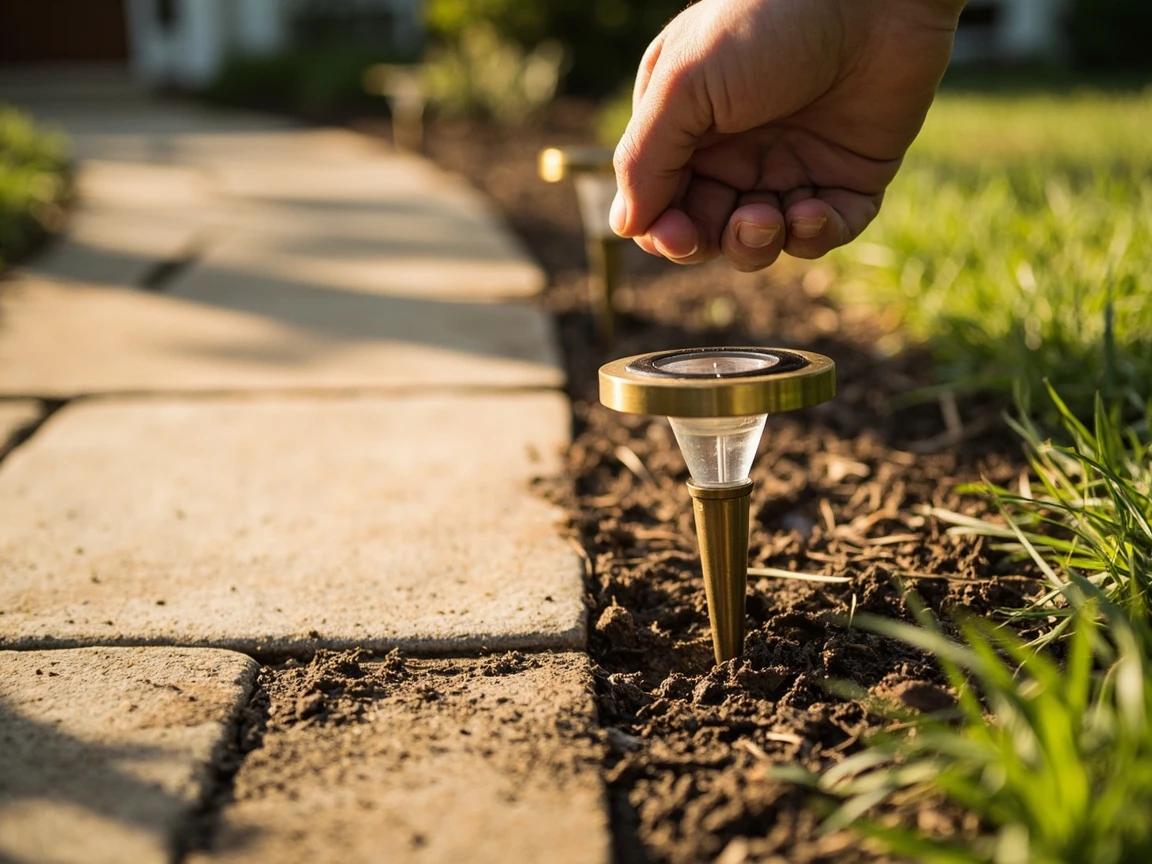
Set each fixture at its planned location and push the ground stake into the soil by hand or with a rubber mallet. Path lights should sit 14-18 inches above grade and be spaced 8-10 feet apart along walkways for even coverage without hot spots. Spotlights aimed at trees or walls should be positioned 1-2 feet from the base of the object being lit, angled upward at roughly 30-45 degrees. Step back after placing each fixture and check the sight lines — you want to see the light effect, not the fixture itself.
Connect Each Fixture to the Wire
Most low-voltage landscape fixtures connect to the main wire using either snap-on piercing connectors (included with many kits) or waterproof gel-filled splice connectors. For gel connectors — the more reliable option — strip half an inch of insulation from each conductor on the main wire and from the fixture lead, insert all wires into the connector, and snap the lid shut. The gel displaces moisture and creates a weatherproof seal. Repeat for every fixture on the run. There is no polarity with 12V AC landscape wire, so it doesn't matter which conductor connects to which fixture lead.
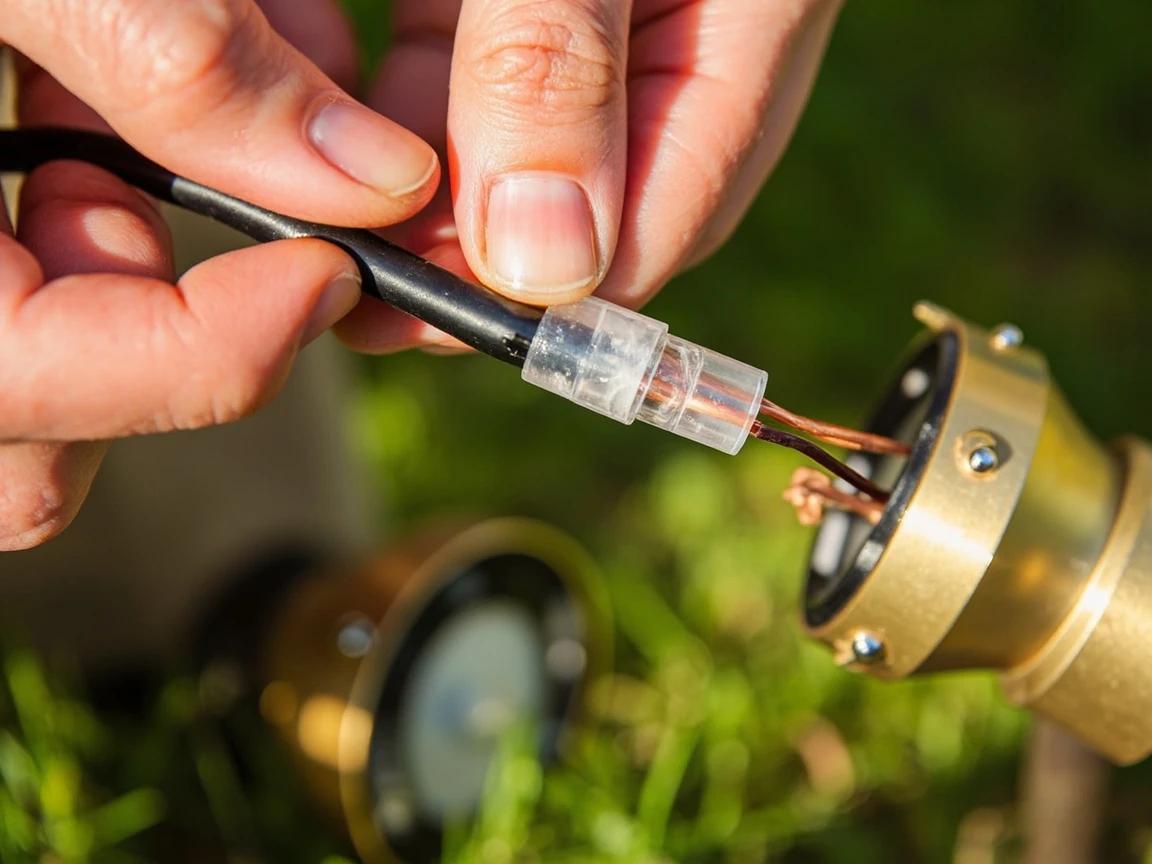
Avoid the cheap piercing-style connectors that come in many kits — they corrode within a season. Spend the extra $1 per connection on gel-filled splice connectors for a seal that lasts years.
Wire the Cable to the Transformer
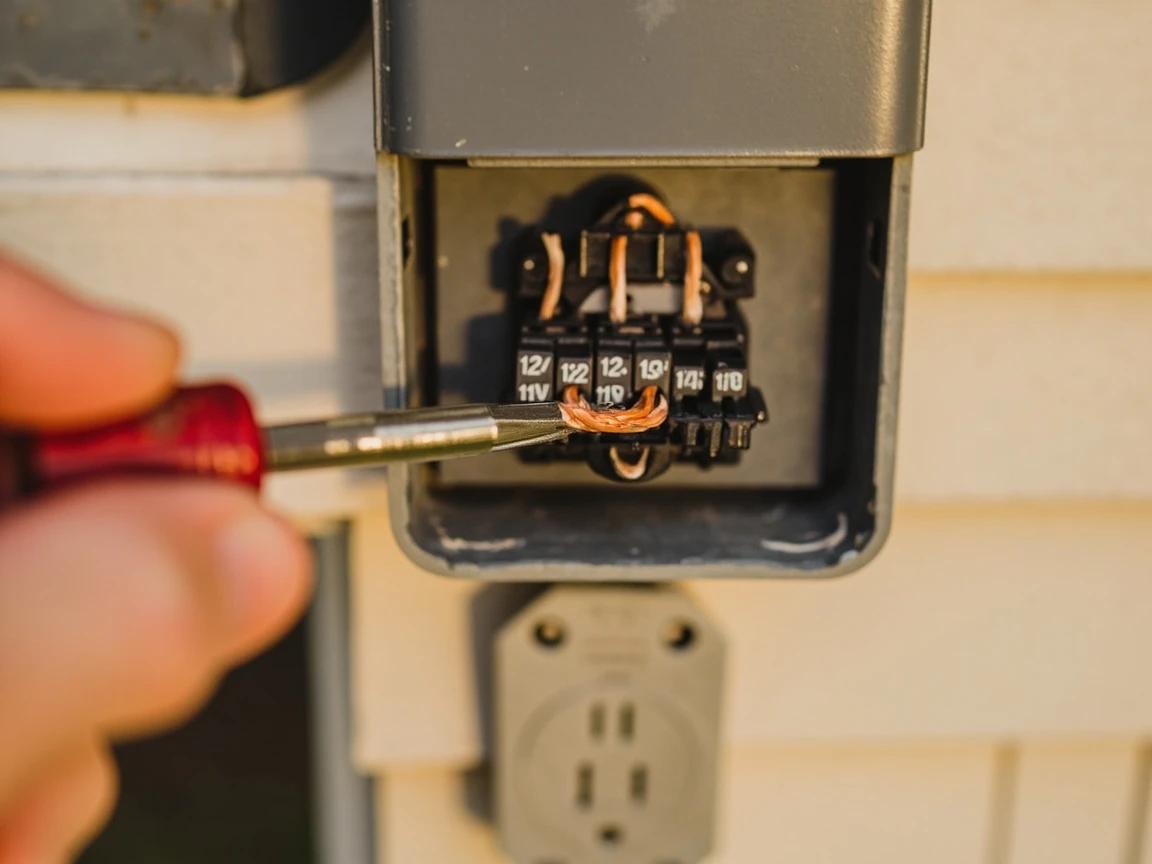
Strip about three-quarters of an inch of insulation from each conductor at the transformer end of the wire. Open the terminal clamp on the transformer — most have two screw terminals marked "12V" (or "13V," "14V," "15V" for voltage compensation on long runs). Insert one conductor into each terminal and tighten the screws firmly with a small flat-head screwdriver. If you have multiple wire runs, each run gets its own pair of terminals or its own tap on the transformer. Start with the 12V tap; you'll adjust after testing.
Test the System Before Burying the Wire
Plug the transformer into the GFCI outlet and switch it on — all fixtures should light up. Wait until dusk to evaluate the actual lighting effect. Walk the entire run with a voltmeter and check the voltage at the first fixture (should read 11.5-12V) and the last fixture on each run (should read no less than 10.8V — a drop of more than 1.2V means the run is too long or too heavily loaded). If the farthest fixtures are dim, move them to the higher voltage tap on the transformer (13V or 14V) until the reading at the far end is close to 12V. Adjust fixture angles and positions while everything is still above ground.
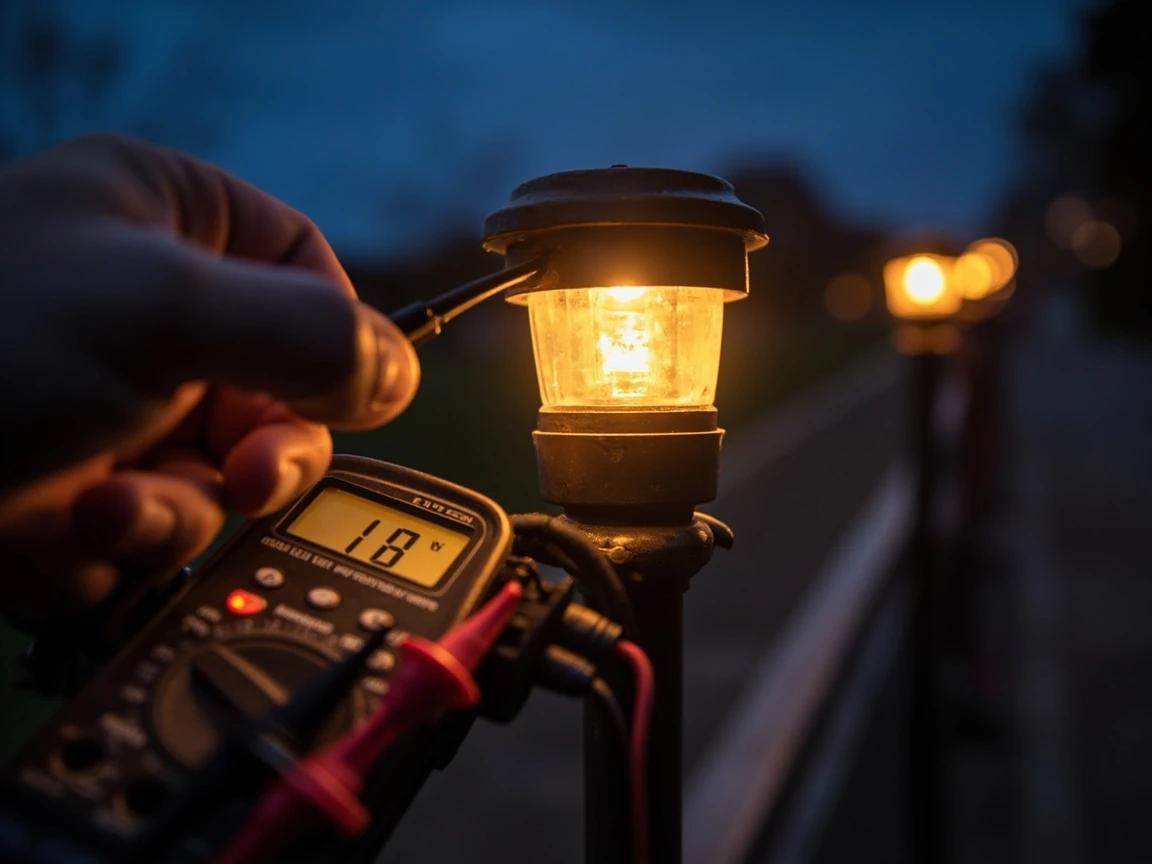
Do not bury the wire until you've tested every fixture at night and confirmed voltage readings are within range — digging everything back up to fix a dim fixture is miserable.
Dig Trenches and Bury the Wire
Once you're satisfied with fixture placement and voltage, use a flat-blade spade to cut a narrow trench at least 6 inches deep along each wire run. In lawn areas, slice straight down, fold the sod flap back, lay the wire in the bottom of the trench, and fold the sod back over — the grass will heal in a week or two. In mulched beds, simply tuck the wire under 3-4 inches of mulch. Where the wire crosses a paved walkway, run it underneath through a shallow trench dug at the edge, or through a piece of PVC conduit slipped under the pavement. Backfill the trenches and tamp the soil lightly.

Set the Timer and Enjoy
Program the transformer's built-in timer or photocell to turn the lights on at dusk and off at a set time — 4-6 hours of run time per night is typical and keeps the electric bill negligible (a 10-fixture LED system uses about $1-2 per month). If your transformer has a photocell, it will turn on automatically when ambient light drops below a threshold. Walk the system one final time after dark to admire the effect and note any fixtures that need angle adjustments. Clean the fixture lenses once a season and check wire connections annually to keep the system looking its best.
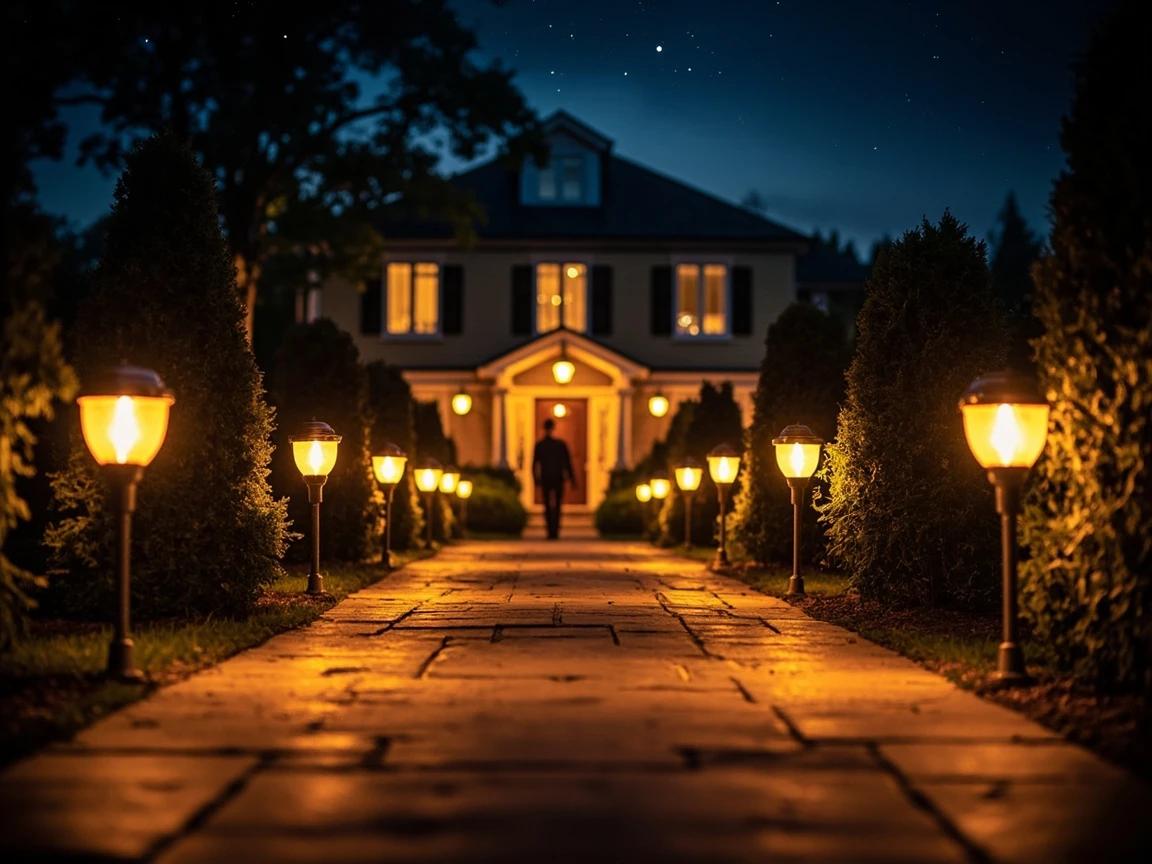
LED landscape fixtures use so little power that running 10 lights for 6 hours costs less than $2 per month — don't skimp on run time for the sake of electricity.
Frequently Asked Questions
How long does it take to install outdoor landscape lighting?
+
This project typically takes about 3 hrs. The guide includes 9 steps with detailed instructions for each.
What tools do I need?
+
You will need: Wire strippers, Wire cutters, Flat-head screwdriver (small, for transformer terminals), Multimeter or low-voltage voltmeter, Spade or flat-blade shovel, Garden rake, Tape measure (25-foot minimum), Drill with masonry bit (if mounting transformer to brick or stucco), Headlamp or flashlight (for testing at dusk). Materials include: Low-voltage transformer (12V, sized to total fixture wattage plus 20% headroom — e.g., 150W transformer for 120W of fixtures), LED landscape light fixtures (path lights, spotlights, or wash lights as needed — typically 3-5 watts each), 12-gauge direct-burial low-voltage landscape wire (two-conductor, 100-foot roll minimum), Waterproof gel-filled wire connectors (one per fixture plus spares), Wire stakes or landscape staples (to pin wire before burial), Outdoor-rated GFCI outlet or in-use weatherproof cover (if not already present), Outdoor extension cord with timer or photocell (if transformer lacks a built-in timer).
Is this a good project for beginners?
+
This is a moderate-difficulty project. Some basic DIY experience is helpful, but the step-by-step instructions make it approachable for motivated beginners.
Sources & further reading
- 811 Before You Dig — Common Ground Alliance (811)
- How to Install Landscape Lighting: Step-by-Step Guide — VOLT Lighting
More Electrical Guides
View all → Easy1h 30m
How to Install Under-Cabinet Lighting
Adding LED strip lights beneath your kitchen cabinets is one of the highest-impact upgrades you can do in a single afternoon — it eliminates countertop shadows, makes food prep safer, and instantly modernizes the space. This guide covers plug-in LED strip lights, which require zero electrical wiring and cost $25-60 for an average kitchen.
 Easy30 min
How to Install a Dimmer Switch
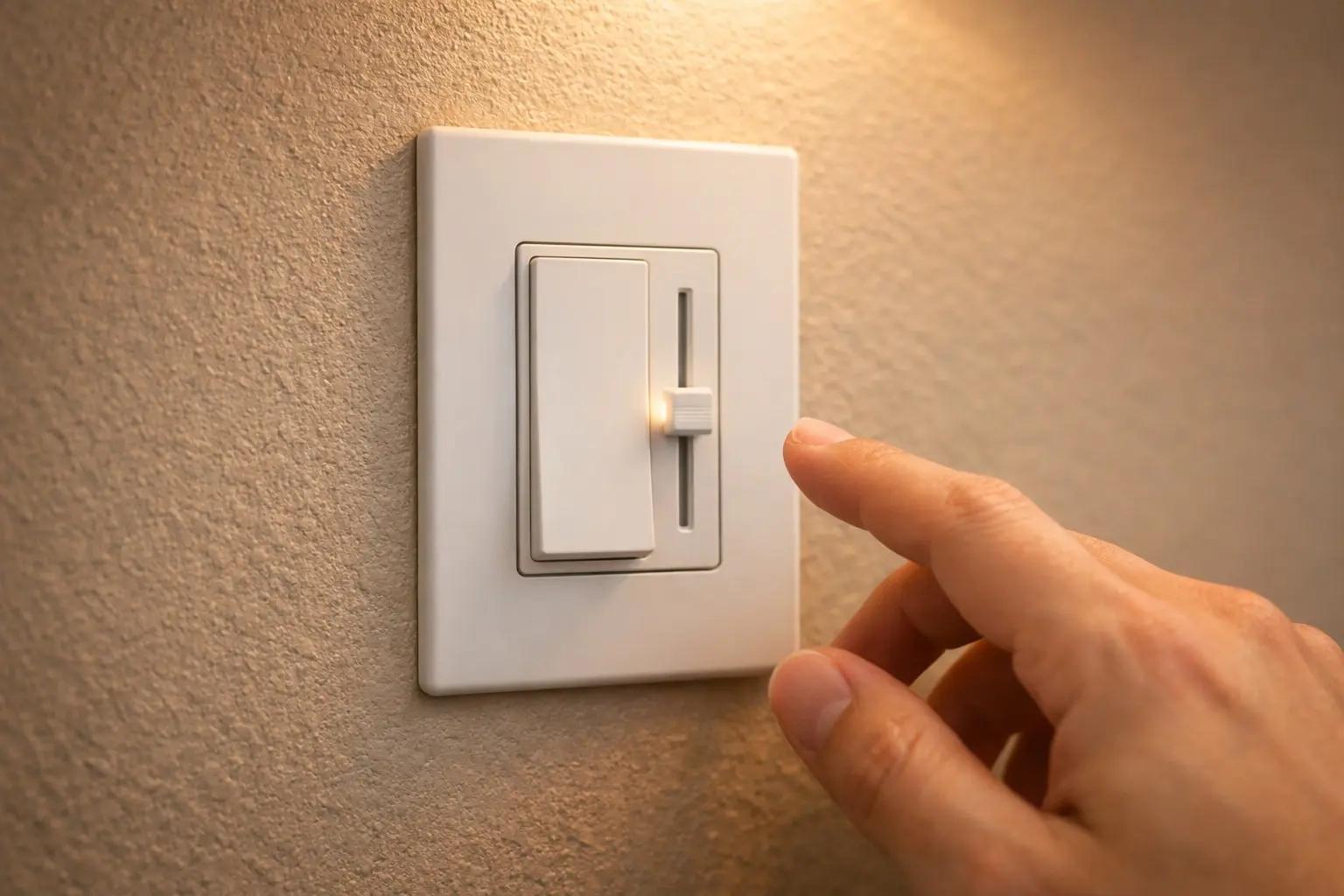
Swapping a standard toggle switch for a dimmer takes about 30 minutes, costs $15-30 in parts, and instantly upgrades any room — you get adjustable ambiance, lower energy bills, and longer bulb life. If you can turn a screwdriver and twist a wire nut, you can handle this one-for-one replacement on a single-pole circuit.
 Easy30 min
How to Fix Garage Door Sensors That Block Closing
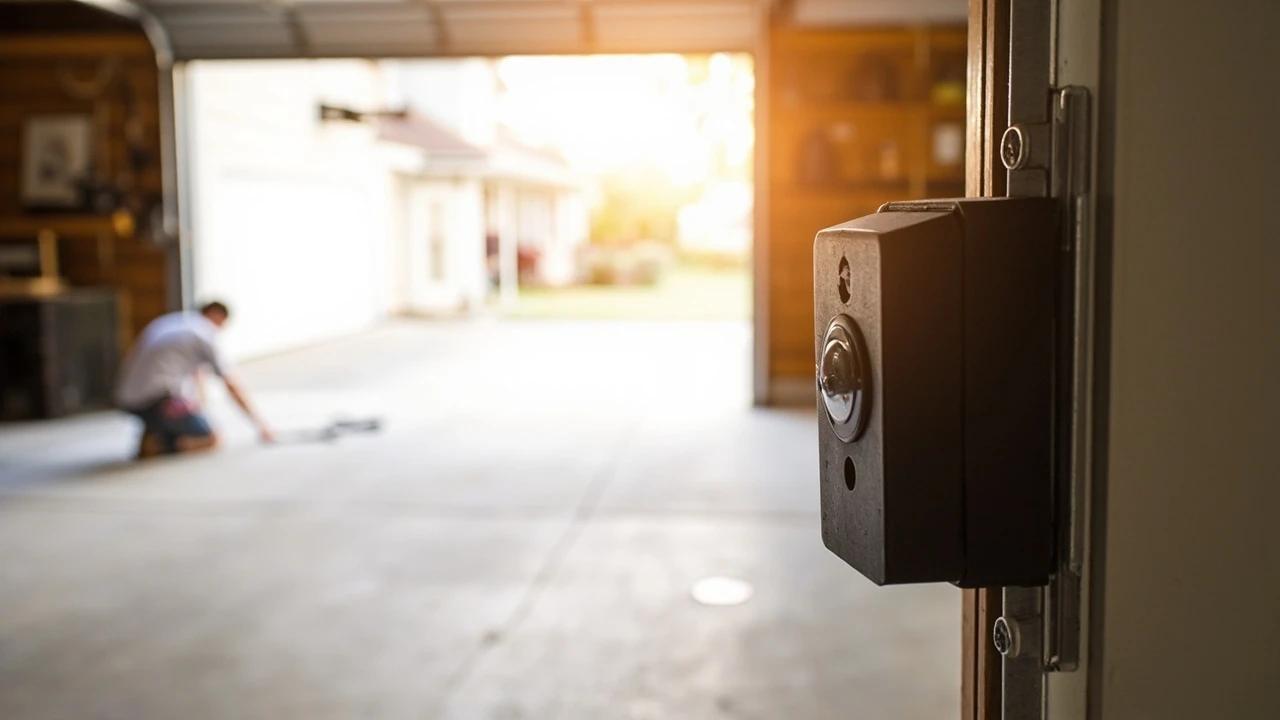
When your garage door rolls down a few inches, stops, and reverses while the opener light blinks, the safety photo-eye sensors are almost always the cause — not the motor. This guide walks the fix in diagnostic order, from a ten-second lens wipe to realignment and a wiring check, so you fix it for free before spending $40 on parts you may not need.
You Might Also Like
 Easy25 min
Best Deck Stain: Transparent vs Semi vs Solid
There is no "best" deck stain — there is the right stain for your sun exposure, wood condition, and how often you want to redo the job. Transparent stains last 1-2 years but let the natural grain show. Solid stains last 4-7 years but look like paint. This guide walks the four opacity levels and the oil-vs-water choice so you pick the one that matches your deck and your tolerance for re-staining.
 Easy45 min
How to Install a Smart Thermostat
A smart thermostat is one of the highest-ROI upgrades you can make to your home — it learns your schedule, adjusts automatically when you're away, and typically saves about 8% on heating and cooling bills — the figure ENERGY STAR verifies from real-home data, roughly $50 a year — so the $120-250 device usually pays for itself within a few years. If your old thermostat has labeled wires behind it, the swap takes about 30-45 minutes with nothing more than a screwdriver and your phone. This guide covers checking compatibility, labeling wires, mounting the new base, connecting everything, and walking through the app setup so your system is running smart the same day.
 Easy30 min
How to Fix a Dripping Faucet
A dripping faucet wastes more than 3,000 gallons of water per year and can add $20 or more to your monthly water bill. The fix is almost always a worn cartridge, washer, or O-ring — parts that cost under $10 and take 20-30 minutes to replace with basic tools.