How to Install a Dimmer Switch
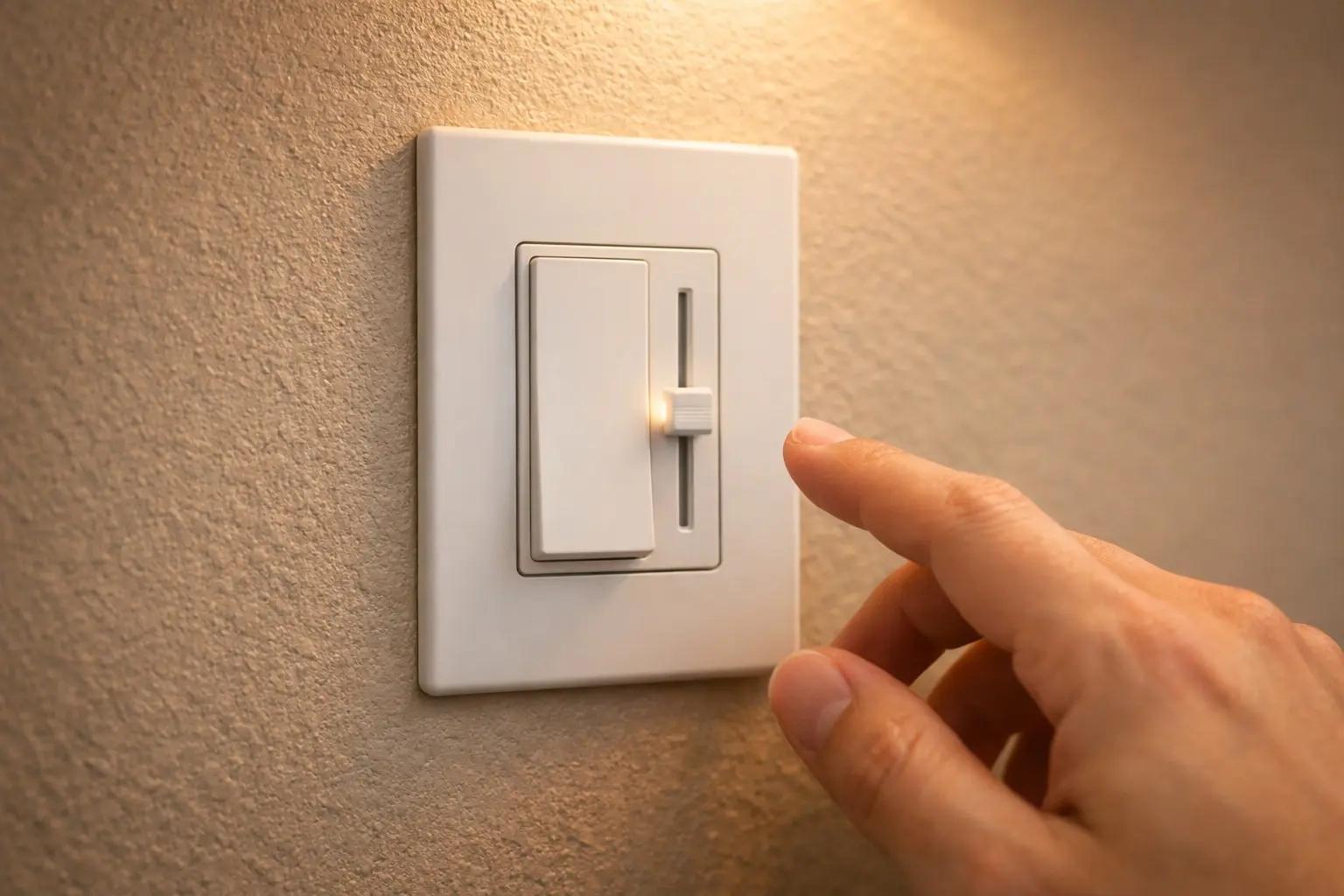

Swapping a standard toggle switch for a dimmer takes about 30 minutes, costs $15-30 in parts, and instantly upgrades any room — you get adjustable ambiance, lower energy bills, and longer bulb life. If you can turn a screwdriver and twist a wire nut, you can handle this one-for-one replacement on a single-pole circuit.
What You'll Need
🛠 Tools
📦 Materials
Safety First
- •Always turn off power at the circuit breaker — not just the wall switch — and verify the circuit is dead with a non-contact voltage tester before touching any wires.
- •Never install a dimmer switch on a circuit that controls a ceiling fan motor, an outlet, or a fluorescent fixture unless the dimmer is specifically rated for that load type. Using the wrong dimmer can overheat and cause a fire.
Step-by-Step Instructions
Turn Off Power and Verify the Circuit Is Dead
Go to your home's main electrical panel and flip the breaker that controls the light switch to the OFF position. Return to the room and flip the existing switch on and off — the light should stay off. Hold a non-contact voltage tester near the switch and confirm it reads no voltage. If the tester beeps or lights up, you have the wrong breaker — go back and try again. Tape a note on the breaker panel so no one restores power while you work.
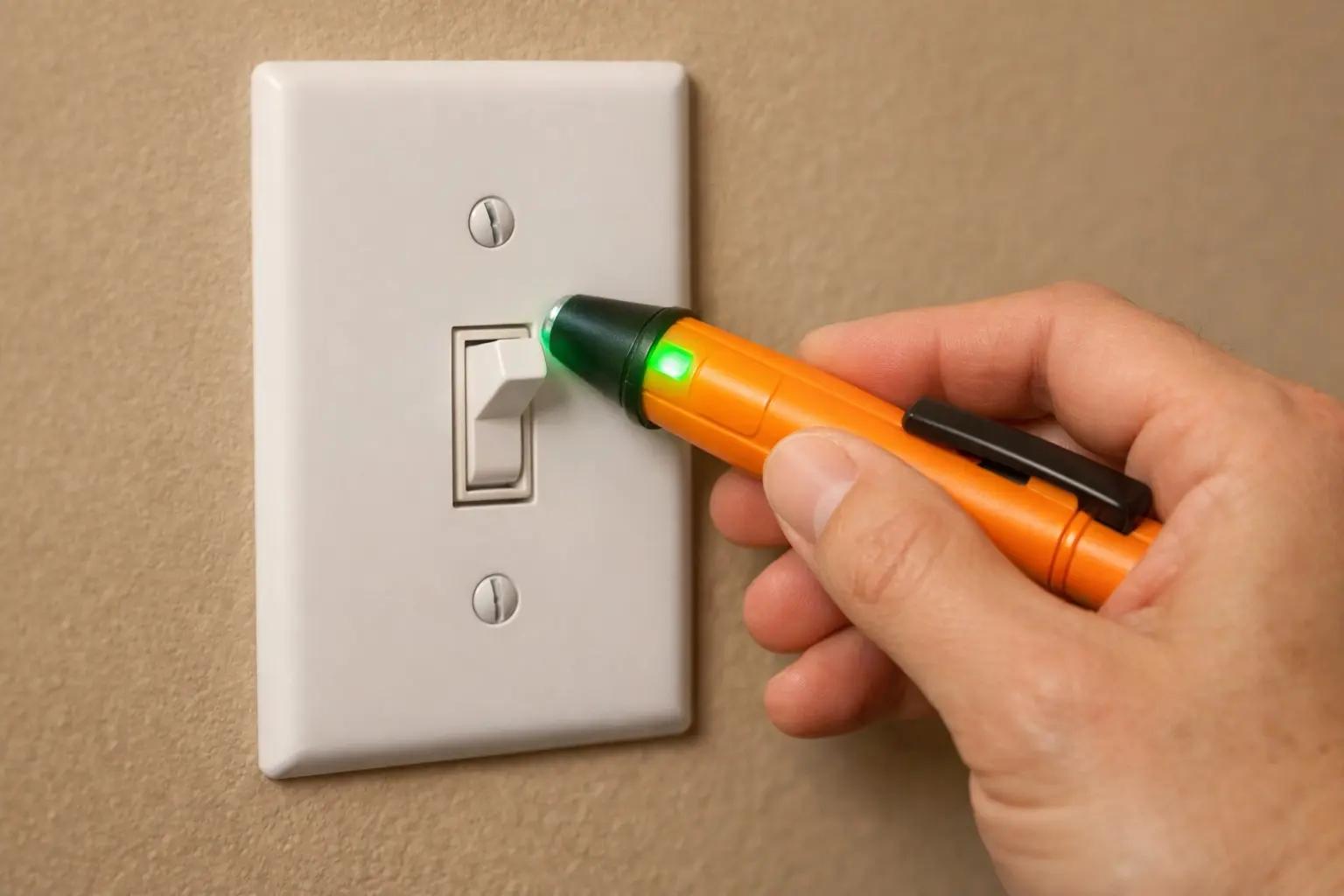
Never rely on the wall switch alone to confirm power is off. Someone could flip the breaker back on while you work. Always use a voltage tester.
Remove the Wall Plate and Old Switch
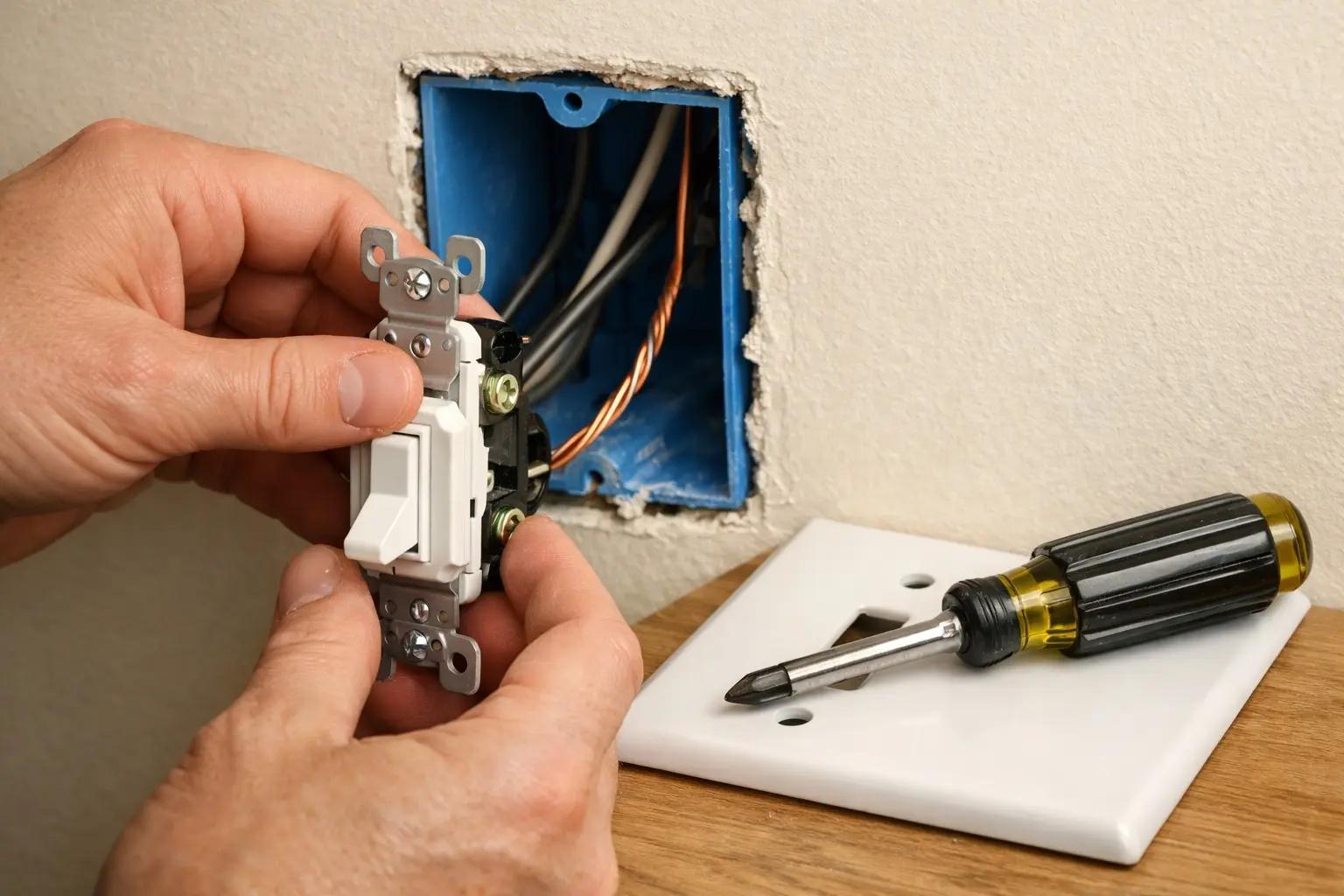
Use a flat-head screwdriver to remove the screws holding the wall plate and set the plate aside. Remove the two mounting screws (top and bottom) that secure the switch to the electrical box. Grip the switch by the mounting tabs and gently pull it out of the box, exposing the wires behind it. Be careful — the wires are stiff and have limited slack.
Photograph and Identify the Wiring
Before disconnecting anything, take a photo of the wiring with your phone. On a single-pole switch you'll typically see two black (or one black and one red) "hot" wires connected to the brass screw terminals, plus a bare copper or green ground wire connected to the green screw. If you see three or more wires on the switch (not counting ground), you may have a 3-way switch — stop and purchase a 3-way dimmer instead. Note whether the wires are looped around screws or back-stabbed into spring-loaded holes in the back of the switch.
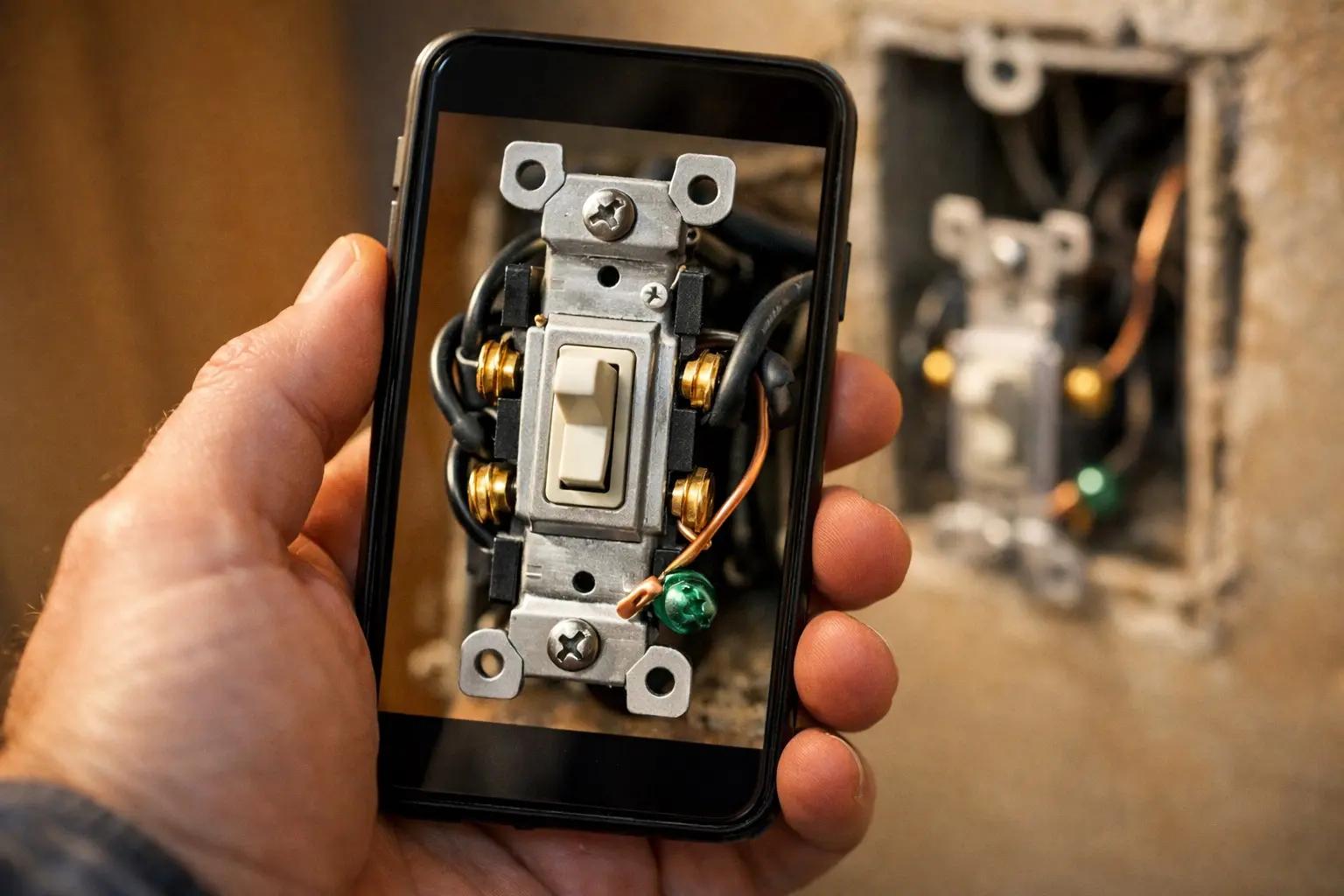
If your switch has a common (COM) screw that's a different color from the other terminals — usually black or dark brass — you have a 3-way switch. Label the wire on the COM screw with a piece of tape before disconnecting. This prevents 90% of 3-way wiring mistakes.
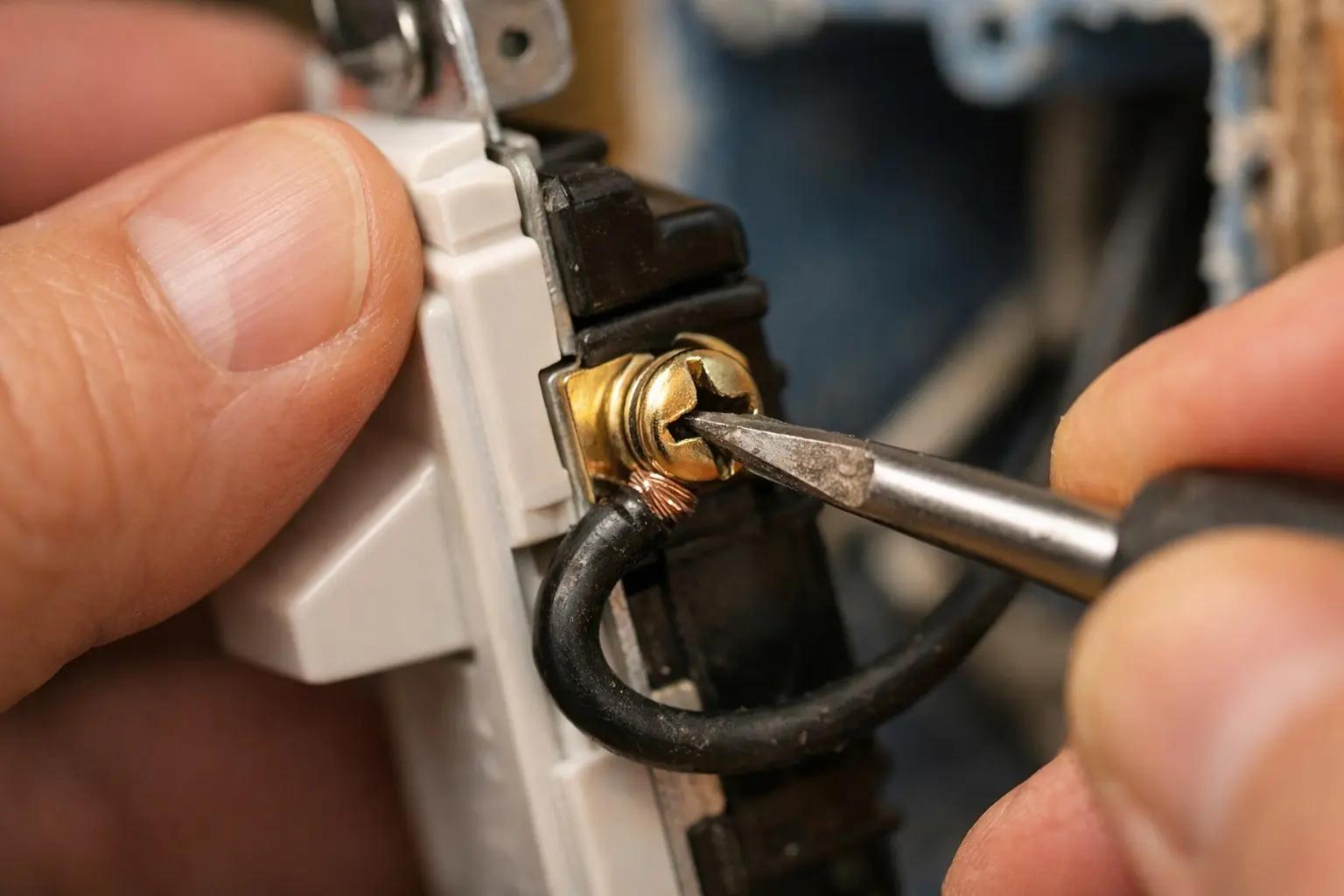
Disconnect the Wires from the Old Switch
Loosen each screw terminal counterclockwise until the wire loop slips free. If the wires are back-stabbed, insert a small flat-head screwdriver into the release slot next to each wire and pull the wire straight out. Disconnect the ground wire last. Straighten any bent wire ends with needle-nose pliers. If the exposed copper is nicked or shorter than 1/2 inch, use wire strippers to strip back the insulation to expose a fresh 3/4-inch length of clean copper.
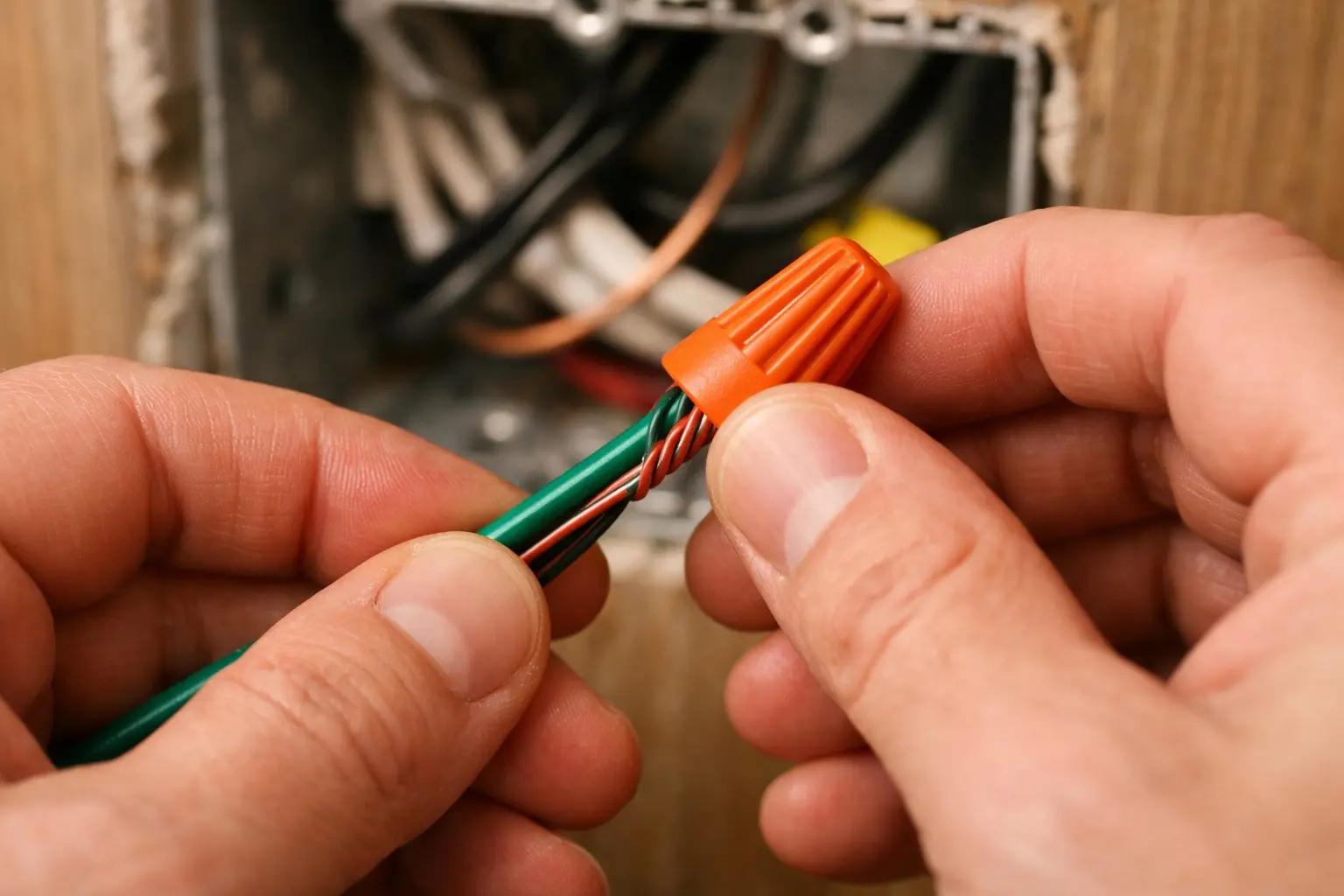
Connect the Ground Wire to the Dimmer
Most dimmers have short pigtail leads (pre-attached wires) instead of screw terminals. Start with the green ground lead from the dimmer — twist it together with the bare copper ground wire from the box using a wire nut, turning clockwise until tight. Tug gently on each wire to confirm the connection holds. If your electrical box is metal, there should also be a ground pigtail attached to the box with a green screw — include that wire in the same wire nut connection so everything is bonded together.
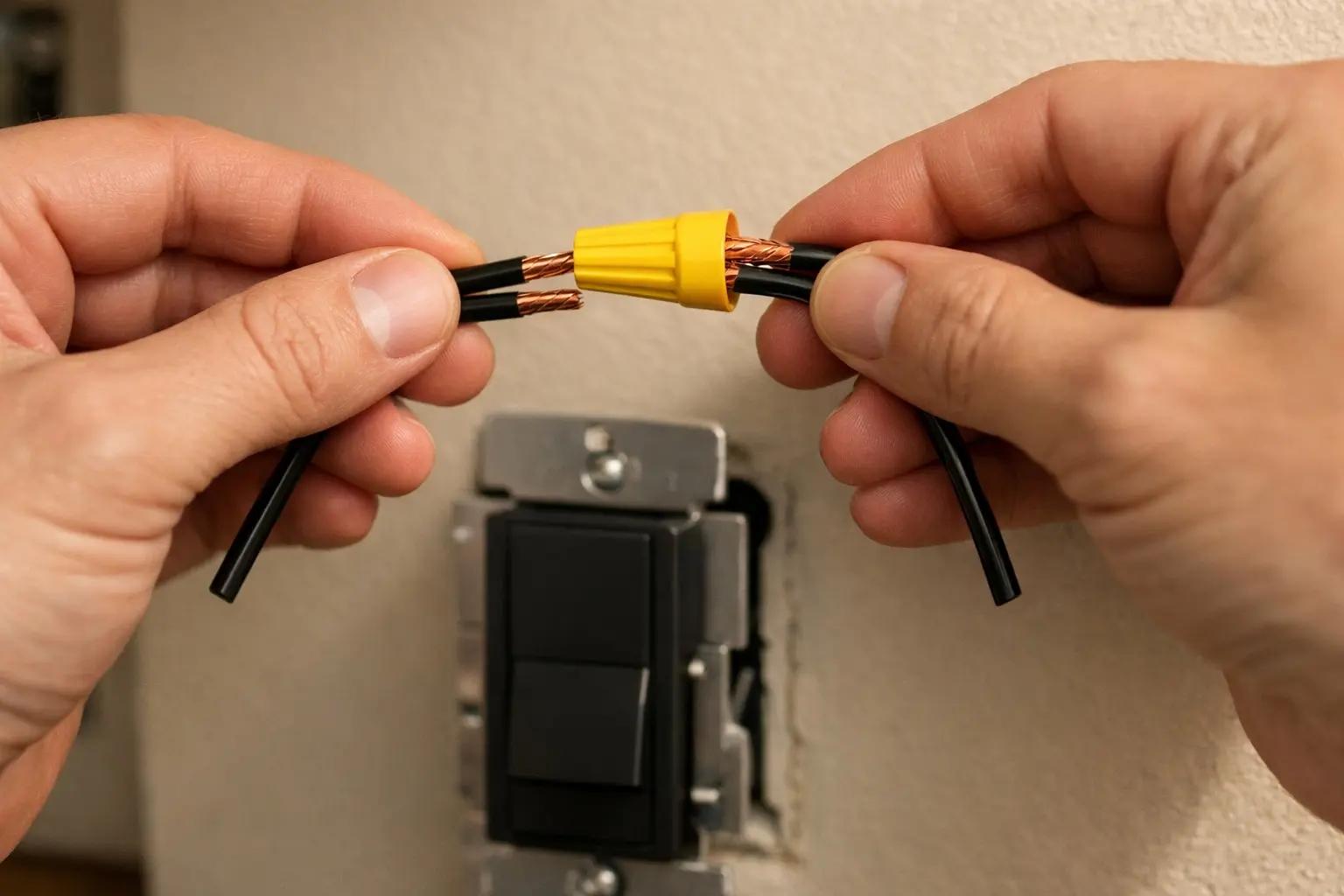
Connect the Hot Wires to the Dimmer Leads
On a single-pole dimmer, the two black leads are interchangeable — it doesn't matter which house wire connects to which lead. Strip 3/4 inch of insulation from each house wire if needed, hold one black dimmer lead alongside one black house wire so their stripped ends are even, and twist a wire nut clockwise until snug. Repeat for the second pair. Give each connection a gentle tug to verify it's secure. Wrap one turn of electrical tape around each wire nut and onto the wire insulation for extra security.
If your dimmer has a red wire in addition to two black wires, it's a 3-way dimmer and the red wire connects to the "traveler" terminal. Do not cap off and ignore extra wires — each one must be connected correctly or the circuit won't work safely.
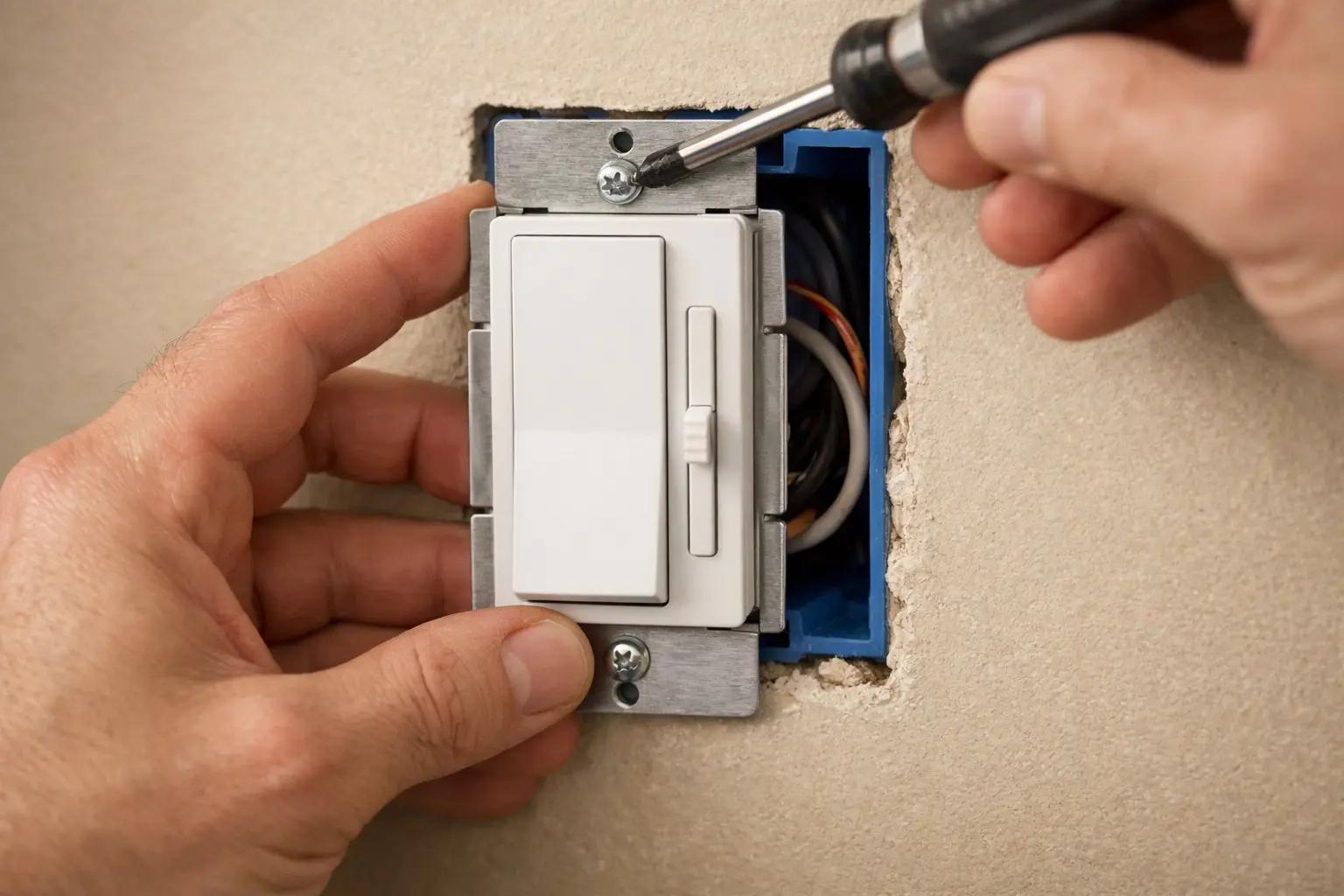
Mount the Dimmer in the Electrical Box
Carefully fold the wires in an accordion pattern and push them into the back of the box — dimmers are bulkier than toggle switches, so take your time to avoid pinching any wires. Align the dimmer's mounting tabs with the screw holes in the box and drive the two mounting screws until the dimmer sits flush with the wall. Use the elongated screw slots to level the dimmer if it's slightly crooked. Snap or screw the wall plate into place — it should sit flat with no gaps around the edges.
If the dimmer won't fit in the box because of wire crowding, don't force it — a jammed box with pinched wires is a fire hazard. Instead, try trimming the dimmer pigtail leads shorter (leave the house wires at least 6 inches of free conductor in the box — the NEC 300.14 minimum) or use a box extension ring to add depth.
Restore Power and Test the Dimmer
Go back to the electrical panel and flip the breaker to ON. Return to the room and turn on the dimmer — slide or press the control to full brightness first, then dim it down slowly to the lowest setting. Watch for flickering, buzzing, or the light cutting out at low levels. A faint hum from the dimmer itself is normal with some bulb types, but loud buzzing means the dimmer and bulbs aren't compatible. Test multiple brightness levels and leave the light on at 50% for a minute to check for overheating at the switch — it should feel barely warm, not hot.
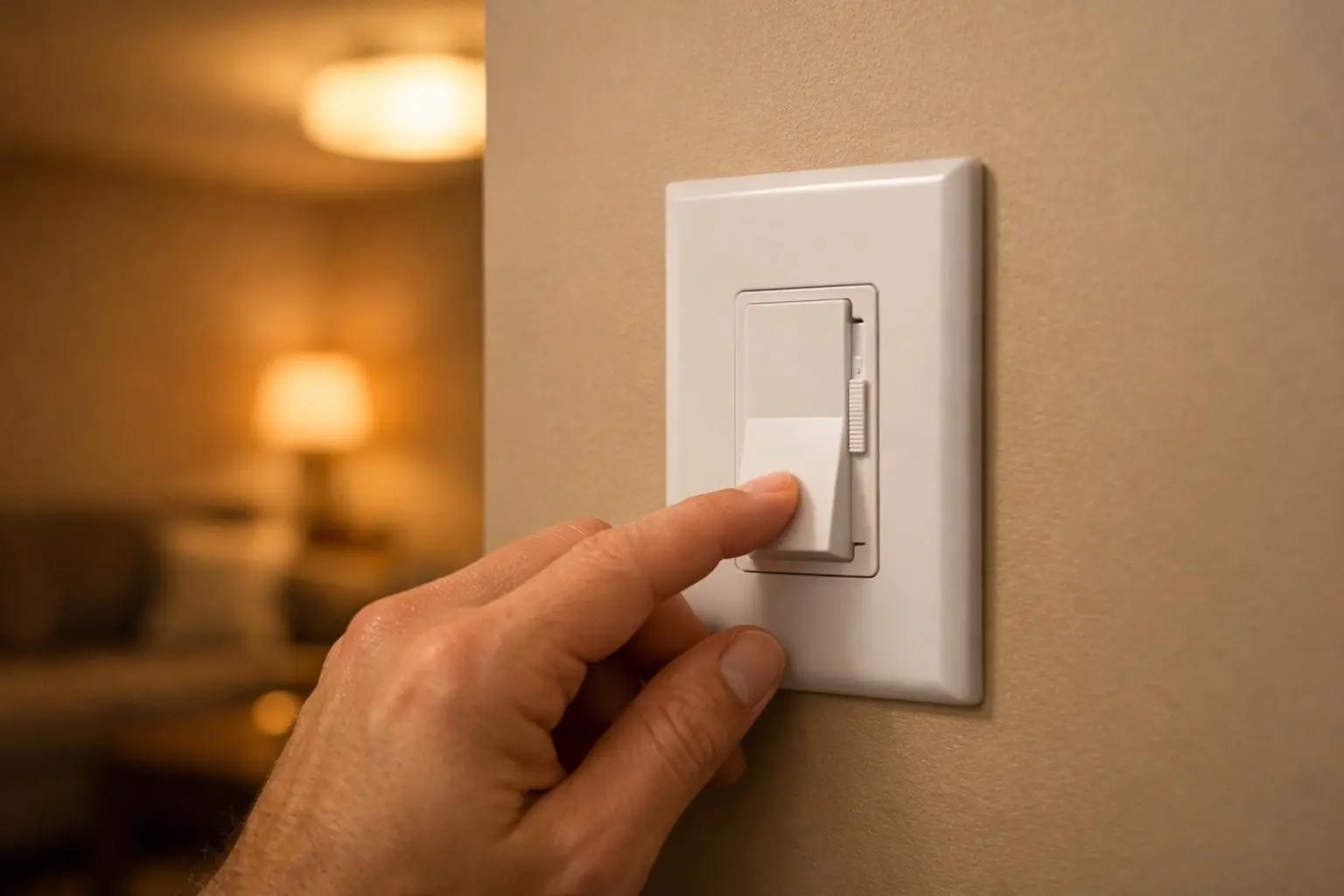
If LED bulbs flicker or won't dim smoothly, check the dimmer manufacturer's bulb compatibility list online — most major brands (Lutron, Leviton, Legrand) publish tested bulb lists. Swapping to a recommended bulb brand usually fixes the issue for under $10.
Frequently Asked Questions
How long does it take to install a dimmer switch?
+
This project typically takes about 30 min. The guide includes 8 steps with detailed instructions for each.
What tools do I need?
+
You will need: Flat-head screwdriver, Phillips-head screwdriver, Non-contact voltage tester, Wire strippers, Needle-nose pliers, Flashlight or headlamp. Materials include: Single-pole dimmer switch (LED/CFL-compatible if using those bulbs — check the wattage rating matches your total bulb load), Wire nuts (usually included with the dimmer), Electrical tape, New wall plate (most dimmers include one — verify it matches your decor).
Is this a good project for beginners?
+
Yes! This is rated as an easy project that most homeowners can complete with basic tools and no prior experience.
Sources & further reading
- Lighting Controls — U.S. Department of Energy
- How to Install a Dimmer Switch — Legrand
More Electrical Guides
View all →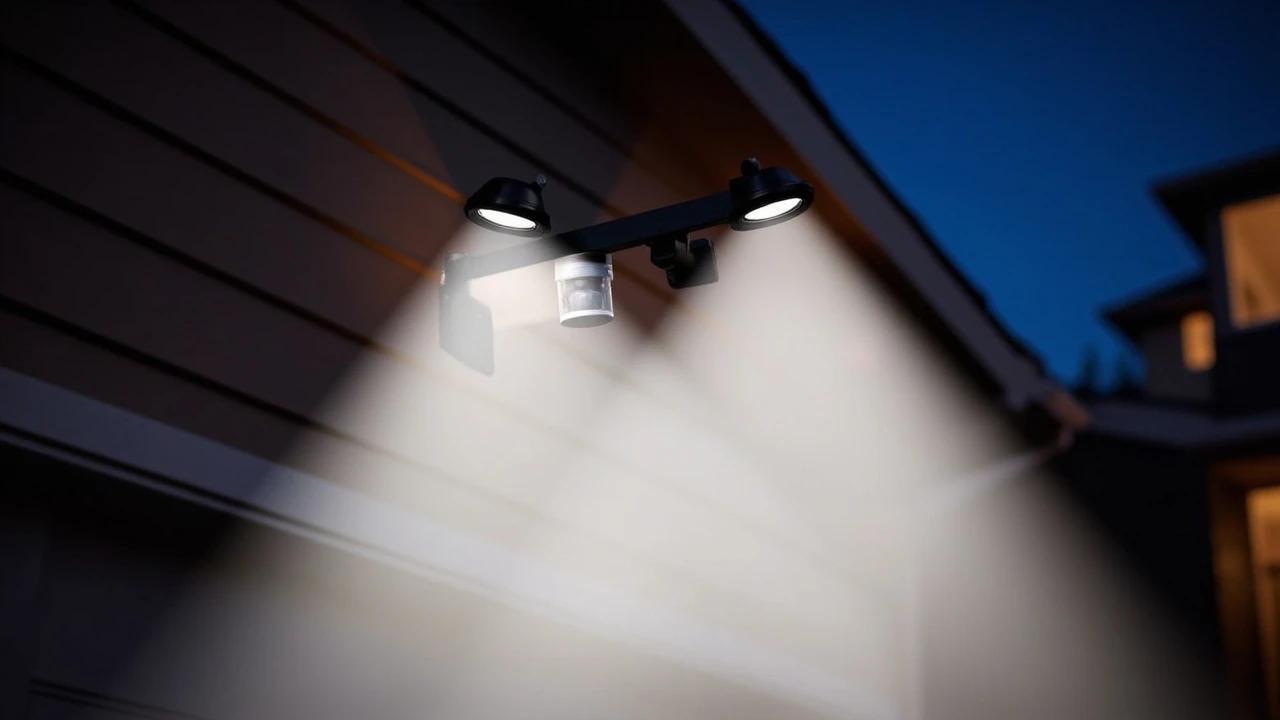 Medium1h 30m
How to Install a Motion Sensor Light
A motion-activated floodlight is one of the most effective and affordable security upgrades you can make — it deters intruders, lights your path when you come home after dark, and typically costs under $40 for the fixture itself. If you're replacing an existing outdoor light, the wiring is already in place and the swap takes about 90 minutes with basic hand tools. This guide covers turning off power safely, removing the old fixture, wiring the new sensor light, mounting it, and dialing in the sensitivity and aim so it covers exactly the zone you want.
 Easy45 min
How to Install a Smart Lock on an Exterior Door
A smart lock is the rare upgrade that's both safer and more convenient — keypad or phone entry, no spare key under the mat, and a log of who came and went — and on a standard pre-bored door it's a 45-minute swap with a single screwdriver, no electrician needed. The catch isn't wiring (there usually isn't any); it's buying a lock that actually fits your door and getting the bolt to line up so it never jams. This guide covers the compatibility check that prevents a costly return, the install itself, and the alignment and app setup that make it reliable.
 Medium45 min
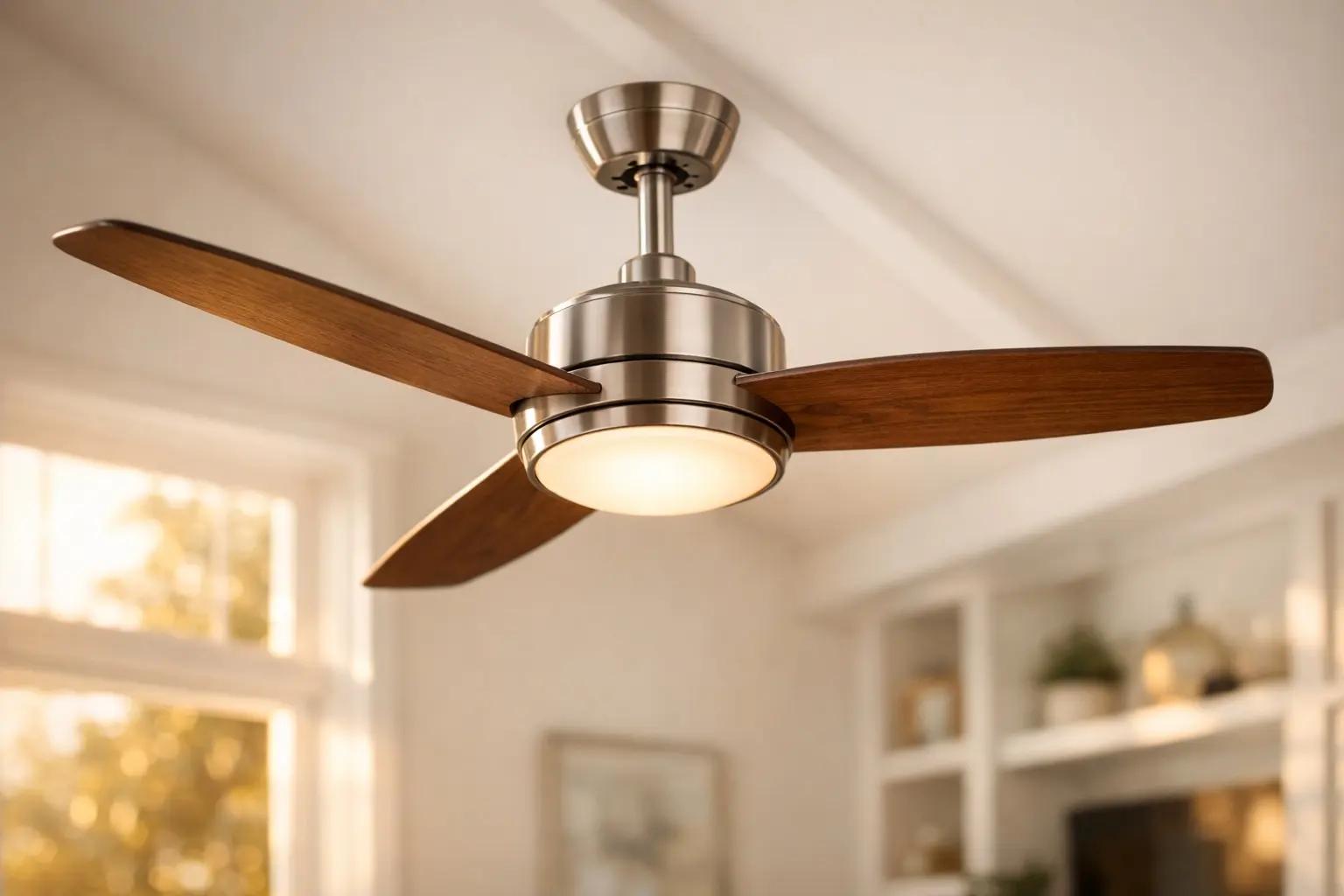
How to Install a Ceiling Fan
Replacing a light fixture with a ceiling fan improves air circulation in summer and can reduce heating costs in winter by circulating warm ceiling air downward. Most installs take 45-60 minutes.
You Might Also Like
 Easy25 min
Best Deck Stain: Transparent vs Semi vs Solid
There is no "best" deck stain — there is the right stain for your sun exposure, wood condition, and how often you want to redo the job. Transparent stains last 1-2 years but let the natural grain show. Solid stains last 4-7 years but look like paint. This guide walks the four opacity levels and the oil-vs-water choice so you pick the one that matches your deck and your tolerance for re-staining.
 Easy45 min
How to Install a Smart Thermostat
A smart thermostat is one of the highest-ROI upgrades you can make to your home — it learns your schedule, adjusts automatically when you're away, and typically saves about 8% on heating and cooling bills — the figure ENERGY STAR verifies from real-home data, roughly $50 a year — so the $120-250 device usually pays for itself within a few years. If your old thermostat has labeled wires behind it, the swap takes about 30-45 minutes with nothing more than a screwdriver and your phone. This guide covers checking compatibility, labeling wires, mounting the new base, connecting everything, and walking through the app setup so your system is running smart the same day.
 Easy30 min
How to Fix a Dripping Faucet
A dripping faucet wastes more than 3,000 gallons of water per year and can add $20 or more to your monthly water bill. The fix is almost always a worn cartridge, washer, or O-ring — parts that cost under $10 and take 20-30 minutes to replace with basic tools.