How to Fix a Leaky Pipe Joint
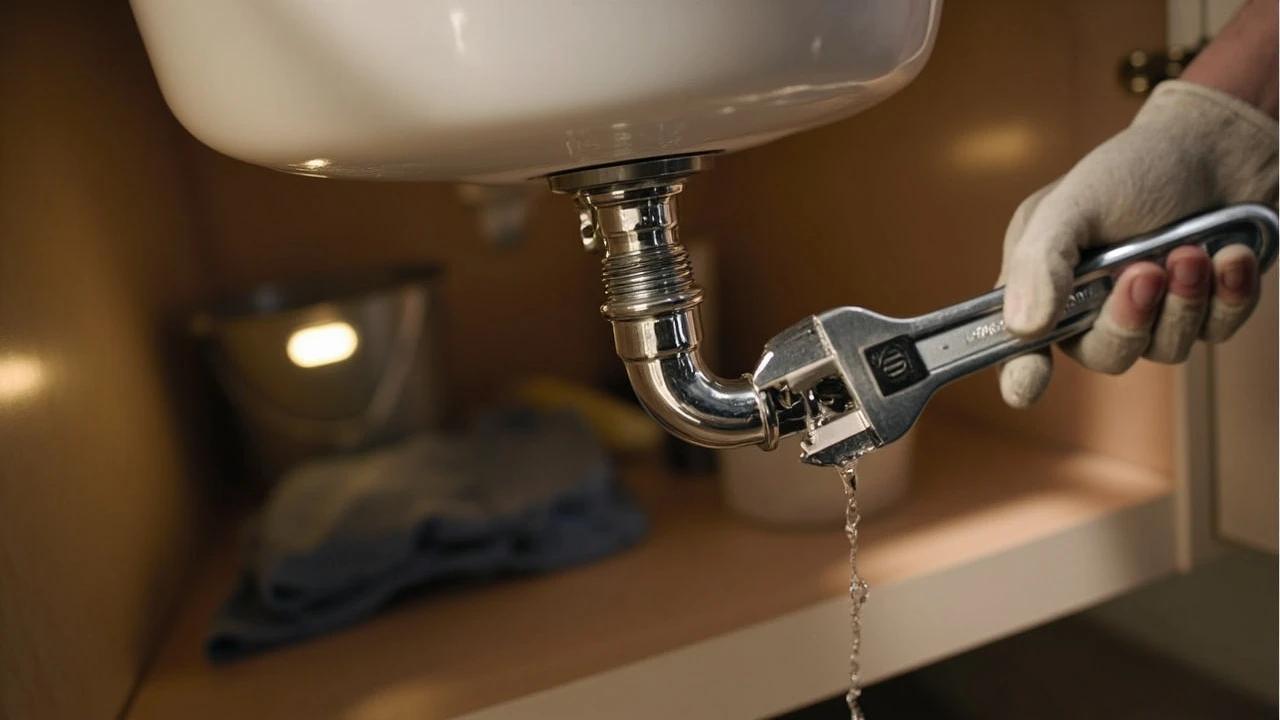

A weeping pipe joint under the sink is one of the most common — and cheapest — plumbing repairs you'll ever make. A roll of Teflon tape and a small tube of pipe joint compound cost under $10 and will fix the vast majority of threaded and compression joint leaks in 30 to 45 minutes, saving you the $150 to $400 a plumber would charge for the same trip.
What You'll Need
🛠 Tools
📦 Materials
Safety First
- •Shut off the water supply before disassembling any joint — a pressurized line will spray when you crack the fitting.
- •Never use Teflon tape or pipe dope on rubber washers, O-rings, or compression-fitting ferrules sealed by compression — sealant prevents the proper compression seal.
Step-by-Step Instructions
Identify the Joint Type and Locate the Leak
Dry the suspect area completely with a paper towel, then watch for 60 seconds with a flashlight to confirm exactly which joint is weeping — water travels along pipes and the visible drip is often inches from the source. There are three common joint types: threaded (metal male threads screwed into a female fitting, sealed with tape or dope), compression (a brass nut squeezes a ferrule onto the pipe — common on shutoff valves and supply lines), and slip-joint (a plastic nut and washer on a P-trap). Each is fixed differently, so confirm the type before grabbing tools.
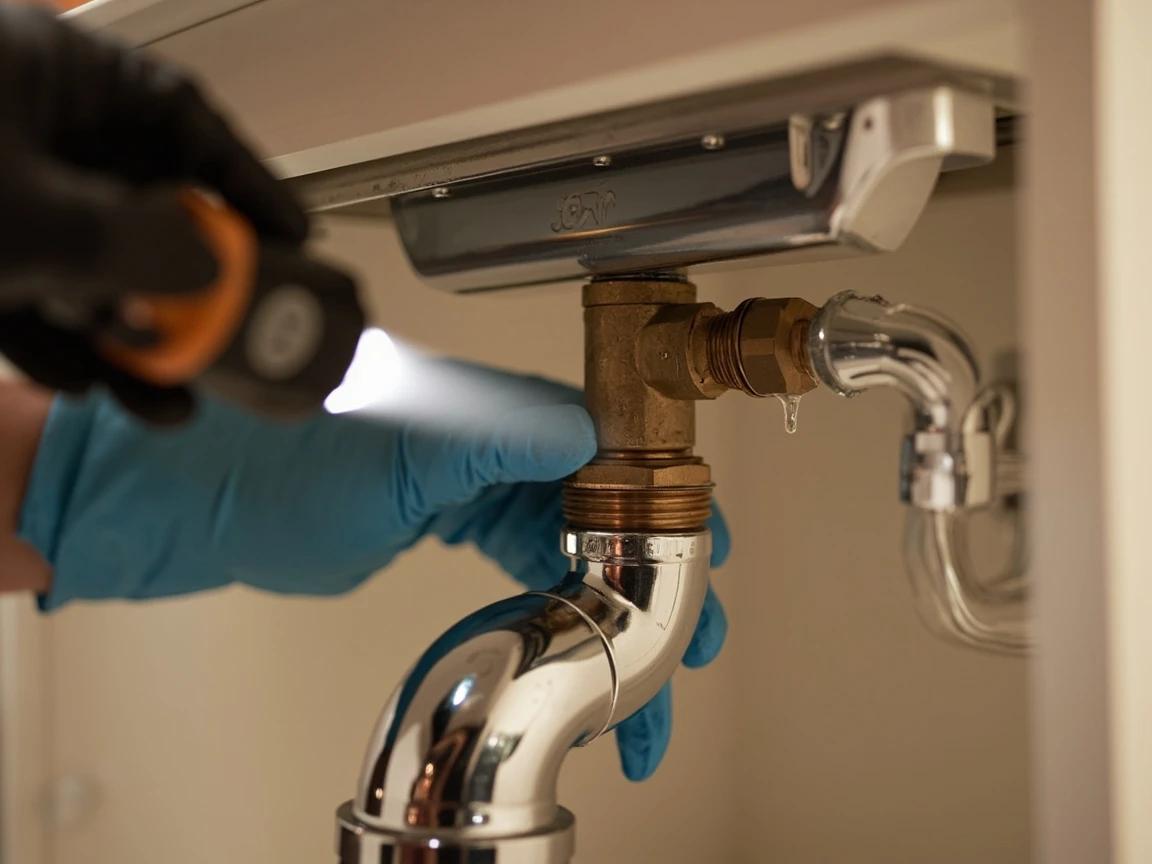
Wrap a single layer of dry toilet paper around each suspect joint and check after 5 minutes — the wet spot pinpoints the exact source far better than your eyes can.
Shut Off the Water and Drain the Line
For a sink or toilet supply line, turn the angle stop valve (the small oval handle on the wall behind the fixture) fully clockwise until it stops. For drain or trap leaks no shutoff is needed, but stop running water at the fixture. Open the faucet to release residual pressure and let the line drain into a bucket. Place a shallow pan or folded towels directly under the joint to catch the water still trapped in the trap or the section you are about to open.
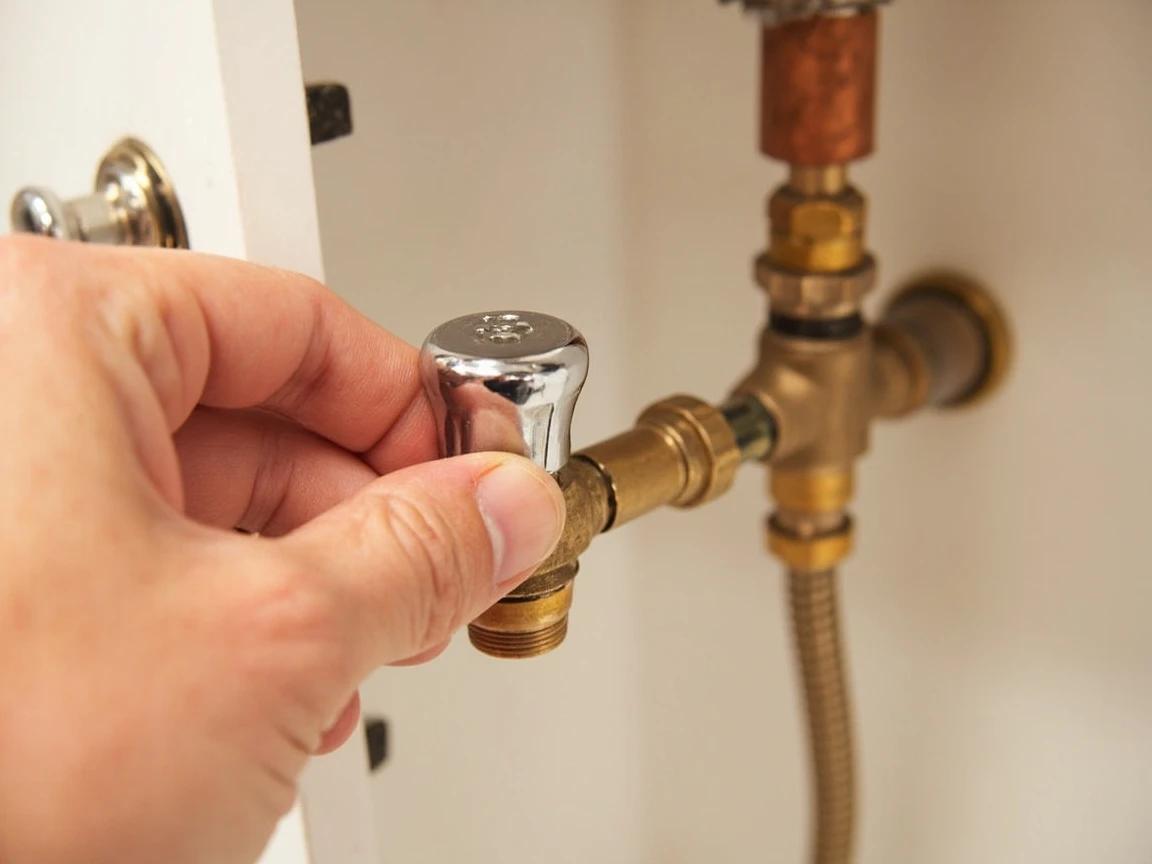
If the angle stop valve itself is the leaking joint, you may need to shut off the main water valve for the house before disassembling. Old multi-turn shutoffs sometimes fail when you close them — be ready to find the main shutoff first.
Disassemble the Joint
For threaded metal joints, hold the fitting body steady with one wrench and turn the nut or pipe counterclockwise with a second wrench — using two wrenches prevents twisting the rest of the pipe run. For compression fittings, hold the valve body with one wrench and back off the compression nut with the second. For slip-joint plastic nuts on a P-trap, you can usually loosen them by hand or with slip-joint pliers — no wrench needed and never with metal-on-plastic force. Catch any standing water in your bucket as you break the seal.
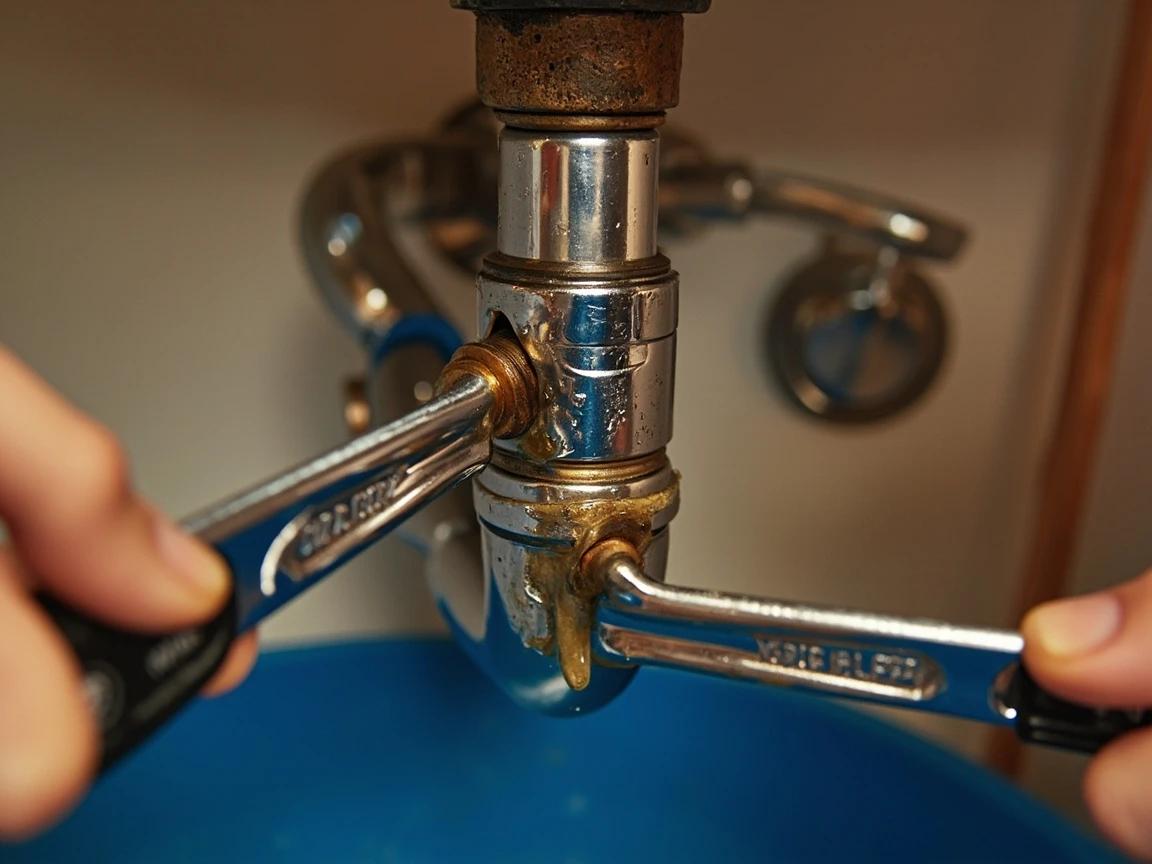
Snap a phone photo before you fully separate the joint. The orientation of washers, ferrules, and any beveled surfaces matters and a reference photo eliminates guesswork at reassembly.
Inspect Threads, Ferrules, and Washers
Look closely at the male threads with a flashlight. You are looking for galling (silvery torn metal), cross-threading (threads going at the wrong angle), or a hairline crack in the female fitting. On compression fittings, inspect the brass ferrule — if it is deformed, cracked, or has cut into the pipe, replace it with a matching new one. On slip-joint connections, check the beveled nylon or rubber washer for flattening, cracks, or stiffness. Replace any worn part now; sealant cannot save a damaged ferrule or torn washer.

Never put Teflon tape or pipe dope on a rubber washer, O-ring, or compression ferrule. These seal by physical compression — sealant prevents the surfaces from mating tightly and almost guarantees a continued leak.
Clean the Threads Thoroughly
Use a wire brush or stiff old toothbrush to scrub off the remnants of the old tape, dope, mineral scale, and any debris from both the male and female threads. For stubborn mineral deposits, soak a rag in white vinegar and wrap it around the threads for 10 minutes, then scrub again. Wipe everything dry with a clean rag — new sealant adheres far better to clean, dry threads than to a fitting with old sealant or moisture on it.
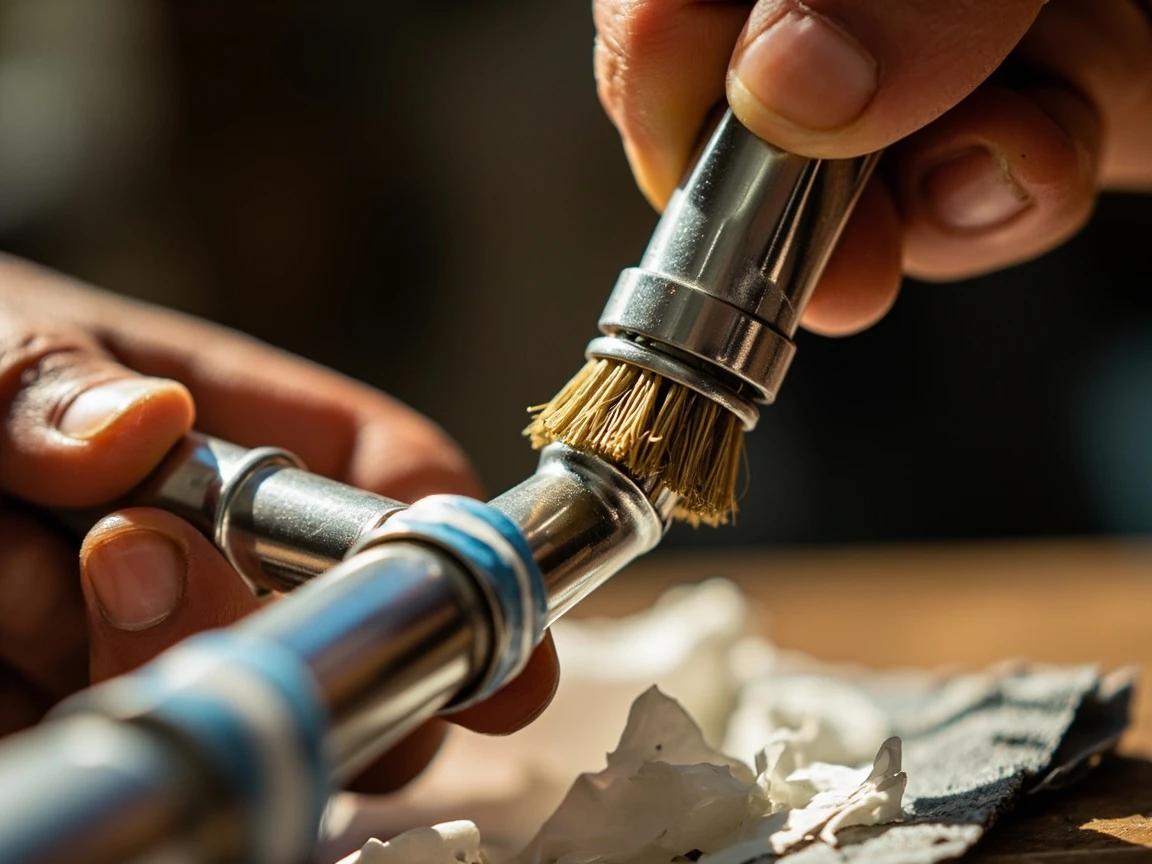
A folded piece of fine-grit sandpaper wrapped around the male threads, twisted a few times, leaves the threads bright and sealant-ready in about 10 seconds.
Apply Teflon Tape (or Pipe Dope) Correctly
Point the open end of the male thread toward you and wrap PTFE tape clockwise around the threads three to five times, stretching the tape lightly so the thread profile shows through. Start one thread back from the very end of the pipe — wrapping over the lip can shed bits of tape into the water line. For pipe dope, brush a thin even coat over all the male threads with the applicator brush, just enough to fill the thread valleys. Use only one or the other on a typical residential joint, not both.
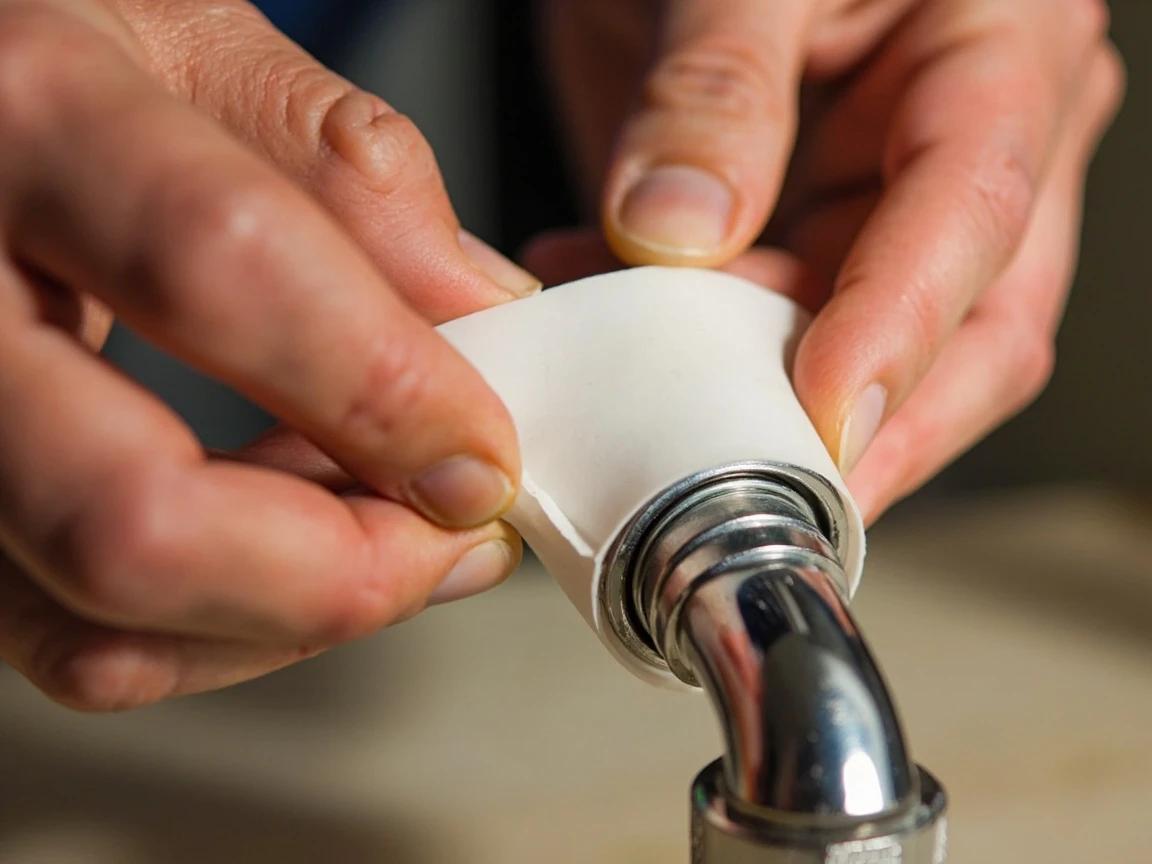
Three to five wraps of standard white tape is the correct amount. Over-wrapping with eight or ten wraps prevents the fitting from threading on fully and can crack plastic female fittings under torque.
Hand-Thread the Joint and Check Alignment
Bring the two parts together by hand only and start the threads with a slow counterclockwise turn first — when you feel a slight click, the threads have aligned. Now turn clockwise and thread the fitting in by hand as far as it will go (typically three to four full turns on a 3/8-inch supply line). If the threads bind or feel gritty before they are fully engaged, back it off and re-check for cross-threading. The pipe must enter the fitting perfectly straight, with no side load.
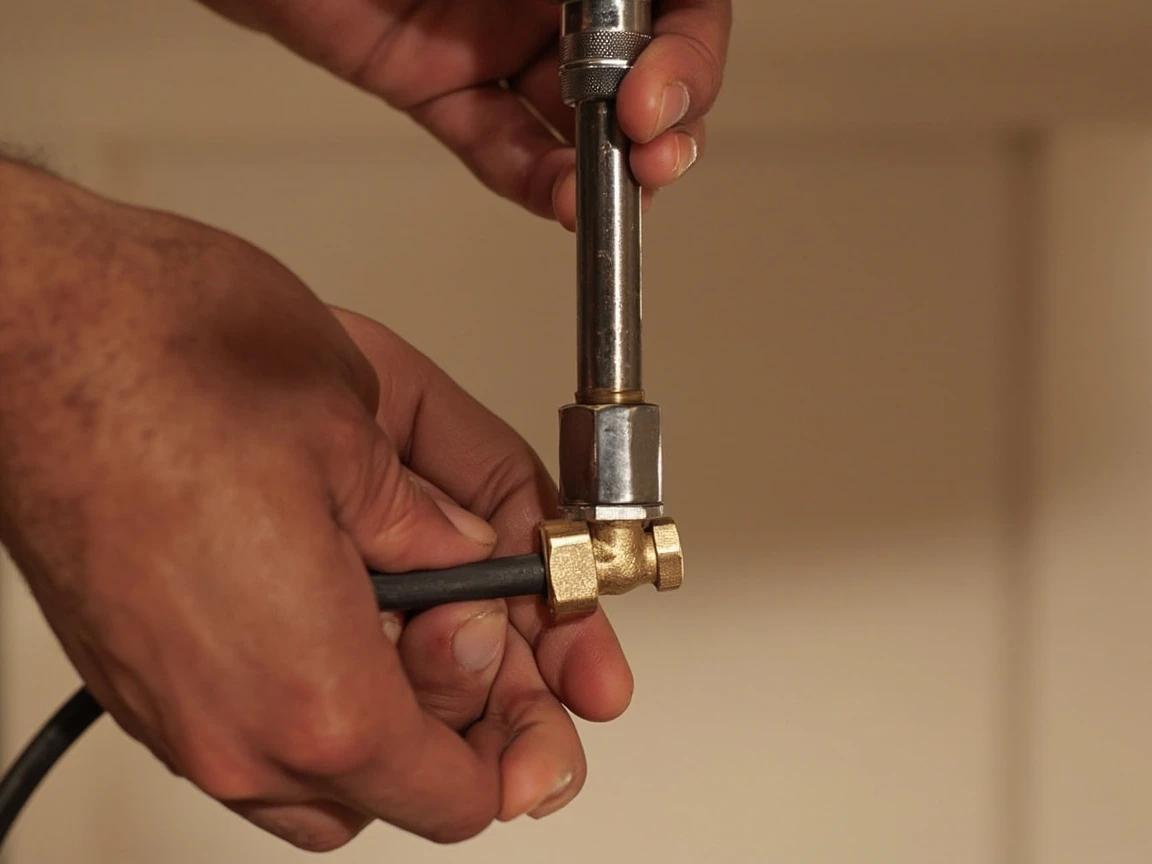
If the pipe will not enter the fitting straight, the fix is upstream — a kinked or bent supply line will pull the joint sideways and leak no matter how tight you crank it. Replace bent supply lines rather than forcing them.
Tighten with Two Wrenches — Then Stop
Hold the fitting body steady with one wrench and turn the nut or pipe clockwise with the second wrench. Tighten an additional one half to one full turn past hand-tight — that is all. The single biggest mistake DIYers make is overtightening, which cracks brass fittings, crushes ferrules, or splits plastic nuts. If the joint still drips after a half turn, stop, disassemble, and re-tape rather than cranking harder.
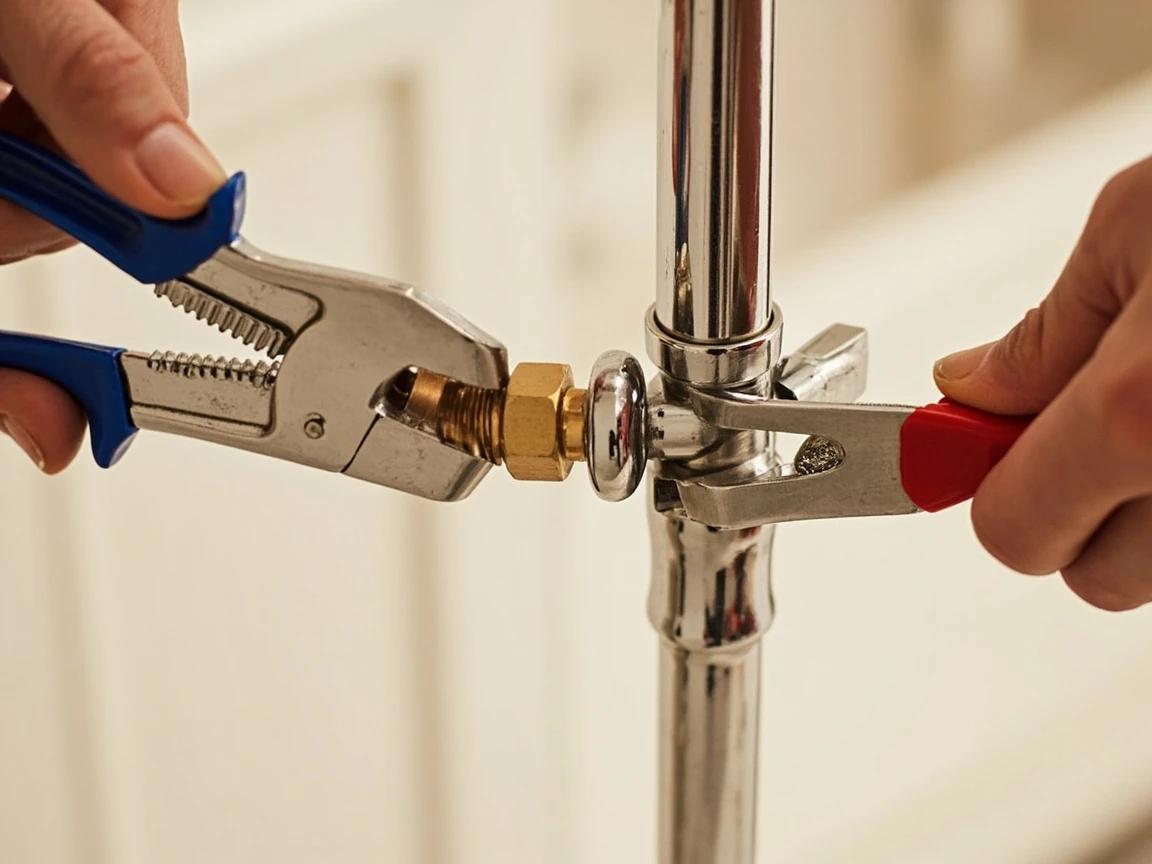
Slip-joint plastic nuts on a P-trap should be hand-tight only, plus at most a quarter turn with slip-joint pliers. Pipe-wrench torque cracks the plastic, and a cracked slip nut leaks immediately.
Restore Water and Test for Leaks
Open the angle stop valve slowly over 10-15 seconds — abrupt opening causes water hammer that can stress your fresh joint. Run the faucet for 30 seconds to flush the line, then turn it off and dry every newly-tightened joint with a clean paper towel. Watch the dried joints for a full 5 minutes with a flashlight, then check again 24 hours later. A truly sealed joint stays bone-dry through both checks.
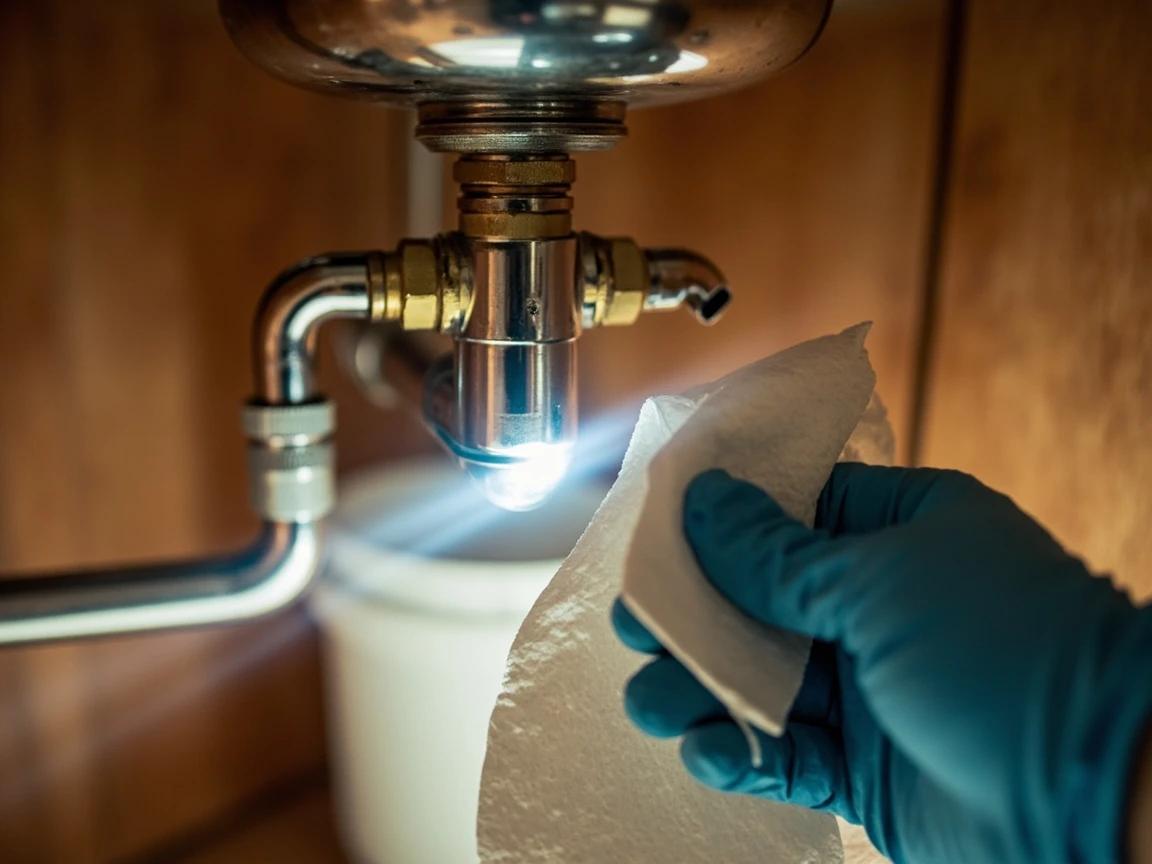
Place a dry sheet of paper towel under the joint and check it the next morning. Any pinpoint dampness shows up clearly on white paper long before you would notice an actual drip.
Frequently Asked Questions
Should I use Teflon tape, pipe dope, or both on a leaky joint?
+
For most household water lines under 80 psi, three to five wraps of PTFE tape on the male threads is plenty. Use pipe dope (joint compound) instead on larger fittings, gas lines (yellow-rated dope only), or anywhere you need extra strength. Pros sometimes layer both — tape first, then a light coat of dope over the tape — on critical high-pressure connections, but on a typical kitchen or bathroom joint that is overkill.
Which way do I wrap Teflon tape so it doesn't unravel?
+
Point the end of the threaded pipe toward you and wrap the tape clockwise around the threads. That way, when you screw the fitting on (which also rotates clockwise from your perspective), the rotation tightens the tape against the threads instead of peeling it off. Use three to five wraps with the tape pulled snug so the thread profile shows through.
Why is my pipe joint still leaking after I tightened it?
+
Nine times out of ten the threads are cross-threaded, the tape was wrapped the wrong direction, or the joint is overtightened and has cracked the female fitting. Back the joint off completely, inspect the threads for galling or a hairline crack in the brass or plastic, re-tape, and re-tighten only hand-tight plus a half to one full turn with a wrench. If it still drips, the fitting itself is damaged and needs to be replaced.
Can I use JB Weld or epoxy to fix a leaking pipe joint?
+
Epoxy products like JB WaterWeld can stop a small drip as a temporary fix and may hold for years, but they are not a code-compliant repair on a threaded joint. The right fix is almost always to disassemble the joint, re-tape, and re-tighten — which costs under $5 and takes 20 minutes. Save the epoxy for pinhole leaks in the middle of a pipe run where disassembly is impractical.
How much would a plumber charge to fix the same leak?
+
A plumber's minimum service call for a single threaded-joint leak runs $150 to $400 depending on your market and the time of day, with after-hours and weekend rates landing on the higher end. The actual repair takes about 20 minutes of work, so most of what you're paying for is the truck, the trip, and the minimum-hour billing. Doing it yourself with $8 of supplies is the single highest hourly-rate task on this site.
Sources & further reading
- Stop Leaks in Plumbing Joints (DIY) — Family Handyman
- Pipe Dope vs. Teflon Tape: Which Should You Use? — Oatey
- How Much Do Pipe Leak Repairs Cost? [2026 Data] — Angi
More Plumbing Guides
View all → Easy30 min
How to Fix a Dripping Faucet
A dripping faucet wastes more than 3,000 gallons of water per year and can add $20 or more to your monthly water bill. The fix is almost always a worn cartridge, washer, or O-ring — parts that cost under $10 and take 20-30 minutes to replace with basic tools.
 Medium1 hr
How to Fix Low Water Pressure
Weak, trickling water usually has a cheap, findable cause — a clogged aerator, a half-closed valve, or a tired pressure-reducing valve — long before it means re-piping the house. This guide walks the diagnosis in order: first pin down whether it's one fixture or the whole house (and hot-only or both), then work each cause with a $12 pressure gauge as your guide. Most fixes are free or under $30; you'll also learn the few signs that mean it's time to call a plumber.
 Easy1 hr
How to Flush a Water Heater Tank
Sediment buildup in your water heater tank silently drives up your gas or electric bill, makes your hot water lukewarm, and can cut the tank's lifespan in half — yet flushing takes about 45 minutes and costs nothing beyond a garden hose you probably already own. Most manufacturers recommend flushing once a year, or every six months in hard-water areas. This guide walks you through shutting down the heater safely, draining the tank, flushing until the water runs clear, and restarting without trapping air or burning out an exposed heating element.
You Might Also Like
 Easy45 min
How to Install a Smart Thermostat
A smart thermostat is one of the highest-ROI upgrades you can make to your home — it learns your schedule, adjusts automatically when you're away, and typically saves about 8% on heating and cooling bills — the figure ENERGY STAR verifies from real-home data, roughly $50 a year — so the $120-250 device usually pays for itself within a few years. If your old thermostat has labeled wires behind it, the swap takes about 30-45 minutes with nothing more than a screwdriver and your phone. This guide covers checking compatibility, labeling wires, mounting the new base, connecting everything, and walking through the app setup so your system is running smart the same day.
 Hard8 hrs
How to Paint Kitchen Cabinets
A professional cabinet refinish costs $3,000-8,000, but painting them yourself with the right prep and materials delivers the same transformation for under $200 in a long weekend. The secret is thorough degreasing, a bonding primer, and thin coats with proper dry time between each — skip any of those and the paint will chip within months. This guide walks through the full process from door removal and labeling to final reassembly, covering both brush and roller techniques for a smooth, factory-like finish.
 Medium6 hrs
How to Paint a Room
A fresh coat of paint is the fastest, cheapest way to transform any room — and doing it yourself saves $400-800 in labor for an average 12x12-foot bedroom. The job takes a weekend from prep to final coat, and the difference between an amateur-looking result and a professional finish comes down to technique, not talent. This guide covers prep, cutting in, rolling, and cleanup so you get clean lines and even coverage the first time.