How to Fix a Tripped Circuit Breaker
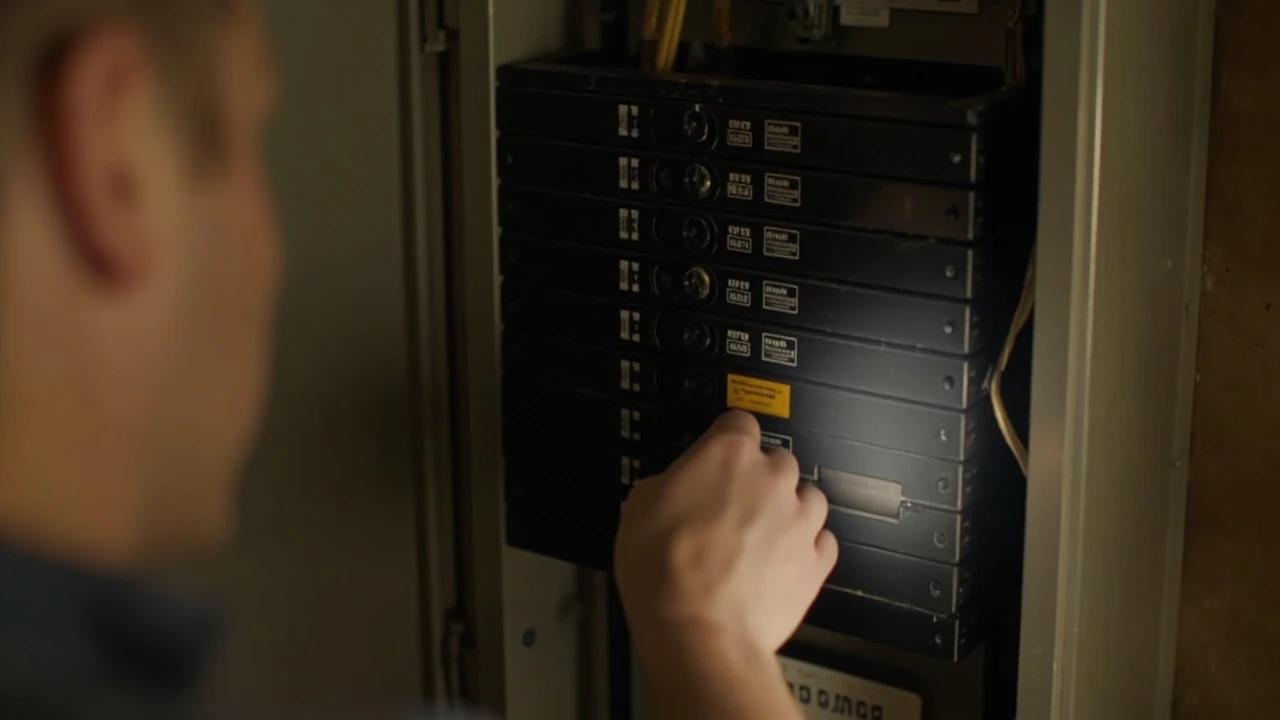

When a breaker trips, part of your home goes dark — and the breaker just did its job, cutting power before the wiring could overheat. This guide shows you how to reset it safely in about 15 minutes, how to read what the trip is telling you (overload, short circuit, ground fault, or arc fault), and the danger signs that mean you should leave it off and call an electrician.
What You'll Need
🛠 Tools
📦 Materials
Safety First
- •If you smell burning plastic, see scorch marks or melted spots, hear buzzing or crackling, or the panel feels warm, do NOT reset the breaker — leave it off and call an electrician (and the fire department if you smell smoke).
- •Stand on a dry surface with dry hands and rubber-soled shoes. Never touch the panel while wet or standing in water.
- •Open only the hinged breaker door. Never unscrew the inner 'dead front' cover behind it — that exposes the bus bars and main service lugs, which stay energized even with the main breaker off.
- •Do not repeatedly flip a breaker that won't stay on. Forcing a breaker closed against a real short or ground fault sends huge current through the wiring and can start a fire in the wall.
Step-by-Step Instructions
Check for Danger Signs Before You Touch Anything
Before you reset anything, use your senses at the panel. If you smell burning plastic, see scorch marks or melted spots, hear buzzing or crackling, or the cover feels warm, do not reset — leave the breaker off and call an electrician. A breaker trips to protect the wiring from overheating; if it tripped because of a real fault, forcing it back on can ignite a fire inside the wall.
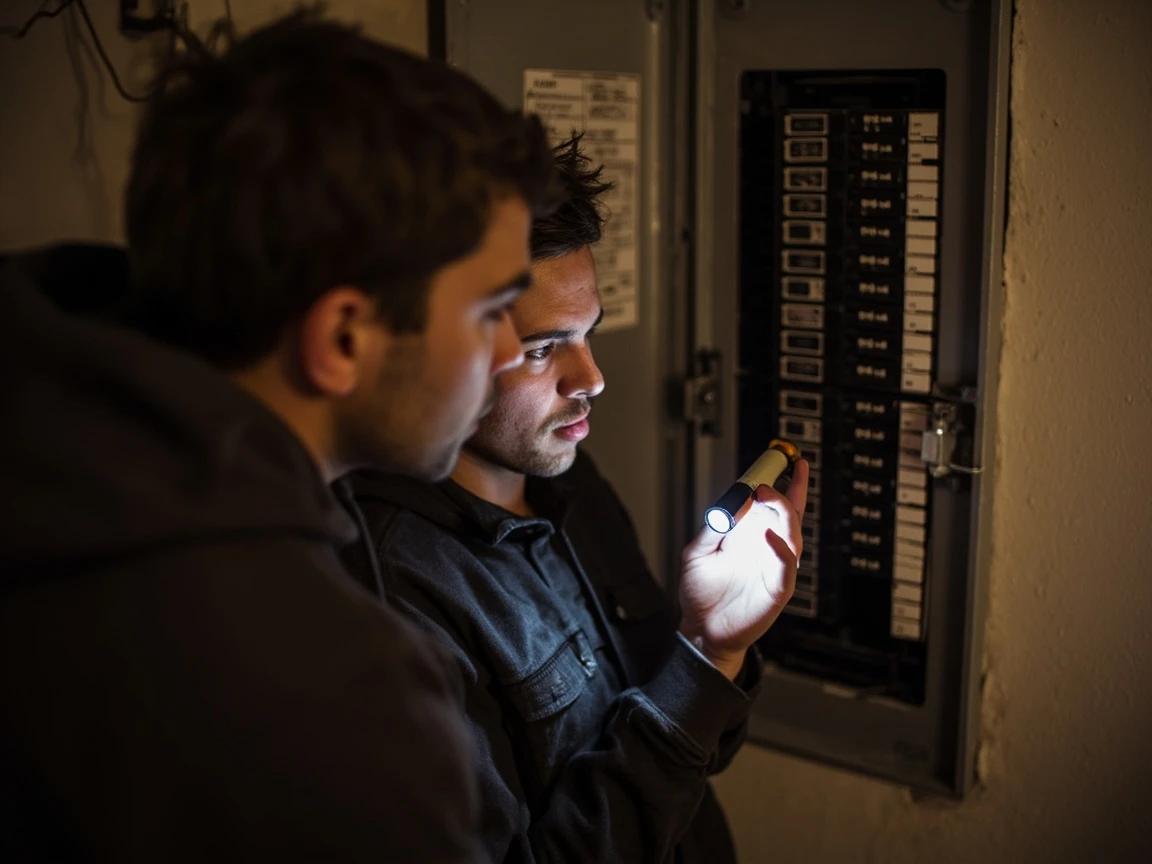
If you smell smoke or see any burning, leave the breaker off, get everyone out, and call the fire department from outside. An electrical fire can be smoldering inside the wall before you see flames.
Turn Off and Unplug Devices on the Dead Circuit
Go to the room or rooms that lost power and switch off the lights, then unplug or switch off everything on that circuit — especially high-draw items like space heaters, hair dryers, microwaves, irons, and window AC units. This removes the overload that most likely caused the trip and protects sensitive electronics from the surge when power snaps back on. Leaving the load connected is the number-one reason a breaker trips right back off.
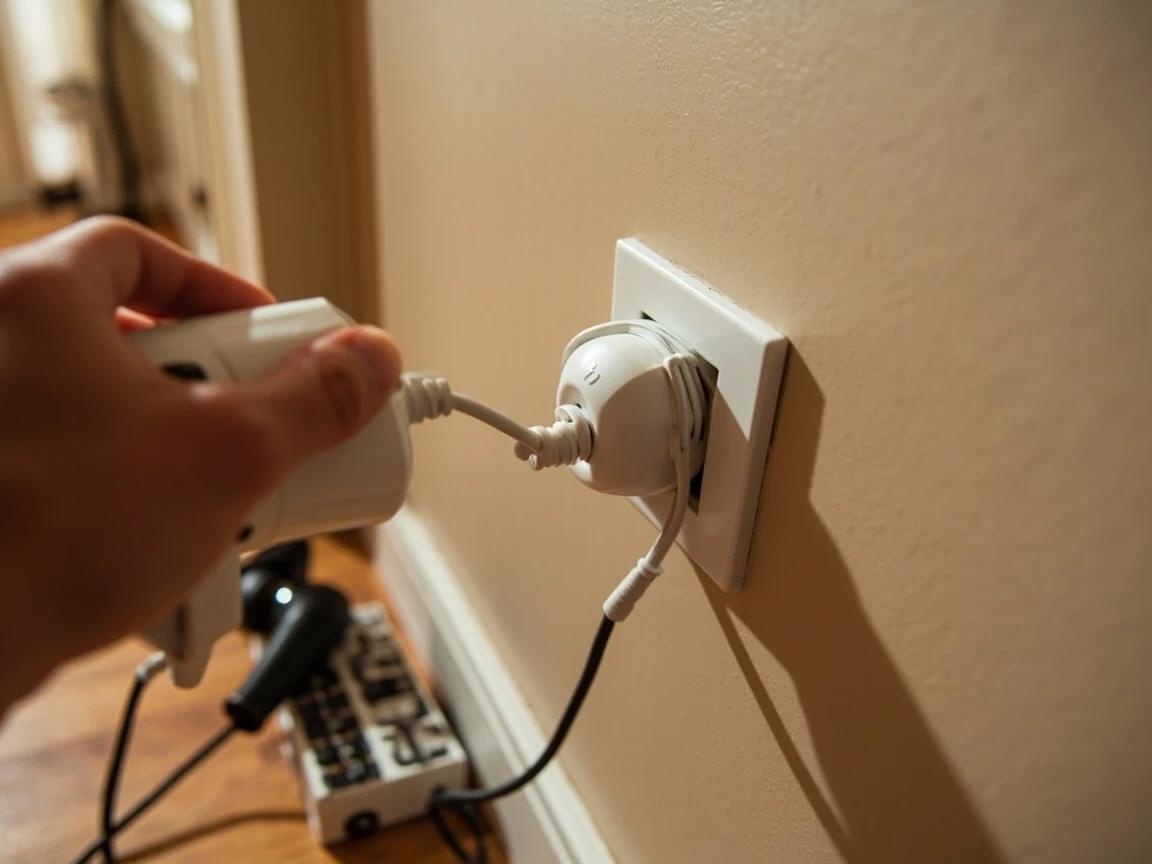
Note what was running the moment it tripped. A space heater plus a microwave on the same circuit is the classic overload — that one clue often solves the whole mystery.
Open the Panel and Find the Tripped Breaker
Find your service panel — usually in the garage, basement, utility room, or a hallway closet — and open only the hinged door covering the switches. A tripped breaker's handle sits in the middle, between ON and OFF, and many show a small orange or red window when tripped. If you can't spot it by sight, gently push each handle toward OFF; the tripped one will have a little give the others don't.
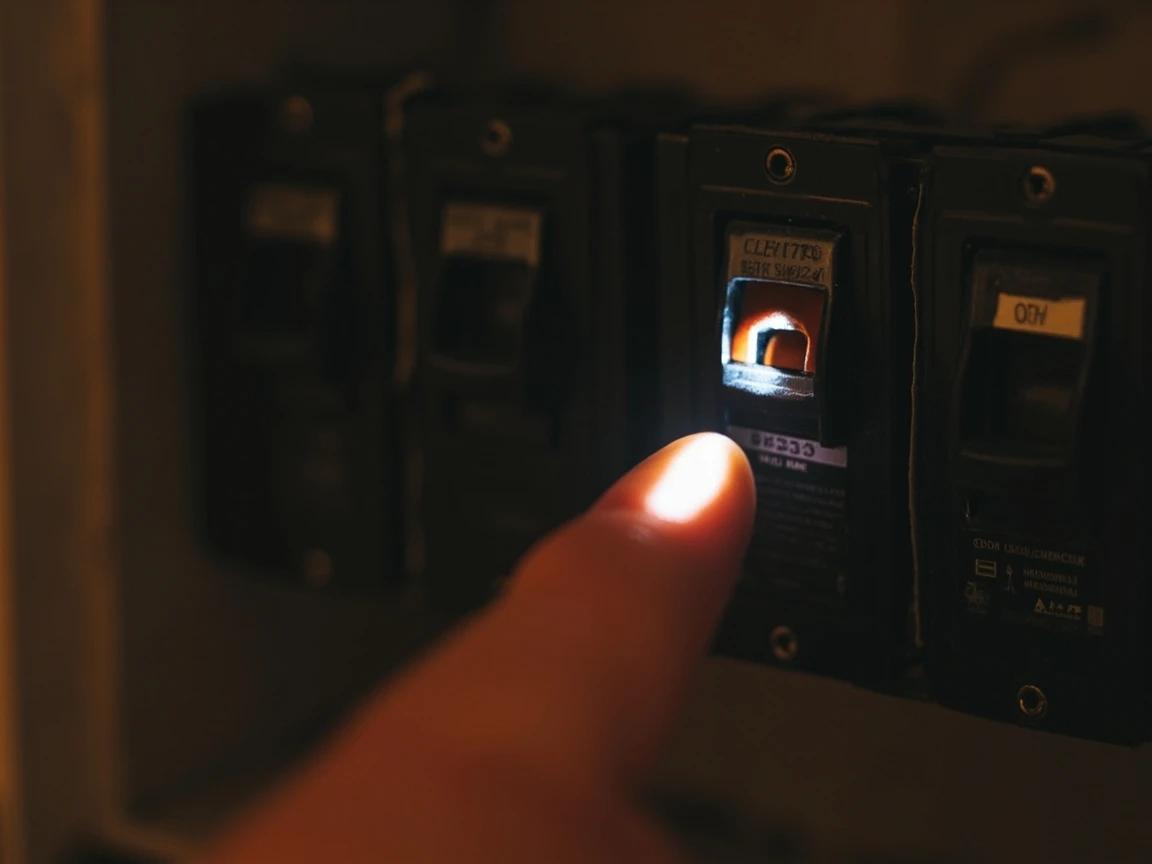
Open only the breaker door. Never unscrew the inner 'dead front' panel behind it — the bus bars and incoming service lugs there stay live even with the main breaker switched off.
Reset It: Firmly OFF, Then ON
To reset a breaker you must first push the handle firmly all the way to OFF — you'll usually feel and hear a distinct click. A breaker will not reset directly from the middle tripped position, which is what makes people think it's broken. Pause two to three seconds, then push the handle firmly to ON.
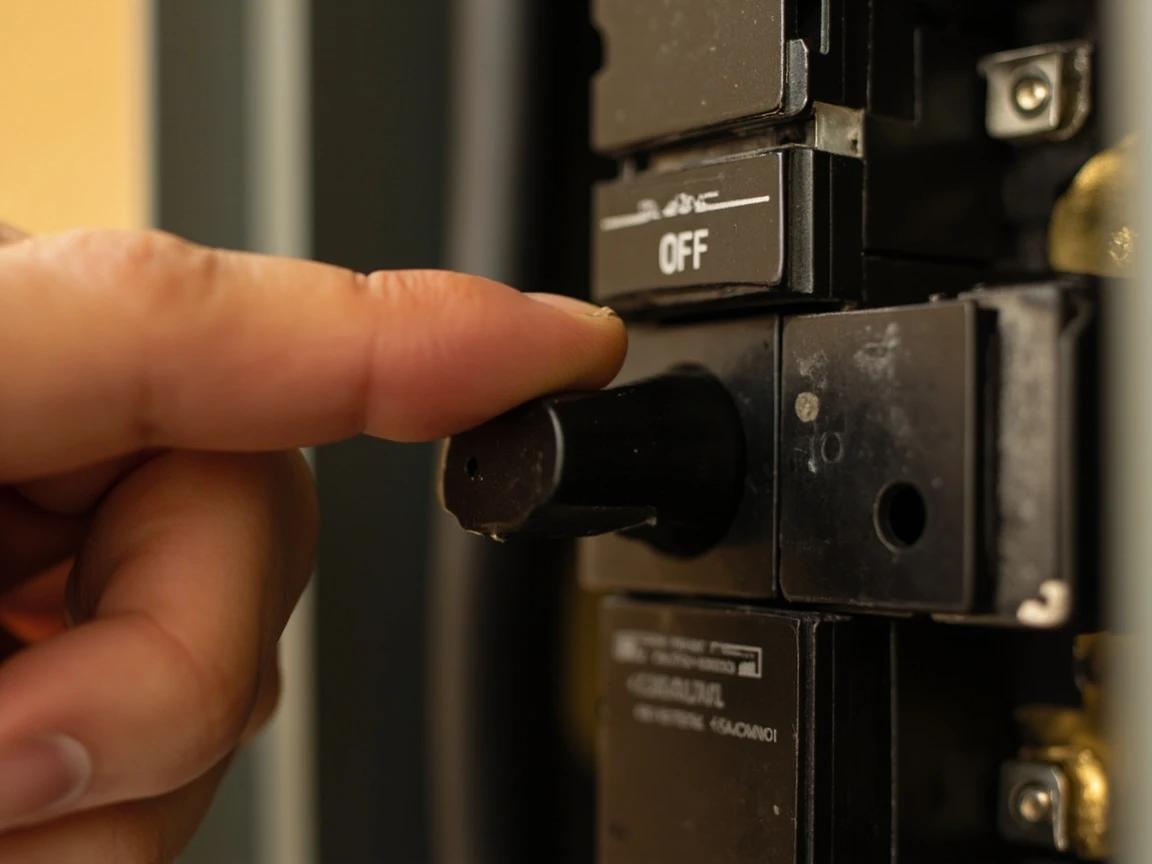
If a whole detached garage, shed, or addition is dark, check the larger feed breaker for that sub-panel in your main panel — it can trip too, killing everything downstream of it.
Restore Power and Read What the Trip Is Telling You
Go back and confirm the outlets and fixtures on that circuit have power again. How the breaker behaves now is your diagnosis. If it holds with the load unplugged and only trips later when you plug everything back in, it was a simple overload. If it trips the instant you flip it on — especially with everything unplugged — you have a short circuit or ground fault, which is not a DIY repair.
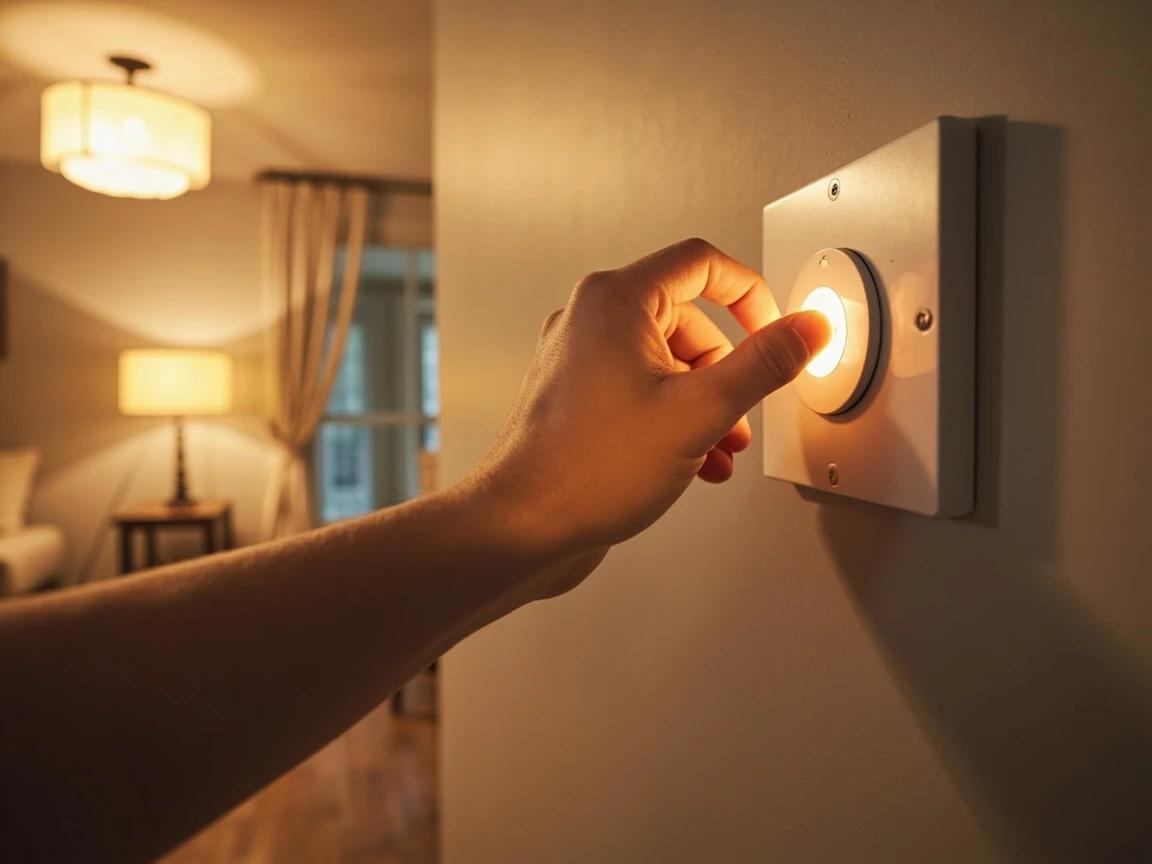
Overload: Spread Out the Load (The Most Common Cause)
An overload means the circuit was asked to carry more current than its wire and breaker are rated for — usually 15 or 20 amps. It typically trips after a few minutes of running, not the instant a device switches on. The fix is to redistribute the load: move the space heater or window AC to a different circuit, avoid running two heat-producing appliances on one outlet, and never daisy-chain power strips to multiply outlets.
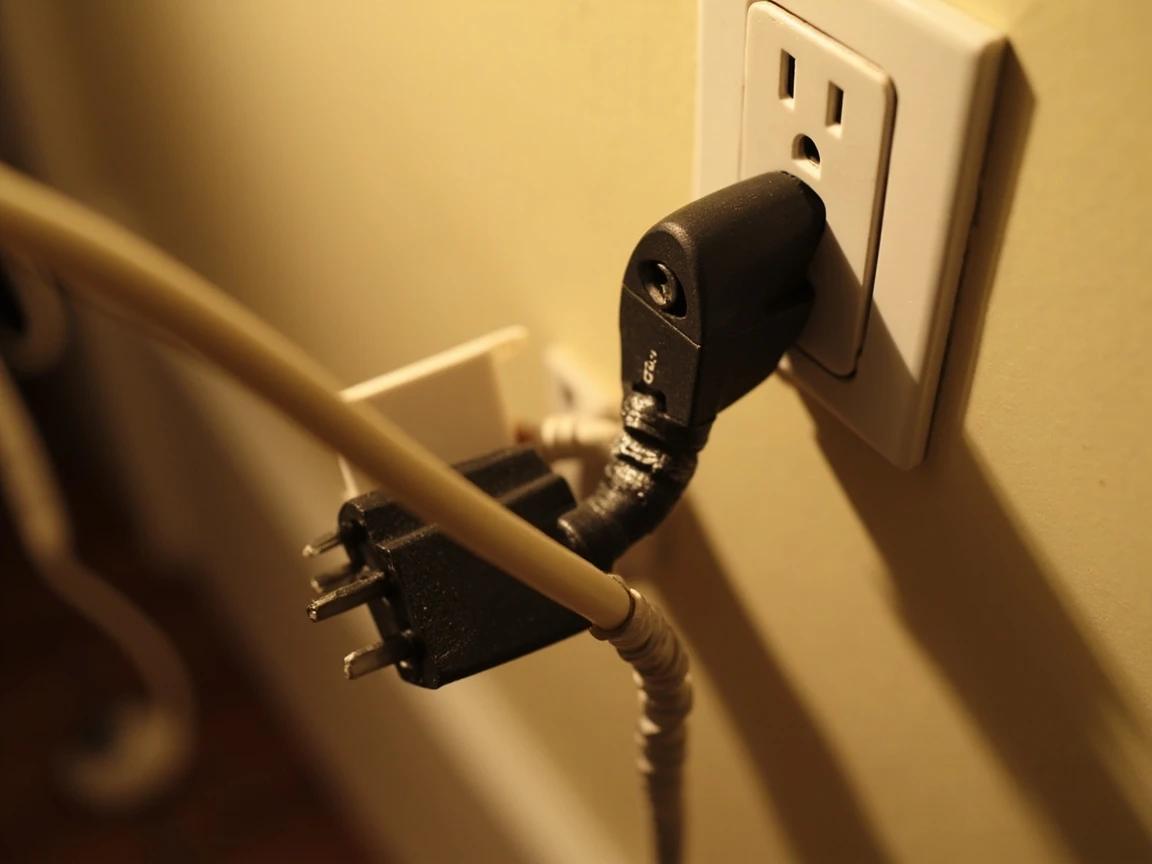
A 15-amp circuit safely carries about 1,440 watts continuously and a 20-amp circuit about 1,920. A single 1,500-watt space heater nearly maxes a 15-amp circuit on its own, so anything else sharing it tips the breaker.
Short Circuit: When It Trips the Instant You Reset
A short circuit happens when a hot wire touches a neutral or another hot wire directly, and current spikes thousands of times above normal — so the breaker trips instantly, sometimes with a pop, a spark, or the smell of hot plastic. Unplug everything on the circuit and reset once. If it now holds, plug items back in one at a time until the faulty cord or appliance trips it again. If it trips with nothing plugged in, the short is in the wiring or a hard-wired device, and you need an electrician.
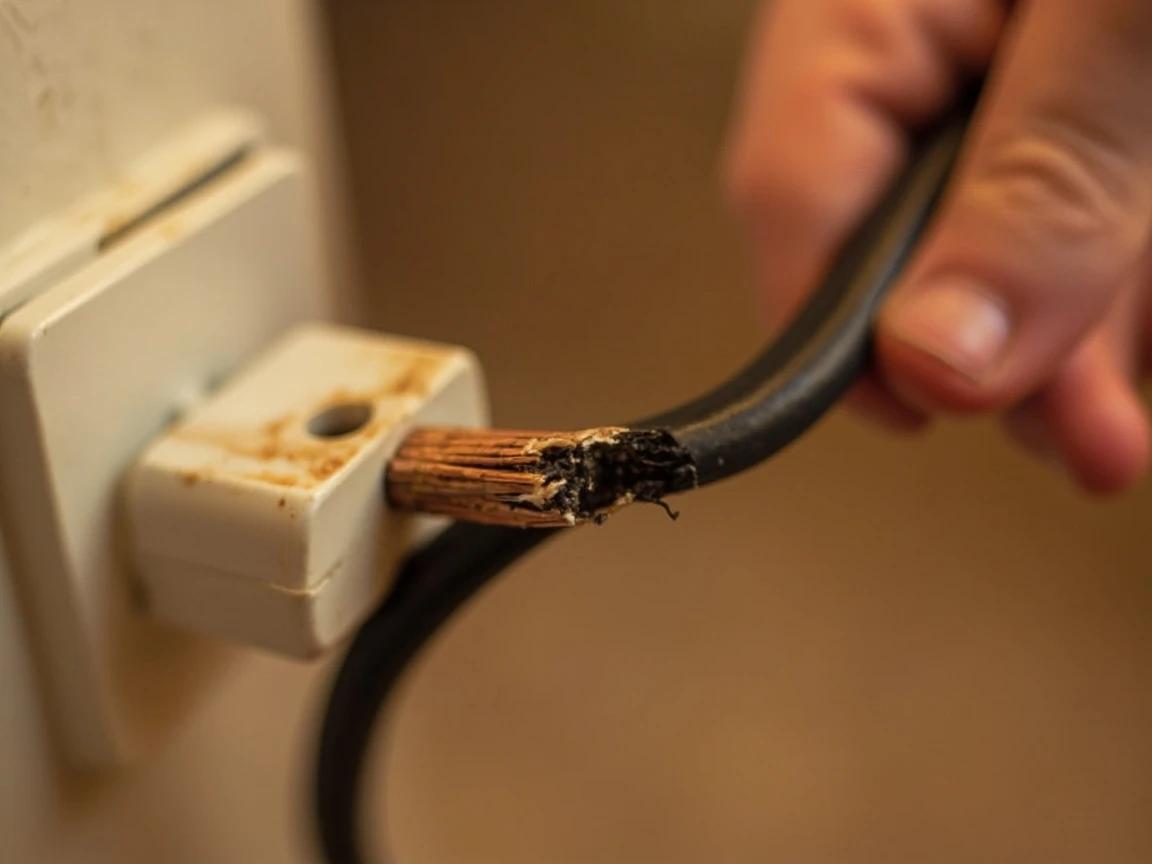
Don't keep flipping a breaker that trips instantly. Each attempt drives a massive fault current through the wiring, and repeated tries can overheat conductors and start a fire.
Ground Fault and Arc Fault: Water, GFCIs, and Bedroom AFCI Breakers
Two specialized devices trip for their own reasons. A ground fault (current leaking to ground, common around water) trips GFCI outlets and GFCI breakers — in kitchens, baths, garages, and outdoors, press the outlet's RESET button before blaming the panel. An arc-fault (AFCI) breaker, required on most bedroom and living-area circuits, senses the erratic signature of arcing; it can nuisance-trip on older vacuums, treadmills, or some electronics, but a persistent trip can also mean genuinely damaged wiring. For either, unplug suspects and reset once; if it keeps tripping, treat it as a wiring problem.
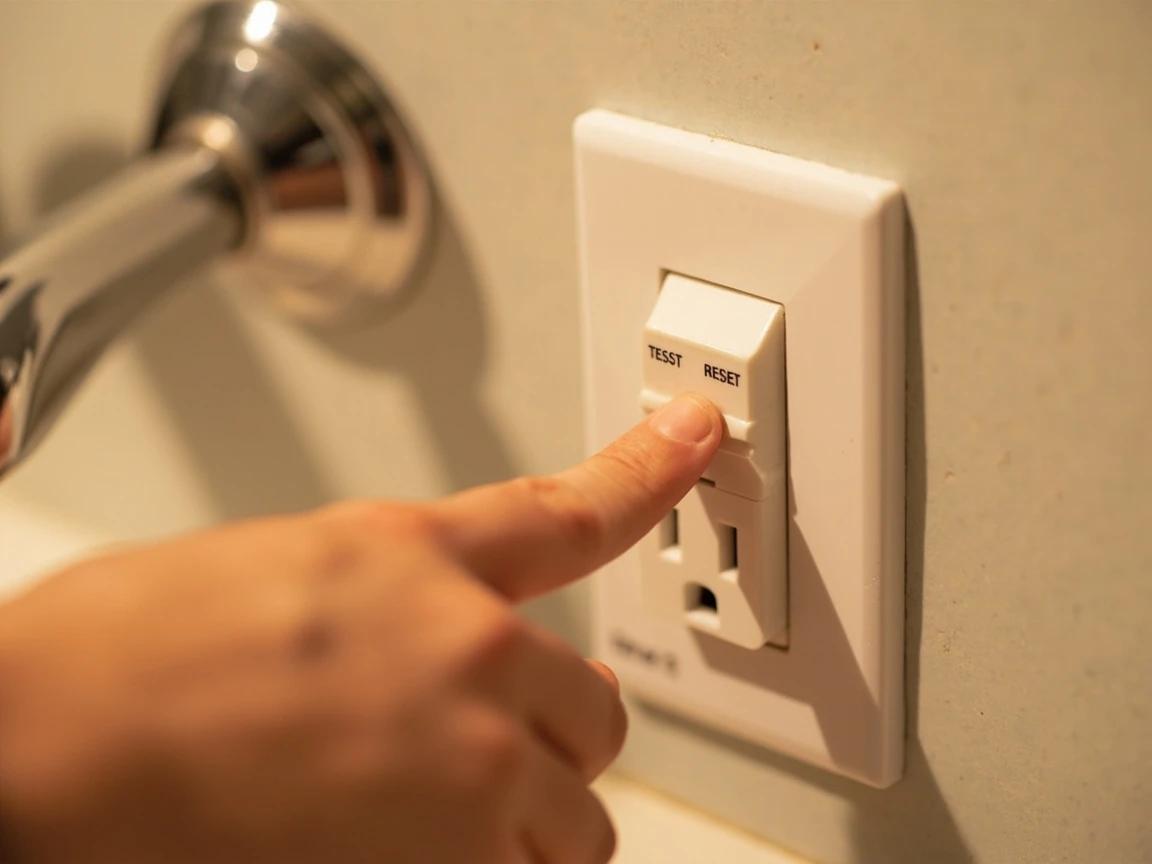
A faint tingle when you touch an appliance, or a GFCI that refuses to reset, is a real ground-fault warning. Stop using that circuit and have it checked before something gets damaged — or someone gets shocked.
Label the Panel and Know When to Call an Electrician
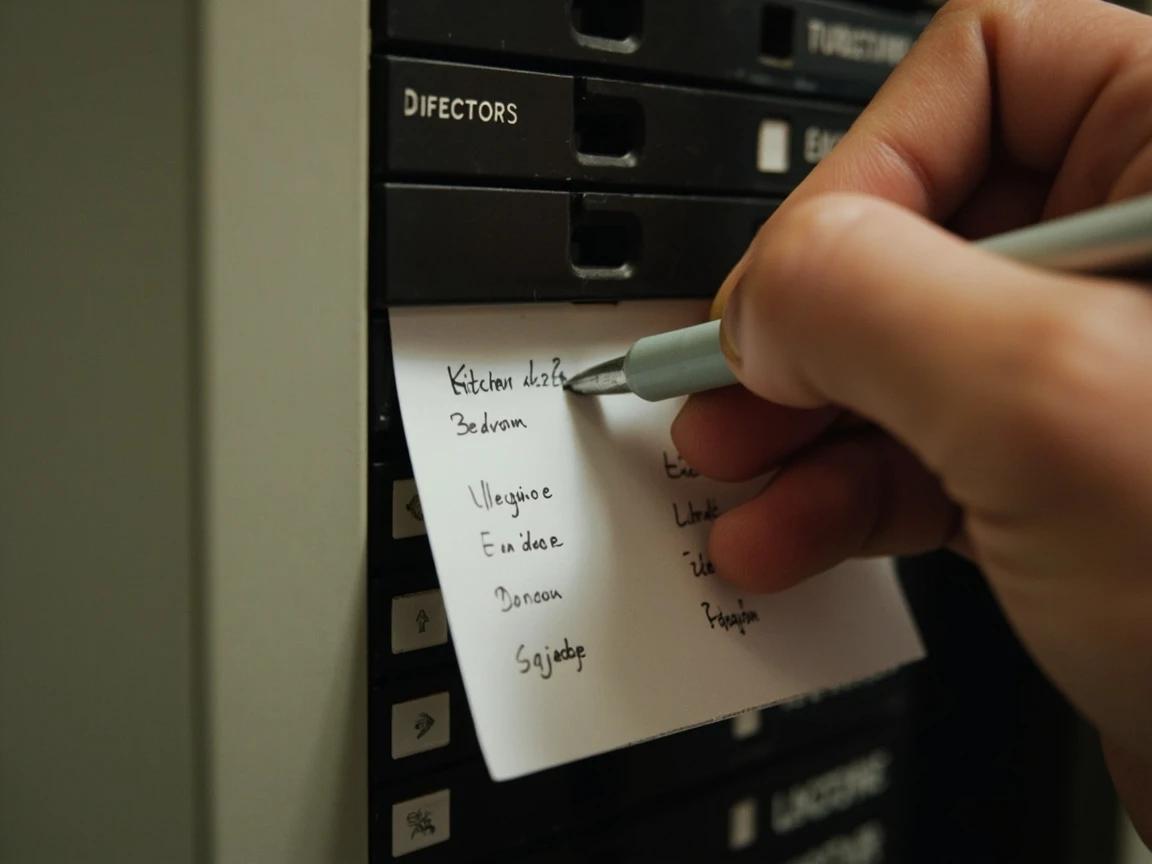
Once power is back, take five minutes to map the panel: have a helper switch lights and outlets on and off while you match each breaker to its room, and write it on the directory card inside the door. A labeled panel turns the next trip into a 30-second fix. Beyond a one-time overload reset, call an electrician — a breaker that keeps tripping is doing its job, and the answer is always to fix the fault, never to defeat the breaker.
Frequently Asked Questions
Why does my circuit breaker keep tripping?
+
The most common cause is an overload — too many high-draw devices (space heaters, hair dryers, microwaves) on one circuit, which trips the breaker after a few minutes of use. Repeated trips can also mean a short circuit, a ground fault, or a worn-out breaker. If it keeps tripping after you unplug everything on the circuit, the problem is in the wiring or the breaker itself, and it's time for an electrician.
How many times is it safe to reset a tripped breaker?
+
Reset it once — twice at most — and only after you've unplugged whatever overloaded the circuit. A breaker that won't stay on is warning you of a real fault, and each reset sends fault current through the wiring. Repeatedly flipping it back on can overheat the conductors and start a fire, so if it won't hold, stop and find the cause.
Why won't my circuit breaker reset?
+
First, you must push the handle all the way to OFF before flipping it ON — a breaker will not reset from the middle 'tripped' position, and that trips up most people. If it still won't hold, the circuit is probably still overloaded (unplug everything on it and try once more), or there's a short or ground fault in the wiring, or the breaker has failed. A breaker that won't reset with nothing plugged in is an electrician call.
How do I know which breaker is tripped?
+
A tripped breaker's handle sits in the middle, between ON and OFF, instead of lining up with its neighbors — and many breakers show a small orange or red window when tripped. If you can't tell by looking, lightly push each handle toward OFF; the tripped one has a little play the others don't.
My breaker isn't tripped but the outlets are dead — what's wrong?
+
Check for a tripped GFCI outlet first: a kitchen, bathroom, garage, and outdoor outlets are often all protected by one GFCI, and pressing its RESET button can restore the whole group. If several rooms or half the house are dark with no breaker tripped, it may be a partial utility outage or a loose main connection — call your power company, then an electrician.
Sources & further reading
- Home Electrical Safety — Electrical Safety Foundation International
- How to Fix a Circuit Breaker That Keeps Tripping — Family Handyman
- Circuit Breakers Fundamentals — Eaton
More Electrical Guides
View all →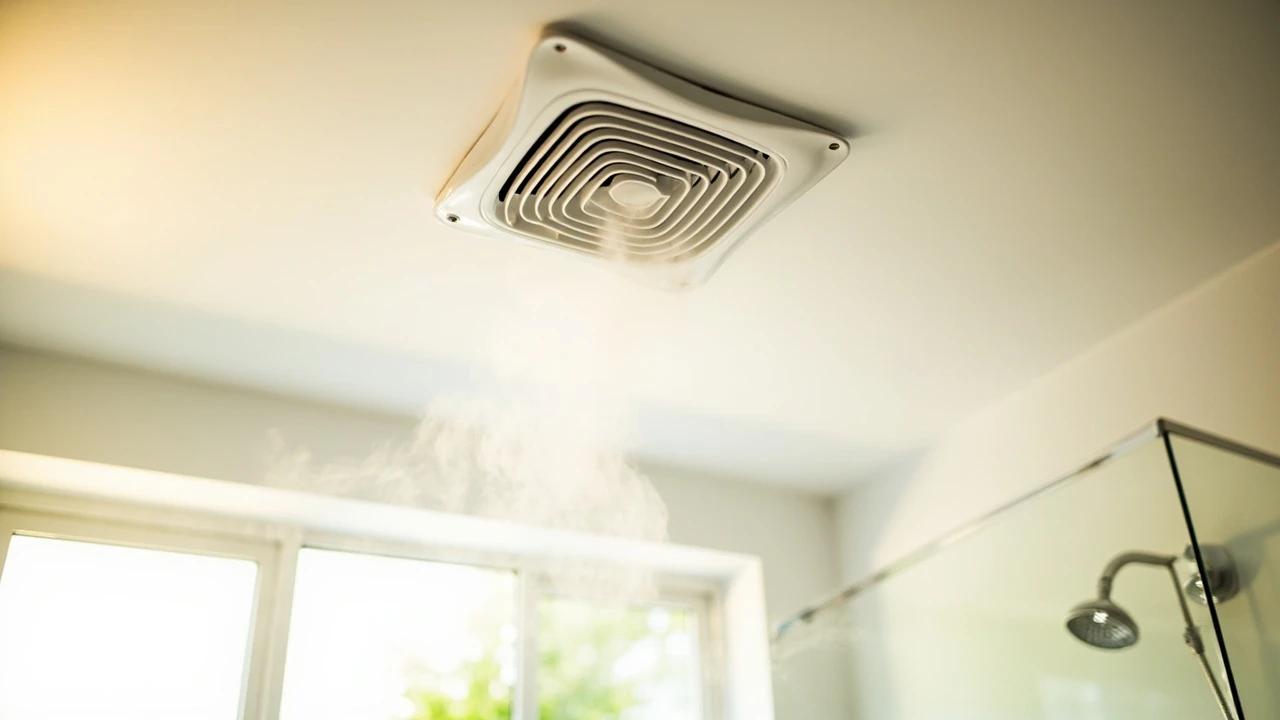 Medium3 hrs
How to Install a Bathroom Exhaust Fan
Replacing a loud, underpowered bathroom fan with a modern quiet model is one of the highest-impact upgrades you can make for under $150 — it kills mold-causing moisture, clears steam in a minute, and runs whisper-quiet while it does it. This guide walks you through a like-for-like replacement in an afternoon, covering CFM sizing, wiring, and ductwork so you end up with a fan that actually does its job.
 Medium45 min
How to Install a GFCI Outlet
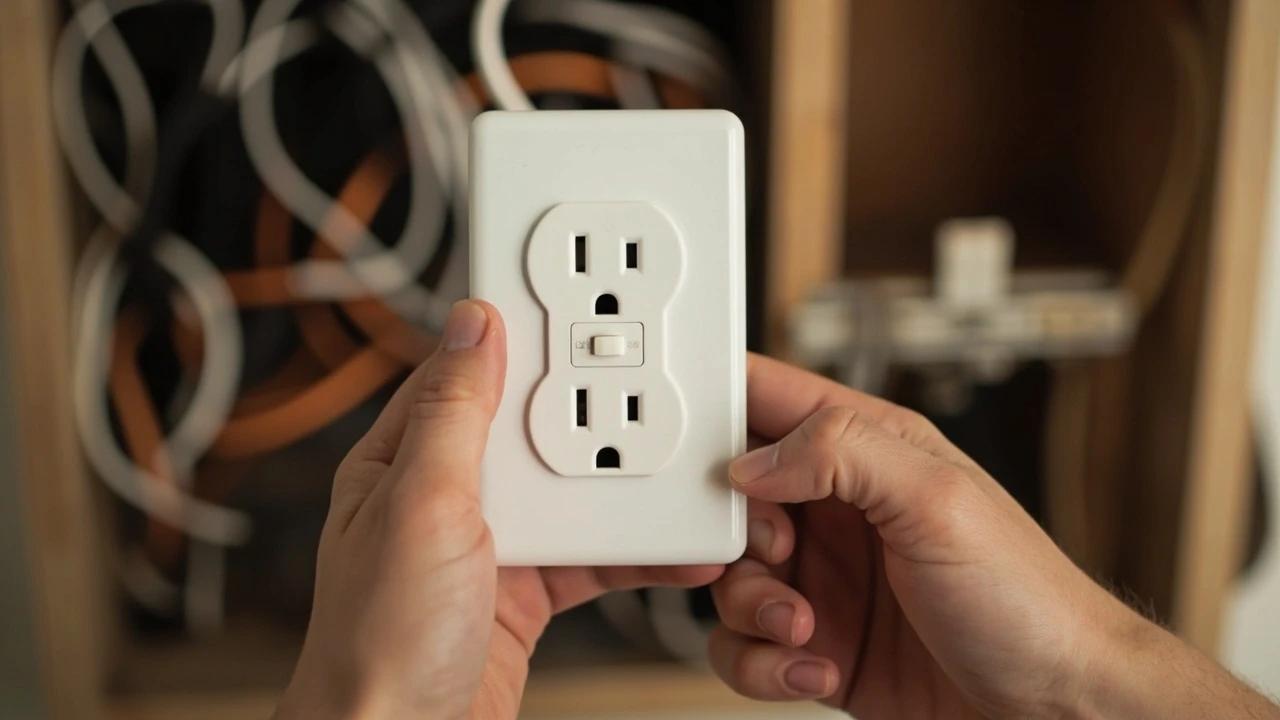
A GFCI outlet cuts power in a fraction of a second when it senses electricity leaking to ground — the exact protection code now requires in kitchens, bathrooms, garages, basements, laundry rooms, and anywhere outdoors. Installing one yourself takes about 45 minutes and costs $15-25 in parts versus $120-250 for an electrician. This guide shows you how to wire the LINE and LOAD terminals correctly so the outlet actually works the first time — and how to protect a whole string of downstream outlets from a single device.
 Easy30 min
How to Install a Dimmer Switch
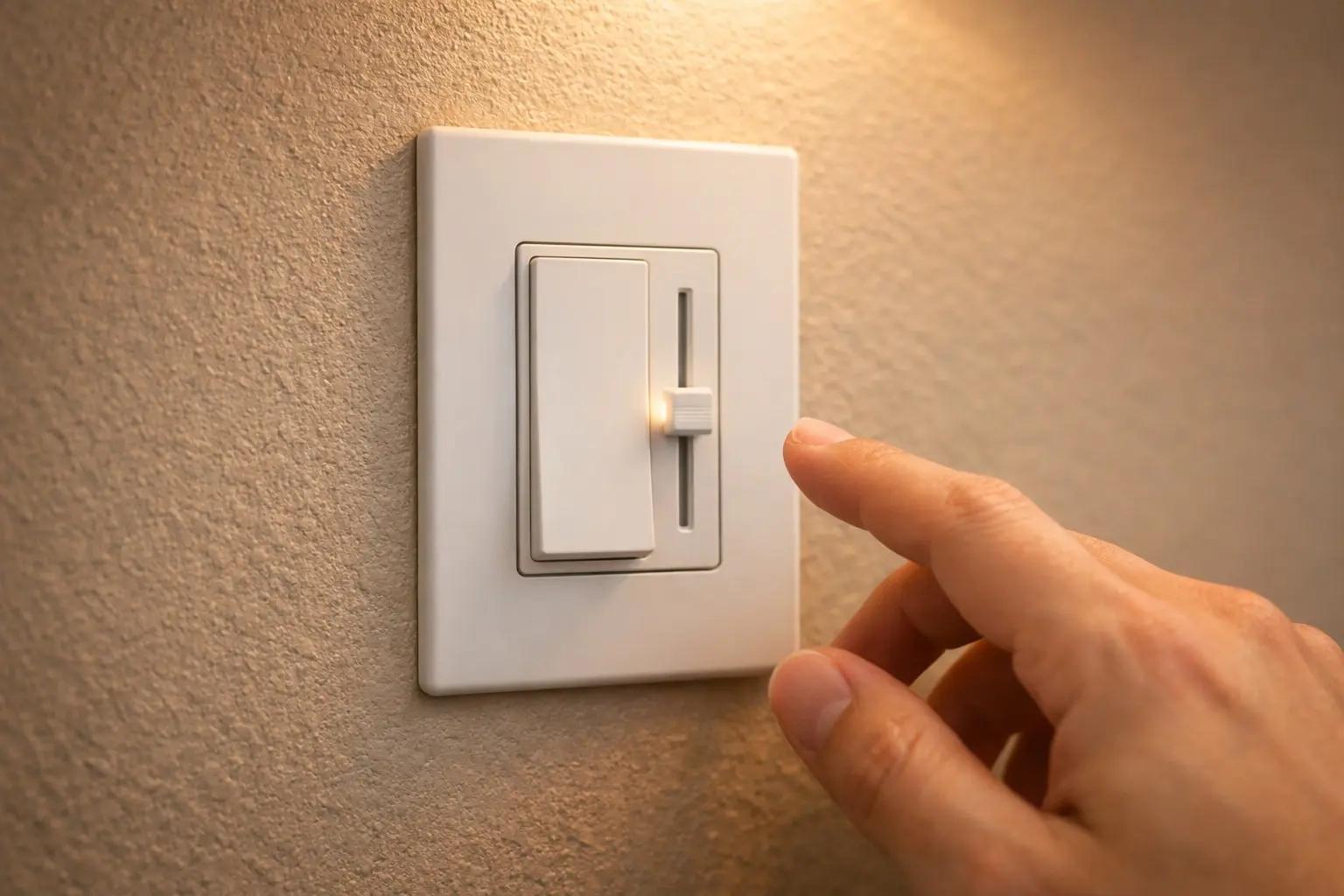
Swapping a standard toggle switch for a dimmer takes about 30 minutes, costs $15-30 in parts, and instantly upgrades any room — you get adjustable ambiance, lower energy bills, and longer bulb life. If you can turn a screwdriver and twist a wire nut, you can handle this one-for-one replacement on a single-pole circuit.
You Might Also Like
 Easy15 min
How to Replace a Refrigerator Water Filter
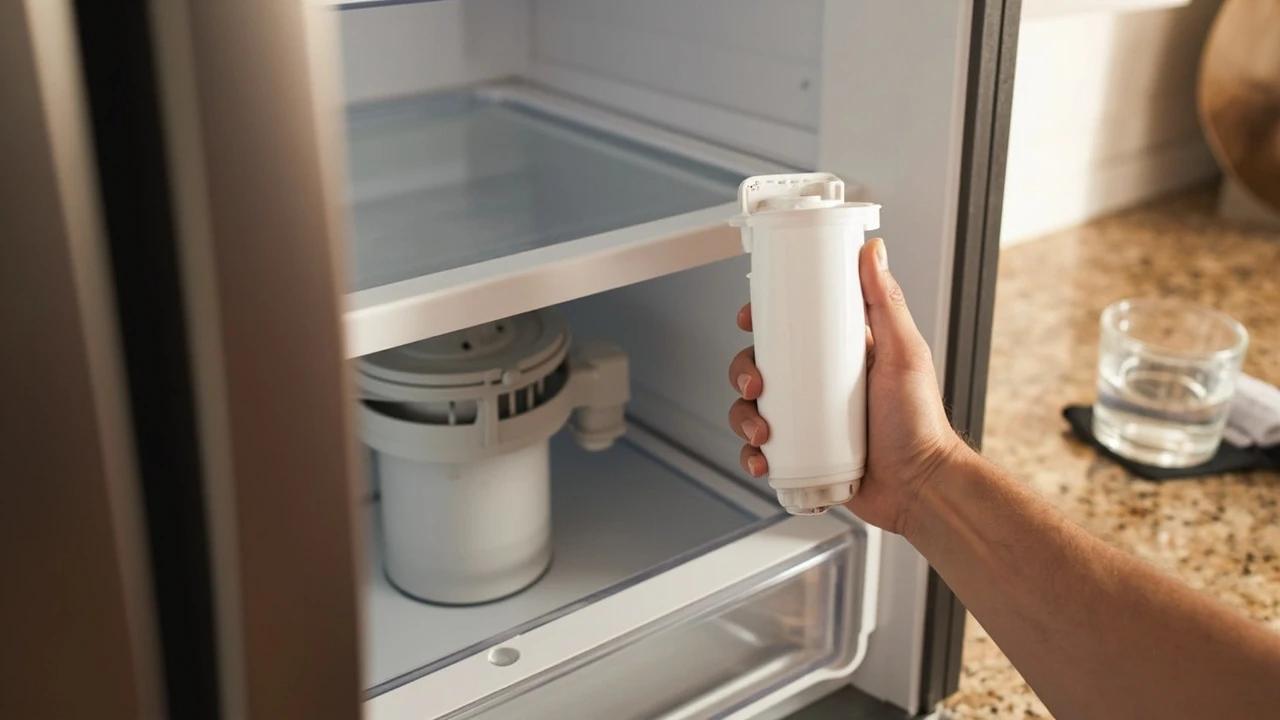
A clogged refrigerator water filter is the most common cause of slow dispensing, off-tasting water, and undersized ice cubes — and it is the easiest fix in your kitchen. Most filters are designed to be swapped in under five minutes with no tools, no shut-off valve, and no spilled water. This guide covers locating your filter, the two common removal styles (twist-in and push-in), inspecting the O-rings, flushing the new filter, and resetting the indicator light so you do not see the red "Replace" warning the next morning.
 Easy20 min
Best Paint for Kitchen Cabinets, Compared
The four paints that actually hold up to daily kitchen use are Benjamin Moore Advance, Sherwin-Williams Emerald Urethane Trim Enamel, INSL-X Cabinet Coat, and Behr Urethane Alkyd. They all work; they each fail in different ways. This guide compares cure time, leveling, scratch resistance, and price so you pick the one that matches your skill level and timeline — not the one a paint-store clerk has the most stock of.
 Easy25 min
Best Deck Stain: Transparent vs Semi vs Solid
There is no "best" deck stain — there is the right stain for your sun exposure, wood condition, and how often you want to redo the job. Transparent stains last 1-2 years but let the natural grain show. Solid stains last 4-7 years but look like paint. This guide walks the four opacity levels and the oil-vs-water choice so you pick the one that matches your deck and your tolerance for re-staining.