How to Clean a Dryer Vent Duct
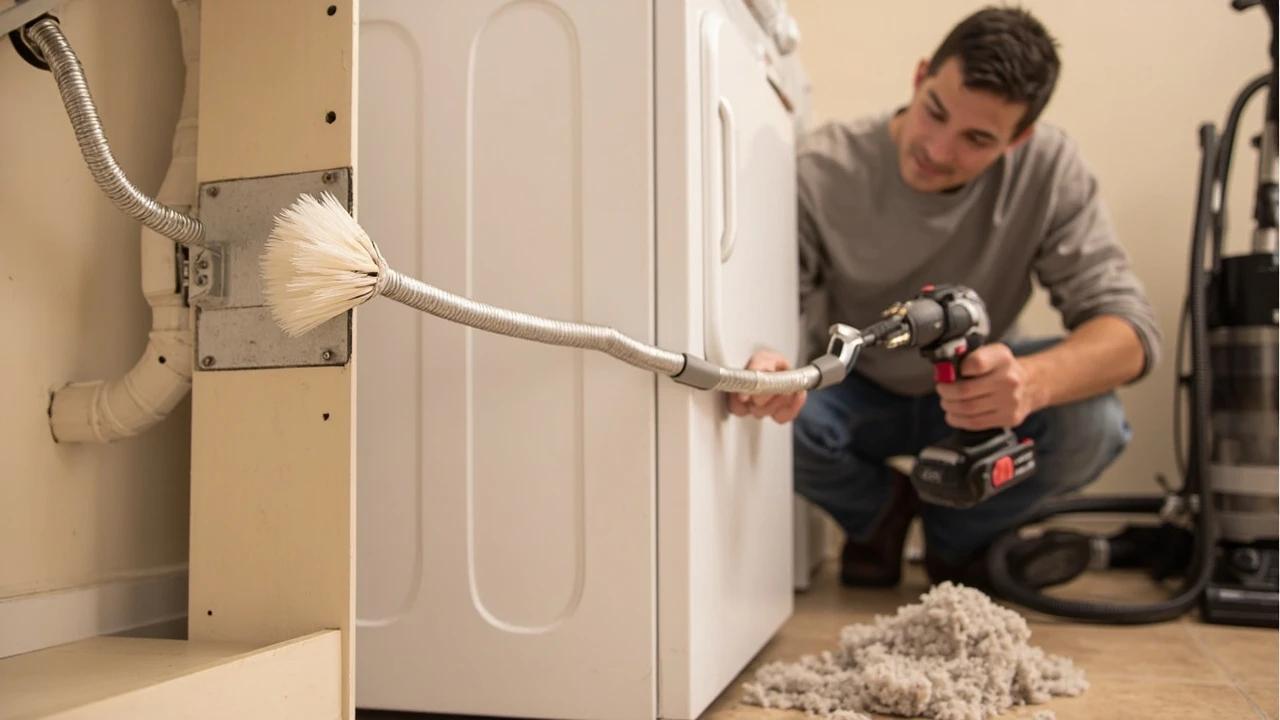

Clogged dryer vents are the leading cause of home dryer fires and the reason your clothes need two cycles to dry. Cleaning the duct yourself takes about an hour with a $25 rotary brush kit and a shop vacuum, removes years of compacted lint, restores drying efficiency, and lowers your energy bill. This guide walks you through unplugging the dryer, disconnecting the duct, brushing the entire run from end to end, and verifying airflow at the exterior hood.
What You'll Need
🛠 Tools
📦 Materials
Safety First
- •Always unplug the dryer before working behind it. For gas dryers, also shut off the gas supply valve and never disturb or kink the gas line — if you smell gas at any point, stop, leave the area, and call your gas utility.
- •Never use plastic or vinyl flex hose for a dryer vent — it is illegal in most jurisdictions and can melt or ignite. Only metal duct (rigid or UL-listed semi-rigid foil transition) is approved.
- •Wear an N95 mask and safety glasses while brushing. Dryer lint is fine, highly flammable, and irritating to lungs and eyes when stirred up.
- •Do not use cloth duct tape on dryer joints — the adhesive dries out and the tape falls off. Use foil tape rated UL 181B-FX or metal hose clamps.
- •If your dryer vent runs through an attic, crawlspace, or roof, only clean the sections you can safely reach. Hire a pro for roof-vented or long, complex runs (over 25 feet with multiple elbows).
Step-by-Step Instructions
Unplug the Dryer (and Shut Off Gas if Applicable)
Unplug the dryer's power cord from the wall outlet — do not just turn it off at the breaker, since you may need to move the cord out of the way. If you have a gas dryer, also turn the yellow shut-off valve on the gas supply line a quarter turn so the handle sits perpendicular to the pipe; this stops gas flow. Never disconnect the gas line itself unless you are completely replacing the dryer. The whole job runs with the dryer fully powered down.
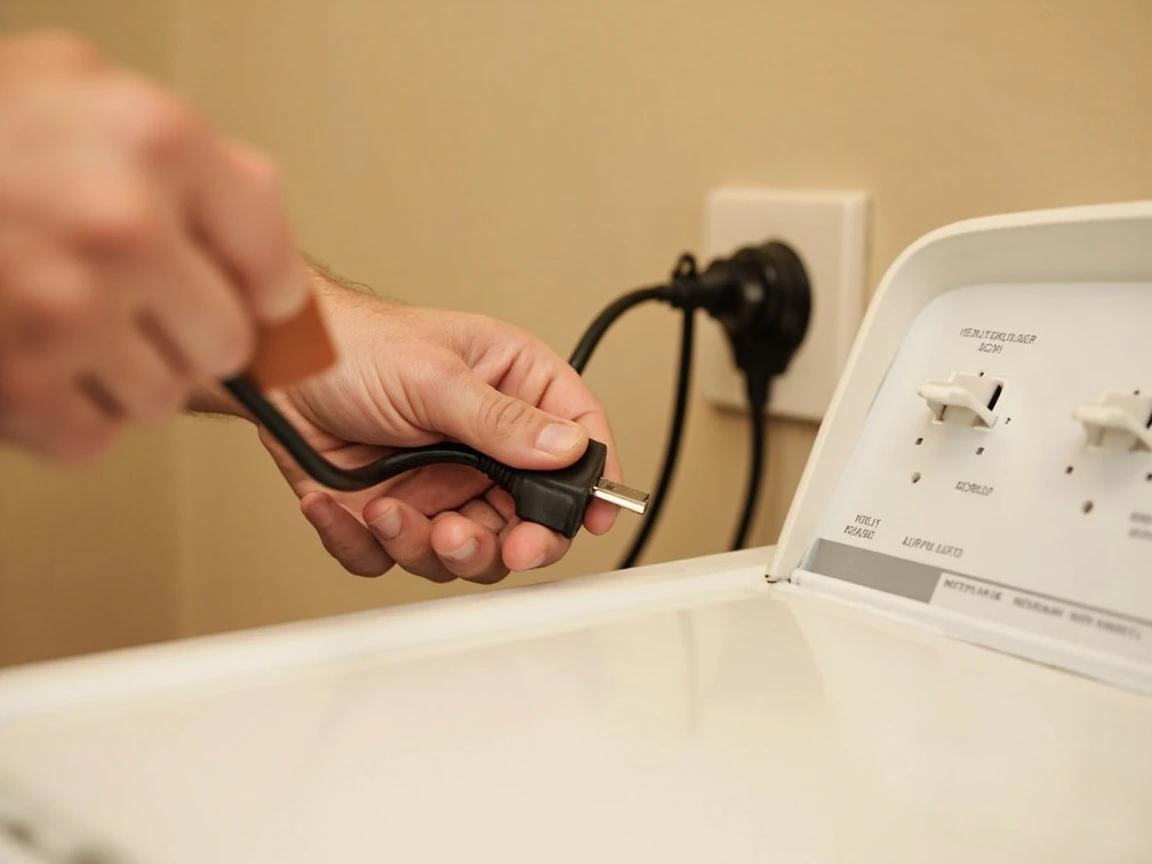
For gas dryers, if you smell even a faint gas odor at any point during this job, stop immediately, leave the area without using lights or switches, and call your gas utility from outside. Never test for gas leaks with a flame.
Pull the Dryer Away from the Wall
With the cord and gas valve off, gently walk the dryer away from the wall by alternating one corner and then the other a few inches at a time — dryers are heavy and tip easily on the back legs. You only need 18-24 inches of clearance to access the vent connection. Lay an old towel or piece of cardboard on the floor under the dryer's feet if you want to avoid scuffs on hardwood or vinyl. Watch the gas line (if equipped) and electrical cord so neither gets pinched or stretched.
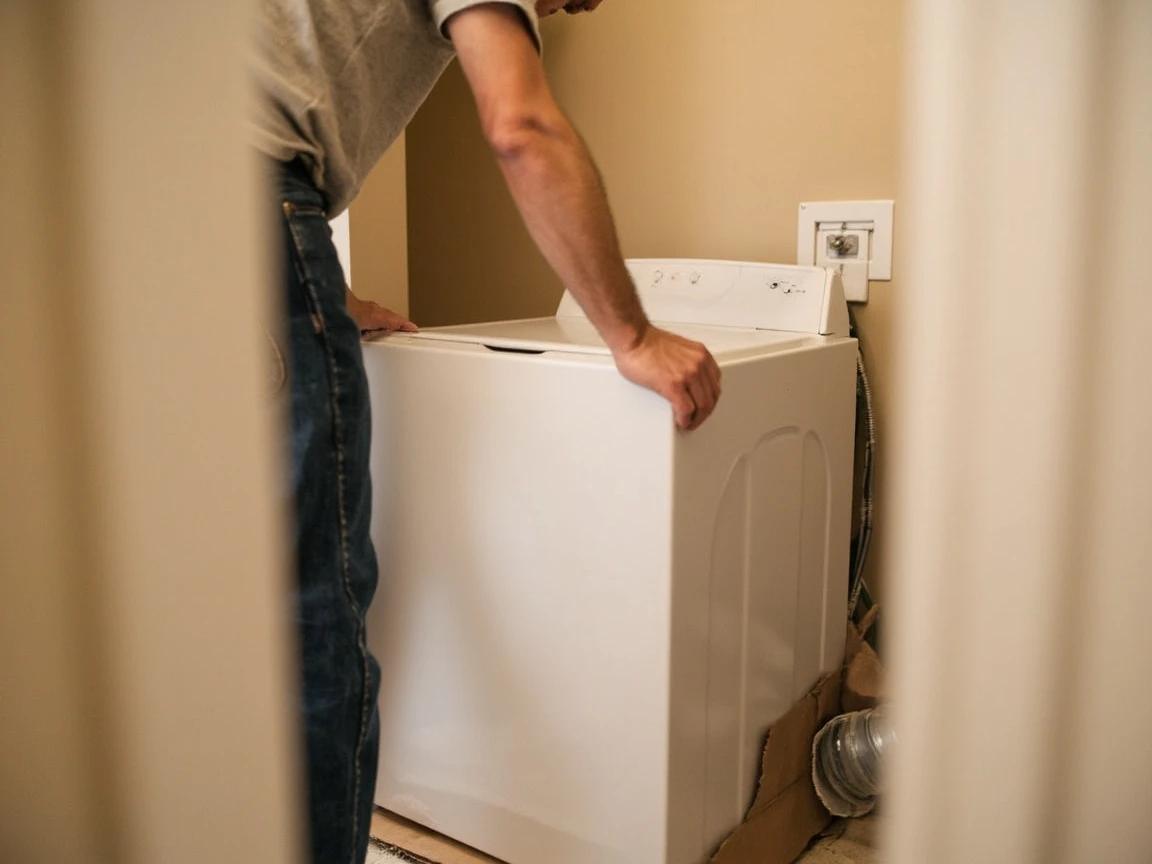
If the dryer is on a pedestal or stacked above a washer, ask a second person to help. The center of gravity is high and the appliance can tip forward on the front legs.
Disconnect the Vent Duct from the Dryer
Behind the dryer you'll see a 4-inch round duct connecting the dryer's exhaust port to a matching opening in the wall. Loosen the worm-drive hose clamp at the dryer end with a flathead screwdriver or 5/16-inch nut driver, then twist and pull the duct off the dryer outlet. Some homes use a metal foil duct held on with foil tape instead of a clamp — peel the tape off carefully. Do the same at the wall end if your duct is short and you want to clean the dryer's lint port too. Set the disconnected transition duct aside on a drop cloth.
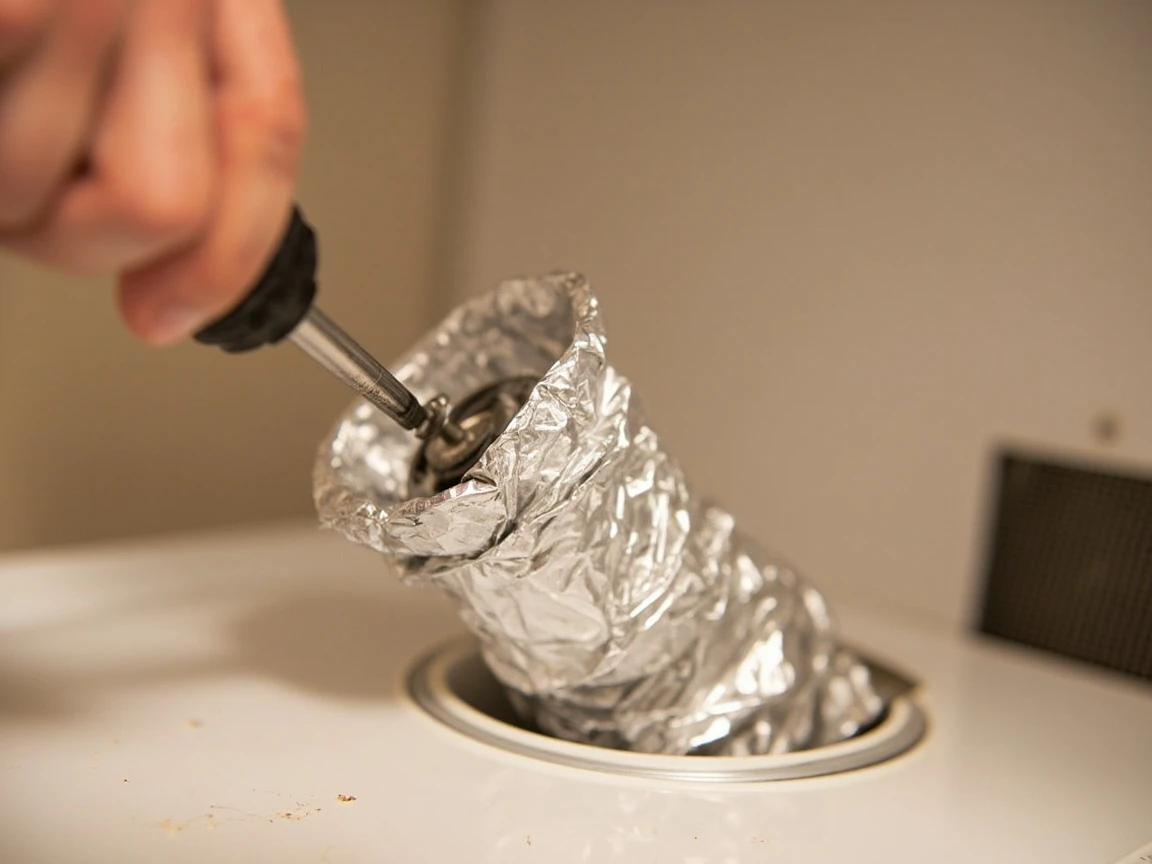
Inspect the transition duct as you remove it. If it is plastic or vinyl (smooth white or clear ribbed tubing), replace it with UL 2158A semi-rigid aluminum or rigid metal — plastic ducts are illegal in most jurisdictions and a serious fire hazard.
Vacuum the Dryer's Lint Port and Behind the Cabinet
Pull out and clean the lint trap screen as you normally would, then use the shop vacuum's crevice tool to suck lint out of the lint trap housing as deep as the hose will reach — a flashlight helps you see how much is in there. Vacuum the round exhaust port on the back of the dryer too, and the floor and walls behind the dryer where dust tends to coat everything. A thick mat of lint deeper inside the dryer reduces airflow no matter how clean the duct is.
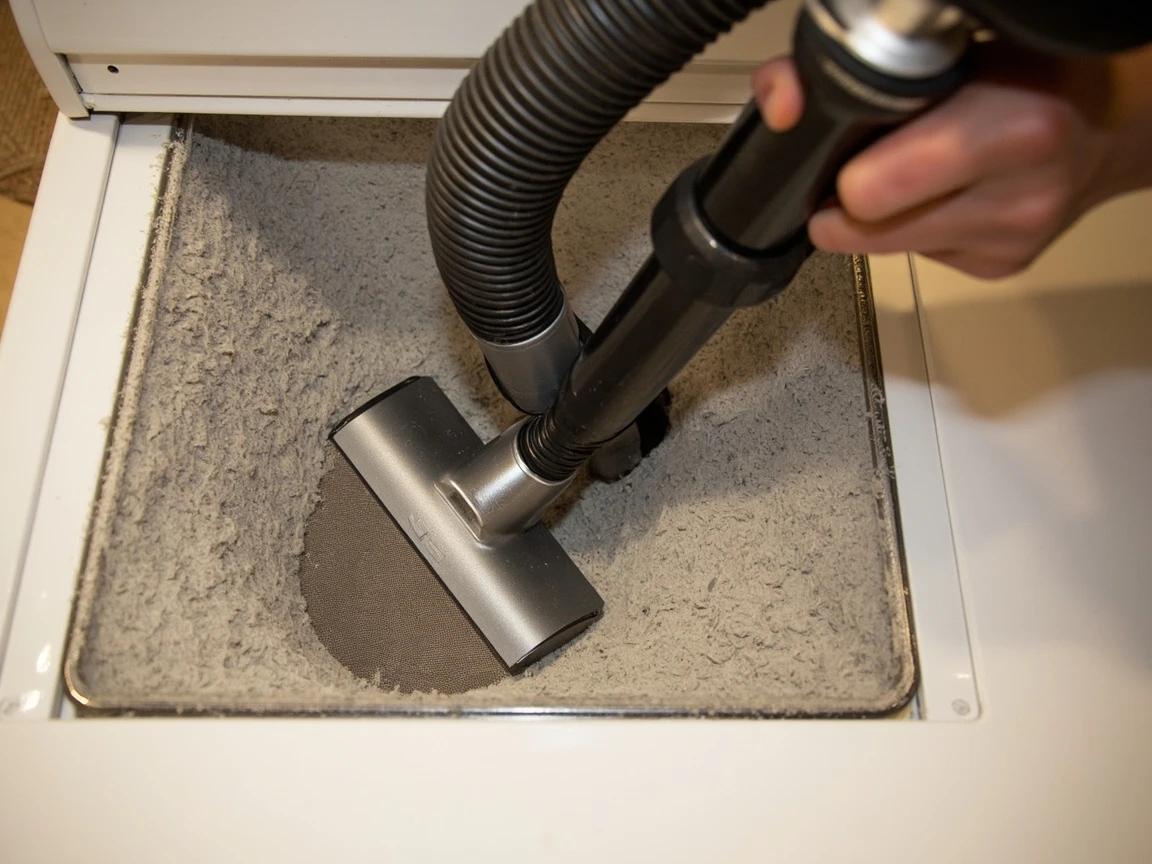
Lint trap housings hide a surprising amount of buildup. Many dryer fires start here, not in the wall duct. Clean it every time you do this job — and run a flexible bottle brush down inside if your shop vac hose can't reach the bottom.
Find and Open the Exterior Vent Hood Outside
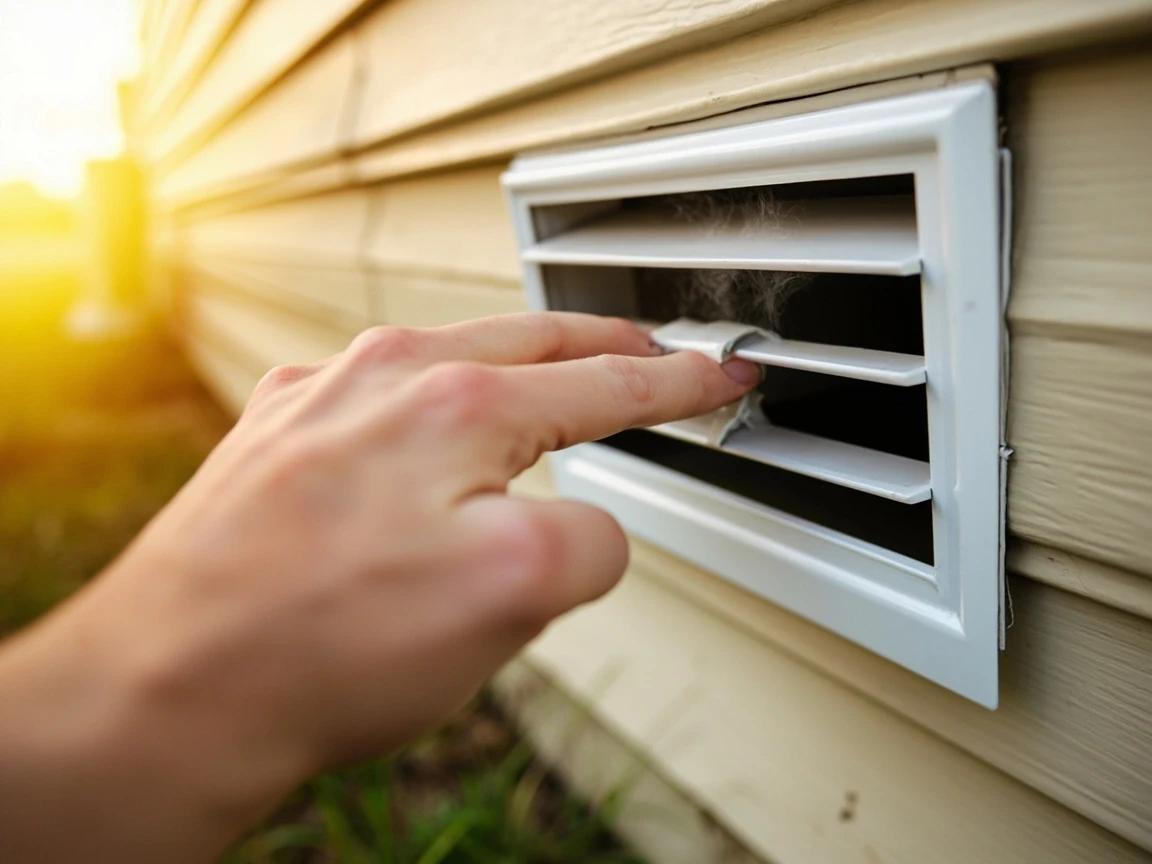
Walk outside and locate the dryer vent — it's a 4-inch louvered or flapper hood, usually low on a side or back wall of the house, sometimes on the roof. Pull or twist away any visible lint plug from the louvers; you'll often find a thick gray mat blocking the flap from opening. Some hoods have a removable screen or cap held by a few screws — remove it for a clearer brush path. If birds or rodents have nested behind the hood (common with broken or missing flap covers), clear the debris before brushing so you don't push it deeper into the duct.
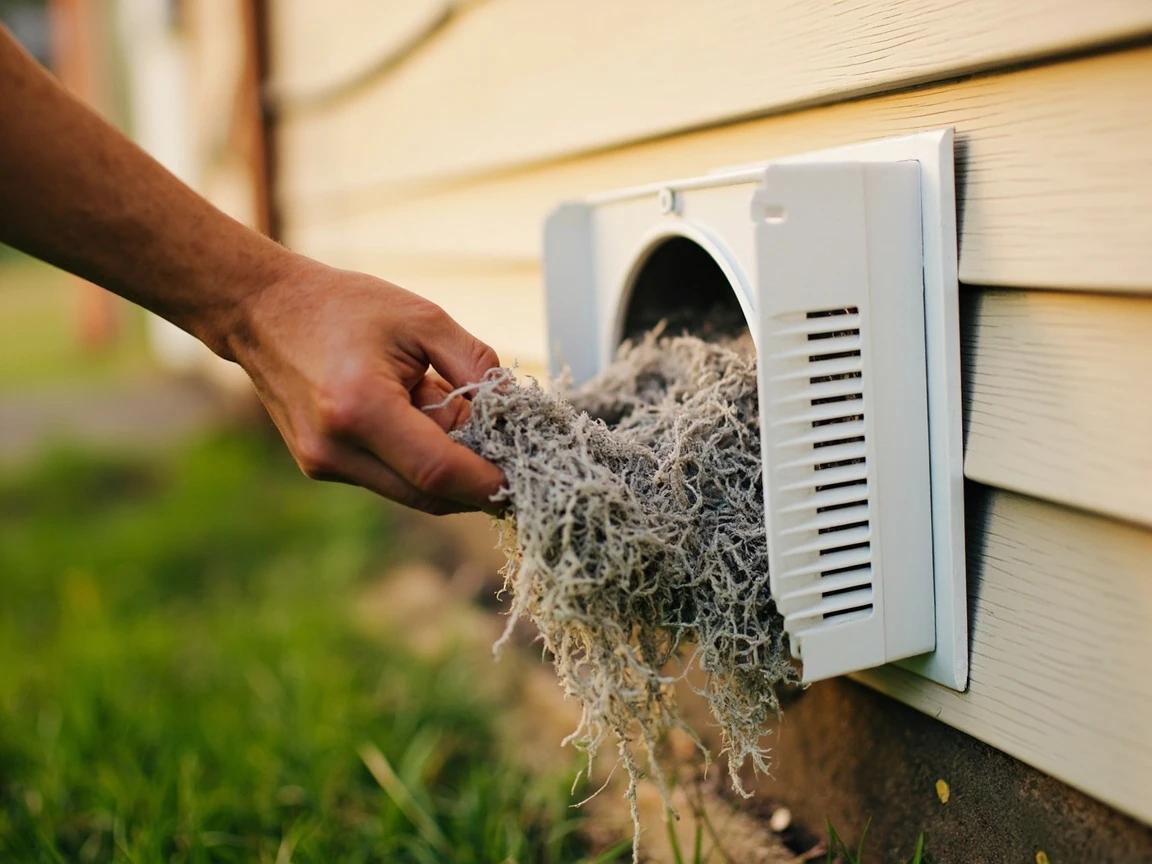
If the exterior flap is broken, missing, or stuck open, replace the hood after cleaning. A working flapper keeps cold air, rain, mice, and wasps out of your duct — and a screen-style cover (without a flap) traps lint and is the wrong type for dryers.
Run the Rotary Brush Through the Duct with a Drill
Assemble the first rod of the brush kit into the round nylon brush head, then chuck the rod into your cordless drill and set the drill to forward (clockwise). Insert the brush into the wall-side duct opening behind the dryer and squeeze the trigger at low-to-medium speed while feeding the rod in. As the brush disappears, screw on the next extension rod and continue feeding — most kits include enough rods for 20-30 feet. Pull the brush back out slowly while still spinning so you scrub the walls in both directions. Keep the drill turning forward when you reverse direction; running it backward unscrews the rods inside the duct, where they're a nightmare to retrieve.
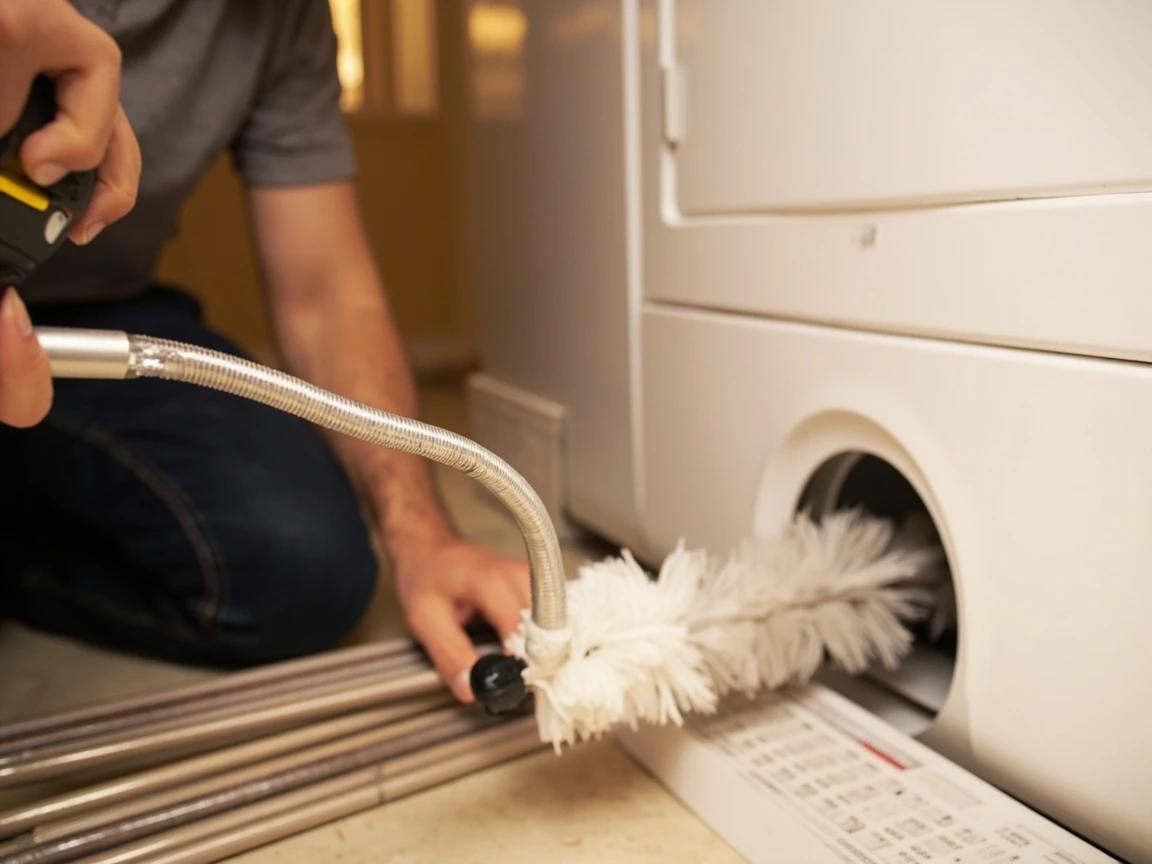
Always run the drill in forward (clockwise) direction, even when pulling the brush out. Running in reverse unscrews the threaded rod connections inside the duct. A separated rod stuck in the wall means cutting drywall to retrieve it.
Vacuum Both Ends of the Duct
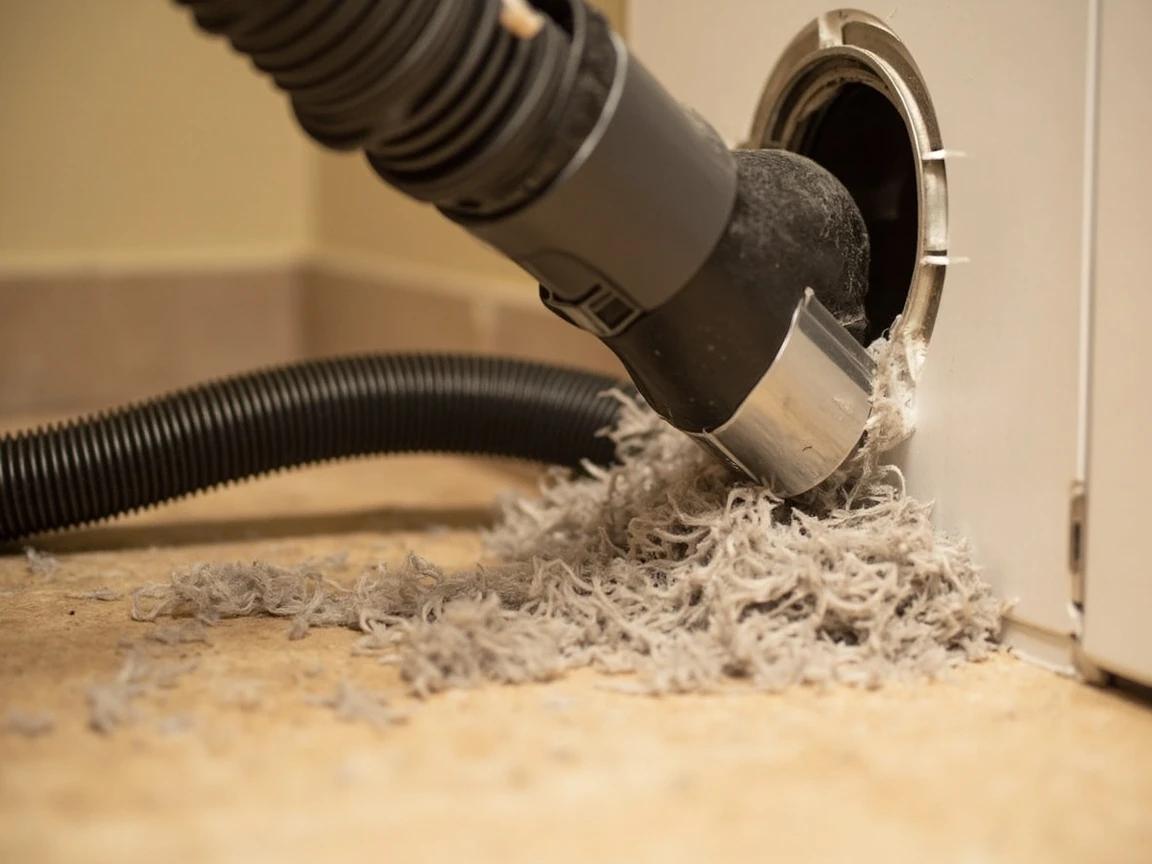
Once the brush has run the full length, pull it all the way back out and detach the rods one at a time. A surprising amount of lint will pile up at the duct openings on both sides — vacuum the inside of the wall port behind the dryer with the shop vac, then go back outside and vacuum the exterior hood end. Reach the hose as far into the duct as it will go on each end. Do a second pass with the brush if a lot of lint came out the first time; thick clogs often need two trips.
Reconnect the Transition Duct and Reposition the Dryer
Slide the transition duct back over the dryer's exhaust port and the wall port, making sure both ends seat fully (about 1.5 inches of overlap). Tighten a stainless-steel worm-drive clamp at each joint with a screwdriver or nut driver — snug but not crushing. If your duct uses foil tape instead of clamps, wrap UL 181B-FX foil HVAC tape twice around each joint, smoothing out wrinkles. Avoid sharp bends and kinks; the duct should follow a gentle curve, and shorter is always better. Walk the dryer back to the wall slowly, leaving 4-6 inches of breathing room behind the appliance so the duct doesn't crush flat.
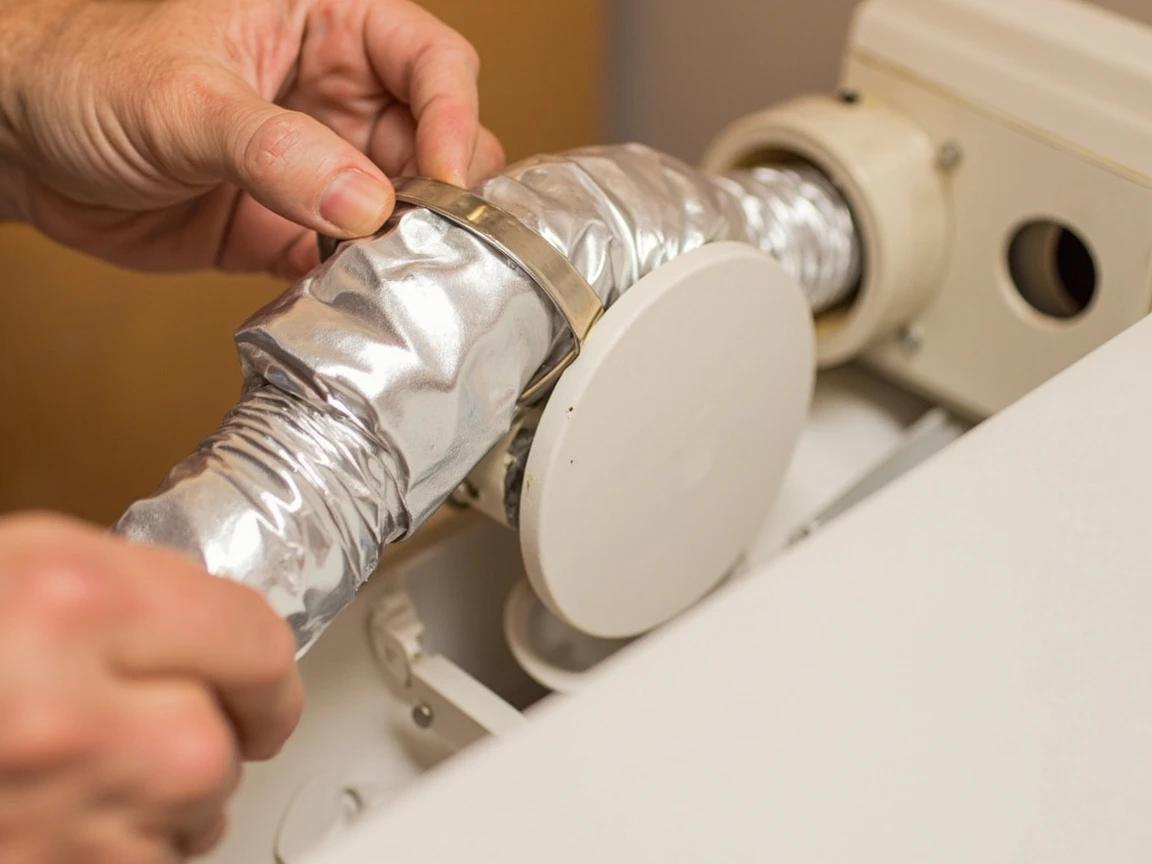
Never use cloth or fabric duct tape on dryer joints — the adhesive dries out and the tape falls off. Use only metal hose clamps or UL 181B-FX-rated foil HVAC tape.
Run a Test Cycle and Verify Airflow at the Exterior Vent
Plug the dryer back in, open the gas valve if applicable, and toss a few damp towels in for a real-world test. Start a regular timed-dry cycle and walk outside to the exterior vent hood within the first minute. You should feel strong, warm airflow lifting the flapper open — a noticeable improvement if the duct was clogged before. Back inside, listen for the dryer running quietly without unusual high-pitched whining, and feel the cabinet — it should warm up but not get hot. If airflow at the hood is still weak, the duct may have a hidden kink, a crushed section behind the wall, or an inner-wall blockage that needs a pro.
Mark your calendar to repeat this cleaning every 12 months — sooner if you do laundry daily or own pets. Between cleanings, clear the lint screen after every load and vacuum the lint trap housing once a month.
Frequently Asked Questions
How often should I clean my dryer vent duct?
+
The U.S. Fire Administration and most appliance manufacturers recommend a full duct cleaning at least once per year. Clean more often — every six months — if you do laundry daily, have a vent run longer than 25 feet, share the home with shedding pets, or notice clothes taking longer than usual to dry. Lint accumulates faster than people expect; even a thin coating along the duct walls measurably reduces airflow.
How do I know if my dryer vent is clogged?
+
The clearest warning signs are clothes that come out hot but still damp, drying cycles that take twice as long as they used to, a dryer cabinet that feels hot to the touch, a faint burning smell during operation, and weak or no airflow at the exterior vent hood when the dryer is running. A heavily clogged vent can also trip the dryer's thermal fuse, which kills heat entirely until the fuse is replaced.
Can I just use a vacuum instead of a brush kit?
+
A vacuum alone only reaches the first 3-4 feet of the duct and cannot dislodge the compacted lint that sticks to the duct walls deeper in the run. A rotary brush spun by a drill scrubs the entire length loose, and the vacuum then collects what falls out at each end. Both tools used together are the right combination — neither one fully cleans the duct on its own.
Should I replace the flexible foil duct with rigid metal?
+
Yes, whenever possible. Building codes (IRC Section M1502) require the duct behind the wall to be smooth-wall rigid metal because foil and plastic flex tubing trap lint in their ridges and can sag or kink. A short UL 2158A-listed semi-rigid aluminum transition is allowed only between the dryer outlet and the wall — and even there, the shorter and straighter, the better.
How much does professional dryer vent cleaning cost?
+
Professional cleaning typically runs $100-200 for a standard ground-floor run, and $200-400 for long or roof-vented systems. A DIY brush kit costs $20-40 and pays for itself the first time you use it. The job is genuinely beginner-friendly — under an hour, no special skills, and the rotary brush does most of the work for you.
Sources & further reading
- Clothes Dryer Fire Safety — U.S. Fire Administration (FEMA)
- Proper Clothes Dryer Venting — Building America Solution Center (DOE/PNNL)
More Appliance Repair Guides
View all → Easy45 min
How to Deep Clean a Dishwasher
A dishwasher that smells, leaves residue on glasses, or doesn't drain properly is almost always a cleaning problem, not a mechanical one — and a deep clean takes about 30 minutes of hands-on work plus two empty cycles. Food particles, grease, mineral deposits, and mold accumulate in the filter, spray arms, and door gasket over time, reducing cleaning performance and creating odors. This guide walks through every hidden spot so your dishwasher runs like new.
 Medium1 hr
How to Replace a Dryer Belt
A dryer that hums but won't tumble almost always has a snapped drive belt — a $10 to $40 part that a technician will charge $100 to $250 to swap. The job is an hour of careful panel work: pop the top, pull the front, loop the new belt around the drum and idler, and check the pulley that probably killed the old belt in the first place.
 Easy1 hr
How to Descale a Coffee Maker
Slow brewing, lukewarm coffee, a sputtering carafe, or a flashing "Descale" light all point to the same culprit: a layer of calcium and magnesium scale clinging to the inside of your heating element and water lines. Left unchecked, scale doubles your brew time and eventually burns out the heater. The fix takes about an hour, costs under $5 in white vinegar (or $1 in citric acid), and is the same procedure for drip machines, Keurigs, and most pod brewers — with a few small differences this guide will walk you through end to end.
You Might Also Like
 Medium6 hrs
How to Paint a Room
A fresh coat of paint is the fastest, cheapest way to transform any room — and doing it yourself saves $400-800 in labor for an average 12x12-foot bedroom. The job takes a weekend from prep to final coat, and the difference between an amateur-looking result and a professional finish comes down to technique, not talent. This guide covers prep, cutting in, rolling, and cleanup so you get clean lines and even coverage the first time.
 Easy30 min
How to Replace an Electrical Outlet
A worn-out or discolored electrical outlet is one of the simplest electrical repairs you can tackle yourself — swapping one takes about 15-30 minutes and costs under $5 in parts versus $75-150 for an electrician visit. This guide walks you through safely replacing a standard duplex receptacle, including how to handle the wiring correctly and avoid the most common DIY mistakes.
 Medium45 min
How to Install a Ceiling Fan
Replacing a light fixture with a ceiling fan improves air circulation in summer and can reduce heating costs in winter by circulating warm ceiling air downward. Most installs take 45-60 minutes.