How to Aerate and Overseed a Lawn
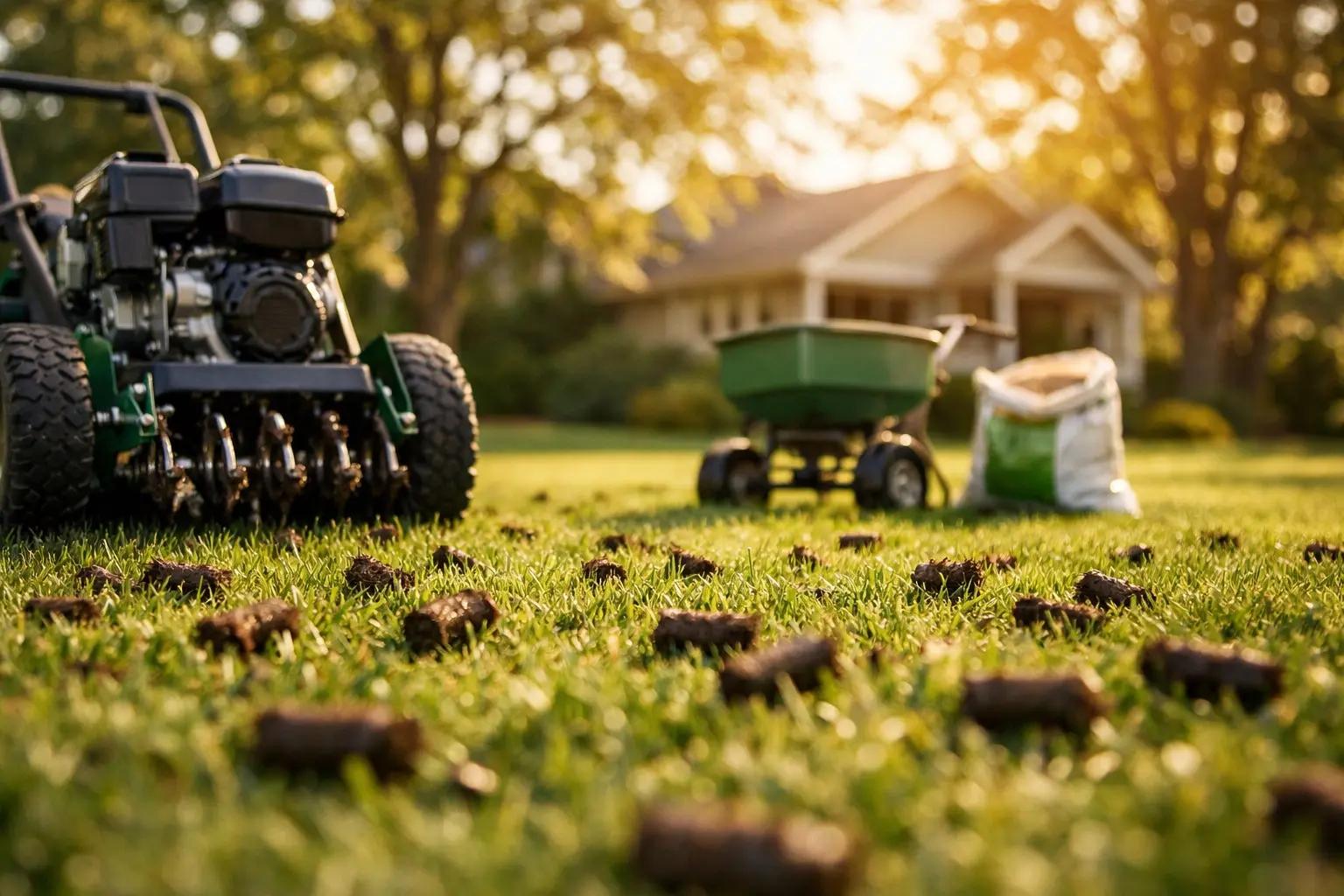

Compacted soil starves grass roots of air and water, turning a thick lawn thin and patchy over a single season — and professional aeration-plus-overseeding runs $200-400 for an average yard. Renting a core aerator for about $75 and doing it yourself takes a half-day of walking behind a machine, followed by spreading seed into the fresh holes where it gets perfect soil contact. This guide covers timing for cool- and warm-season grasses, proper aerator technique, seed selection, and the critical watering schedule that makes or breaks germination.
What You'll Need
🛠 Tools
📦 Materials
Safety First
- •Mark all sprinkler heads, invisible fence wires, and shallow utility lines with flags before aerating — the tines penetrate 2-3 inches deep and will damage anything in their path.
- •Core aerators are heavy machines (200+ lbs) that pull forward aggressively — keep a firm grip on the handles and never let go while the tines are engaged.
Step-by-Step Instructions
Choose the Right Timing for Your Grass Type
Timing is the single biggest factor in success. For cool-season grasses (Kentucky bluegrass, tall fescue, perennial ryegrass), aerate and overseed in early fall — late August through mid-September — when soil temperatures are still warm (55-65°F) but air temperatures are cooling and rain is more frequent. Early spring (March to mid-April) is a second option but weeds compete harder in spring. For warm-season grasses (Bermuda, Zoysia, St. Augustine), aerate in late spring through early summer when the grass is actively growing and can recover quickly.
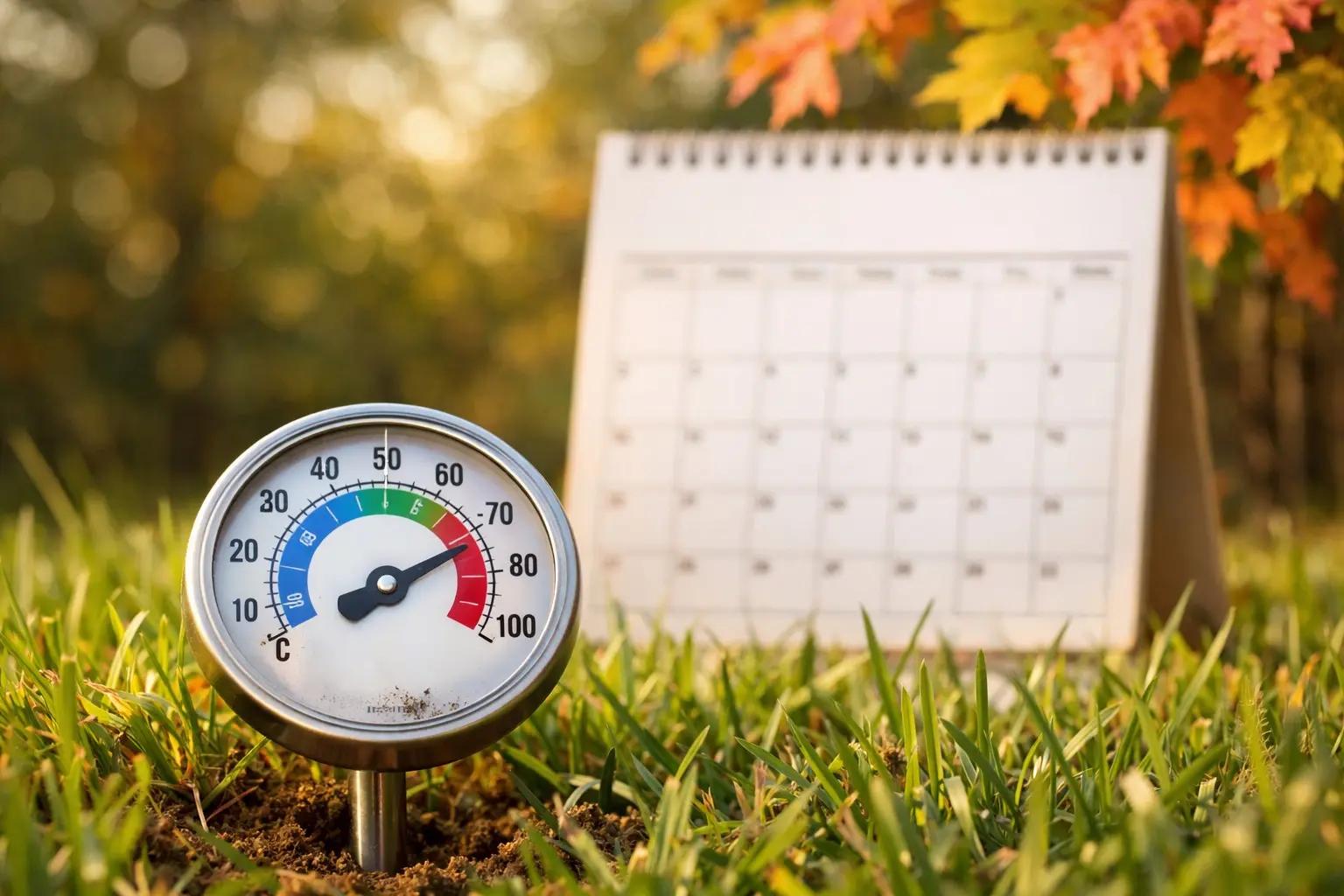
Check soil temperature with a thermometer at 4-inch depth two mornings in a row. Consistent readings between 55-65°F mean ideal germination conditions for cool-season seed.
Mow Low and Clear the Lawn
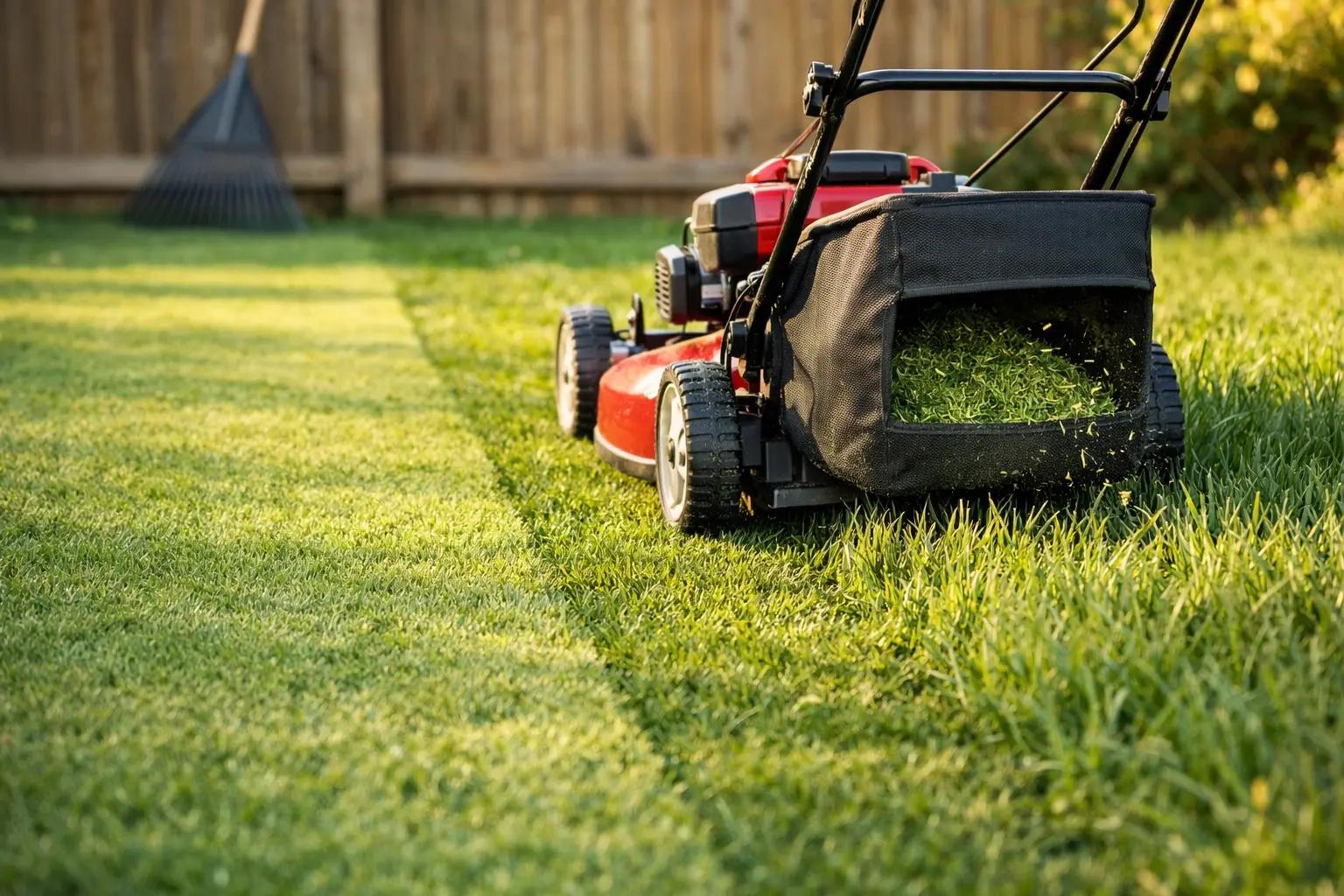
Mow your lawn to about 1.5-2 inches — roughly one notch lower than your normal cutting height. This shorter cut lets the aerator tines penetrate cleanly and gives new seed direct access to sunlight instead of being shaded out by existing grass blades. Bag the clippings rather than mulching so they don't smother the seed later. Rake up any leaves, sticks, or debris. If you have thick thatch (the spongy brown layer between the grass blades and soil), and it's thicker than 1/2 inch, consider dethatching before aerating.
Water the Lawn the Day Before Aerating
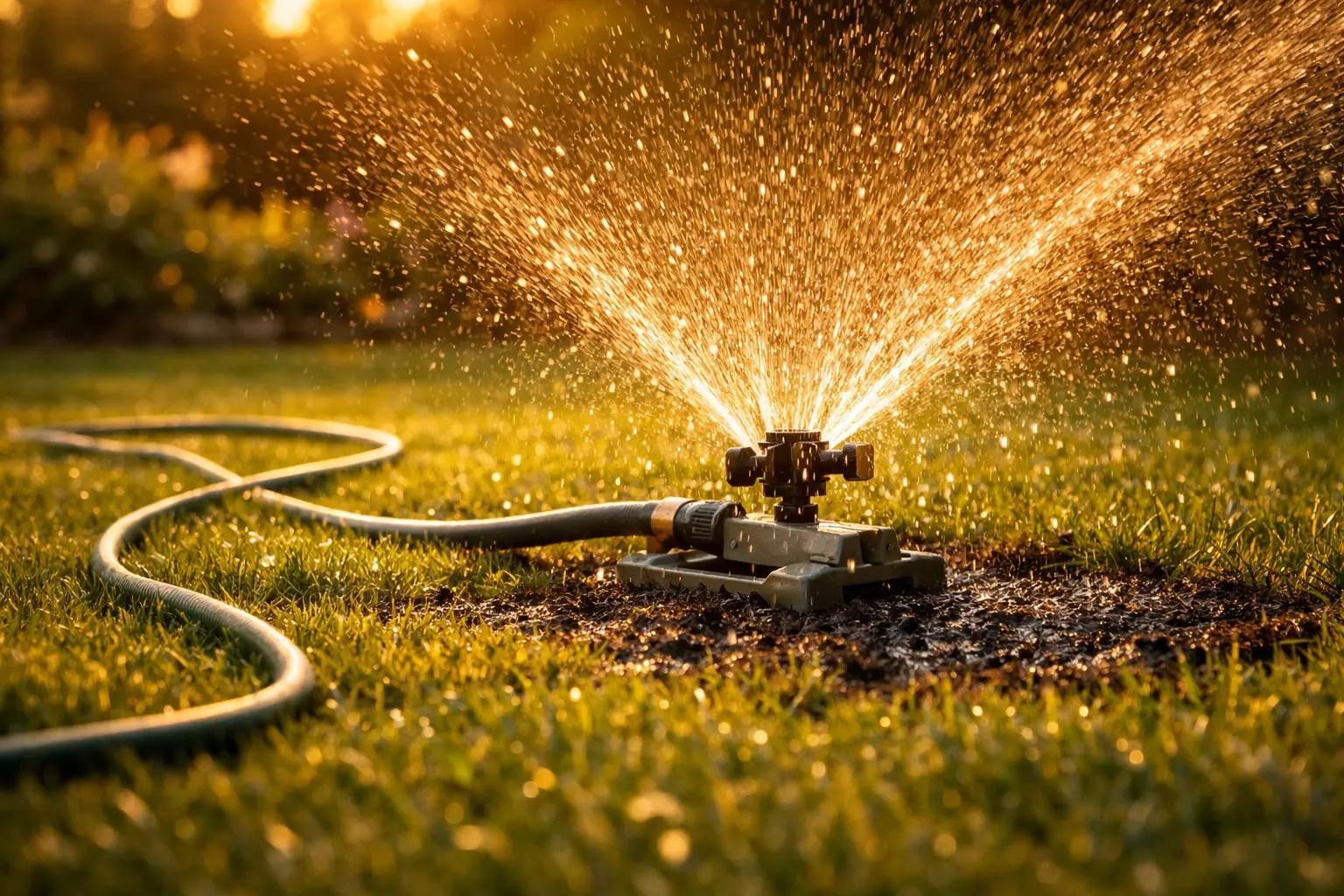
Run your sprinklers for about 30-45 minutes the evening before you plan to aerate, or time the job for a day or two after a good rain. The soil should be moist to a depth of 3-4 inches — firm enough to walk on without sinking, but soft enough that you can push a screwdriver into the ground with moderate effort. Aerating bone-dry soil is nearly impossible and damages both the machine and your lawn. Conversely, soggy mud will clog the hollow tines and create a mess rather than clean plugs.
Aerate the Entire Lawn with a Core Aerator
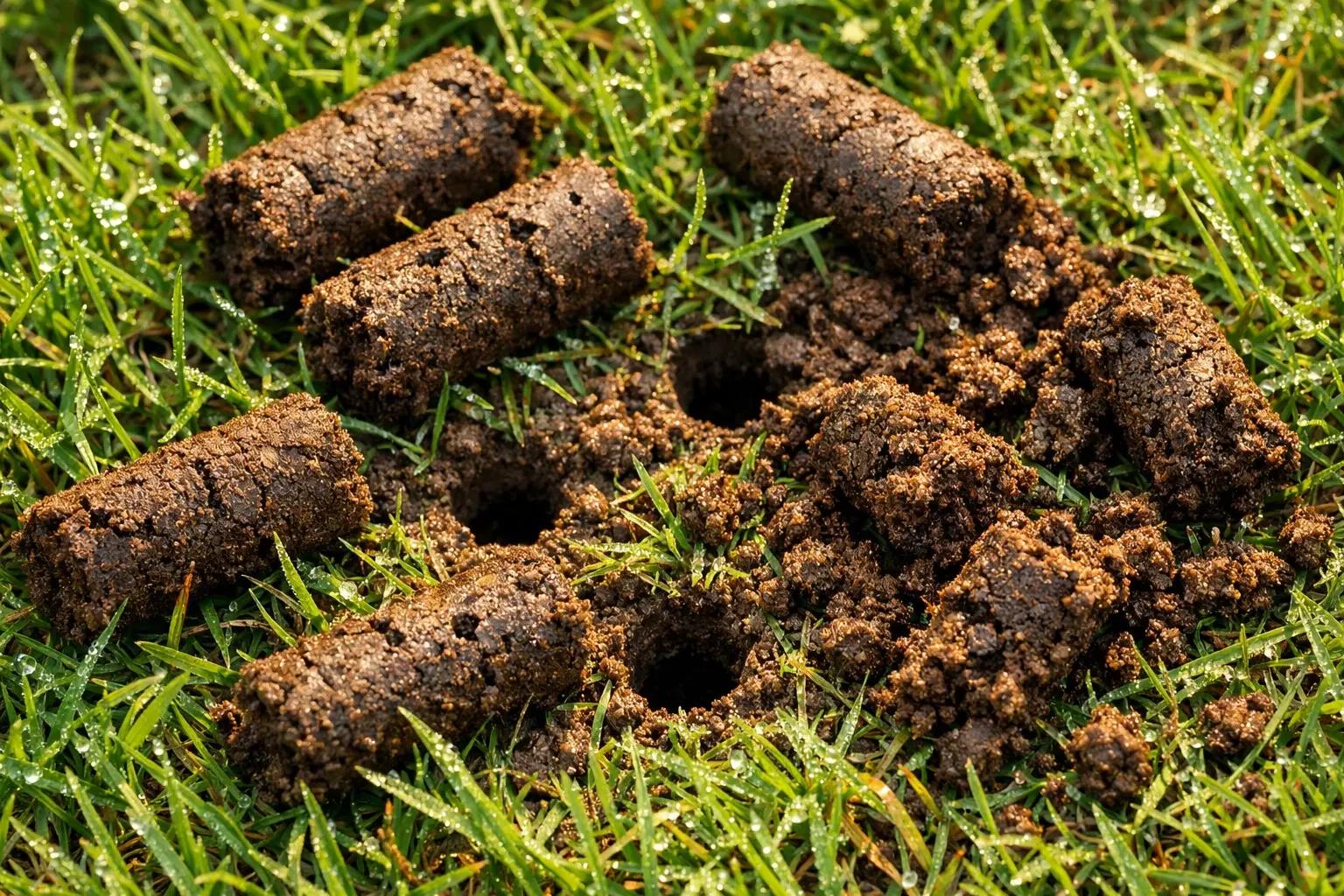
Start at one corner of the lawn and walk the aerator in straight, overlapping passes — just like mowing. The machine will punch hollow tines into the soil and eject small plugs (cores) of soil and thatch onto the surface. Make two complete passes over the entire lawn: the first in one direction (north-south), and the second perpendicular (east-west). This cross-pattern ensures holes every 4-6 inches across the lawn. The cores should be 2-3 inches long — if they're shorter than 1.5 inches, the soil may be too dry or the machine needs adjustment.
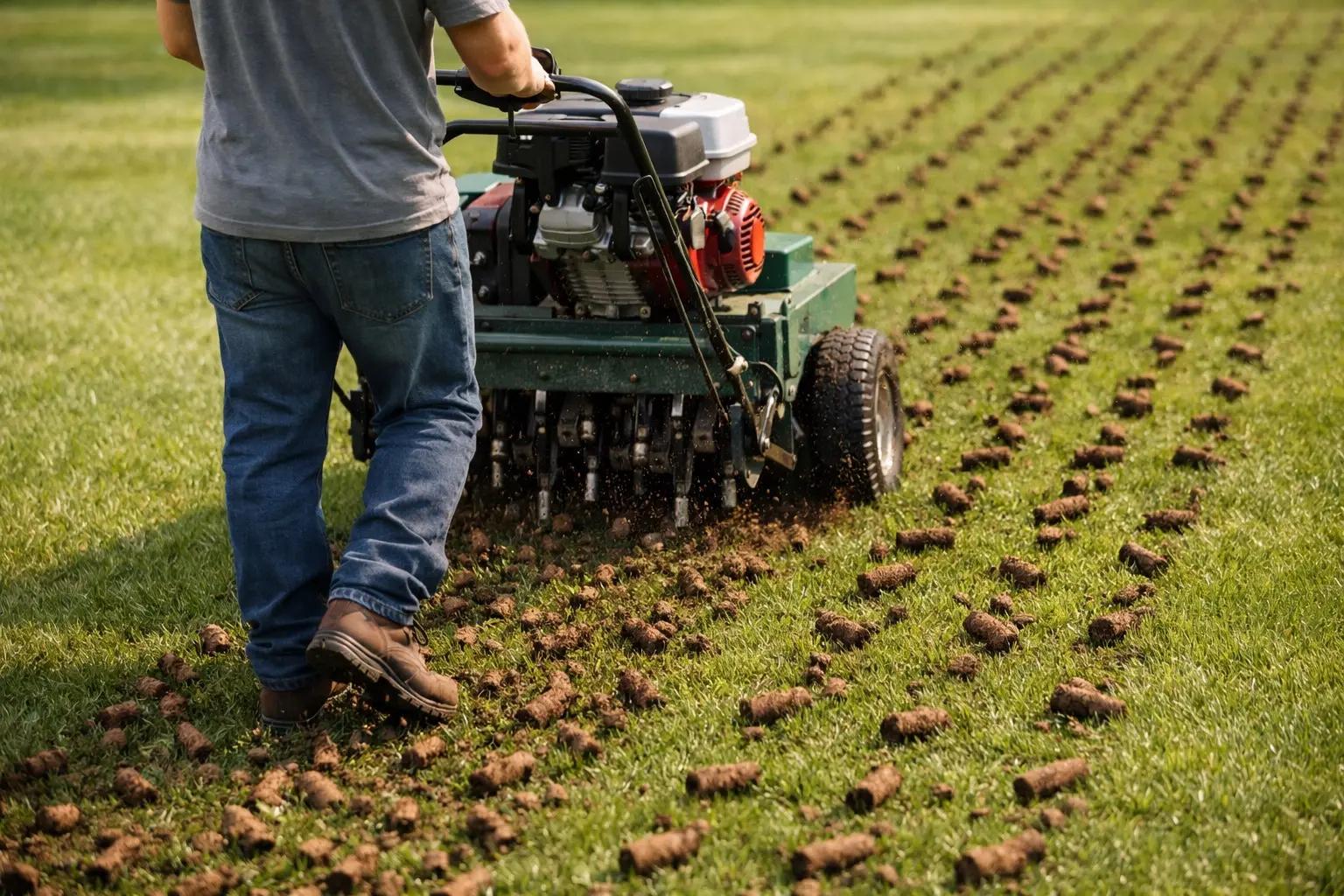
Make extra passes over high-traffic areas like paths, play areas, and spots near downspouts where the soil compacts the most. Three passes on these trouble spots is not overkill.
The aerator will buck when it hits tree roots, rocks, or buried objects. Keep a firm two-handed grip and be prepared to disengage the tines quickly using the handle lever.
Leave the Soil Plugs on the Lawn
The small cylindrical soil plugs scattered across your lawn look messy, but leave them in place. They break down within 1-2 weeks (faster if you run a mower over them to crumble them) and return nutrients and beneficial microorganisms to the soil surface. The decomposing plugs also help break down thatch naturally. If the plugs bother you aesthetically, run the back of a leaf rake lightly over the lawn to break them up — but never bag and remove them.
Spread Grass Seed with a Broadcast Spreader
Load your broadcast spreader with grass seed at the overseeding rate on the bag — typically 3-4 pounds per 1,000 square feet (half the rate used for new lawns). Apply half the seed walking in one direction (north-south), then apply the remaining half walking perpendicular (east-west). This crosshatch pattern ensures even coverage with no bare streaks. The seed will fall naturally into the aeration holes where it has perfect soil contact, moisture, and protection from birds. For bare patches larger than 6 inches across, apply seed at the full new-lawn rate.
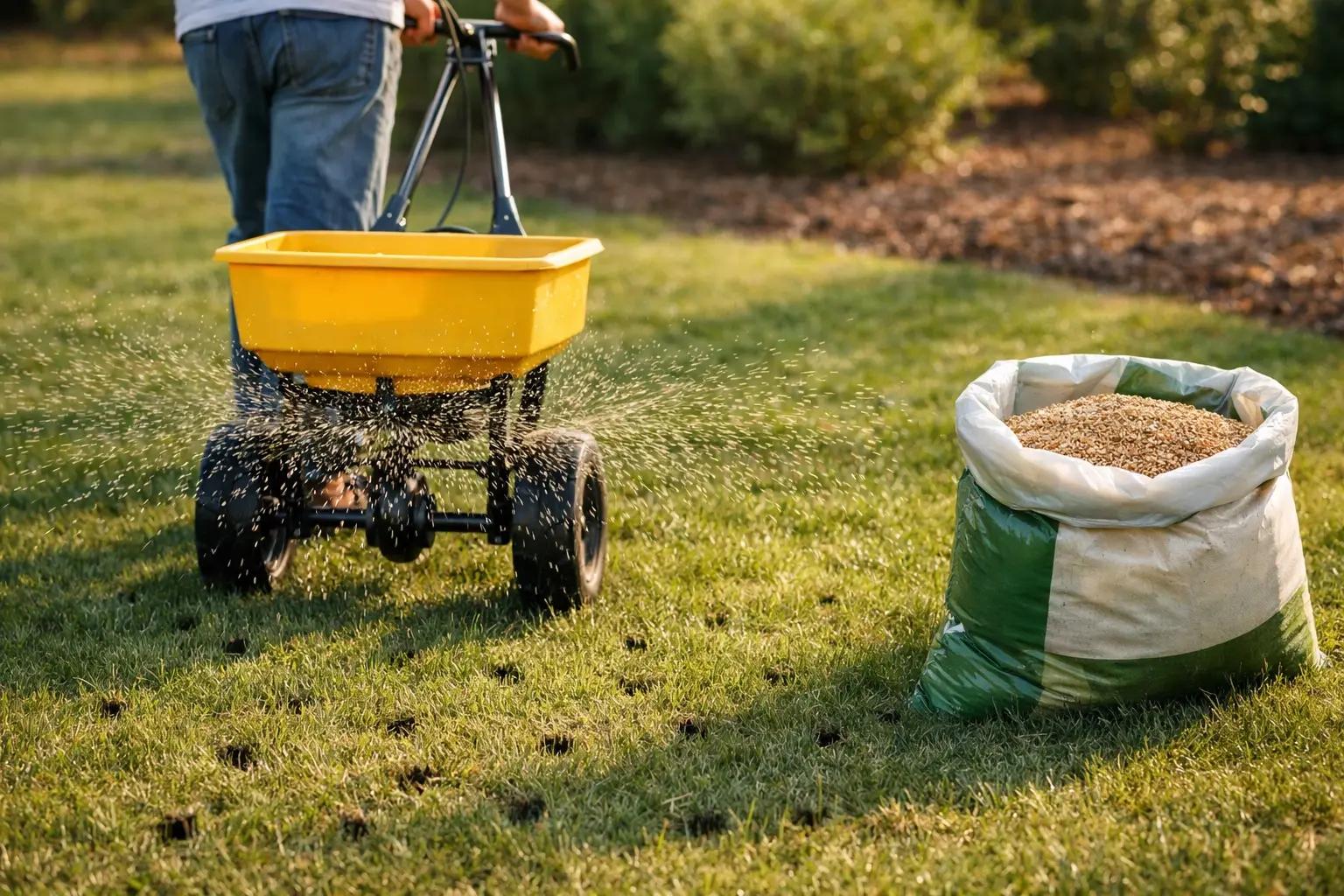
Buy seed that matches your existing grass species. Check the seed bag label — look for less than 0.5% weed seed and a germination rate above 85%. Avoid "contractor mix" bags that prioritize fast-growing annual ryegrass over permanent turf species.
Apply Starter Fertilizer
Immediately after seeding, apply a starter fertilizer with a high middle number (phosphorus) — something like 10-18-10 or a product labeled specifically as "starter fertilizer." Phosphorus promotes root development in new seedlings, which is critical during the first 4-6 weeks. Use your broadcast spreader at the rate listed on the fertilizer bag. Do not apply weed-and-feed or any product containing pre-emergent herbicide — these chemicals prevent all seeds from germinating, including your new grass seed.
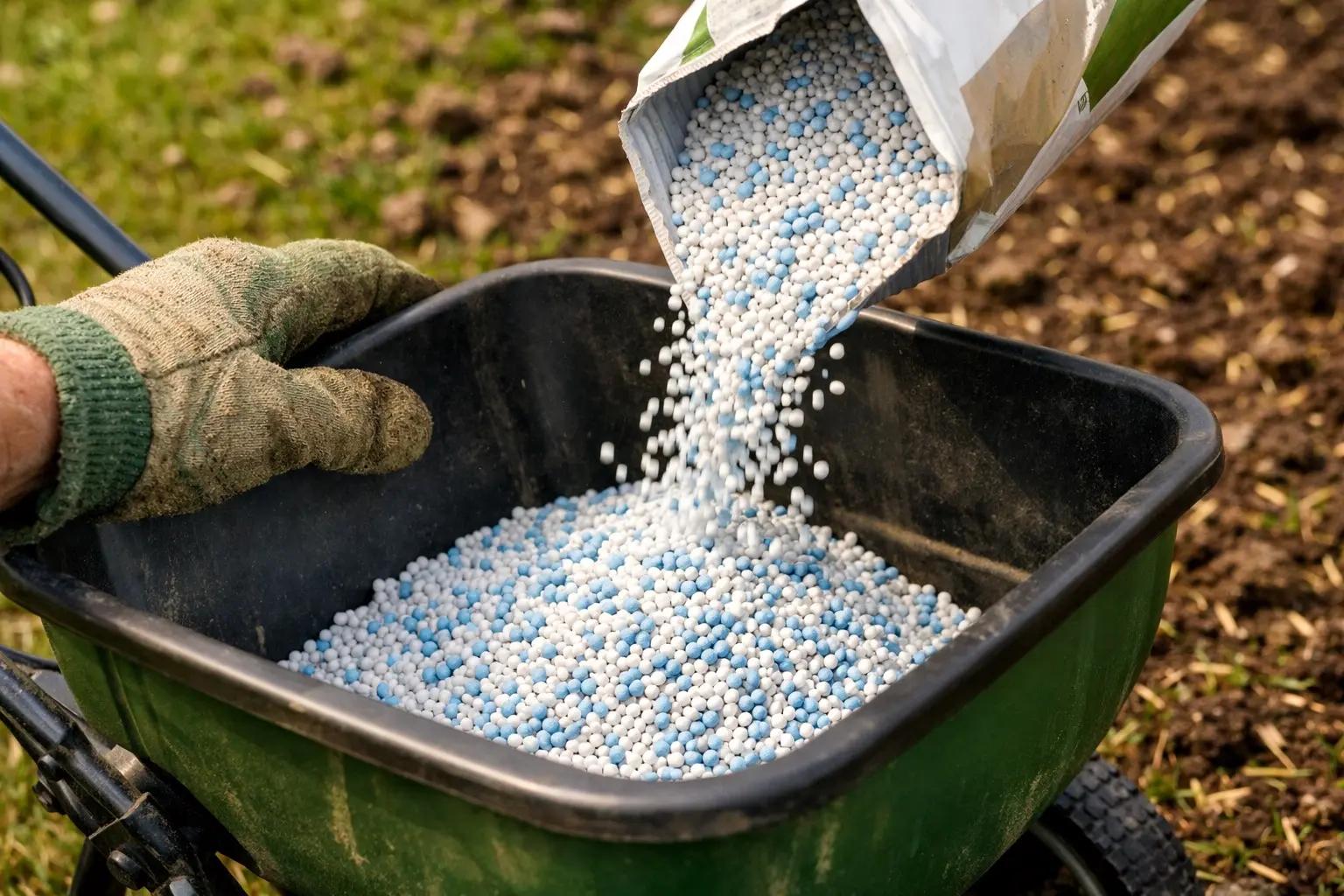
Never apply pre-emergent herbicide (crabgrass preventer) within 8 weeks of overseeding. It will kill your new grass seedlings just as effectively as it kills weeds.
Lightly Rake to Improve Seed-to-Soil Contact
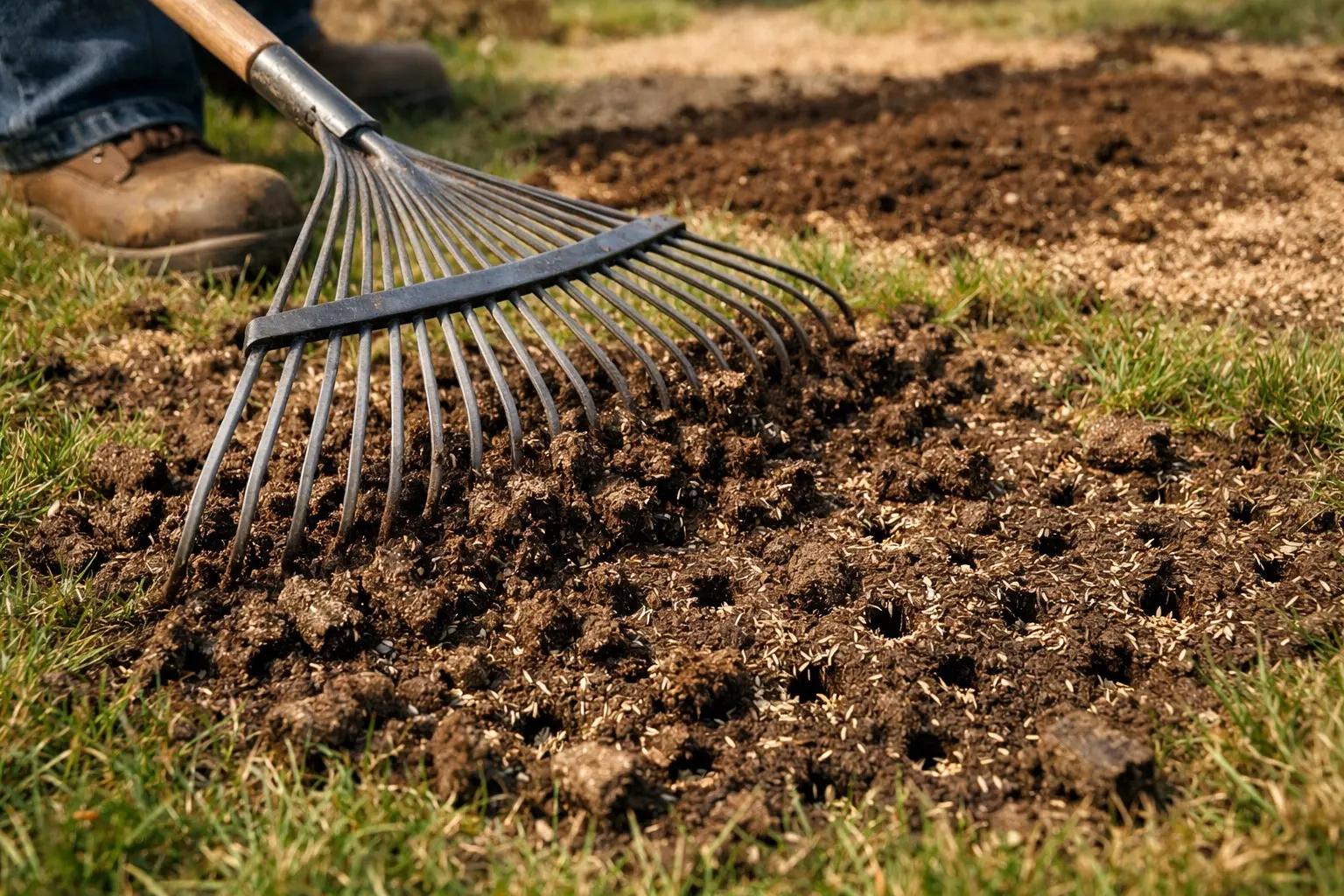
Use the back of a leaf rake or a flexible tine rake to gently drag across the lawn surface. This works loose seed down into the aeration holes and scratches it into the top 1/4 inch of soil between the holes. Don't rake aggressively — you're not trying to move soil, just nudge the seed into contact with it. For bare or thin patches, spread a thin layer (1/4 inch) of peat moss, compost, or topsoil over the seed to hold moisture and protect against birds. Straw mulch works too — one bale covers roughly 1,000 square feet at the right thickness.
Water Consistently for the First Three Weeks
This step makes or breaks the entire project. For the first 7-10 days, water lightly twice a day — once in the early morning and once in the late afternoon — keeping the top inch of soil consistently moist but never puddled. Each session should run about 10-15 minutes per zone. After seedlings emerge (usually 7-14 days depending on grass type), reduce to once daily for another week, then transition to deeper, less frequent watering (about 1 inch per week total). New grass seedlings have tiny roots and will die within hours if the soil surface dries out during the first two weeks.
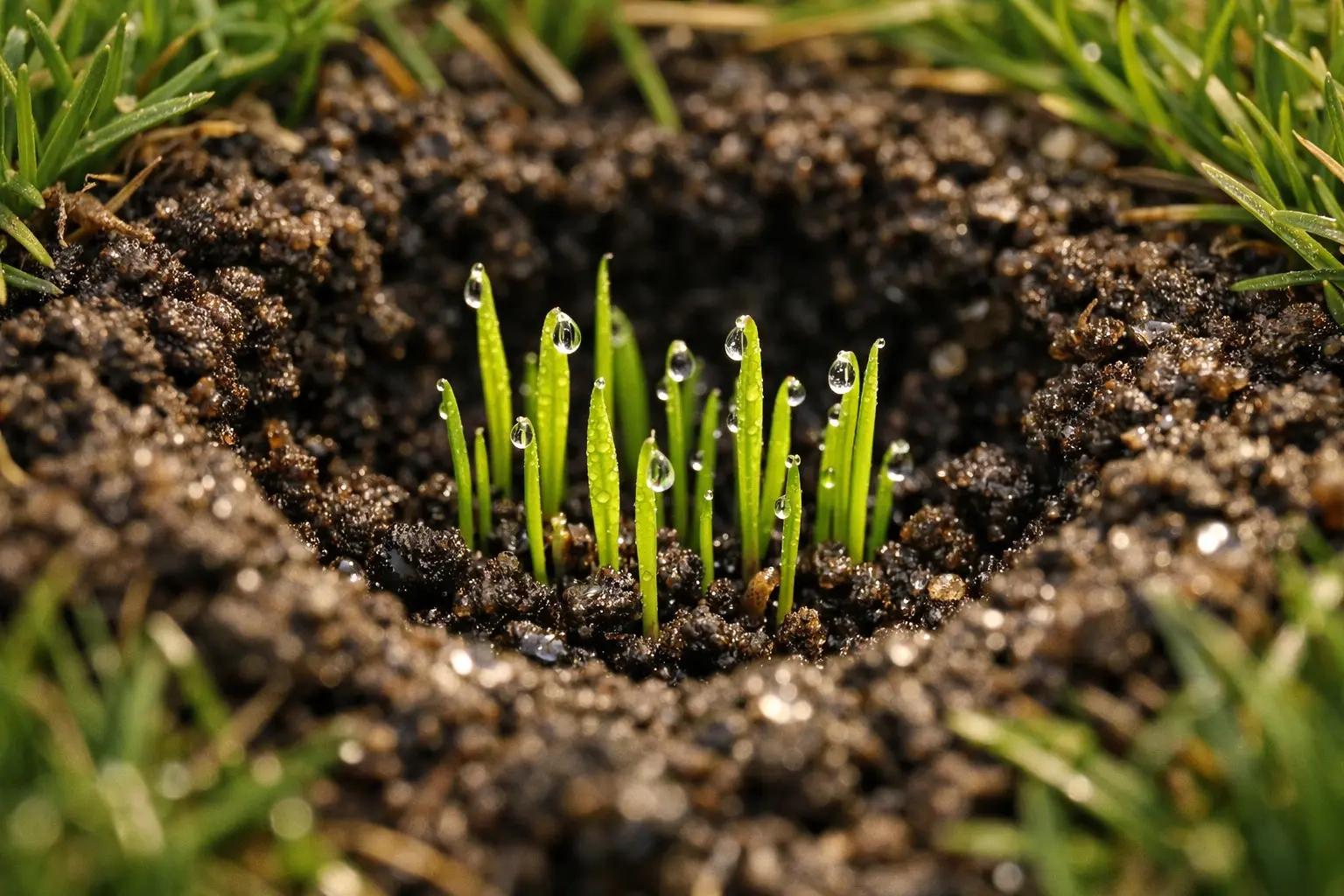
Set a phone timer for your watering sessions. The most common reason overseeding fails is forgetting to water on day 5 or 6 when the seeds have swelled but haven't yet sprouted — one dry afternoon can kill the entire batch.
Wait to Mow Until New Grass Reaches 3-4 Inches
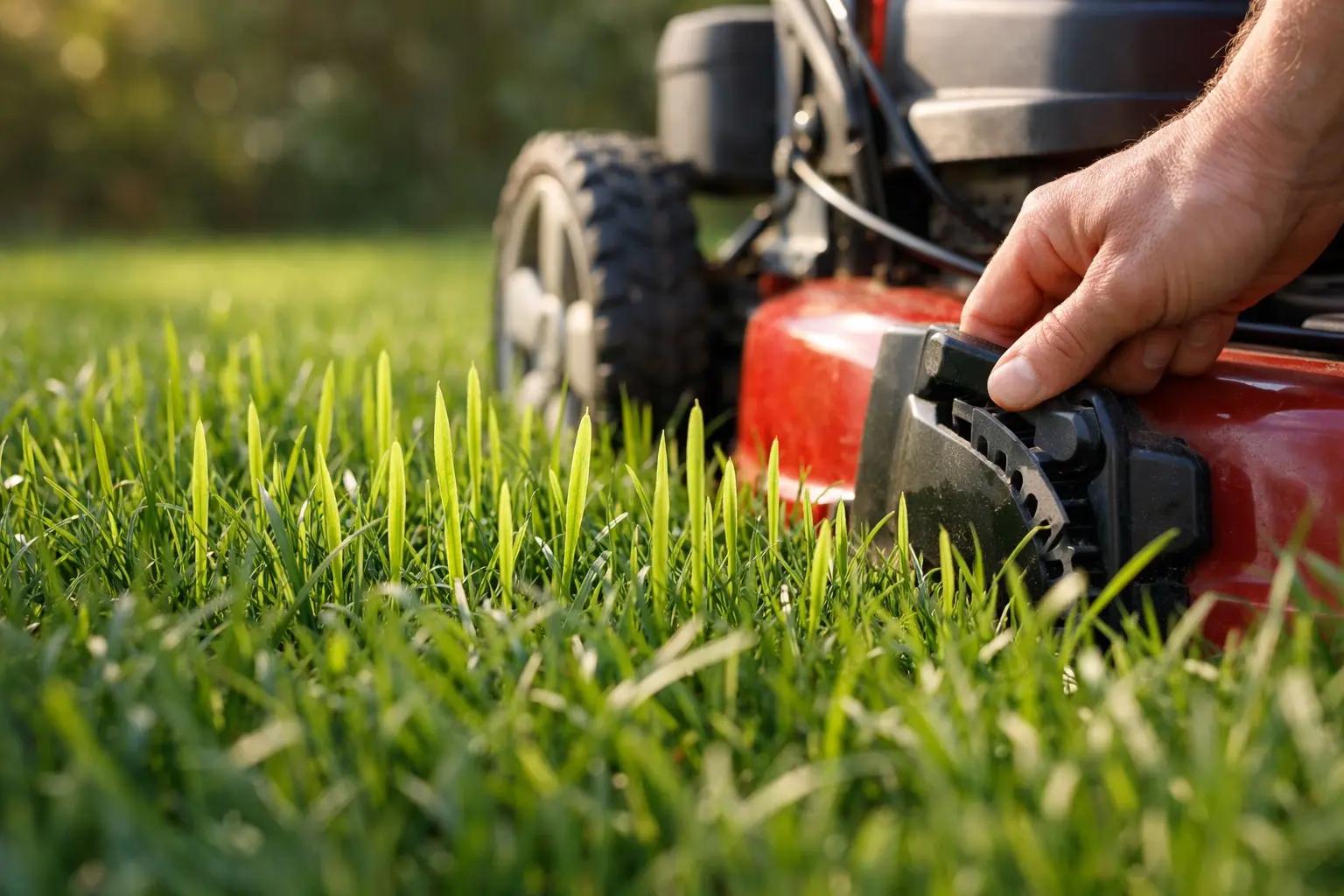
Resist the urge to mow for at least 3-4 weeks after overseeding. Wait until the new grass seedlings are 3-4 inches tall before the first cut, and even then, set your mower to the highest setting and remove no more than one-third of the blade height. Mowing too soon or too short pulls up seedlings that haven't rooted firmly. Stay off the lawn as much as possible during this establishment period — foot traffic, pets, and mower wheels compact the soil you just aerated and crush young seedlings.
Frequently Asked Questions
When is the best time to aerate and overseed?
+
For cool-season grasses — Kentucky bluegrass, tall fescue, perennial ryegrass — aim for early fall, roughly late August through mid-September, when soil is still warm at 55-65°F but air temperatures are dropping and rain is more reliable. Early spring works as a fallback but weed pressure is much higher. For warm-season grasses like Bermuda, Zoysia, and St. Augustine, aerate late spring into early summer while the grass is actively growing.
Should I rake up the soil plugs after aerating?
+
No — leave them. The plugs break down within one to two weeks and return nutrients and soil microorganisms to the surface, and their decomposition actively helps break down thatch. If they bother you, run a mower or drag a leaf rake lightly over the lawn to crumble them faster, but never bag and remove them. Hauling them off throws away most of the benefit.
How often do I water new grass seed?
+
Lightly and often at first, then taper. For the first 7-10 days water twice daily, morning and late afternoon, about 10-15 minutes per zone — enough to keep the top inch consistently moist but never puddled. Once seedlings appear, usually in 7-14 days, drop to once daily for a week, then move to about 1 inch per week in deeper, less frequent soakings.
Why does seed germinate better after aeration?
+
Because the core holes give seed direct contact with soil instead of leaving it sitting on top of thatch and grass blades, where it dries out and gets eaten. Seed-to-soil contact is the whole mechanism, which is why aerating and overseeding are done together rather than as separate jobs — overseeding a compacted, un-aerated lawn wastes most of the seed.
When can I mow after overseeding?
+
Wait until the new grass reaches 3-4 inches, which typically takes a few weeks. Mowing sooner tears out seedlings that have not yet anchored their roots. When you do mow, make sure the blade is sharp — a dull blade rips young grass out of the ground rather than cutting it cleanly.
Sources & further reading
- Core Aeration of Lawns — Iowa State University Extension
- When is the best time to aerate a lawn? — Iowa State University Extension
- Lawn Establishment — Penn State Extension
More Gardening Guides
View all →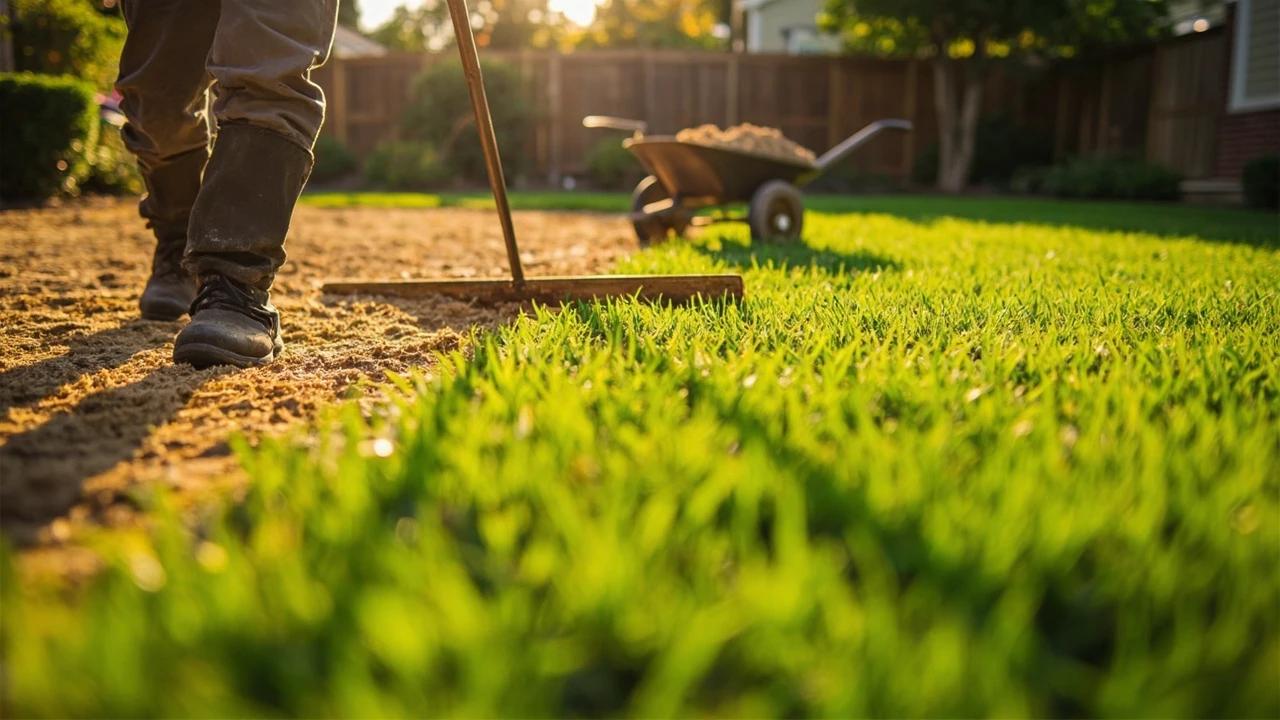 Medium3 hrs
How to Level a Bumpy Lawn
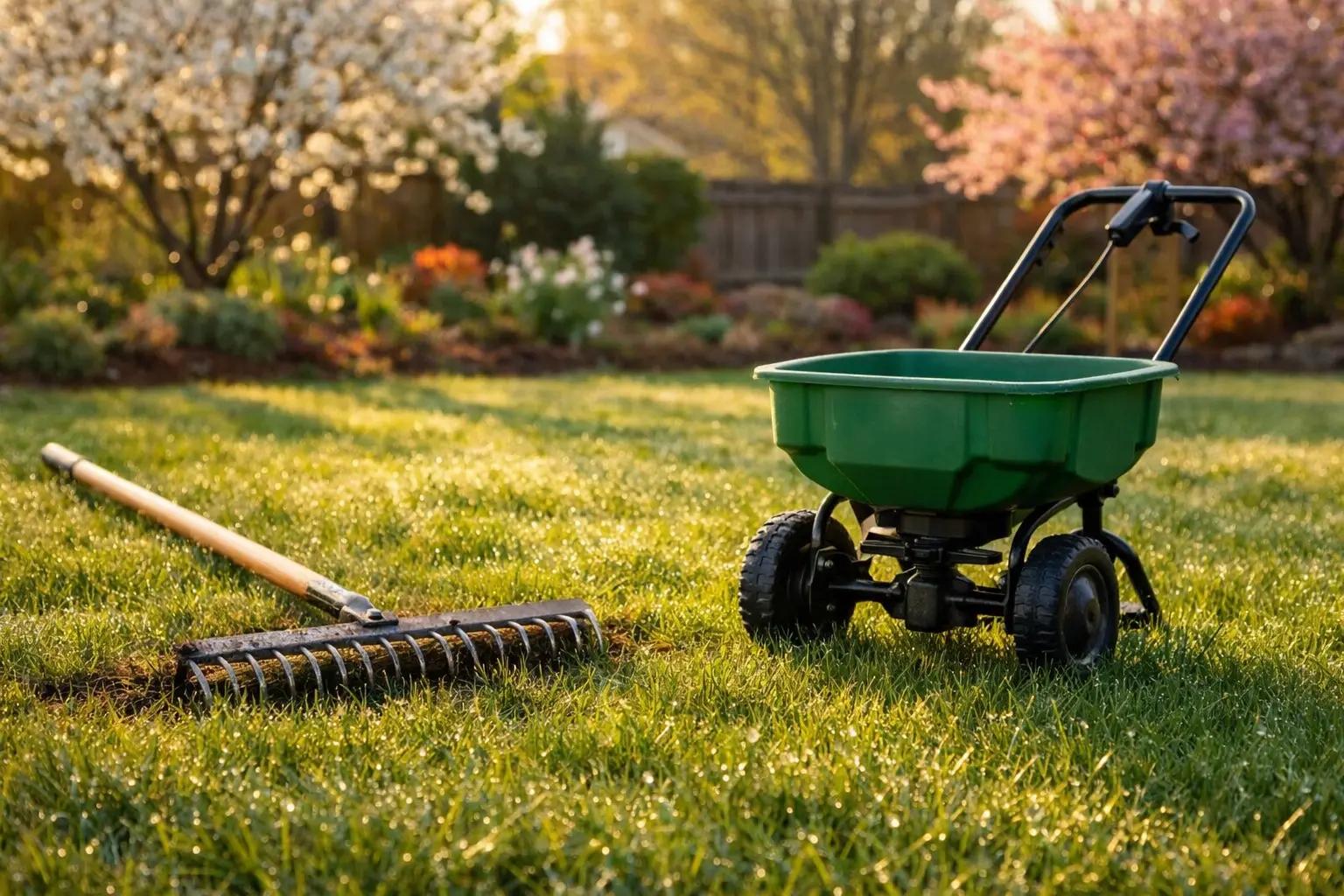
A bumpy lawn is not just ugly — it scalps high spots when you mow, pools water in low spots that breed mosquitoes, and turns every backyard game into an ankle-rolling hazard. The fix is topdressing: spreading a thin sand-soil-compost mix over the surface and letting the grass grow through it. It costs $50-100 in materials for an average yard, takes a weekend afternoon, and produces a noticeably smoother lawn within 3-4 weeks.
 Easy3 hrs
Spring Lawn Care Checklist
What you do to your lawn in the first six weeks of spring determines its health for the entire growing season. Follow this sequence to fix winter damage, encourage deep roots, and crowd out weeds before they establish.
 Easy2 hrs
How to Build a Drip Irrigation System
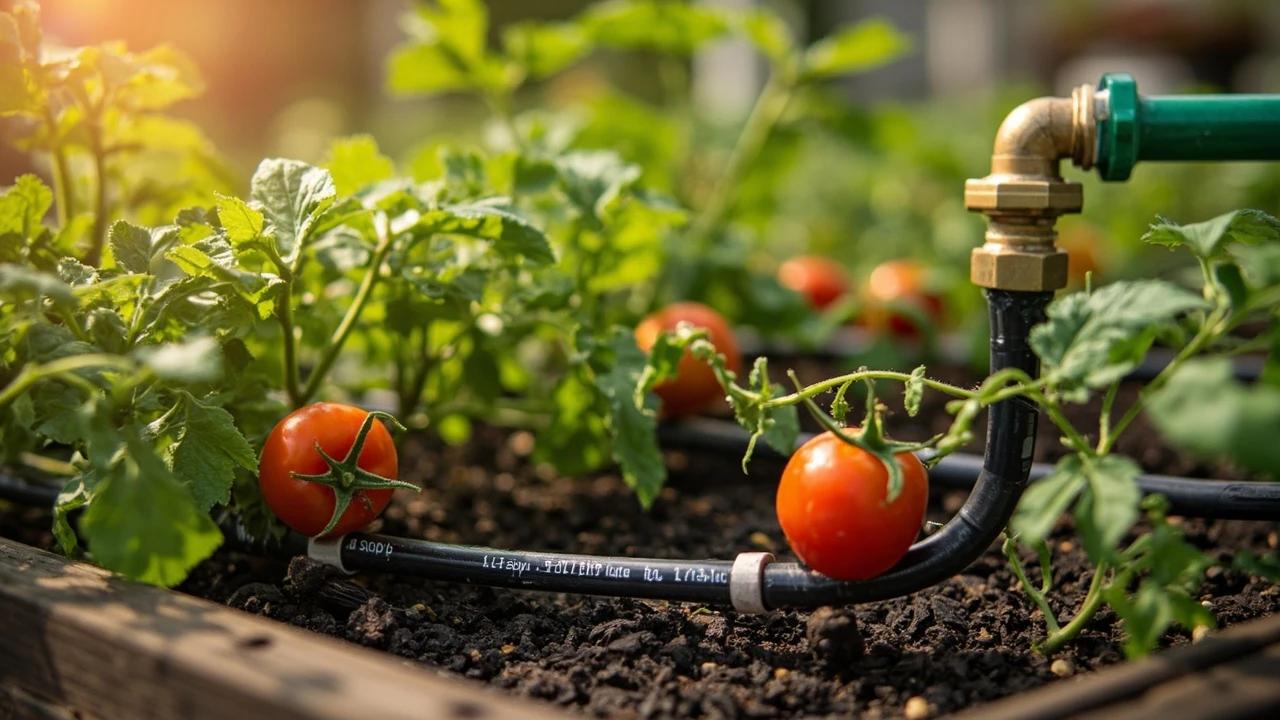
A drip irrigation system delivers water directly to the root zone of each plant, cutting water use by up to 50% compared to overhead sprinklers while eliminating the evaporation, runoff, and fungal leaf problems that come with them. A basic system for a 200-400 sq ft garden costs $40-80 in parts, installs in an afternoon with no special tools, and runs entirely off an outdoor spigot — no plumbing or electrical work required.
You Might Also Like
 Easy15 min
How to Replace a Refrigerator Water Filter
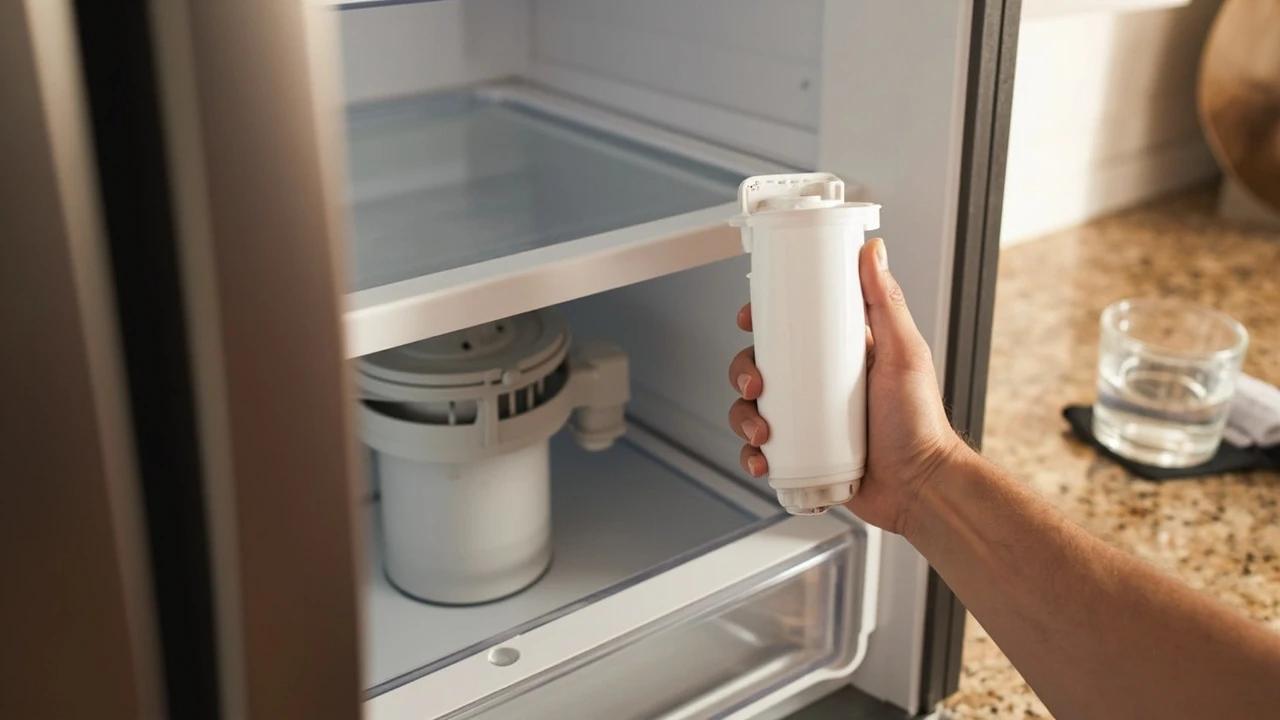
A clogged refrigerator water filter is the most common cause of slow dispensing, off-tasting water, and undersized ice cubes — and it is the easiest fix in your kitchen. Most filters are designed to be swapped in under five minutes with no tools, no shut-off valve, and no spilled water. This guide covers locating your filter, the two common removal styles (twist-in and push-in), inspecting the O-rings, flushing the new filter, and resetting the indicator light so you do not see the red "Replace" warning the next morning.
 Easy25 min
Best Deck Stain: Transparent vs Semi vs Solid
There is no "best" deck stain — there is the right stain for your sun exposure, wood condition, and how often you want to redo the job. Transparent stains last 1-2 years but let the natural grain show. Solid stains last 4-7 years but look like paint. This guide walks the four opacity levels and the oil-vs-water choice so you pick the one that matches your deck and your tolerance for re-staining.
 Easy45 min
How to Install a Smart Thermostat
A smart thermostat is one of the highest-ROI upgrades you can make to your home — it learns your schedule, adjusts automatically when you're away, and typically saves about 8% on heating and cooling bills — the figure ENERGY STAR verifies from real-home data, roughly $50 a year — so the $120-250 device usually pays for itself within a few years. If your old thermostat has labeled wires behind it, the swap takes about 30-45 minutes with nothing more than a screwdriver and your phone. This guide covers checking compatibility, labeling wires, mounting the new base, connecting everything, and walking through the app setup so your system is running smart the same day.