How to Replace a Toilet Wax Ring
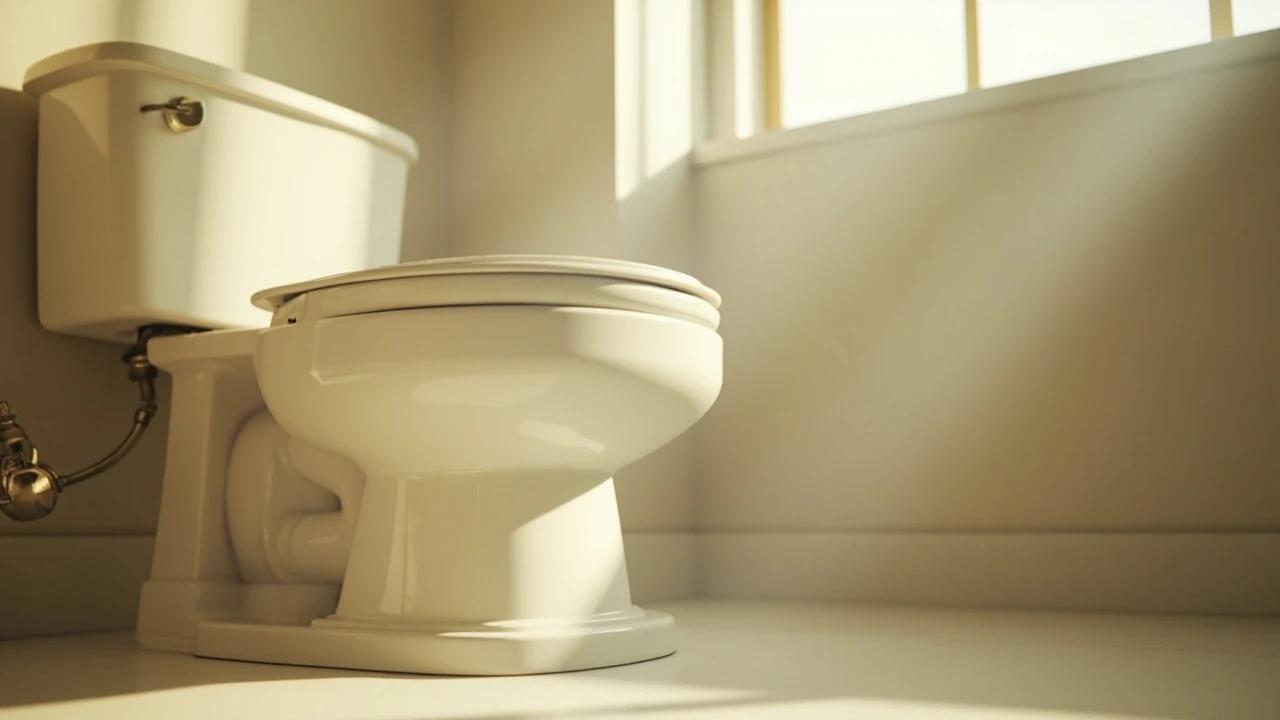

A leaky wax ring causes water stains on the ceiling below, rotted subfloor, and that unmistakable sewer smell creeping into the bathroom — and a new wax ring costs $5-10 and takes about an hour to swap yourself versus $150-300 to call a plumber. The job isn't complicated, but a handful of small mistakes (stacking rings, overtightening bolts, missing a cracked flange) turn a simple fix into a re-do. This guide walks you through shutting off the water, pulling the toilet cleanly, inspecting the flange, setting the new ring, and resealing everything so your bathroom stays dry for another decade.
What You'll Need
🛠 Tools
📦 Materials
Safety First
- •A porcelain toilet weighs 70-120 lbs and is awkward to lift — use a helper and lift with your legs to avoid back injury and a cracked bowl.
- •The waste pipe below the flange is an open sewer line once the toilet is lifted — stuff a rag into it immediately to block sewer gas (methane, hydrogen sulfide) from entering the room.
- •Wear nitrile gloves and eye protection. Anything under an old toilet may contain bacteria, mold, or urine residue.
Step-by-Step Instructions
Shut Off the Water and Drain the Toilet
Locate the shut-off valve on the wall behind or beside the toilet and turn it fully clockwise. Hold the flush handle down for 10 seconds to empty the tank and bowl as completely as possible. Use a sponge or shop vacuum to remove every last bit of water from both the tank and the bowl — any water left behind will dump onto your floor when you lift the toilet. Disconnect the water supply line from the bottom of the tank with an adjustable wrench, catching drips in a small cup.
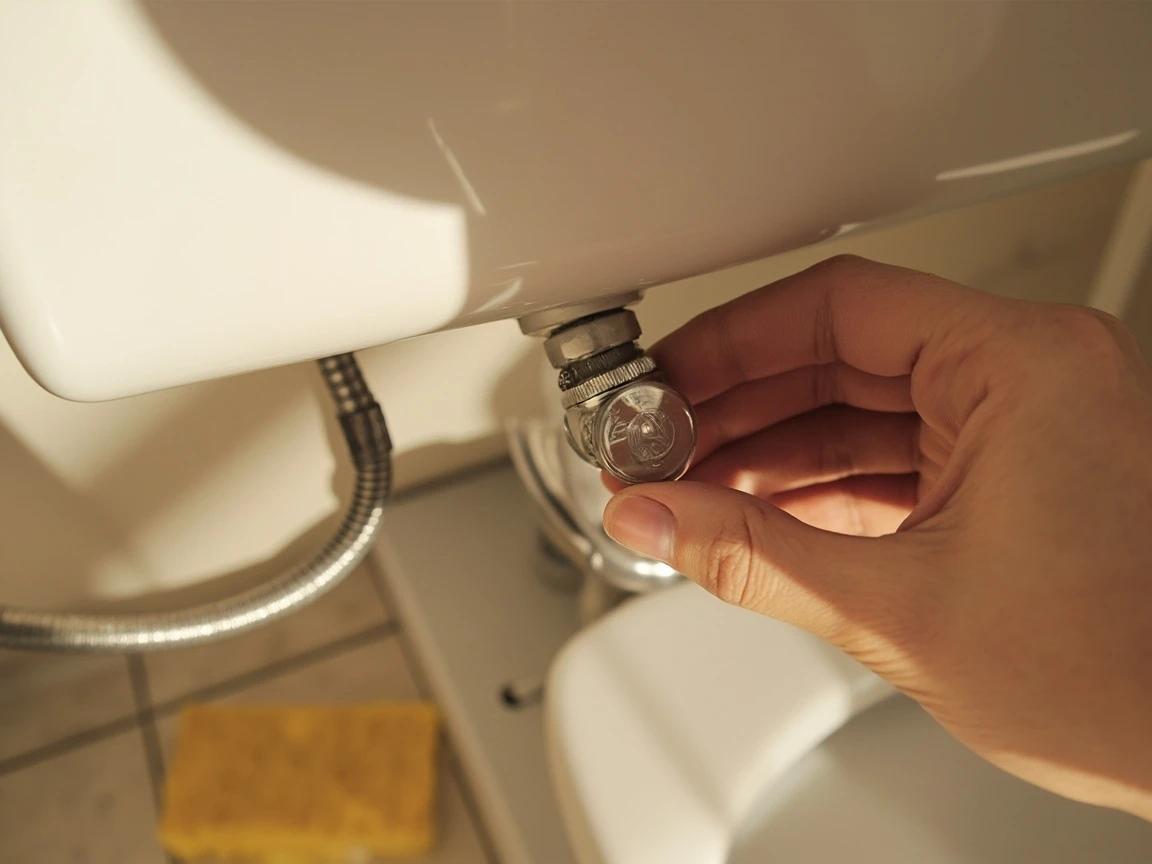
If the shut-off valve is stuck or weeps when turned, replace it while the toilet is already off — a new quarter-turn valve costs about $8 and takes five extra minutes.
Remove the Bolt Caps and Unbolt the Toilet
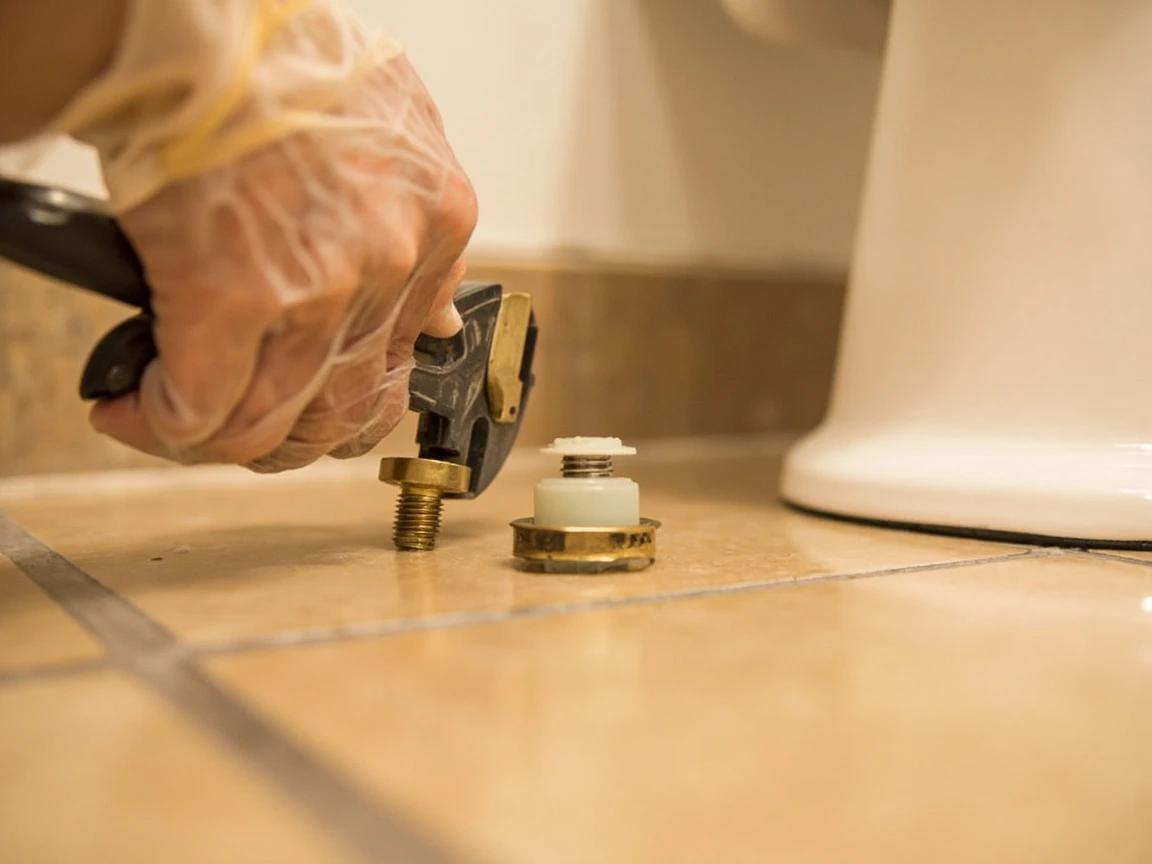
Pry off the plastic or ceramic caps at the base of the toilet on each side with a flathead screwdriver — they usually pop off with light pressure. Underneath you'll see the closet bolts with nuts and washers. Use an adjustable wrench to loosen each nut counterclockwise. If a bolt spins in place or a nut is rust-welded, cut the bolt off with a mini hacksaw — you're replacing the bolts anyway. Set the nuts, washers, and caps aside where you can find them.
Break the Seal and Lift the Toilet
Straddle the toilet, grip it firmly under the bowl rim with both hands, and rock it gently side to side to break the old wax seal — you'll feel it release with a soft crack. With a helper, lift the toilet straight up, keeping it level so any remaining water in the trap stays inside. Carry it to a pre-laid bed of old towels or cardboard and set it on its side — do not tip it onto the back of the tank, which can crack. Immediately stuff a clean rag into the open drain pipe to block sewer gas.
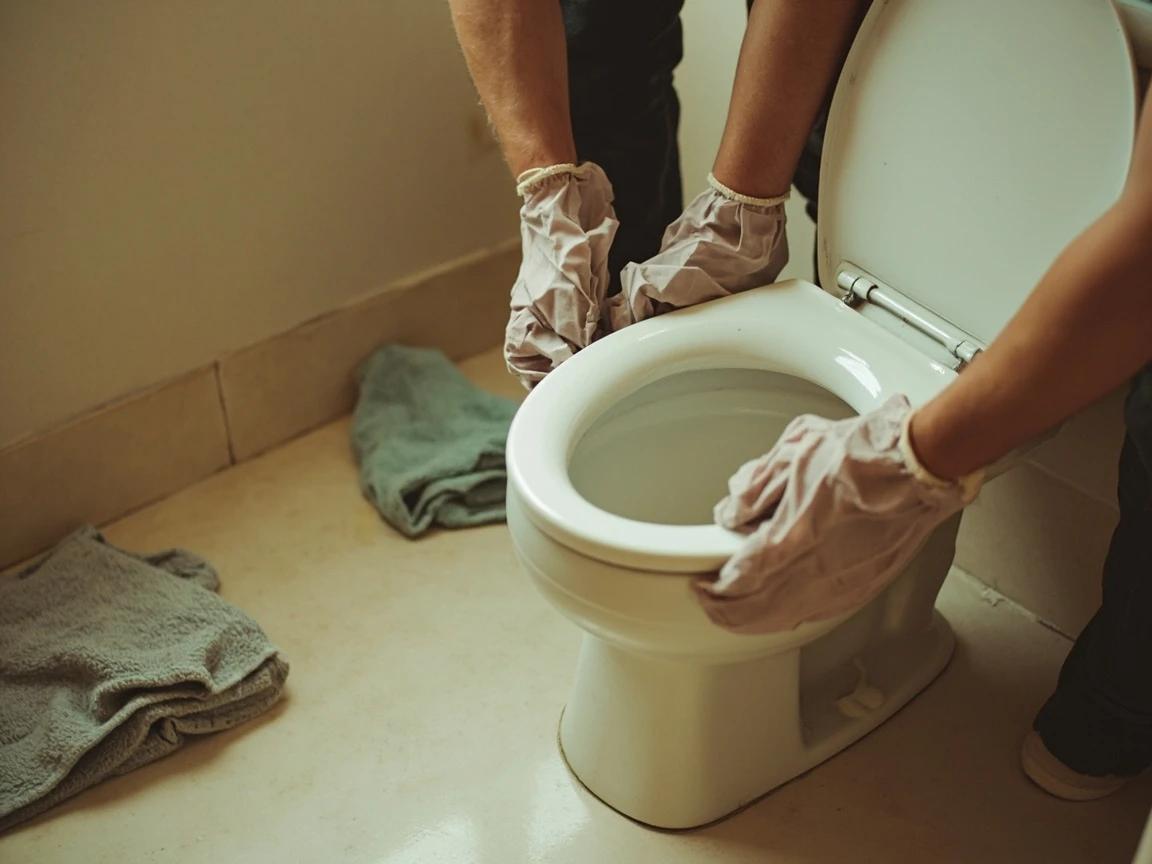
With the toilet already pulled, this is the cheapest moment to swap the whole fixture if it is cracked, wobbling, or an old water-guzzler — see how to install or replace a toilet.
The exposed drain is a direct opening into the sewer — stuff a rag into it within seconds of lifting the toilet to block methane and hydrogen sulfide gas.
Scrape Off the Old Wax Ring Completely
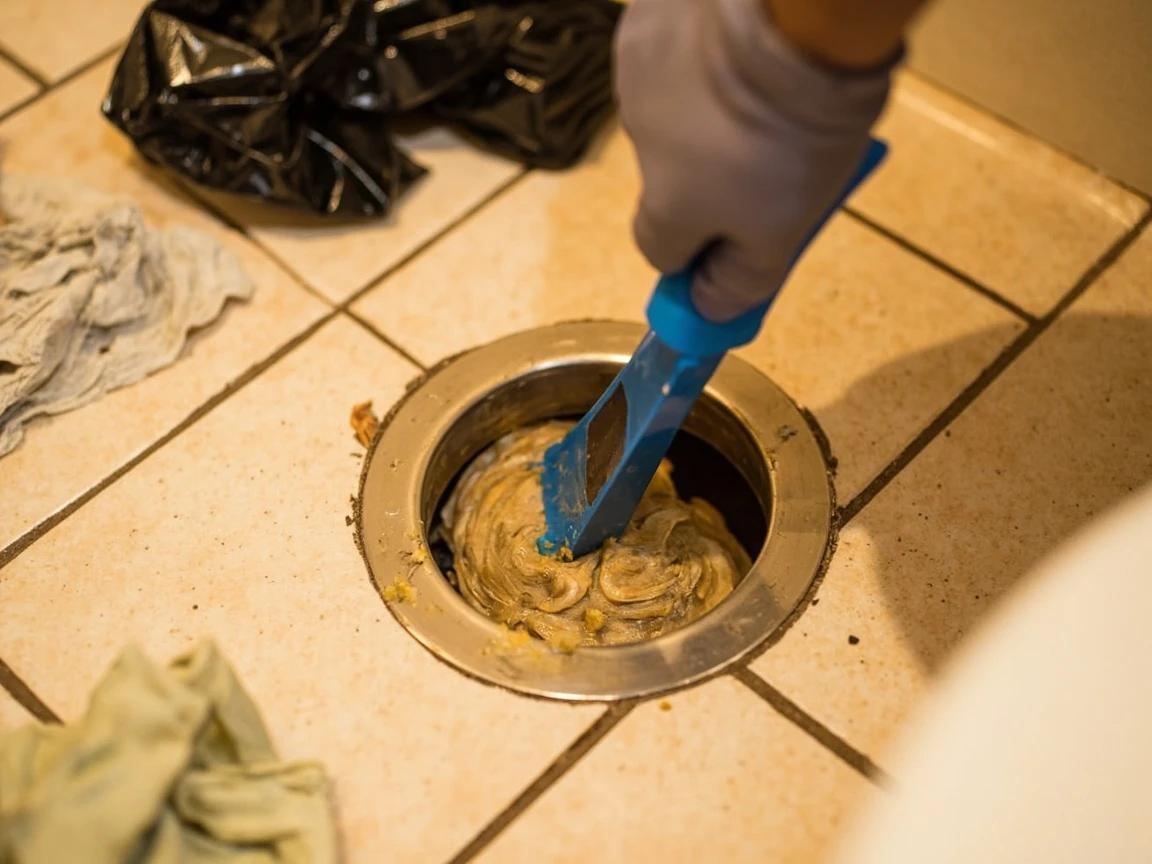
Put on nitrile gloves. Use a stiff putty knife to scrape every trace of old wax off the flange on the floor and off the horn (the ceramic outlet) on the bottom of the toilet. The wax is sticky and smears — work it into a ball on the putty knife and drop it into a trash bag. Both mating surfaces must be bare porcelain and metal/PVC before the new ring goes on or the new seal won't compress evenly. Wipe both surfaces with a rag and disinfectant cleaner to remove residue.
Inspect the Flange for Damage
With the flange clean, look closely for cracks, broken ears (the slotted wings that hold the closet bolts), rust on cast iron, or the flange sitting below the finished floor level. The flange must sit flush with or slightly above the finished floor for the wax to seal properly. A cracked flange must be repaired before you set the toilet — a $6 metal repair ring bolts over most broken flanges. If the flange sits below the floor (common after new tile), use an extender ring or a thick wax ring with a horn.
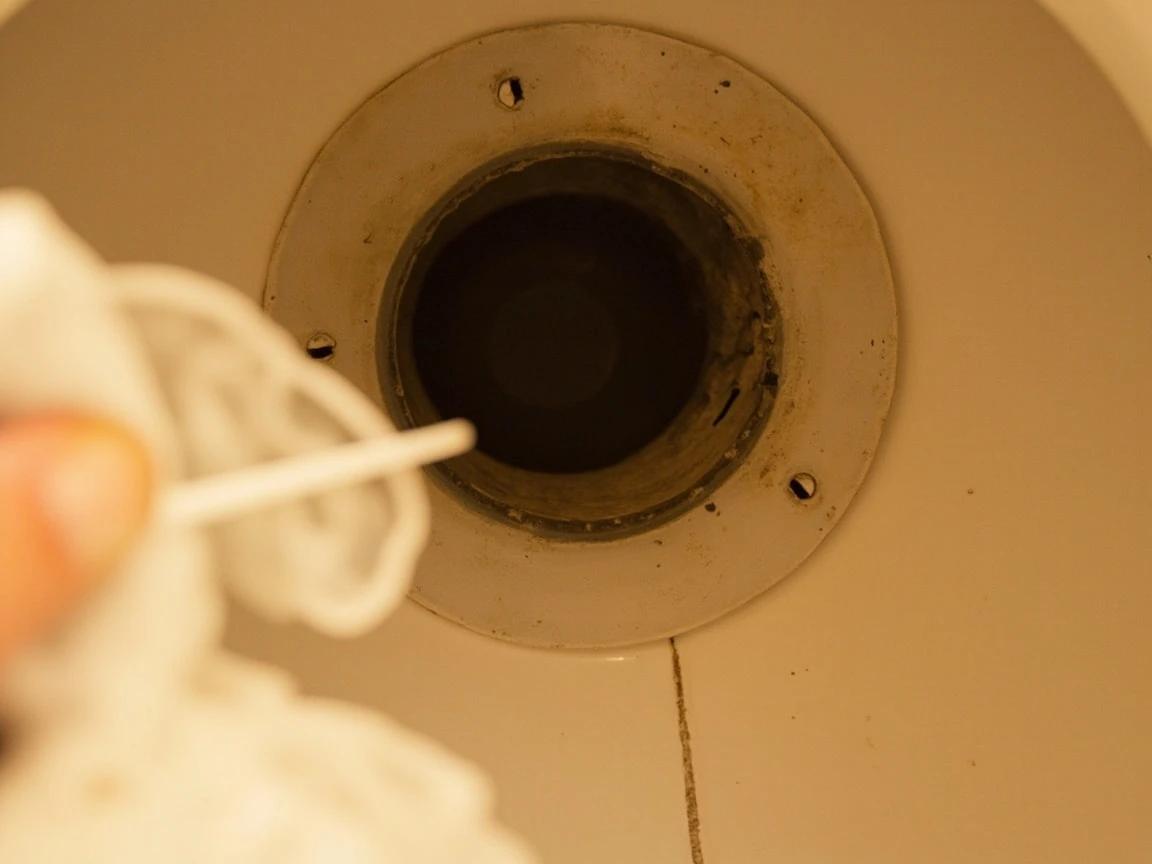
Take a photo of the flange and bring it to the hardware store if anything looks unusual — the plumbing aisle staff can usually identify the exact repair part in seconds.
Install New Closet Bolts and Position the Wax Ring
Remove the rag from the drain pipe just before you set the ring. Slide the new brass closet bolts into the slots on the flange so they stand upright pointing up through where the toilet holes will sit — the oval-headed end goes in the slot, and a plastic or brass retainer washer holds them vertical. Unwrap the new wax ring and set it directly onto the flange, centered over the drain. If the ring has a plastic horn (a funnel), the horn points down into the drain pipe. Do not press the wax ring onto the toilet first — this makes alignment much harder.
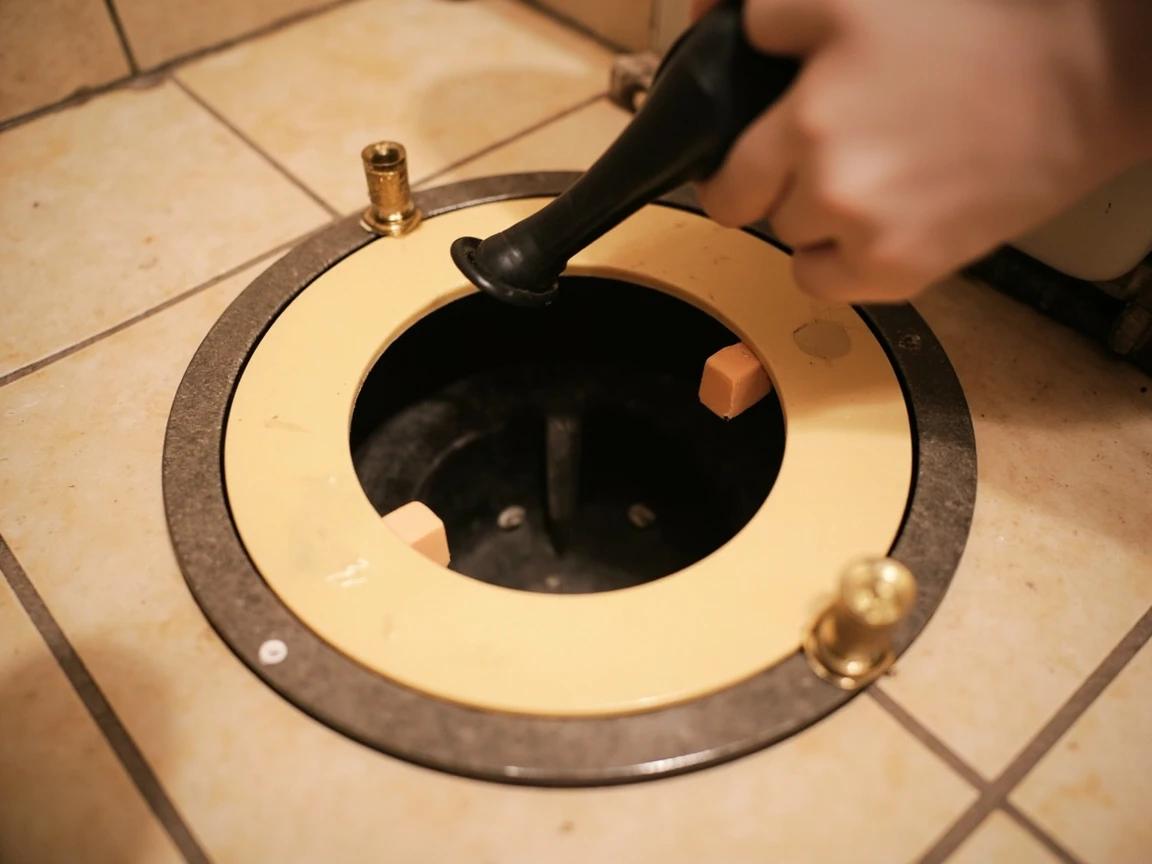
Never stack two wax rings to reach a deep flange — the stacked seam leaks. Use one jumbo or extra-thick ring instead.
Lower the Toilet Straight Down Onto the Ring
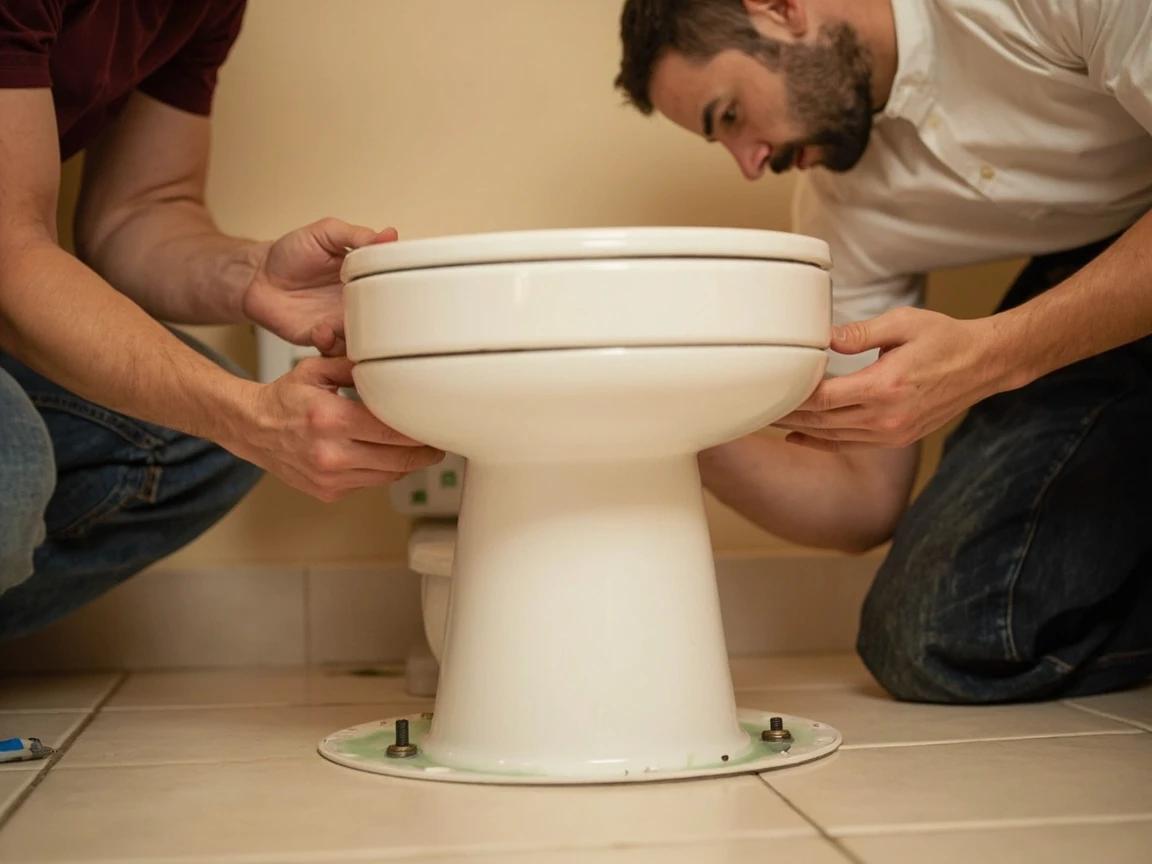
With a helper, lift the toilet and hold it directly above the flange, aligning the two holes in the base with the upright closet bolts. Lower it slowly and straight down in one smooth motion — do not rock or tilt, as that deforms the wax and breaks the seal before it even starts. Once the base is touching the ring, sit on the toilet with your full body weight and rock gently side to side for 10-15 seconds. Your weight compresses the wax until the porcelain base rests flat on the finished floor.
Tighten the Bolts Evenly (Do Not Overtighten)
Slip the new plastic washers and nuts onto each bolt and hand-tighten. Then, using the adjustable wrench, alternate sides a quarter turn at a time to draw the toilet down evenly — uneven tightening twists the porcelain and cracks it. Stop tightening the moment you feel firm resistance and the toilet no longer rocks. The bolts should snug the toilet to the floor, not clamp it down. If the bolts stick up higher than the caps, cut them flush with a hacksaw, then snap the bolt caps on.
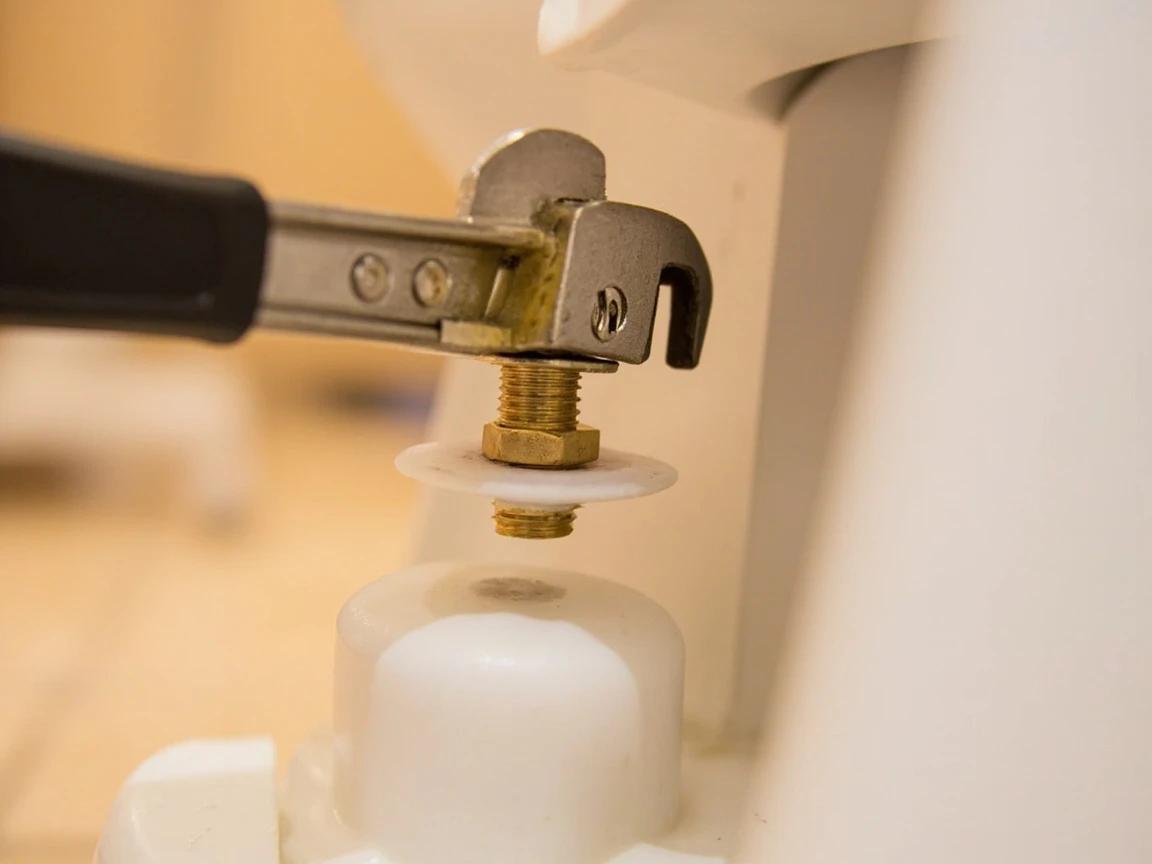
Overtightening closet bolts is the #1 way to crack a toilet base. Stop at snug — you are not lifting a car.
Reconnect Water, Test for Leaks, and Caulk the Base
Reattach the water supply line to the fill valve inlet and hand-tighten plus a quarter turn with the wrench — the cone washer inside the coupling nut makes the seal, so no Teflon tape is needed on this connection. Open the shut-off valve slowly and watch the tank fill while you check the supply connection and the base of the toilet for leaks. Flush twice and watch again. Once you confirm no leaks after 10-15 minutes, run a thin bead of 100% silicone caulk around the front and sides of the toilet base — leave a 2-3 inch gap at the back so a future leak can be seen before it rots the subfloor.
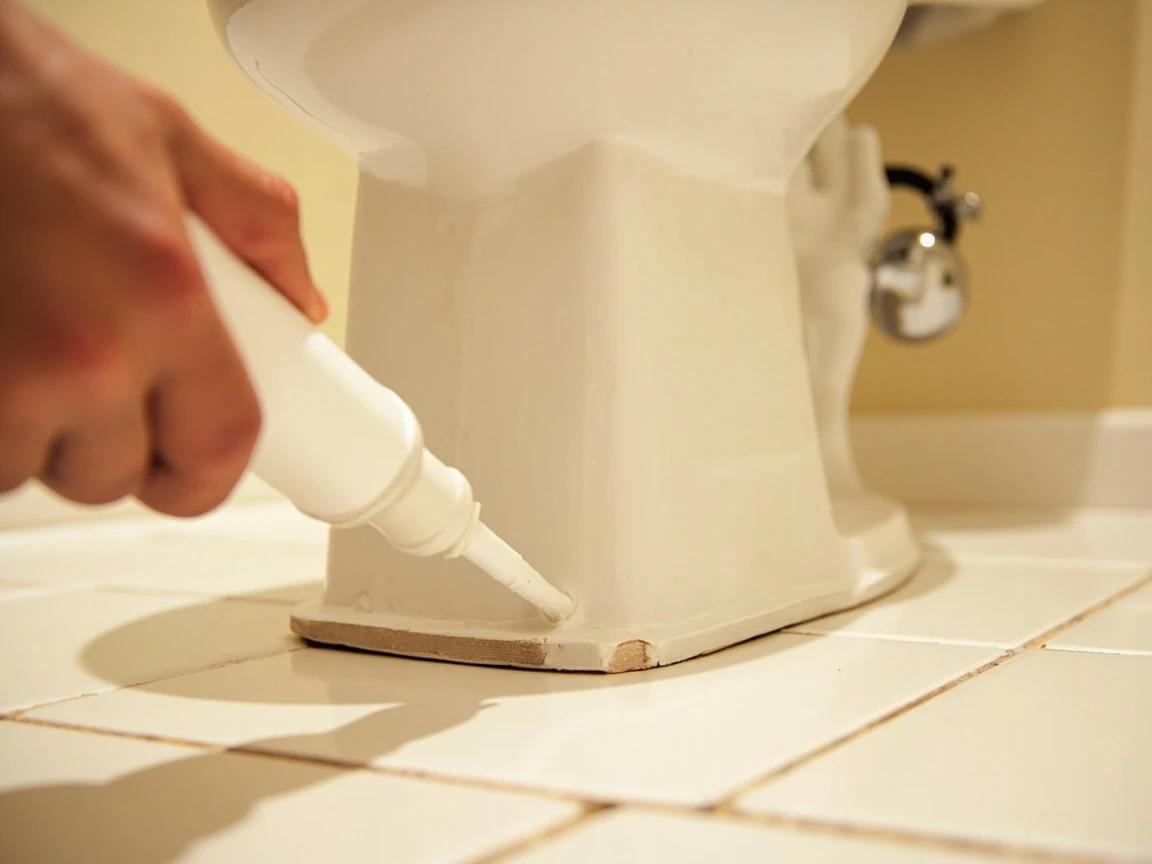
Leave a deliberate gap in the caulk at the back of the toilet — plumbing codes in many areas require it, and it lets you spot a future leak on the floor before it damages the ceiling below.
Frequently Asked Questions
How do I know the wax ring has failed?
+
Four signs, roughly in order of how often they show up: water seeping onto the floor around the base after a flush, a persistent sewer smell in the bathroom, brown staining on the ceiling of the room below, and a toilet that rocks when you shift your weight on it. A rocking toilet is the one worth acting on early — the movement is what breaks the seal in the first place, so it tends to be cause as well as symptom.
Can I stack two wax rings if the flange sits too low?
+
No. Stacked rings leak at the seam between them, and it is not a code-compliant fix. If the flange sits below the finished floor — common after new tile went in — use a single extra-thick or jumbo ring, or fit a proper flange extender to bring the surface up to floor level. A flange sitting more than about 1/4 inch low is a plumber's job rather than a ring choice.
Can I reuse a wax ring if I have to lift the toilet again?
+
No — wax rings are single-use. The seal forms by the wax crushing to the exact shape of the gap, so once the bowl has touched down the ring is committed. If you lift the toilet for any reason, even a few seconds later, scrape it off and set a fresh one. They cost a few dollars, which is nothing against pulling the toilet twice.
How tight should the closet bolts be?
+
Snug and no more. Alternate side to side a little at a time so the bowl draws down evenly, and stop the moment the toilet no longer rocks. Overtightening is the classic way to crack the porcelain base, and a hairline crack means a new toilet rather than a new ring. The bolts hold the toilet steady; your body weight is what compresses the wax.
Why do I still smell sewer gas after replacing the wax ring?
+
If the new ring was set correctly on a clean, flat, properly-height flange, the smell is coming from somewhere else — usually a cracked closet bend below the floor or a dry or blocked vent stack. Neither is fixed by another ring. Both are plumber territory, since reaching them normally means opening the floor or working on the vent.
Sources & further reading
- How to Replace a Toilet Wax Ring — Oatey
- How to Use Wax When Installing a Toilet Bowl — Fluidmaster
More Plumbing Guides
View all → Easy30 min
How to Fix a Dripping Faucet
A dripping faucet wastes more than 3,000 gallons of water per year and can add $20 or more to your monthly water bill. The fix is almost always a worn cartridge, washer, or O-ring — parts that cost under $10 and take 20-30 minutes to replace with basic tools.
 Easy45 min
How to Repair a Shower Diverter Valve
When you pull the diverter knob and water still pours from the tub spout instead of the showerhead, the fix is usually a worn washer or mineral buildup — not a $200 plumber visit. This guide covers the three most common diverter types (tub spout, three-valve, and two-valve) and walks you through cleaning, replacing washers, and swapping the diverter if needed, all in under an hour with basic tools.
 Easy1h 30m
How to Re-Caulk a Bathtub or Shower Surround
Mildewed, cracked, or peeling caulk around a bathtub isn't just ugly — it's letting water reach the drywall and studs behind the wall, which turns a $10 caulk job into a thousand-dollar tile-and-framing repair. This guide walks through removing the old caulk completely, treating mold, masking and tooling a clean single bead of 100% silicone, and the curing schedule that keeps the new joint waterproof for years.
You Might Also Like
 Easy25 min
Best Deck Stain: Transparent vs Semi vs Solid
There is no "best" deck stain — there is the right stain for your sun exposure, wood condition, and how often you want to redo the job. Transparent stains last 1-2 years but let the natural grain show. Solid stains last 4-7 years but look like paint. This guide walks the four opacity levels and the oil-vs-water choice so you pick the one that matches your deck and your tolerance for re-staining.
 Easy45 min
How to Install a Smart Thermostat
A smart thermostat is one of the highest-ROI upgrades you can make to your home — it learns your schedule, adjusts automatically when you're away, and typically saves about 8% on heating and cooling bills — the figure ENERGY STAR verifies from real-home data, roughly $50 a year — so the $120-250 device usually pays for itself within a few years. If your old thermostat has labeled wires behind it, the swap takes about 30-45 minutes with nothing more than a screwdriver and your phone. This guide covers checking compatibility, labeling wires, mounting the new base, connecting everything, and walking through the app setup so your system is running smart the same day.
 Hard8 hrs
How to Paint Kitchen Cabinets
A professional cabinet refinish costs $3,000-8,000, but painting them yourself with the right prep and materials delivers the same transformation for under $200 in a long weekend. The secret is thorough degreasing, a bonding primer, and thin coats with proper dry time between each — skip any of those and the paint will chip within months. This guide walks through the full process from door removal and labeling to final reassembly, covering both brush and roller techniques for a smooth, factory-like finish.