How to Paint Kitchen Cabinets
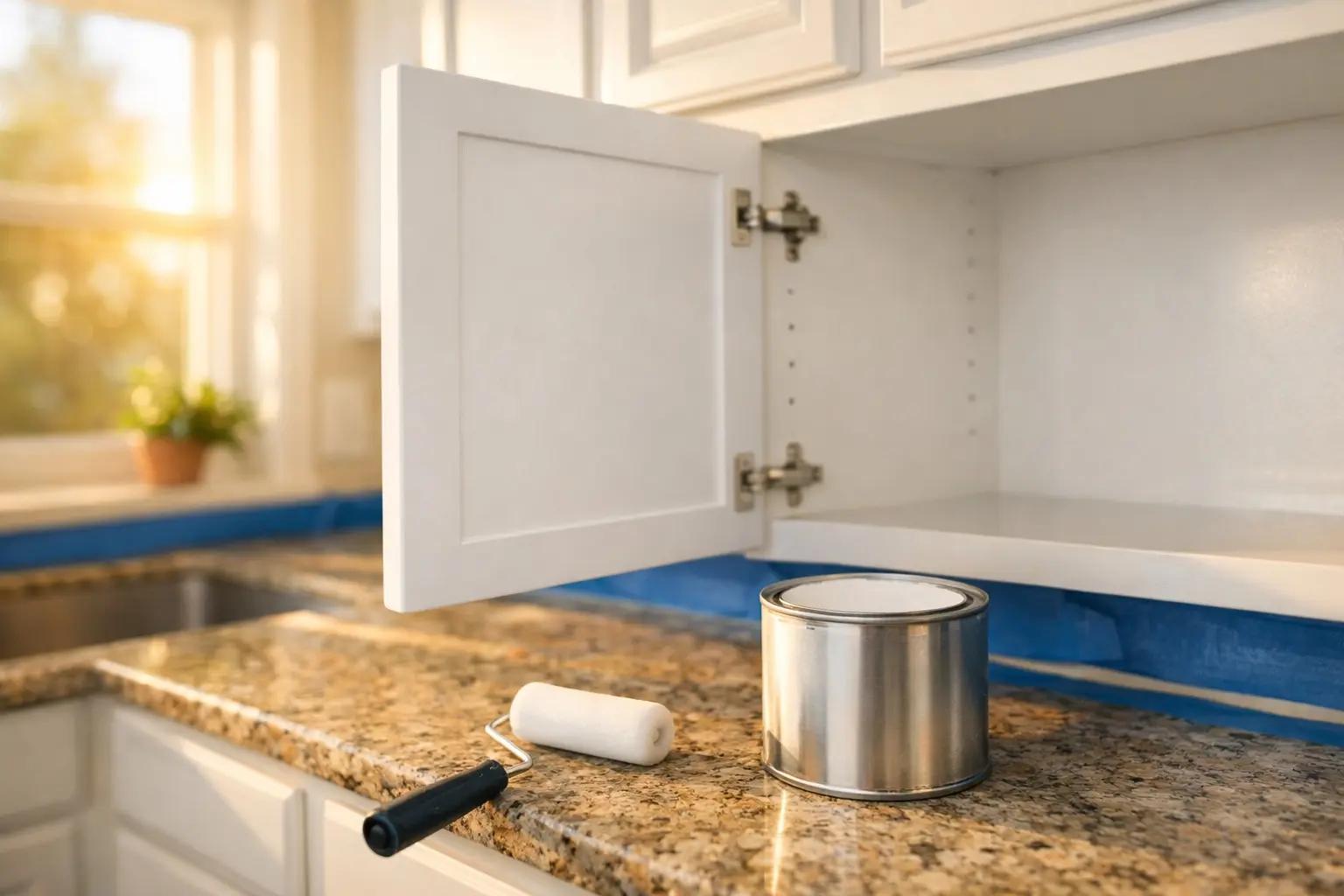

A professional cabinet refinish costs $3,000-8,000, but painting them yourself with the right prep and materials delivers the same transformation for under $200 in a long weekend. The secret is thorough degreasing, a bonding primer, and thin coats with proper dry time between each — skip any of those and the paint will chip within months. This guide walks through the full process from door removal and labeling to final reassembly, covering both brush and roller techniques for a smooth, factory-like finish.
What You'll Need
🛠 Tools
📦 Materials
Safety First
- •Work in a well-ventilated area when using shellac-based primer — open windows and use a fan to move air. Wear a respirator rated for organic vapors, not just a dust mask.
- •TSP and TSP substitutes are skin irritants — wear nitrile gloves and safety glasses during the degreasing step.
Step-by-Step Instructions
Remove Doors, Drawers, and All Hardware
Empty every cabinet and remove all doors, drawer fronts, and hardware (hinges, pulls, knobs). Use a cordless drill to speed up hinge removal. As you remove each door, write a number on a piece of painter's tape and stick it on the back of the door and inside the cabinet box where it came from — this labeling system saves hours of guesswork during reassembly. Drop each door's hardware into a labeled ziplock bag with the matching number. Set hinges aside; you can clean or replace them while the paint cures.
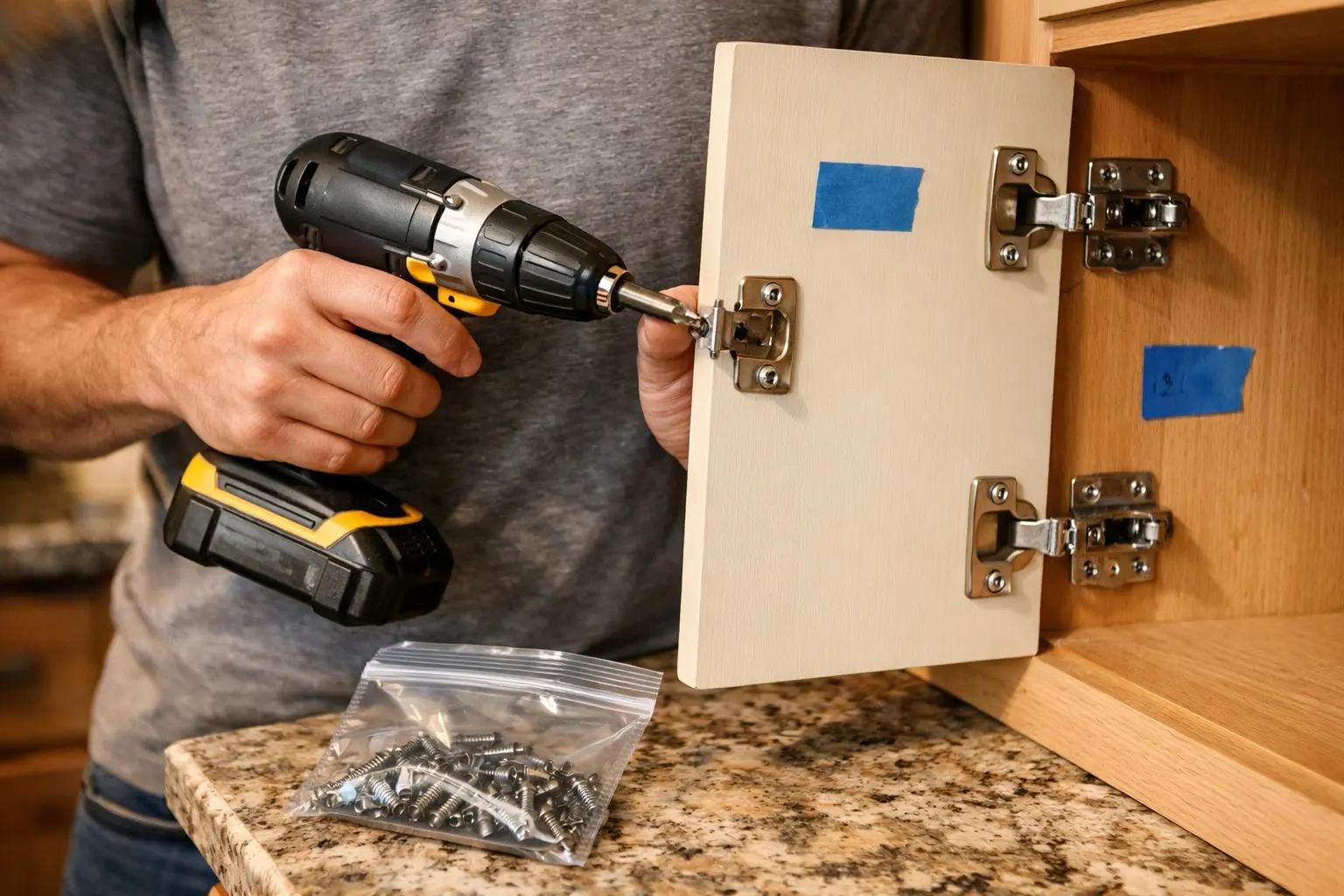
Take a photo of each cabinet with its number label before removing the door. This reference photo is invaluable when reinstalling doors with different hinge types or overlay sizes.
Clean All Surfaces with Degreaser
Kitchen cabinets collect years of cooking grease, fingerprints, and grime that primer and paint will not stick to. Mix TSP substitute according to the package directions (typically 1/2 cup per gallon of warm water) and scrub every surface — door fronts, door backs, cabinet boxes, and drawer fronts — with a sponge or rag. Pay extra attention to the areas around the stove and above the range hood where grease buildup is heaviest. Rinse with a clean damp cloth and let everything dry completely for at least 2 hours.
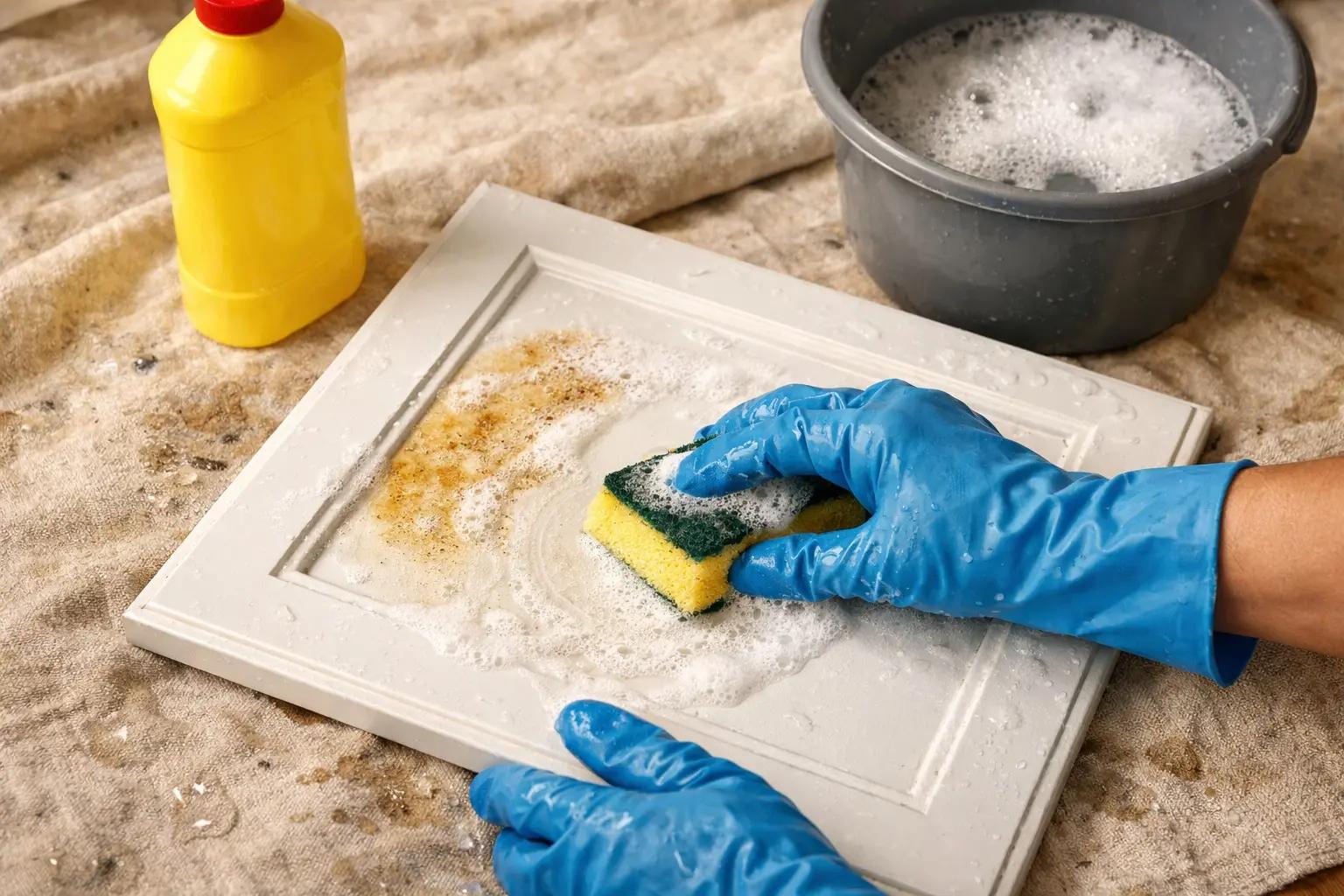
Skipping degreasing is the number-one reason DIY cabinet paint fails. Even if the cabinets look clean, invisible grease film will cause the primer to peel within weeks.
Sand All Surfaces to Create Tooth
Using 120-grit sandpaper or an orbital sander on a low setting, lightly scuff every surface you plan to paint. You're not stripping the old finish — just dulling the sheen so the primer has something to grip. Sand in the direction of the wood grain on flat panels and use a folded piece of sandpaper to get into routed details and edges. Wipe every surface with a tack cloth to remove all sanding dust. For any dings, dents, or nail holes, fill them with wood filler, let it dry, and sand flush with 220-grit.
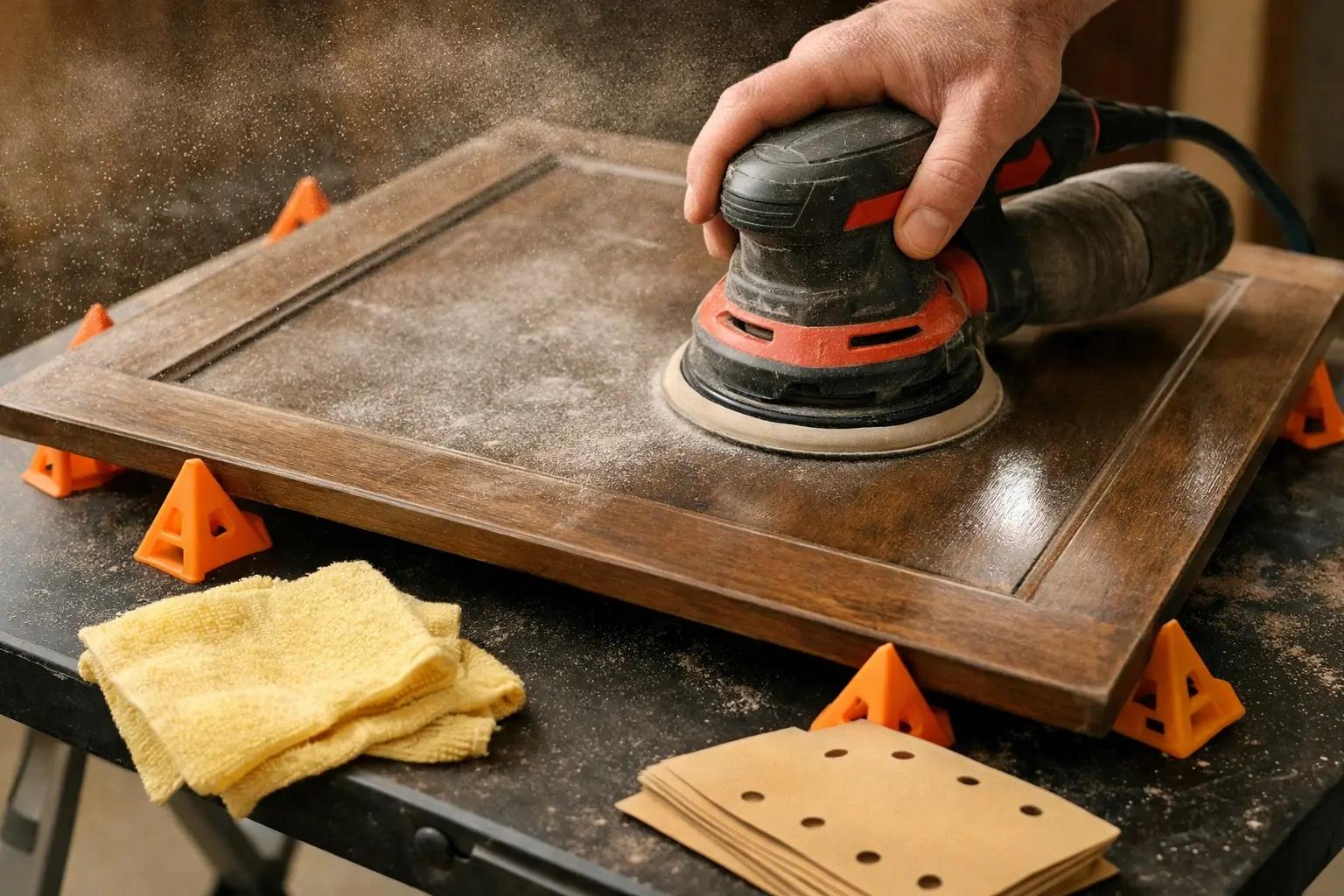
If your cabinets are laminate or thermofoil (not real wood), skip sanding and use a liquid deglosser like Krud Kutter Gloss-Off instead. Then use a bonding primer like INSL-X Stix, which is specifically designed for slick surfaces.
Tape Off and Protect the Kitchen
Apply painter's tape along the walls, countertops, and any surfaces adjacent to the cabinet boxes that will be painted in place. Lay drop cloths or plastic sheeting over countertops, appliances, and the floor. If you're painting the cabinet interiors, tape around the inside edges; if not, tape the interior edges so paint doesn't wrap into the box. Set up a painting station in a well-ventilated area (garage or covered patio works well) with folding tables or sawhorses where you'll prime and paint the doors and drawers.
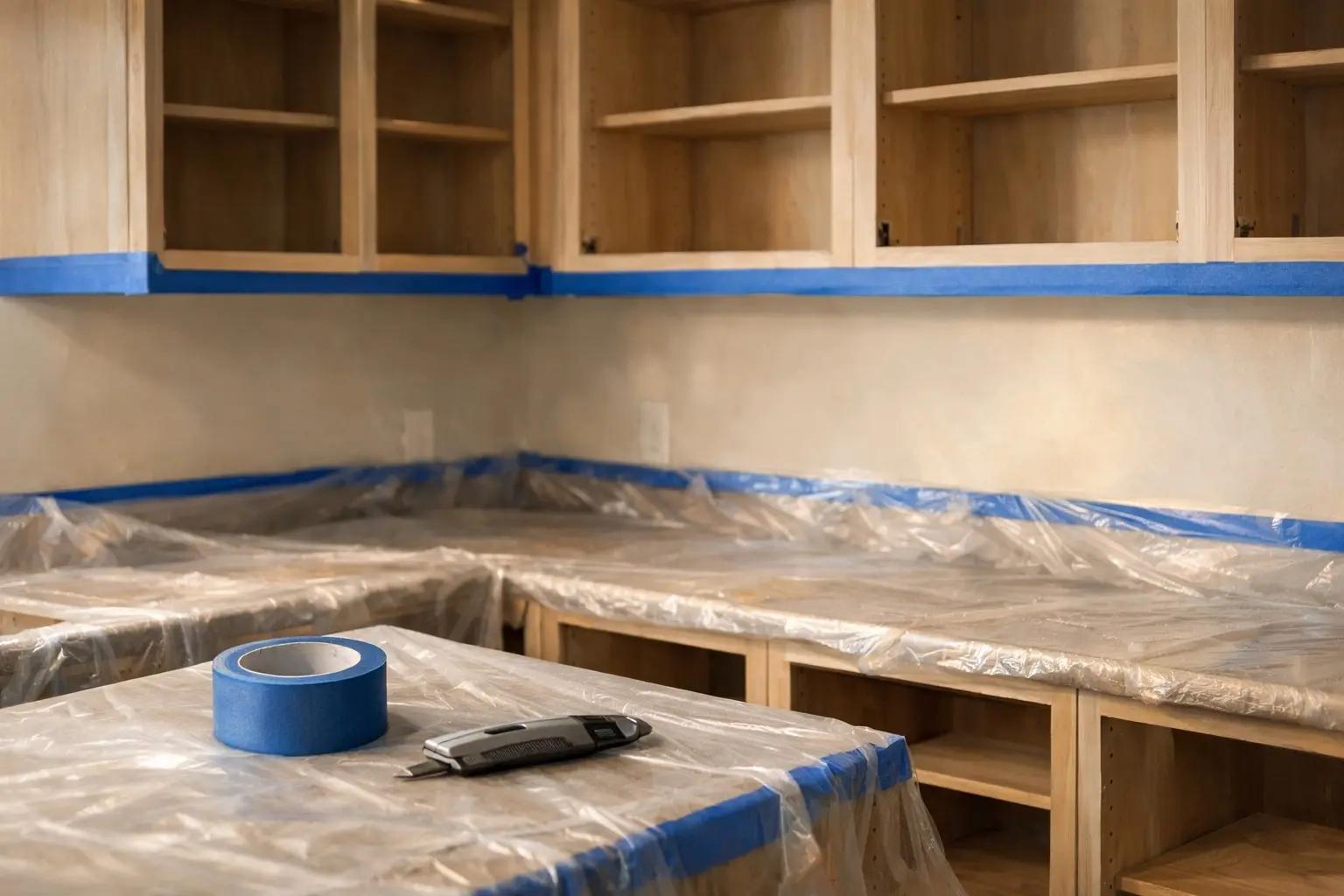
Apply Bonding Primer to All Surfaces
Stir your primer thoroughly (never shake shellac-based primer — it creates bubbles). Using the foam roller for flat areas and the angled brush for edges, routed details, and inside corners, apply a thin, even coat of bonding primer to every surface. Prime the backs of the doors first, let them dry, flip them onto painter's pyramids, then prime the fronts. Prime the cabinet boxes in place. One coat of a quality bonding primer like Zinsser B-I-N is typically sufficient. Not sure which primer your cabinets need? Our guide to priming kitchen cabinets compares shellac, oil, and bonding primers by cabinet material. Allow the primer to dry for the time specified on the label — usually 45-60 minutes for shellac-based, 2-4 hours for water-based.
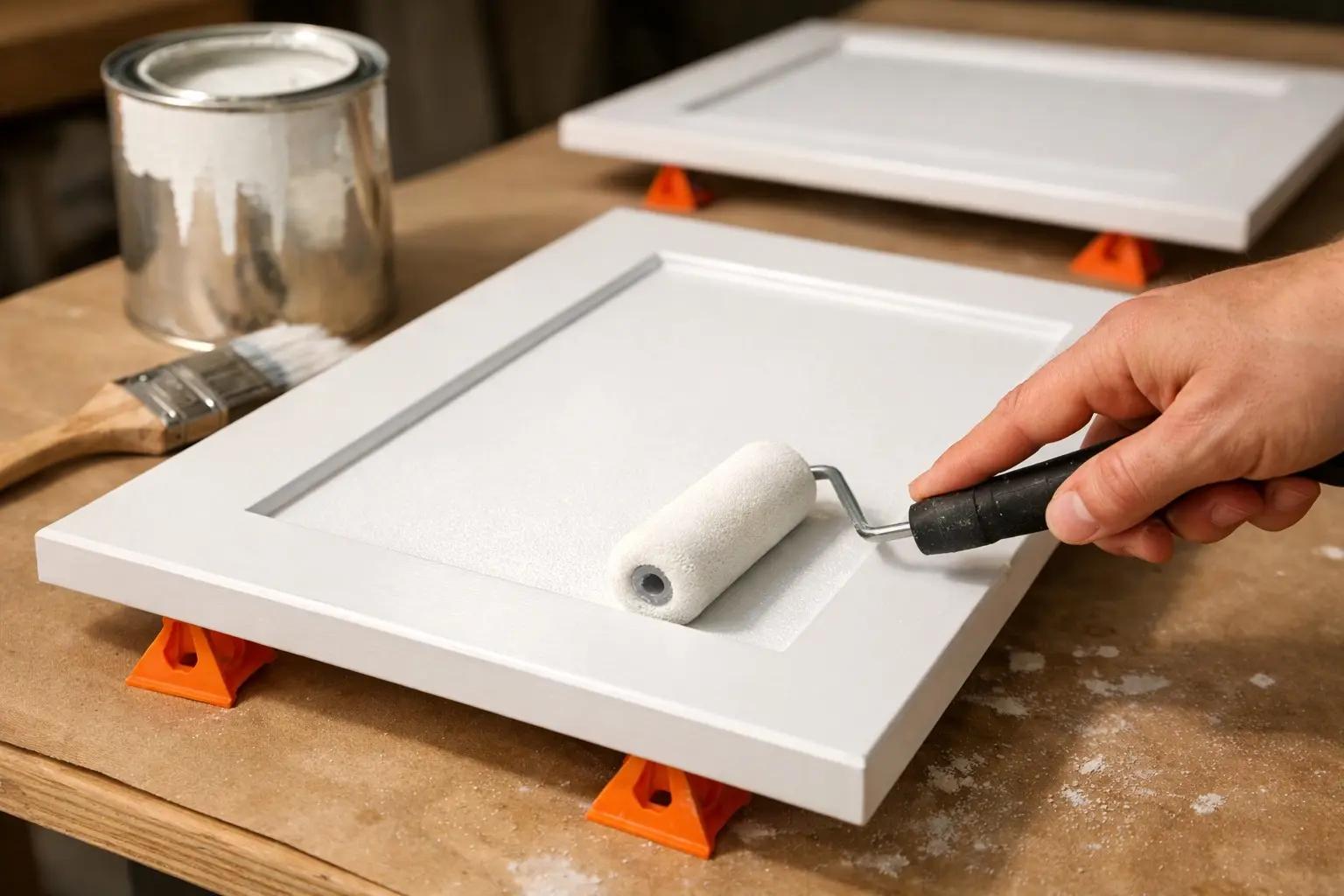
For shellac-based primer, clean your brush and roller with denatured alcohol — water won't work. For water-based bonding primers like Stix, soap and water are fine.
Light-Sand the Primed Surfaces
Once the primer is fully dry, lightly sand every primed surface with 220-grit sandpaper. This knocks down any raised grain, roller texture, or tiny imperfections and creates a silky-smooth base for the paint. Use very light pressure — you're smoothing, not removing the primer. Wipe everything down with a tack cloth again after sanding. This step is what separates a professional-looking finish from an obviously DIY one.
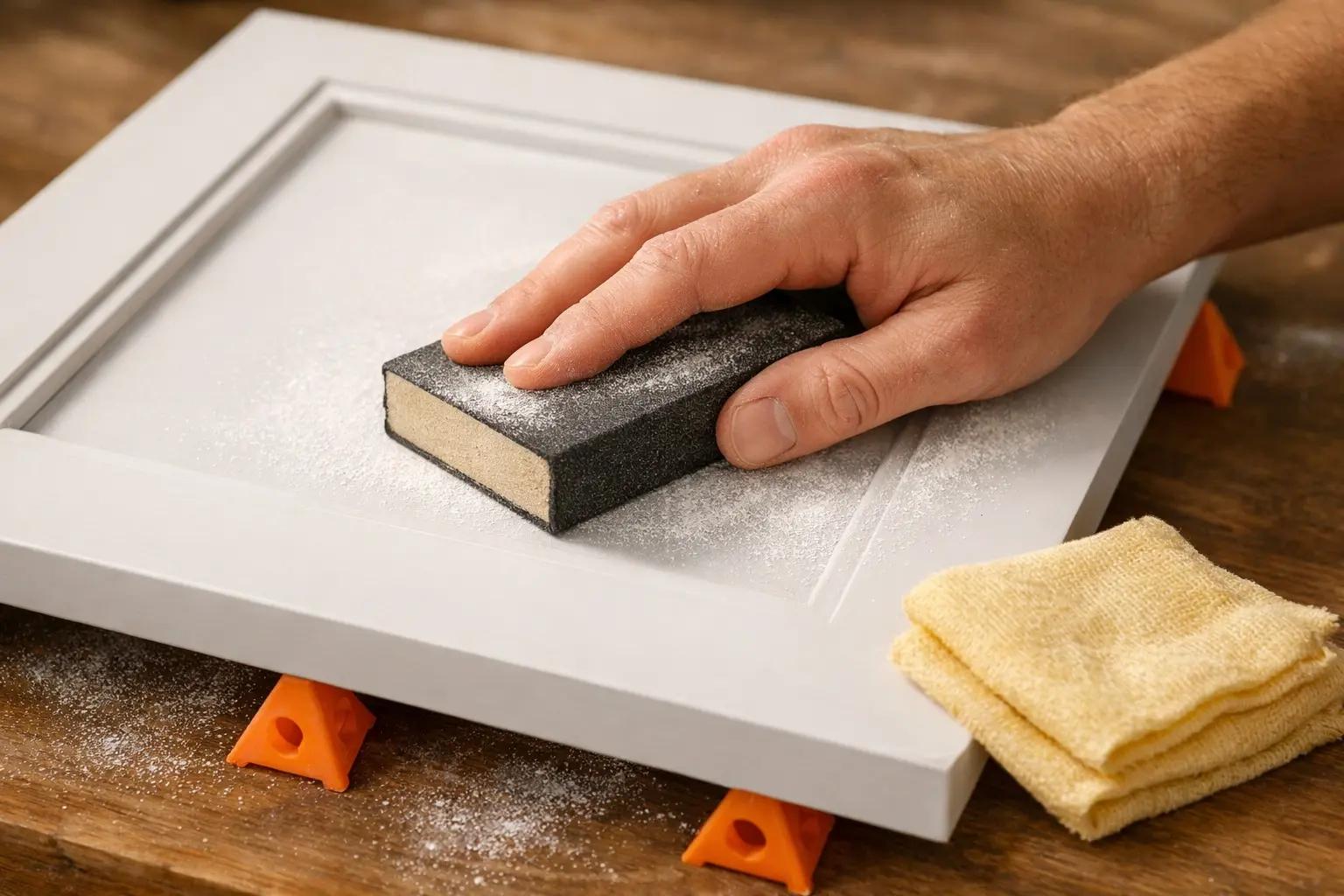
Apply the First Coat of Cabinet Paint
Stir your cabinet paint thoroughly. Using the same roller-and-brush technique as priming, apply a thin first coat to all surfaces. Start with the brush on edges, routed details, and corners, then immediately roll the flat areas to maintain a consistent texture. Roll in one direction for the smoothest finish — avoid going back over semi-dry paint, which creates drag marks. Paint the door backs first, let them dry, flip onto pyramids, then paint the fronts. Allow 24 hours of dry time before applying the second coat.
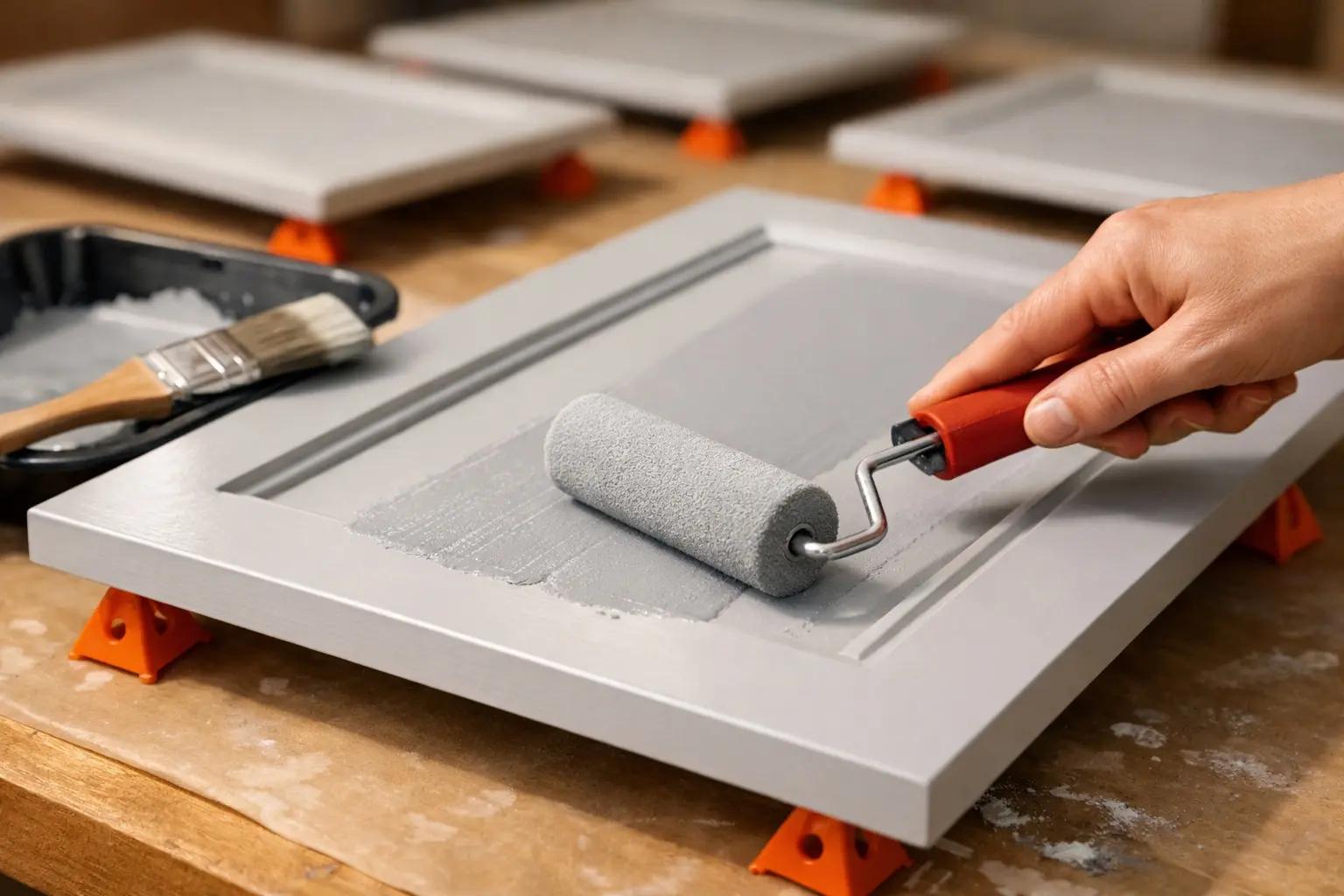
Thick coats are the enemy — they drip, sag, and take forever to cure. Two thin coats will always outperform one thick coat in both appearance and durability.
Apply the Second Coat and Let It Cure
Lightly sand with 220-grit between coats if you feel any rough spots or dust nibs, then tack-cloth. Apply the second coat the same way as the first — thin and even. Two coats is standard; a third may be needed if you're painting over a dark color with a light one. After the final coat, the paint needs to cure (not just dry) before the cabinets can handle daily use. Alkyd-hybrid paints like Benjamin Moore Advance take up to 30 days to reach full hardness. During this time, the doors can be handled carefully but should not be subjected to scrubbing or stacking.
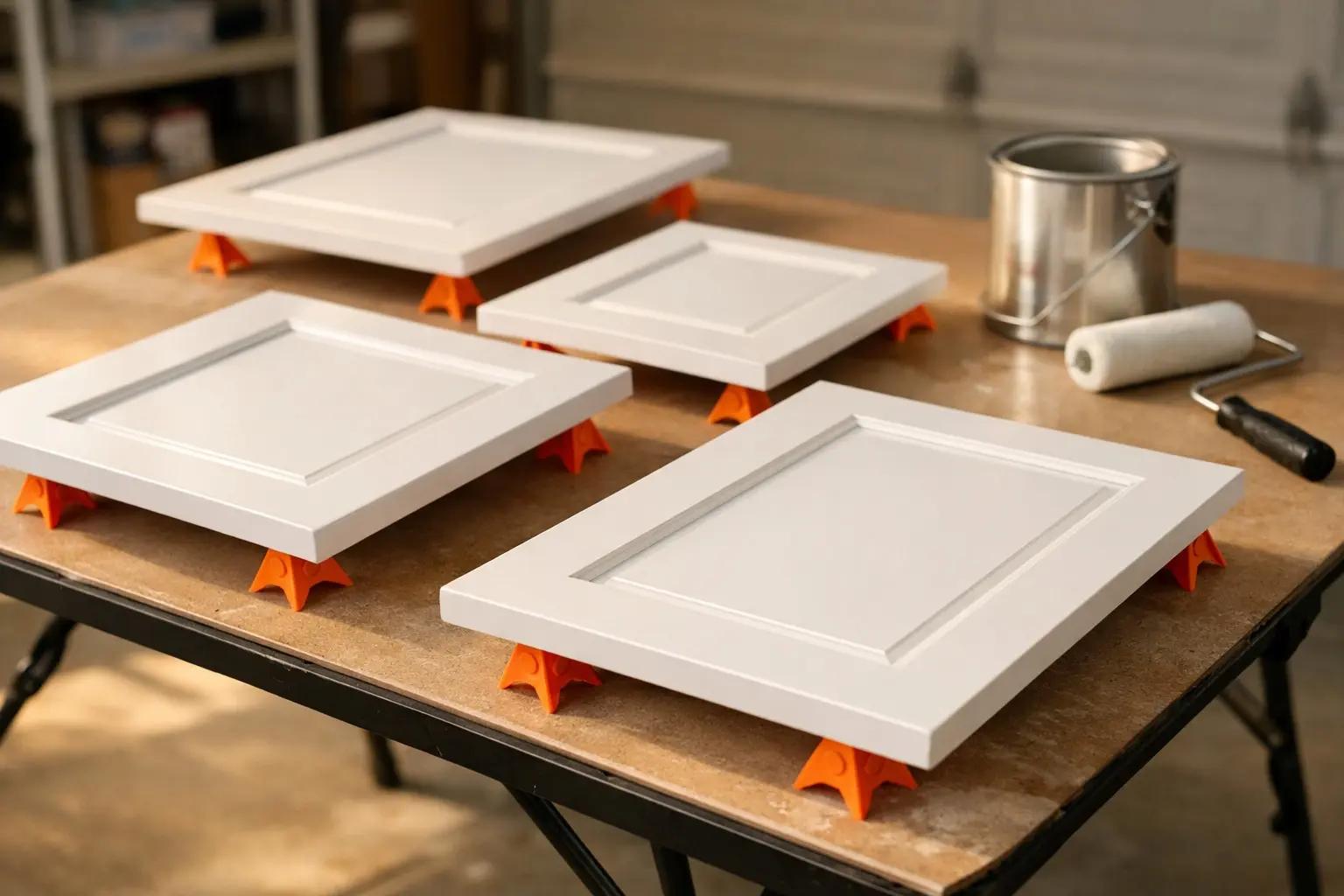
Set a fan nearby (not blowing directly on wet paint) to keep air circulating. Good airflow dramatically speeds curing without causing dust problems if the area is clean.
Reinstall Hardware, Doors, and Drawers
After the paint has cured for at least 3-5 days (longer is better), begin reassembly. Install the hinges on the doors first, then hang each door using your numbered labels to match them to the correct opening. Adjust the hinges so doors sit flush and even. Install drawer fronts, then attach pulls and knobs through the existing holes. If you're upgrading hardware and the new holes don't match, fill the old holes with wood filler, let it dry, sand, touch up with paint, then drill new holes using a cabinet hardware jig for perfect alignment.
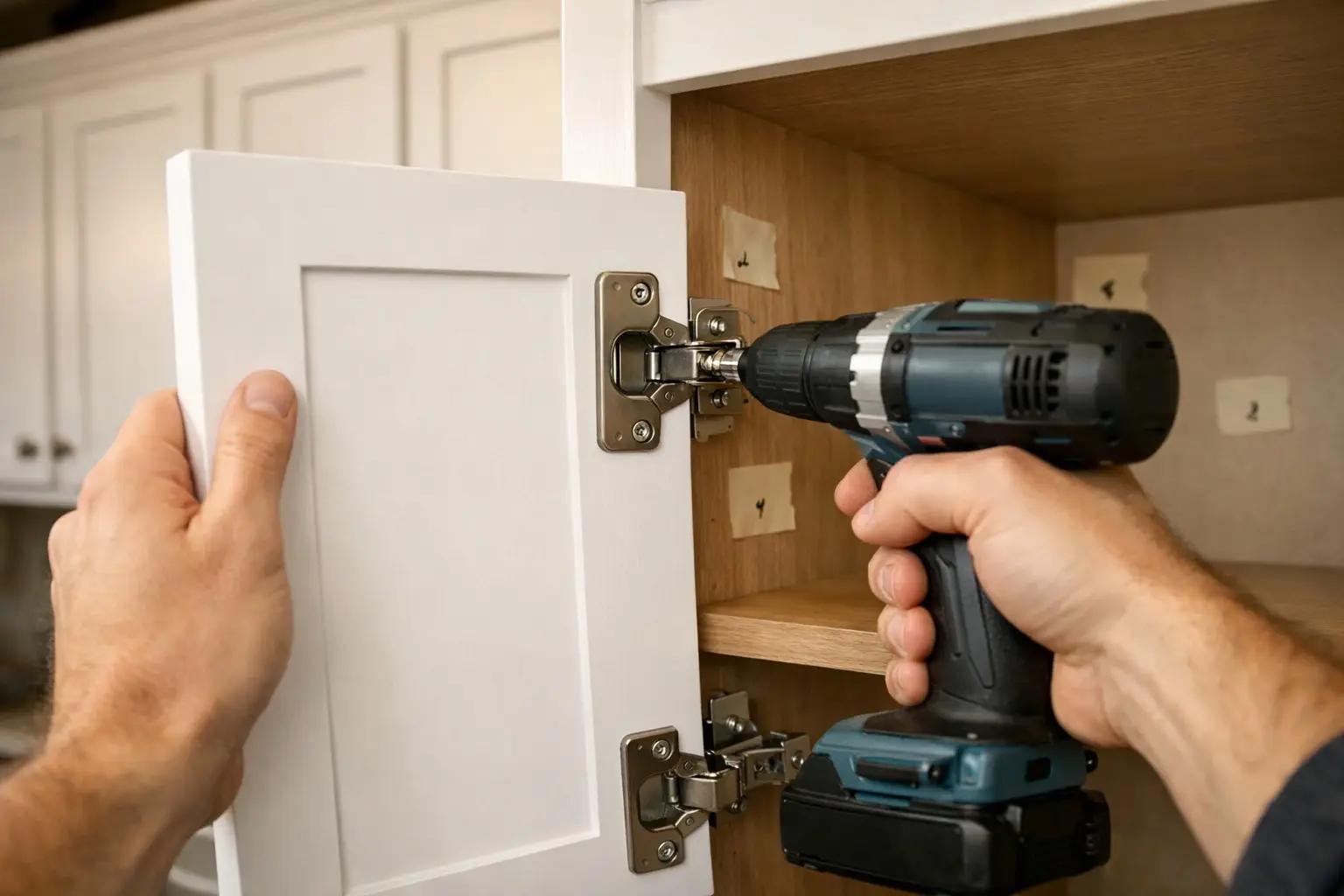
Place a small adhesive-backed felt bumper pad on each corner of every door and drawer before closing them for the first time. This prevents the fresh paint from sticking to the frame and cushions the close to protect the finish.
Frequently Asked Questions
Why does paint peel off kitchen cabinets?
+
Almost always skipped or inadequate degreasing. Kitchen cabinets carry years of airborne cooking grease, and the film is invisible on a surface that looks clean — paint and even primer will not bond through it, so the finish releases in sheets within weeks. Scrub every surface with a TSP substitute or heavy-duty degreaser, rinse, and let it dry fully. The second most common cause is skipping a true bonding primer.
Do I have to sand cabinets before painting them?
+
For real wood, yes — but you are only scuffing, not stripping. A light pass with 120-grit dulls the existing sheen so primer has tooth to grip. For laminate or thermofoil cabinets, skip sanding entirely: use a liquid deglosser instead and follow with a bonding primer formulated for slick surfaces, since sanding a thin melamine skin just damages it.
How long before I can use the cabinets normally?
+
Reinstall doors after about 3 to 5 days, but understand the difference between dry and cured. Alkyd-hybrid cabinet enamels keep hardening for up to 30 days, and during that window the finish is soft enough to dent, stick, or scuff. Handle doors gently, do not stack them, and hold off on scrubbing. Felt bumpers on every door and drawer corner stop fresh paint from bonding to the frame.
Can I paint oak cabinets and get a smooth finish?
+
Not without extra work. Oak has a deep open grain that telegraphs straight through a rolled or brushed finish, so painted oak still reads as textured oak. Getting genuinely smooth means filling the grain with grain filler and sanding back through several intermediate coats — a long, finicky process that is the usual reason people hand oak cabinets to a finish painter. Alternatively, accept the grain as part of the look.
Is one thick coat faster than two thin ones?
+
No, and it is the fastest way to ruin the job. Thick coats sag, drip, hold brush marks, and take far longer to cure hard — a cabinet door with a run in it has to be sanded flat and recoated anyway. Two thin coats with proper dry time between them consistently outperform one heavy coat on both appearance and durability.
Sources & further reading
- Choosing the Right Paint for Kitchen Cabinets — Family Handyman
- Benjamin Moore Advance — Product Specifications — Benjamin Moore
- Lead-Safe Practices for Renovation, Repair, and Painting — U.S. Environmental Protection Agency
More Painting Guides
View all → Easy6 hrs
How to Paint Kitchen Cabinets Without Sanding
You can genuinely skip sanding on a cabinet repaint by replacing the abrasive step with two specific chemical steps: a heavy-duty degreaser (Krud Kutter Gloss-Off or TSP) and a bonding primer (Zinsser BIN shellac). This saves four hours of dust and tape on a typical kitchen, but it only works when the existing finish is intact — if your cabinets have peeling, chipping, or thermofoil damage, sanding will not save you anyway and you need to fix that first. Total project: one weekend, ~$60 in supplies.
 Easy1h 30m
How to Choose Paint Colors for Any Room
Picking a paint color from a 1-inch swatch in a store is the single biggest reason rooms get repainted within a year. The fix is a small process: understand undertones, measure Light Reflectance Value (LRV), check the color against your room's actual light, and test a sample-board patch before buying gallons. This guide turns "I think we like that gray" into "this specific color, in this specific room, will look right at 8 AM and 8 PM."
 Hard24 hrs
How to Paint a Concrete Garage Floor
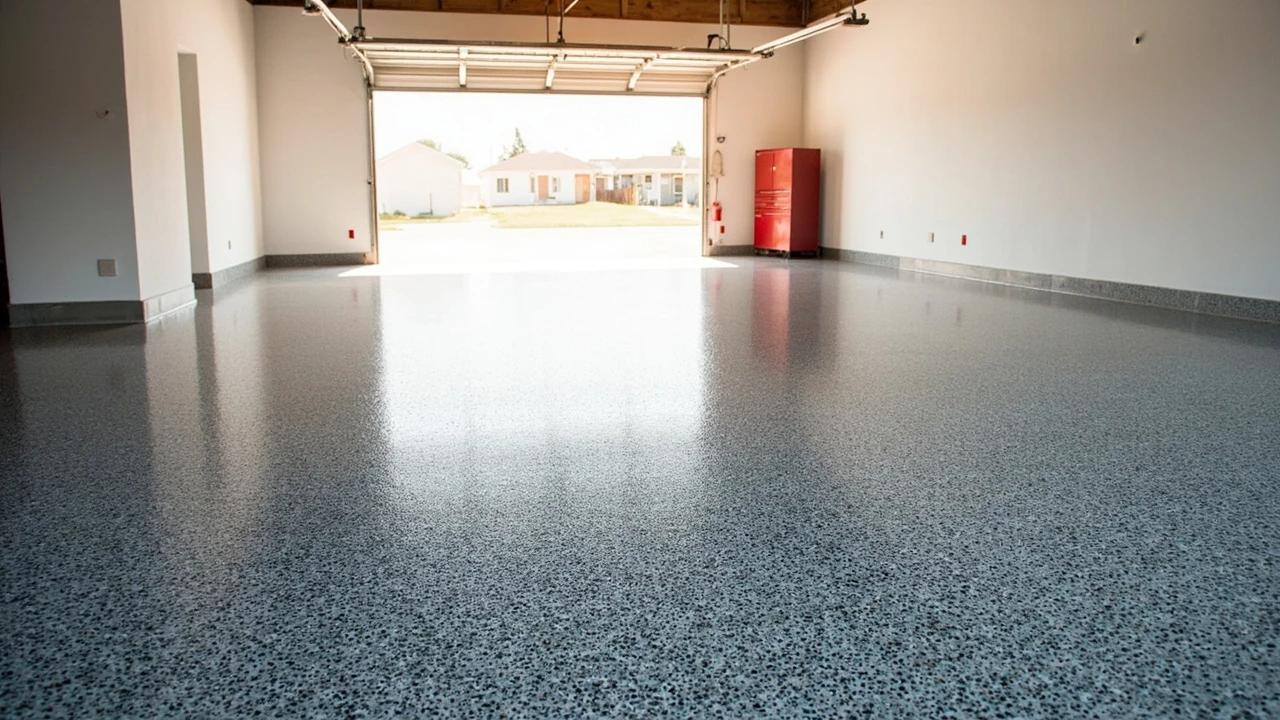
A two-part epoxy coating transforms a stained, dusty garage slab into a showroom-quality floor that shrugs off oil, tire marks, and road salt for years. The paint is the easy part — 80% of failed jobs come from skipping prep, so this guide walks you through moisture testing, etching, and coating like a pro over a weekend.
You Might Also Like
 Medium1 hr
How to Repair Scratches in a Hardwood Floor
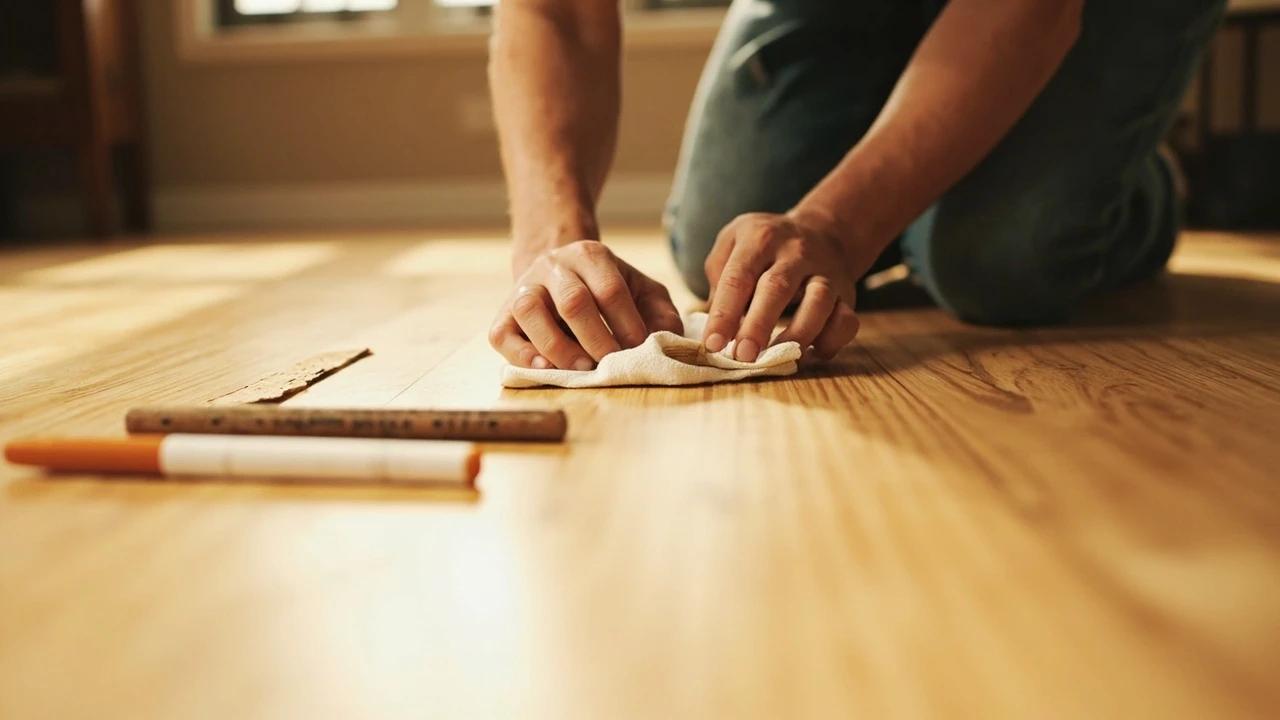
Scratched hardwood almost never means refinishing the whole floor. This guide shows you how to match the fix to the damage — a touch-up marker for finish-level scratches, a wax fill stick for shallow ones, and stainable wood filler with stain and polyurethane for deep gouges — all for under $40 in supplies and about an hour of work.
 Easy45 min
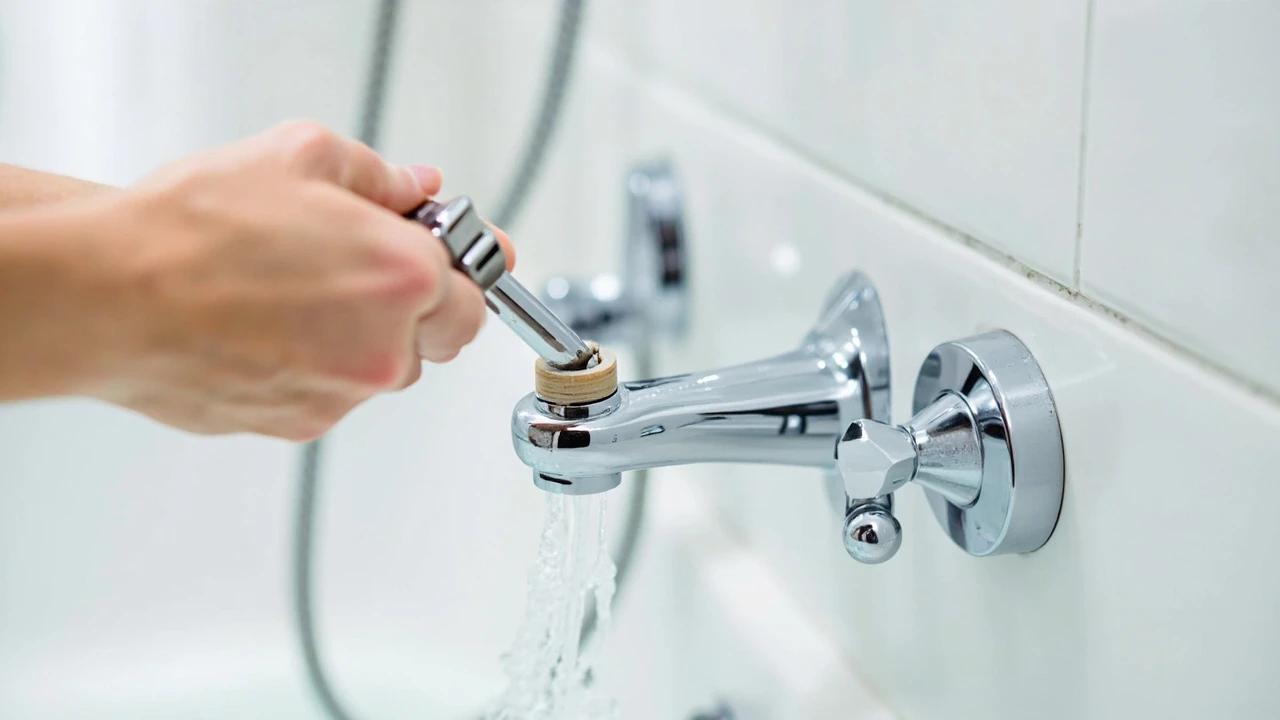
How to Repair a Shower Diverter Valve
When you pull the diverter knob and water still pours from the tub spout instead of the showerhead, the fix is usually a worn washer or mineral buildup — not a $200 plumber visit. This guide covers the three most common diverter types (tub spout, three-valve, and two-valve) and walks you through cleaning, replacing washers, and swapping the diverter if needed, all in under an hour with basic tools.
 Easy2 hrs
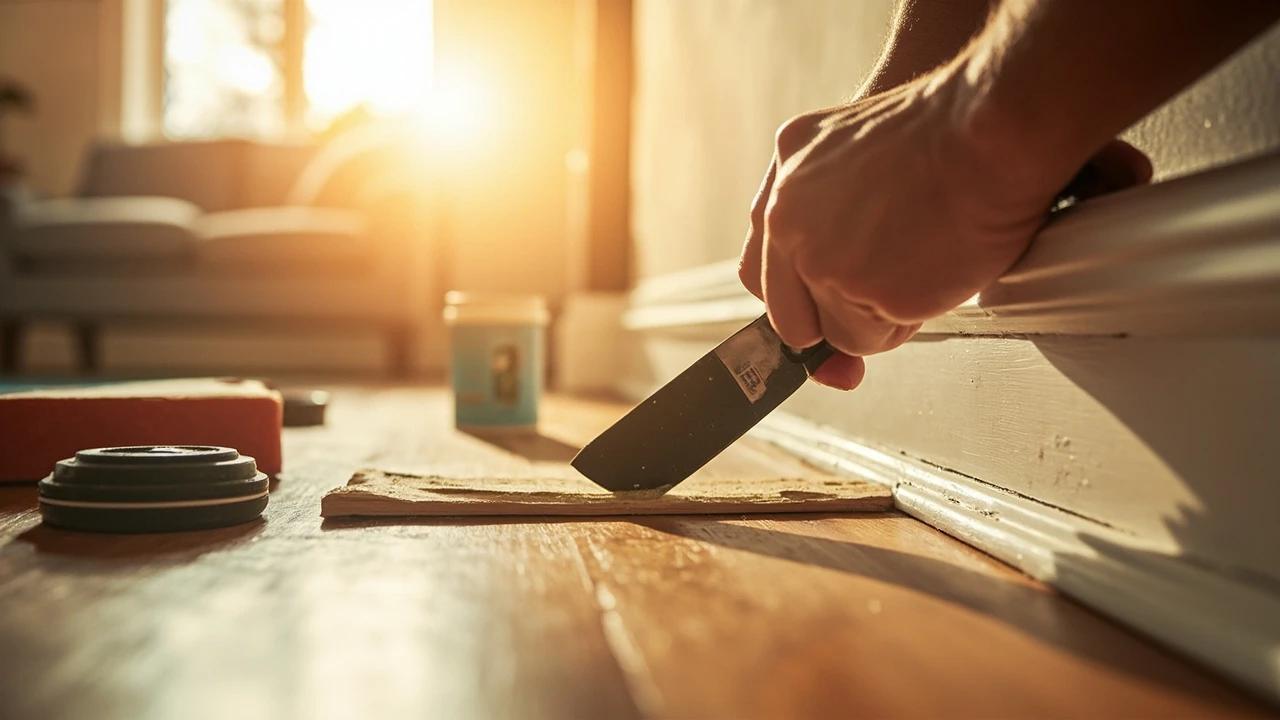
How to Repair Damaged Baseboard Trim
Dented, chipped, and gouged baseboards are one of the most visible signs of a neglected home — but they are also one of the easiest things to fix. With $10-20 in filler and a few hours of work (mostly drying time), you can make battered trim look factory-fresh without pulling a single board off the wall.