How to Paint a Ceiling Without Streaks or Roller Marks
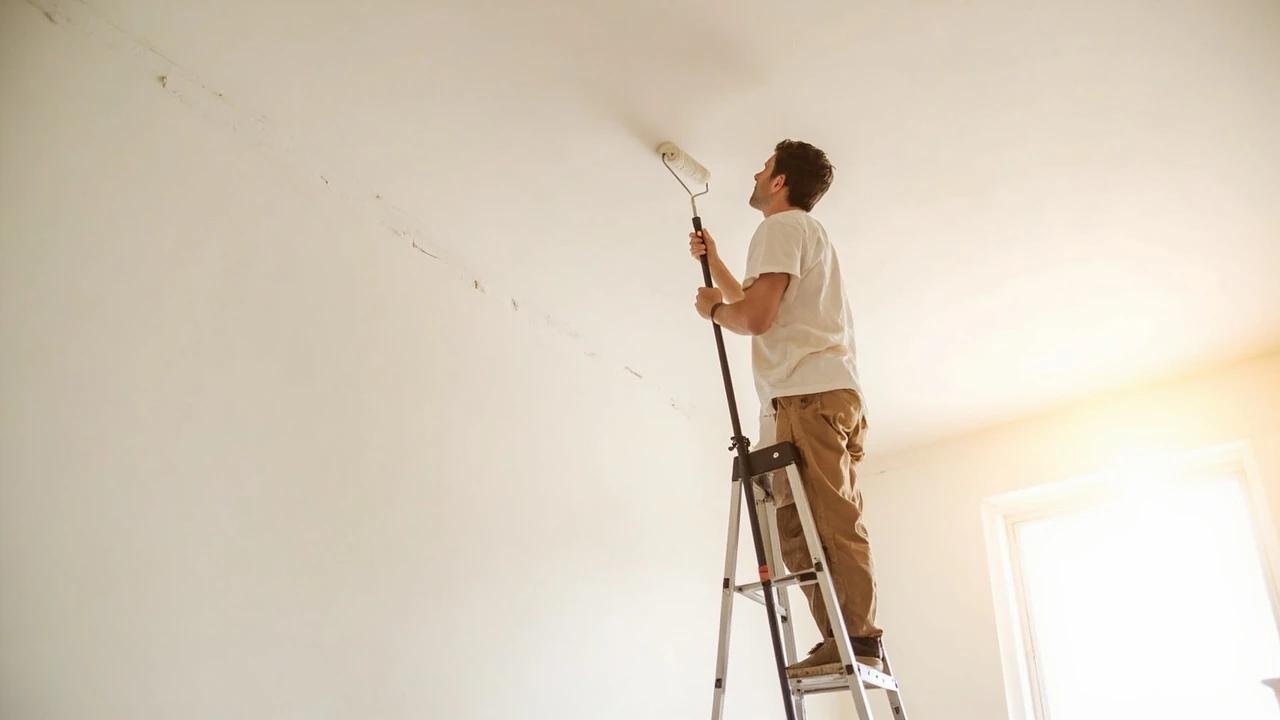

A streaked ceiling is the single most common DIY paint failure — and it is almost always one of three things: wrong roller nap, wrong direction, or letting the wet edge dry before you fill it in. Get those three right and a ceiling paint job looks professional. This guide covers nap selection, the W-pattern roll, working away from the light source, and the wet-edge rule that prevents lap marks.
What You'll Need
🛠 Tools
📦 Materials
Safety First
- •Use a sturdy step ladder rated for your weight, set on flat ground, with the legs fully spread and locked. Painting ceilings from a chair or stepstool causes more falls than any other DIY paint task.
Step-by-Step Instructions
Move Furniture Out and Drop-Cloth Everything That Stays
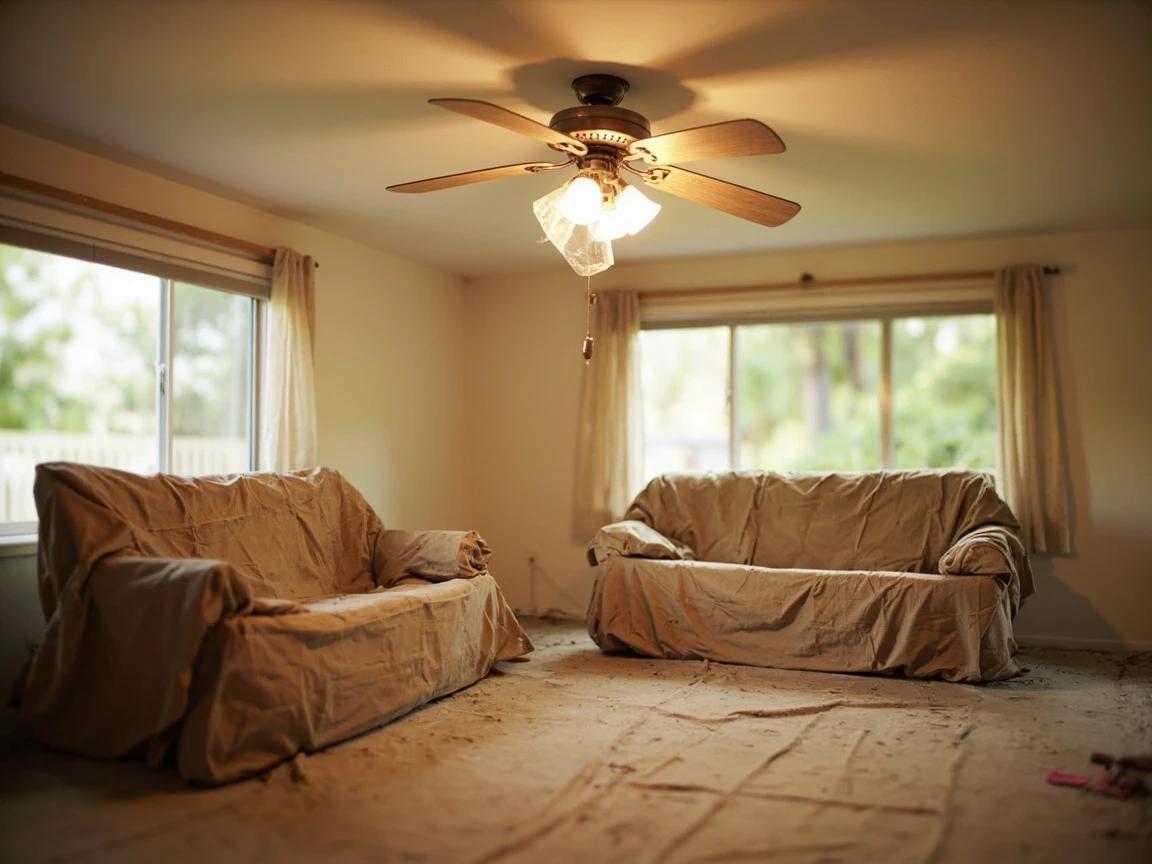
Ceiling paint drips. There is no way to roll a ceiling without paint spraying off the roller as a fine mist plus occasional drops. Move all furniture out of the room or pile it in the center and cover it completely with canvas drop cloths (not plastic — plastic is slippery underfoot on hardwood floors). Cover the floor too. Remove ceiling fixtures or, if removal is difficult, bag them in plastic and tape the bag shut around the base.
Wear a baseball cap or bandana over your hair. Looking up at a ceiling for 2 hours means catching paint mist with whatever is on top of your head. The cap also keeps drips out of your eyes.
Choose the Right Roller Nap and Load Onto an Extension Pole
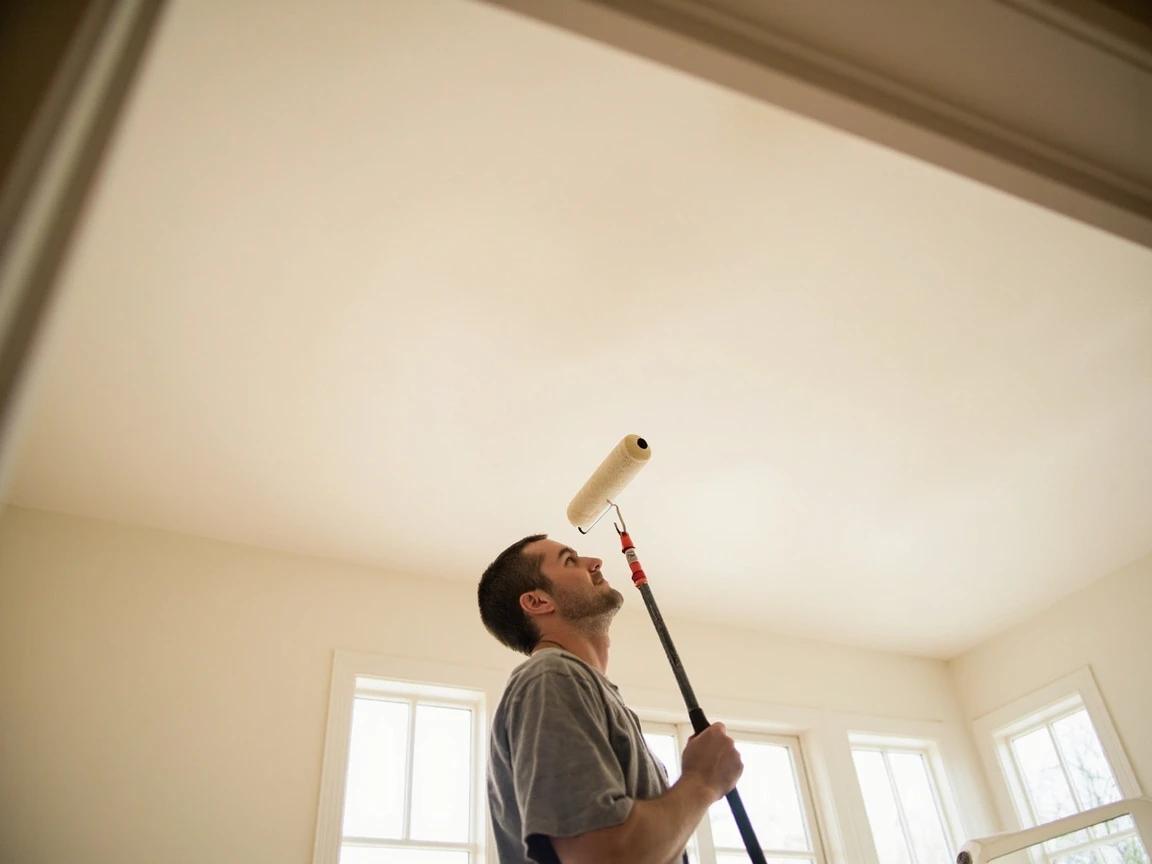
Use a 9-inch microfiber or woven roller cover with a 3/8-inch nap. NOT foam (creates bubbles and inconsistent texture). NOT 1/2-inch or thicker (creates orange-peel texture on smooth ceilings). Attach a 4-foot telescoping extension pole to the roller frame — this lets you cover most rooms from the floor with no ladder, which both speeds the job and gives you a better view of your work as you go.
Cut In the Perimeter With a 2.5-Inch Angled Brush
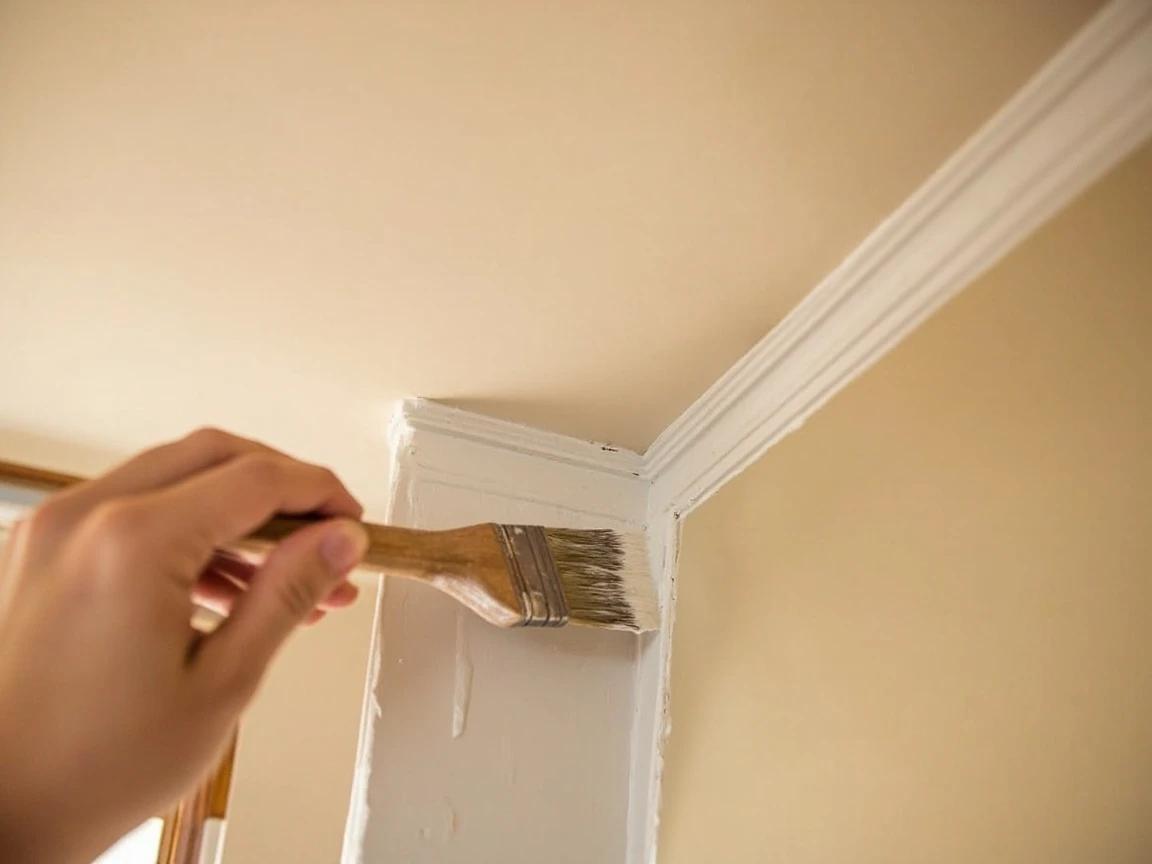
Before rolling, paint a 3-inch border around the entire ceiling where it meets the walls. Use a 2.5-inch angled sash brush. Cut in two adjacent walls' worth of border at a time — about 20 feet of border — so the paint is still wet when you start rolling the field. The roller will overlap the cut-in line and blend it invisibly. If you cut in the whole room before rolling, the early cut-in dries and shows a sheen difference.
Roll the Ceiling in W-Pattern, 3-Foot Squares
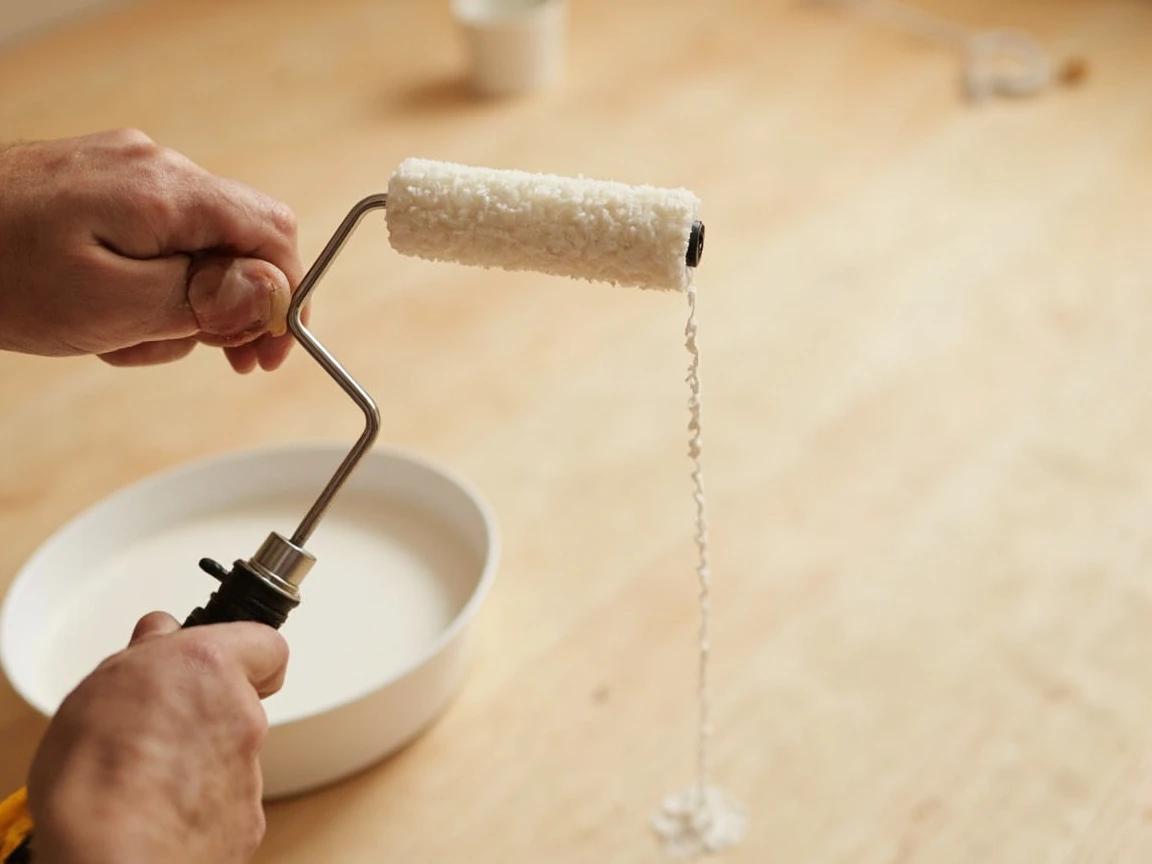
Pour ceiling paint into the tray. Load the roller by rolling it back and forth in the tray's reservoir, then on the ramp to remove excess. Start in a corner away from the door (you do not want to paint yourself into the door corner). Roll a big W shape across a 3-foot square section without lifting, then fill in the W with parallel back-and-forth strokes. The W distributes paint evenly; the parallel fill smooths it out. Move to the next 3-foot square and repeat, always rolling into the wet edge of the previous square.
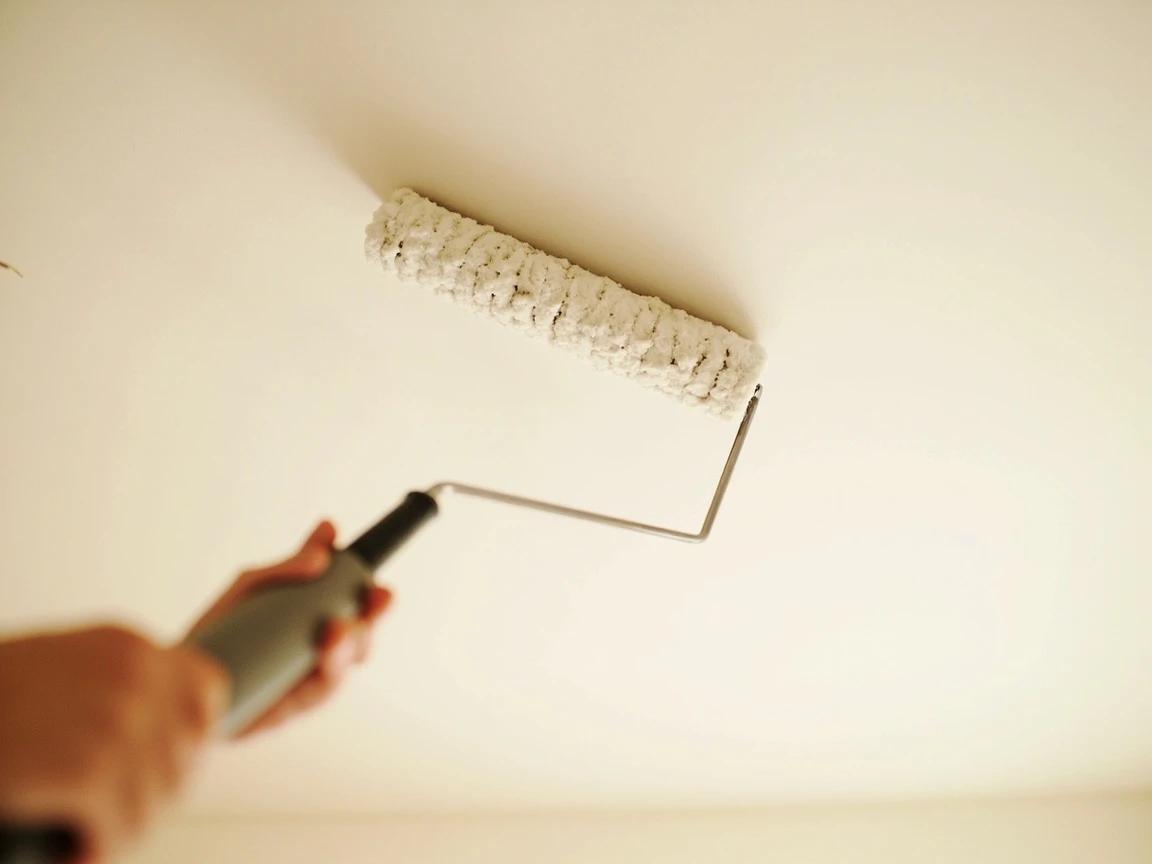
Do not press hard on the roller. The most common rookie mistake is bearing down to "make it cover faster" — this squeezes paint out the roller's sides and creates ridges that dry as visible marks. Let the roller weight + the loaded paint do the work.
Roll Parallel to the Strongest Light Source
Once the entire ceiling has been W-filled, do one final pass of parallel back-rolling in the direction of the strongest light source. If the room has windows on one wall, the strokes should be parallel to that wall, not crossing it. This means light skims along any tiny roller texture instead of catching it side-on. Make this final pass slow and even, slightly overlapping each stroke, with the roller barely loaded — almost dry-rolling to smooth the surface.
Position yourself so the window light is at your back as you do the back-roll pass. That way you can see the wet ceiling glisten in the same direction as the future dried sheen, and you spot any uneven areas before the paint sets.
Inspect Wet, Touch Up, and Let Dry
While the paint is still wet, stand back at the door and look at the ceiling from several angles under different light. Any holiday (a missed spot) shows up as a different reflection. Touch up missed spots immediately while the surrounding paint is still wet — that blends the touch-up in without a visible patch. Once you stop spotting holidays, you are done. Let the paint dry 2-4 hours before walking under the ceiling normally.
Frequently Asked Questions
Why does my ceiling show roller marks even after two coats?
+
Almost always one of three causes: (1) wrong nap — using a 1/2-inch or thicker nap on a smooth ceiling produces an orange-peel texture that reads as marks; (2) not maintaining a wet edge — letting one section dry before back-rolling into it creates a visible band; (3) wrong sheen — using eggshell or satin ceiling paint instead of flat. Flat ceiling paint has no reflectivity, so any roller texture disappears. Eggshell catches light and amplifies it.
What direction should I roll the ceiling?
+
Roll parallel to the longest wall in the room, OR perpendicular to the strongest light source — pick whichever makes your strokes invisible. The principle: roller marks (if any) align with the stroke direction, so aligning the strokes parallel to the dominant light direction means light skims along the marks instead of crossing them. In rooms with windows on one wall, roll parallel to that wall.
Can I skip cutting in with a brush and just use the roller?
+
No — the roller cannot reach within 1/4 inch of the wall, leaving a visible stripe at the perimeter. Cut in a 3-inch border around the entire ceiling with a 2.5-inch angled brush BEFORE rolling, then roll the field while the cut-in line is still wet. If the cut-in dries first, the brushed border telegraphs through as a slightly different sheen.
Do I need to prime the ceiling first?
+
Skip primer if the existing ceiling is in good shape and you are using ceiling-rated paint. Prime if (1) there are stains from leaks or smoke — use a stain-blocking primer like Zinsser BIN, (2) you are covering popcorn-texture removal patches, or (3) you are going from a dark color to white. New drywall always needs primer first.
Sources & further reading
- How to Paint Ceilings Without Streaks or Roller Marks — Prestige Coating
- How to Avoid Roller Marks When Painting a Ceiling — The Decorator's Forum UK
- How To Paint A Ceiling Without Roller Marks — Mighty Paint
More Painting Guides
View all →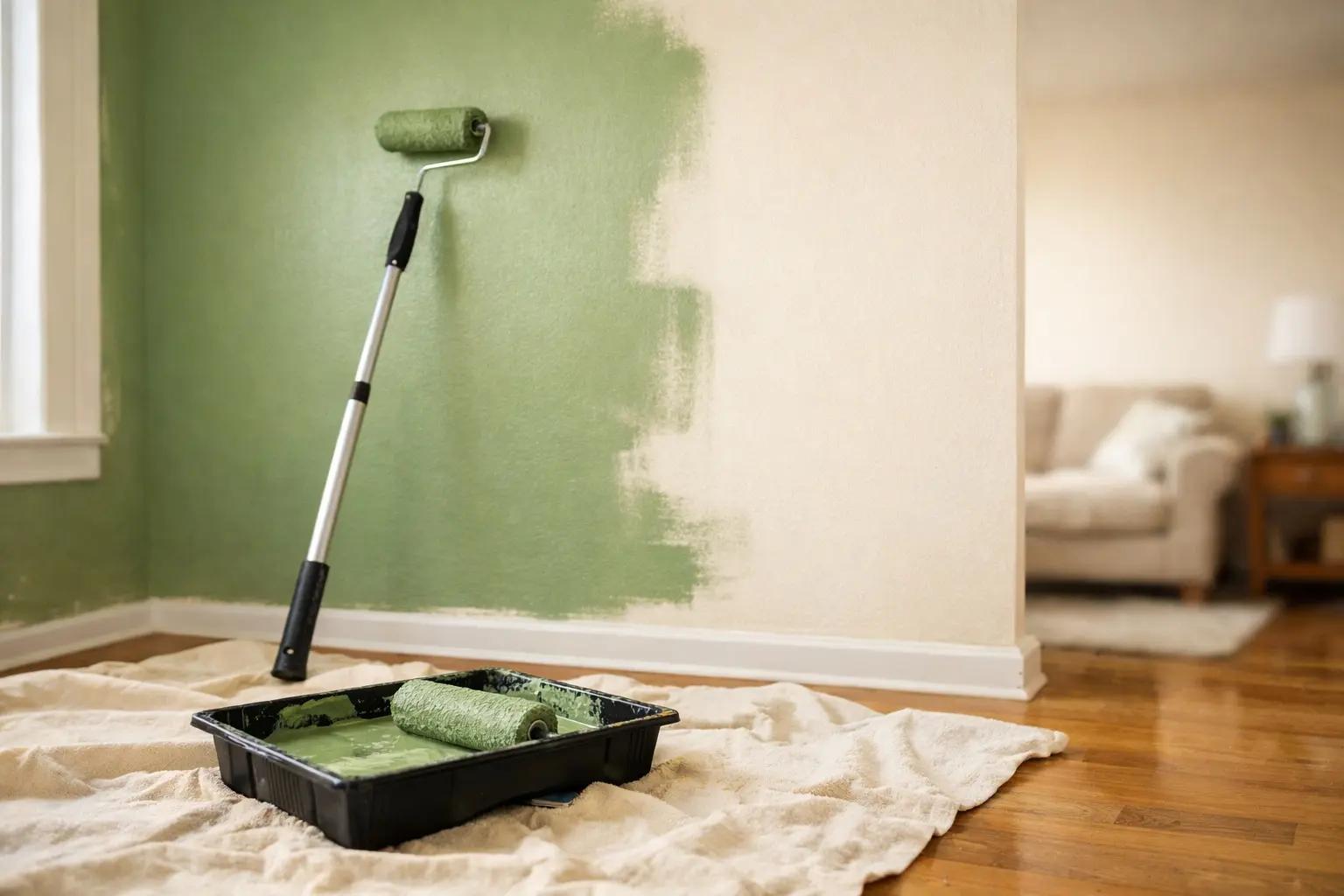 Medium6 hrs
How to Paint a Room
A fresh coat of paint is the fastest, cheapest way to transform any room — and doing it yourself saves $400-800 in labor for an average 12x12-foot bedroom. The job takes a weekend from prep to final coat, and the difference between an amateur-looking result and a professional finish comes down to technique, not talent. This guide covers prep, cutting in, rolling, and cleanup so you get clean lines and even coverage the first time.
 Easy6 hrs
How to Paint Kitchen Cabinets Without Sanding
You can genuinely skip sanding on a cabinet repaint by replacing the abrasive step with two specific chemical steps: a heavy-duty degreaser (Krud Kutter Gloss-Off or TSP) and a bonding primer (Zinsser BIN shellac). This saves four hours of dust and tape on a typical kitchen, but it only works when the existing finish is intact — if your cabinets have peeling, chipping, or thermofoil damage, sanding will not save you anyway and you need to fix that first. Total project: one weekend, ~$60 in supplies.
 Easy1h 30m
How to Choose Paint Colors for Any Room
Picking a paint color from a 1-inch swatch in a store is the single biggest reason rooms get repainted within a year. The fix is a small process: understand undertones, measure Light Reflectance Value (LRV), check the color against your room's actual light, and test a sample-board patch before buying gallons. This guide turns "I think we like that gray" into "this specific color, in this specific room, will look right at 8 AM and 8 PM."
You Might Also Like
 Easy30 min
How to Fix a Dripping Faucet
A dripping faucet wastes more than 3,000 gallons of water per year and can add $20 or more to your monthly water bill. The fix is almost always a worn cartridge, washer, or O-ring — parts that cost under $10 and take 20-30 minutes to replace with basic tools.
 Easy30 min
How to Replace an Electrical Outlet
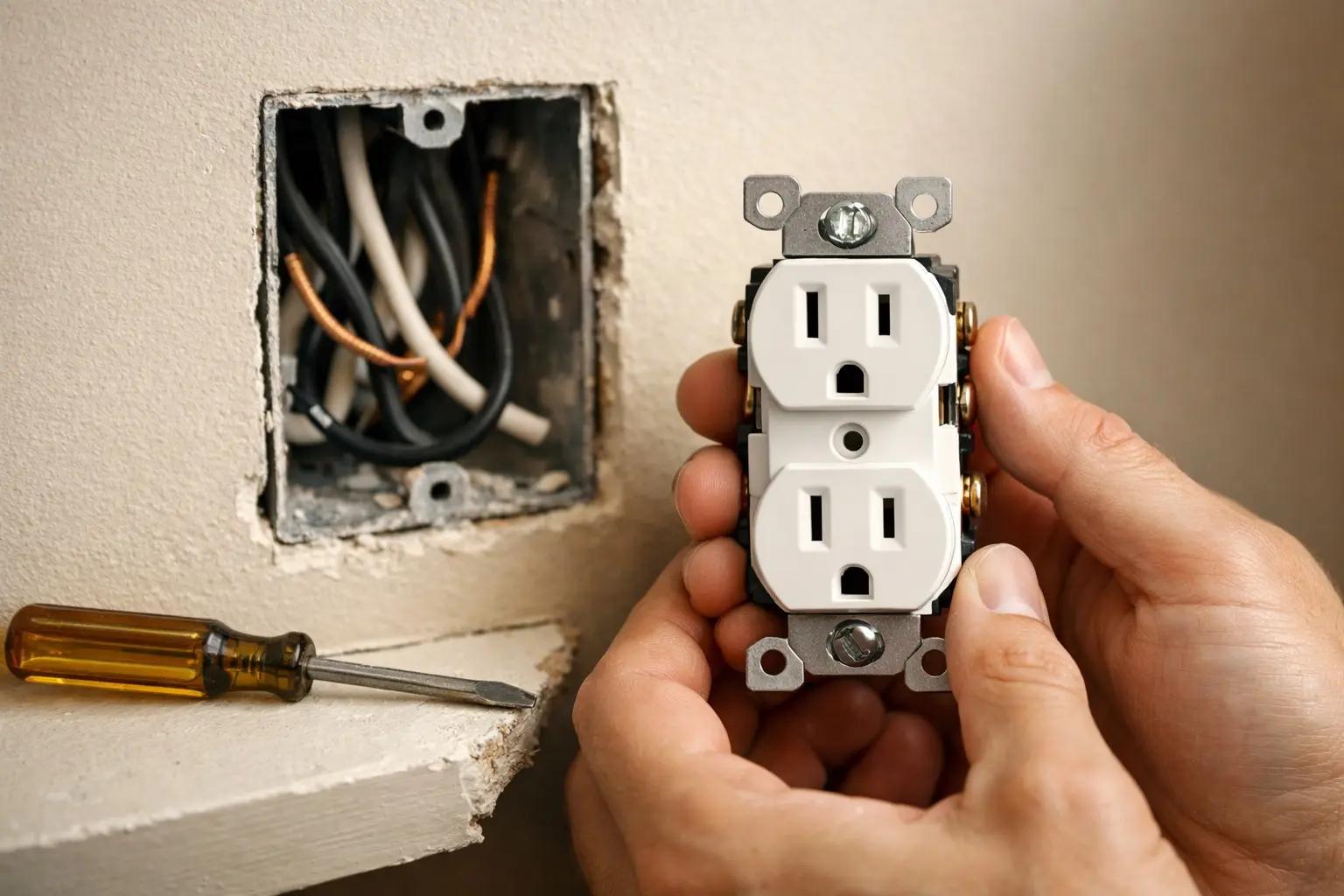
A worn-out or discolored electrical outlet is one of the simplest electrical repairs you can tackle yourself — swapping one takes about 15-30 minutes and costs under $5 in parts versus $75-150 for an electrician visit. This guide walks you through safely replacing a standard duplex receptacle, including how to handle the wiring correctly and avoid the most common DIY mistakes.
 Medium30 min
How to Troubleshoot a Microwave That Won't Heat
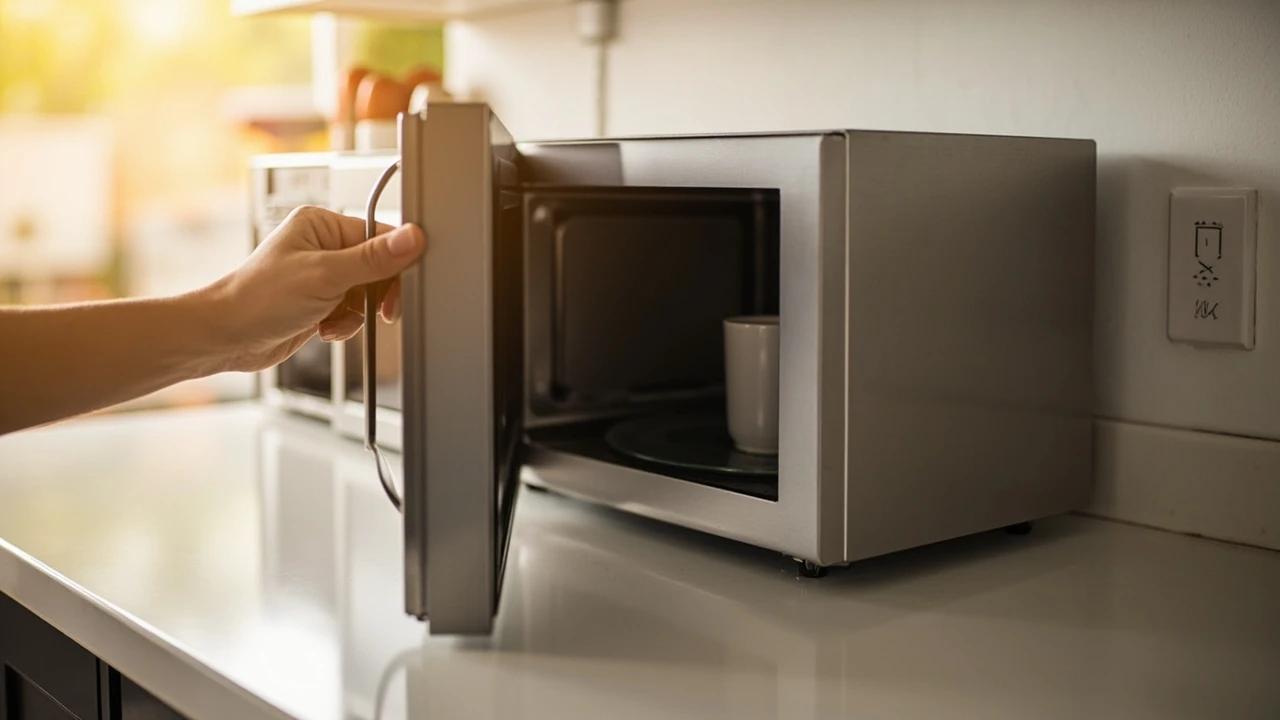
A microwave that runs — light on, turntable spinning, timer counting down — but leaves food stone cold is one of the most common appliance failures, and about half the time the cause is something you can fix in five minutes for free. This guide walks the diagnosis from the easy stuff (demo mode, power level, a tripped GFCI, a dirty door latch) to reading the failure signature that tells you the high-voltage circuit is gone, then helps you make the repair-or-replace call with real numbers.