How to Level a Bumpy Lawn
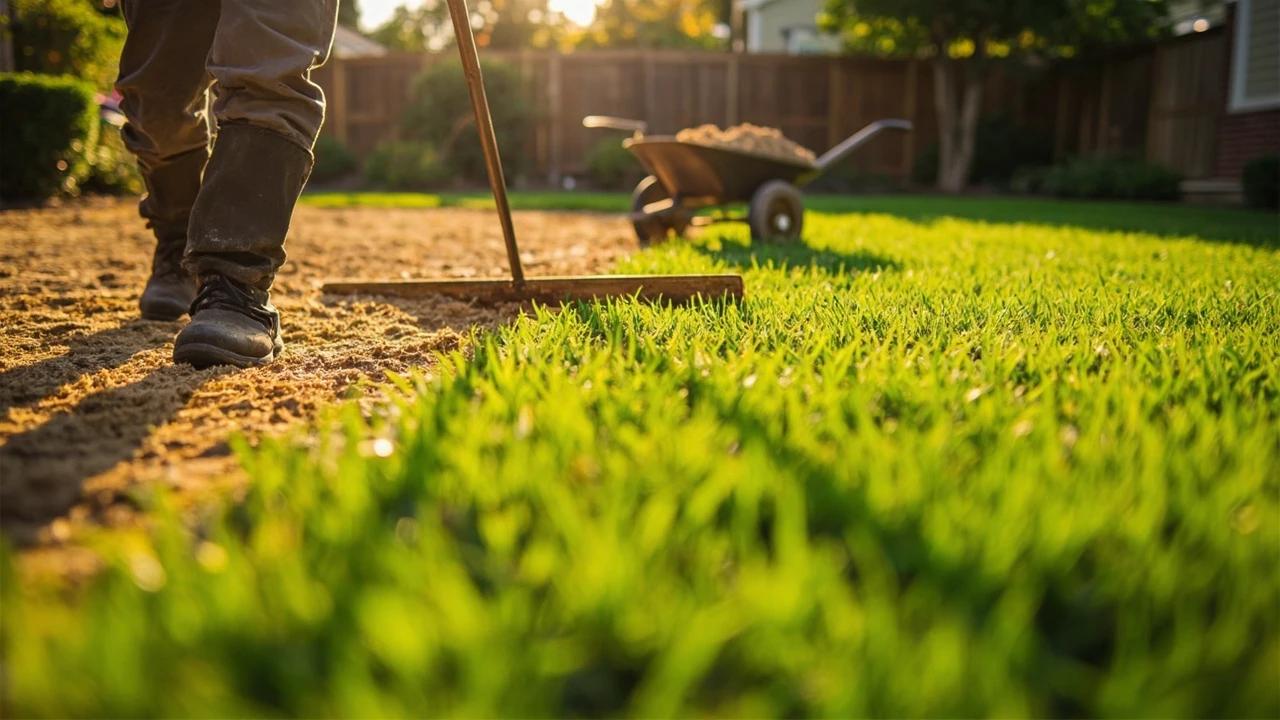

A bumpy lawn is not just ugly — it scalps high spots when you mow, pools water in low spots that breed mosquitoes, and turns every backyard game into an ankle-rolling hazard. The fix is topdressing: spreading a thin sand-soil-compost mix over the surface and letting the grass grow through it. It costs $50-100 in materials for an average yard, takes a weekend afternoon, and produces a noticeably smoother lawn within 3-4 weeks.
What You'll Need
🛠 Tools
📦 Materials
Safety First
- •Call 811 at least 48 hours before digging if you need to address bumps caused by buried roots, drainage issues, or sunken utility trenches. Even shallow digging for root removal can hit buried gas, electric, or irrigation lines.
Step-by-Step Instructions
Choose the Right Time of Year
Topdress when your grass is actively growing so it can push through the new material within 2-3 weeks. For cool-season grasses (fescue, bluegrass, ryegrass), the best window is early fall — September through mid-October — when temperatures cool but the grass is still growing vigorously. The second-best window is early spring after the last frost. For warm-season grasses (Bermuda, zoysia, St. Augustine), topdress in late spring through mid-summer when the grass is at peak growth. Never topdress a dormant lawn or during extreme heat — the material will smother the grass before it can recover.

If you are unsure of your grass type, take a close-up photo to your local garden center or cooperative extension office. The timing matters — topdressing warm-season grass in fall or cool-season grass in summer is the most common cause of topdressing failure.
Mow the Lawn Short and Identify Problem Areas
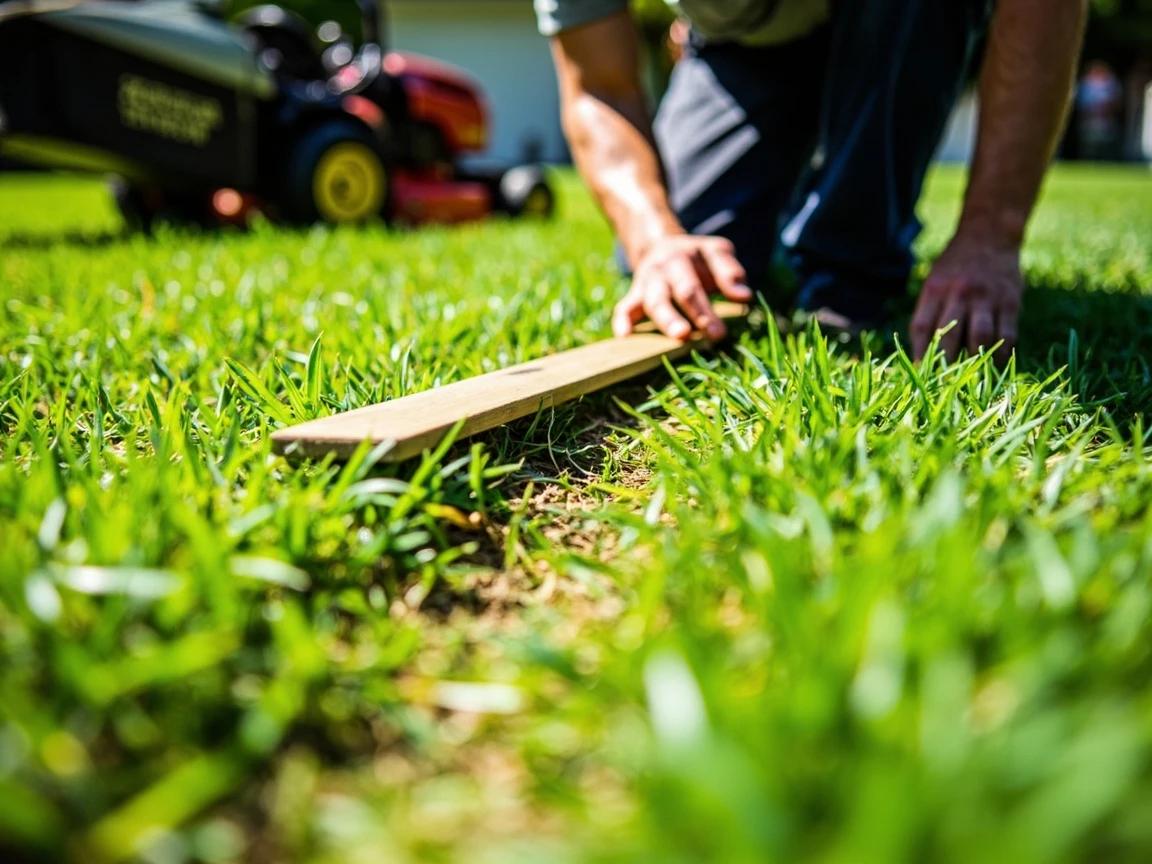
Mow the entire lawn to its lowest safe height — typically 1.5 to 2 inches for most cool-season grasses like fescue and bluegrass (about half your normal mowing height) and 0.5 to 1 inch for warm-season grasses like Bermuda and zoysia. This short cut exposes the soil surface so the topdressing can make direct contact with the ground rather than sitting on top of tall grass blades. After mowing, walk the yard slowly and identify the high spots, low spots, and depressions. Lay a straight 6-foot board or level across the lawn to see exactly where the dips and bumps are — mark problem areas with small flags or spray paint so you know where to apply extra material.
Mix Your Topdressing Blend
The ideal topdressing mix for leveling is 2 parts coarse sand, 2 parts screened topsoil, and 1 part finished compost — mixed thoroughly in a wheelbarrow or on a tarp. The sand prevents compaction and improves drainage, the topsoil provides structure, and the compost delivers nutrients to help the grass recover from being partially buried. Mix until the color is uniform and the texture is consistent — no clumps of pure compost or pockets of dry sand. The blend should feel gritty and loose, not sticky or muddy. If it clumps when you squeeze a handful, it is too wet — let it dry before spreading.
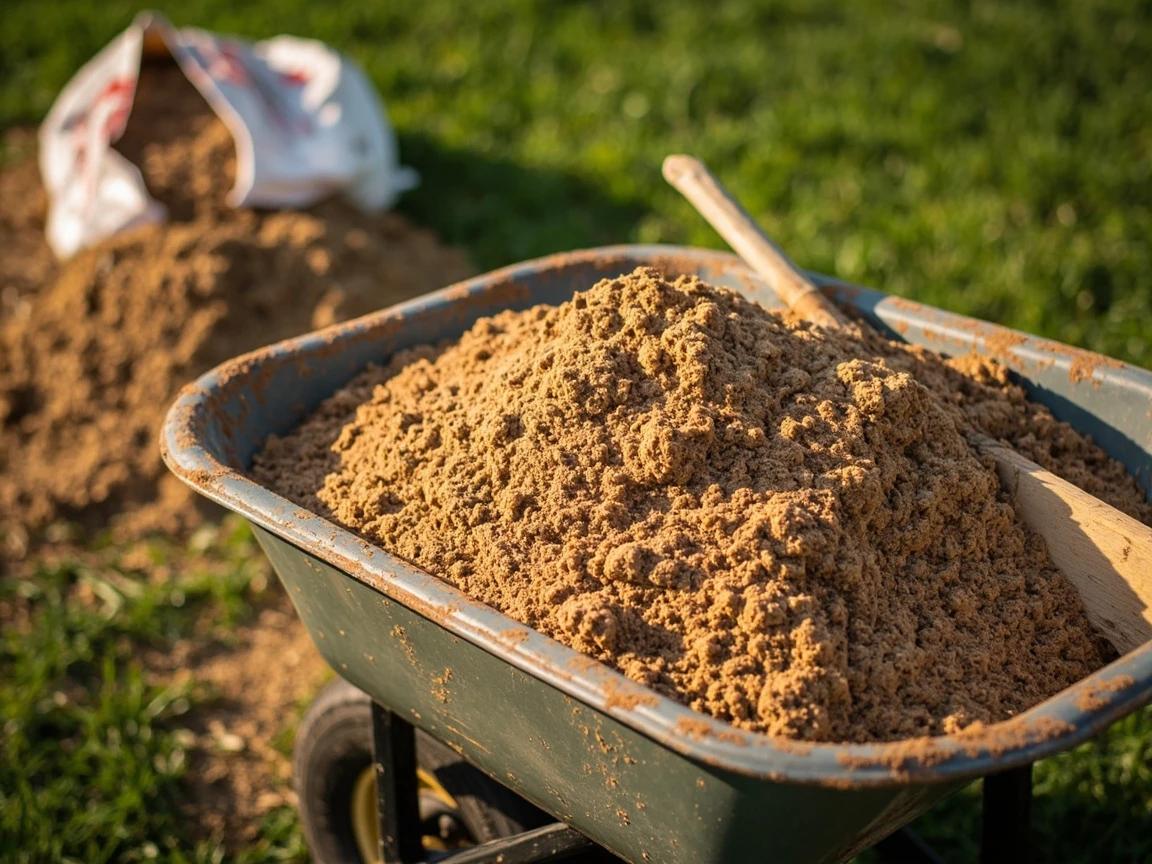
For large areas, buy pre-mixed leveling sand (available at most garden centers) to save mixing time. For small yards under 2,000 sq ft, mixing your own is more cost-effective — a cubic yard of each component costs $30-50 from a landscape supply yard, far cheaper than bagged material.
Spread the Topdressing Over Low Spots First
Using a flat shovel, drop small piles of the topdressing mix onto the marked low spots and depressions throughout the lawn — space the piles about 3 feet apart. Aim for enough material to bring the low spots up to the level of the surrounding lawn, but no more than 1/2 inch deep in any single application. For deeper depressions (over 1 inch), plan on multiple topdressing sessions spaced 4-6 weeks apart — filling a deep hole in one pass buries the grass and kills it. Spread each pile outward with a leveling rake or the back of a landscape rake, feathering the edges so there are no abrupt transitions.
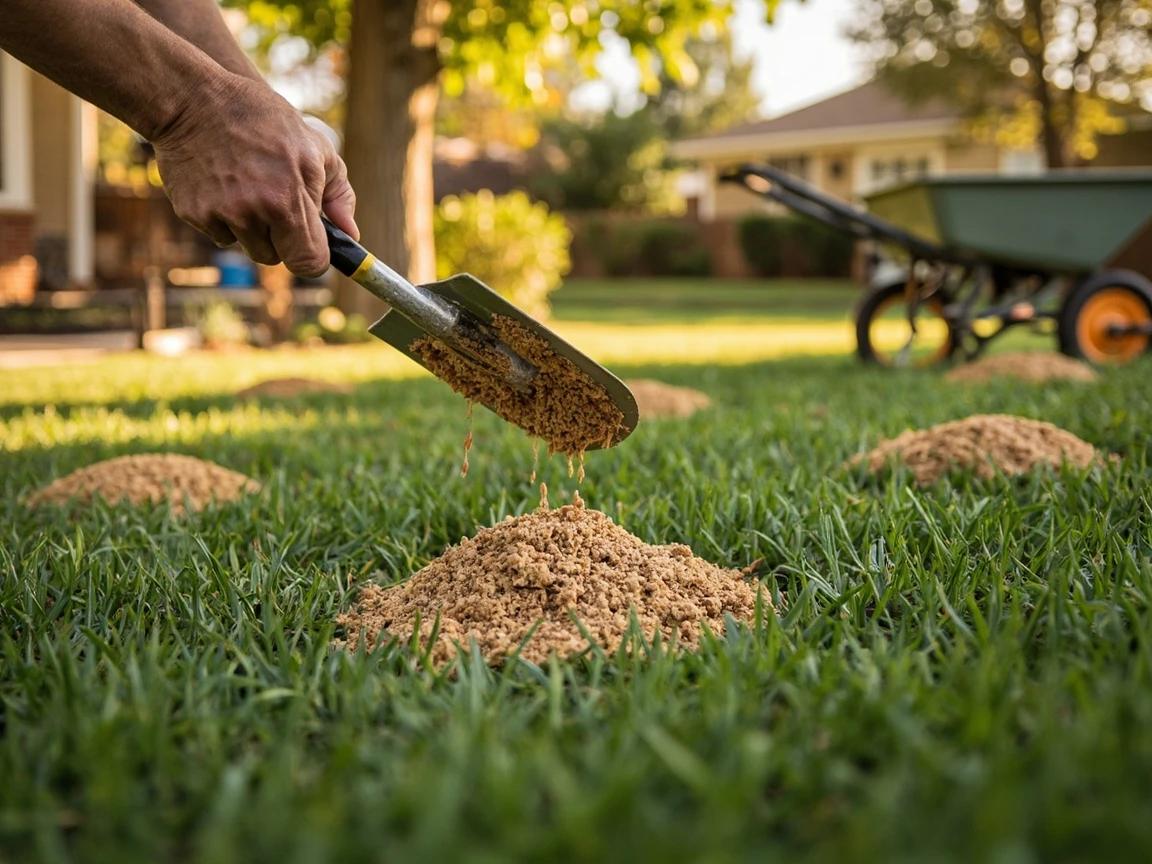
Never apply more than 1/2 inch of topdressing in a single application. Thicker layers smother the grass and prevent sunlight from reaching the blades. If you need to fill a depression deeper than 1 inch, apply 1/4 to 1/2 inch, wait 4-6 weeks for the grass to grow through, then apply another layer.
Spread a Thin Layer Over the Entire Lawn
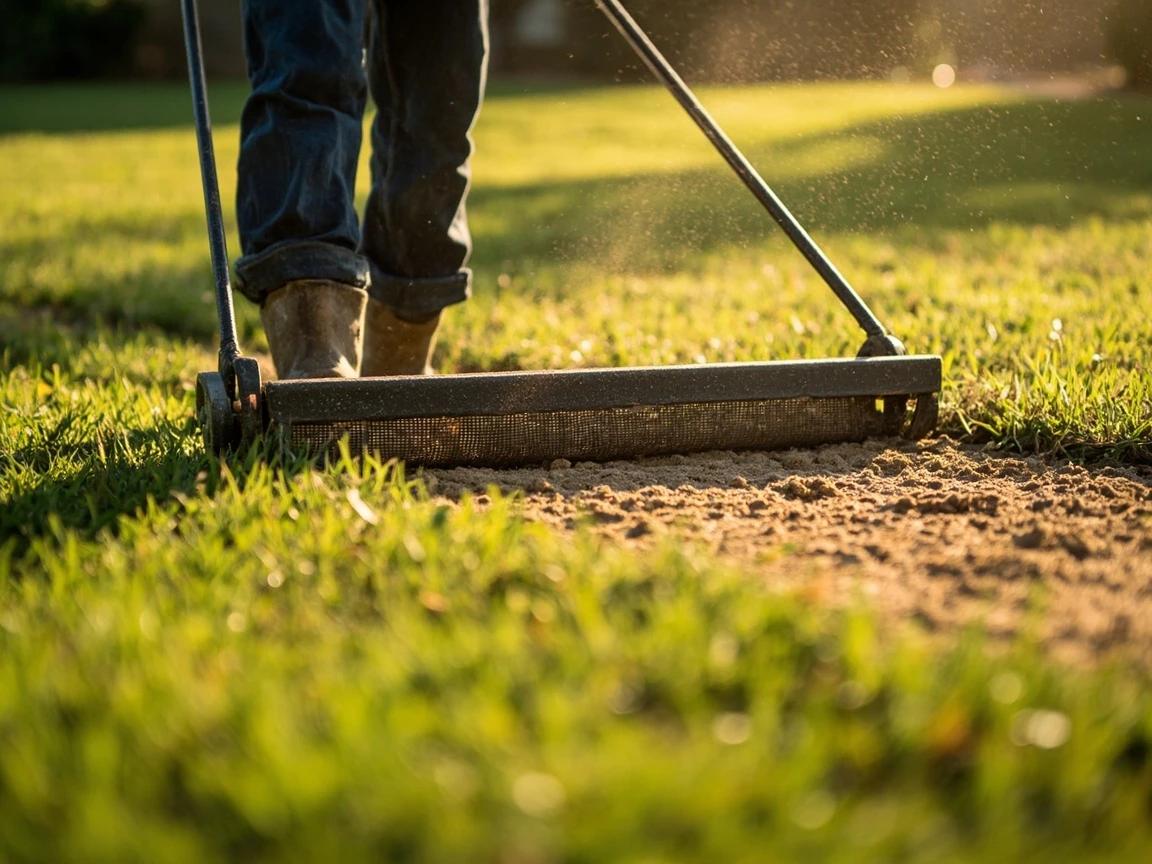
After addressing the worst low spots, spread a thin even layer of topdressing mix — no more than 1/4 inch — across the entire lawn surface. This evens out subtle bumps and micro-depressions that you cannot see with the naked eye but that create the overall rough texture when you walk or mow. Use a leveling rake to distribute the material evenly, pulling it across the lawn in long overlapping passes. The leveling rake's flat mesh bottom prevents it from digging into the soil while smoothing the topdressing into a uniform layer. If you do not have a leveling rake, the flat back of a landscape rake or a push broom works — just move in straight, overlapping passes.
Work the Topdressing into the Grass
After spreading, use a push broom or the back side of a landscape rake to work the topdressing down through the grass blades to the soil surface. Sweep in multiple directions — north-south, then east-west — to ensure the material settles into the base of the turf rather than sitting on top of the grass. The goal is to see the grass blade tips poking through the topdressing layer. If any area has the grass completely buried, rake some material away to expose the tips — the grass needs sunlight to survive and grow through the new layer. This step is critical and should not be skipped.
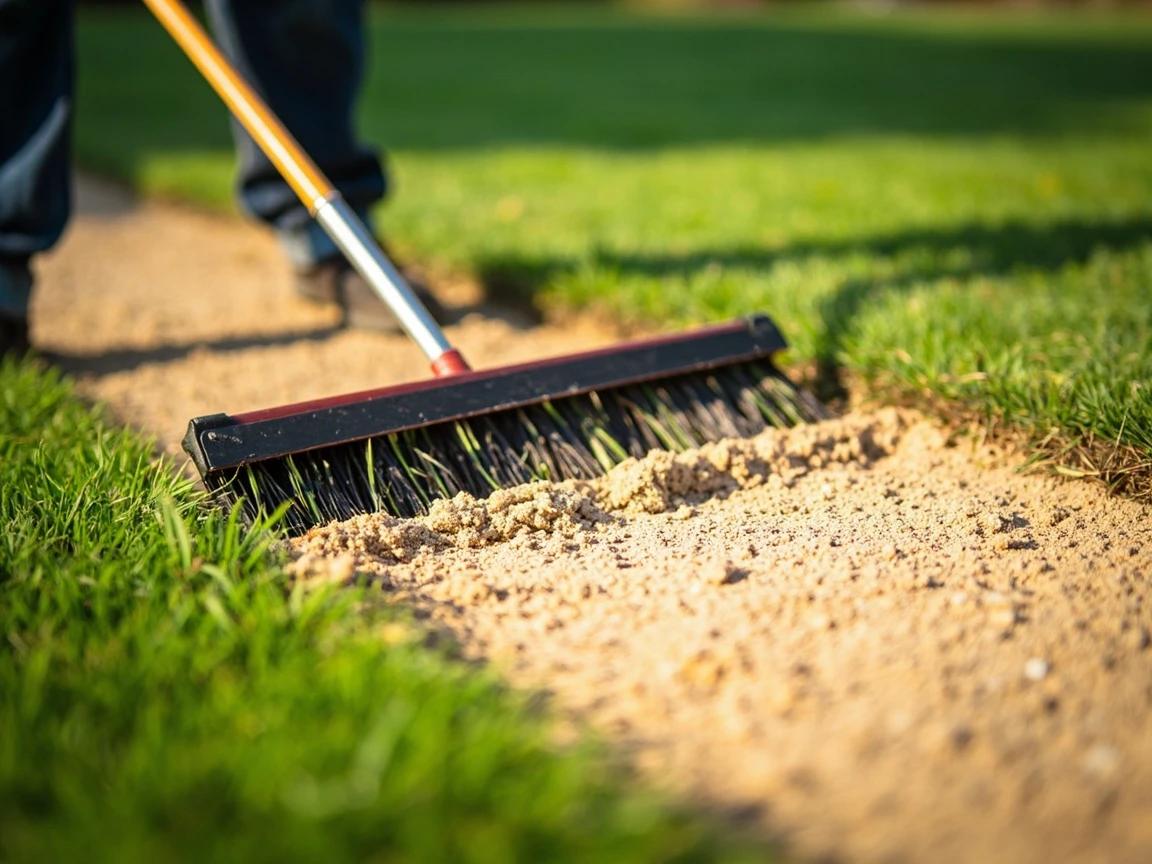
If grass tips are not visible after working the mix in, you applied too much. Use the leveling rake to pull excess material toward thin areas or pile it on a tarp for the next application round. Do not leave buried grass — it will die within 3-4 days without sunlight.
Water Thoroughly to Settle the Material
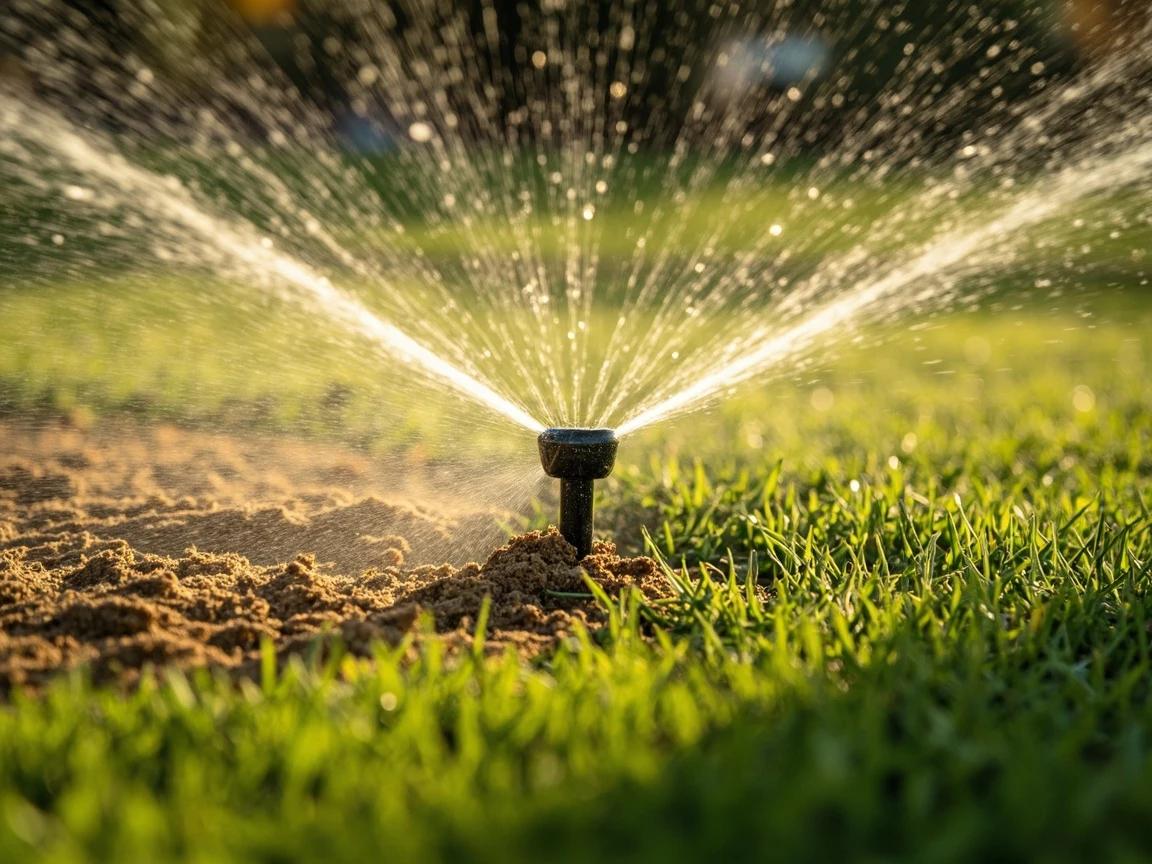
Set up a sprinkler or use a garden hose with a gentle shower nozzle to water the entire lawn for 15-20 minutes. The water settles the topdressing into the soil surface and fills any remaining air pockets between the sand particles. Do not blast the lawn with a strong stream — this washes the topdressing into piles and undoes your leveling work. A gentle soaking is all that is needed. Continue watering daily for the first week if there is no rain, then transition to your normal watering schedule. The grass will begin growing through the topdressing within 7-14 days depending on conditions.
Overseed Thin Areas and Wait Before Mowing
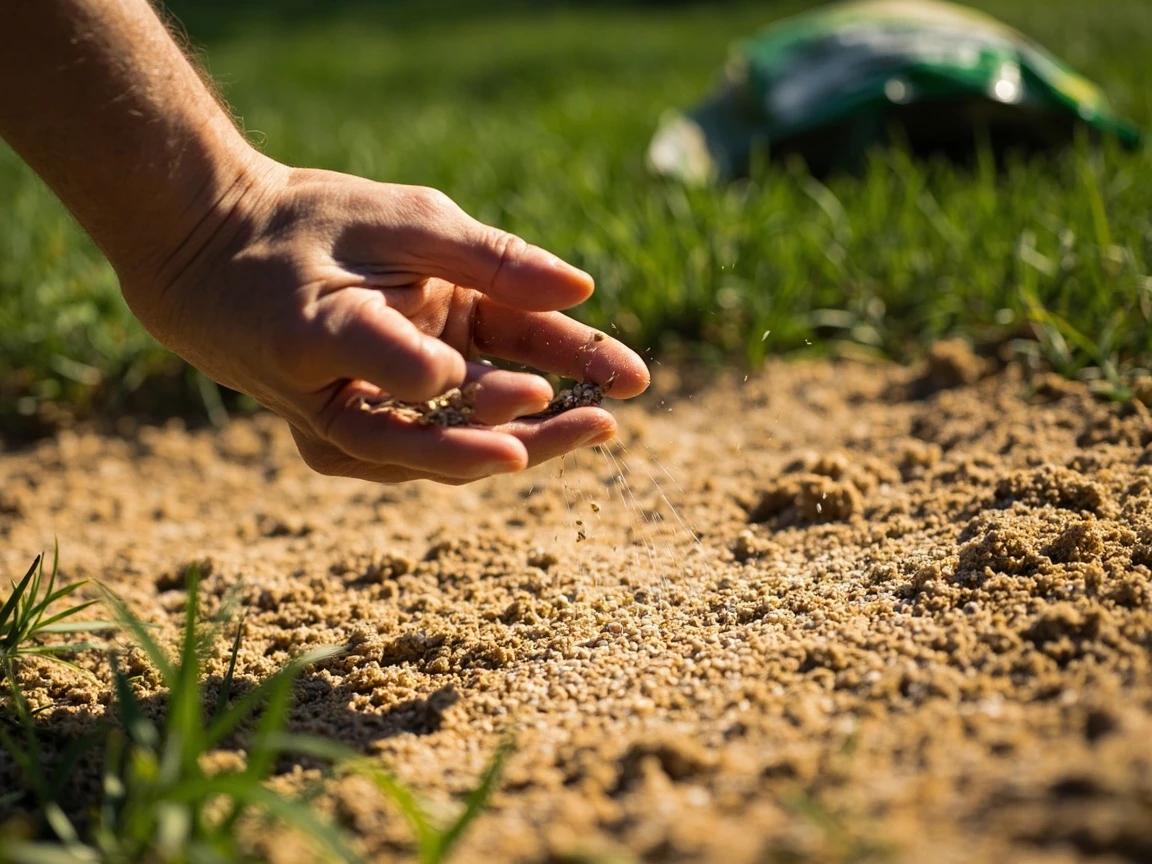
If the topdressing exposed any thin or bare patches, broadcast grass seed matching your existing lawn type over those areas — scatter at a rate of 3-5 lbs per 1,000 sq ft for overseeding. Lightly rake the seed into the topdressing surface and keep it moist with daily light watering until germination (7-21 days depending on grass type). Do not mow the lawn for at least 7-10 days after topdressing to let the grass recover and grow through the new material. When you do mow, set the mower back to its normal cutting height — the short pre-leveling cut was temporary. After 4-6 weeks, evaluate the lawn and repeat the process on any areas that still show unevenness.
Most lawns need 2-3 topdressing sessions over the course of a growing season to achieve a truly level surface. Do not try to fix everything in one pass — patience and thin layers produce far better results than one heavy application that risks killing the grass.
Frequently Asked Questions
How long does it take to level a bumpy lawn?
+
This project typically takes about 3 hrs. The guide includes 8 steps with detailed instructions for each.
What tools do I need?
+
You will need: Lawn leveling rake (36-inch or 42-inch — Landzie or similar) or a sturdy landscape rake, Flat-head shovel, Wheelbarrow or garden cart, Garden hose with adjustable nozzle or sprinkler, Push broom (for working topdressing into the grass), Lawn mower (set to lowest safe cutting height), String and stakes (for identifying high and low spots), Straight board or long level (6-foot minimum). Materials include: Coarse masonry sand or USGA-spec sand (the main leveling ingredient — approximately 1 cubic yard per 1,000 sq ft of lawn for a 1/4-inch application), Screened topsoil (equal parts with sand — do not use garden soil or potting mix, which compact too easily), Finished compost or aged manure (half the volume of sand — adds nutrients to help the grass recover), Grass seed matching your existing lawn type (for overseeding thin areas after leveling — about 3-5 lbs per 1,000 sq ft).
Is this a good project for beginners?
+
This is a moderate-difficulty project. Some basic DIY experience is helpful, but the step-by-step instructions make it approachable for motivated beginners.
Sources & further reading
- Topdressing — Cornell University (CALS)
- Cool-Season Grasses: Lawn Establishment and Renovation — University of Missouri Extension
More Gardening Guides
View all →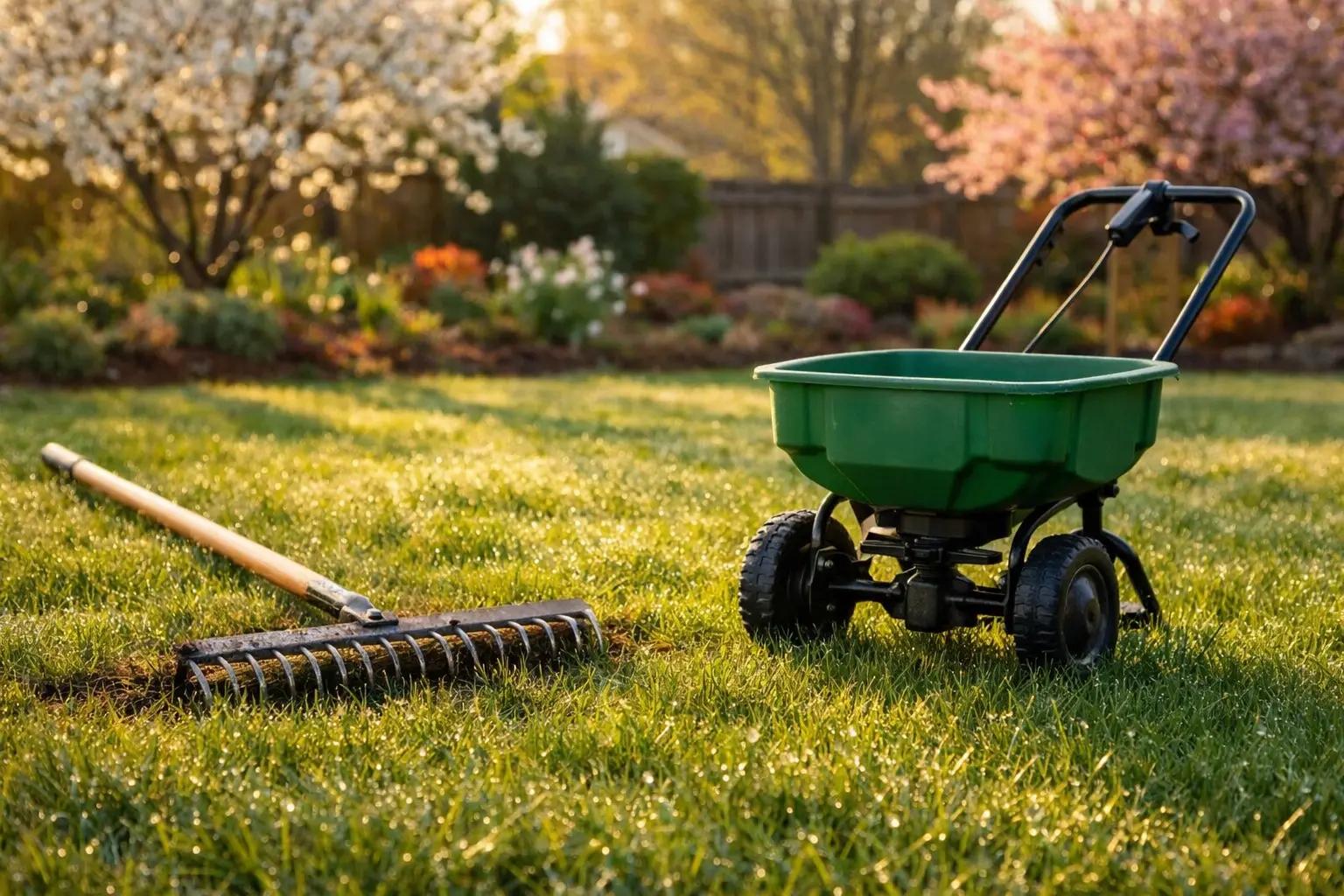 Easy3 hrs
Spring Lawn Care Checklist
What you do to your lawn in the first six weeks of spring determines its health for the entire growing season. Follow this sequence to fix winter damage, encourage deep roots, and crowd out weeds before they establish.
 Medium2 hrs
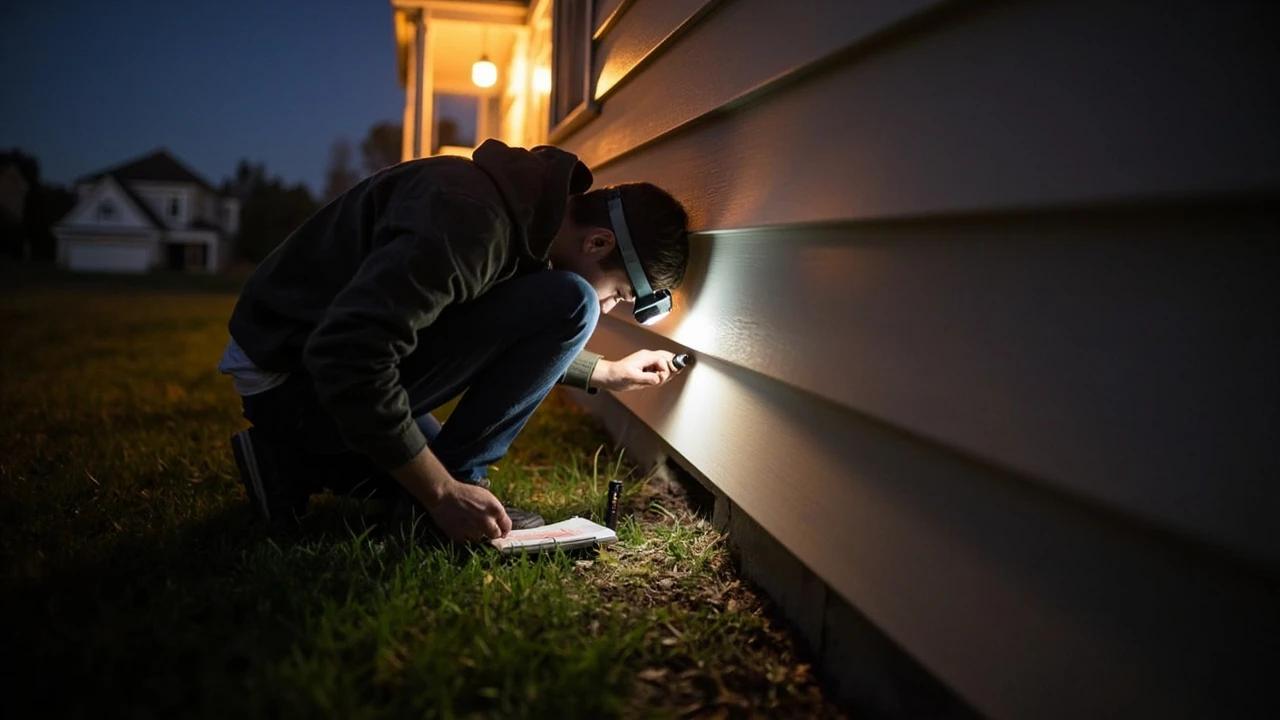
How to Get Rid of Carpenter Ants Without an Exterminator
Big black ants in the kitchen at midnight usually mean a carpenter ant colony is excavating damp wood somewhere in your house — and the instinctive response, spraying them, is exactly what makes an infestation permanent. This guide covers the method extension entomologists actually recommend: track the nest at night, feed the colony slow-acting bait, and fix the moisture that invited them, for $20-40 instead of a $300-600 pest contract.
 Medium4 hrs
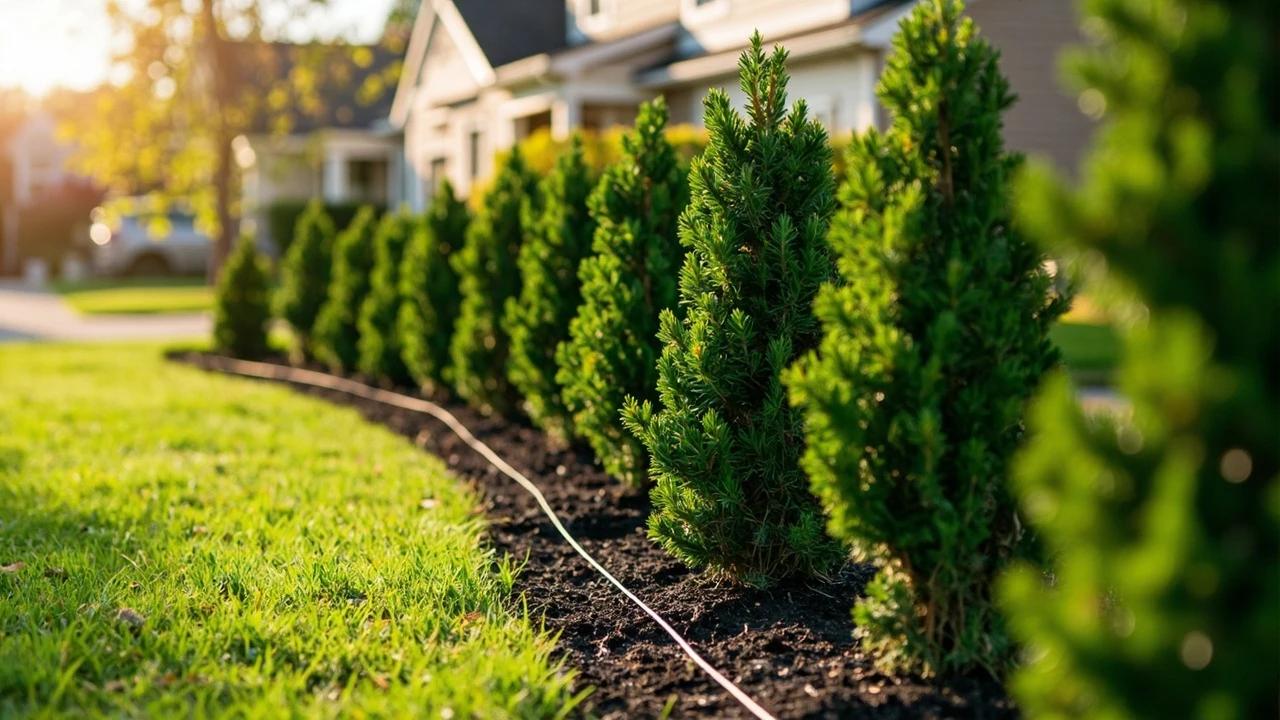
How to Plant a Privacy Hedge (Best Species + Spacing)
A well-planted privacy hedge blocks sight lines, dampens road noise, and adds property value for a fraction of the cost of a fence — expect to spend $15-40 per plant versus $30-60 per linear foot for fencing. But hedges planted too close together, too deep, or in the wrong season end up thin, sickly, or dead within two years. This guide walks you through choosing the right species for your climate, spacing plants for dense coverage, preparing the soil, and watering through establishment so you end up with a lush green wall that fills in by year three.
You Might Also Like
 Easy25 min
Best Deck Stain: Transparent vs Semi vs Solid
There is no "best" deck stain — there is the right stain for your sun exposure, wood condition, and how often you want to redo the job. Transparent stains last 1-2 years but let the natural grain show. Solid stains last 4-7 years but look like paint. This guide walks the four opacity levels and the oil-vs-water choice so you pick the one that matches your deck and your tolerance for re-staining.
 Easy45 min
How to Install a Smart Thermostat
A smart thermostat is one of the highest-ROI upgrades you can make to your home — it learns your schedule, adjusts automatically when you're away, and typically saves about 8% on heating and cooling bills — the figure ENERGY STAR verifies from real-home data, roughly $50 a year — so the $120-250 device usually pays for itself within a few years. If your old thermostat has labeled wires behind it, the swap takes about 30-45 minutes with nothing more than a screwdriver and your phone. This guide covers checking compatibility, labeling wires, mounting the new base, connecting everything, and walking through the app setup so your system is running smart the same day.
 Easy30 min
How to Fix a Dripping Faucet
A dripping faucet wastes more than 3,000 gallons of water per year and can add $20 or more to your monthly water bill. The fix is almost always a worn cartridge, washer, or O-ring — parts that cost under $10 and take 20-30 minutes to replace with basic tools.