How to Install a Garbage Disposal
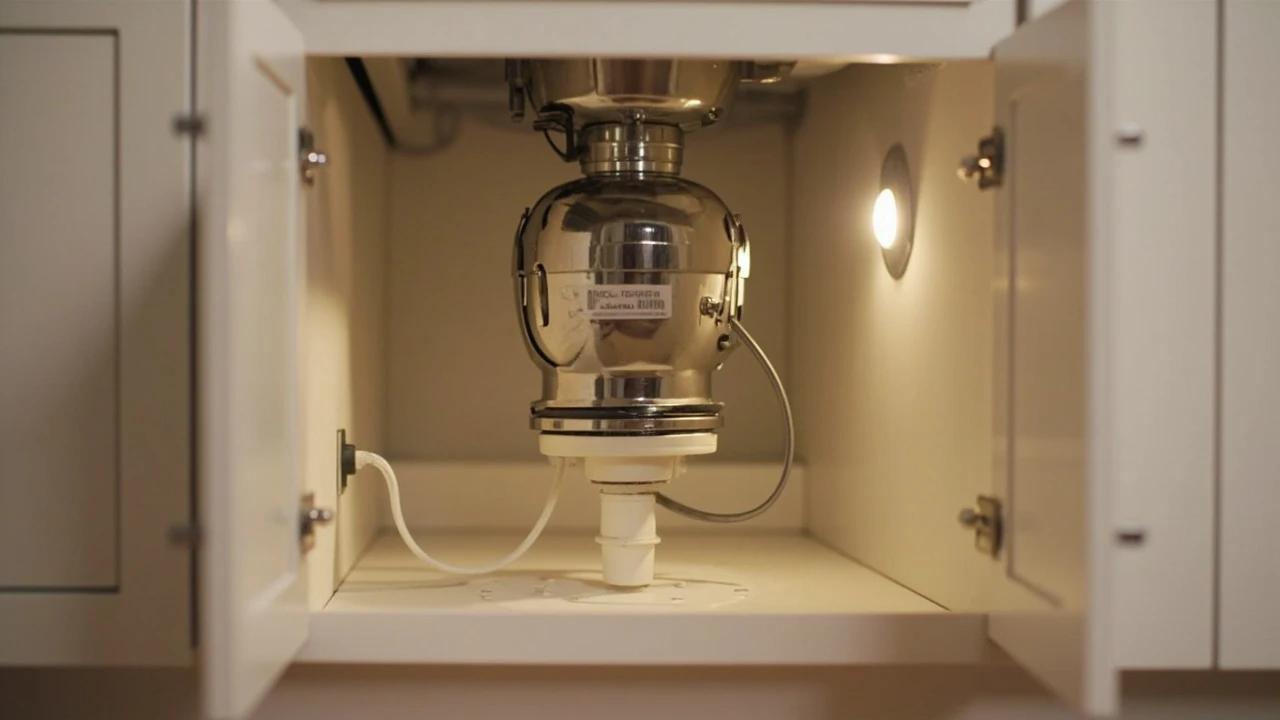

A garbage disposal turns food scraps into a non-issue and keeps your kitchen drain smelling clean — a new unit costs $80-200 and you can install it yourself in about two hours versus $200-500 for a plumber visit. The job combines basic plumbing and a simple electrical connection, but a loose mounting ring, a forgotten dishwasher knockout plug, or a bad P-trap slope will leave you mopping up under the sink. This guide walks you through removing the old drain (or disposal), mounting the new flange and ring assembly, wiring the unit, connecting the discharge to the P-trap, and testing everything leak-free.
What You'll Need
🛠 Tools
📦 Materials
Safety First
- •Turn off the circuit breaker powering the disposal outlet before doing any electrical work — verify the power is dead with a non-contact voltage tester before touching any wires.
- •Never put your hand inside a garbage disposal, even when the power is off — use pliers or tongs to remove objects from the grinding chamber.
- •The disposal unit weighs 8-15 lbs and you'll be holding it overhead while mounting — support it with a small bucket, a stack of books, or have a helper hold it until the mounting ring locks.
Step-by-Step Instructions
Disconnect Power and Remove the Old Drain or Disposal
Turn off the circuit breaker that powers the under-sink outlet and verify it's dead with a non-contact voltage tester. If replacing an existing disposal, unplug it (or disconnect the hardwired cable), loosen the discharge tube clamp, disconnect the dishwasher hose if present, then twist the lower mounting ring counterclockwise to release the unit. If you're installing fresh into a standard drain, place a bucket under the P-trap, loosen the slip-nut fittings with channel-lock pliers, and remove the drain tailpiece, P-trap, and the old sink strainer from above.
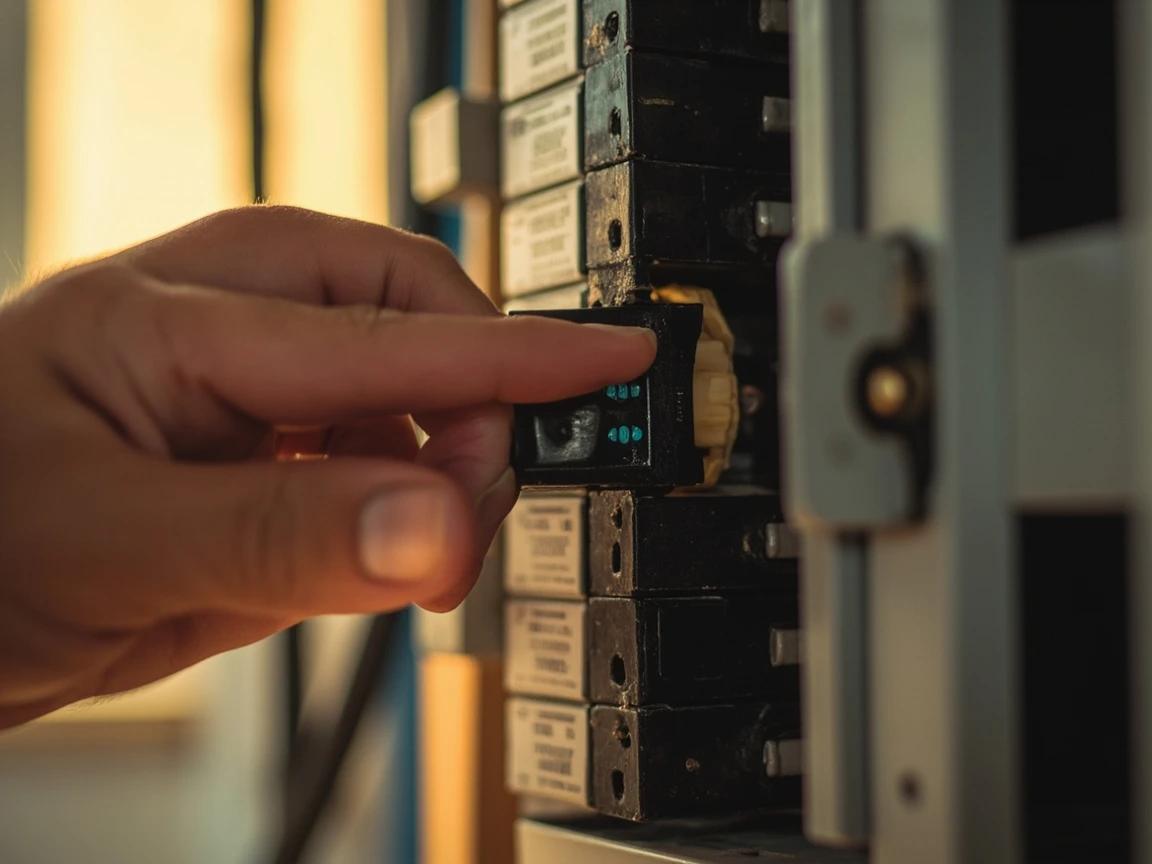
Always verify the power is off with a voltage tester — a labeled breaker may not be the correct one, and working on a live circuit under a sink with wet hands is extremely dangerous.
Apply Plumber's Putty and Seat the Sink Flange
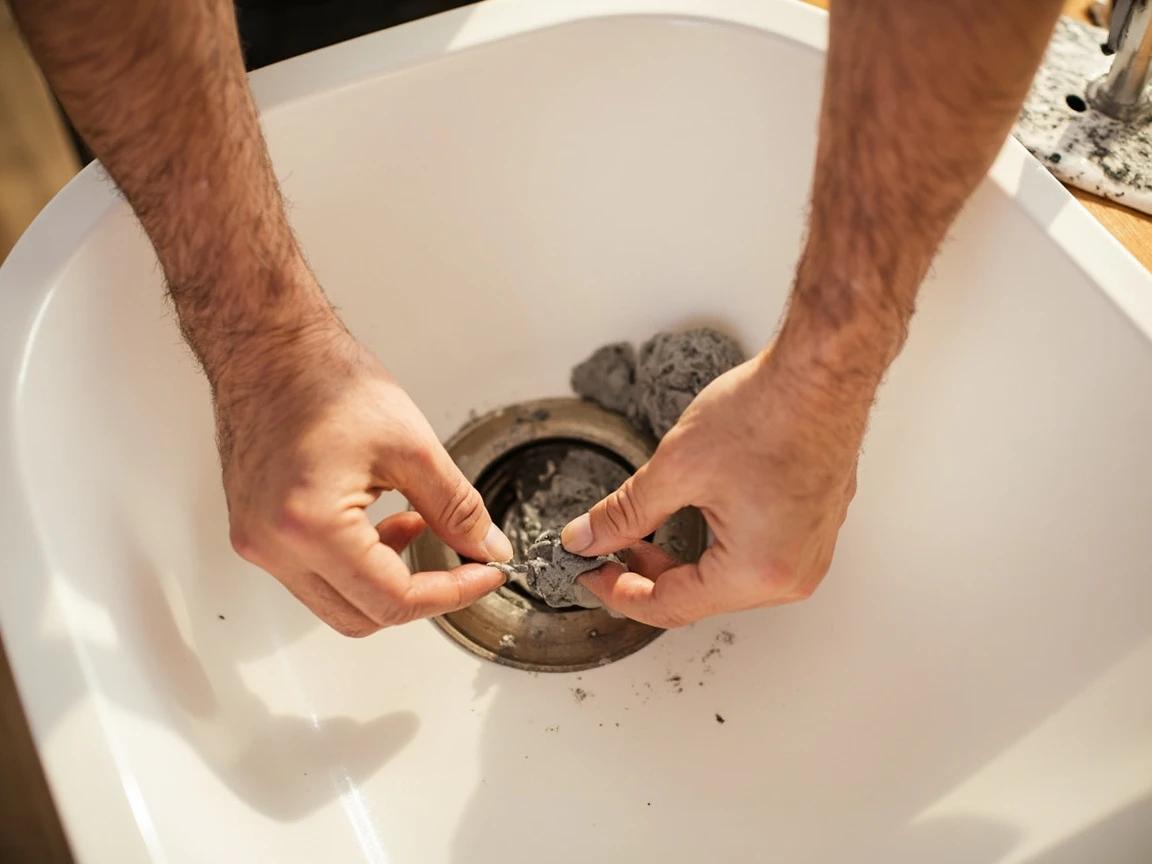
Roll a rope of plumber's putty about 1/2 inch thick and 10 inches long between your palms. Press it around the underside of the new sink flange's lip in a continuous ring. From above, push the flange into the sink drain opening and press it firmly so putty squeezes out evenly around the rim. Don't clean up the excess putty yet — it will be trimmed after the mounting assembly is tightened from below.
Assemble and Tighten the Mounting Hardware
Working from underneath the sink, slide the fiber gasket, the metal backup flange, and the mounting ring up onto the sink flange's sleeve in that order. Push the snap ring up and into the groove on the sleeve — you'll hear it click into place, which locks all the hardware against the underside of the sink. Tighten the three mounting screws on the mounting ring evenly, alternating between them a few turns at a time, until the backup flange is pulled snugly against the sink bottom. From above, trim the excess plumber's putty with a putty knife.
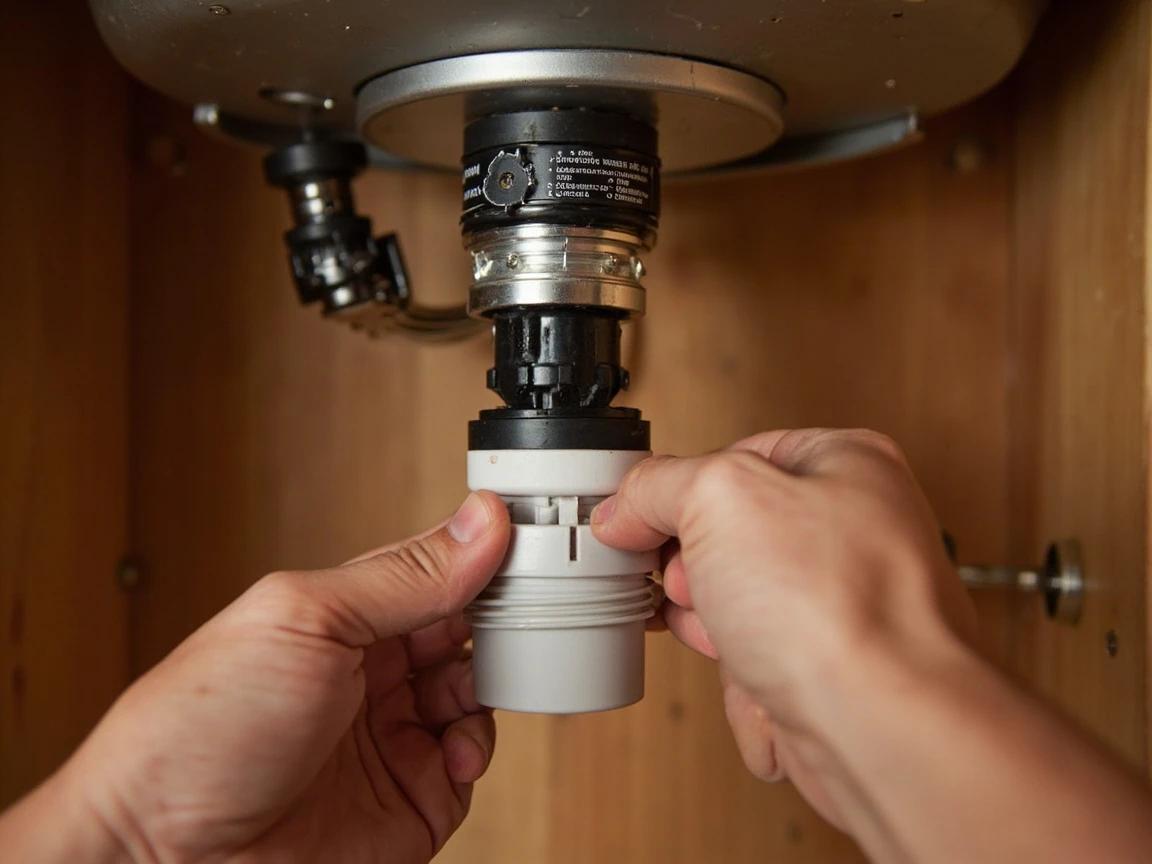
Tighten the three mounting screws in a star pattern (not sequentially around the ring) to draw the flange down evenly and prevent a gap that leaks.
Knock Out the Dishwasher Plug (If Applicable)
If you have a dishwasher that drains through the disposal, locate the dishwasher inlet on the side of the disposal — it's a small circular knockout plug inside a short nipple. Place a flathead screwdriver or a wooden dowel against the knockout and tap it firmly with a hammer to pop it out. Reach into the disposal with pliers and remove the loose plastic disk — if you leave it inside, it will jam the grinding plate on first use. If you do not have a dishwasher, leave the knockout in place.
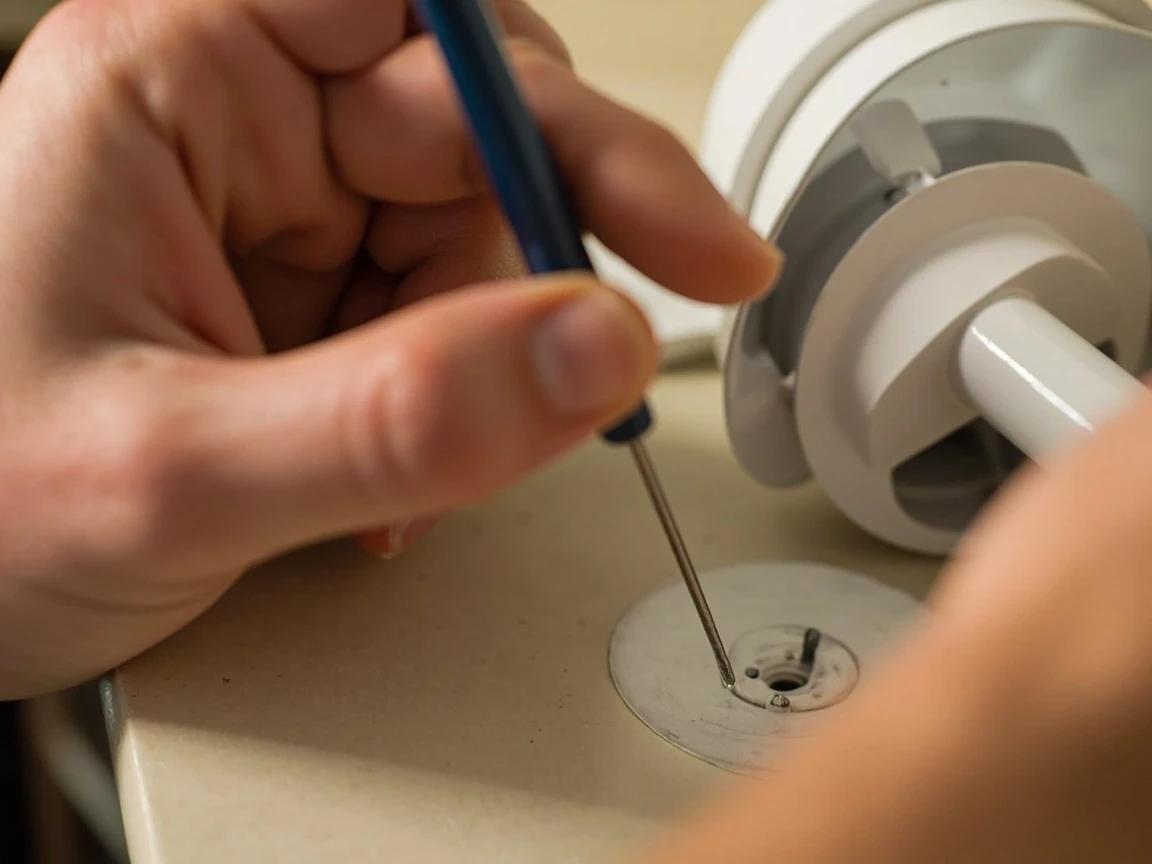
Forgetting to knock out this plug is the #1 mistake — your dishwasher will back up into the sink on the very first cycle.
Wire the Electrical Connection
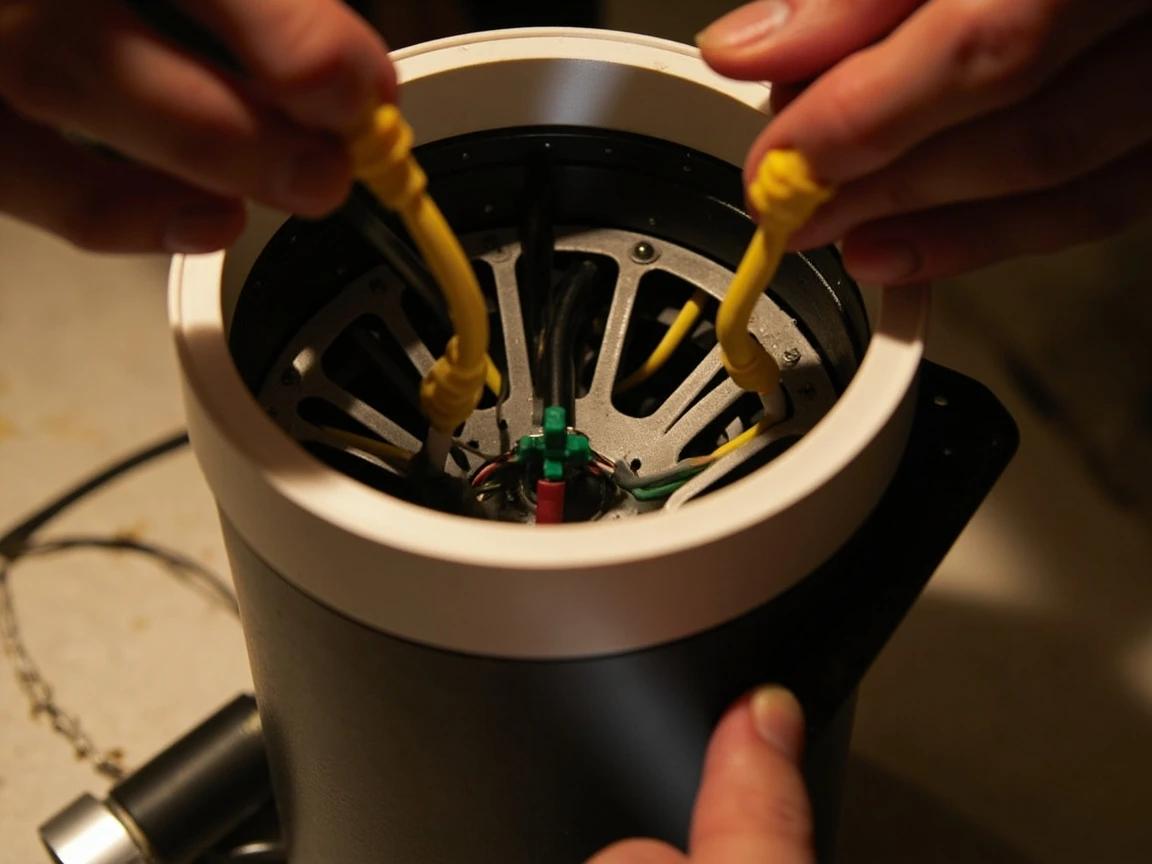
If your disposal came with a factory-installed power cord, skip to the next step. Otherwise, remove the electrical cover plate on the bottom of the unit (one or two screws). Feed the power cord (or the Romex cable from the wall) through the strain-relief clamp. Connect the black wire to the black wire, the white wire to the white wire, and the green ground wire to the green ground screw on the disposal using wire nuts. Tug each connection to confirm it's tight, tuck the wires into the compartment, and replace the cover plate.
Mount the Disposal onto the Sink Flange
Lift the disposal and align its three mounting tabs with the slide-up ramps on the mounting ring underneath the sink flange. A stack of books or an overturned bucket under the disposal helps support its weight while you work. Rotate the lower mounting ring clockwise using the included wrenchette (a small Allen-wrench-like tool that fits into a lug on the ring) until all three tabs lock into position and the unit hangs firmly from the flange assembly. Give the disposal a gentle tug downward to confirm it's locked — it should not budge.
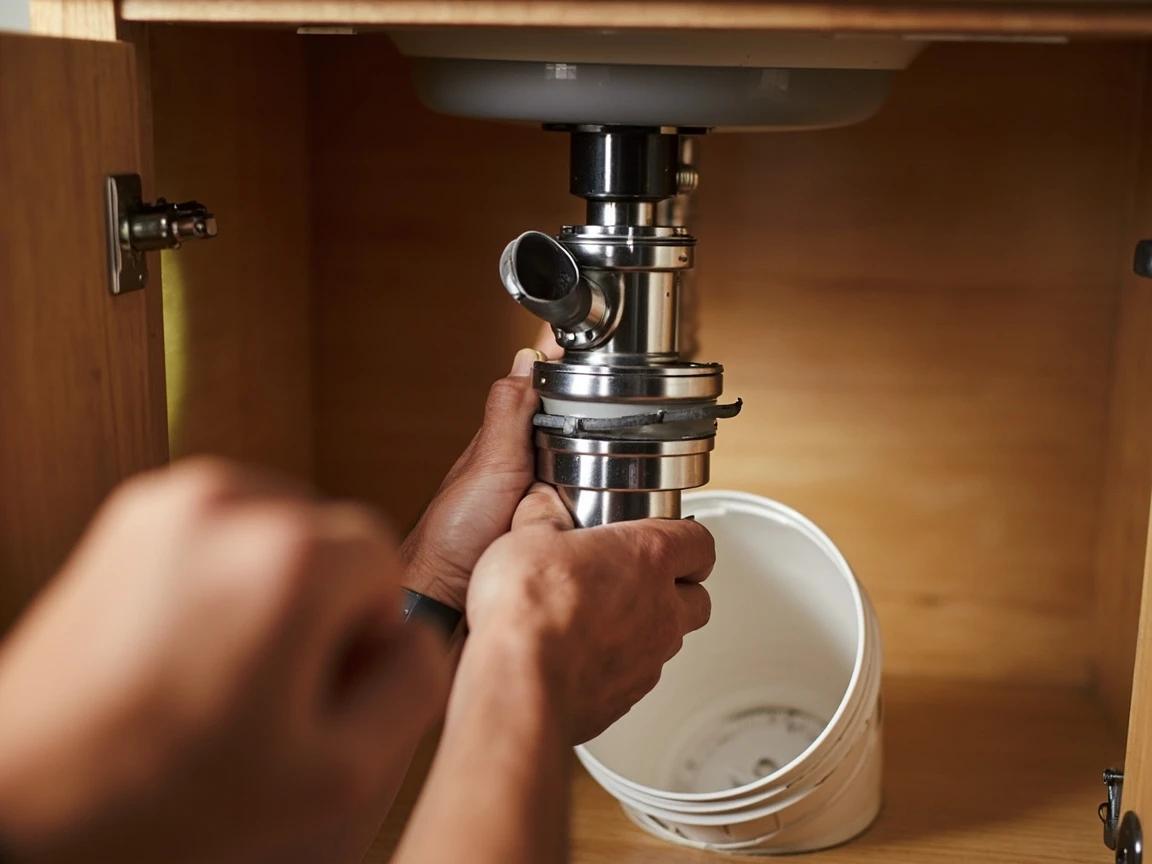
Place a small bucket or a stack of books under the disposal to support its weight while you twist the mounting ring — trying to hold 10+ lbs overhead with one hand while turning the ring with the other is a recipe for a dropped unit and a dented cabinet floor.
Connect the Discharge Tube and P-Trap
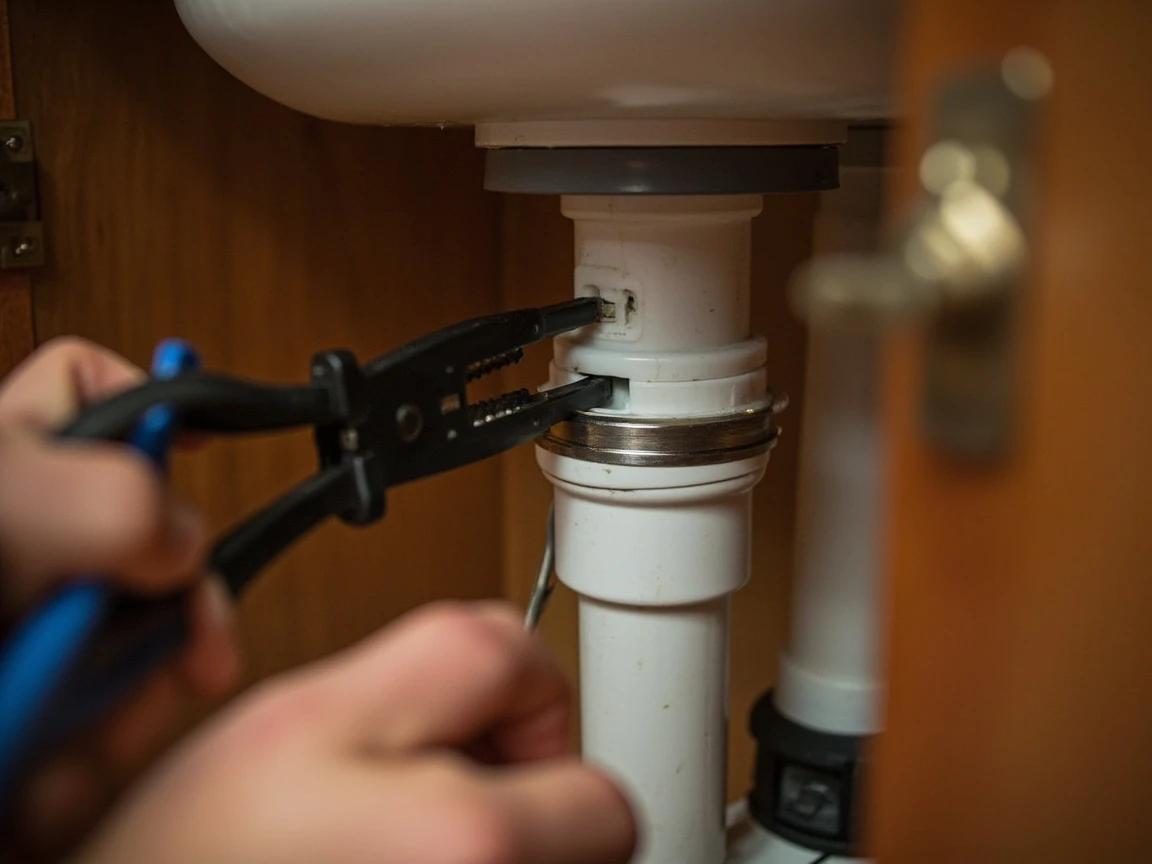
Attach the rubber gasket to the discharge outlet on the side of the disposal, slide the discharge tube into the outlet, and tighten the metal clamp with a flathead screwdriver. Connect the other end of the discharge tube to the P-trap using a slip-nut fitting — hand-tighten first, then snug it with channel-lock pliers (a quarter turn past hand-tight). The discharge tube should slope gently downward toward the P-trap — if it runs uphill at any point, water will pool and drain slowly. If connecting a dishwasher, clamp the drain hose onto the dishwasher inlet nipple with a hose clamp, then route the hose up in a high loop fastened to the underside of the countertop before it drops back down to the disposal. That high loop — or an air-gap fitting, which some jurisdictions (notably California) require instead — is what keeps drain water from siphoning back into the dishwasher.
Test for Leaks and Check the Operation
Plug the disposal into the outlet (or turn the breaker back on for hardwired units). Turn on the cold water and let it run for 30 seconds while you inspect every connection point with a flashlight: the sink flange from above, the mounting assembly, the discharge tube clamp, all P-trap slip-nut joints, and the dishwasher hose clamp. Dry each joint with a paper towel, then check again — even a tiny drip needs to be tightened now. With the water running, flip the wall switch to turn on the disposal and listen for smooth operation with no rattling or grinding sounds.
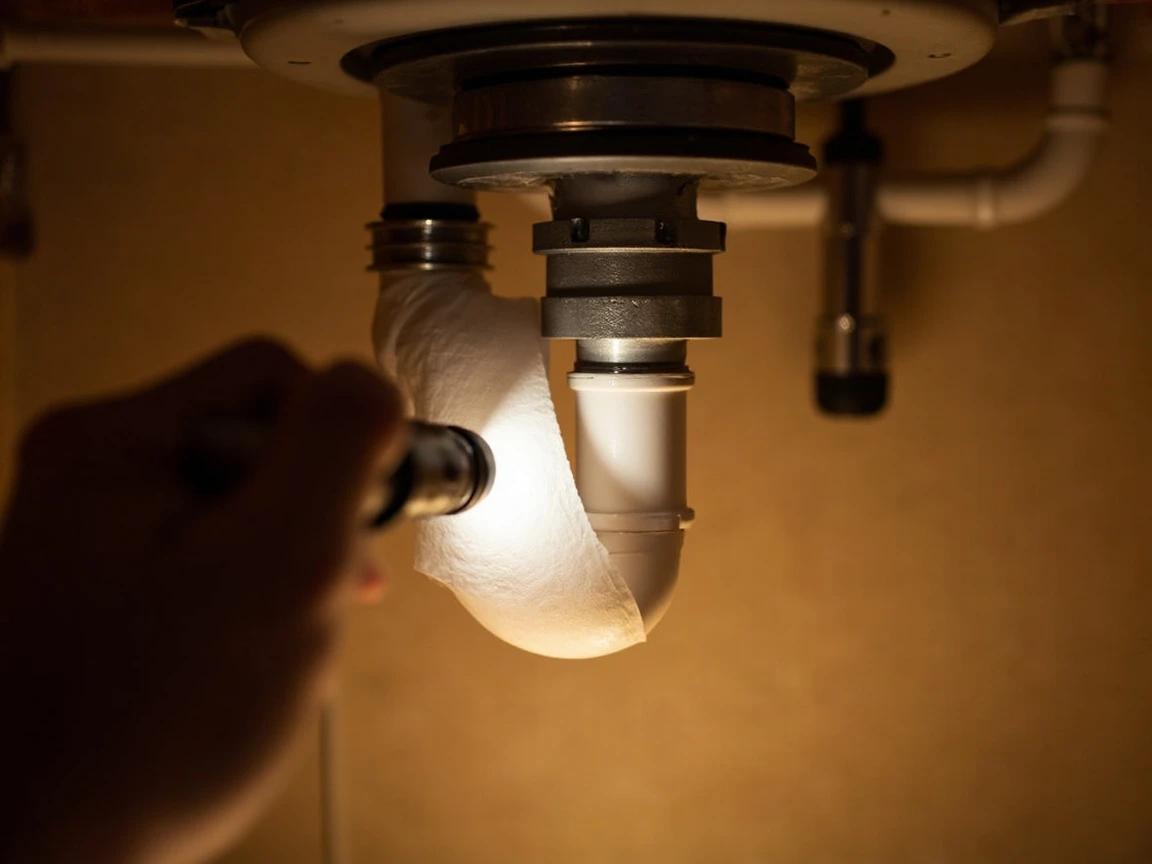
Always run cold water (not hot) when operating the disposal — cold water solidifies grease so the blades can chop it up, while hot water melts grease and lets it coat the inside of your drain pipes.
Clean Up and Learn the Reset Button
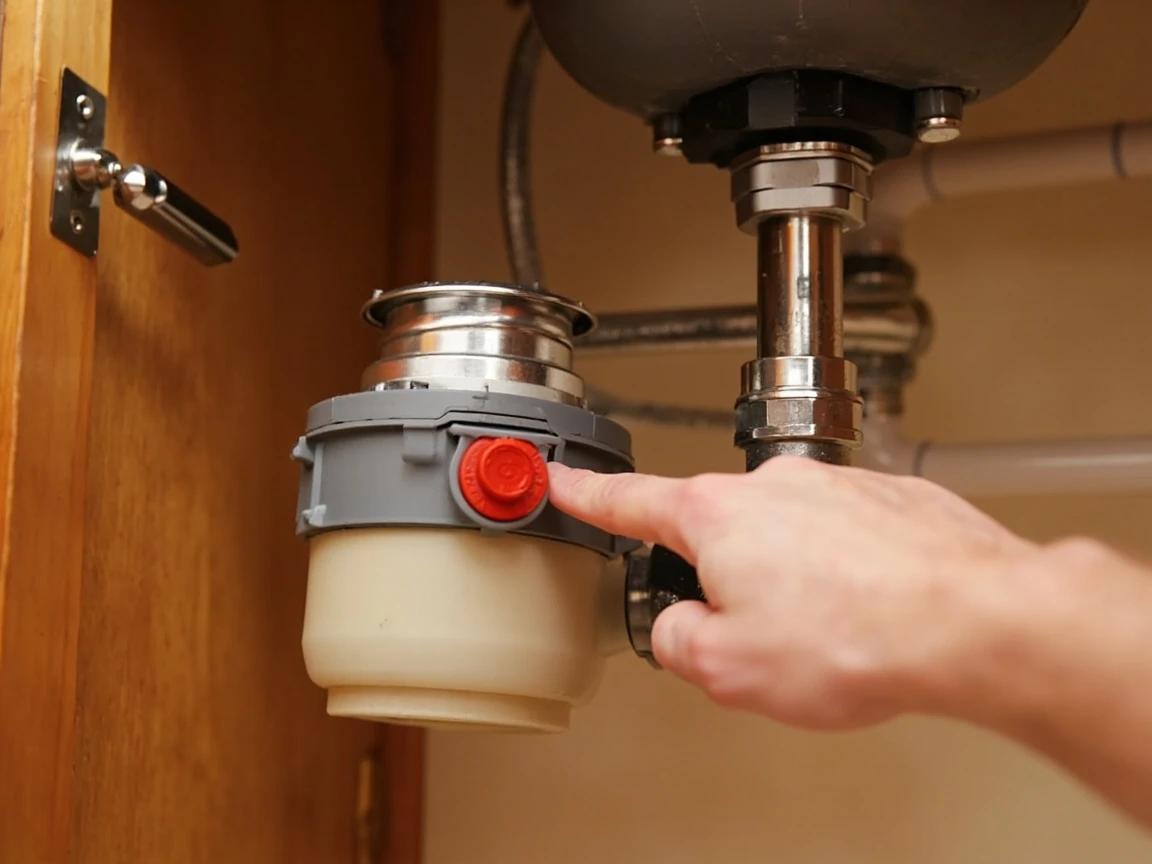
Wipe down the sink flange area with a damp cloth to remove any remaining plumber's putty residue. Locate the red reset button on the bottom of the disposal — if the unit ever jams or trips its internal breaker, you'll press this button after clearing the jam to restore power. Most disposals also include an Allen wrench that fits into a hex socket on the bottom center — if the grinding plate jams, insert the wrench and rotate it back and forth to free the obstruction. Store the Allen wrench under the sink where you can find it.
Frequently Asked Questions
How long does it take to install a garbage disposal?
+
This project typically takes about 2 hrs. The guide includes 9 steps with detailed instructions for each.
What tools do I need?
+
You will need: Phillips-head screwdriver, Flathead screwdriver, Adjustable wrench, Channel-lock pliers, Plumber's putty knife, Hammer, Non-contact voltage tester, Wire strippers, Flashlight or headlamp, Bucket and towels. Materials include: Garbage disposal unit (1/2 HP for light use, 3/4 HP recommended for most households), Plumber's putty (if not included with unit), Discharge tube and rubber gasket (usually included), Wire nuts — yellow, rated for #14 AWG (two needed), Electrical cord kit with plug (if unit does not include a factory-installed cord), Dishwasher drain connector hose and clamp (if connecting to a dishwasher), P-trap and tailpiece — PVC or chrome (reuse existing if compatible), Teflon tape.
Is this a good project for beginners?
+
This is a moderate-difficulty project. Some basic DIY experience is helpful, but the step-by-step instructions make it approachable for motivated beginners.
Sources & further reading
- Everything You Need To Know To Install a Garbage Disposal — This Old House
- Installing a New Garbage Disposal — InSinkErator
More Plumbing Guides
View all → Easy1 hr
How to Flush a Water Heater Tank
Sediment buildup in your water heater tank silently drives up your gas or electric bill, makes your hot water lukewarm, and can cut the tank's lifespan in half — yet flushing takes about 45 minutes and costs nothing beyond a garden hose you probably already own. Most manufacturers recommend flushing once a year, or every six months in hard-water areas. This guide walks you through shutting down the heater safely, draining the tank, flushing until the water runs clear, and restarting without trapping air or burning out an exposed heating element.
 Easy30 min
How to Replace a Shower Head and Shower Arm
Swapping just the shower head is a 10-minute job, but if the arm (the pipe curving out of the wall) is corroded, leaking, or the wrong length for a new rain head, you'll want to replace both. The whole job costs under $50 and takes half an hour — the one trick that separates a clean swap from a flooded wall is holding the arm steady so it doesn't snap off inside the tile. This guide covers removing a stuck arm, prepping the in-wall fitting, taping the threads right, and testing leak-free.
 Easy25 min
How to Replace a Toilet Flapper Valve
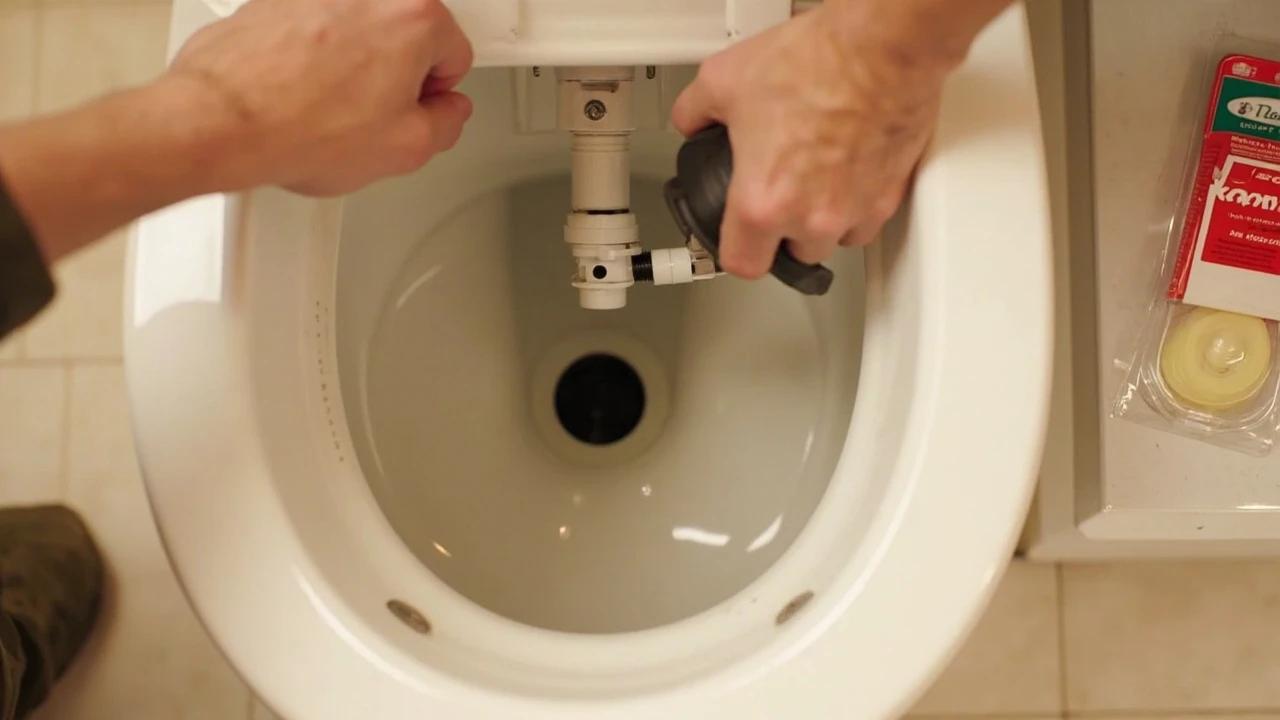
A worn-out flapper is the cause of roughly 90% of "phantom flush" and running-toilet problems, and replacing it is the single cheapest plumbing fix in the house — $5 to $15 for a new flapper and 20 minutes of your time. A leaking flapper wastes 200 gallons of water per day at the high end, which can add $30 to $50 a month to a typical water bill. This guide covers sizing the right replacement, cleaning the valve seat so the new flapper actually seals, and dialing in the chain length so the toilet stops running for good.
You Might Also Like
 Easy15 min
How to Replace a Refrigerator Water Filter
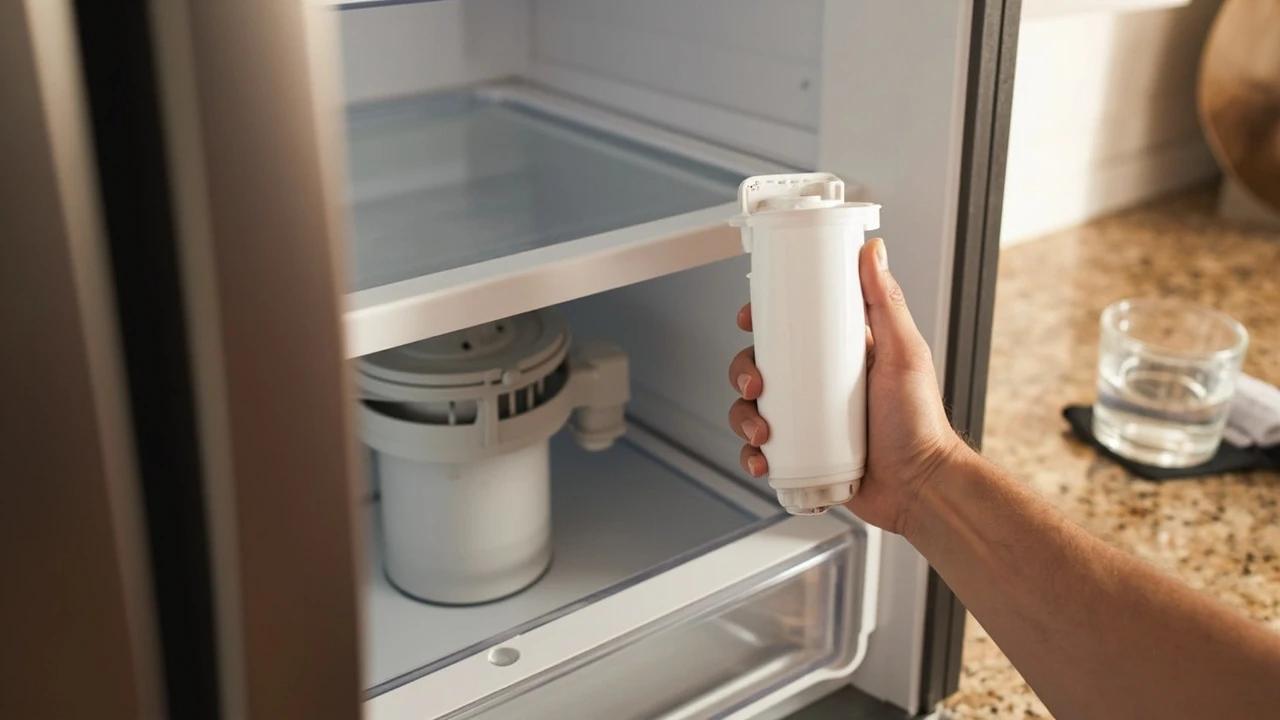
A clogged refrigerator water filter is the most common cause of slow dispensing, off-tasting water, and undersized ice cubes — and it is the easiest fix in your kitchen. Most filters are designed to be swapped in under five minutes with no tools, no shut-off valve, and no spilled water. This guide covers locating your filter, the two common removal styles (twist-in and push-in), inspecting the O-rings, flushing the new filter, and resetting the indicator light so you do not see the red "Replace" warning the next morning.
 Medium1 hr
How to Repair Scratches in a Hardwood Floor
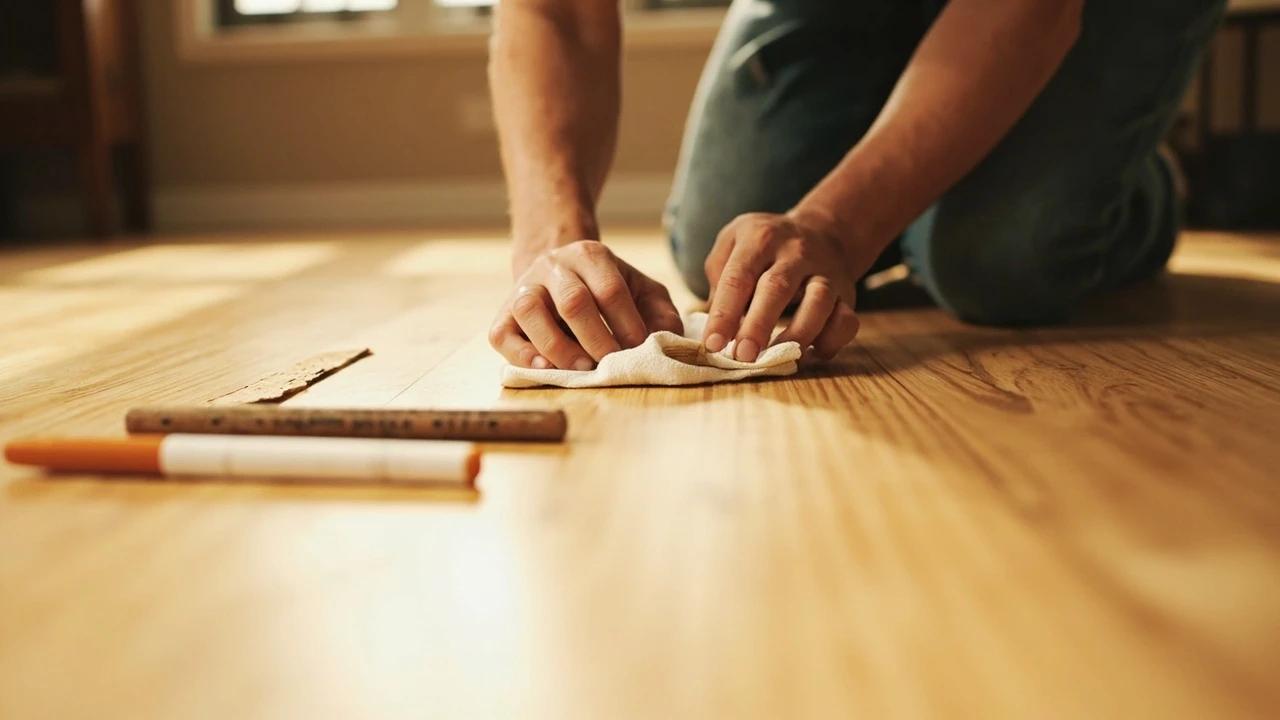
Scratched hardwood almost never means refinishing the whole floor. This guide shows you how to match the fix to the damage — a touch-up marker for finish-level scratches, a wax fill stick for shallow ones, and stainable wood filler with stain and polyurethane for deep gouges — all for under $40 in supplies and about an hour of work.
 Easy25 min
Best Deck Stain: Transparent vs Semi vs Solid
There is no "best" deck stain — there is the right stain for your sun exposure, wood condition, and how often you want to redo the job. Transparent stains last 1-2 years but let the natural grain show. Solid stains last 4-7 years but look like paint. This guide walks the four opacity levels and the oil-vs-water choice so you pick the one that matches your deck and your tolerance for re-staining.