How to Fix a Running Toilet
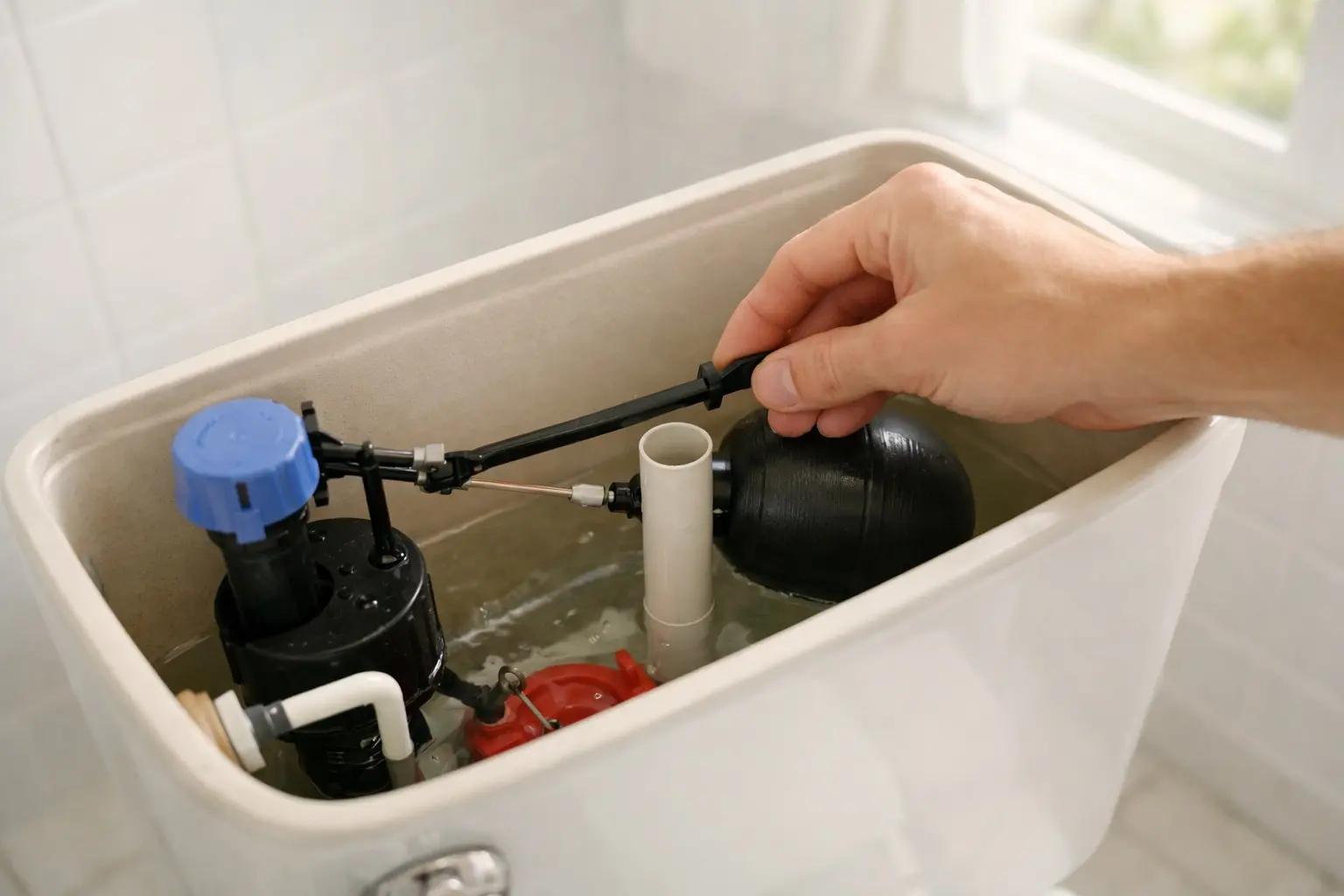

A running toilet can waste up to 200 gallons of water per day, adding $50 or more to your monthly water bill. The fix almost always involves one of three cheap parts — the flapper, fill valve, or float — and takes under 30 minutes with no special skills required.
What You'll Need
🛠 Tools
📦 Materials
Safety First
- •Turn off the water supply valve before removing any parts. The valve is located on the wall behind the toilet, near the floor.
- •Tank water is clean (it has not contacted the bowl), but wear rubber gloves if you prefer.
Step-by-Step Instructions
Diagnose the Cause
Remove the toilet tank lid and set it on a towel (porcelain lids are heavy and crack easily on hard floors). Listen and watch: if water is trickling into the bowl, the flapper is leaking. If the fill valve keeps cycling on and off every few minutes (called "phantom flush"), the flapper is the culprit. If water is flowing into the overflow tube continuously, the float or fill valve needs adjustment. Understanding which part is failing tells you exactly what to fix.
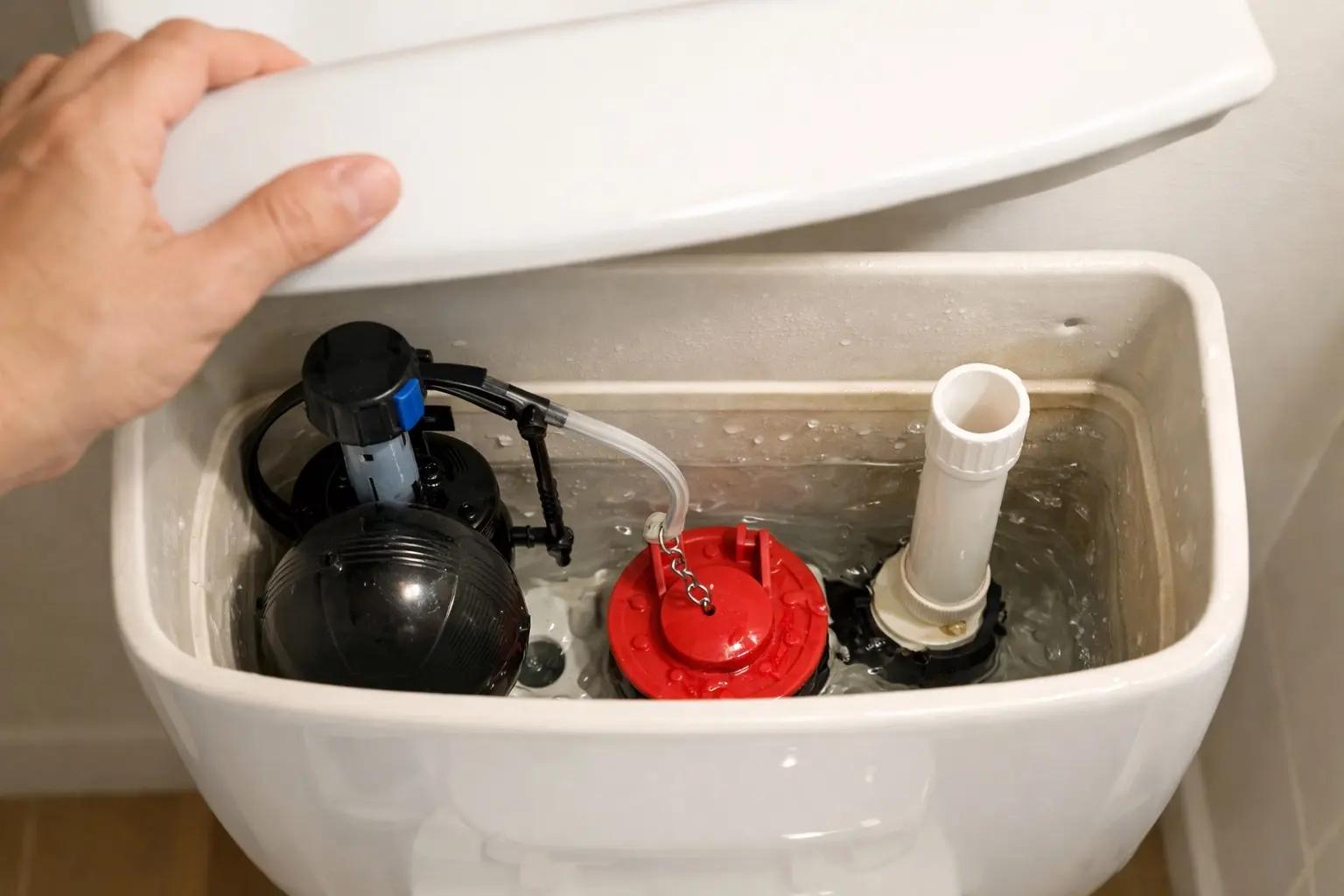
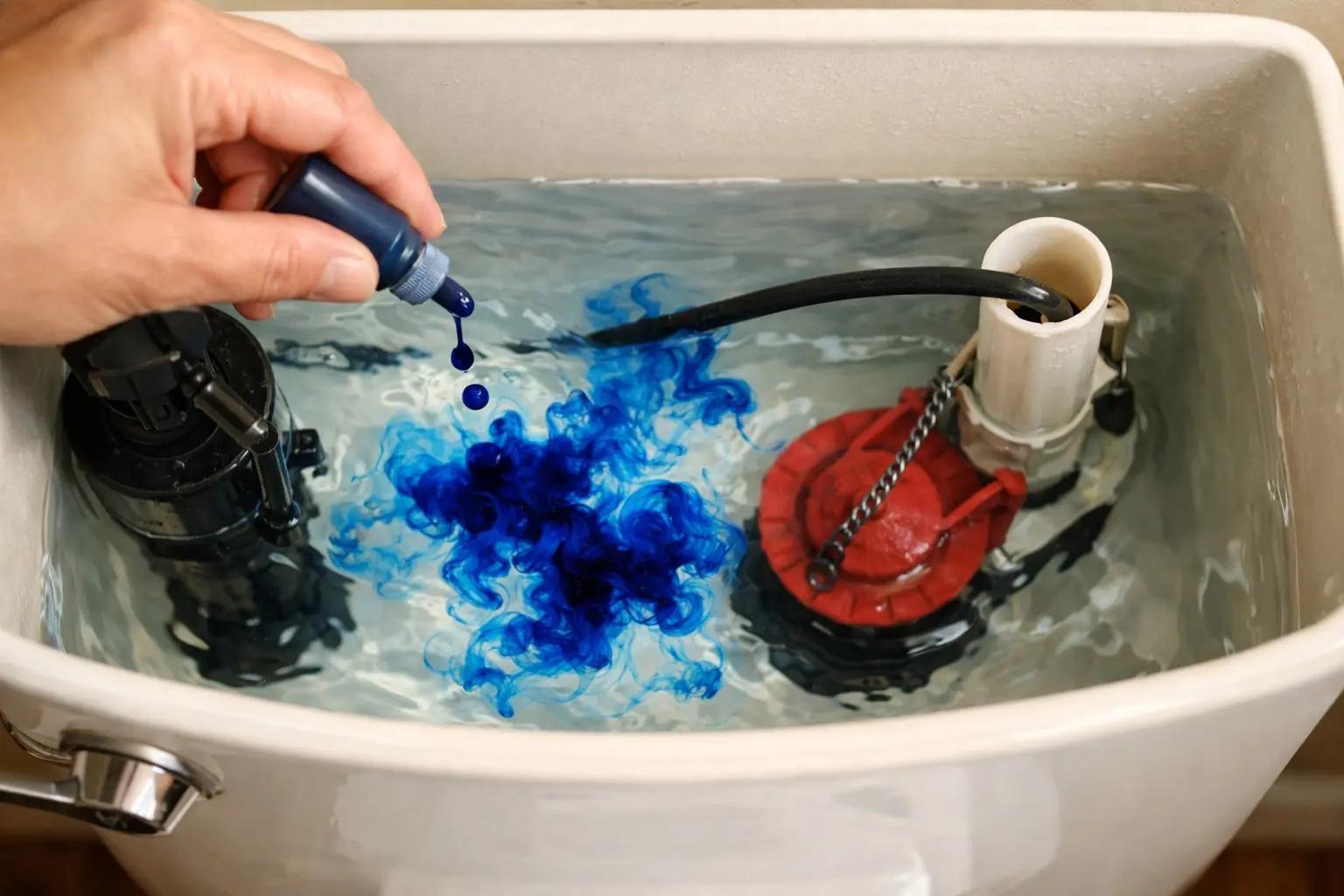
Do a dye test to confirm a flapper leak: add 5-10 drops of food coloring to the tank water (don't flush). Wait 15 minutes — if colored water appears in the bowl, the flapper is not sealing properly.
Shut Off the Water Supply
Locate the shut-off valve on the wall or floor behind the toilet — it's a small oval handle or knob on the supply line. Turn it clockwise until it stops. Flush the toilet once to empty most of the tank water. Use a sponge to soak up the remaining water in the bottom of the tank. This gives you a dry workspace and prevents spills when you remove parts.
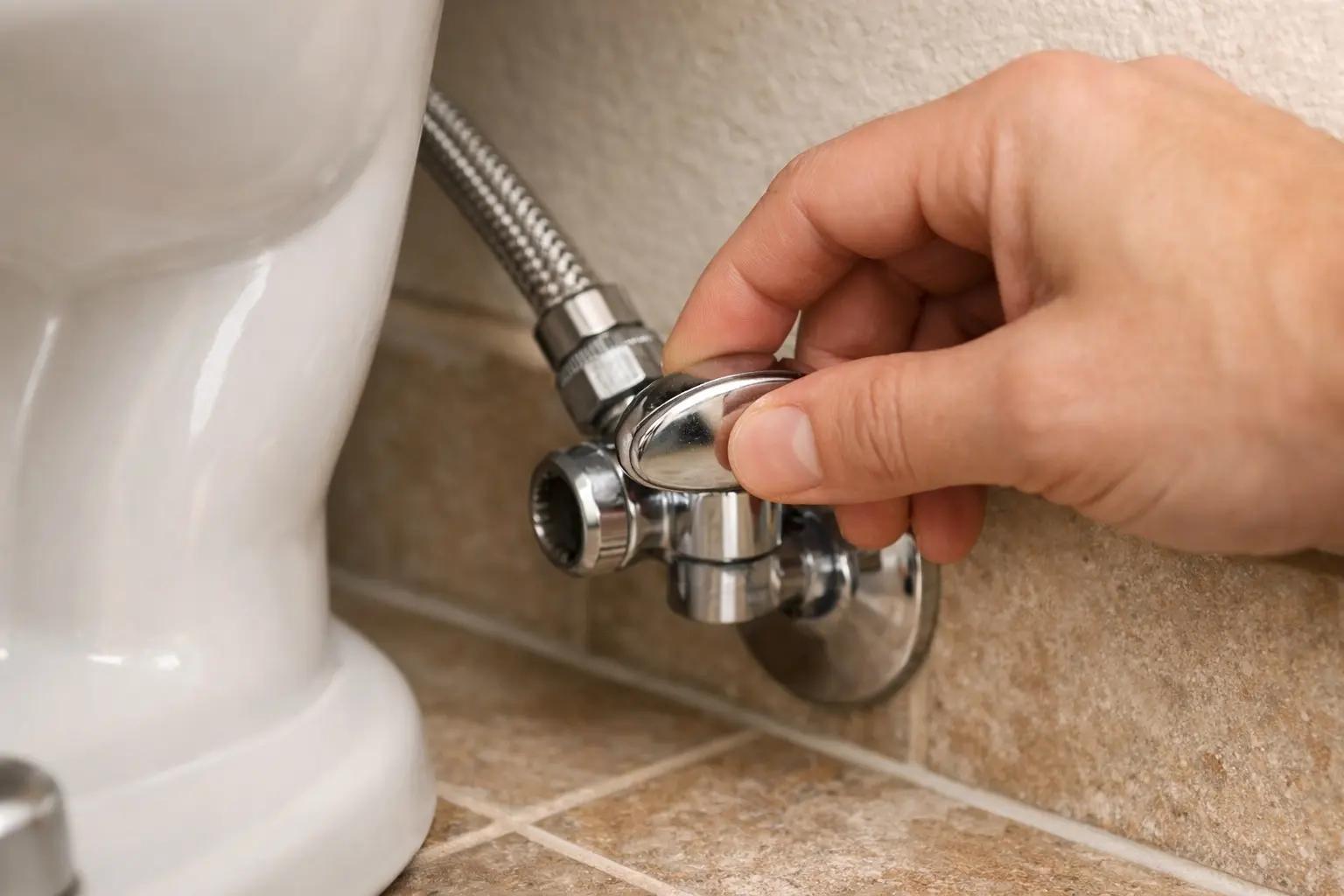
If the shut-off valve is stuck or corroded and won't turn, do not force it — you could snap the valve or the supply line. Use penetrating oil (WD-40) and wait 10 minutes, or shut off the main water supply to the house instead.
Inspect and Replace the Flapper
The flapper is the rubber disc at the bottom of the tank that seals the flush valve opening. Unhook the flapper's ears from the pegs on either side of the overflow tube and disconnect the chain from the flush lever. Examine the flapper: if it's warped, cracked, or feels slimy and deteriorated, it needs replacing. Take the old flapper to the hardware store to match the size (most toilets use a 2-inch or 3-inch flapper). Snap the new flapper onto the same pegs and reattach the chain.
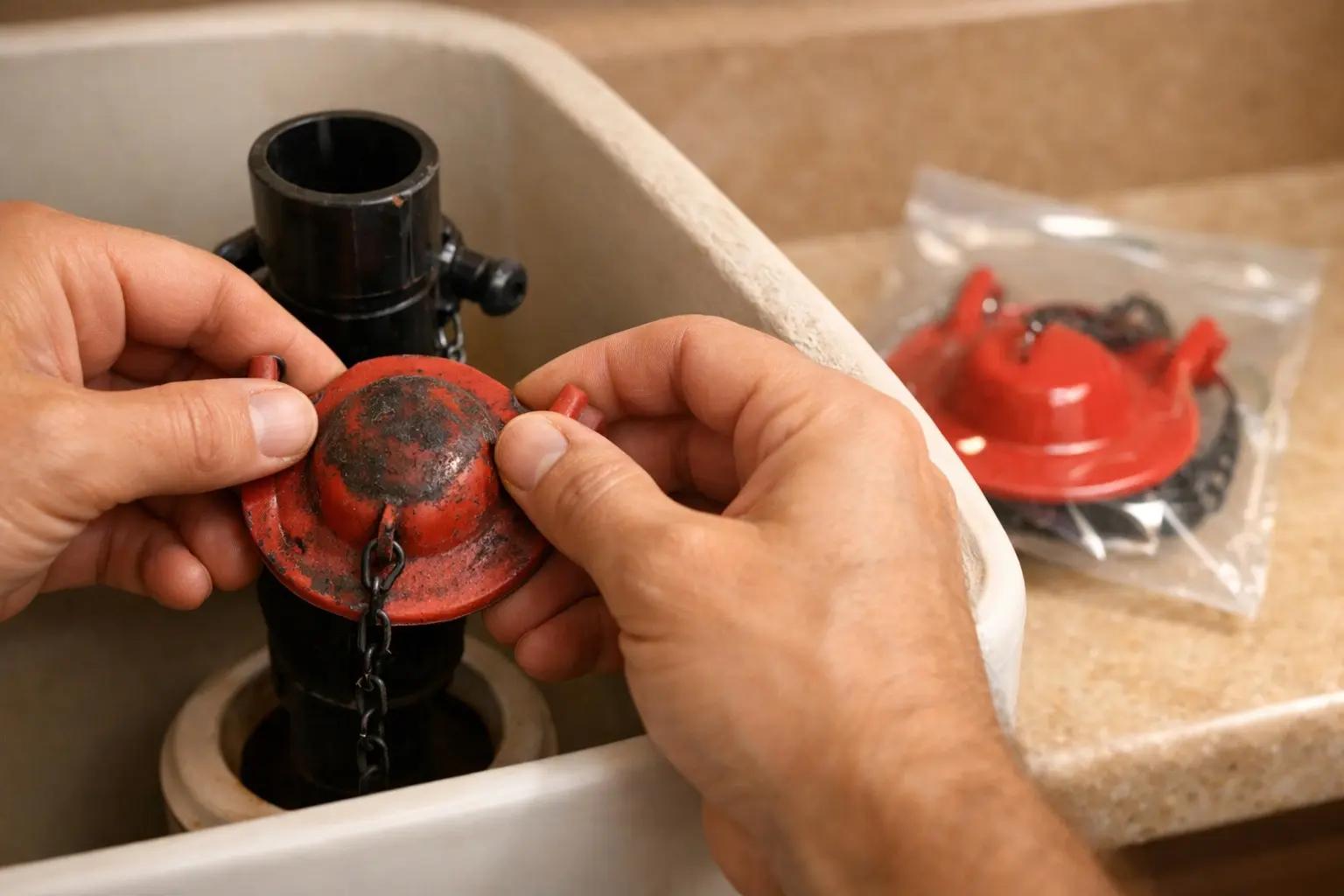
A universal flapper ($4-8) fits most toilets. Korky and Fluidmaster are the two most reliable brands. If you have a Kohler or American Standard toilet, check for model-specific flappers — some use proprietary canister-style seals instead of traditional flappers. For the full replacement walkthrough, see how to replace a toilet flapper valve.
Adjust the Chain Length
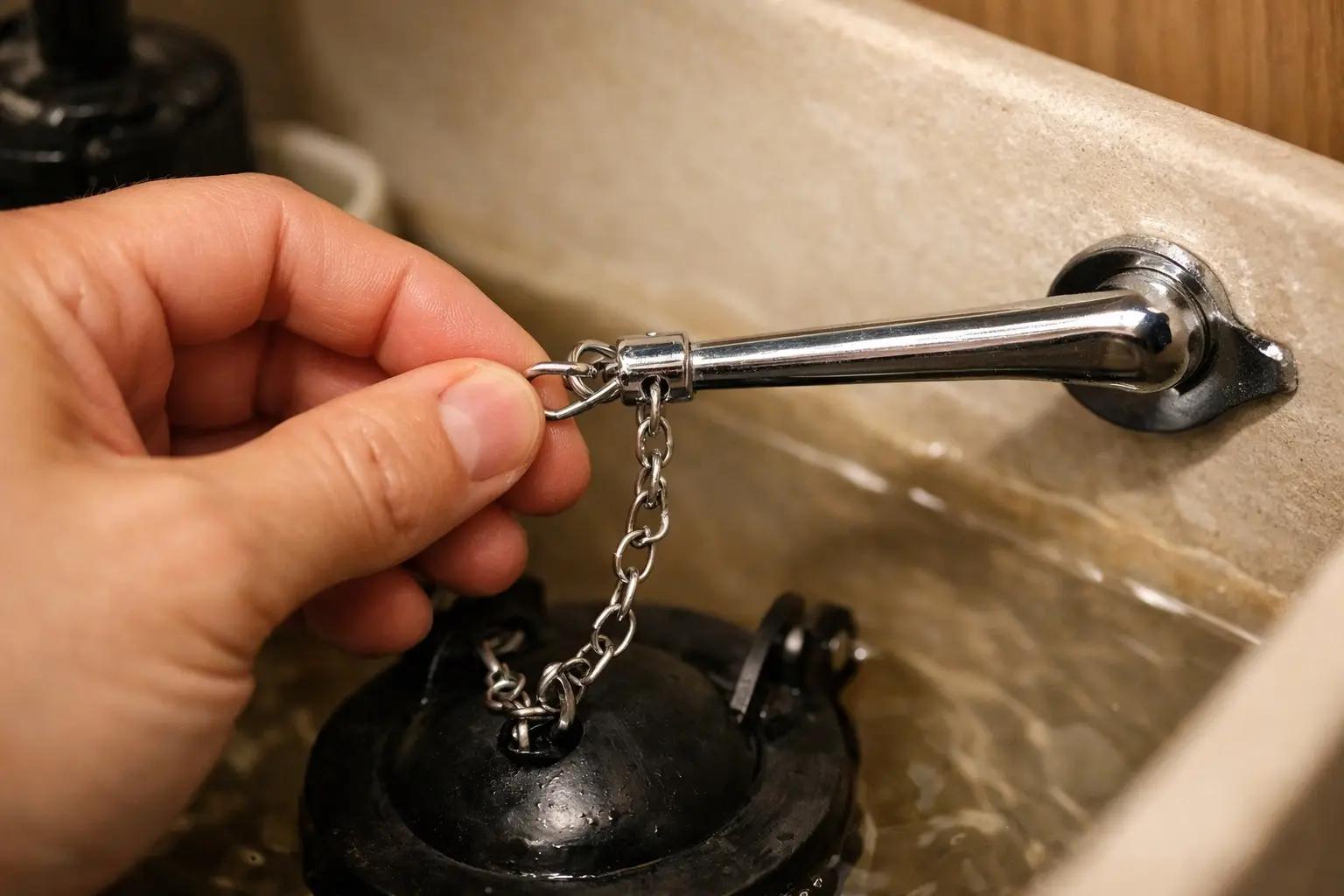
The chain connecting the flapper to the flush lever needs exactly the right amount of slack — about 1/2 inch. If the chain is too short, it holds the flapper slightly open, causing a constant leak. If it's too long, it can get caught under the flapper and prevent a full seal. Hook the chain to the flush lever hole that gives you 1/2 inch of slack when the flapper is closed. Trim excess chain with wire cutters or bend the last link to keep it from tangling.
Adjust the Water Level
The water level in the tank should sit about 1 inch below the top of the overflow tube — a line is usually marked on the inside of the tank or on the overflow tube itself. If water is flowing over the overflow tube, the float is set too high. For a ball float (round ball on a metal arm), bend the arm gently downward to lower the water level. For a cylinder float (plastic cylinder that slides on the fill valve), squeeze the spring clip and slide the float down the rod about 1/2 inch at a time. Test by turning the water back on and checking where the level settles.
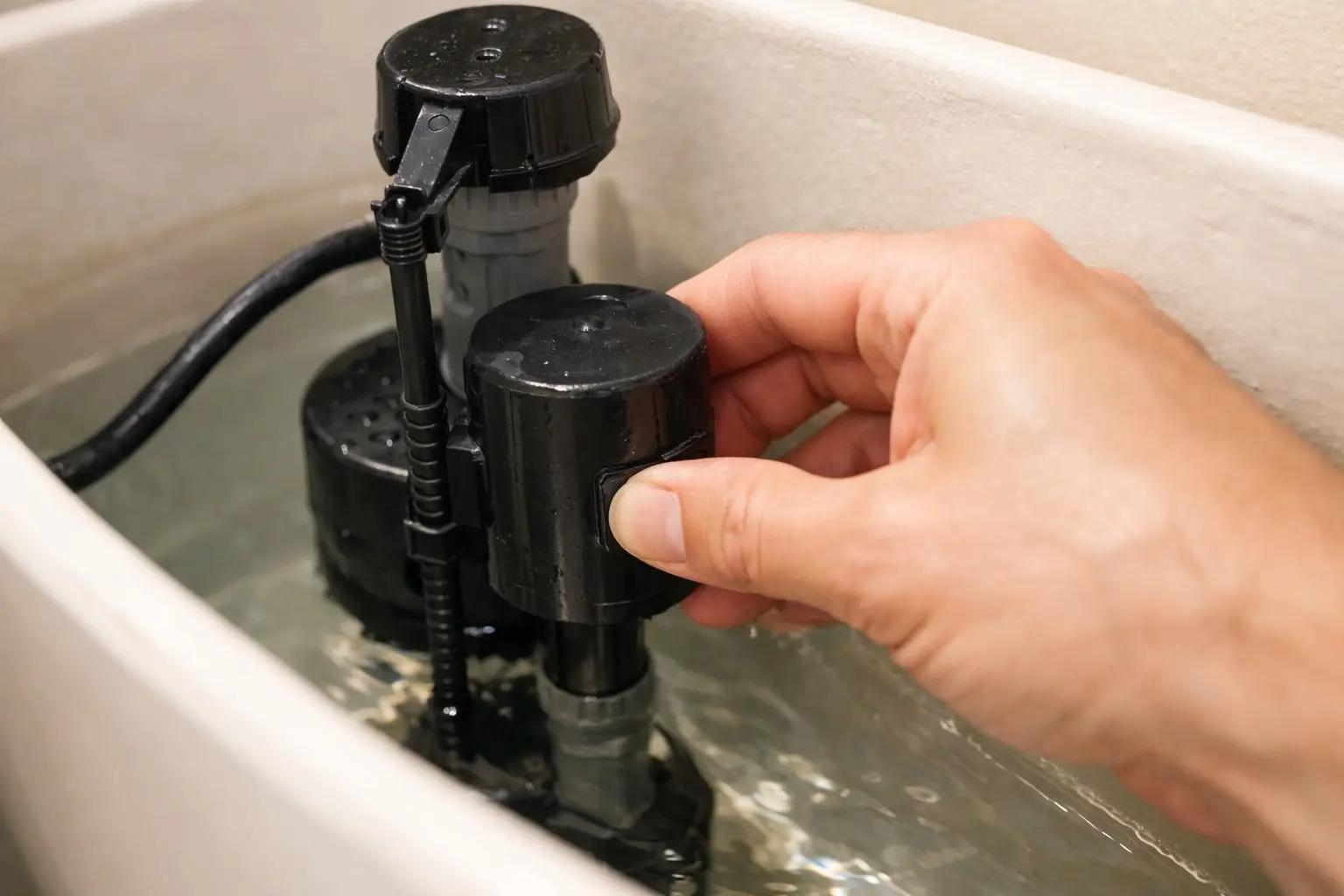
If your toilet has a fill valve with an adjustment screw on top (common on Fluidmaster 400A), turn it clockwise with a flathead screwdriver to lower the water level — each full turn lowers the level about 1/2 inch.
Replace the Fill Valve if Needed
If adjusting the float doesn't stop the running and the fill valve hisses, vibrates, or won't shut off, replace the entire fill valve. Disconnect the water supply line from the bottom of the tank using adjustable pliers. Unscrew the lock nut on the outside of the tank that holds the fill valve in place. Lift out the old valve. Insert the new fill valve (Fluidmaster 400A is the industry standard at $8-12), adjust its height so the overflow tube sits 1 inch below the critical level mark, and tighten the lock nut. Reconnect the supply line and the refill tube to the overflow tube.
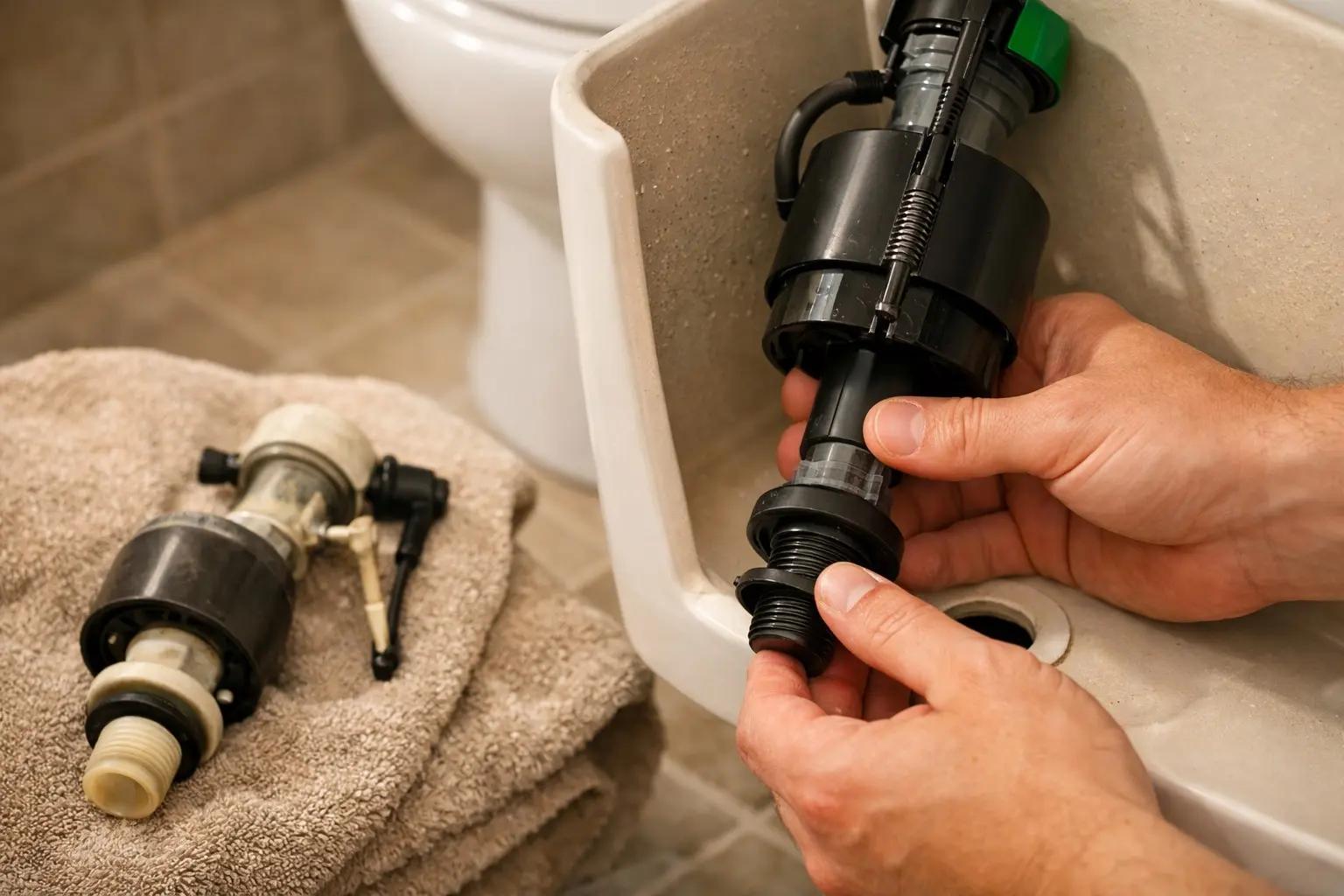
Do not overtighten the lock nut — hand-tight plus a quarter turn with pliers is enough. Overtightening can crack the porcelain tank, which means replacing the entire toilet.
Turn On Water and Test
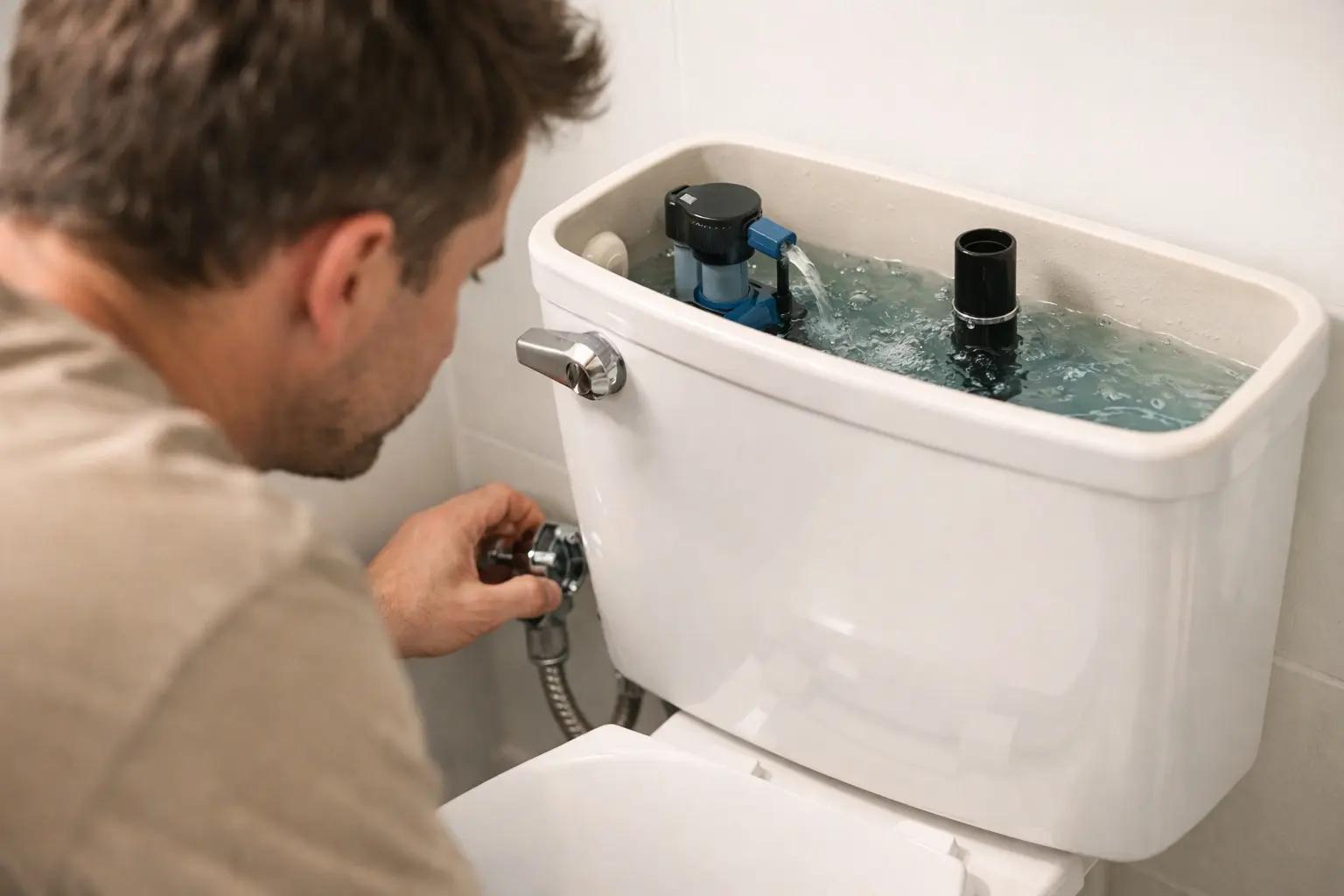
Open the shut-off valve by turning it counterclockwise. Let the tank fill completely — this takes 1-2 minutes. Watch the water level: it should stop about 1 inch below the overflow tube. Listen for any hissing or trickling sounds, which indicate a leak. Flush the toilet 3-4 times and confirm that it fills, stops, and holds water silently between flushes. Check the supply line connection and the bottom of the tank for drips.
Perform the Final Dye Test
Once the tank is full and the water has stopped running, add 5-10 drops of food coloring to the tank. Wait 15-20 minutes without flushing. Check the bowl — if the water in the bowl remains clear, your repair is complete and the flapper is sealing correctly. If colored water appears in the bowl, the flapper still isn't seating properly: check that the chain isn't caught underneath, the flapper ears are seated on the pegs, and the flush valve seat is clean and free of mineral deposits. Replace the tank lid and you're done.
If the flush valve seat (the ring the flapper sits on) is rough or has mineral buildup, scrub it gently with a Scotch-Brite pad or fine-grit emery cloth. Even a new flapper can't seal against a pitted seat.
Frequently Asked Questions
How do I tell whether the flapper or the fill valve is the problem?
+
Add 5-10 drops of food coloring to the tank and do not flush. If colored water shows up in the bowl within 15 minutes, the flapper is leaking past its seal. If the water level instead climbs until it spills into the overflow tube, the float or fill valve is set too high or failing to shut off. A fill valve that cycles on for a few seconds every several minutes — a phantom flush — also points back to the flapper.
How much water does a running toilet waste?
+
Up to 200 gallons a day at the high end, which is why a running toilet often shows up as a sudden jump on a water bill rather than as an obvious noise. The parts that fix it are inexpensive: a universal flapper runs about $4-8 and a standard fill valve about $8-12.
How much slack should the toilet flapper chain have?
+
About 1/2 inch. Too short and the chain holds the flapper slightly open, which produces a constant trickle that mimics a worn flapper. Too long and the excess can slip under the flapper as it drops, propping it open. Hook the chain into whichever hole on the flush lever gives that half-inch of slack with the flapper fully seated, and trim or bend back the leftover links so they cannot tangle.
Where should the water level in the tank sit?
+
Roughly 1 inch below the top of the overflow tube — most tanks have a molded fill line marking it. If water is trickling into the overflow tube, the float is set too high. Bend a ball-float arm gently downward, or squeeze the clip on a cylinder float and slide it down the rod about 1/2 inch at a time. Many fill valves also have an adjustment screw on top that lowers the level about 1/2 inch per full turn.
I replaced the flapper and it still runs — what now?
+
Check the flush valve seat, the ring the flapper closes against. If it is pitted, rough, or coated in mineral scale, even a new flapper cannot seal against it; scrub it gently with a plastic scouring pad or fine emery cloth. Also confirm the chain is not caught underneath and that both flapper ears are properly seated on the overflow tube pegs. If the fill valve hisses or vibrates and will not shut off, replace the valve rather than the flapper.
Sources & further reading
- Fix a Leak Week — EPA WaterSense
- Residential Toilets — EPA WaterSense
More Plumbing Guides
View all → Medium1 hr
How to Fix Low Water Pressure
Weak, trickling water usually has a cheap, findable cause — a clogged aerator, a half-closed valve, or a tired pressure-reducing valve — long before it means re-piping the house. This guide walks the diagnosis in order: first pin down whether it's one fixture or the whole house (and hot-only or both), then work each cause with a $12 pressure gauge as your guide. Most fixes are free or under $30; you'll also learn the few signs that mean it's time to call a plumber.
 Easy25 min
How to Replace a Toilet Seat
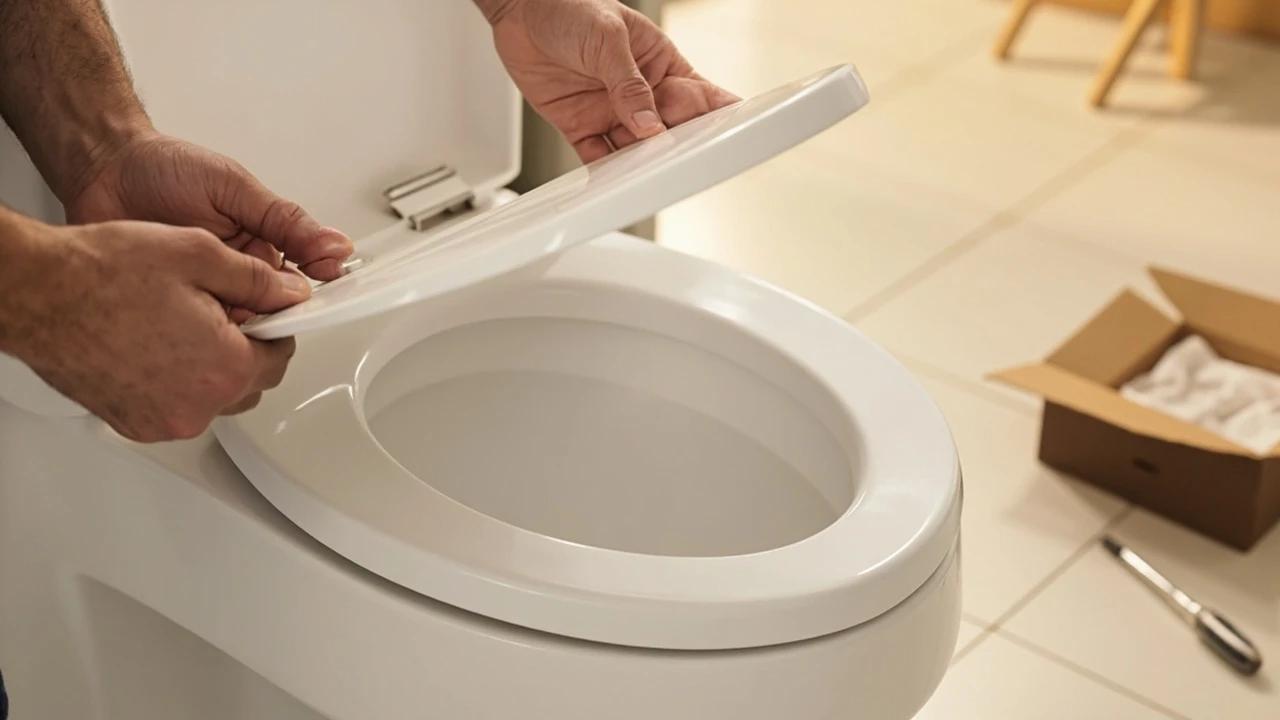
A cracked, stained, or wobbly toilet seat is one of the cheapest, fastest upgrades in the house — a new seat runs $20-50 and the swap takes about 20 minutes with nothing more than a screwdriver. This guide covers both standard and soft-close (quick-release) seats, how to measure so the new one actually fits, and the part everyone gets stuck on: freeing corroded bolts without cracking the bowl.
 Easy45 min
How to Unclog a Toilet Without a Plunger
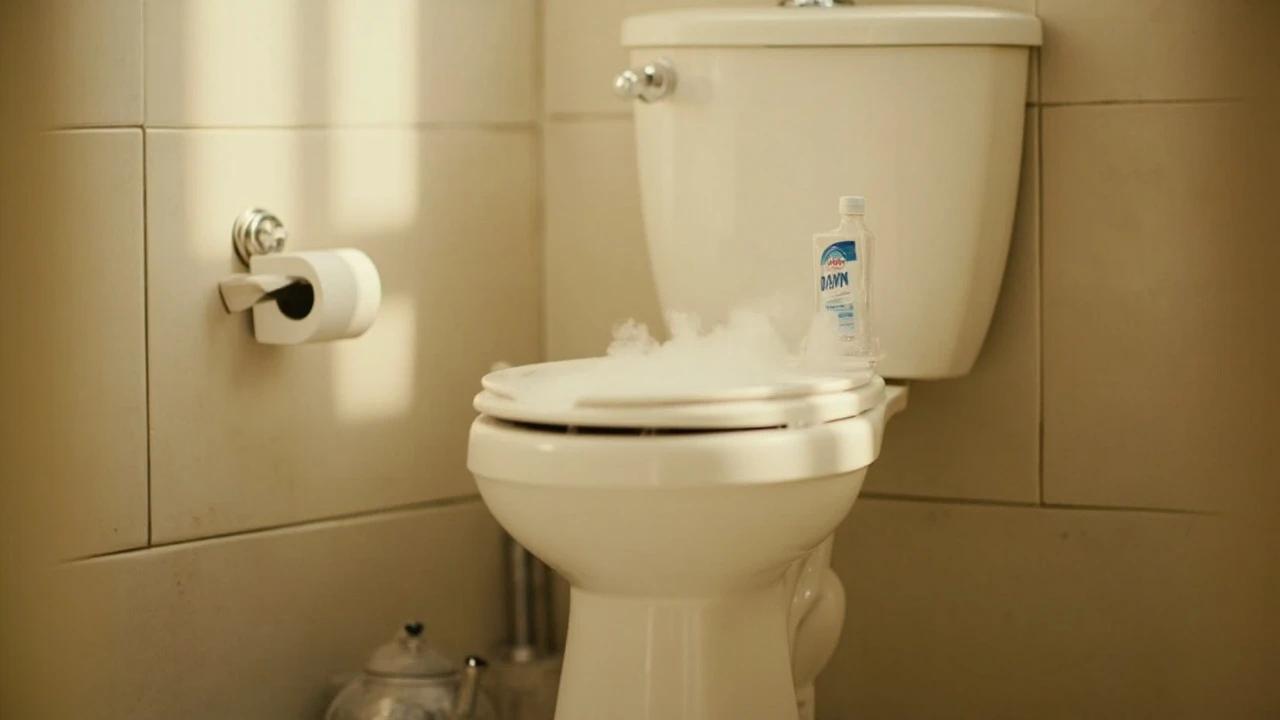
It's 11 PM, the toilet won't flush, and the plunger is at your in-laws' house. Dish soap and a gallon of hot tap water will clear most clogs in 30 minutes for about a dollar — no plumber, no panic, no overflowing bowl. This guide walks through stopping the water first, the dish-soap method, the baking-soda-and-vinegar backup, and the wire-hanger snake for stubborn clogs, plus the boiling-water mistake that cracks porcelain and turns a $1 fix into a $400 toilet replacement.
You Might Also Like
 Easy25 min
Best Deck Stain: Transparent vs Semi vs Solid
There is no "best" deck stain — there is the right stain for your sun exposure, wood condition, and how often you want to redo the job. Transparent stains last 1-2 years but let the natural grain show. Solid stains last 4-7 years but look like paint. This guide walks the four opacity levels and the oil-vs-water choice so you pick the one that matches your deck and your tolerance for re-staining.
 Easy45 min
How to Install a Smart Thermostat
A smart thermostat is one of the highest-ROI upgrades you can make to your home — it learns your schedule, adjusts automatically when you're away, and typically saves about 8% on heating and cooling bills — the figure ENERGY STAR verifies from real-home data, roughly $50 a year — so the $120-250 device usually pays for itself within a few years. If your old thermostat has labeled wires behind it, the swap takes about 30-45 minutes with nothing more than a screwdriver and your phone. This guide covers checking compatibility, labeling wires, mounting the new base, connecting everything, and walking through the app setup so your system is running smart the same day.
 Hard8 hrs
How to Paint Kitchen Cabinets
A professional cabinet refinish costs $3,000-8,000, but painting them yourself with the right prep and materials delivers the same transformation for under $200 in a long weekend. The secret is thorough degreasing, a bonding primer, and thin coats with proper dry time between each — skip any of those and the paint will chip within months. This guide walks through the full process from door removal and labeling to final reassembly, covering both brush and roller techniques for a smooth, factory-like finish.