How to Control Grubs and Lawn Pests
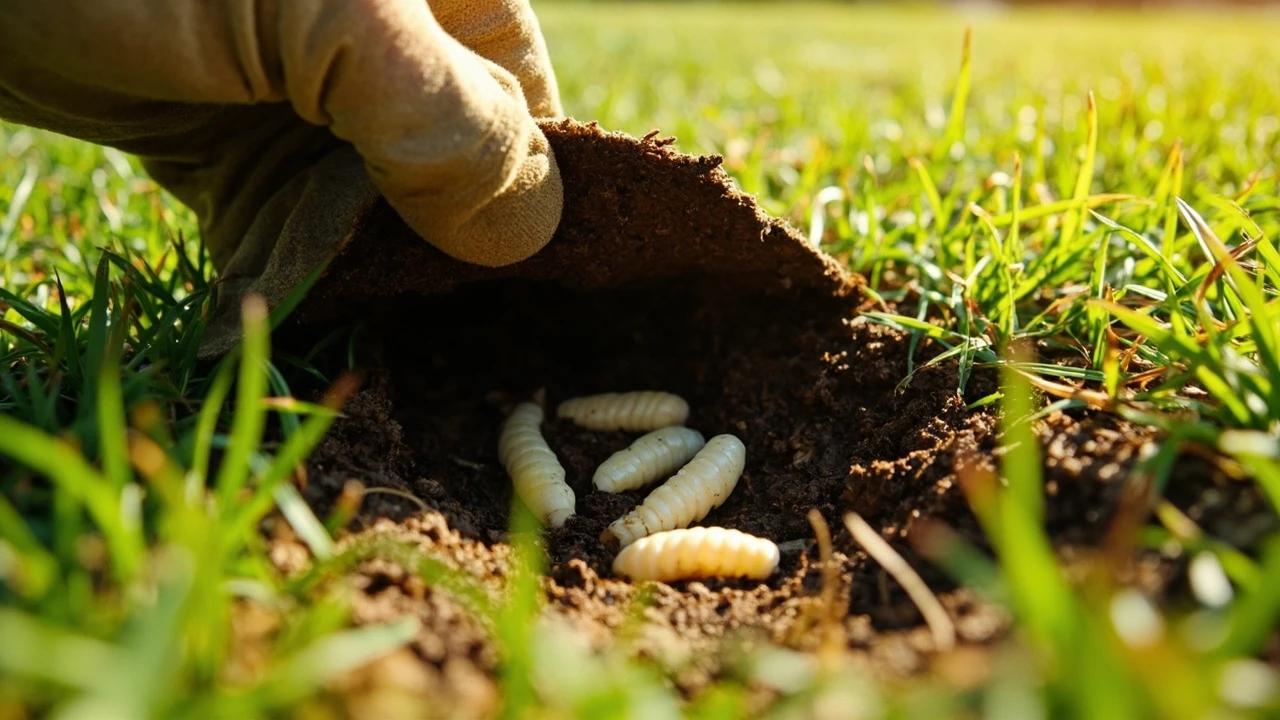

White grubs — the C-shaped larvae of Japanese beetles, June bugs, and chafers — are the number one underground lawn pest in North America, and a heavy infestation can destroy an entire lawn in a single season by severing grass roots just below the surface. The good news is that a single well-timed application of preventive grub control in late spring or early summer eliminates 75-100% of grubs before they cause damage, and the whole job takes under an hour with a broadcast spreader. This guide covers confirming you actually have a grub problem, choosing between preventive and curative treatments, applying the product correctly, and maintaining a grub-resistant lawn year after year.
What You'll Need
🛠 Tools
📦 Materials
Safety First
- •Wear chemical-resistant gloves and safety glasses when handling and spreading any granular insecticide. Keep children and pets off the treated lawn until the product has been watered in and the grass is dry.
- •Neonicotinoid-based grub controls (imidacloprid, clothianidin) are toxic to pollinators. Apply them only when the lawn is not in bloom and avoid drift onto flowering plants. Chlorantraniliprole is a safer alternative for pollinator-conscious homeowners.
Step-by-Step Instructions
Confirm You Have a Grub Problem
Before spending money on treatment, verify that grubs are actually the issue. Choose a brown or spongy area of your lawn and use a flat-blade spade to cut three sides of a 1-foot square, about 3 inches deep. Peel back the sod flap like a carpet and count the white, C-shaped grubs in the exposed soil. Six or fewer grubs per square foot is normal and doesn't require treatment — a healthy lawn can tolerate that level. Ten or more per square foot means you have an infestation that needs action. Check 3-4 spots across the lawn to get an accurate picture, then press the sod flap back down and water it.
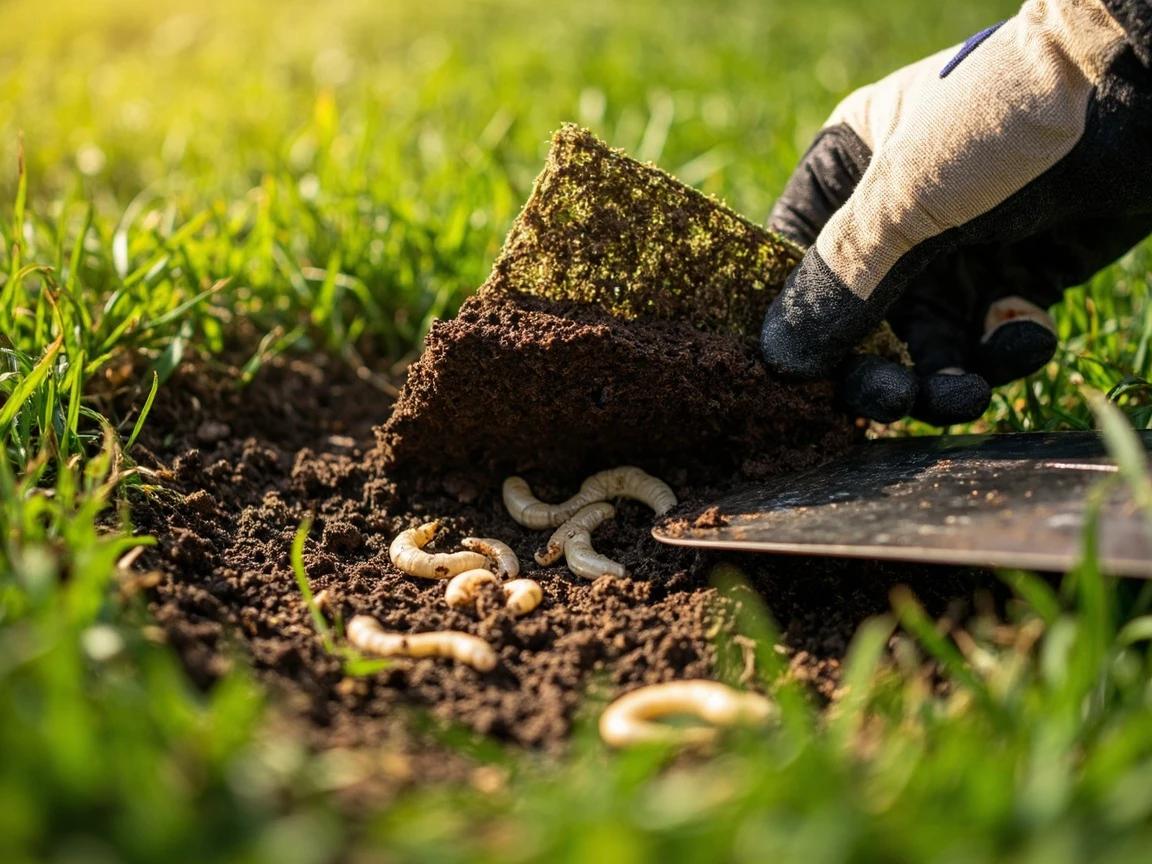
Another sign of grubs: if raccoons, skunks, or birds are digging up patches of your lawn at night, they're probably feeding on grubs just below the surface.
Choose Between Preventive and Curative Treatment
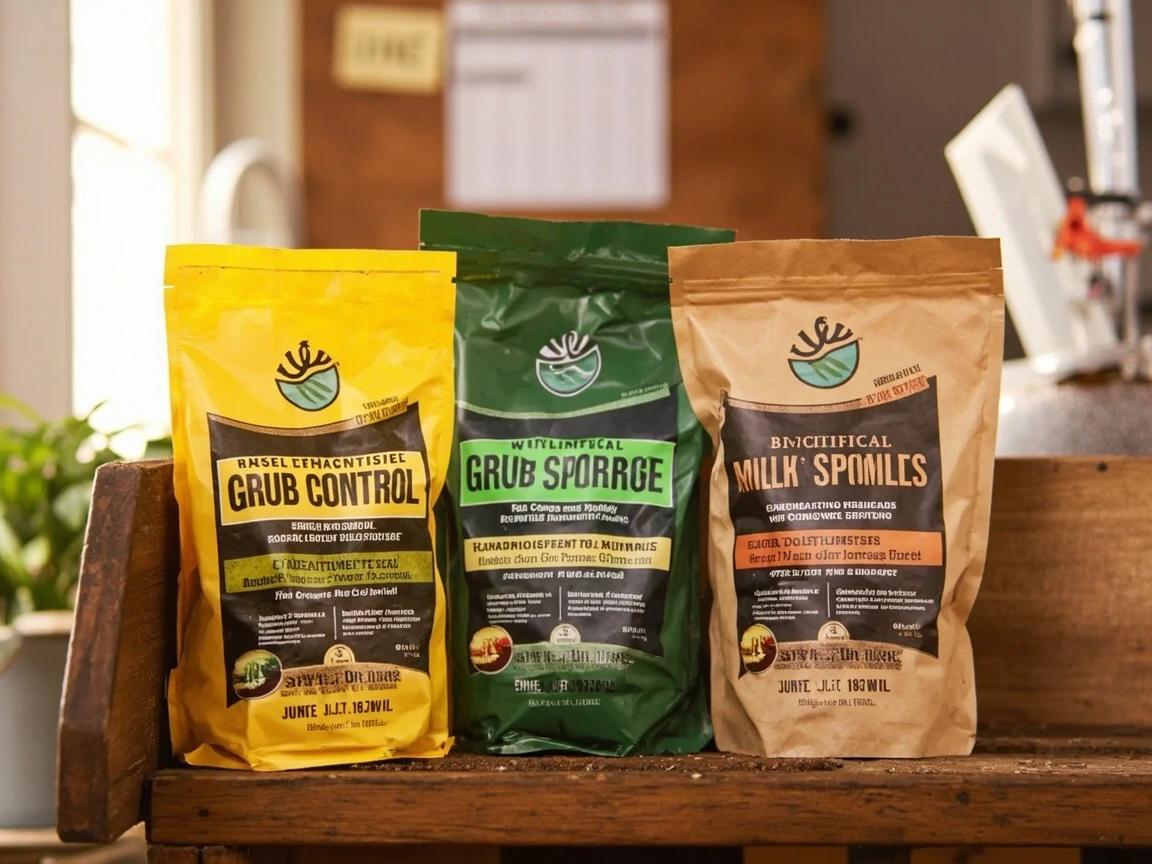
Timing determines which product you need. If it's late spring or early summer (April through mid-July depending on your region) and you want to prevent grubs before they hatch, use a preventive product containing chlorantraniliprole (Scotts GrubEx) — this is the most effective approach, killing 75-100% of grubs. If it's late summer or fall and you're seeing active damage from grubs already in the soil, use a curative product containing trichlorfon (BioAdvanced 24 Hour Grub Killer Plus) or carbaryl — these work on contact against existing grubs. For an organic approach, apply beneficial nematodes (Heterorhabditis bacteriophora) in late August or September when grubs are small and near the surface.
Calibrate and Load the Spreader
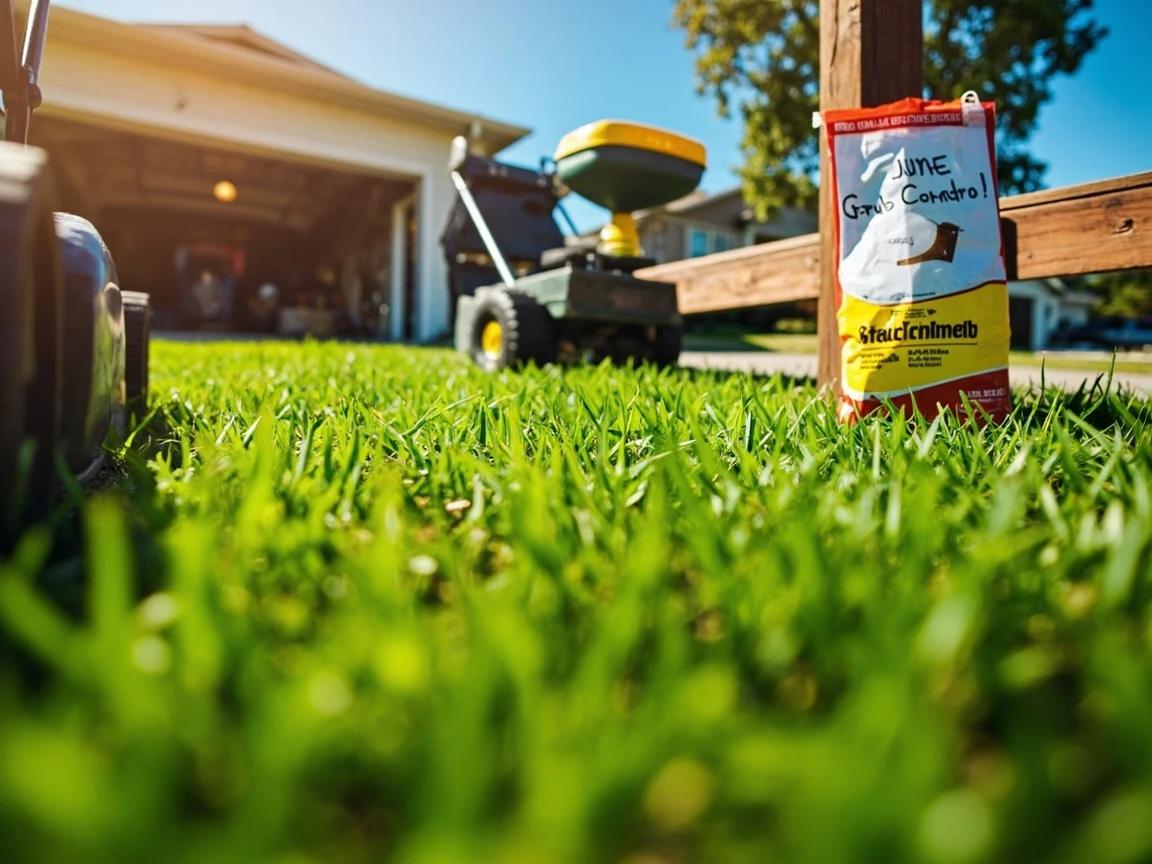
Check the product label for the recommended spreader setting and application rate — GrubEx, for example, calls for 2.87 pounds per 1,000 square feet. Set your broadcast spreader to the dial number listed on the bag for your spreader brand (Scotts, Earthway, etc.). Pour the granules into the spreader hopper on a hard surface like a driveway — never on the lawn, where a spill could burn the grass. Close the hopper gate before moving to the lawn.
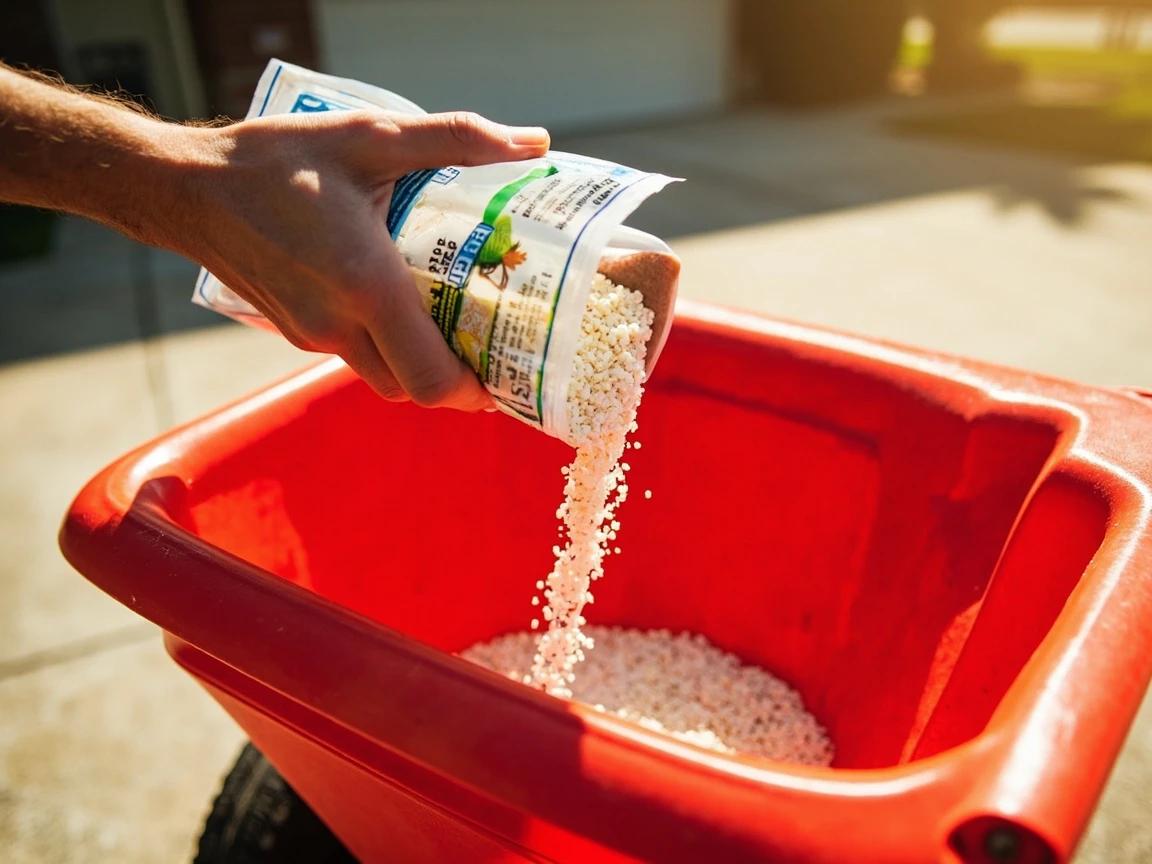
Always load the spreader on a hard surface — a spill on the lawn will create a concentrated burn spot that can kill the grass.
Apply the Product in Overlapping Passes
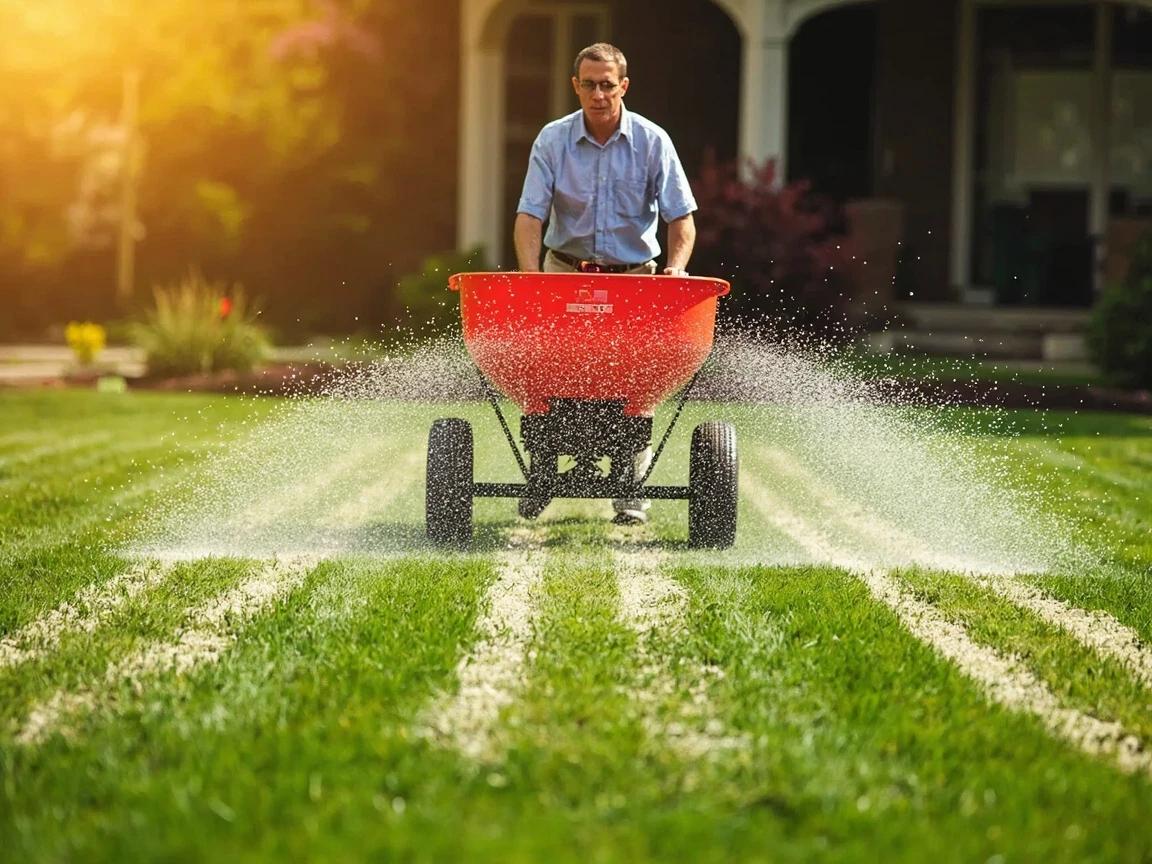
Walk at a steady pace across the lawn, making parallel passes with the broadcast spreader. Overlap each pass by about 6 inches to avoid leaving untreated gaps — missed strips are where grubs will survive and continue feeding. Walk the perimeter of the lawn first, then fill in the interior with back-and-forth passes. Cover the entire lawn uniformly, not just the damaged areas — grubs can be present throughout the soil even where the grass still looks green. An average 5,000-square-foot lawn takes about 15 minutes to cover.
Water the Lawn Immediately After Application
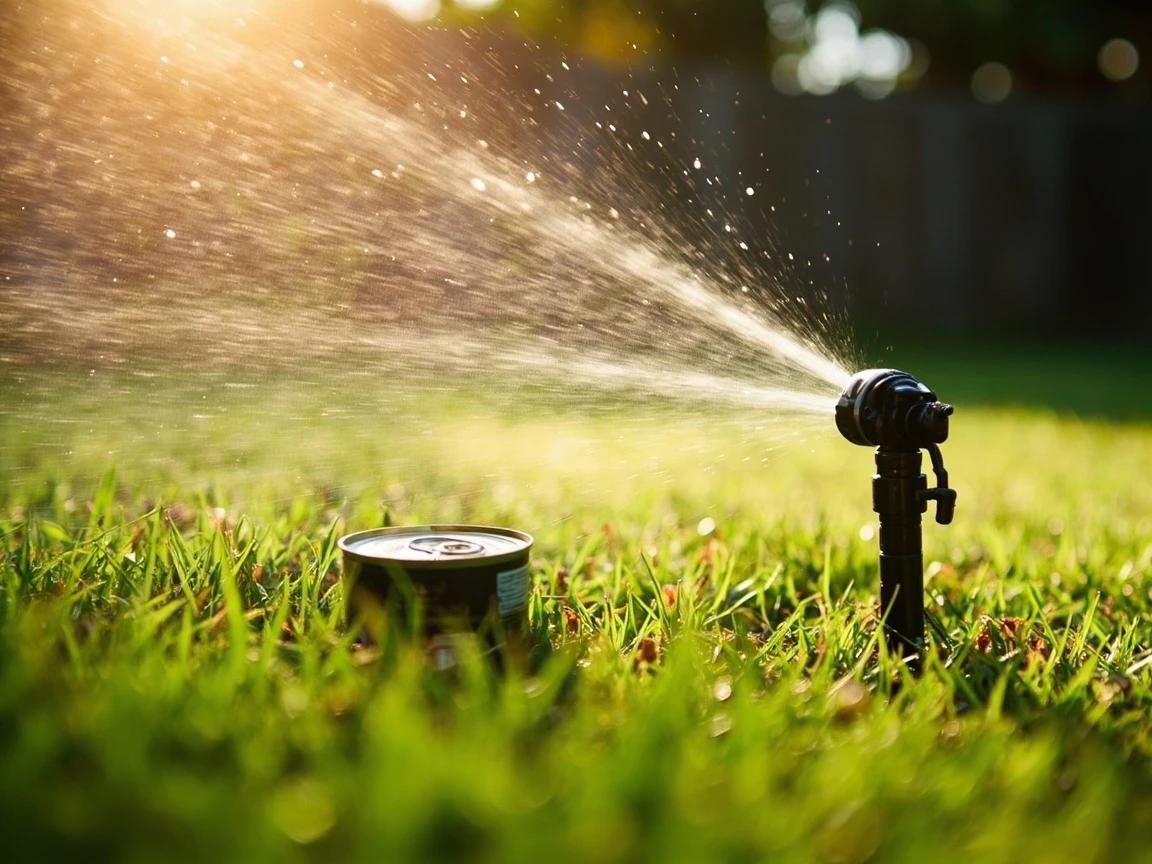
Within 24 hours of application — ideally immediately after — water the entire treated lawn with at least half an inch of water. This is the single most critical step: the water dissolves the granules and drives the active ingredient down through the thatch layer into the soil where grubs live. Without watering, the product sits on the grass blades, breaks down in sunlight, and never reaches the grubs. Use a sprinkler and set out a tuna can or rain gauge to measure when you've hit half an inch — most sprinklers take 20-30 minutes to deliver that amount.
If rain is forecast within 24 hours of your planned application, skip the sprinkler — let nature do the watering for free.
Apply Beneficial Nematodes for Organic Control
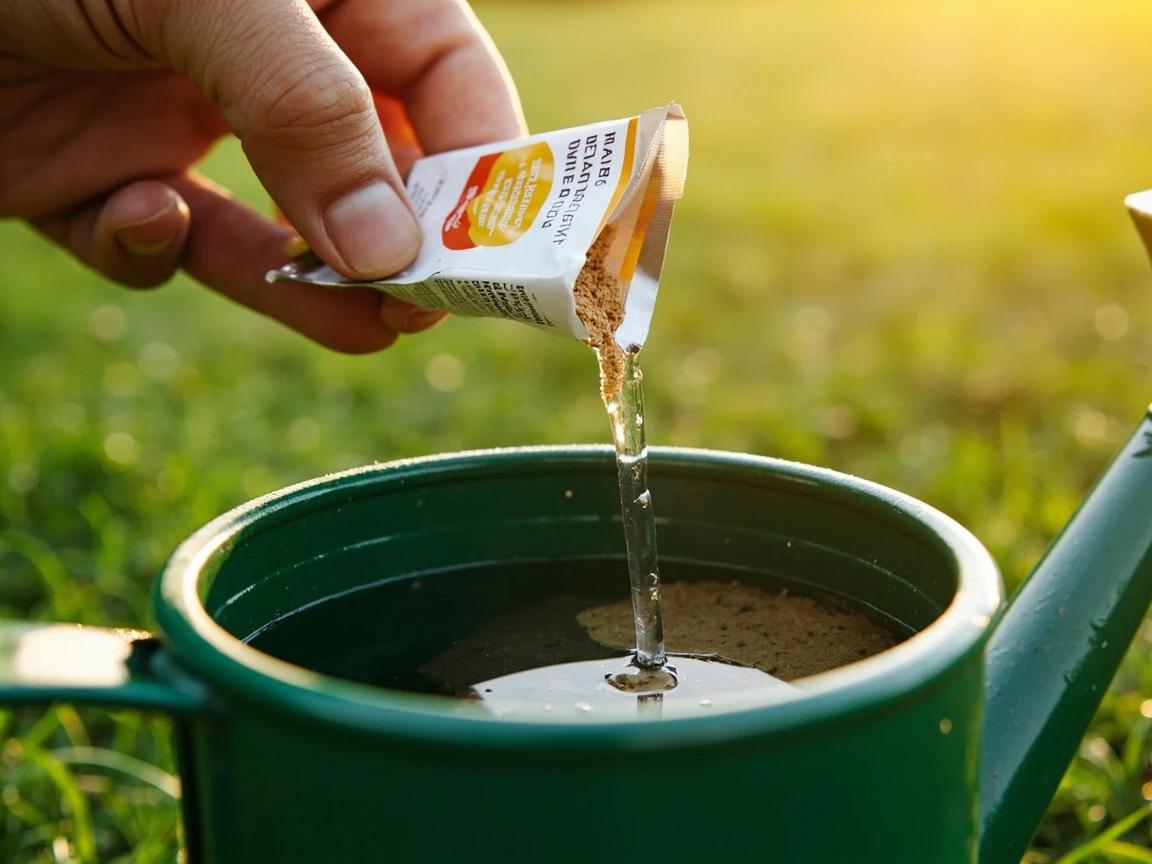
If you prefer an organic approach, apply beneficial nematodes (Heterorhabditis bacteriophora) in late August or early September when soil temperature is 60-85°F and young grubs are feeding near the surface. Nematodes are living organisms that come refrigerated — mix the contents of the pack with water in a watering can or hose-end sprayer according to the package directions (typically one pack per 2,000-3,000 square feet). Apply in the early morning or evening when the sun is low, since UV light kills nematodes. Water the lawn thoroughly before and after application to ensure the nematodes can move through moist soil to reach the grubs.
Repair the Damaged Areas
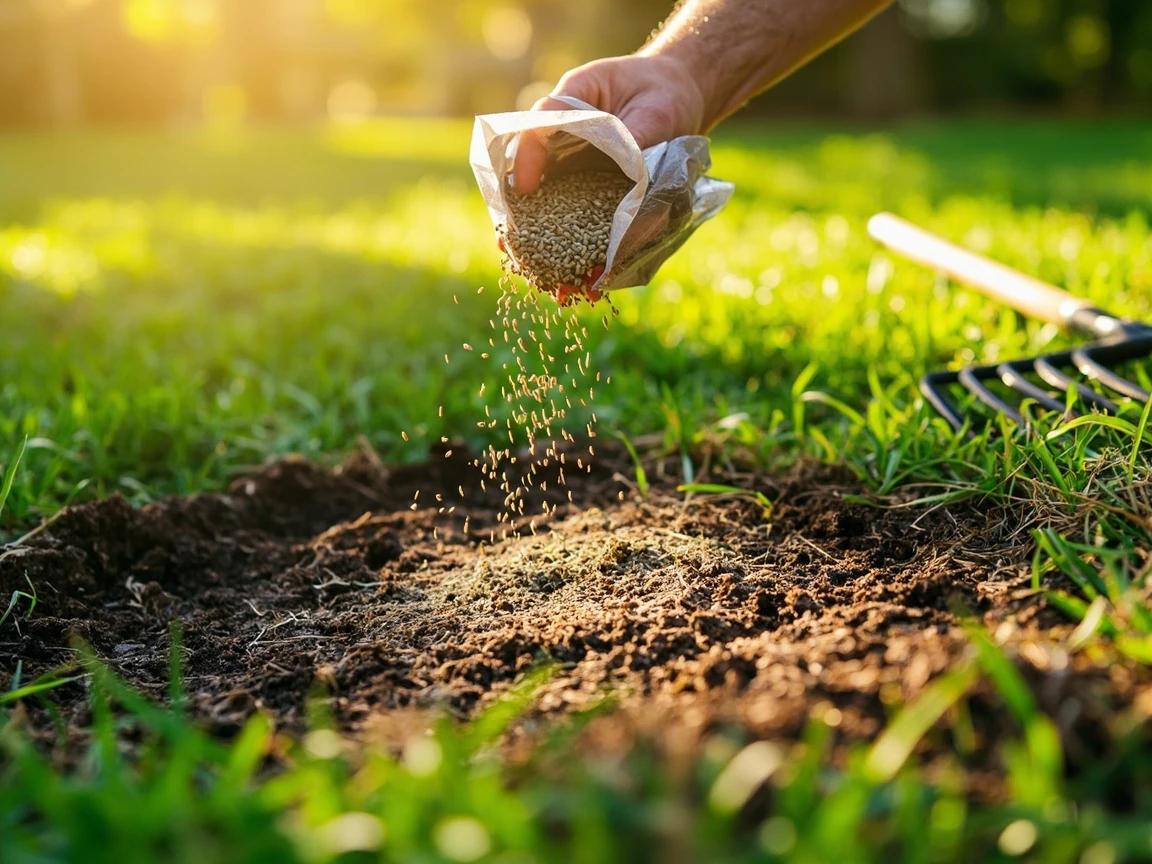
After treatment, the dead grubs stop feeding within days, but the brown patches won't repair themselves — you need to reseed or resod. For small areas, rake out the dead grass and thatch, scratch the soil surface with a garden rake, spread grass seed at the rate listed on the bag (typically 4-6 pounds per 1,000 square feet for overseeding), and cover lightly with a thin layer of compost or peat moss. Water the seeded areas twice daily until germination (7-14 days for most grass types). For large dead areas over 4 square feet, consider laying sod patches for instant results.
Maintain a Grub-Resistant Lawn Year-Round
Prevention is easier than cure. Mow at 3.5-4 inches — taller grass develops deeper roots that tolerate grub feeding and shades the soil so female beetles avoid laying eggs in it. Water deeply but infrequently (1 inch per week in one or two sessions) to build strong roots rather than shallow, frequent watering that keeps the topsoil moist and attractive to egg-laying beetles. Mark your calendar each spring for a preventive GrubEx application in late May or June — one annual treatment keeps grubs below the damage threshold all season. After 2-3 years of consistent treatment, grub pressure typically drops significantly.
Japanese beetle traps are tempting but actually attract more beetles to your yard than they catch — skip them and focus on treating the grubs in the soil instead.
Frequently Asked Questions
How many grubs per square foot is too many?
+
Six or fewer per square foot is normal and a healthy lawn tolerates it without visible damage — no treatment needed. Ten or more per square foot is an infestation worth treating. Cut three sides of a 1-foot square about 3 inches deep, peel the sod back like a carpet, and count the white C-shaped larvae. Check three or four spots across the lawn, since grubs cluster and a single sample can mislead you badly in either direction.
When should I apply grub control — spring or fall?
+
It depends which product you need. Preventive treatments containing chlorantraniliprole go down late spring through mid-July, before the eggs hatch, and are by far the most effective option at 75-100% control. Curative products with trichlorfon or carbaryl are for late summer and fall when grubs are already feeding and doing visible damage. Applying a preventive in October or a curative in May largely wastes the money.
Do I have to water in grub control?
+
Yes, and it is the step people skip. Water the treated lawn with at least half an inch within 24 hours — ideally right away. The water dissolves the granules and carries the active ingredient down through the thatch into the soil layer where grubs actually feed. Left dry on the grass blades, the product degrades in sunlight and never reaches them. Set out a tuna can to measure; most sprinklers need 20-30 minutes.
Is there an organic way to control grubs?
+
Beneficial nematodes — specifically Heterorhabditis bacteriophora — applied in late August or September, when grubs are small and feeding near the surface. They are living organisms, so they need moist soil and cool conditions to work, and timing matters more than with a chemical product. Results are less consistent than a preventive application but they carry no pesticide load.
How do I know it is grubs and not something else?
+
You confirm by digging, not by looking at the brown patch. Chinch bugs, sod webworm, billbugs, and fungal diseases like brown patch all produce similar-looking dead areas, and the treatments are completely different — grub control poured on a fungal problem does nothing and can make conditions worse. The grub-specific tell is turf that lifts away like loose carpet because the roots have been severed underneath.
Sources & further reading
- White Grub Control in Turfgrass — Iowa State University Extension
- How to choose and when to apply grub control products for your lawn — Michigan State University Extension
More Gardening Guides
View all → Medium2 hrs
How to Transplant a Shrub Without Killing It
Moving an established shrub to a new spot saves you the $30-150 cost of buying a replacement — but only if the plant survives the move. The secret is timing (early spring or fall), keeping the root ball intact, and consistent watering for the first month. This guide covers the full process for shrubs up to 4 feet tall, from prep through aftercare.
 Medium3 hrs
How to Aerate and Overseed a Lawn
Compacted soil starves grass roots of air and water, turning a thick lawn thin and patchy over a single season — and professional aeration-plus-overseeding runs $200-400 for an average yard. Renting a core aerator for about $75 and doing it yourself takes a half-day of walking behind a machine, followed by spreading seed into the fresh holes where it gets perfect soil contact. This guide covers timing for cool- and warm-season grasses, proper aerator technique, seed selection, and the critical watering schedule that makes or breaks germination.
 Medium3 hrs
How to Level a Bumpy Lawn
A bumpy lawn is not just ugly — it scalps high spots when you mow, pools water in low spots that breed mosquitoes, and turns every backyard game into an ankle-rolling hazard. The fix is topdressing: spreading a thin sand-soil-compost mix over the surface and letting the grass grow through it. It costs $50-100 in materials for an average yard, takes a weekend afternoon, and produces a noticeably smoother lawn within 3-4 weeks.
You Might Also Like
 Medium45 min
How to Install a Ceiling Fan
Replacing a light fixture with a ceiling fan improves air circulation in summer and can reduce heating costs in winter by circulating warm ceiling air downward. Most installs take 45-60 minutes.
 Easy15 min
How to Replace a Refrigerator Water Filter
A clogged refrigerator water filter is the most common cause of slow dispensing, off-tasting water, and undersized ice cubes — and it is the easiest fix in your kitchen. Most filters are designed to be swapped in under five minutes with no tools, no shut-off valve, and no spilled water. This guide covers locating your filter, the two common removal styles (twist-in and push-in), inspecting the O-rings, flushing the new filter, and resetting the indicator light so you do not see the red "Replace" warning the next morning.
 Easy25 min
Best Deck Stain: Transparent vs Semi vs Solid
There is no "best" deck stain — there is the right stain for your sun exposure, wood condition, and how often you want to redo the job. Transparent stains last 1-2 years but let the natural grain show. Solid stains last 4-7 years but look like paint. This guide walks the four opacity levels and the oil-vs-water choice so you pick the one that matches your deck and your tolerance for re-staining.