How to Build a Raised Garden Bed for Under $100
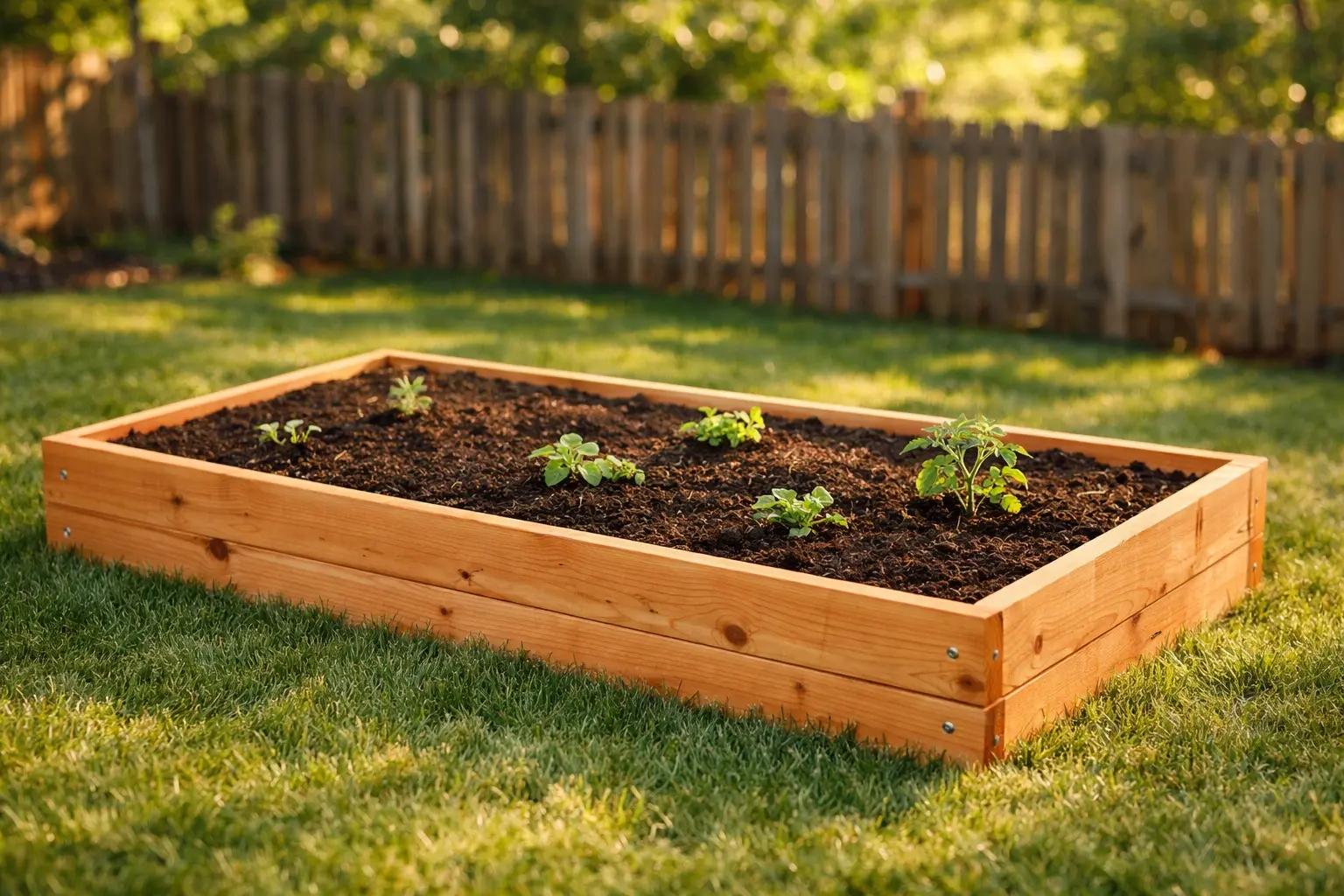

A raised garden bed gives you complete control over soil quality, drainage, and pest management — and it can double your yield compared to in-ground planting. This guide walks you through building a sturdy 4x8-foot cedar bed for under $100 in materials and about two hours of work, no advanced carpentry skills needed.
What You'll Need
🛠 Tools
📦 Materials
Safety First
- •Wear safety glasses when cutting lumber and driving screws — wood splinters and screw heads can deflect unexpectedly.
- •If you want zero chemical risk, skip pressure-treated lumber for vegetable beds and use a naturally rot-resistant wood like cedar or redwood — note that Douglas fir is not naturally rot-resistant and will decay within a few years in ground contact. Modern pressure-treated lumber (copper azole or ACQ, rated for ground contact) is considered low-risk for food beds by current university extension research, but some gardeners still line the inside walls with plastic as a precaution.
Step-by-Step Instructions
Choose the Location
Pick a spot that gets at least 6-8 hours of direct sunlight per day — most vegetables and herbs need full sun to thrive. Avoid low-lying areas where water pools after rain, and stay at least 2 feet away from fences or walls so air circulates around your plants. Make sure you can reach the center of the bed from both sides — a 4-foot width is ideal because you can reach 2 feet in from each side without stepping on the soil. Place the long side facing south if possible, so all plants get even sun exposure.

Place the bed near a water source — dragging a hose across the yard every day gets old fast. If you're running a soaker hose or drip irrigation, being close to a spigot makes setup much simpler.
Cut the Lumber
For a 4x8-foot bed that's 12 inches deep (two boards high), you need: four 8-foot lengths and four 4-foot lengths of 2x6 cedar. If you bought 8-foot boards, cut two of them in half to get the four 4-foot pieces. Cut four 12-inch lengths of 4x4 cedar post for the interior corner supports. Use a speed square to mark straight cut lines and a circular saw or miter saw to make the cuts. Most home improvement stores will also make cuts for free if you prefer.

Have the lumber yard or big-box store make your cuts — it's usually free for the first few cuts and guarantees perfectly square ends. This saves time and eliminates the need for a saw.
Assemble the First Layer
Stand a 4x4 corner post inside one corner, flush with the top edge of a long board. Pre-drill two pilot holes through the 2x6 into the post to prevent splitting, then drive two 3-inch deck screws through the board into the post. Attach a short (4-foot) board to the same corner post the same way — pre-drill, then screw. Continue around the rectangle, attaching boards to corner posts until you have a complete 4x8 frame. Check that the frame is square by measuring diagonals — they should be equal (within 1/4 inch).
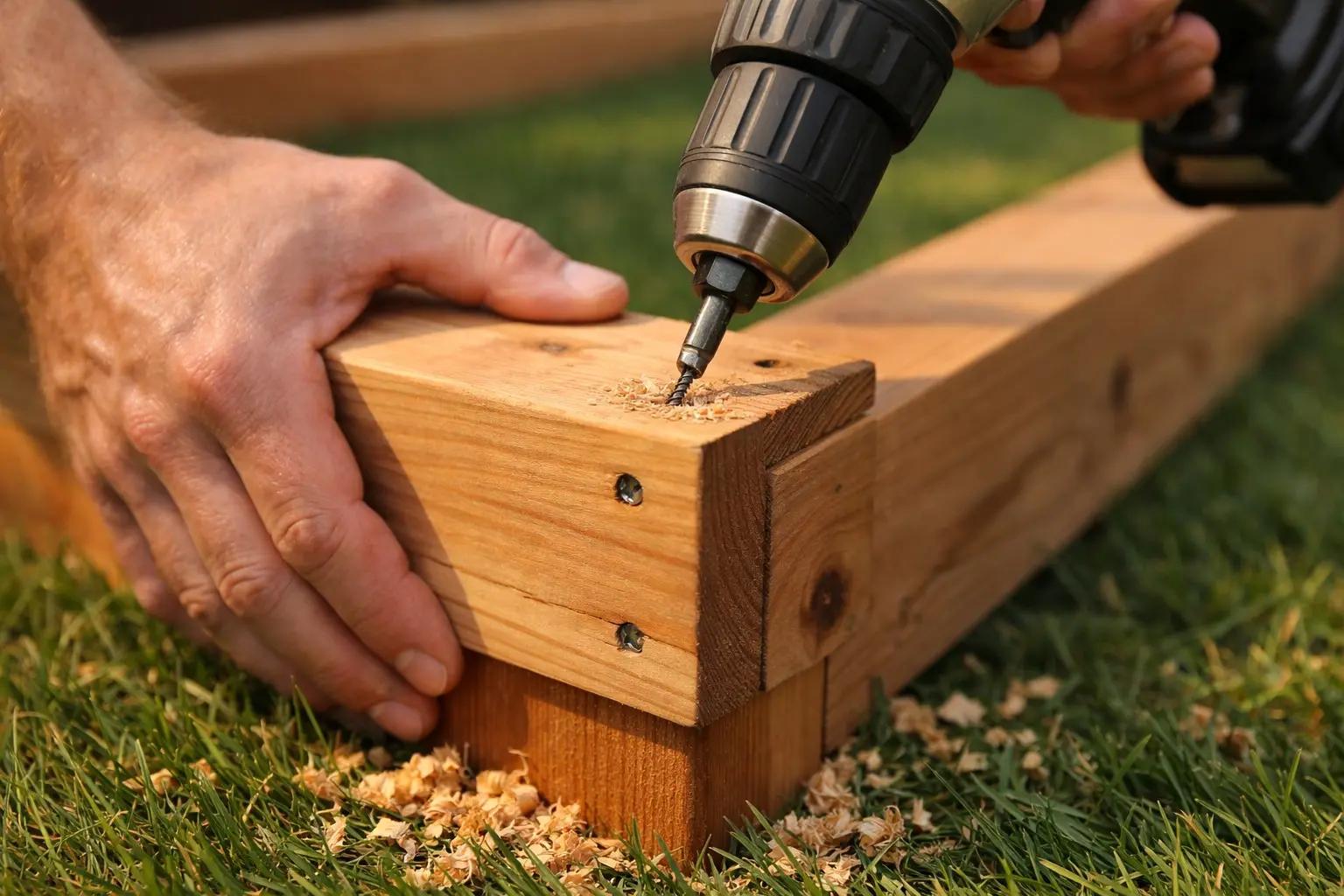
To square the frame, measure both diagonals corner-to-corner. If they're not equal, push the longer diagonal's corners inward until the measurements match. Getting it square now prevents headaches later.
Add the Second Layer
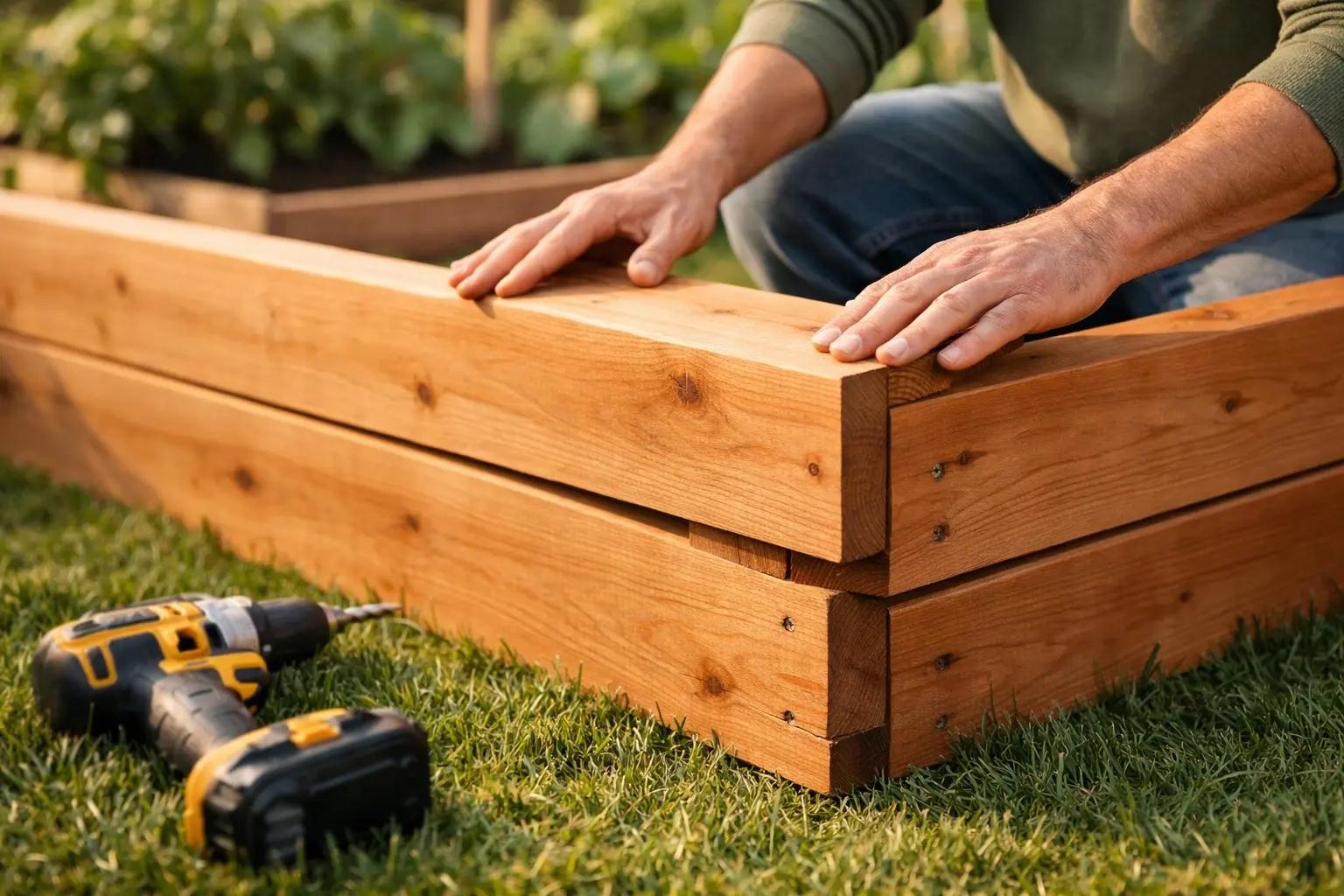
Stack the second set of 2x6 boards on top of the first layer to bring the bed to 12 inches deep. Offset the seams — if the first layer has the long boards overlapping the short boards at the corners, reverse it on the second layer so the short boards overlap the long ones. This interlocking pattern adds rigidity, similar to how bricks are laid. Pre-drill and screw each board into the corner posts below with two 3-inch screws per joint. For extra strength on the long sides, add a mid-span support by screwing a short piece of 2x4 vertically inside the center of each 8-foot side.
Prepare the Ground
Place the assembled frame in its final position and use a level across the top edges to check that it sits evenly. If the ground slopes, dig down on the high side until the frame is level — this prevents soil and water from shifting to one end. You don't need to remove the grass underneath. Lay cardboard or landscape fabric inside the bed footprint directly over the grass — it will smother the existing vegetation and decompose over a few months. Overlap cardboard pieces by 4-6 inches so weeds can't find gaps.
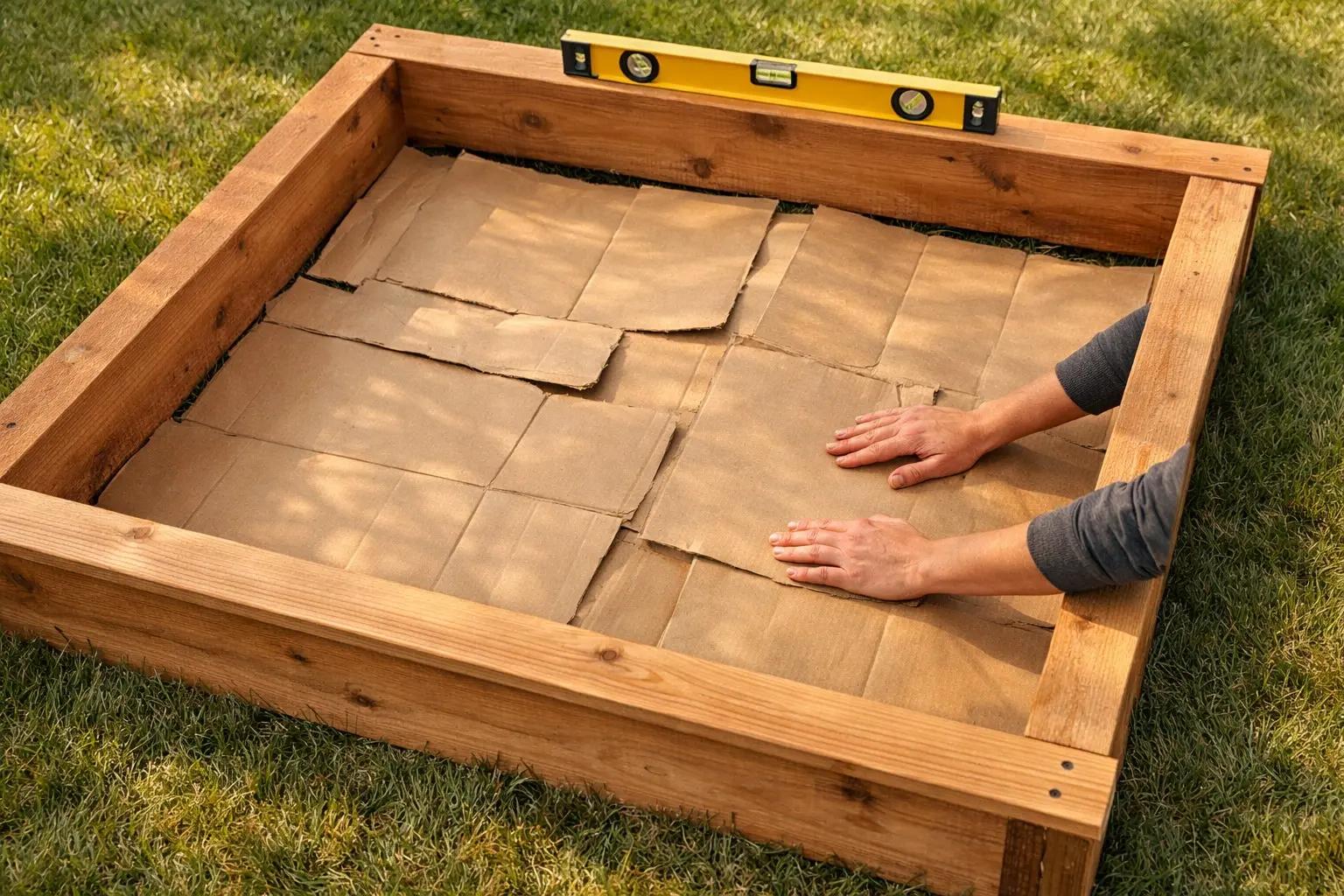
Cardboard works just as well as landscape fabric and is free — save your Amazon boxes. Remove any tape and staples first. It fully decomposes in 3-4 months and actually feeds worms as it breaks down.
Fill with Soil
A 4x8-foot bed that's 12 inches deep requires approximately 1 cubic yard of soil (about 27 cubic feet). Use a mix of 60% topsoil, 30% compost, and 10% coarse vermiculite or perlite for drainage — this is sometimes sold pre-mixed as "raised bed mix." Dump the soil into the bed with a wheelbarrow and spread it evenly with a garden rake. Fill to within 1 inch of the top to leave room for mulch. Water the soil thoroughly after filling — it will settle 1-2 inches over the first week, so top off as needed.
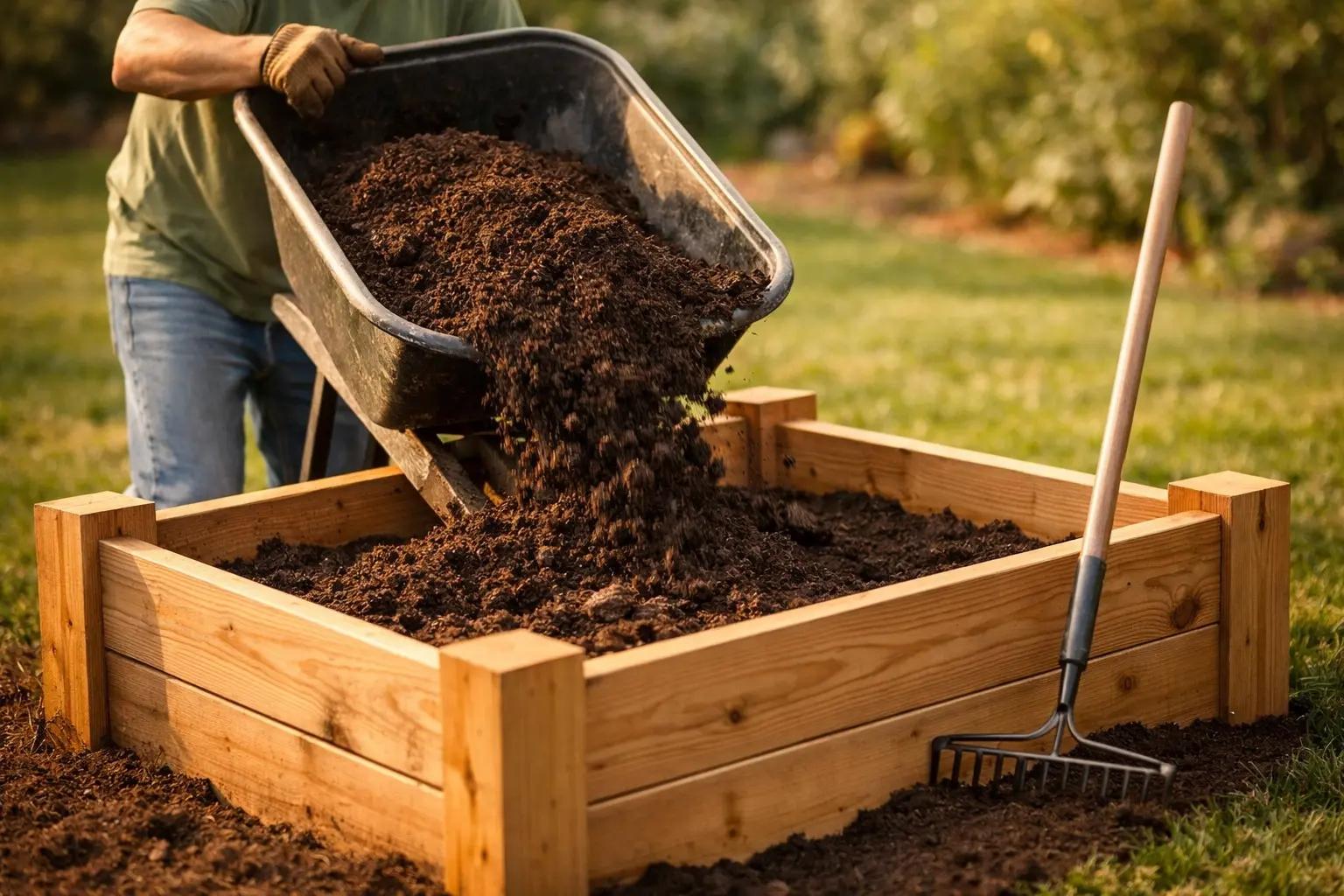
Buying bulk soil by the cubic yard from a landscape supply company is 50-70% cheaper than bags from the hardware store. A cubic yard costs $30-50 delivered versus $150+ in bags for the same volume.
Add Finishing Touches
Rake the soil surface smooth and level. If you plan to install drip irrigation or a soaker hose, lay it on the soil surface now before planting — a simple soaker hose on a timer ($20-30) saves hours of hand-watering. Add 2-3 inches of mulch (straw, wood chips, or shredded leaves) around plants after planting to retain moisture and suppress weeds. Optionally, screw a flat 1x4 or 1x6 cedar board along the top edge as a cap rail — this creates a comfortable ledge to sit on while weeding and gives the bed a polished look.
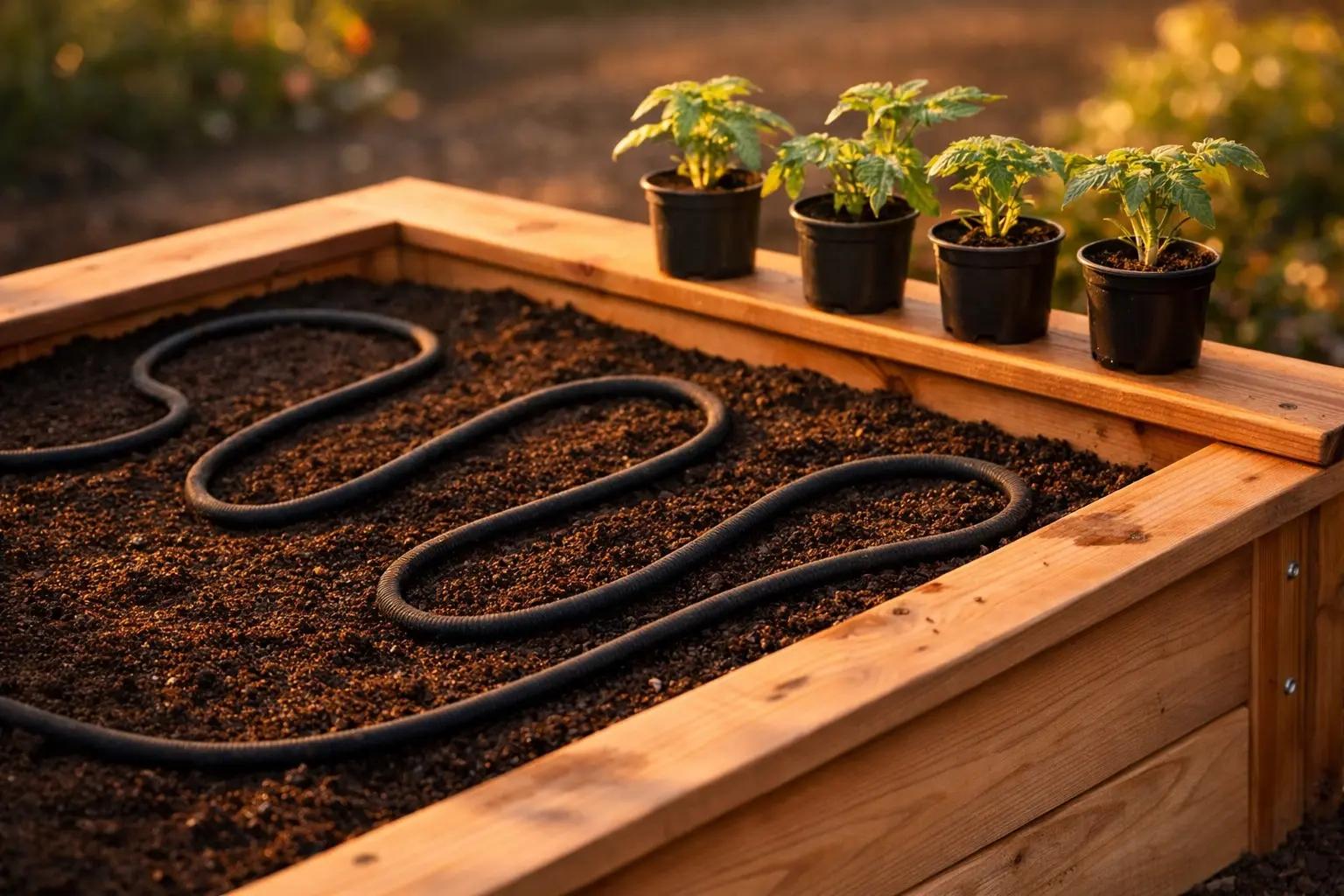
Cedar weathers to a beautiful silver-gray over time and doesn't need sealing or staining. If you prefer the golden color, apply a food-safe exterior wood oil (like pure tung oil) once a year — never use standard wood stain on a food-growing bed.
Frequently Asked Questions
Is pressure-treated wood safe for a raised vegetable bed?
+
Modern pressure-treated lumber is generally considered acceptable by extension services. The arsenic-based CCA treatment that caused the original concern was phased out of residential lumber in 2003 and replaced with copper-based preservatives such as ACQ and MCA. Gardeners who prefer to avoid the question entirely use naturally rot-resistant cedar, which is what this build uses, or line the inside walls with heavy plastic sheeting.
Do I need to remove the grass under a raised bed?
+
No, and digging it out is wasted effort. Lay cardboard or landscape fabric across the bed footprint directly over the grass — it smothers the existing vegetation and decomposes into the soil over a few months. Overlap the pieces by 4 to 6 inches so weeds cannot find a seam to push through. Level the frame first, though, digging down on the high side if the ground slopes.
How much soil does a 4x8 raised bed need?
+
About 1 cubic yard, or roughly 27 cubic feet, for a bed 12 inches deep. A workable mix is around 60% topsoil, 30% compost, and 10% coarse vermiculite or perlite for drainage — often sold pre-blended as raised bed mix. Fill to within an inch of the top, water it thoroughly, and expect it to settle an inch or two in the first week, so plan to top it off.
Why is 4 feet the standard raised bed width?
+
Because you can reach 2 feet in from either side without stepping into the bed, and compacting the soil is exactly what a raised bed exists to prevent. Length is flexible; width really is not. Site the bed with its long side facing south where possible so plants get even sun rather than shading each other.
How much sun does a raised bed need?
+
Six to eight hours of direct sun a day for most vegetables and herbs. Avoid low spots where water pools after rain, since a raised bed cannot drain into already-saturated ground, and keep the bed at least 2 feet clear of fences or walls so air can circulate — crowded, still air is what invites fungal problems on leaves.
Sources & further reading
- The Safety of Materials Used for Building Raised Beds — University of Maryland Extension
- Pressure-treated wood for raised bed construction — Oregon State University Extension
More Gardening Guides
View all → Easy2h 30m
How to Mulch Flower Beds Properly
A 2-3 inch layer of mulch suppresses weeds, holds moisture in the soil through summer heat, and gives a bed that clean, finished look that makes the whole yard pop — but most homeowners do it wrong, piling mulch into volcanoes around tree trunks or laying it so thick it smothers roots. Done right, a weekend of mulching costs $50-150 for an average front yard, lasts 8-12 months, and cuts garden watering in half.
 Medium2 hrs
How to Prune Fruit Trees
Regular pruning is the most important annual task for fruit tree health and productivity. Properly pruned trees produce larger, higher-quality fruit, resist disease better, and live significantly longer than unpruned trees.
 Easy1 hr
How to Start a Compost Bin
Composting converts kitchen scraps and yard waste into rich, free fertilizer that dramatically improves garden soil. Setup takes under an hour and once running, the bin requires minimal effort for big rewards.
You Might Also Like
 Easy15 min
How to Replace a Refrigerator Water Filter
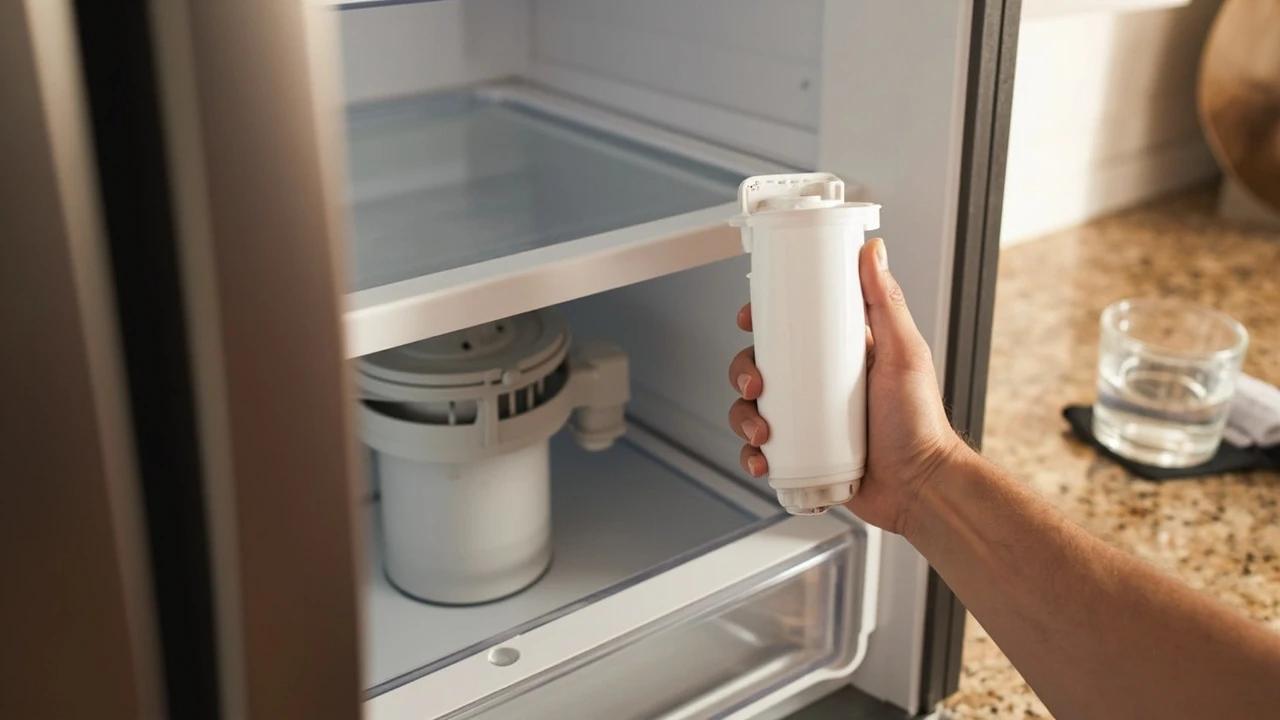
A clogged refrigerator water filter is the most common cause of slow dispensing, off-tasting water, and undersized ice cubes — and it is the easiest fix in your kitchen. Most filters are designed to be swapped in under five minutes with no tools, no shut-off valve, and no spilled water. This guide covers locating your filter, the two common removal styles (twist-in and push-in), inspecting the O-rings, flushing the new filter, and resetting the indicator light so you do not see the red "Replace" warning the next morning.
 Easy25 min
Best Deck Stain: Transparent vs Semi vs Solid
There is no "best" deck stain — there is the right stain for your sun exposure, wood condition, and how often you want to redo the job. Transparent stains last 1-2 years but let the natural grain show. Solid stains last 4-7 years but look like paint. This guide walks the four opacity levels and the oil-vs-water choice so you pick the one that matches your deck and your tolerance for re-staining.
 Easy45 min
How to Install a Smart Thermostat
A smart thermostat is one of the highest-ROI upgrades you can make to your home — it learns your schedule, adjusts automatically when you're away, and typically saves about 8% on heating and cooling bills — the figure ENERGY STAR verifies from real-home data, roughly $50 a year — so the $120-250 device usually pays for itself within a few years. If your old thermostat has labeled wires behind it, the swap takes about 30-45 minutes with nothing more than a screwdriver and your phone. This guide covers checking compatibility, labeling wires, mounting the new base, connecting everything, and walking through the app setup so your system is running smart the same day.