How to Build a Simple Garden Trellis
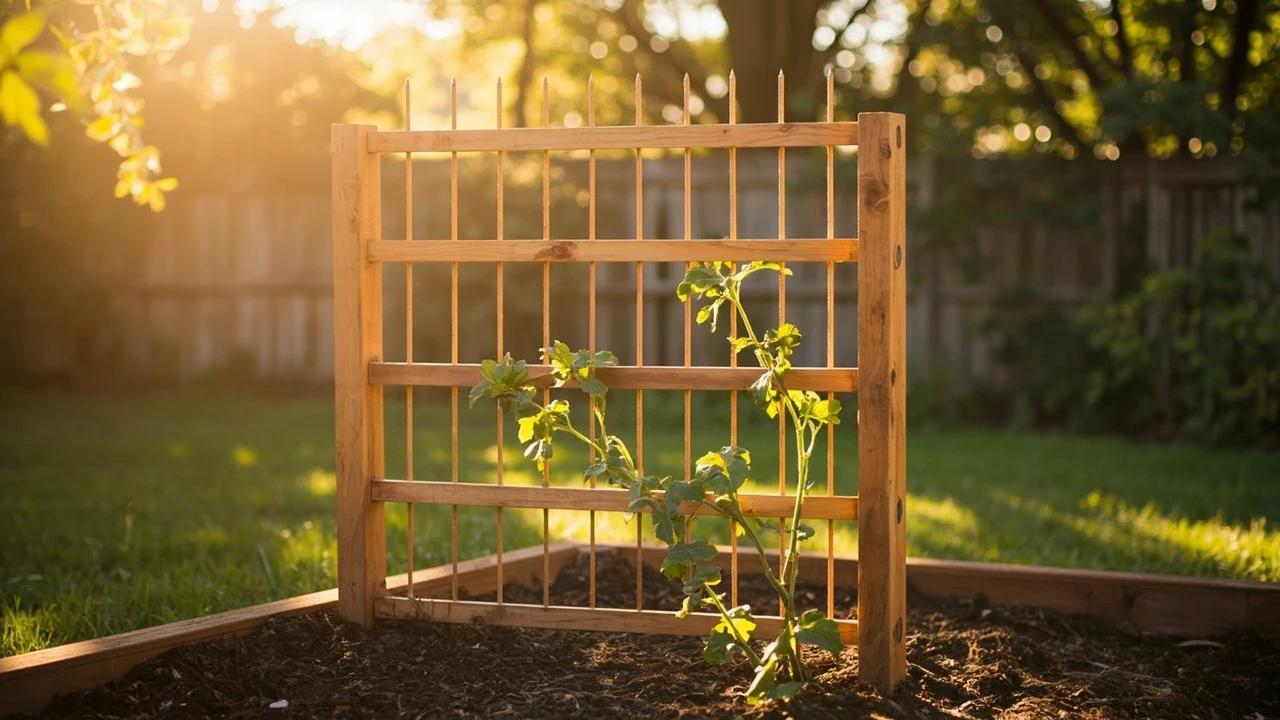

A sturdy 6-foot cedar trellis turns a flat patch of soil into a vertical garden — doubling your growing space, improving airflow around climbers like peas, beans, and cucumbers, and giving roses, clematis, and morning glories a structure that lasts 10+ years. This guide walks you through a freestanding 4-foot-wide grid trellis built with two 4x4 posts and a 1x2 lattice for $40-90 in materials and an afternoon of work, no advanced carpentry required.
What You'll Need
🛠 Tools
📦 Materials
Safety First
- •Call 811 at least 2-3 business days before digging — buried gas, electric, and irrigation lines can sit only 12-24 inches deep and aren't always where you'd expect, even in a backyard garden.
- •Don't use pressure-treated lumber for a trellis that will support edibles like beans, peas, or cucumbers — the older arsenic-based (pre-2004 CCA) treatment could leach into soil. Use cedar, redwood, or black locust instead.
Step-by-Step Instructions
Choose the Location and Plant Compatibility
Pick a spot that gets at least 6 hours of direct sun for vegetable climbers (beans, peas, cucumbers) or matches the requirements of your ornamental — clematis prefers sun on the leaves and shade at the roots, while morning glories need full sun. Orient the long face of the trellis east-west so plants on the south side get even light and don't shade their neighbors. Allow at least 12 inches of clearance behind the trellis for airflow and pruning access. Before you commit, mark each post location with a stake and call 811 — utility companies will flag buried lines for free within 2-3 business days.

Place the trellis on the north side of a vegetable bed so the climbing plants don't shade shorter sun-loving crops like lettuce, basil, or peppers planted in front of them.
Cut the Lumber to Length
You'll need two 8-foot 4x4 cedar posts left full-length (2 feet underground, 6 feet above). For the lattice panel, cut two 1x2s to 5 feet for the outer vertical rails, two 1x2s to 4 feet for the top and bottom horizontal rails, eight 1x2s to 4 feet for the inner horizontal slats, and seven 1x2s to 5 feet for the inner vertical slats. Use a speed square to mark straight cut lines and a miter saw or circular saw to cut. If you don't own a saw, most home improvement stores will make these straight cuts for free.

Label each cut piece in pencil as you go (V for vertical, H for horizontal, R for rail) — once you have 19 nearly identical 1x2 strips on the ground, sorting them slows the build down considerably.
Dig the Post Holes
Mark two hole locations 4 feet apart, measured center-to-center — this matches the 4-foot lattice width. Use a post hole digger or a 6-inch auger to dig each hole 24 inches deep and roughly 10-12 inches wide (about 3x the post width). In freeze-prone climates (USDA zones 5 and colder), go 30-36 inches deep to get below the frost line. Drop 3-4 inches of coarse gravel into the bottom of each hole — this lets water drain away from the end grain of the post and dramatically slows rot at the soil line.
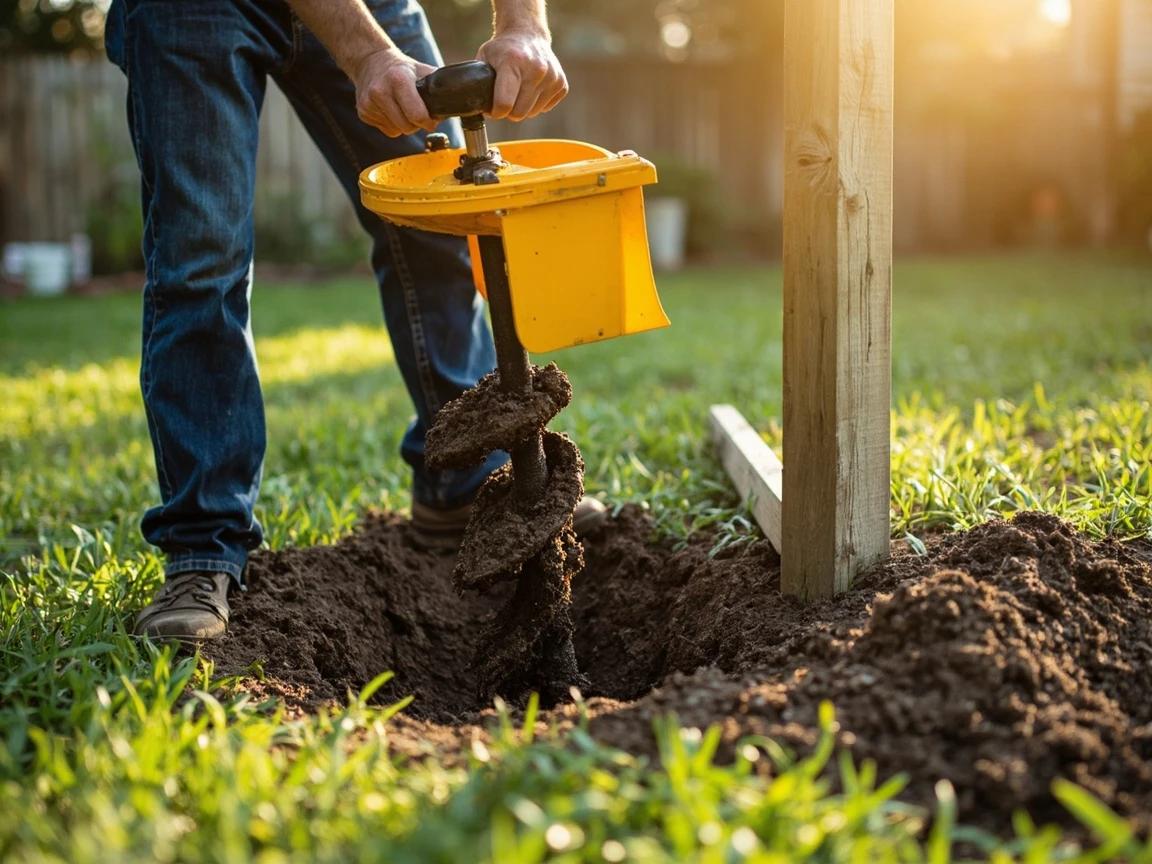
Always confirm 811 utility marks are in place before digging — striking a buried gas line is a life-threatening emergency, and even a clipped low-voltage cable can be a $500-1,500 repair.
Set the Posts in Concrete
Stand a post in the first hole on top of the gravel layer. Hold a 4-foot level against two adjacent faces and adjust until the post is plumb in both directions — have a helper hold it or temporarily brace it with two scrap 1x2s screwed to stakes. Pour one 60-pound bag of fast-setting concrete dry into the hole (no pre-mixing needed), then add about 1 gallon of water per bag. Repeat for the second post, double-checking that the two posts are exactly 4 feet apart and aligned in the same vertical plane. Let the concrete cure for at least 4 hours (or overnight) before attaching the lattice.
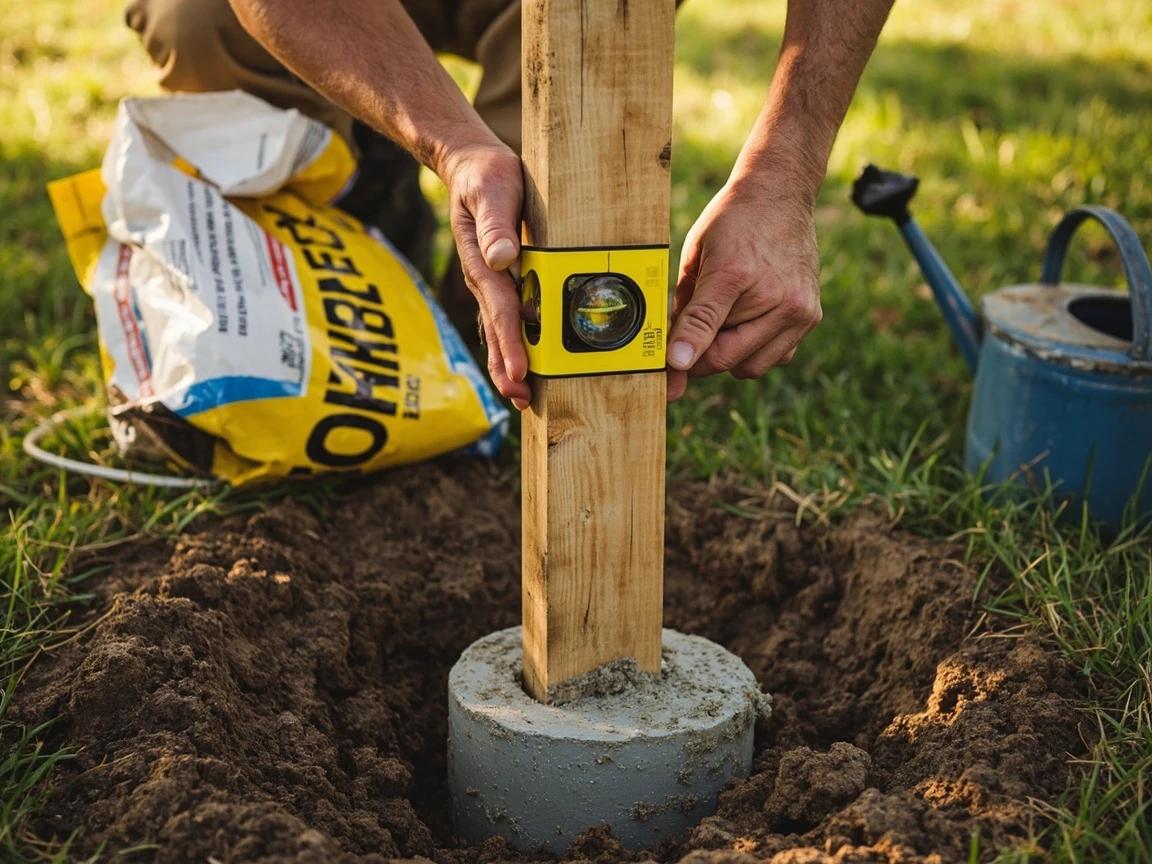
Crown the concrete slightly above grade and slope it away from the post on all sides — this sheds rainwater away from the wood and adds years to the post's lifespan.
Build the Lattice Frame
On a flat surface like a driveway or garage floor, lay out the four outer rails to form a 4x5-foot rectangle: two 5-foot 1x2s vertically and two 4-foot 1x2s horizontally, with the horizontals overlapping the verticals at each corner. Pre-drill pilot holes through the corners to prevent splitting (cedar splits easily), then drive two 1-1/4-inch exterior screws through each corner joint. Check the frame is square by measuring corner-to-corner diagonals — they should be equal within 1/8 inch.
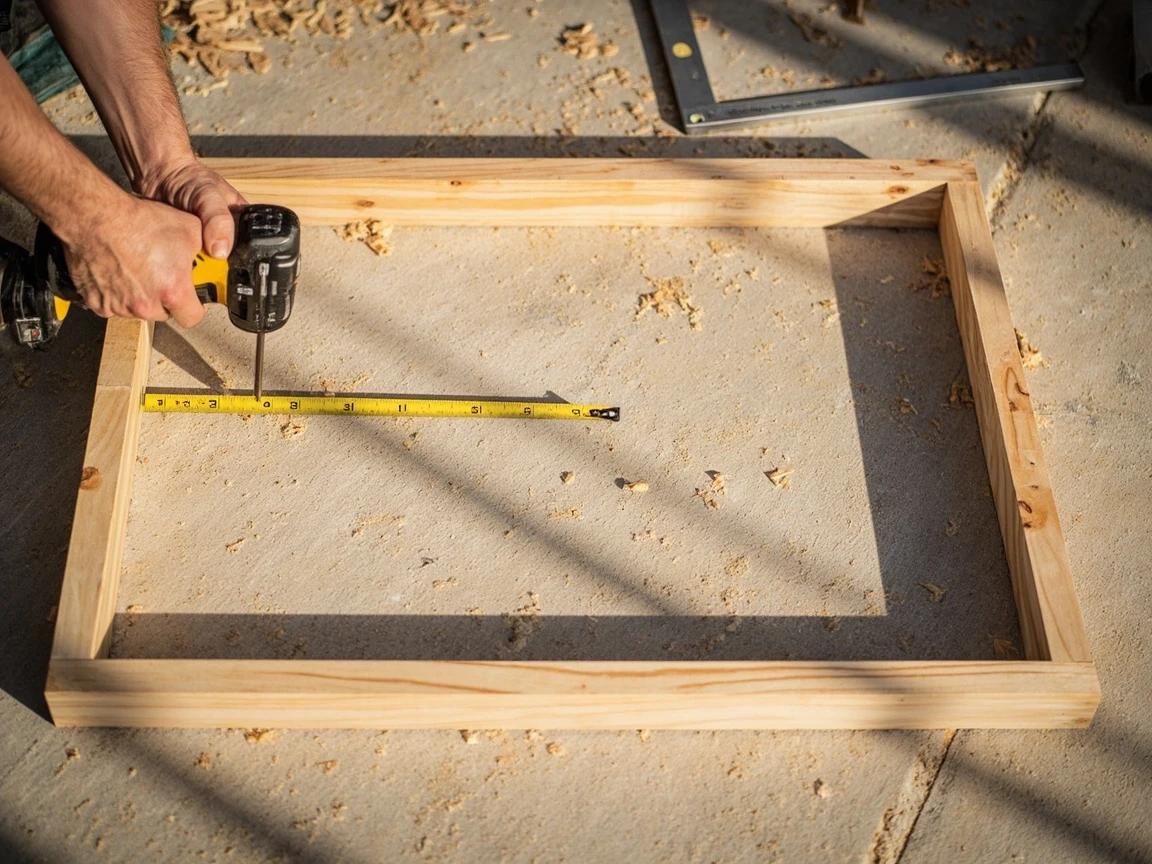
Pre-drilling makes a huge difference with cedar 1x2s — without a pilot hole, screws split the wood about 30% of the time, especially within 2 inches of the end grain.
Attach the Grid Slats
Inside the frame, lay out the seven vertical 5-foot 1x2s evenly spaced — for a 4-foot-wide frame, space them about 6 inches on-center. Then lay the eight horizontal 4-foot 1x2s perpendicularly across them, also spaced 6 inches on-center, creating a square grid. At each intersection, drive one 1-1/4-inch screw straight through both slats. Where the inner slats meet the outer frame, drive one screw through the slat into the frame. Work from the center outward to keep spacing even, and adjust the lattice if any slats drift before screwing them down.
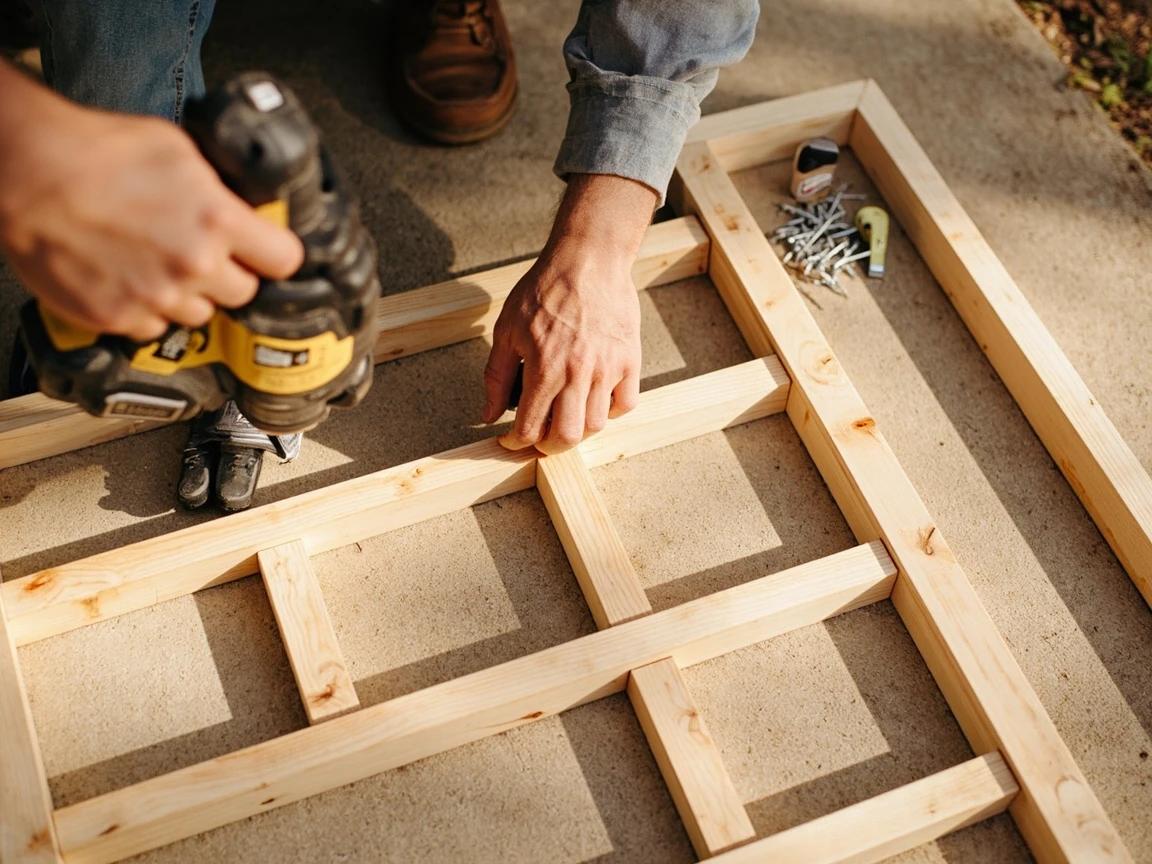
Use a scrap 6-inch piece of 1x2 as a quick spacing gauge — slide it between each slat as you go, and you'll never need to break out the tape measure.
Mount the Lattice and Finish
Once the concrete has cured, lift the assembled lattice and position it against the inside (garden-facing) side of the two posts, with the bottom rail about 6 inches above grade — this airflow gap dramatically slows rot and lets you mulch underneath. Have a helper hold it level while you drive four 2-1/2-inch exterior screws through the outer frame rails into each post (eight screws total, two per corner). Check that the panel is plumb with a level before driving the final screws. If you want to preserve the warm cedar color, apply a thin coat of pure tung oil with a rag — never use deck stain on a structure that will touch edible plants.
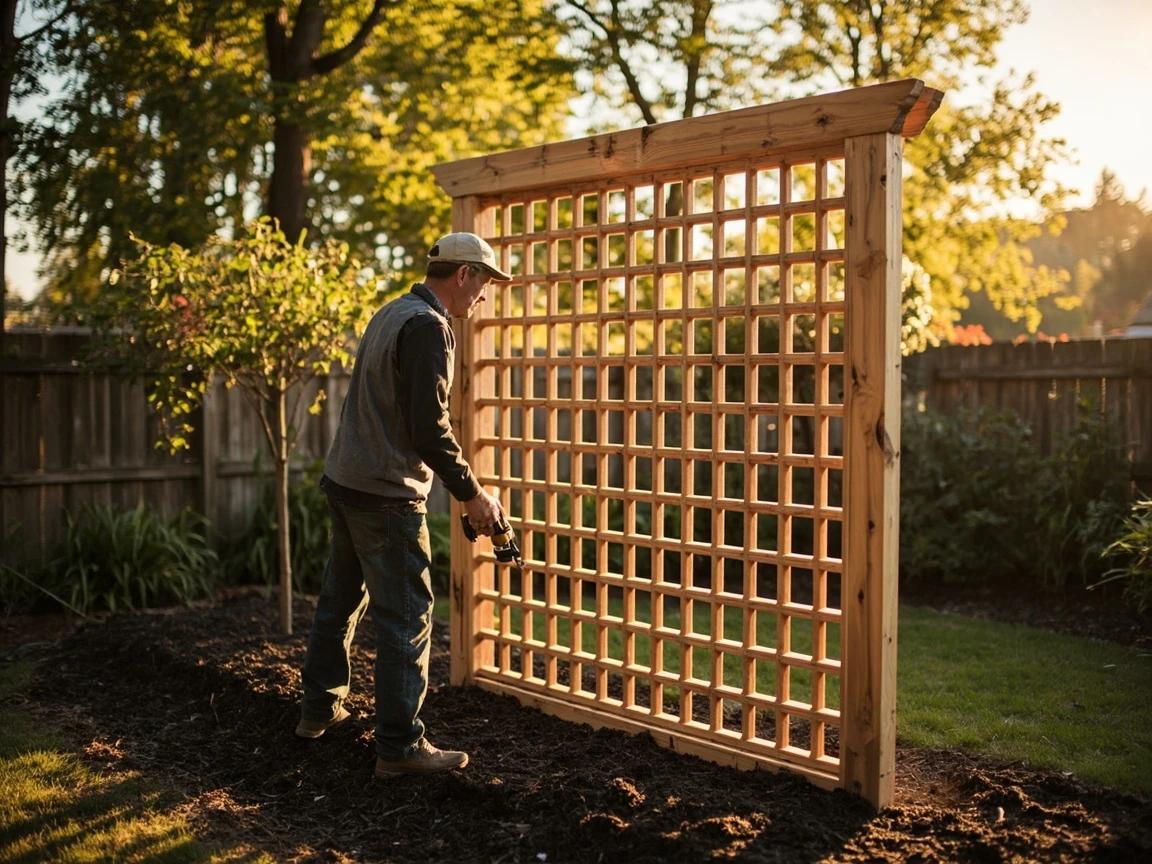
Cedar weathers to a silvery gray within one or two seasons. If you'd rather keep the warm reddish tone, reapply pure tung oil once a year — standard wood stains are fine for ornamental trellises but should never coat a trellis growing edibles.
Frequently Asked Questions
How deep should the posts on a garden trellis be buried?
+
Bury at least one-third of the post's total length below grade — for a 6-foot-tall trellis using 8-foot posts, that means 24 inches deep at minimum. In zones with hard freezes, dig below the local frost line (typically 30-42 inches in the northern US) so frost heave doesn't lift the posts each spring. Deeper holes are also safer for tall trellises that catch wind, especially once they're covered in foliage.
What's the best wood for a DIY garden trellis?
+
Cedar (Western Red or Eastern White) is the most common choice — naturally rot-resistant, lightweight, easy to cut, and runs about $5-8 per 1x2x8. Redwood and black locust last even longer (15-25 years) but cost 2-3x more. Avoid the old pre-2004 arsenic-treated (CCA) pine for a trellis supporting edibles; modern copper-based pressure-treated pine is considered low-risk by extension research, but cedar, redwood, or black locust sidestep the question.
Do garden trellis posts need concrete?
+
Concrete is the most reliable anchor for a tall freestanding trellis, especially in sandy or loose soil. For shorter trellises (under 4 feet) or in dense clay, tamped gravel works fine and lets you reposition the trellis later. If you do use concrete, fast-setting mix (Quikrete) sets hard enough to plumb the post in 20-40 minutes — no mixing required, just pour dry and add water.
How wide should the grid spacing be on a trellis?
+
For tendril climbers like peas, cucumbers, and morning glories, a 4-6 inch grid works best — the tendrils can wrap around 1x2 slats easily. For twining climbers like beans and clematis, 6-8 inch spacing is fine. Heavy fruiting vines like squash or melons need wider spacing (10-12 inches) and stronger slats (1x3 or 2x2) to support the weight.
How long does a cedar garden trellis last outdoors?
+
Untreated cedar trellises typically last 8-15 years before posts rot at the soil line, depending on local climate and drainage. Adding gravel at the post base for drainage and applying pure tung oil or a UV-protective exterior finish every 2-3 years can extend life to 20+ years. Cedar weathers to a silvery gray within 1-2 seasons; staining preserves the warm reddish tone but isn't structurally necessary.
Sources & further reading
- Trellising, Staking and Caging — Vertical Gardening Techniques for Vine-Type Vegetables — University of Wisconsin-Madison Extension
- Trellises and cages to support garden vegetables — University of Minnesota Extension
More Gardening Guides
View all → Easy3 hrs
How to Winterize Your Garden
A few hours of fall garden prep is the difference between a thriving spring and a cleanup nightmare in March — proper winterization prevents frost heave, protects perennials from -20°F lows, kills overwintering pests, and adds 2-3 weeks of free growing time next season. This guide covers the eight tasks every gardener should knock out 4-6 weeks before the first hard frost: cleanup, weeding, perennial cutback, bulb storage, soil amending, mulching, deep watering, and irrigation drain-down.
 Medium2 hrs
How to Get Rid of Carpenter Ants Without an Exterminator
Big black ants in the kitchen at midnight usually mean a carpenter ant colony is excavating damp wood somewhere in your house — and the instinctive response, spraying them, is exactly what makes an infestation permanent. This guide covers the method extension entomologists actually recommend: track the nest at night, feed the colony slow-acting bait, and fix the moisture that invited them, for $20-40 instead of a $300-600 pest contract.
 Easy1 hr
How to Grow Herbs in a Window Box
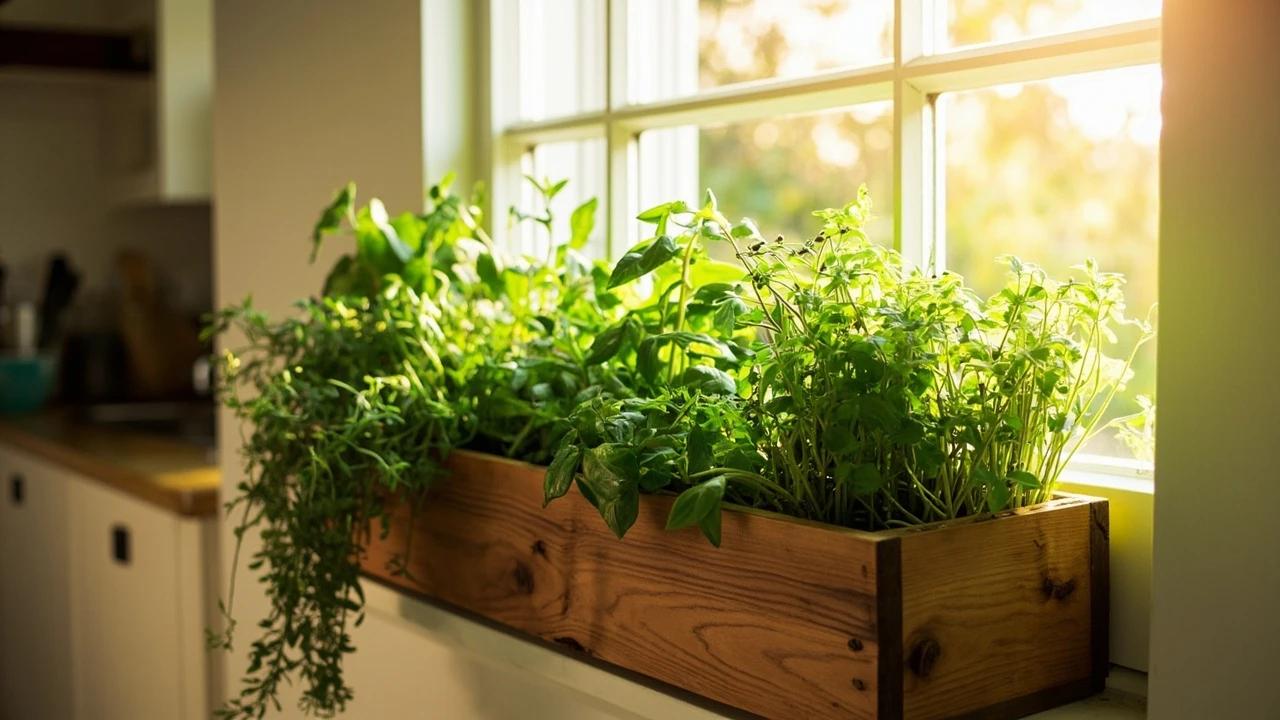
A 30-inch window box on a sunny windowsill produces enough basil, parsley, thyme, and chives to keep a household supplied all summer — for under $80 in materials and about an hour of setup. This guide covers everything from picking the right window and box, to mounting it safely, choosing herbs that thrive together, and the harvesting technique that doubles a basil plant's output.
You Might Also Like
 Easy45 min
How to Install a Smart Thermostat
A smart thermostat is one of the highest-ROI upgrades you can make to your home — it learns your schedule, adjusts automatically when you're away, and typically saves about 8% on heating and cooling bills — the figure ENERGY STAR verifies from real-home data, roughly $50 a year — so the $120-250 device usually pays for itself within a few years. If your old thermostat has labeled wires behind it, the swap takes about 30-45 minutes with nothing more than a screwdriver and your phone. This guide covers checking compatibility, labeling wires, mounting the new base, connecting everything, and walking through the app setup so your system is running smart the same day.
 Easy30 min
How to Fix a Dripping Faucet
A dripping faucet wastes more than 3,000 gallons of water per year and can add $20 or more to your monthly water bill. The fix is almost always a worn cartridge, washer, or O-ring — parts that cost under $10 and take 20-30 minutes to replace with basic tools.
 Hard8 hrs
How to Paint Kitchen Cabinets
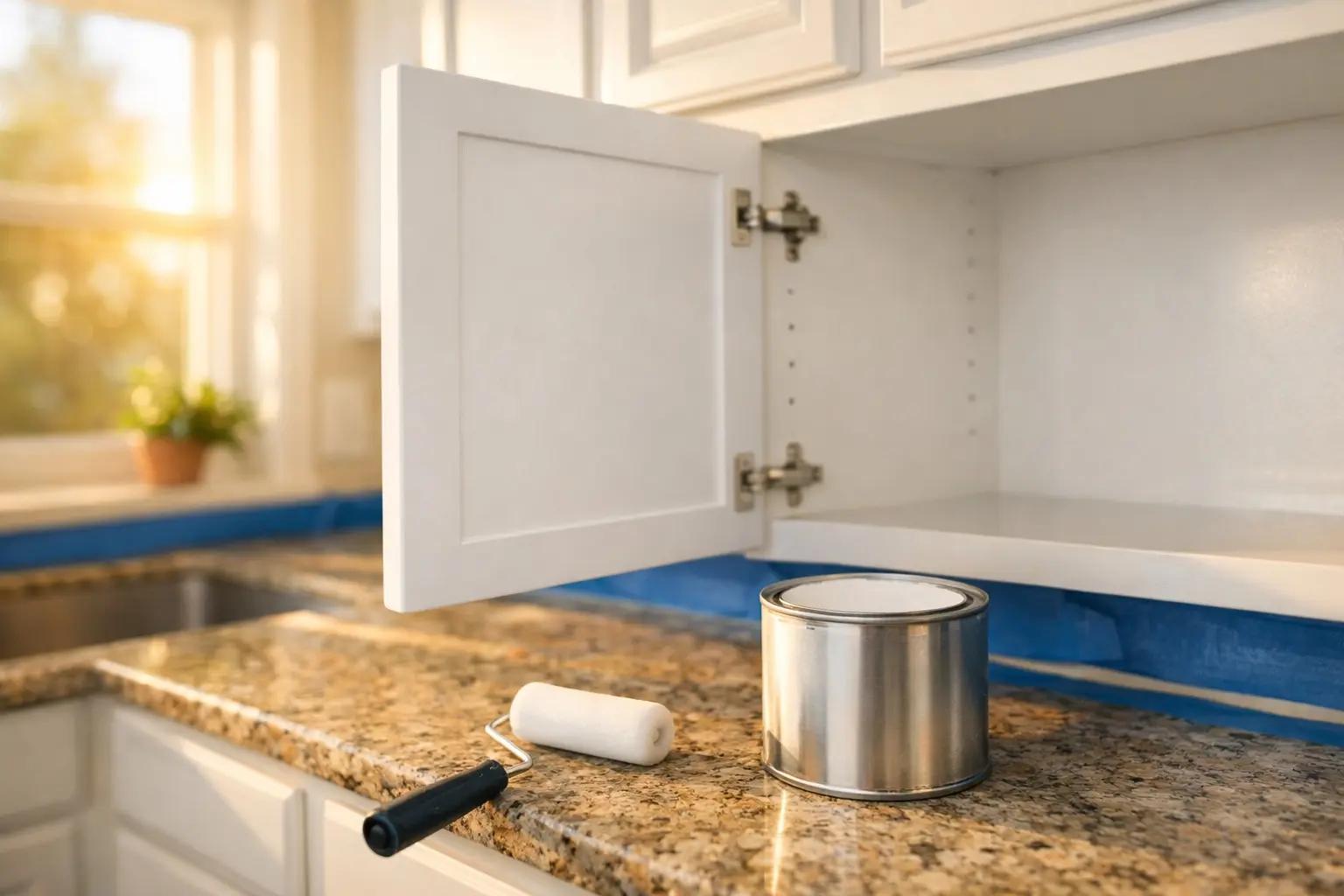
A professional cabinet refinish costs $3,000-8,000, but painting them yourself with the right prep and materials delivers the same transformation for under $200 in a long weekend. The secret is thorough degreasing, a bonding primer, and thin coats with proper dry time between each — skip any of those and the paint will chip within months. This guide walks through the full process from door removal and labeling to final reassembly, covering both brush and roller techniques for a smooth, factory-like finish.