How to Stain a Wood Deck
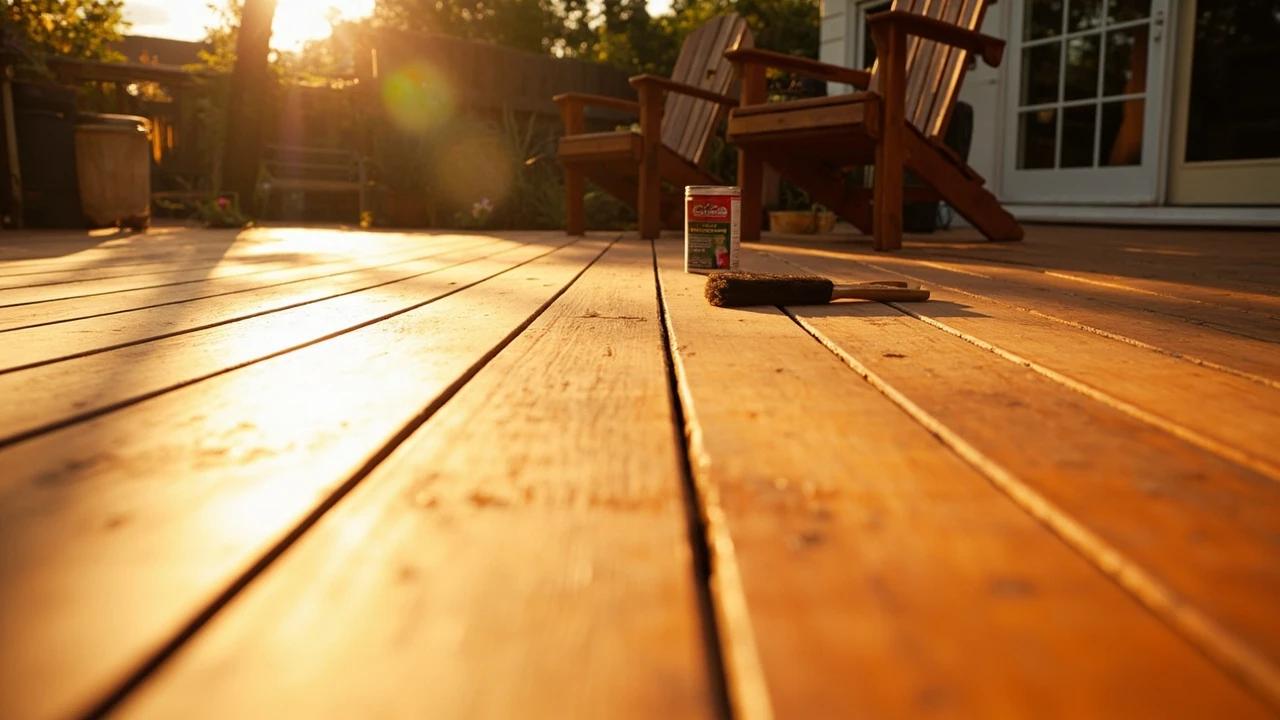

A properly stained wood deck not only looks stunning — deep, rich color that makes the whole backyard feel finished — but also protects the boards from UV damage, water, and rot, extending the life of a $10,000+ deck by a decade or more. A fresh coat of semi-transparent stain runs $50-150 in materials for a typical 200-square-foot deck, versus $1,500-3,000 for a pro to do it. The project itself takes an afternoon of active work spread across a 2-3 day window for cleaning, drying, and staining. This guide covers prep (which is 80% of the job), choosing the right stain, applying without lap marks, and letting it cure properly.
What You'll Need
🛠 Tools
📦 Materials
Safety First
- •Rags soaked with oil-based (or oil-modified) stain can spontaneously combust if balled up in a trash can — the curing oil generates its own heat. After using any oil-based product, lay the rags flat outdoors to dry completely for 24 hours, or submerge them in water in a sealed metal container before disposal. Rags from purely water-based stain do not self-ignite, but when in doubt, treat them as oil-based.
- •Deck cleaners contain bleaching agents or strong acids — wear chemical-resistant gloves and safety glasses, and avoid contact with nearby plants by wetting them down before and after treatment.
- •Never run a pressure washer above 2,500 PSI on softwoods like cedar or pine — it will gouge the wood and create permanent damage.
Step-by-Step Instructions
Check the Weather and Pick Your Window
Deck staining success depends almost entirely on weather. Plan a 3-day window with temperatures between 50°F and 90°F, no rain in the forecast for at least 24 hours after application, and humidity below 85%. Late spring and early fall are ideal seasons. Avoid staining in direct sunlight — surface temperatures under full sun can reach 120°F even on a 75°F day, causing the stain to dry before it penetrates. Start work in the shade or on an overcast day, and stain different sections as the shade moves across the deck throughout the day.

The wood surface temperature matters more than air temperature — touch the deck with the back of your hand. If it feels hot, it's too hot to stain right now.
Clear and Inspect the Deck
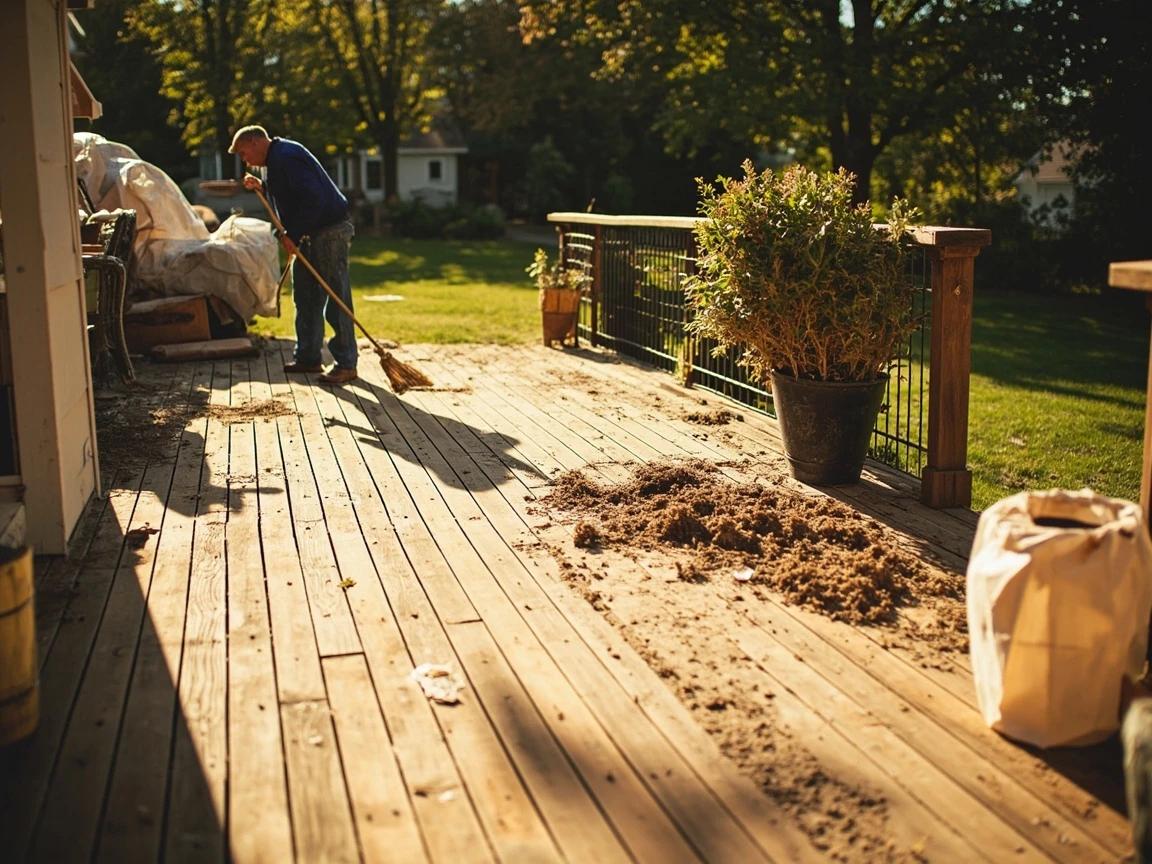
Remove all furniture, grills, planters, and rugs from the deck surface. Sweep thoroughly with a stiff broom to clear leaves, dirt, and debris from between boards. Walk every board looking for popped nails (hammer them back flush or replace with deck screws), splintered or rotted boards (replace before staining — stain won't fix structural issues), and protruding screws. Cover nearby plants and shrubs with plastic sheeting to protect them from cleaner overspray. Tape off any siding, railings, or trim you don't want stained with 2-inch painter's tape.
Apply Deck Cleaner and Scrub
Mix the deck cleaner according to the label — most sodium percarbonate cleaners are diluted at 1 part cleaner to 4 parts water. Wet the entire deck with a garden hose first (a dry deck absorbs cleaner unevenly), then apply the cleaner with a pump sprayer or watering can, covering about 100 square feet at a time. Let it dwell for 15-20 minutes — do not let it dry on the wood. While it's still wet, scrub aggressively with a stiff-bristle brush on a long handle, going with the grain of the boards. The old gray weathered surface and any mildew should lift free as you scrub.
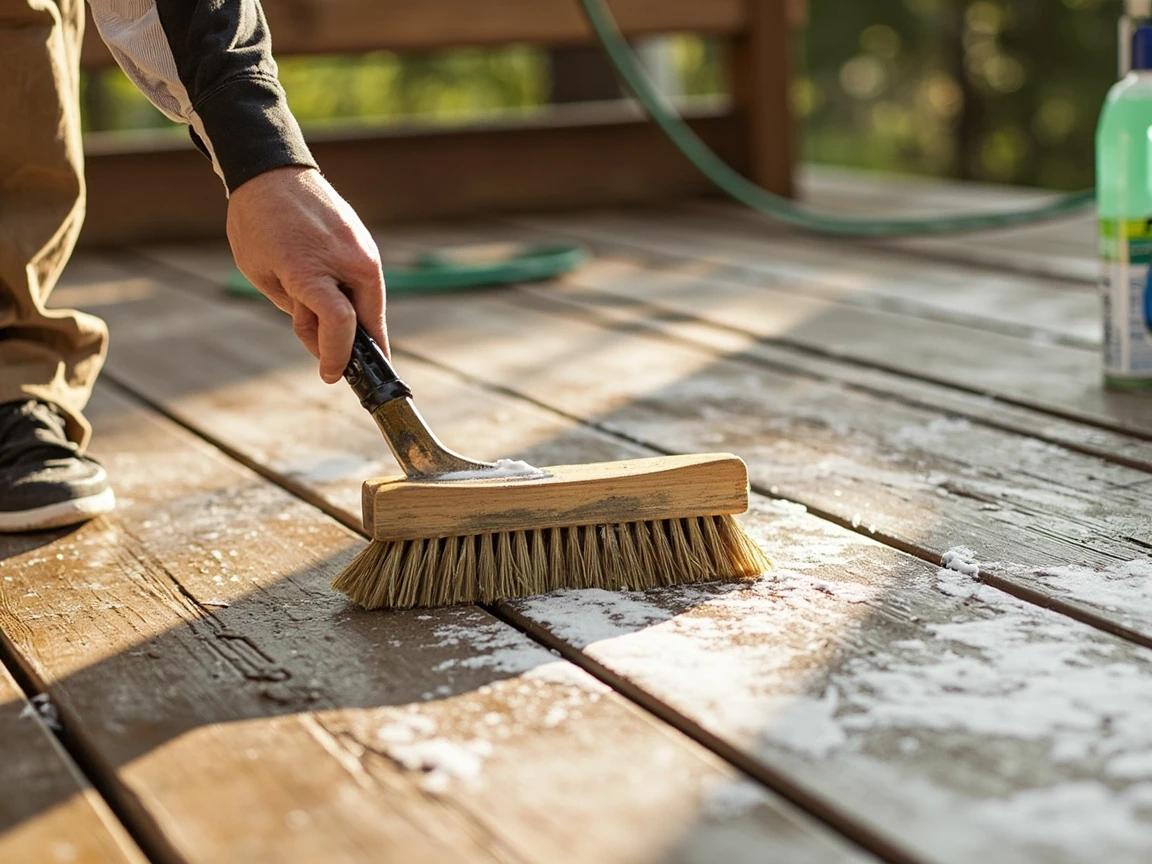
Wet nearby plants with a hose before applying cleaner, then rinse them thoroughly afterward — cleaner runoff can burn foliage.
Rinse, Brighten, and Let Dry 48 Hours
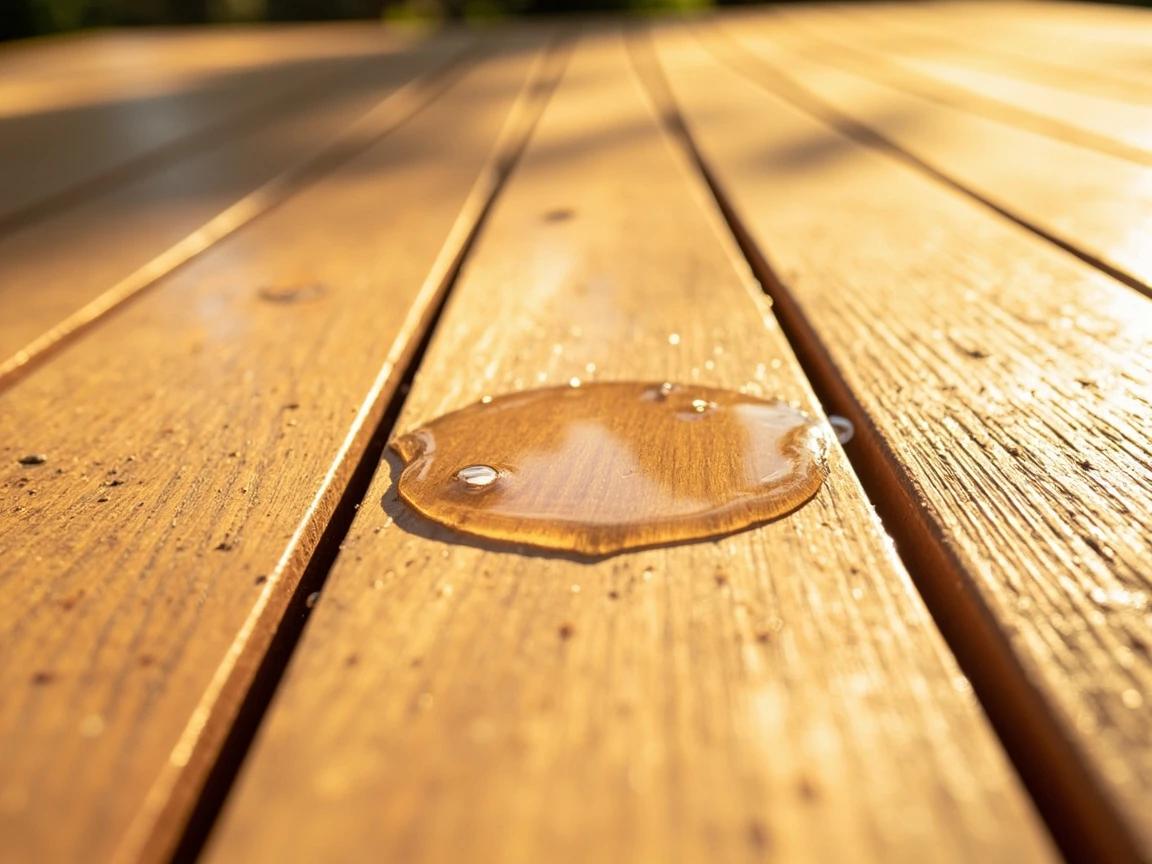
Rinse the entire deck thoroughly with a garden hose (or pressure washer at 1,500-2,500 PSI, keeping the tip at least 12 inches from the wood and moving constantly). Next, apply a wood brightener diluted per the label — this oxalic-acid-based solution neutralizes the alkaline cleaner, restores the wood's natural color, and opens the grain for better stain penetration. Let it sit 10-15 minutes, rinse again, then let the deck dry for a full 48 hours. Test readiness by sprinkling a few drops of water on the wood — if it soaks in within 10 seconds, you're ready to stain. If it beads up, wait another day.
Sand Rough Spots and Raised Fibers
After cleaning, some spots will have raised fibers or "fuzz" where the cleaner opened the wood grain. Run a random orbital sander with 80-grit sandpaper over any rough areas, railings, and handrails — this smooths the surface so stain goes on evenly and ensures a splinter-free finish. Don't over-sand: you want to remove the fuzz, not burnish the wood closed. Vacuum or sweep up all dust thoroughly. A dusty deck will trap grit under the stain, creating a rough, gritty finish.
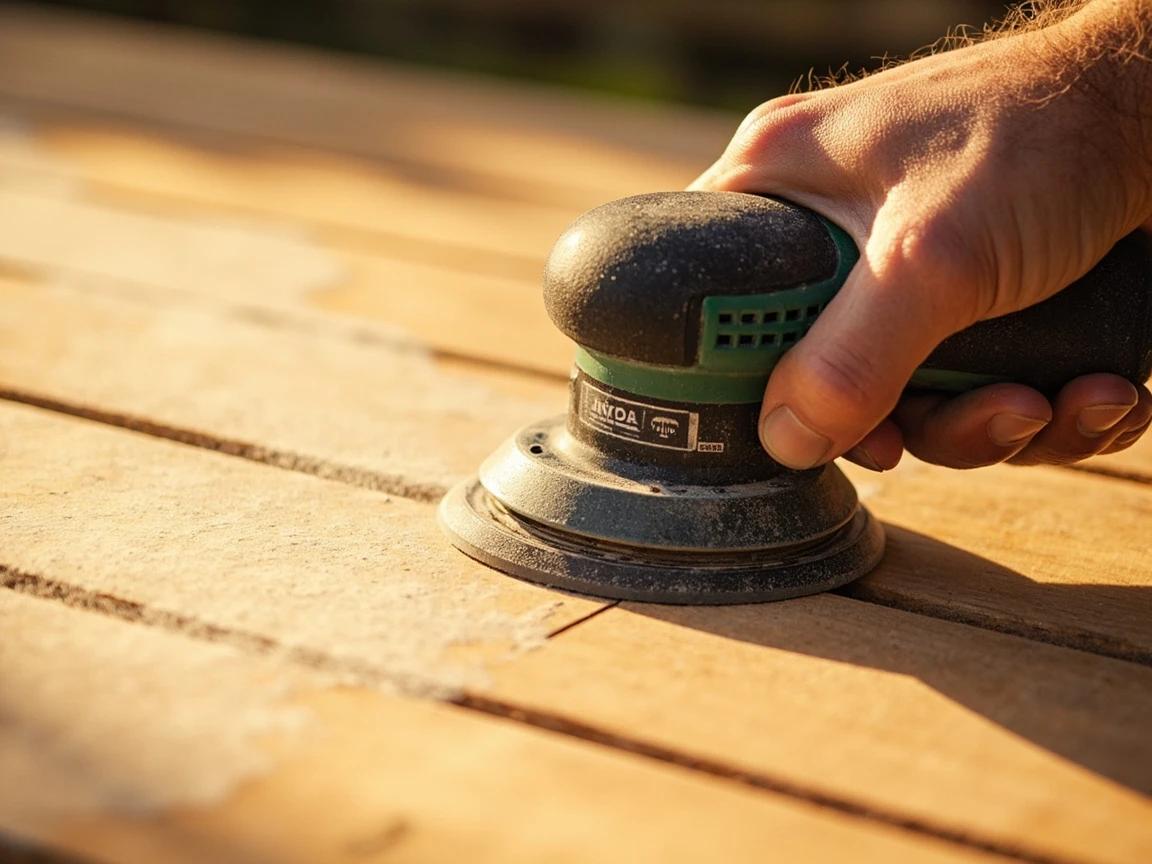
Sand railings and handrails more aggressively than the floor — those are the surfaces people touch, and splinters on a handrail ruin the whole project.
Stir the Stain and Plan Your Exit
Stir the stain thoroughly with a paint stick for at least 2 minutes before use and every 15 minutes during application — pigments settle fast and the bottom of the can is where the color lives. Never shake stain (it creates bubbles that show up in the finish). Plan your staining route so you end near an exit off the deck — staining yourself into a corner means walking on wet stain. Start at the far end of the deck and work backward toward the stairs or door, one full board at a time from end to end to keep a wet edge.
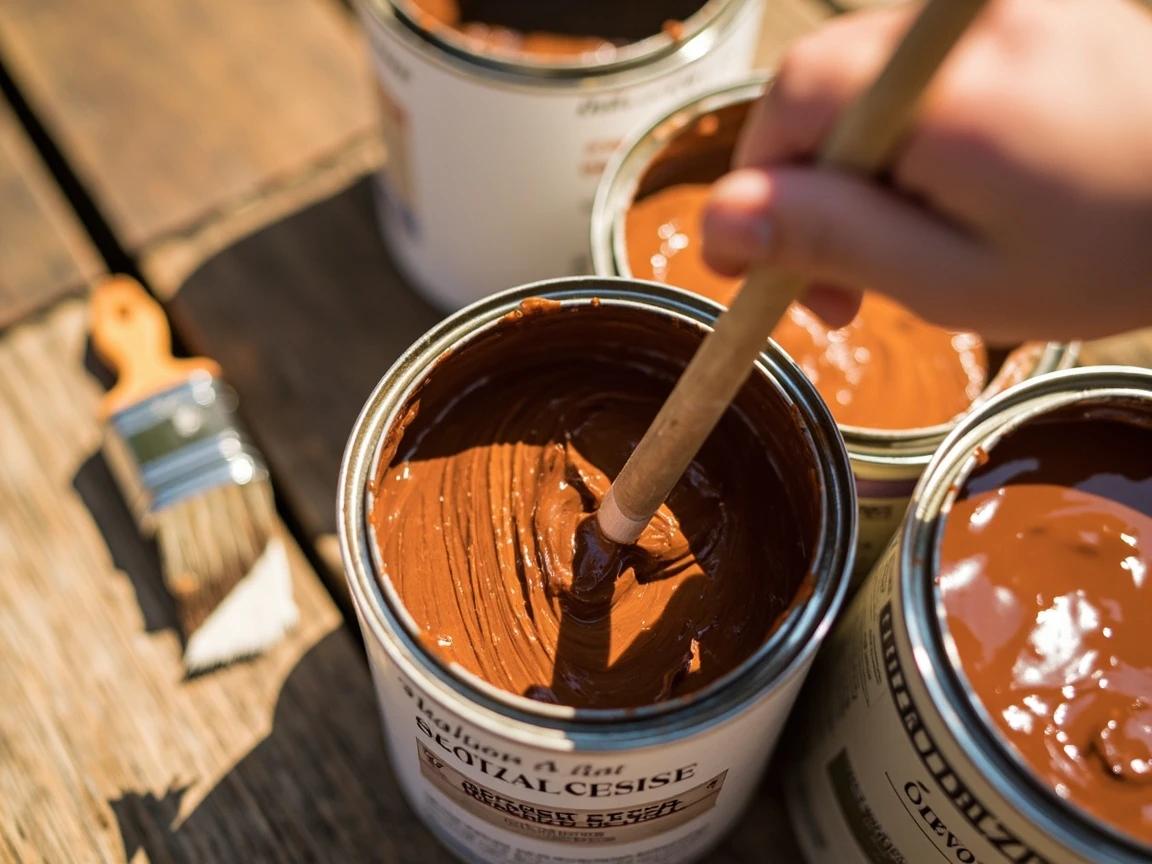
Apply Stain with Pad, Roller, or Brush
Start with the railings, balusters, and tight spots using a 4-inch brush — doing these first means drips land on the floor that you'll stain next. For the deck floor, use a stain pad on a telescoping pole or a medium-nap roller for speed, then back-brush with a 4-inch brush immediately after to work the stain into the grain. Stain two full boards end-to-end at a time, never stopping in the middle of a board — stopping mid-board causes permanent lap marks. Apply one thin, even coat — too much stain puddles on the surface and dries sticky or peels within a season.
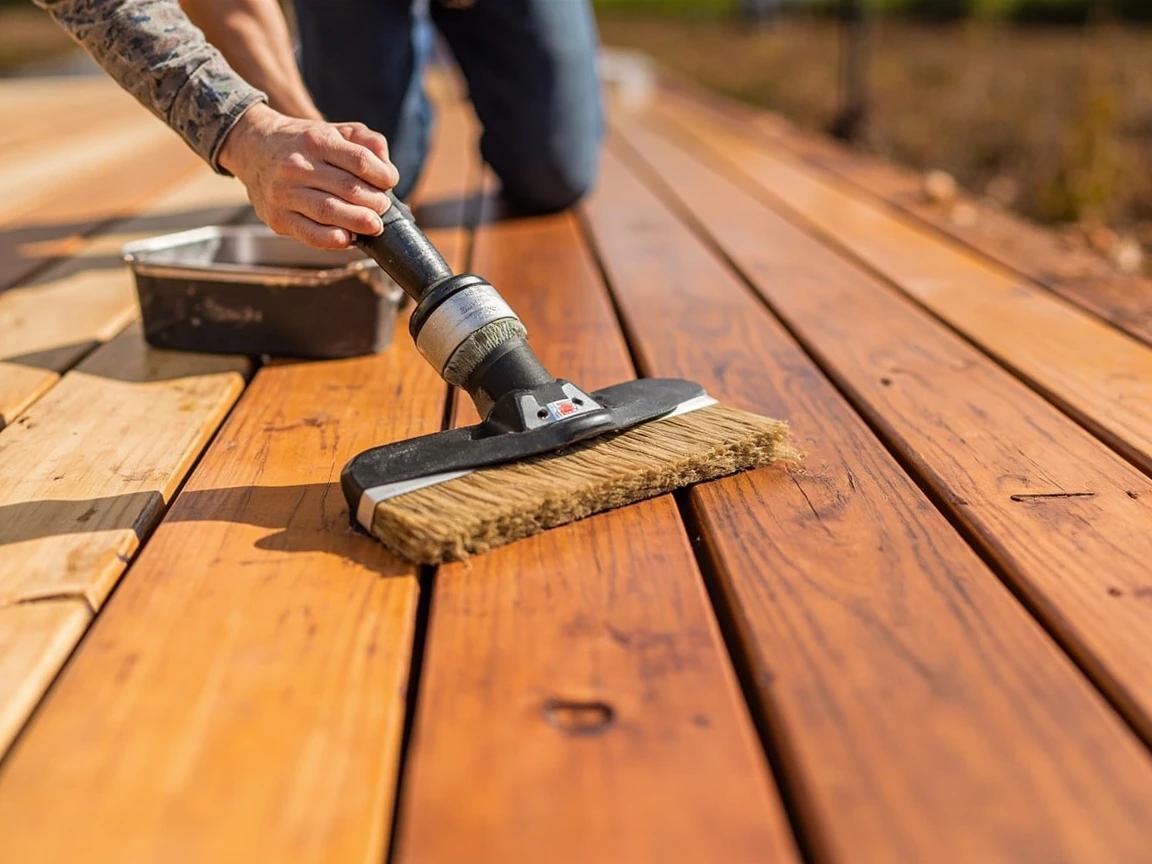
Never let stain puddle on the surface. Wipe up any puddles with a rag within 5 minutes — dried puddles stay sticky for weeks and attract dirt.
Wait, Apply a Second Coat If Needed
Let the first coat dry for 24-48 hours depending on humidity and temperature (check the stain label for specifics). For semi-transparent stains on old or thirsty wood, a second thin coat deepens the color and improves protection — apply within 48 hours of the first coat, using the same technique. For solid-color stains, two coats are usually required for full coverage. Walk on the deck only with clean, soft-soled shoes after the first coat is dry to the touch, and wait the full cure time (typically 48-72 hours) before replacing furniture or allowing heavy traffic.
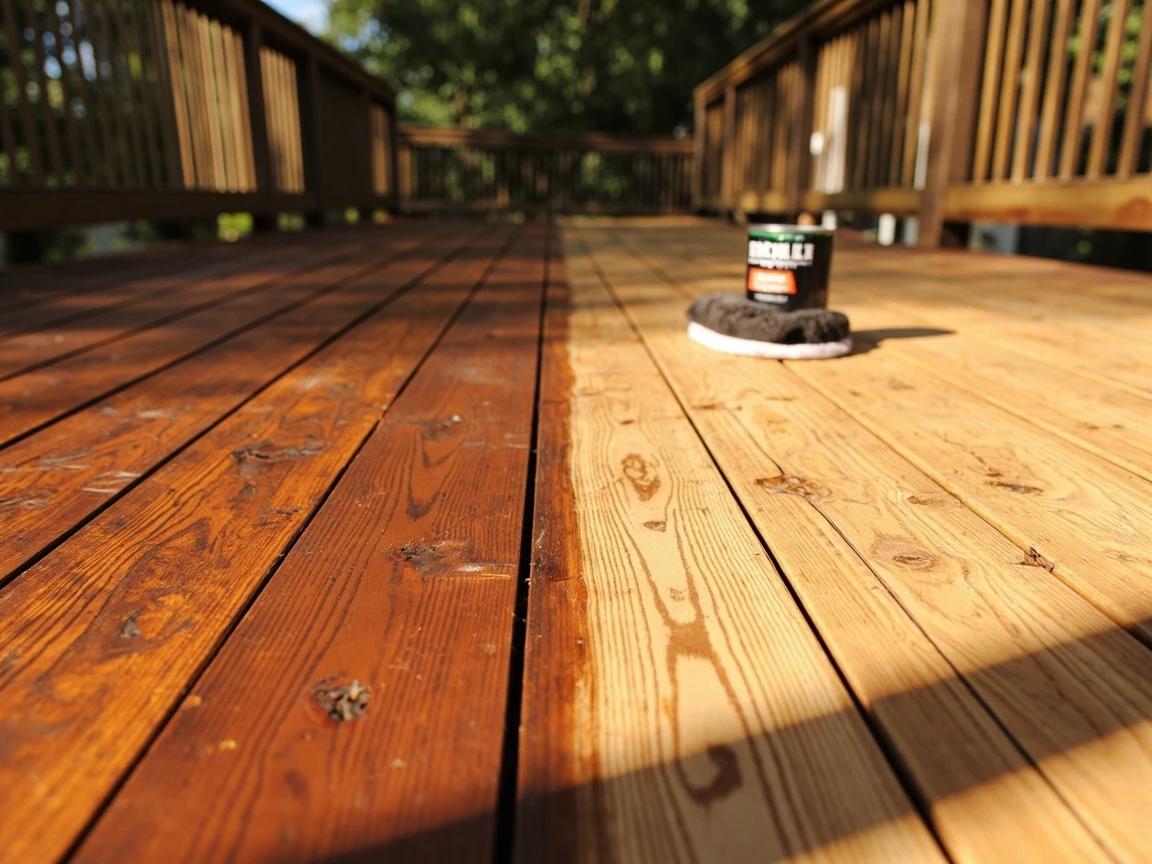
Test the second coat on a hidden corner first — if the wood doesn't absorb more stain (the first coat saturated it), skip the second coat to avoid a sticky finish.
Dispose of Rags Safely and Clean Up
This is the single most important cleanup step: oil-based stain-soaked rags can spontaneously combust as the oil oxidizes. Spread used rags flat outside on concrete or gravel (not piled up) for 24 hours until dry, or fully submerge them in water in a sealed metal container, then dispose of them in a sealed metal can with the lid on. Clean brushes with mineral spirits (oil-based stains) or warm soapy water (water-based). Pull up painter's tape while the stain is still slightly tacky for the cleanest edge. Wait 48-72 hours of cure time, then move furniture back onto the deck.
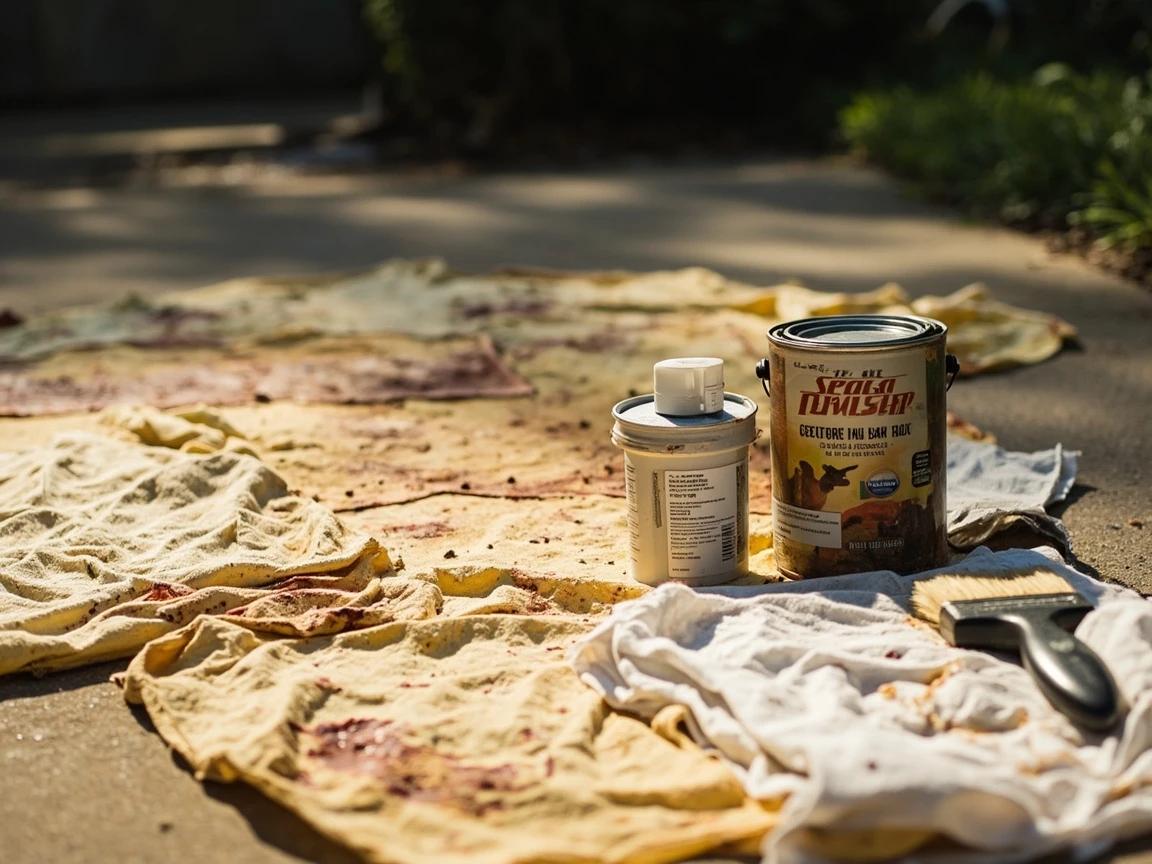
Never ball oil-based stain-soaked rags into a trash bag or leave them in a pile. They can self-ignite within hours as the oil cures — multiple house fires every year start this way. (Water-based stain rags do not carry this risk.)
Frequently Asked Questions
How long does it take to stain a wood deck?
+
This project typically takes about 4 hrs. The guide includes 9 steps with detailed instructions for each.
What tools do I need?
+
You will need: Stiff-bristle deck scrub brush (long-handled), Pressure washer with 25-degree tip (1,500-2,500 PSI) OR garden hose with high-pressure nozzle, Random orbital sander with 80-grit sandpaper, 4-inch natural-bristle brush (for oil-based stains) or synthetic (for water-based), Stain pad applicator with telescoping pole, 9-inch paint roller with medium-nap cover and extension pole, 5-gallon paint bucket with roller grid, Paint stir stick, Painter's tape (2-inch), Drop cloths or plastic sheeting, Chemical-resistant gloves, Safety glasses and dust mask. Materials include: Deck cleaner (sodium percarbonate-based, e.g., Restore-A-Deck or Olympic Premium), Wood brightener (oxalic acid-based, for bringing out wood tone and neutralizing cleaner), Exterior deck stain — semi-transparent or solid color, oil-based or water-based (plan on 1 gallon per 200 sq ft for one coat), Wood filler or exterior deck screws (for repairing damaged boards before staining).
Is this a good project for beginners?
+
This is a moderate-difficulty project. Some basic DIY experience is helpful, but the step-by-step instructions make it approachable for motivated beginners.
Sources & further reading
- Selection and Application of Exterior Stains for Wood — USDA Forest Products Laboratory
- Safety with Oily Rags — NFPA
More Painting Guides
View all → Easy6 hrs
How to Paint Kitchen Cabinets Without Sanding
You can genuinely skip sanding on a cabinet repaint by replacing the abrasive step with two specific chemical steps: a heavy-duty degreaser (Krud Kutter Gloss-Off or TSP) and a bonding primer (Zinsser BIN shellac). This saves four hours of dust and tape on a typical kitchen, but it only works when the existing finish is intact — if your cabinets have peeling, chipping, or thermofoil damage, sanding will not save you anyway and you need to fix that first. Total project: one weekend, ~$60 in supplies.
 Medium6 hrs
How to Remove Wallpaper and Prep Walls for Paint
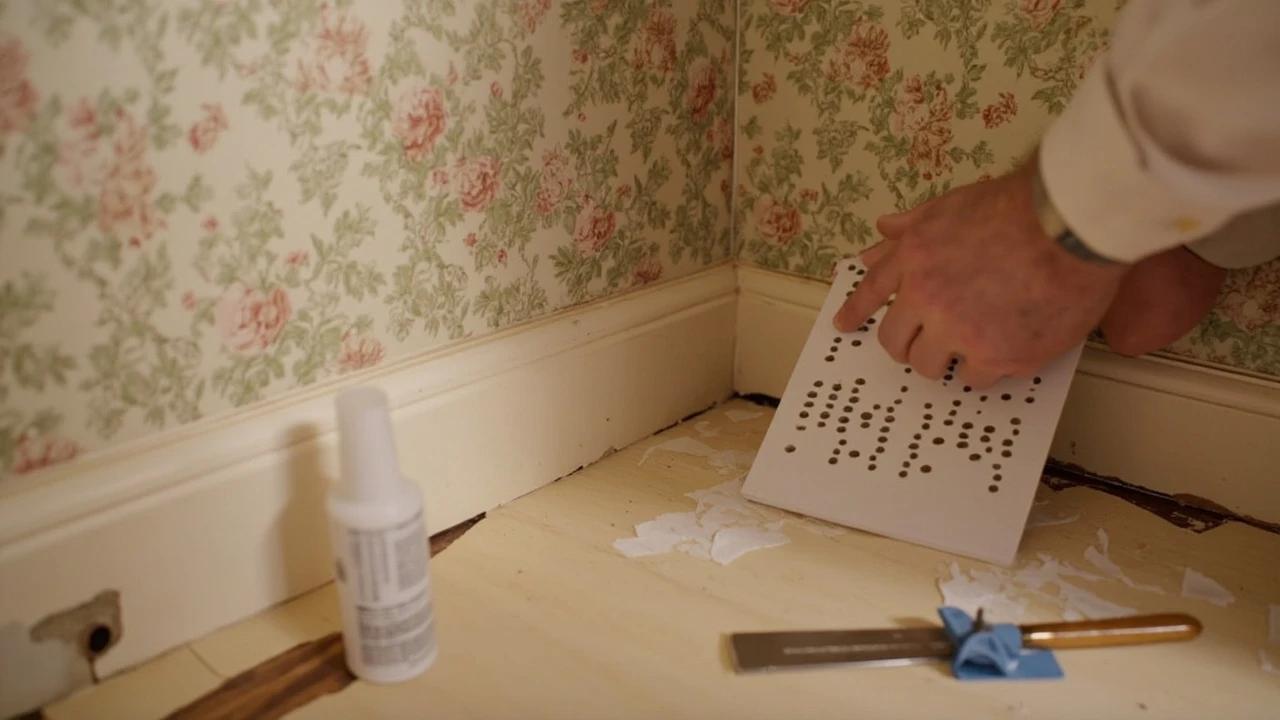
Removing wallpaper is the slowest single step in any paint refresh — but the steps themselves are simple: score, soak, scrape, neutralize, prime. The mistake that wastes whole weekends is skipping the score step or using plain water instead of a gel-based stripper. This guide covers the full sequence including the post-removal adhesive cleanup and the oil-or-shellac primer that prevents residual paste from bleeding through new paint.
 Easy25 min
Best Deck Stain: Transparent vs Semi vs Solid
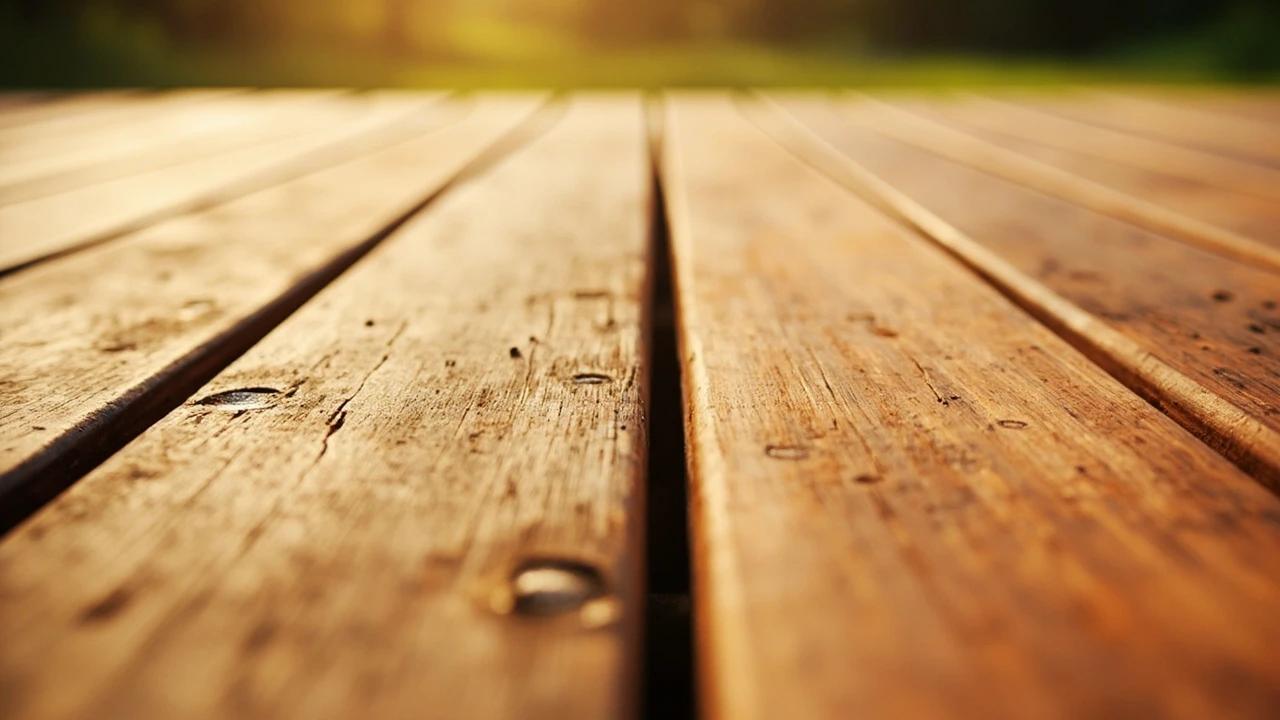
There is no "best" deck stain — there is the right stain for your sun exposure, wood condition, and how often you want to redo the job. Transparent stains last 1-2 years but let the natural grain show. Solid stains last 4-7 years but look like paint. This guide walks the four opacity levels and the oil-vs-water choice so you pick the one that matches your deck and your tolerance for re-staining.
You Might Also Like
 Easy45 min
How to Repair a Shower Diverter Valve
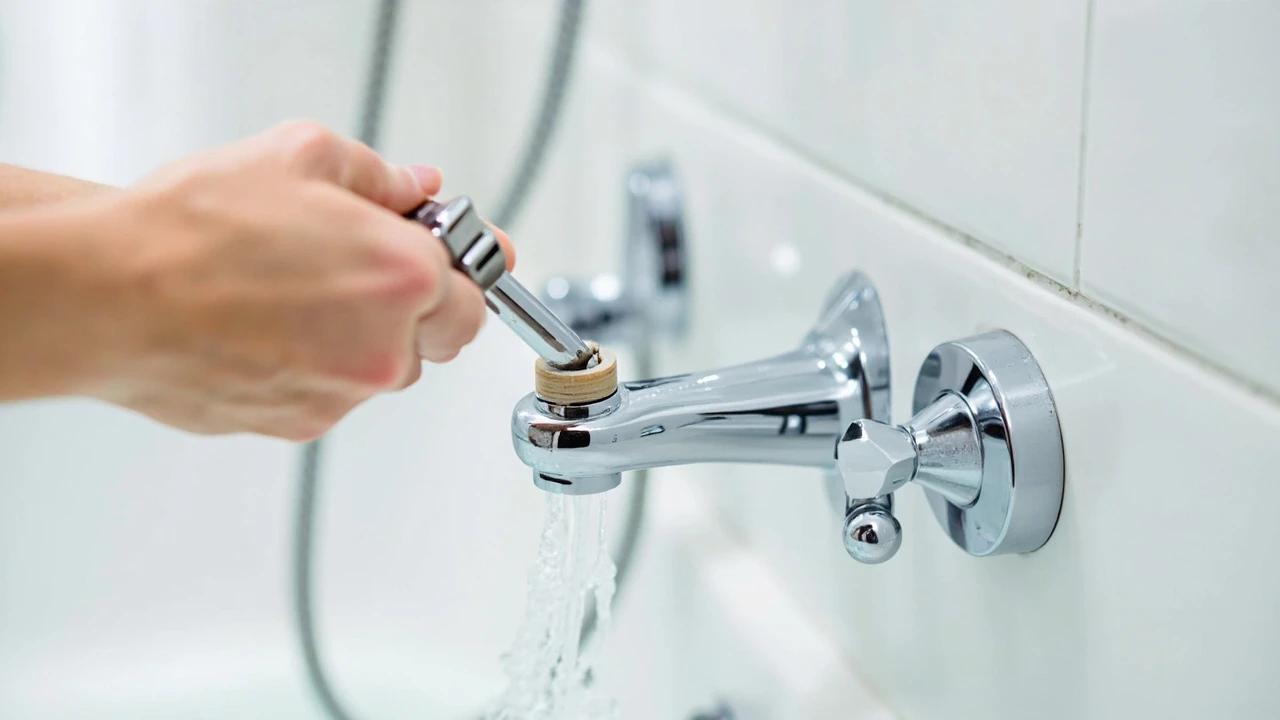
When you pull the diverter knob and water still pours from the tub spout instead of the showerhead, the fix is usually a worn washer or mineral buildup — not a $200 plumber visit. This guide covers the three most common diverter types (tub spout, three-valve, and two-valve) and walks you through cleaning, replacing washers, and swapping the diverter if needed, all in under an hour with basic tools.
 Easy2 hrs
How to Repair Damaged Baseboard Trim
Dented, chipped, and gouged baseboards are one of the most visible signs of a neglected home — but they are also one of the easiest things to fix. With $10-20 in filler and a few hours of work (mostly drying time), you can make battered trim look factory-fresh without pulling a single board off the wall.
 Easy45 min
How to Install a Smart Thermostat
A smart thermostat is one of the highest-ROI upgrades you can make to your home — it learns your schedule, adjusts automatically when you're away, and typically saves about 8% on heating and cooling bills — the figure ENERGY STAR verifies from real-home data, roughly $50 a year — so the $120-250 device usually pays for itself within a few years. If your old thermostat has labeled wires behind it, the swap takes about 30-45 minutes with nothing more than a screwdriver and your phone. This guide covers checking compatibility, labeling wires, mounting the new base, connecting everything, and walking through the app setup so your system is running smart the same day.