How to Choose Paint Colors for Any Room


Picking a paint color from a 1-inch swatch in a store is the single biggest reason rooms get repainted within a year. The fix is a small process: understand undertones, measure Light Reflectance Value (LRV), check the color against your room's actual light, and test a sample-board patch before buying gallons. This guide turns "I think we like that gray" into "this specific color, in this specific room, will look right at 8 AM and 8 PM."
What You'll Need
🛠 Tools
📦 Materials
Step-by-Step Instructions
Identify Which Direction Your Room Faces
Stand in the middle of the room and use a compass app on your phone to confirm which direction the largest window faces. The four primary orientations affect color radically: north-facing rooms get cool, even, dim light all day; south-facing rooms get warm bright light all day; east-facing rooms get warm morning light and cool evening light; west-facing rooms get cool morning and golden-hour evening light. Write down the orientation — every other choice in this guide is influenced by it.

Pick 5-8 Candidate Colors From a Fan Deck
Go to a Sherwin-Williams or Benjamin Moore store and ask for a fan deck (free if you have a contractor account; about $20 for retail customers — worth it). Browse at home, in daylight, on the wall where the paint will go — NOT under the bright fluorescent lights of the paint store. Pick 5-8 candidate colors. Resist the urge to pick from a phone screen or a website — screens render colors inaccurately and almost always make colors look more saturated than they will paint.

The fan deck has 1,200+ colors organized by color family. Spend the first 15 minutes browsing entire pages, not individual chips — colors look completely different when isolated vs. surrounded by their family. The chip that pops as "interesting" against its neighbors is the chip that will pop in your home.
Check Each Candidate for Undertone
For each chip, hold it next to a pure-white piece of printer paper, then next to true black. The chip will suddenly reveal its hidden color — a "warm gray" might show as green-gray, a "white" might show as pinkish-white, a "beige" might show as yellow-gold. Note the undertone for every candidate. This is the most important and most-skipped step in choosing color. The undertone is what will dominate the room at 24 inches viewing distance once the color covers four walls.

Check the LRV of Each Candidate Against Your Room
Look at the back of each fan-deck chip for the LRV number. For north-facing rooms, aim for LRV 55-75 to compensate for the cool, dim natural light. For south-facing rooms, you can go lower (LRV 35-55) because the warm light brightens everything. For small or dark rooms, push toward LRV 60+. For large bright rooms where you want coziness, drop below LRV 40. Eliminate any candidates whose LRV is wrong for your room — even if you love the color on the chip, it will fight your room's light.

Do not pick a color just because the LRV is "right" — LRV tells you brightness behavior, not whether the color is the right hue. A butter yellow and a pale gray can have identical LRVs and look nothing alike. LRV is one filter, undertone is another. Both must pass.
Narrow to 3 Finalists and Buy Sample Quarts
After the undertone and LRV filters, you should have 3-5 finalists. Buy a quart sample of each at the paint store (about $7-9 each). Quart samples are mixed in a slightly different base than gallon-size production paint, so the color may look 5-10% different in the final gallon — but for sample-board purposes, the quart is close enough to be useful. Bring a couple of small foam rollers and an artist brush to apply with.

Paint Sample Boards (Not Walls)
For each finalist, paint a 2-foot square section of white poster board with two coats of the sample — the white poster board prevents the existing wall color from biasing your view. Let dry overnight. Painting directly on the wall is the second-most-common DIY color mistake: the existing color reflects up and contaminates the new color, and the patch is permanent until you repaint the whole wall. Boards move and the contamination problem goes away.

If you do not want to deal with rollers and drips, buy peel-and-stick swatches from Samplize for the same finalists. They cost about the same ($6-8 each), are made from real paint, and stick/remove without residue. Same purpose as a sample board, less mess.
Live With the Samples for 3 Days
Move the sample boards around the room over three days. Look at them at 8 AM (cool morning light), at noon (warm direct light), at 4 PM (warm afternoon light), and at 8 PM under your room's actual artificial lighting. Take phone photos at each time and lay them side by side later — the same color often shifts dramatically between conditions. The winner is the color that looks consistent and intentional in all four lighting conditions, not the one that looked great in only one of them.

Resist the impulse to buy gallons before the three-day wait. Most regret-stories start with "we just got excited and bought paint that night." The whole point of the sample-board step is to interrupt that impulse. Three days is short enough to keep momentum and long enough to see all lighting cycles.
Frequently Asked Questions
What is LRV and why does it matter?
+
LRV stands for Light Reflectance Value — a number 0-100 measuring how much light a color reflects (pure black = 0, pure white = 100). LRV tells you how a color will feel in a room: high LRV (60+) opens up dark north-facing rooms; low LRV (under 30) creates intimacy in a large bright room. Most paint manufacturers publish LRV on the back of every color chip. It is the single most useful color number after the name itself.
What is an undertone and how do I see it?
+
Every "neutral" gray, beige, or off-white has a hidden color underneath the surface neutral — that is the undertone. The easiest way to see it: hold the chip next to a pure-white piece of printer paper, then next to a true-black piece of paper. The chip will suddenly look slightly green, blue, pink, yellow, or violet next to those references. That undertone will dominate the room once it covers four walls — what looked like "warm cream" on a chip can read as "pale yellow" or "pinkish" when scaled up.
How do I pick a color for a north-facing room?
+
North-facing rooms receive the coolest, dimmest natural light, which exaggerates cool undertones. Avoid grays and whites with blue or violet undertones — they will read steel-gray and feel cold all day. Pick warm-undertone colors (creams with yellow/pink hints, warm beiges, putties) and aim for LRV 55+ to brighten the space. South-facing rooms get the opposite problem and can handle cool undertones because the warm sunlight balances them out.
Are paint store color matches as accurate as buying the original?
+
Yes for the visible color (their spectrophotometer matches within 95% accuracy), but no for the chemistry. A Sherwin-Williams color matched in Behr will look the same on the wall but cures differently, takes a different sheen, and ages differently over years. Match the base brand when you can — buy "Benjamin Moore Hale Navy" from a Benjamin Moore store, not a Hale Navy color-match in a different brand's base. The chemistry difference shows up at year three, not year one.
Do peel-and-stick samples really work as well as painted boards?
+
For undertone evaluation, yes — companies like Samplize ship a 12x12 inch peel-and-stick swatch made from real paint that you stick on the wall, move around, and remove with no residue. They cost about the same as a quart sample ($6-8) and save the time of painting boards. The one place they fall short: they cannot show how the color reads when it covers a full wall corner-to-corner, which can subtly shift with the geometry of a real wall.
Sources & further reading
- Paint Colors and LRV: A Color Expert's Guide — Kylie M Interiors
- How to Choose Paint Colors Based on Room Direction — Sherwin-Williams
- LRV Paint Colors: The #1 Rule for Choosing the Perfect Shade — Four Generations One Roof
More Painting Guides
View all →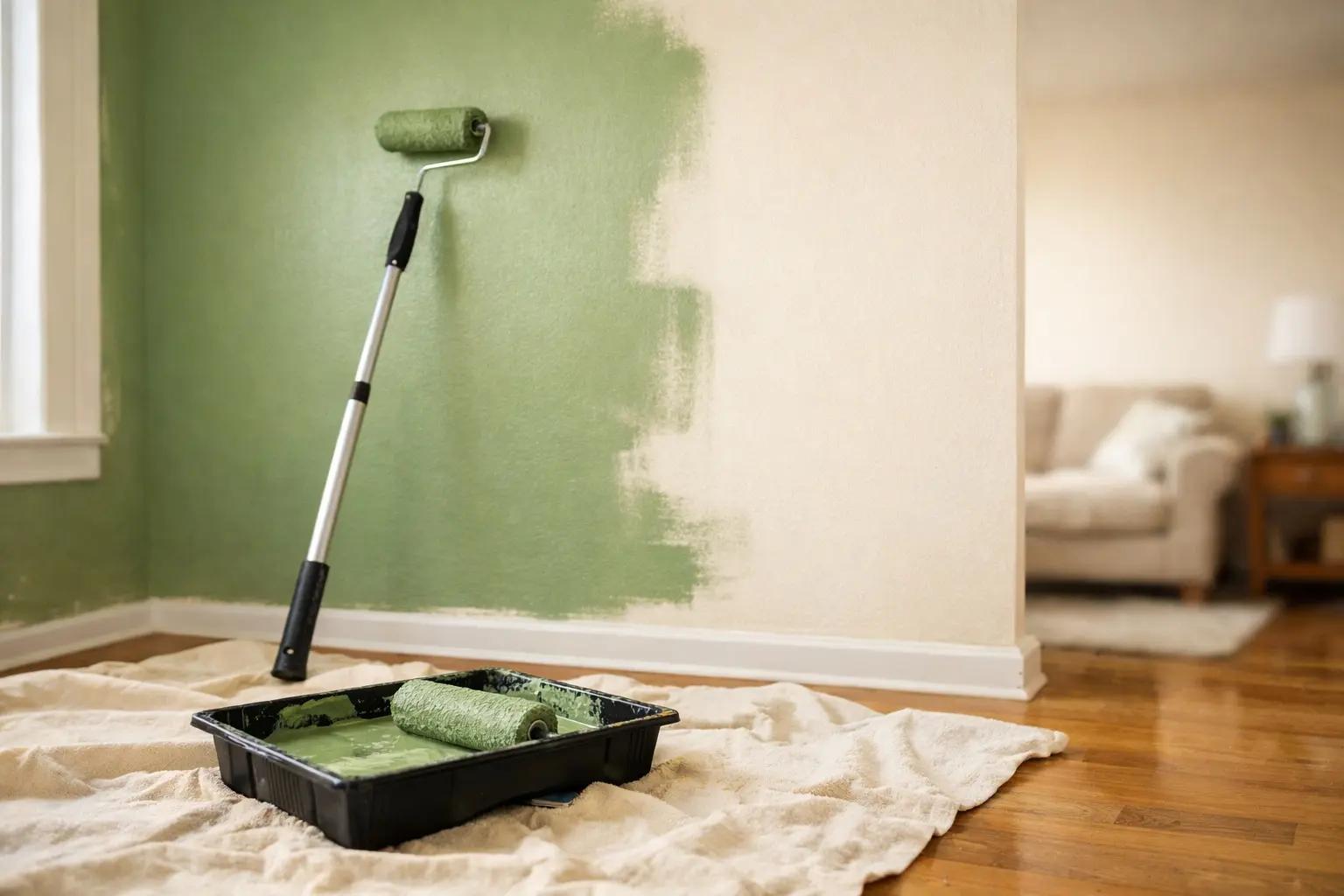 Medium6 hrs
How to Paint a Room
A fresh coat of paint is the fastest, cheapest way to transform any room — and doing it yourself saves $400-800 in labor for an average 12x12-foot bedroom. The job takes a weekend from prep to final coat, and the difference between an amateur-looking result and a professional finish comes down to technique, not talent. This guide covers prep, cutting in, rolling, and cleanup so you get clean lines and even coverage the first time.
 Easy15 min
Paint Sheen Comparison: Flat to High-Gloss, by Room
Paint sheen is a tradeoff between hiding wall imperfections and being able to wipe the wall clean. Flat hides everything but cannot survive a sponge. High-gloss is bulletproof but shows every dent. The five common sheens — flat, eggshell, satin, semi-gloss, high-gloss — each have a right room and a wrong room. This guide gives you the matchup so the bathroom does not get flat paint and the bedroom does not get gloss.
 Medium30 min
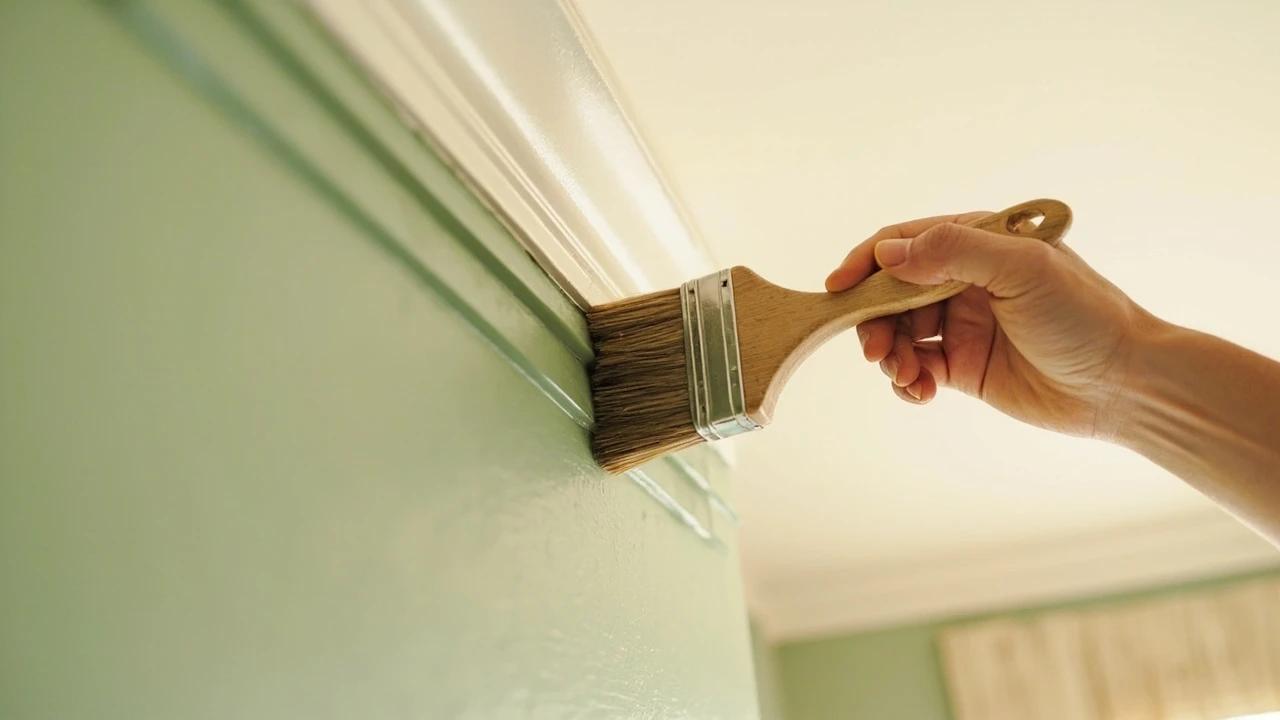
The Cut-In Technique — Clean Paint Lines Without Tape
Cutting in is the painter's skill that separates "I painted my own house" from "I had a painter do it." A clean cut-in line at the ceiling, baseboard, or trim eliminates the need for painter's tape entirely — and tape leaves bleed lines anyway. This guide covers the 2.5-inch angled sash brush technique: how to load the brush, hold it, position your body, and bring it to the edge so the line is straight without any tape.
You Might Also Like
 Easy45 min
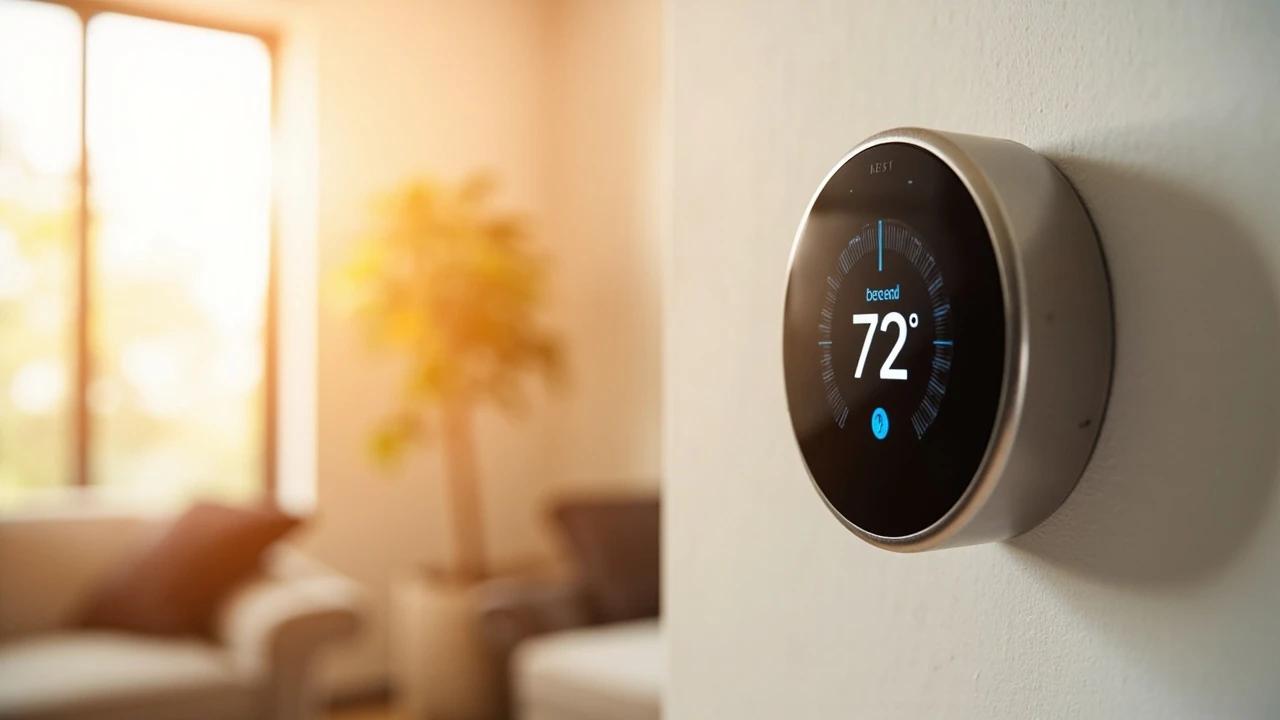
How to Install a Smart Thermostat
A smart thermostat is one of the highest-ROI upgrades you can make to your home — it learns your schedule, adjusts automatically when you're away, and typically saves about 8% on heating and cooling bills — the figure ENERGY STAR verifies from real-home data, roughly $50 a year — so the $120-250 device usually pays for itself within a few years. If your old thermostat has labeled wires behind it, the swap takes about 30-45 minutes with nothing more than a screwdriver and your phone. This guide covers checking compatibility, labeling wires, mounting the new base, connecting everything, and walking through the app setup so your system is running smart the same day.
 Easy30 min
How to Fix a Dripping Faucet
A dripping faucet wastes more than 3,000 gallons of water per year and can add $20 or more to your monthly water bill. The fix is almost always a worn cartridge, washer, or O-ring — parts that cost under $10 and take 20-30 minutes to replace with basic tools.
 Easy30 min
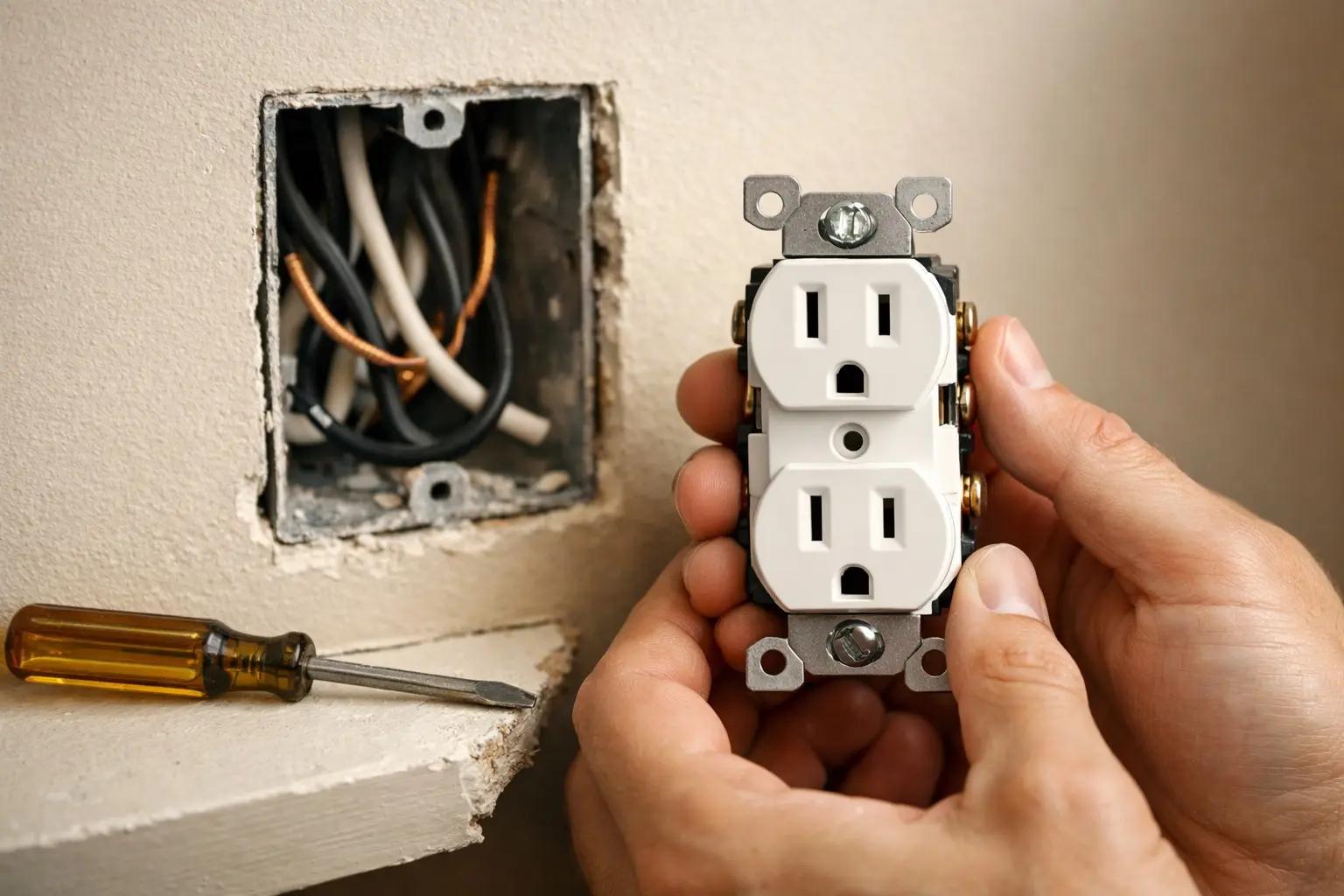
How to Replace an Electrical Outlet
A worn-out or discolored electrical outlet is one of the simplest electrical repairs you can tackle yourself — swapping one takes about 15-30 minutes and costs under $5 in parts versus $75-150 for an electrician visit. This guide walks you through safely replacing a standard duplex receptacle, including how to handle the wiring correctly and avoid the most common DIY mistakes.