Best Paint for Kitchen Cabinets, Compared


The four paints that actually hold up to daily kitchen use are Benjamin Moore Advance, Sherwin-Williams Emerald Urethane Trim Enamel, INSL-X Cabinet Coat, and Behr Urethane Alkyd. They all work; they each fail in different ways. This guide compares cure time, leveling, scratch resistance, and price so you pick the one that matches your skill level and timeline — not the one a paint-store clerk has the most stock of.
What You'll Need
🛠 Tools
Which paint is best for kitchen cabinets?
Understand What "Cabinet Paint" Actually Means
Cabinet-rated paints are not regular latex wall paint. They are urethane-modified alkyd hybrids (sometimes called waterborne enamels) that combine the easy water cleanup of acrylic with the hard, self-leveling cure of oil-based paint. The film they cure to is harder and more scratch-resistant than wall paint, which matters because cabinet doors get touched a hundred times a day. The four brands compared here — Benjamin Moore Advance, Sherwin-Williams Emerald Urethane Trim Enamel, INSL-X Cabinet Coat, Behr Urethane Alkyd — are all in this category. Whichever you pick only bonds as well as what is under it, so match the primer to your cabinet material — laminate, oak, or previously painted — before your first coat of color.

Benjamin Moore Advance — The Smoothest Brushed Finish
Advance is the paint to choose if you are brushing and rolling by hand and you care more about a flawless finish than speed. Its slow dry time — 16 hours minimum between coats, many pros wait 24 — gives the paint time to self-level so brush marks settle out. Satin sheen is the standard for cabinets. Price: about $55-65 per gallon. The downside: a 15-door kitchen takes a full extra weekend because of the recoat wait. Choose Advance if you have the time and you want results that look closer to professional spray finish without a sprayer.

Advance levels best when applied with a 4-inch high-density foam roller for the door fronts plus a 2-inch Wooster Shortcut angled brush for inside corners and profiles. Avoid bristled brushes on flat panel areas — even fine-bristle brushes leave faint marks where the foam roller would not.
Sherwin-Williams Emerald Urethane Trim Enamel — The Fast Track
Emerald Urethane is the paint to choose if you need the kitchen back in service quickly. Recoat in 4 hours instead of 16-24, and the cured film is the most scratch-resistant of the four in side-by-side testing. Satin sheen is the standard. Price: about $80-95 per gallon (the priciest of the four). It is also the most forgiving on lap marks — applies smoothly with brush, roller, OR sprayer. Choose Emerald if you have a tight deadline (visiting in-laws, holiday meal, real-estate listing) and can absorb the premium price.

The Sherwin-Williams store list price is misleading — Sherwin-Williams runs 30-40% off sales on a near-weekly basis. Wait for a sale and Emerald drops to Advance territory ($55-65/gal). Buying at full sticker is a $30 mistake per gallon.
INSL-X Cabinet Coat — The Budget Pro Pick
INSL-X Cabinet Coat (made by Benjamin Moore) is the budget choice that pros recommend when the homeowner cannot stretch to Advance. It applies smoothly, has good adhesion to laminate without a separate bonding primer, and cures to a respectable hardness. Satin sheen is the standard. Price: about $45-55 per gallon. The downside: it is harder to spray than Advance or Emerald — clogs HVLP tips more readily — so most DIYers will be brushing and rolling, which is fine. Choose INSL-X for rental units, secondary baths, or any cabinet project where saving $30/gallon matters.

Behr Urethane Alkyd Semi-Gloss Enamel — The Hardware-Store Option
Behr is the only one of the four available at Home Depot, which matters when the project is on a Saturday afternoon and the Sherwin-Williams store closed at 4 PM. Its water-based alkyd formula is genuinely in the same category as the other three. Price: about $40-50 per gallon — the cheapest. The catch: it is the least forgiving of poor application — drips and sags if your roller is too loaded or your brush is too wet. Multiple thin coats are essential. Choose Behr when the alternative is "drive 25 minutes to Sherwin-Williams" — three thin coats of Behr beats two thick coats of premium paint applied in a rush.

Pick the One That Matches Your Situation
There is no single "best" cabinet paint — only the best one for your specific constraints.
| Paint | Price/gal | Recoat | Sheen | Choose it when | Main drawback |
|---|---|---|---|---|---|
| Benjamin Moore Advance | $55-65 | 16-24 hr | Satin | You have a free weekend and want the best brushed finish | The recoat wait adds a weekend to a 15-door kitchen |
| Sherwin-Williams Emerald Urethane | $80-95 | 4 hr | Satin | Deadline is tight; hardest cured film of the four | Priciest by a wide margin |
| INSL-X Cabinet Coat | $45-55 | Not stated | Satin | Rentals and secondary baths; sticks to laminate without a bonding primer | Clogs HVLP tips, so plan to brush and roll |
| Behr Urethane Alkyd | $40-50 | Not stated | Semi-gloss | The other stores are closed and you want to start today | Least forgiving — drips and sags unless coats are thin |
All four will outlast the cabinet boxes, and the application matters more than the brand: three thin coats of the cheapest option beats two thick coats of the most expensive one applied in a rush.

Whichever brand you pick, buy a quart first and paint one drawer front as a test. Live with it for a week before committing to gallons. The color almost always looks slightly different on a vertical surface in your kitchen lighting than it does on the sample card in the store.
Frequently Asked Questions
Is Sherwin-Williams Emerald or Benjamin Moore Advance better for cabinets?
+
They are the two best DIY cabinet paints sold. Pick Sherwin-Williams Emerald Urethane Trim Enamel if you need to get the kitchen back in service fast — its 4-hour recoat window vs. Advance's 16-24 hour window saves a full weekend on a 15-door kitchen. Pick Benjamin Moore Advance if you are brushing and rolling by hand (its slower dry produces a noticeably smoother self-leveled finish) and you can give the project an extra day. The deciding factor is honestly your schedule rather than the finish, because both land in the same quality tier once cured. One caveat on Advance that catches people out: that long recoat window is a minimum, not a target, and it stretches in cold or humid conditions. Recoating it early is the single most common way to ruin an otherwise good cabinet job — the second coat drags the soft first coat into ridges that will not sand out cleanly. If the doors are drying in a cool garage, budget 24 hours.
Can I use regular interior latex paint on cabinets?
+
You can apply it, but it will scuff, peel at the door edges, and need touch-ups inside the first year. Cabinet doors get touched, scrubbed, and bumped daily — they need a hybrid alkyd / urethane-modified enamel that cures to a hard shell. Regular wall paint cures to a flexible film designed for low-touch vertical surfaces, the opposite of what cabinets need. The failure is predictable in both timing and location. Wall paint stays slightly soft indefinitely, so doors stick to frames and shelf liners bond to shelves, and the first chips appear within months at the door edges and around the handles where fingernails catch. It also cannot take repeated cleaning: a degreaser that a cabinet enamel shrugs off will burnish or lift latex. If cost is the constraint, a cheaper cabinet-rated enamel is still a far better buy than a premium wall paint.
What sheen should I buy for kitchen cabinets?
+
Satin is the dominant choice and what most paint manufacturers stock for these cabinet-rated lines. Semi-gloss is durable and slightly easier to wipe but highlights every brush mark — fine if you are spraying, risky if you are rolling. Avoid eggshell (not washable enough for cabinets) and high-gloss (too unforgiving of any surface imperfection). Sheen also changes how much prep you are signing up for, which is the part worth thinking through before buying. Every step up the gloss scale reflects more light across the surface and so reveals more grain, more sanding scratches and more brush marks. Satin is forgiving enough to hide ordinary hand-application texture on oak or previously painted doors. If you want semi-gloss, commit to the extra prep it demands — grain filling on open-grain wood, and sanding between coats at 220 grit — rather than discovering the requirement after the first coat.
How long does the paint take to fully cure?
+
The doors will dry to the touch in 4-16 hours depending on the brand, but full cure to maximum hardness takes 21-30 days. That is the window where new cabinets are most vulnerable to chips, fingerprints sticking, and pots leaving marks on shelves. Reinstall the doors at 24-72 hours but treat them gently for the first month. Practically, that cure window means a few temporary habits. Leave shelf liner or wax paper under anything heavy, do not stack plates directly on freshly painted shelves, and avoid closing doors hard enough to press painted face against painted frame. If two coated surfaces do stick, a strip of clear bumper pads on the door corners solves it permanently and costs a couple of dollars. Hold off on any cleaning product other than a damp cloth until the month is up, because solvents reach full resistance only at the end of cure.
How much paint do I need for an average kitchen?
+
A standard 10-15 door kitchen (cabinet boxes + doors + drawer fronts) typically uses one gallon of primer and one gallon of finish paint with two coats. At about $50-95 per gallon for cabinet-rated enamels, that is $100-190 in paint plus another $30-50 in brushes, foam rollers, and a quart of bonding primer for any laminate edges. Buy the paint in one purchase rather than topping up mid-project. Tinted colors are mixed per can, and a second can ordered a week later can come back a shade off — enough to see across a run of doors in kitchen light. Ordering a full gallon when you need three quarts is cheap insurance, and the leftover is what you will use for touch-ups over the next few years. Label the lid with the color code and the date before it goes on the shelf.
Sources & further reading
- Benjamin Moore Advance vs. Sherwin Williams Emerald — Side-by-Side Test — Refresh Living
- The Best Paint for Kitchen Cabinets, According to Experts — Family Handyman
- How to Choose a Paint Finish — Benjamin Moore
More Painting Guides
View all → Easy6 hrs
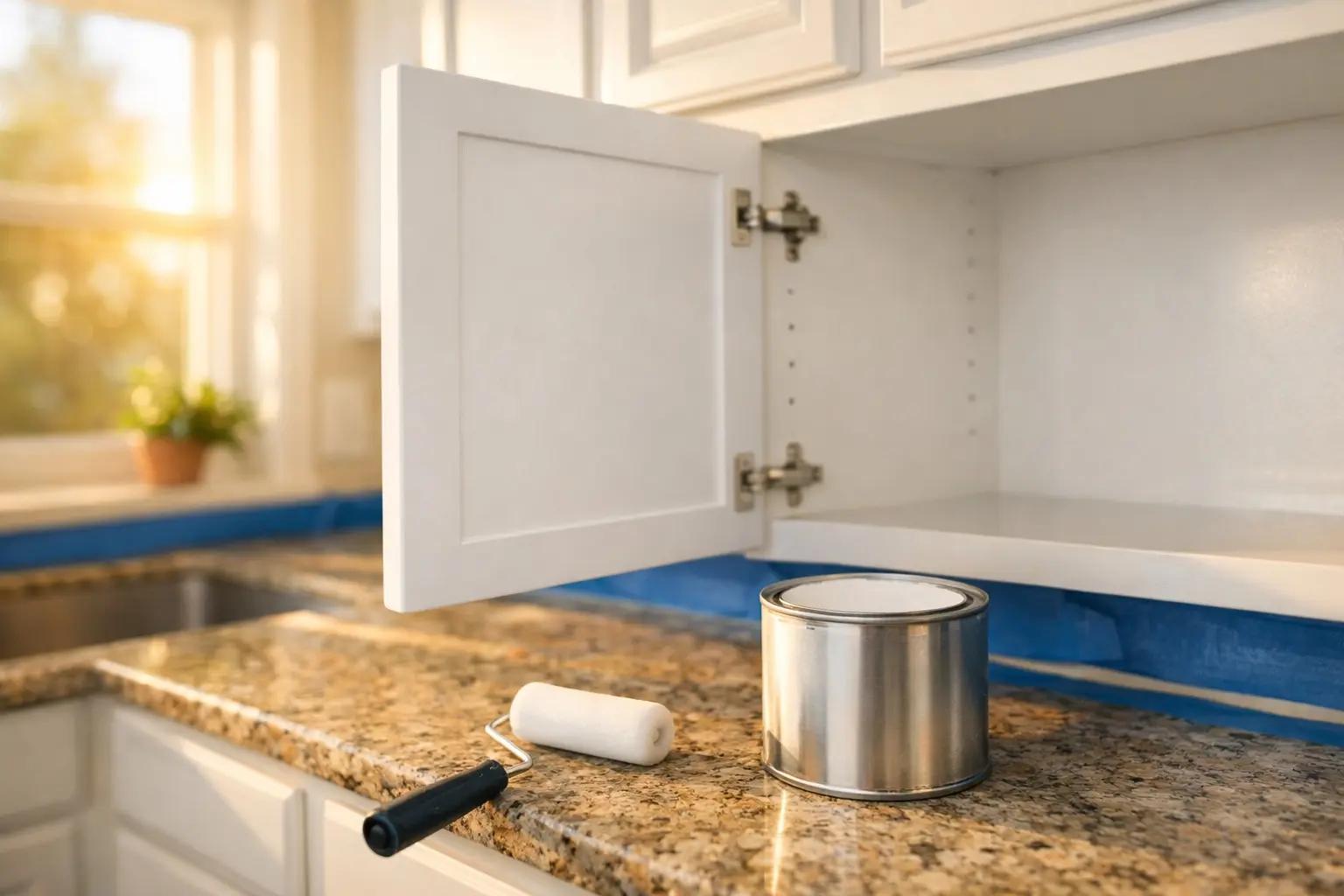
How to Paint Kitchen Cabinets Without Sanding
You can genuinely skip sanding on a cabinet repaint by replacing the abrasive step with two specific chemical steps: a heavy-duty degreaser (Krud Kutter Gloss-Off or TSP) and a bonding primer (Zinsser BIN shellac). This saves four hours of dust and tape on a typical kitchen, but it only works when the existing finish is intact — if your cabinets have peeling, chipping, or thermofoil damage, sanding will not save you anyway and you need to fix that first. Total project: one weekend, ~$60 in supplies.
 Hard8 hrs
How to Paint Kitchen Cabinets
A professional cabinet refinish costs $3,000-8,000, but painting them yourself with the right prep and materials delivers the same transformation for under $200 in a long weekend. The secret is thorough degreasing, a bonding primer, and thin coats with proper dry time between each — skip any of those and the paint will chip within months. This guide walks through the full process from door removal and labeling to final reassembly, covering both brush and roller techniques for a smooth, factory-like finish.
 Easy4 hrs
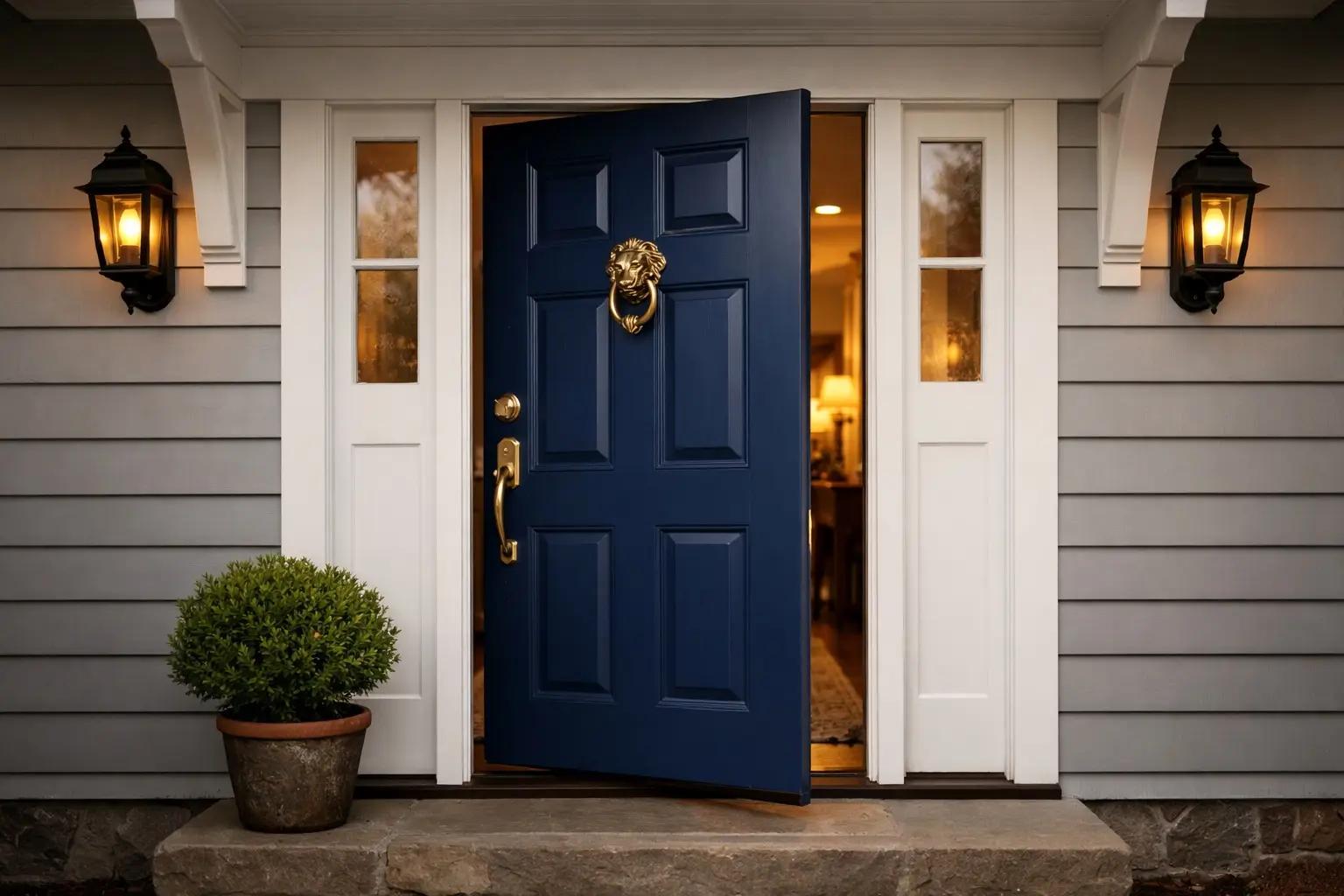
How to Paint a Front Door
A freshly painted front door is the single biggest curb-appeal upgrade you can make in an afternoon — real estate pros estimate it adds $500-1,000 in perceived home value for under $50 in materials. The key to a smooth, brush-mark-free finish is proper prep, thin coats, and the right weather window. This guide covers wood, steel, and fiberglass doors using exterior latex paint.
You Might Also Like
 Easy30 min
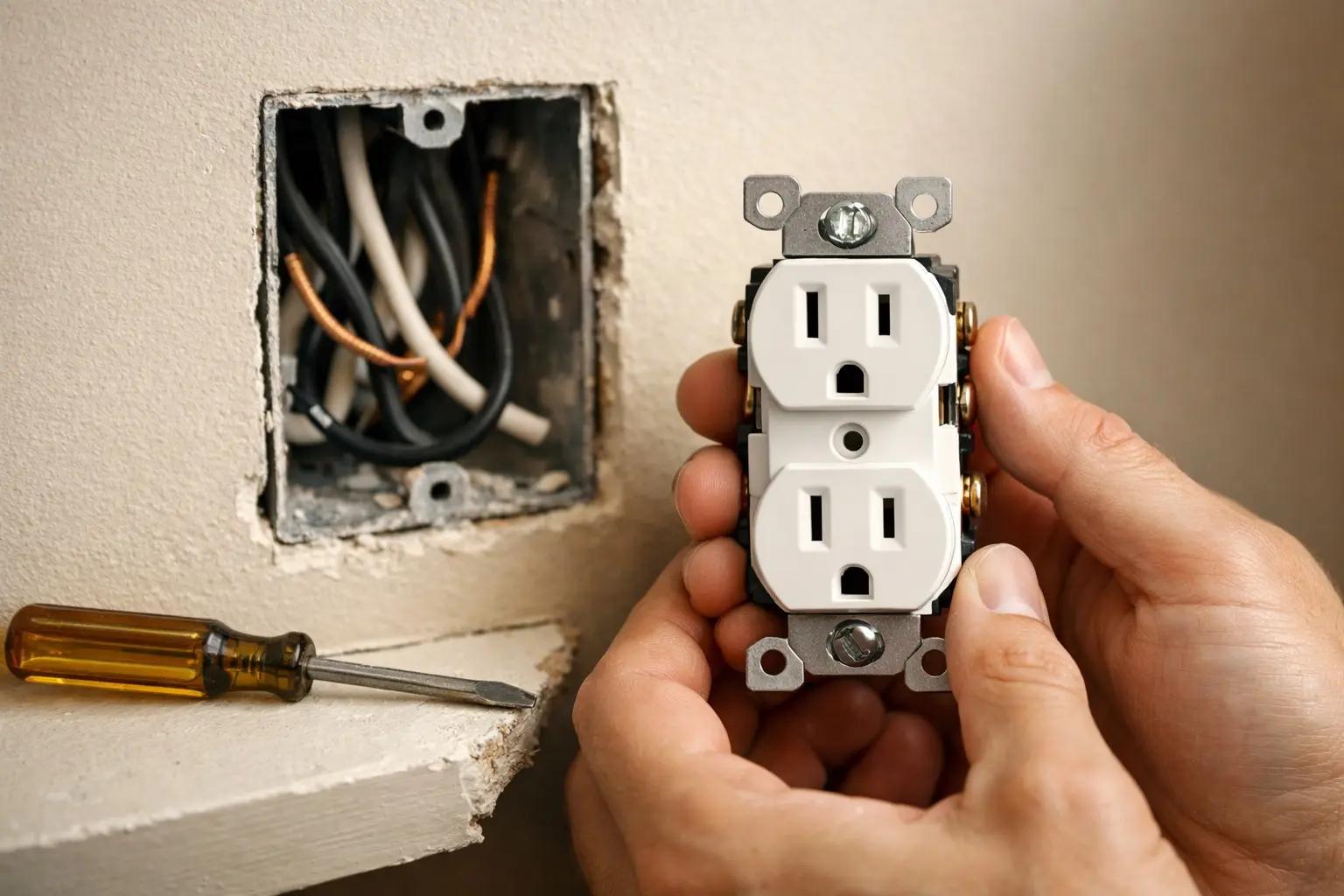
How to Replace an Electrical Outlet
A worn-out or discolored electrical outlet is one of the simplest electrical repairs you can tackle yourself — swapping one takes about 15-30 minutes and costs under $5 in parts versus $75-150 for an electrician visit. This guide walks you through safely replacing a standard duplex receptacle, including how to handle the wiring correctly and avoid the most common DIY mistakes.
 Medium30 min
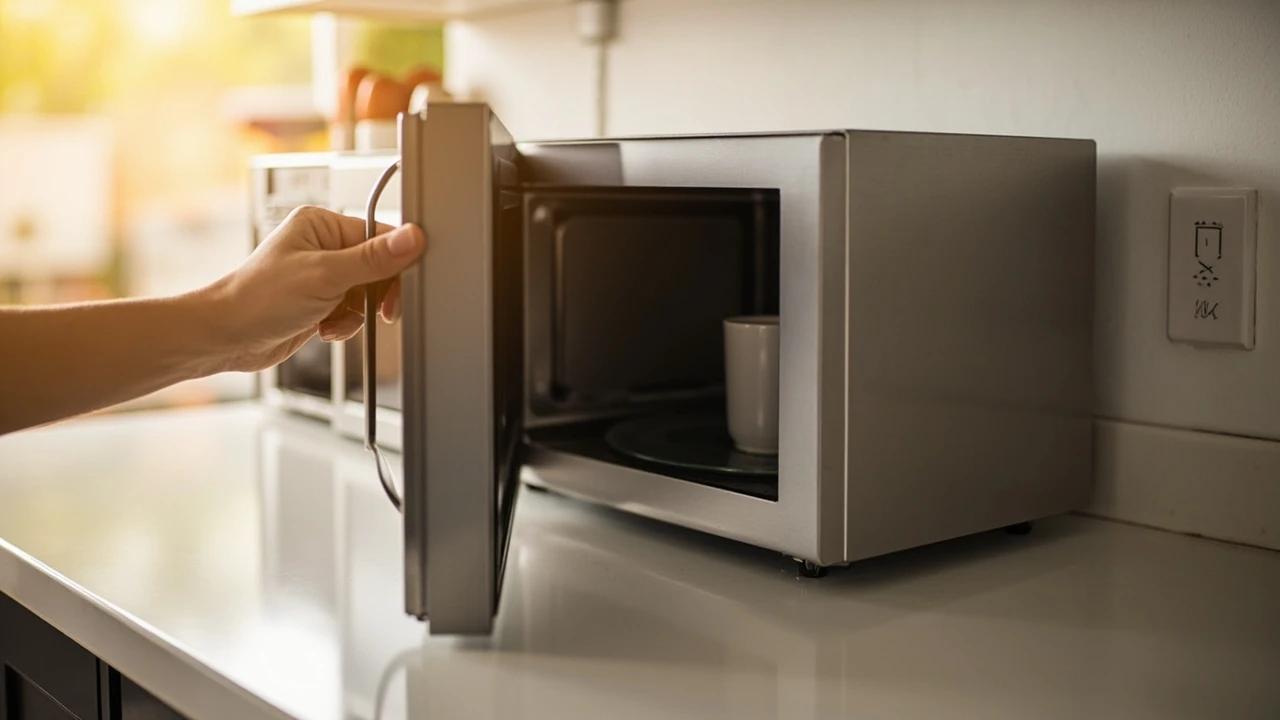
How to Troubleshoot a Microwave That Won't Heat
A microwave that runs — light on, turntable spinning, timer counting down — but leaves food stone cold is one of the most common appliance failures, and about half the time the cause is something you can fix in five minutes for free. This guide walks the diagnosis from the easy stuff (demo mode, power level, a tripped GFCI, a dirty door latch) to reading the failure signature that tells you the high-voltage circuit is gone, then helps you make the repair-or-replace call with real numbers.
 Medium45 min
How to Install a Ceiling Fan
Replacing a light fixture with a ceiling fan improves air circulation in summer and can reduce heating costs in winter by circulating warm ceiling air downward. Most installs take 45-60 minutes.